Game Design reports and market data
Documents

Leveling Up your Game Literacy | Design Club
Game literacy functions as a critical framework for understanding the medium, requiring players to transition from passive consumers to informed observers.
- Game literacy requires transitioning from a passive consumer to an informed observer by intentionally analyzing mechanics, technical execution, and cultural impact across a diverse range of titles.
- Broadening one's gaming portfolio beyond personal preference—including critically acclaimed works, genre-defining hits like Fortnite and Candy Crush, and poorly designed games—is essential for understanding the medium's evolution.
- True literacy is defined by the intellectual capacity to deconstruct how inputs facilitate gameplay loops and storytelling, rather than just possessing reflexive dexterity or 3D navigation skills.

🎮 ARKNIGHTS: ENDFIELD - Gacha meets factory automation
Arknights: Endfield represents a high-budget, cross-platform action RPG that integrates complex factory automation mechanics—inspired by titles like Factorio and Satisfactory—into a traditional anime-style gacha framework.
- Arknights: Endfield generated approximately $22 million in mobile revenue during its first 15 days following its January 20 release.
- The game differentiates itself by integrating complex factory automation mechanics, similar to Factorio and Satisfactory, as a core requirement for crafting gear and progression items.
- Revenue is currently heavily concentrated in Asian markets, with China and Japan serving as the primary drivers of the game's financial performance.

Curated Panel: When is a Game a Gamble? Loot boxes, Virtual Economics and Regulatory Creep.
The classification of loot boxes and virtual items as gambling hinges on the presence of a stake, an element of chance, and a prize with tangible real-world value.
- Loot boxes are legally classified as gambling only when they involve a stake, chance, and a prize with tangible real-world value; most social games avoid this classification by restricting winnings to internal environments.
- Preventing the development of secondary markets—where virtual items are exchanged for real-world currency—is essential to avoid legal reclassification as gambling.
- The European Union is intensifying regulatory pressure through the Digital Fairness Act and Consumer Protection Cooperation principles, which mandate that virtual transactions meet the transparency standards of real-world commerce.

Session:Using High-Quality Cinematics To Nail Your Pitch Without Breaking The Bank - Robert Craig.
The presentation outlines a methodology for creating high-quality, cinematic game pitches and trailers using Unreal Engine 5, emphasizing efficiency and cost-effectiveness.
- Unreal Engine 5 tools like Nanite and Lumen allow developers to bypass traditional, time-consuming workflows such as retopology, enabling high-quality cinematics to be produced with minimal budgets and small teams.
- The Metahuman framework, combined with digital casting via 3D scan libraries, allows for efficient creation of realistic characters by ingesting raw scans into the Metahuman rig for shading and animation.
- A physically based lighting and camera workflow—matching real-world lux values for specific times of day to engine directional lights and HDRI—creates consistent, cinematic results that are easily adjustable shot-to-shot.
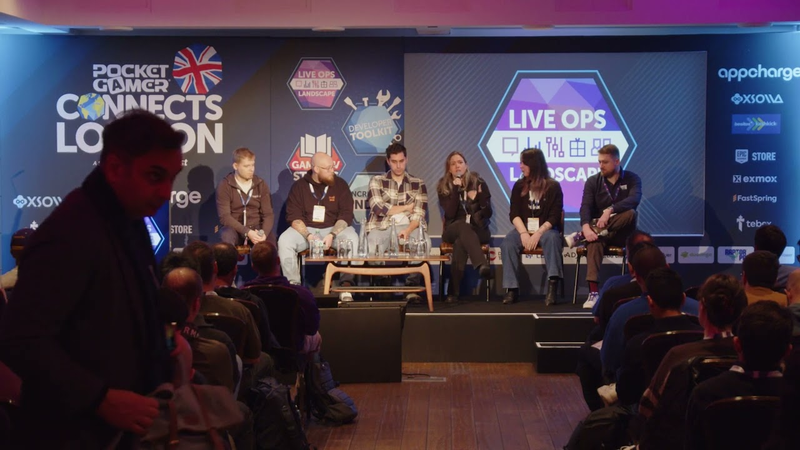
Curated Panel: Giving New Life To Established Games - Live Service Strategies To Boost Retention & .
Established games frequently encounter growth plateaus that necessitate a shift from passive maintenance to active, strategic recalibration.
- Rebalancing a game economy can drive significant growth even in mature titles; one panelist reported a 50% increase in LTV for a four-year-old game through systematic rebalancing.
- Live service teams should shift their mindset from constant content production to problem-solving, as some developers have successfully broken growth ceilings by pausing roadmap production for months to focus on better decision-making.
- Player trust is a form of capital that must be managed by communicating expectations clearly; using 'beta' tags or direct community feedback via Discord allows studios to iterate on features without alienating the existing player base.
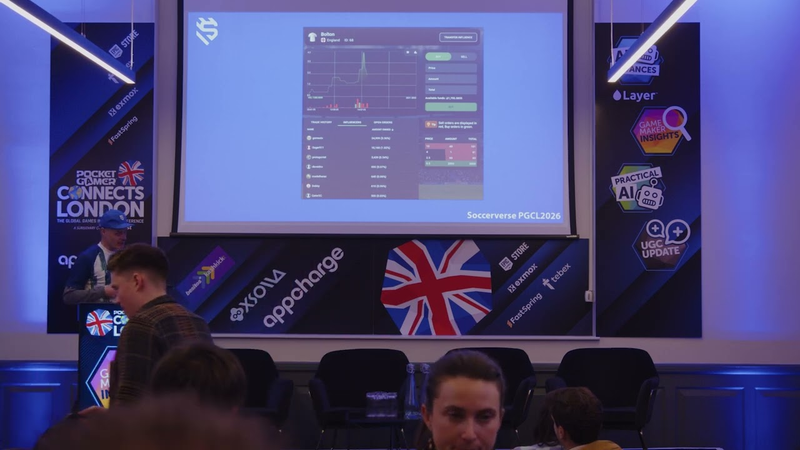
Session: Real Players, Real Value: Building Onchain Football Management Game Soccerverse.
Soccerverse is a fully on-chain football management game designed to create a persistent, multiplayer simulation where users manage clubs and trade assets within a decentralized economy.
- Soccerverse is a persistent, multiplayer football management game built on the Polygon blockchain where every club and player is tokenized into 'influence' shares that users can trade.
- The game operates on a six-month seasonal cycle with matches occurring twice weekly, requiring users to submit team tactics as on-chain transactions.
- The game economy is designed to avoid 'play-to-earn' mechanics by capping time-based rewards and ensuring the SVC token functions strictly as a utility asset for club management and transfers rather than a speculative investment.

Session: From Steps to Spending: A New Motivation Loop That Turns Player Movement Into Engagement...
The integration of physical activity into mobile gaming serves as a novel motivation loop designed to address two persistent industry challenges: low player retention and stagnant conversion rates.
- A 'conditional payer' segment exists among non-paying mobile gamers, representing 5% to 15% of that group, who are willing to make purchases if they can offset costs using earned rewards.
- Allowing users to pay for a portion of in-game currency with earned rewards significantly increases purchase intent, with a 3x growth in intent at a 50% reward-coverage level and a 5x growth at 75%.
- Integrating physical activity into a motivation loop drives retention, as 73% of surveyed gamers reported they would check their earnings progress at least once daily.
Art Directing in the AI Era with SciPlay's Peter Franco
Modern art direction within the social casino sector has transitioned from an intuitive, creative-led process to a rigorous, data-informed discipline.
- Art direction in the social casino sector has shifted from purely intuitive creative work to a data-informed discipline where design choices are validated by player surveys and key performance indicators.
- AI serves as a catalyst for operational efficiency by enabling rapid prototyping and asset iteration, allowing teams to meet the high-frequency content demands of the mobile gaming market.
- To maintain stylistic cohesion, studios are increasingly training custom AI models and utilizing human artists to refine and oversee the final output of automated tools.
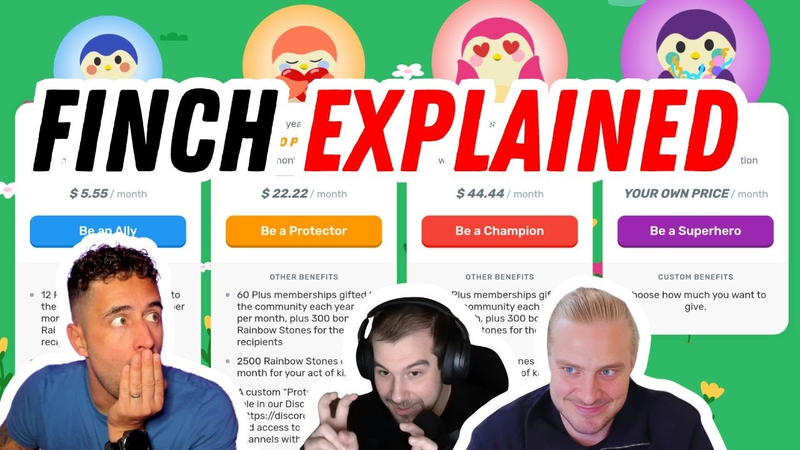
How Finch turned self-care into a $100M+ game
Finch has established itself as a dominant force in the mental health and stress management sector by successfully merging productivity tools with addictive, Tamagotchi-style gamification.
- Finch has achieved a valuation exceeding $100 million by merging mental health utility with Tamagotchi-style gamification, reaching 10 million daily active users.
- The app maintains a strong 20% day-60 retention rate by utilizing streak mechanics, collectibles, and emotional engagement to sustain its core loop.
- The company bypasses mobile store fees by utilizing a direct-to-consumer web model powered by Stripe, which includes a 'Guardian' program for gifted subscriptions.
How the Joke has Changed | Comedy in Games 2026 | Extra Credits Gaming
Comedy in video games has evolved significantly over the last decade, shifting from a reliance on scripted writing and voice acting to a model where gameplay mechanics and player interaction serve as the primary drivers of humor.
- Comedy in games relies on the structural manipulation of player expectations, where developers create tension through established rules and resolve it through surprising or subverted outcomes.
- Effective game comedy often involves a strategic balance of player agency, where designers must decide when to grant control and when to remove it to ensure the player's input enhances rather than disrupts the intended humor.
- Modern comedy games have shifted from relying solely on written dialogue to utilizing gameplay-driven mechanics, such as physics-based simulations in titles like Octodad and Surgeon Simulator that intentionally defy real-world gravity and logic.
Softlaunch Sonar: Why everyone is cloning Pixel Flow! (and still missing the point)
The mobile gaming industry is currently defined by a pervasive clone-first mentality, where developers prioritize rapid production cycles and cost-efficiency over original design.
- Direct cloning of successful titles like Pixel Flow is an unsustainable strategy because derivative products fail to capture market momentum and struggle to achieve long-term player retention.
- The match-three genre functions as a high-barrier environment where non-major developers rarely secure sustainable lifetime revenue, making it an ineffective target for rapid replication.
- Success in the current mobile market is driven by strategic timing and the development of unique gameplay hybrids rather than high production polish or simple aesthetic variations.

Shooter Monthly #4: The World's Biggest Shooter May Surprise & The Thing Highguard Needs to Learn
The global shooter market has reached a state of equilibrium dominated by a duopoly of Battle Royale and tactical genres, creating a challenging environment for new entrants.
- The global shooter market is dominated by mobile-first titles like Free Fire and PUBG Mobile, which command significantly higher monthly active user counts than traditional premium PC and console shooters.
- Modern shooter success is increasingly driven by experiential gameplay and high-frequency engagement loops rather than strictly competitive, high-stakes outcomes.
- The 'shadow drop' launch model is no longer a viable strategy, as modern players have little tolerance for the technical instability and lack of tactical depth seen in recent failures like Highguard.