VideoPocketGamer.biz
Curated Panel: When is a Game a Gamble? Loot boxes, Virtual Economics and Regulatory Creep.
10 Feb 202641 min video
Transcript
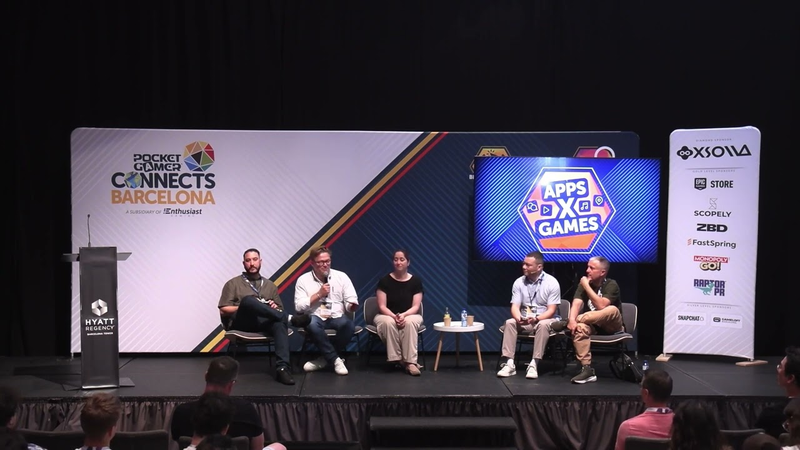
Good morning everyone. Welcome back to the digital policy decoder track. Uh I'm Nick Allen. I'm a partner at a London law firm called Mishonderea where I lead our video games group. And uh I'm personally spending quite a lot of time, an increasing amount of time over the past year, uh advising clients in the video games, mobile games industry on digital regulation of all forms. And we've uh we've heard a lot this morning. um got a tough act to follow here from Celia Dom and JP uh who've provided a really great overview of all the digital
regulation that we have to look out for. So, we're going to continue that discussion um but also add in some more practical boots on the ground experience um and advice for people sitting in the audience. Specifically, how the evolving standards for digital engagement, free-to-play mechanics are affecting the way we design, monetize, and protect our players in 2026. So, I'm delighted to lead this discussion with a group of experts who represent the International Social Games Association or the ISGA for short. If you're not already familiar with the ISGA, it is the global industry body for social games companies. And for over a decade, the ISGA has been an important voice in defining best practice standards and representing the interest of the social game sector. And while social games are a specific subsector of the mobile games industry, uh the main monetization mechanic of social games of course are shared with the wider industry, uh namely freeto play. So we can all draw on the
experience of this fabulous panel. So I'm going to um introduce our panelists now. Um to my left we've got Donna Delg Greco, vice president of legal services at CYP and an ISGA member. We have Rohan Paramesh who is the chairman of the ISGA and also deputy chief legal officer at Aristocrat. Ronit Bernstein Abraham's ISGA board director and deputy general counselor Platea and Tom Nut who is the secretary of the ISGA and also the practice head of the lab within SEC Nugate a global communications agency. So we're going to structure today's panel around three broad topics. So first of all we need to answer our hook when is a game a gamble and we'll discuss a few of the specific regulatory challenges faced by the social games industry uh and together with some broader monetization mechanics like loot boxes. Second, uh we'll discuss the wider digital regulation
that we've heard all about this morning faced by freetoplay monetization more generally, especially in relation to consumer laws. And then in the remaining time, we'll um have a look at some practical tips and guidance on how how on earth a mobile game developer is supposed to comply in the real world with all this regulation. Um if you have any burning questions, please do feel to raise your hand during the session. Um otherwise we'll hopefully allow a bit of time for Q&A at the end. So to kick us off with the uh the first topic um perhaps to set the scene a bit Rohan I've turned to you as chair of the ISGA. Um could you give us a bit of a brief overview of uh the social games uh sub sector and how they're typically monetized.
Sure. Absolutely. Thanks Nick and hi everyone. It's great to to be here in this discussion this morning. It's been a great morning of uh of content. Um, so as you say, the ISGA, the International Social Games Association, is the global
representative body of the social games industry. We've existed for about 14 years. Um, but but sort of becoming more and more proactive and trying to to raise the profile of the association. Um, we represent social games publishers and social games, the way we look at it, I'm sure as many of you know, um, key community focused games operating a free-to-play model, as you say, and social casino, um, is a large part of the social games industry as well, and and, um, often overlooked in terms of a genre, but but sort of a really significant one, and as I say, part of part of social games. Um so the sort of a key characteristic of social games and social casino games specifically is often this chance-based mechanic. So often in the form of a slot mechanic that sits there but the games are played purely for entertainment purposes only. So nothing of any real world value can ever be won. There's no cash out mechanism in that sense. So often the apps have the word casino in the title or Vegas in the title. But actually, as I say, there there's there's nothing ever of real world uh value to be won there. They're purely for entertainment
and communities are really important important part of it as well. So, the social side of social casino and social gaming is important and they're they're tremendously important for community building and and players really enjoy that part of it.
Thank you, Rohan. So, uh Donna, perhaps if I could bring you in here, um if I were to create a mobile game then that's themed around, I don't know, a card game or a casino game then. Uh, and you can place bets using virtual currency. Um, where where's the line drawn? Can you just explain to the audience a little bit more about where that line is? When is a game a gamble?
Yes, I can do that. Um, hello everyone and thanks for coming to listen to our talk. Um, so just because a game has got like casino uh elements in there, it doesn't necessarily push it straight into the gambling realm. Um, to be in the gambling realm, I think to tackle our question head on, there needs to be three components. The first is there has to be a stake. There has to be an element of chance and there has to be a prize with a real world value connected to it or a cash out. Now in the social
space we don't have the third element. There's a prize but you definitely can't bring it back into the real world. It always stays in the game.
So um that definition is that presumably the UK definition of gambling. Is is it the same everywhere?
It's the universal definition of gambling. It's certainly the ones that the regulators look at. So in a in a social um environment, if you've got any ability to take your prize out of the game and bring it into the into the real world, then that would fall into the gambling realm. So very much in the social space, we need to make sure that when you win coins, they stay in the game and you can't bring it out and then it would be collapsed as a digital consumer product looking at today's uh head.
So So what's the position on say loot boxes? Uh Renit, um could you could you talk us through that? Do you use loot boxes in your in your games?
Sure. So hi everyone. It's odd to hear your voice in the microphone. Um good morning. So yeah, loot box is a is a very interesting mechanics. Most of the social games, not only casino one,
social games as well have that mechanics. Now um loot box when we look at the regulation of loot box globally actually it varies jurisdiction by jurisdiction. You can see actually different treads globally when for example you have an a clear ban on loot box in Belgium and the Netherland these days. Let's put the issue of enforcement aside but then and it's motivated by illegal gaming or gambling laws while actually you have other jurisdictions um that look at loot box and the h regulatory environment around it more from consumer protection side and trying to regulate it. Now the most important thing about loot box is as Donna said not to have the secondary market meaning because having a loot box that will actually end have with secondary market can be considered illegal gaming and we just saw court cases about that in Austria not long ago. So the regulatory environment about loot boxes varies jurisdiction but jurisdiction and it's very important to look when it comes to
compliance on the relevant jurisdiction and to do a a valid risk assessment in view of that law. Um I will say something interesting that I learned today in the morning by the way that a new initiative for regulating loot box in New York has come as a proposal by the governor and the attorney general if I remember correctly when they're actually looking both from the illegal gaming and consumer protection lens to um prohibit or to limit loot boxes in social uh games. So um how do you manage this multi-jurisdictional question? You mentioned loot boxes are banned in some territories. There may be some different definitions going on. Uh do you want to stay with you Renit or would anyone else like to take this one?
Sure. So um I can say that for example with us we clearly do a risk based assessment per jurisdiction and uh then you actually have to have the technology to support that meaning you have to have a the ability technology wise to have
different toggles to to align it to different jurisdiction to look at geo geob blocking in certain situations. So you need to have the ability to have a risk assessment and the technology to support that in order to be as much as compliant as you can according to your risk assessment in different jurisdictions.
Thank you. Um Tom, I'd like to bring you in now. Could you tell us a bit more about the work of the ISJ and how you support uh these challenges faced by its members?
Yeah, very much so. And hello everyone. So I think building on Renit's point, one of the most sort of valuable elements of the ISGA work is understanding those risks globally. So it sounds terribly dull, but a huge amount of our work is around monitoring and understanding the dynamics of regulation in the different parts of the world. So you know my team is operating in Washington DC in Brussels, London and we have consultants in Australia which covers the kind of key markets where the
the the the change is happening at at the fastest pace. And I think the crucial thing that you know we really want to emphasize in all of this is is kind of two elements. First is that social gaming social casino is a very specific subset. So all our games are over 18. So they are age gated in that respect. Um so we're not looking at at at some what some games will be looking at around um how do you ensure that children are safe on the game. Children are not on these games. But as as I mean crucial to emphasize that we've all discussed about is that there is no ability to take anything of value out of this game these games. And what has happened over the you know the past few years is there has been a greater need to differentiate obviously from you know real money gaming that's fairly straightforward but actually there's increasing innovation in the industry around sweepstakes games for instance where through a quite complicated mechanic of a number of steps you can
take things of value out so they may be prizes not currency um and that from our perspective is a different product to a social game social casino where there is a community where there is nothing of real value and there is a game mechanic that is fun and enjoyable uh and we believe completely safe. So the differentiation um work of the ISGA is critical and also the understanding of change of dynamics um that are taking place in in different jurisdictions and I think one of the things that we're very aware of is the likelihood of of you know change and dynamics and regulation tends to hit social games first. um we're at the pointy end of the spear in quite a lot of the things that are being viewed as as digital harms. Now, we very much don't see that um perspective. We see games that are fun, that are enjoyable, that create community. Um you know, the panel here
have told me stories over the years of, you know, marriages have come from from people who have met in social games, etc. And I think that's a crucial element of this, that you're looking at fun games that have a what looks like a casino mechanic, but you're not gaining anything of real value. And that's absolutely critical to how these games operate.
Do do you think the industry needs to do more to explain that these sort of casino themed art is a stylistic choice for a specific audience rather than anything more than that?
I mean, I think we can always do more. Uh I think that's a very fair point and I think yeah the the the reality is that millions of people are playing these games globally so there is a fair degree of awareness from a player is that widely understood in the regulatory and policy maker audience it can always be better understood and I think [clears throat] you know one conversation that I imagine is happening throughout an event like this is the level of innovation and the level of brilliant work that's happening in the creation of really captivating games is
well ahead of where regulation can understand it and that constant need to educate the policy makers and the regulators is is beholden on on the whole industry of which we are a subset. Um we're playing our part. We can always do more.
Thank you. and and Don or Rohan, uh Tom Tom mentioned the Washington decision about this sort of thing of value concept and are you seeing regulators try to broaden out the definition of value to to include things like gameplay advantage or time saved? I I don't think there's necessarily any huge g global trend of wanting to broaden that out, but I think it speaks to the point that that Tom was addressing just now of a sense of confusion among policy makers and uh regulators who in an enthusiasm to ensure player safety and to protect the player in their journey um might accidentally in many in many cases accidentally um bring social casino
games under the same tent. And so I think that's something that we have to be super aware about because as you say we working in the in the social games world or players of social games social casino games may be well aware of exactly how the game models and mechanisms work versus a regulated uh gaming product but actually a lot of people out there aren't aware and you know when often when the apps have the words casino and Vegas in their title and they have a skin to the game that actually could lead someone to believe someone on a first view to to believe it's a it's a real money gaming game. I do think the onus is on us to make sure that we are providing clarity and and transparency to the whole ecosystem, not just to our own players, of course to our players, but not just to our own players, but to policy makers. And that's actually really important part of of why the ISGA came to exist in the first place. It's um a group of a group of businesses and and and we are happy to work with loads of businesses. It's definitely not a closed loop of of
members. um and membership has grown because actually what we've seen is that trend of of publishers and developers wanting to join a common voice to help provide that clarity to to all stakeholders in that ecosystem.
Thank you Rohan. So I think in the interest of time we'll move on to our next topic around digital regulation and virtual economics more broadly. Um so you know from being a relatively unregulated industry around say 10 10 15 years ago suddenly games and mobile games have a rather frightening array of regulation around the world to contend with uh the EU digital fairness act the CPC principles that we've heard about the UK's online safety act the Australian ban on social media and maybe one to follow in the UK there's a a vote in the House of Lords in the next day or two on that as well. So um how do we deal with this in practice? Maybe you've come back to Renit um and the CPC uh principles which were introduced last year aimed rather squarely at um virtual currency and games that use them which
affects of course a wide number of mobile games. Could could you give us a little bit more of an overview of of the CPC principles and what it means for mobile games?
Sure. And I think that there is just addressing what you said there are more laws now but actually I don't think there are so many new laws. It's more about a new h attention and focus on social mobile games due to even more broader issues which are political sometimes. But let's drill down to the CPC. So the CPC is um is is a group of consumer protection authorities mainly in the EU that actually gathered a and I think that they had a very structured way of h achieving a certain goal. It started with in September 24 already with a report that was a BU report if somebody heard that that was starting to mention and address the virtual currencies and the virtual services of
games as to to see them as real world um services that needs to be addressed as such. And then we also and this actually gave the leverage to the CPC authorities to start investigation for of a studio game studio. The first one was Star Stable for those that heard it. So everything is part of the same movement towards March 25 when it's true that the CPC um principles were published. It's actually a set of seven principles. They're nonbiding at the moment. But seven principle that are adhering to the same purpose of inducing a fairness, transparency, trust and the most important thing is addressing virtual currencies as real world currencies and hence putting on them a lot of requirements that are coming from consumer protection laws that exist and maybe wants to h achieve which is under the digital furnace act. Um so as said those principles are aiming to provide transparency and the biggest change that
they're talking about is transparency with the virtual currency. What does it means? It means that actually the principal expects developer to um have the real world money value of every virtual currency bundle or package presented to the player in the moment of purchase. But it goes even more even with virtual currencies transaction within the game the developer needs to produce a certain real world money value as transparency for the player. We all know what it means a game economy it's something that is very difficult to achieve it. Moreover, I can say that for us, for example, we actually all the time want to refrain of showing any real world money connection with the virtual currency because we actually come under the assumption that our virtual currency within our games and the premium currency as well, they have no real world value outside the game. This is why also we are fighting secondary
market so much because we don't have that we don't need that benefit of secondary market. We are not gambling, we are social games. So these are the main aspect that the CPC principle are trying to achieve. Now as I said it's nonbinding principle. However they're trying to be the basis for the digital fairness act which will be binding.
Thank you Rene. So Donna perhaps you could talk to you build on what Renit said about the digital fairness act. If you could perhaps give us a little bit of an overview of that the recent report and how it relates to the CPC. Yeah, there's been a recent report on the digital fairness act and the intention there is to reduce the opakquakeness and to give more transparency as to what's going on when you're playing a social game. But I think just dialing back a little bit, if we think about um products in the real world, if you go to a shop and you buy something, you buy a jumper, you get it home, you wear it once, the sleeve goes bobbly, you've got rights as a consumer, you can take that back. If you buy something from vintage,
that's like my favorite platform currently, and it arrives and it's not as described, you can go back to them. You've got rights. You can return it. You can get your money back. But the digital world hasn't caught up. And the whole thing now about games being a digital consumer product. It's it's that world catching up. It's giving the consumer rights fundamentally that when you make a digital purchase, you will have similar rights to those that you have attached when you go and buy the jumper or you buy the item from vintage that have been missing from so long. Some of the key principles about the digital fairness act are around um value. So when you buy your virtual currency, understanding what that is when you use the virtual currency in the game, understanding what you're spending, giving the players more control so that when they make those purchases in the game, they know what they've bought. They have the ability to turn off certain features. For example, it's about giving them control around pressure elements. It's about disclosure. So when they've made um purchases in the same way for example if you would make a purchase in the eBay app you then have like um you can go
into your uh player account and you can get a download of what you spent when who you bought it from. All of that is kind of missing today. So the digital fairness act is coming along to try and bring to catch up with where things got left behind from the real world to the digital world.
Are these requirements actually possible to implement in practice? Donna,
I think everything is always possible. It's how far you want to go. I think as as operators, we always look at the regulatory curve and because we're not regulated in the same way as the gambling industry is where you've got a very strict set of rules that you have to stand by. We're now looking at these consumer rules coming in and they're coming in really gently. But going back to your CPC point, that is seen to be the muscle. It's there today. It can be used as enforcement action against uh certain countries. Um but the digital fairness act will end up being the rule book and effectively as developers as operators of games if we don't take things more responsibly when the digital fairness act consultation ends and it
comes into force properly we will have to abide by a very strict set of rules. So it's where you want to be on that regulatory curve. Do you want to be here like entry level or do you want to be right over here being an example shining star? I
I think it's fair to say that the video games industry can't afford to ignore the DFA. rather squarely in the sites of the European regulators. So in the DFA's report that you mentioned last year, there's a specific section on video games where 87% of respondents agreed that the price of inapp purchases offered in exchange for paid virtual currencies should also be expressed in real world currency such as euro. Another 87% of respondents agreed that there should be more transparency concerning the odds of winning when buying virtual items with uncertainty based rewards such as loot boxes. And 85% of respondents stated that consumers should have, and I quote, more control over certain features of video games by having the ability to turn off features such as the sale of virtual currencies, virtual items, learn certainty based
rewards, and pay to progress. That that would be quite difficult to implement, I assume. I mean, do you want to come in on that, Dom?
Well, I just wanted to make another point about something that's in the consultation report as well, and it's around when you've made a digital purchase, what happens if the game suddenly vanishes, what happens to all of those digital things? So, there's a lot of talk in there. I think it was again over 70% of respondents voted for um having some rules around that so that it just doesn't just disappear into the atmosphere because like when you've bought your thing from eBay, vintage, Amazon, you still got it at home. It's still in your wardrobe. You can use it. But when you've made those digital purchases, if they vanish, that's not really very fair on the consumer.
No. And it would be rather serious if um virtual currency had to be turned up. I mean, Tom, could we hear from you perhaps? I mean, what's your take on these consumer responses to the DFA and what role does the organizations like the ISGA have in responding to these type of consumer? Um
well I think I mean having read that report in in depth I think it is it
provides a snapshot of of consumers rather than operators and regulators. Um I think within that um I think it's it's excellent that consultations bring consumers in but I I think there is a risk of overindexing on some of those responses. Uh, I think the, you know, the balance always has to be wrought between the correct level of transparency, the correct level of control for players, but also not things that get in the way of the enjoyment of playing the game. And I think that that's that's the balance we're always seeking in this. At the end of the day, we're here to provide a fun, social, um, and enjoyable game that is very low risk in terms of, you know, all the digital harms that all this these regulations are are seeking to mitigate and ultimately is is there for the enjoyment of the players. If you put too many barriers in front of that, it limits the enjoyment. And obviously from a from a operator perspective, it limits the
takeup. But I think crucially from a player perspective, it limits the enjoyment. And I think we we've always got to have, you know, two heads on. What one is, you know, how do we create the games that make the industry as successful and vibrant as it as it can be? But also, how do we make it as enjoyable and as fun for the players? Because ultimately, that's, you know, that's what these games are here. That that then, you know, I think we can all be, you know, they're not here to save the world. These games are are fun things for people to do in their leisure time and and to you know create communities that that they can exist in enjoy the transparency around what the digital currencies get them is absolutely fine you know that there is a you know I think the players in all the feedback we get understand exactly what they're doing within the game and and the risk in all of this is that we get to a kind of regulatory environment that's built off a society which is so derisked as to be sort of slightly anodine and unenjoyable. And I
think one of the the the the interesting dynamics that could take place over the next few years is regulations seem to be heading in one direction. They seem to be you know greater protection, greater control, etc. And while we welcome some elements of that, I think we also have to mitigate that in terms of things can't get in the way of of of player enjoyment. And I think, you know, these are adult only games. And I think the the the reality of all of these regulations is they need to allow players a level of control that is, you know, respectful, but also a level of freedom that gives them the ability to enjoy themselves. Um, and frankly, that exists across lots of sways of society, whether it be, you know, alcohol or, you know, real money gaming, etc. And I think that that it'll be interesting to see. I think, you know, not to get political on this, it's, you know, I think Donald Trump has had an interesting impact and global regulation
in the way the world seeks to to look at these things um both positive and negative. And I think be interesting to see the dynamics of change in in the Western world over over a lot of these issues over the next few years.
Rohan, do you do you agree with Tom and do you think maybe self-regulation has a role to play?
I do. I think it's has a really important role to play and I think as Tom sort of alludes to you need to find that balance between hard regulation regulation and legislation which creates this kind of ultimate framework the the kind of really uh clear red lines but within that I think subg genres of the industry should get together and and and discuss what best practice should look like and I think there are advantages to that to a self-regulatory regime where it can move firstly much quicker than legislation can be introduced So legislation is often catching up. The problem is often evolved by the time legislation comes into force. Uh so it can be much quicker and it can really capture player behavior. you know, when
when a group of responsible um industry operators are acting in the correct way with their players at heart really in the decisions they're making, not polluted too much by commercial objectives, then I think you can really respond to the data and deep insights that operators have and create a set of uh best principles, best practice principles that can evolve. they will be living and breathing and as I say that can be far more nimble and and we can be groups of of industry participants can be far more quick to act and I do think that's an important mechanism to yes it doesn't have the legal bite that that broader framework has but it does have other advantages and I think we must really try and um double down on those where we can
thank you and and staying with you Rohan and switching things up a bit to another area of regulation how talking about online safety and ageur insurance is is that something you're actively looking to implement in your organization and how is that going?
It's a it's a hot topic. It's something
that's really important because whilst we've you know I think said a few times that our games are for adults only there all our games are across the industry are 18 plus at least. Um age assurance is an an enormous part of that because we need and should want to ensure that it's only 18 year olds and plus who actually play our games. So even though we don't have children in our games, those below the age of 18, age assurance is equally, if not more important for us. And as you mentioned earlier, there's this sort of global um uh emphasis now and and direction of travel trying to look at these issues and codify them in legislation. And we have the online safety act in the UK. We have something very similar in Australia which is a large market for particular this genre of games um and which is being more kind of proactively enforced by the e-safety commissioner there. We have in the US which is you know been pretty light touch on issues of of age assurance in in mobile video games now looking to sort of beef up the regime in certain states Texas, Utah, Louisiana
for example. So we are seeing a global movement and it's causing um video game publishers and developers in our space to be far more thoughtful about it. What is is there a a kind of a a global standard that can be unified and developed into product road maps that would be a bit easier if there was but actually maybe it's not that simple and it has to be more nuanced um from jurisdiction to jurisdiction. So it's a it's a really critical question.
Thank you. Thanks Roan. uh in the interest of time just move on to our final topic then just a few practical takeaways to conclude the panel. So uh Renit if I may start with you the thinking about the CPC principles you were talking about the digital fairness act uh as an experienced and senior in-house lawyer how do you manage this regulatory risk you know if you go to your product teams who are saying hey we've got this this cool new feature we think it's going to be very commercially successful and popular how do you how do you deal with this
sure so first of all while um we need to
make sure that compliance and legal are part of the design phase. So we can't be brought to the product when it ends. We need to be part of the in the beginning. It's the benefit of the studios and it's benefit for us. And clearly in the end it's looking about we we're not here to deceive anyone the player. We are not here about aggressive monetization. We actually want to induce trust and transparency and let's see how we are able to do that with minimal interference to the user experience clearly. So just going back to what Ran said, we actually need to prevent minors from addressing the game when actually and putting safeguards when actually it shouldn't hurt the experience of the adult that is playing. So looking at the CPC, the biggest challenge is the real world money value to the virtual currency and how actually the change of the economy is going to be. I see it mainly done with a lot of disclosures and transparency to the players.
Again, Donna, do you want to comment on that as well? How do you manage risk in
your organization?
Well, uh, in our in our organization, uh, in the legal team, we have a brief and it's to find a way to get to Yes. We're not actually here to shut down what the business is trying to do. Believe it or not, we really want to partner with the business. We want to find a way to move forward. Got somebody from Cipley here smiling and nodding. Um, yeah, so I think yes, it's certainly important for legal to be brought in early on. Um, we certainly partner with the the developments phase of the games to make sure that what the screen pop-ups look like aren't going to be too invasive for the player. The last thing we want is to kill that player journey. We know how important it is when the players partway through the game if they see all these pop-ups coming. Come on, we all know when we download an app today, how absolutely irritating it is when all of these cookie banners pop up and opt in, opt out. We know we have to comply with that stuff, but we're trying to do it in the most benign way possible so that you can get to the game and get on playing and enjoy yourselves, but being really mindful as to what the the legislation and regulations require us to do.
There you are. You heard it here. Solutionsoriented industry lawyers. Um, I'm we're at five minutes remaining. Does anyone have a burning question for this panel? Yes, please. So, thank you for your answer. I was going to circle back to the first uh statement where it was deemed an uh a game of gambling where you can take something of out of value out of the game. Now, there's a huge trend where, for example, Counter-Strike Goins, you can't trade them within Counterstrike, but there are third party websites that allow you to take them out and trade them for real cash into your bank account. How do you see that trend in this uh topic?
Who wants to take that or is that direct to anyone in particular? Rooney.
So if I understand your question correctly, this is exactly what I mean when I say secondary market. So any third party not related to us as developers that actually are able to
take tradable um features from within the game and actually trade it outside something that the company the developer doesn't support. We are fighting it very very diligently. We have third party vendors that actually are looking around on the net finding those third parties and we take them down. So we we can't have the secondary market as a part of the economy of the game. It will put us in the gambling definition which we don't want to be there. So I know by the way that there are some developers that don't fight the secondary market because it helps them. It's a good buzz. Yeah. I really hope IO what was said here about the self-regulation that we actually need to better behave not for to make sure to give the trust and the comfort to the regulator not actually to look at us and regulate us and we need to be together on this one as well and the secondary market is a very big problem when it comes to social games and we need to fight it all together. I
wanted to add to that actually as well that um this this panel is not talking about children because our games aren't focused at but my child uh likes Roblox and the adopt me platform. We all know there's a secondary market for the pets on eBay and she likes to buy those pets on eBay. So I've exp I've experienced it myself and they trade for like really huge amounts of money if it's a really rare pet. Um, it's not something I've seen in our own games, but I've experienced it as a consumer. And I find it a little bit interesting because like it's a quick way to get what you want, I guess, rather than waiting and trading your way through the game to find it.
Thank you. Does anyone else have any question? Thank you for that question. Anyone else have anything they want to ask the panel? Do any members of the panel have anything they want to ask another panelist?
I would like to add something about compliance. I was saying about bringing the lawyers and the compliance in the beginning. We need to remember that the regulator becomes faster and smarter. And this is where live ops comes into
the picture. Compliance is not a one time one-time uh situation. We finish check the box. No, it's an ongoing communication with compliance and the legal team because you have live operations, you have new features, you are adjusting and the law adjusters on this on the same path. So this communication and working together with your legal and compliance team is crucial for the success of your company.
Thank you. Um I think we're nearly at time unless anyone else has any final questions. Um perhaps we could just conclude. I don't know Tom did a bit of horizon scanning in one minute. What's the future of regulation uh two or three years? How do you see things going? Oh sorry
I've been advising games industry since the 90s. I've been asked now there is a because I think there are some grays between all sectors. So there's a new company now with a platform approaching
gaming companies and saying they can have their games API into the platform the platform can decide only doing some play to win in these countries for $2, etc. and and the players collect the the money the the virtual coin whatever in in your view play and win and play to win etc. I I would assume you consider that as gambling I guess or or how would you categorize that? Because if you had traditional gaming, you have social games, you have social casino games and you have what they called eye gaming. This kind of platform where would you categorize that?
Is anyone want to take that question? I would like to make sure that I understand it's a platform that takes a standalone game and with an API it actually provides the the platform with a va player but it's not actually the operator or the developer of the game
that runs the platform.
No, correct. And the games companies of course has to be involved with the developer and the platform an API to connect. So two players it's most it's not multiplayer. two players can play against each other and then the system decide you win and you get $2 for example. So that's one idea is basically to go into countries like Africa and I'm been a little bit confused about that concept and and I think for me everyone the perception it's yeah that's gambling because for if you give if I give another example game of thrones for example is a bit confusing as an IP because you have singa that do the social games and then you have aristocrats that do the slot machine in Vegas etc. So for a a player sometimes it's like what is this? So so basically the platform approach of course
officially gaming companies do an API plug into the platform and play and win. It's a super interesting uh question and probably it breaks into two parts. On the IP side, I agree with you that uh social casino businesses need to be super clear because IPs can obviously be used between regulated gambling and non-regulated social casino. And so clarity to players is absolutely utmost importance. So 100% agree with that. On platforms that can bring social casino games or social games onto a sort of a a different environment where players can play for money. I think from a social casino publisher perspective, we would not be particularly happy with that without really understanding it better because that brings something of real world value as a derivative of the game even if it's not direct but nevertheless an indirect um uh cash out or ability to sort of win money from that game I think feels very concerning to me.
Okay. Um
sorry um we're starting to run out of time now. Um, sorry. And of course, please do continue the conversation. Um, I think it's really interesting. Um, can I get a quick round of applause for our LOVELY [applause]
Auto-generated captions from YouTube — names and numbers may be misheard.
Key insights
Distilling the key insights…
Ask AI about this video
Cite this video
Citation
Generating citation…




















Comments