Game Design reports and market data
Documents

Panel: The Return of Interactive Fiction PG Connects Digital #2
Interactive fiction is currently undergoing a significant resurgence, fueled by a maturing gaming industry and a growing demographic of players who prioritize narrative depth over mechanical complexity.
- Interactive fiction is experiencing a resurgence driven by a demographic shift toward players who prioritize narrative depth over mechanical complexity.
- Modern narrative design is increasingly treated as a data-driven loop, utilizing A/B testing and granular user research to optimize player retention and plot progression.
- Developers are integrating natural language processing and voice-driven AI to create context-aware interactions that move beyond simple transactional gameplay.
Using Accuracy & Realism to Attract New Gaming Audiences PG Connects Digital #2
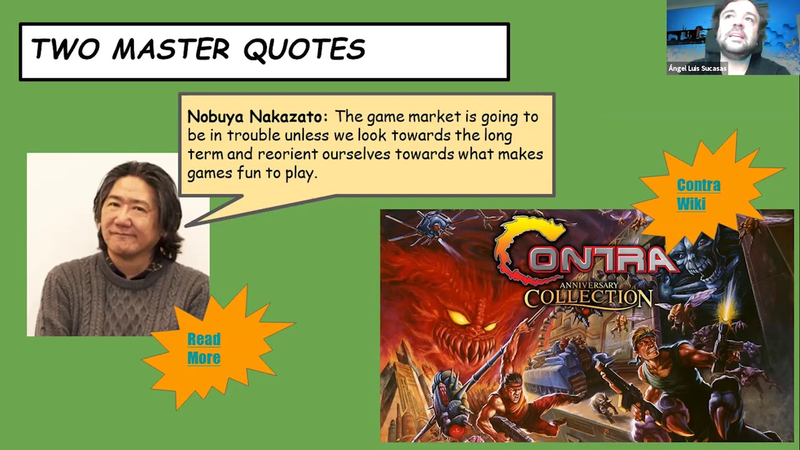
Integrating scientific accuracy and historical realism into game design serves as a potent strategy for expanding reach beyond traditional gaming demographics.
- Integrating scientific accuracy and historical realism into game design serves as a strategic alternative to expensive licensed intellectual property, helping to differentiate titles from generic fantasy tropes.
- Authentic data sources, such as NASA-based planetary mapping or verified historical contexts, provide a foundation for game mechanics that increases player immersion and gravitas.
- Realism should be prioritized as a gameplay mechanic rather than a simulation, ensuring that authentic data enhances narrative depth and challenge rather than becoming tedious edutainment.
Unseen: How Non-gamer Input can Change & Improve Art & Storytelling in Games PG Connects Digital #2
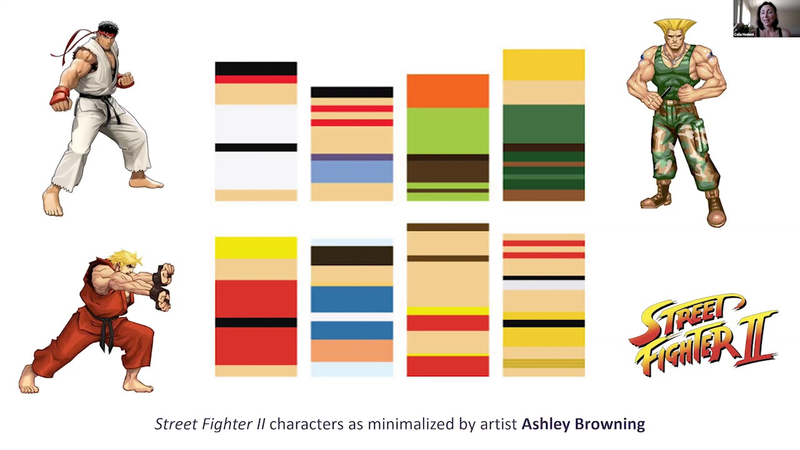
The integration of non-gamer perspectives is essential for the evolution of game design, art, and storytelling.
- Integrating non-gamer perspectives is essential for game developers to remain competitive as interactive media increasingly shares digital platforms with film and television.
- Non-gamers often perceive high-fidelity photorealism as uncanny or toy-like, suggesting that non-photorealistic art styles can better reduce the 'uncanny valley' effect and improve emotional resonance.
- Complex control schemes requiring multiple sticks and numerous buttons act as significant barriers to entry, necessitating a return to intuitive, 'pick-up-and-play' arcade mechanics.
Building Your Game's UX Strategy Using a Scientific Approach PG Connects Digital #2
User experience in game development functions as a comprehensive, team-wide mindset dedicated to aligning a creator’s design intentions with the actual reality of the player’s journey.
- UX in game development must be treated as a team-wide mindset that aligns design intent with the objective reality of the player's journey rather than relying on developer assumptions.
- Developers must account for the limitations of human cognition, specifically acknowledging that perception is subjective, attention is a finite resource, and memory is fallible.
- Teams should adopt a scientific approach to playtesting to move beyond gut feelings and use iterative feedback to identify where design intent fails to translate into intuitive gameplay.
T1000’s, Trex’s & Eyebrow Mites PG Connects Digital #2
Steve Williams, a veteran computer graphics pioneer and former chief animator at Industrial Light & Magic (ILM), provided an analytical retrospective on the evolution of computer-generated imagery (CGI) during his session at Pocket Gamer Connects Digital #2 in June 2020.
- The transition from stop-motion to digital assets in films like Jurassic Park proved that CGI could replicate physical realism—such as breathing and weight—that was previously deemed impossible by industry experts.
- Technological breakthroughs in visual effects are driven by a synergy between creative curiosity and the inevitable progression of hardware capabilities.
- Modern real-time rendering, exemplified by Unreal Engine and productions like The Mandalorian, represents the next phase of visual evolution where any imagery is theoretically possible given sufficient computational power.
Designing Engaging VR & AR Games PG Connects Digital #2
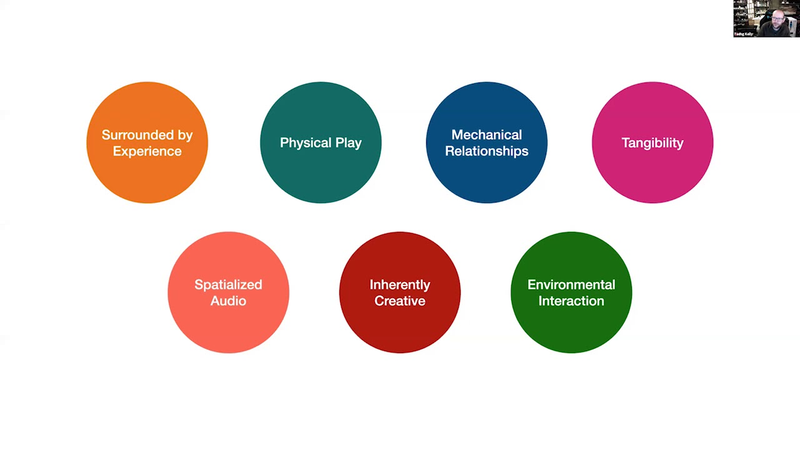
Spatial computing, encompassing virtual, augmented, and mixed reality, represents a transformative shift in game design that prioritizes physical interaction and environmental awareness over traditional screen-based mechanics.
- Successful spatial computing design requires creating bespoke, tactile interactions rather than porting traditional screen-based game mechanics.
- Developers must prioritize user comfort by implementing mitigation strategies for motion sickness, such as short-hop teleportation, dynamic blinders, and cockpit-style anchoring.
- The lack of a standardized input method remains the primary barrier to mainstream adoption, necessitating a focus on intuitive, arm-based controls and clear spatial anchoring.

Multiplayer - Demystifying the Development of Games we Play Together PG Connects Digital #2
Successful multiplayer mobile game development hinges on the strategic application of intuitive design, social engineering, and balanced progression systems.
- Successful multiplayer design relies on grounding core mechanics in familiar real-world mental models, such as racing or culinary tasks, to lower the barrier to entry.
- Developers must conduct rigorous playtesting that replicates real-world conditions, specifically testing remote play scenarios without voice communication to ensure design goals match actual player behavior.
- Long-term retention and monetization are driven by social dynamics, utilizing psychological frameworks like emotion mapping to identify friction points and implement triggers such as reciprocation.

Panel: What are the Best Ways to use Tools to Bring Data into Design? PG Connects Digital #2
Data serves as a critical instrument for informing game design, functioning as a catalyst for collaborative problem-solving rather than a replacement for creative intuition.
- Data should be used as a tool to inform and validate creative intuition rather than as a replacement for the designer's vision.
- Effective design analysis requires synthesizing quantitative metrics, such as heat maps and player flow data, with qualitative insights gathered from direct playtesting.
- Studios must foster a culture of cross-disciplinary communication where designers, artists, and product managers collectively interpret data to solve engagement problems.
Working Smart - Machine Learning in Art Asset Creation for the Games Industry PG Connects Digital #2
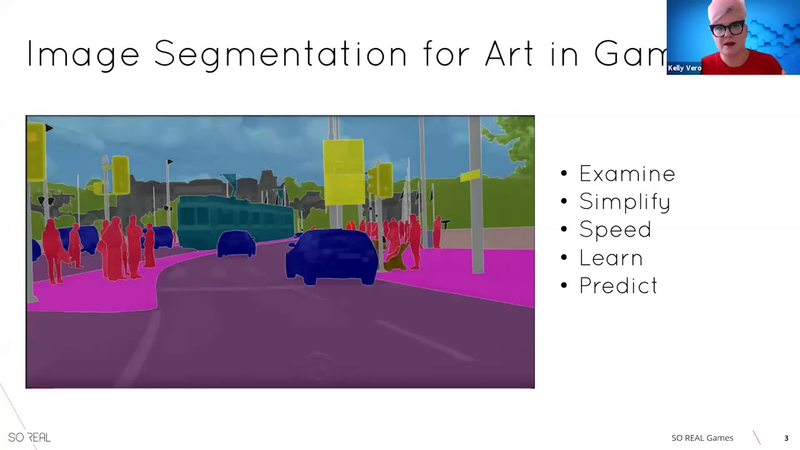
The integration of machine learning into art asset creation offers a transformative approach to game development, primarily by accelerating production timelines and automating complex workflows.
- Digital twinning utilizes CT scanning and automated platforms to convert physical objects into game-ready assets, bypassing traditional manual modeling and CAD-based workflows.
- Machine learning algorithms use image segmentation techniques—including thresholding, histogram analysis, and the Otsu method—to automate the reconstruction of complex objects by clustering vertices and structural data.
- Automating the art pipeline through algorithmic checks for vertex counts and file storage significantly reduces the need for human intervention in quality assurance and project management.
When Gameplay met Narrative - A Love Story on a Budget PG Connects #2
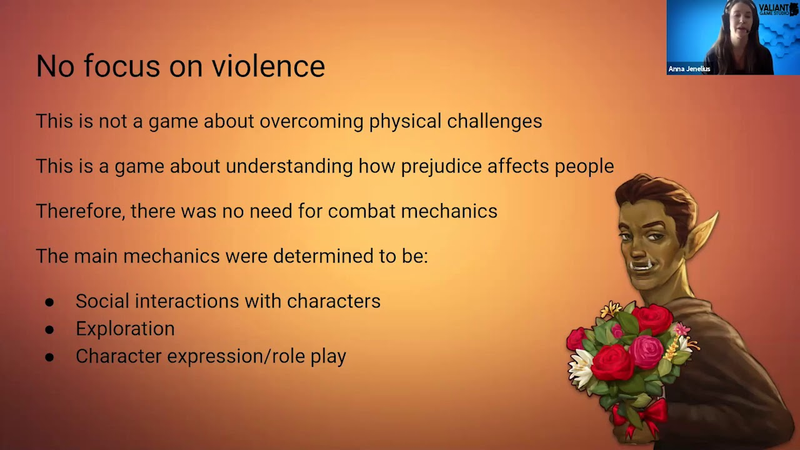
Establishing a cohesive guiding idea at the onset of production is essential for ensuring that gameplay mechanics and narrative themes remain unified.
- Establish a single, cohesive guiding idea at the start of production to ensure all gameplay mechanics, UI design, and narrative themes remain unified.
- Anchor development in a central thematic message to prioritize core systems, which helps small studios manage budget constraints by eliminating extraneous or disconnected features.
- Utilize a modular, episodic development model to maintain financial viability while allowing for iterative content expansion.
Emergent Behaviour, Informal Currencies & Black Markets-How Trade Adds Value to Your Virtual Economy
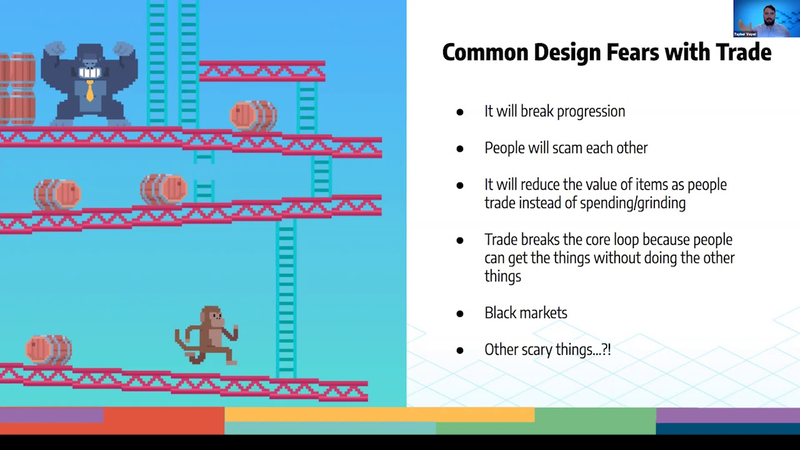
The integration of trade systems into virtual economies serves as a powerful tool for enhancing player monetization, retention, and social engagement.
- Implementing trade mechanics in 'Party in My Dorm' resulted in a sustained 35% increase in average revenue per daily active user (ARPDAU).
- Integrating trade systems shifts player psychology from consumption to asset management, reducing purchase friction by framing virtual goods as long-term investments rather than sunk costs.
- Prioritizing social-first trade interfaces, such as embedding exchange directly into chat, fosters community trust and acts as a natural deterrent to fraud compared to automated auction houses.

Building & Running Game Economies PG Connects Digital #2
Sustainable game economy design hinges on the strategic balance between player retention and monetization, with long-term engagement serving as the primary foundation for financial success.
- Sustainable game economies rely on a dual-currency framework where soft currency drives gameplay progression and hard currency is reserved for time-saving mechanics or exclusive cosmetics.
- Developers should anchor hard currency value in real-money equivalents to manage inflation and ensure that in-app purchases remain the primary acquisition method over free rewards.
- Resource management requires balancing sources and sinks by monitoring cumulative currency gains against spending objectives to identify and resolve progression bottlenecks.