1 free read left. Create a free account for unlimited reading + AI research.
Create free account
Multiplayer - Demystifying the Development of Games we Play Together PG Connects Digital #2
Key insights
5 takeaways- 01Developers must conduct rigorous playtesting that replicates real-world conditions, specifically testing remote play scenarios without voice communication to ensure design goals match actual player behavior.
- 02Long-term retention and monetization are driven by social dynamics, utilizing psychological frameworks like emotion mapping to identify friction points and implement triggers such as reciprocation.
- 03Successful multiplayer design relies on grounding core mechanics in familiar real-world mental models, such as racing or culinary tasks, to lower the barrier to entry.
- 04To maintain a positive community environment, developers should implement smart matchmaking based on language and preferences while using self-reporting systems to leverage cognitive dissonance against toxicity.
- 05Designers must explicitly decide whether to decouple single-player achievements from multiplayer performance or allow gear and ability progression to impact competitive outcomes to maintain game balance.
Ask AI about this video
Transcript
I'd like to worm to bring our next speaker to the stage you're here on the developer toolkit slate sponsored by Agora de I oh it's it's 20 past 4 in the UK on BST and and wherever you are you're very welcome to join us and I'd like you two to give a virtual round of applause to our next speaker who's errant apollyon from a media tonic here to talk to us about demystifying the development of games we play together the developer toolkit stage is all about practical tools and advice for developers so I know you're gonna want to check in on this one and hopefully we've we've got some of our audio sorted out I'm Erin are you there yeah I'm here just about excellent thank you for joining us really appreciate it not taking your time um okay here's what we're gonna do I'm gonna step back and let you take to the take the stage and and give you presentation in a little a
little bit I'll rejoin you and help you create some of those questions so folks if you have some questions here for a media tonic do drop them in the Q&A box at the bottom and I'll help you work through those later but in the meantime I'm ducking back out again I don't know it's you thank you very much - thank you I'm just gonna share my screen and we can get started okay so yeah everyone thank you much for coming to my talk today on multiplayer demystifying the development of games we played together I'm just gonna go to the taskbar here I can now I have we're not going and there's a lot to demystify in 20 minutes so I'm jumping so playing together is something we as human beings have been doing for a very long time first one examples of between game for example involving a ball occurred in
Mesoamerican cultures over 3,000 years ago the ball which was made of rock would symbolize the Sun and the captain of the losing team would be sacrificed to the gods their arm so considering how deeply rooted this dynamic it is it's no wonder that a lot of the biggest sports and video games to date are typically games that can play together I'm sure you're all very familiar with this example for tonight it's somewhat of a phenomenon and cross-platform as at last month's 350 million players have registered with fortnight's and recently 27 players logged into the game to attend a virtual music performance so like I said if it states a lot of Golden Age right now if anything for multiplayer games server costs are falling dramatically with the rise and growth in cloud computing broadband internet and always-on mobile connections continue to spread so today
I want to cover some of the best design practices that I've learned I'm working on this kind of games so far which is somehow you know the maturity of my career to date so what we're going to before we go any deeper into some of the good stuff my name's like I say I'm Italian I've worked in the industry now for just over seven years I've worked at a bunch of different places during that time on a bunch of different genres of game such as rare on the sea of thieves Microsoft Research Cambridge and oculus and it was recently I've been working in media tonic I've been media tonic for just under three years now I worked there as a senior game designer and I spent two and a half of those years working on top grossing mobile game Yahtzee with buddies so we all know what the title of the talk is what does that title actually mean and what are you actually going to get out of this talk and spend 20 minutes of your life and precious time listening to and learning about it so essentially it translates to
something slightly longer and a bit more mouthful but is essentially best design practices to consider when developing mobile multiplayer games from a designer's perspective at least which I myself wish I didn't know what about a bit sinner multiplayer is a very broad spectrum and so there's a lot to demystify in general another in twenty minutes so the best practices that I've been staking lis chosen are fairly broad but in turn highly applicable that can cover the development process essentially from ideation all the way through to post release so hopefully it's gonna be at least something in there for everyone to take away so the first thing I'd like to talk about is premise and mental models obviously premise in any game is hugely important but I would argue it's even more so in multiplayer games players are the lifeblood of a multiplayer experience if you don't have anyone to play with the whole thing kind of falls apart so coming up with a premise that's as approachable and appealing and
comprehensible for your target audience as possible and obviously be massive help so when coming up with a premise or such a premise I've often relied on mental models so a mental model is how we simplify complexity we can't keep all the details of the world in our brains some of us try so we use models to simplify the complex and understandable recall chunks and also as human beings it's worth bearing in mind that these mental models can come with emotions attached which means that we might be more receptive to certain mental models than others because we have so stated with happier memories so a premise that taps into a pre-existing mental model can really help not only your player understand what's expected of them quicker it can also help your experience click better with your players and it can also even help you as a designer get a clearer sense of how that experience is going to work or its mechanics so to
give an example of this a while back now I worked on feature for Yahtzee buddies called families and this is essentially a clan type experience where players could scroll through a virtual space to engage with groups of their choosing soon after its release which was a strong release players took two families well we decided okay we've got players to group up but now we need to give them something to do together so to meet those requirements I designed a feature called family feast and the rules of family feast this is a screen shot of family feast here were fairly simple players have to play Yahtzee to earn ingredients which are these little sort of bags of beauties at the bottom of each the kitchen counters and these ingredients all contribute to a recipe which the whole family is also collecting ingredients for which you can see at the top of the screen with various bags and little numbers next to them so this feature became hugely popular with players it boosted our KPIs
considerably and it also had a great emotional response from our players but this wasn't something I just popped into my head it was a premise it was based rather on a premise that was something quite universal applicable which was cooking or the act of preparing a meal and also it's worth saying this is a mental model that I felt me have had a higher chance of resonating with the game's target audience which did turn out to be the case these mental models can also exist in our minds not because we've experienced them in the real world they can also exist because they've been created by other games so this game right here is a multiplayer focus game called trip to terrors which I highly recommend in heaven for it's a lot of fun but just by looking at this screenshot alone a lot of you probably know how this game works already right because you're familiar with with Tetris so straight off the bat that mental model can help communicate the premise of a multiplayer experience that you've never even seen before which can be incredibly useful in terms of
approachability and better ensuring as many people can play and want to play as possible as a designer you can also take mental models you yourself possess and reuse them so another example from Yahtzee is mystery cards and dice world race and this is a screenshot here best well race from the Accio buddies in the game so dice for grace the objective is to play games of Yahtzee to earn points points burn you steps and steps get you around the track and the player with the most steps or who finish in the top three positions because they've written the most steps when the best prizes so once based on the board this little guy right here is the mystery card space so when you land on this space you get unsurprisingly a mystery card and mystery cards essentially reward the player with the bonus addition or additional bonus steps so this is great not only for the players who are far behind in the race because they need to catch up and they can get them back into
the race it's also great in terms of players who are in the lead it keeps these players on their toes and it can also encourage monetization even further through dice rerolls to earn more points earn more steps and maintain their lead so super useful but again this mechanic wasn't just plug death in there either it was actually based on Mike resisting understanding of the bullet build powerup in Mario Kart which is basically a supercharged autopilot powerup that you're more likely to get the further back you are in a race so using mental models can really help them it comes to your games your multiplayer games premise as well as its mechanics so next up I'd like to talk about prototyping and play tests hmm right after super water so yeah the importance of this really can't be stressed enough especially for multiplayer games even if it's just with pencil and paper and erasers it's vital
that you prototype your multiplayer experience out as soon as possible here we have a charming quota of media tonics on creative director Jeff Henson and Tom English one of our lead designers meticulously prototyping at the very early beginnings of Gears pop using a somewhat arcane combination of batteries paper and figurines so of course it does take extra time and resources to prototype and to go off or find the batteries but it may be very good time very well spent it's hard enough as a designer and a developer to encourage and anticipate the behaviors of a single player with a certain set of mechanics it's a totally different ballgame when there's a variable as big and unpredictable as another player or several other players active into the equation now may be the case that something you design with the best intentions will be used by players in a way that it totally wasn't intended for and one example of this that I really like I'm actually during the
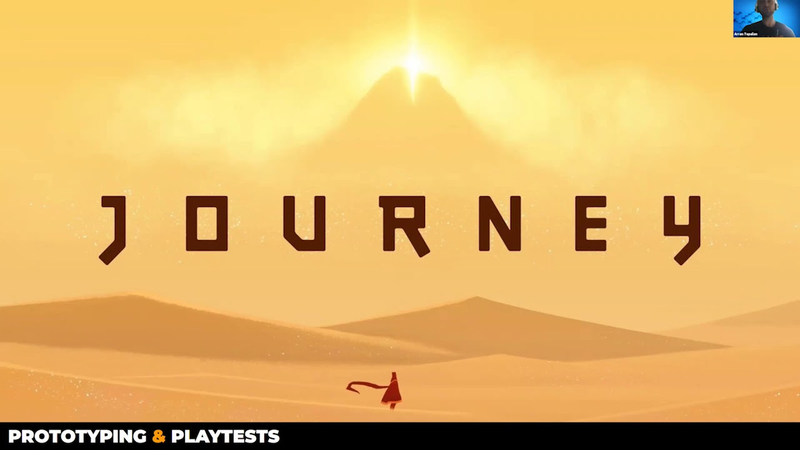
development of that game company's journey so journey's development took three years which was longer than everything anticipated because the team had to change the design of the game to ensure that everyone got the same experience and the experience that the designers wanted those players to have which ultimately provided them with the foundation for their latest mobile release sky children of lytics so as you never chen described it for quite a while we had players being very mean to each other people are really aggressive many other games online when the same player playing college GT came over to Jeremy we were expecting through the positive side of humanity rather than a society but it didn't happen so originally in journey players were able to physically push other players to help them get to higher locations but playtesters ended up using that ability to shove other players instead or push them into pits so they would die which is quite far removed from the journey we to be so this really just underlines the vital importance of play testing your
multiplayer game it's also very important to think about how you're going to run your multiplayer experience play tests so if your experience is somewhat catch co-op one then something like this albeit maybe a little bit less cheesy I'm not involving original PlayStation controllers it's gonna be fine odds are people playing that kind of gamer get into each other fairly well and communication is going to be fairly wide open because they're sat next to each other but if you're working on a multiplayer experience it's typically strangers playing remotely very possibly without a means of communicating or even an interest in communicating with each other then something like this isn't going to be very useful for you when running your play tests to get real sense of exactly what impact your game is having so that is the case I'd highly recommend running your play tests first and foremost without voice chats or a text chat if that's what your game involves unless of course these are integral to the experience if this is how your product is going to be experienced realistically for the most part and wild then I do think that's how
you need to be running your play tests you can even go one step further and don't even let your play testers be in the same room as each other things like laughter can be quite contagious and if one play tester is for example laughing which is great it can mean that this can discolor the results of your play tests because it affects through the play testers in the room and above all don't play tests with friends I mean you can't you want it's a lot of fun to play test with friends we all love doing things with friends or groups or friends but ultimately anything we play with our friends can be fun in some way shape or form and can end up again discoloring the results of our play tests as a quick mention as well another part of prototyping and play testing your multiplayer experience is how you take in and evaluate feedback which can be especially tricky for multiplayer games which can generate a lot of feedback because there's a lot of players involved so one method that I really like using or have done in the past is using robert plutchik squeal of emotions
which can really help identify the fun aspects and pain points in your design really well and it sort of generates essentially a game designers heat map so the idea is that after your playtesters sorry after your play test playtesters can write down magic moments or memorable events that happen to them during their play test and can stick them or attach them if you've done it digitally to the wheel of emotion to signify how that event made them feel and what you end up getting at the end this is sort of a very visual sense of what emotions your play your prototype is making the players feel but also more helpfully what's making them feel that way and where problems might lie and the last thing I'd like to touch on is the social factor of your multiplayer experience or gilding up as I like to call it so in another talk by spry Fox is Daniel cook he discussed how games that build stronger relationships and stronger communities
will likely have a better retention and improve monetization and this is mainly because these games are creating value for players that speaks to deeply human psychological needs but as Daniel cook also asks how can their game better support encourage these relationships perform so one of the most important aspects of the families feature which I put up earlier is the joining that button which is this guy right here um I know means the sexiest part the feature and it seems interesting means that Shane used either but it's argued one of the most important in terms of English players it's the largest button on this screen this is the everyone it's the time we won't be there's two tap hosts and with very good reason essentially this is the problem that comes up and players looking to join a family for the first time isn't just grabbing a random family from either there's actually put a lot of logic and Disney thinking going on behind the scenes of this it's asking
certain questions before presents like is there enough activity in this family when was the last time a chat log was entered into that family's family chat or is this the family of sort of building on the wine miss unlit engineering analog engagement there is there anyone in the group that player doesn't like so other players and that finally that the player has booked for example to use a real-life analogy your last Olympics ago belong to the party if you know something you don't like it's going to be there so same rule applies here conversely is there anyone that we know they do like in this community under any players our Facebook friends or favorited players and use our team analogy you're more likely to go to that party and austere and longer you do like your friends or even things like does this group speak the same language as the player language CC being a major barrier to creep in those social funds all these checks for in place make sure we're surface and Emily's to the player for the most likely tab of experience with engage with
frequently and you can further encourage him these bonds to strengthen as well as encourage players to engage with these kind of socially oriented features in general through human senses so here we have the help request menu and the family chat press menus it just slides right off the tongue and all the player has to do is hit one of these reports and it generates a help request in the all the players they come along that find help button when the progress bar fills up the player who said to have the request is surprised and features like this really what's called reciprocation a sense of wanting to return a favor which in turn again strengthens those bonds between players through essentially a good old-fashioned gratitude and if you can if you have the time and resources I'm using exclusive team base in mobile to incentivize group engagement more and further strengthen
the communities can be very effective yet see with buddies especially if like gameplay creates real sense of us versus them which is one of the oldest mental models of there is really so when family feast on which we looked at earlier we Electra families to compete against each other so the more ingredients that you will collect the faster your family finishes recipes and the fast to finish recipes the more points you earn and the higher that your family will place in the leaderboard and we've all earned more rewards as a result so the problem doesn't come as much of a surprise but a bit of competition between groups and be a very helpful and healthy thing so to recap cuz we come with a lot in a very short space of time first and foremost an approachable premise it capitalizes on positive pre-existing mortals can really help prototype your multiplayer experience as possible and test it in realistic conditions again that prototyping can take any form even if it's just with
pencil and paper or batteries and also support the creation and growth of stronger social bonds in your Ares I want to find the best practice and I offer mystifying games that we played together is Kristin flee to games just play as many as you possibly can which almost goes unless again but as corny as it sounds just like a chef needs to eat lots of different types of food better recipes for - um do we as designers not just how they work but also how they can make because if you could say as the old saying goes and good artists copy great artists steal and that wraps up the talk thank you very much listening nobody who's been useful if you have any questions thanks Aaron that was fantastic really really useful really informative in a short
space of time great stuff and I've seen we've got a question here from from the audience which I'll share with you and I've got a couple of things that I'd like to mention as well I thought the wheel of emotion was great by the way what a great way of just getting people to articulate how they how they felt about a play during play testing reminds me of actually a very similar device we used during the creation of my magazines and websites called a brand I would get people to talk about their they have their emotions about what they what they're reading and that's great is that something that you that you devised immediate aren't there or is that a you know a standard kind of tool no no that's so that's something that picks up I'm from before media tonic and it seemed like a really nice approach at the time it made a lot of sense because otherwise you end up with spreadsheets or Word docs and you can get the facts from that but it sound obviously a big part of any kind of video game experience is the way that makes you feel and this is a nice grip serve time for 2 min so this would this is make you up for going well it there are there are a few questions some here and from others and the the first question I'm gonna put you from the from the audience is from psy here who asks is video chat
in multiplayer a distraction or not I mean it it can be I mean I don't think it's necessarily distraction it depends in what in what context like if we're talking about with you chat as part of the multiplayer game that you're designing and that's gonna be a core part of that variance then that's fantastic that actually says it really interesting really interesting direct but if it's a means for your playtesters during a prototype playtests to communicate with each other I'm like I say unless intra big since I would say that could be a distraction again you're allowing players to potentially use something that would otherwise not use video chat is fantastic because it's not just voice you're getting it's it's body language and everything else so if anything the player tester is more information to work with that they probably normally and not have yeah that makes sense actually the next question here from from an anonymous attendee
this is a deep deep subject I'm pretty sure I've seen talks that last the entire talk on this subject but the question is how do you monetize a multiplayer game yeah that's gonna be the other talk absolutely there's a number of ways to monetize and again it comes down to platform as well like if it's a what kind of if it's a full free-to-play game its ibrid game and I would say I mean we've touched on the importance of social in multiplayer games and I personally find that a really interesting way to monetize there's a lot of really interesting things that mobile games especially do right now hyping solitaire does something particularly interesting with its Club system where people can essentially buy gift packs for their club to get and I think these kind of social things it's almost like buying around in the pub like everyone you know every it feels good for the person buying it but it's great for everyone else because it's a free drink so those are particularly interesting ways but yeah to get into I think 20 minutes or so yeah right right you know we've got a couple other questions here as well and
we're okay for time so I'll just crack one if you don't mind answering them dan here has asked have you attempted to deal with toxic behaviors in your game design now you spoke a little bit about some examples from journey there but down Askia toxic behaviors in game design and what successes of you had yeah so I mean in the time that's been working on sea of thieves there's just something very much at the front of our minds I mean talks of behavior can exist in any game right where multiple players are are in the same space and it's actually something that looked into a little bit we've we've I've experienced that myself in the past and looked at ways to solve it there's actually a really nice anecdote used by a solution used by a valve for where they they relied on psychology to sort of help alleviate their toxicity with something called cognitive dissonance I looking into it but essentially and their solution which I really liked and waiting for an opportunity to use is essentially having players report on their own behavior so they added a questionnaire at the end of
your experience where you could rate your own cooperation with other players not just how other players cooperated with you and that could be if you want to give yourself five stars you kind of have to feel like you earned the five stars that's so you're less light if you want the five stars next time you play you maybe behave a little bit better and it actually had great results they ended up having about 130 thousand less reports per month because of just this one edition well that's nice that's very good that's a very good approach yeah I didn't rescue but yeah again I think it's another another talking of itself absolutely well we've got we've still got some more questions here sigh again asks is it okay to put a paywall for multiplayer mode in a game I mean I I personally wouldn't say so I mean I think a paywall sort of acts as a barrier to entry and like like I was talking about you know for a multiple multi players are your lifeblood right like if you don't have players to play with and the whole thing just doesn't work which i think is part
of the reason but perhaps while a lot of very successful very big multiplayer games are typically free-to-play for the most part because there's a there's a very easy low barrier to entry there where it gets many players as soon as possible so I've never seen never I guess it would depend on what the setup is but personally I would say maybe putting a paywall is not the most ideal approach because you want players to be coming into your multiplayer experience so that everyone's got someone to play with now that makes sense absolutely but I was just thinking there was an example as a game that I loved on mobile called the Battle of Paulo Tokyo don't know whether you remember its but we do - Swedish Development and then they are they think the single-player game is free but the multiplayer for that is paid for that's that's where they that's why they monetize but yeah I think I think you're right got a couple more questions here and probably yeah yeah so three or four minutes that we can talk so out of this - um we've got um a question here and any thoughts about the multiplayer of a boss level any examples you can think of and will that
excite players yeah I think that's a that's a very cool idea like I think there's a bunch of games out there that explored that destiny for example has done some really cool things with their game design in terms of boss fights raids and they were very interesting twists in terms of how players can engage with the boss or how to defeat the boss even there's quite strong collaborative efforts I know in boss fights were just errantly cool hero of that kind of dynamic I think is pretty exciting one and I think yeah there's definitely games out there that have touched on that but go deeper and another anonymous attendee asks have you ever been in the development of a single-player game and made the shift into multiplayer good question I don't think I don't think I have I think most of the games that I've worked on have been primarily multiplayer focused so
that's that's probably not very helpful but yeah I think there being a single-player which I started at working on games be essentially for children which are very single-player and then later can have started to get more and more into multiplayer game design great I'm quite another question here sorry I happier we all like to keep going we've got a couple of minutes yes yes what might be techniques to make asynchronous multiplayer more fun I mean it's yeah yeah it's a good question I think a big part of a synchronous multiplayer experience a big part of making ensuring it's fun is is being able to process what's happening because it's synchronous because everything's happening at the same time I would say that readability is a very important thing you see of an asynchronous experiences that you get a chance as a player to take a break take a step back and and digest what's happened and then make your own move so in synchronous gameplay I often think that one of the best things to focus on
is the readability became play in the pace of your gameplay as I was saying has a target audiences but you know if you're looking at more sort of teens and be something more fast-paced is fine um maybe for the more sort of mature gamer and I would say maybe less so and a bigger emphasis on making things as clear as possible visually absolutely we've got one more question I'm just thinking maybe we can squeeze in this final question before we run out of time so I asks how do you balance progression in normal versus multiplayer modes so yeah I mean again it really comes down to to the game I'm gonna use this in the game as an example because it's and this is the first one that comes to mind so there are certain modes and destinies is a great reference because it combines a single with multiplayer very well at least on console and they tend to have it that the sort of special abilities of your guns are reneged for a multiplayer I think as a mode at least that allows
for that so I mean again it's it really comes down to the the genre of the game and what the single-player comprises of what the game even involves but the can there definitely are instances of single-player slash multiplayer games that put certain restrictions on player abilities or player gear to sort of create a more I guess the level playing field but by no means not always sometimes it's nice to reward players for their single player progression by saying hey you've got a bit of an edge in this in this multiplayer that makes sense look I'll tell you what we'll draw a line there because our next speaker is ready so a round of applause for Aaron you're gonna have to imagine it coming from the whole audience there we're grateful for you joining us here in this unusual way of doing a conference but we're settling into it in 2020 army here at PG see digital thanks sound that was great and really practical talk here for our developer toolkit track so well thank you and if people do want to catch up with our and of course details on the screen or I guess they can find you in the meeting system as well right that sir yes yes anytime yeah great great thank you again
you
Summary
Successful multiplayer mobile game development hinges on the strategic application of intuitive design, social engineering, and balanced progression systems. By grounding core mechanics in familiar real-world mental models—such as racing or culinary tasks—developers can significantly lower the barrier to entry and improve player engagement. This approach must be supported by rigorous, realistic playtesting that replicates actual user conditions, such as remote play without voice communication, to ensure that intended design goals align with authentic player behavior.
Fostering long-term retention and monetization requires a deliberate focus on social dynamics. Developers should utilize psychological frameworks, such as emotion mapping, to identify friction points and implement triggers like reciprocation and healthy competition to strengthen community bonds. To maintain a positive environment, designers should prioritize smart matchmaking that accounts for language and preferences while utilizing self-reporting systems to curb toxicity through cognitive dissonance. These social features are essential for transforming individual players into a cohesive, engaged community.
The final architectural challenge involves balancing individual progression with competitive integrity. Developers must decide whether to decouple single-player achievements from multiplayer performance or allow gear and ability progression to influence competitive outcomes. This decision remains highly dependent on the specific genre and the desired equilibrium between rewarding personal investment and ensuring a level playing field. Ultimately, the most successful multiplayer experiences are those that harmonize accessible, intuitive mechanics with robust social infrastructure and a transparent, fair progression model.













Comments