Game Design reports and market data
Documents
GDC Summer Dev Speedrun - Yooka Laylee And The Impossible Lair With Chris Sutherland
Yooka-Laylee and the Impossible Lair utilizes a unique health-based progression system where players collect bees to act as shields, allowing them to attempt the final, high-difficulty gauntlet at any point in the game.
- Yooka-Laylee and the Impossible Lair features a health system where players collect up to 48 'Bees' that act as a shield, allowing the game to become progressively easier as the player collects more items.
- Developers at Playtonic Games intentionally leave certain bugs and exploits in the game if they are difficult to encounter, do not corrupt save files, and provide excitement for speedrunners.
- The game utilizes the Unity engine, which differs from the development process of the Donkey Kong Country era by allowing for more modern, flexible workflows and physics-based interactions.

When a Game is Too Long - Respecting the Player's Time - Extra Credits
The core thesis of this analysis is that game developers must prioritize player time as a valuable resource, shifting the industry focus from quantity of content to the quality of engagement.
- Developers must shift their design philosophy from prioritizing arbitrary game length to maximizing the quality of player engagement.
- Excessive content padding, such as repetitive fetch quests and artificial grinds, leads to player burnout and diminishes the overall value of the experience.
- Non-engaging tasks like obtuse user interfaces, unskippable technical hurdles, and tedious inventory management act as barriers that should be streamlined to keep players focused on rewarding gameplay.
GDC Summer Dev Speedrun - Skyrim With Jonah Lobe
The development of The Elder Scrolls V: Skyrim represents a unique intersection between ambitious open-world design and the unintended technical exploits discovered by the speedrunning community.
- Bethesda’s reliance on system-driven gameplay created an environment where technical quirks like load warping and quick-save exploits—persistent since Fallout 3—enabled the speedrunning community to manipulate game states.
- The development of creatures like the Spriggan and Alduin required a pipeline spanning several months per asset, balancing artistic iteration with the technical requirements of performance optimization.
- The art department utilized ZBrush and Marmoset to prioritize a 'lived-in' aesthetic through high-resolution normal maps, focusing on realistic weight and foundational shapes rather than rigid technical metrics.
Procedural Regeneration: Matching the World to the Player
Procedural regeneration represents an evolution of traditional procedural generation, shifting the focus from static world creation to the dynamic alteration of level design in response to player performance and behavior.
- Procedural regeneration shifts game design from static construction to dynamic, AI-driven environments that adjust in real-time based on player skill, health, and behavioral choices.
- The 'outward' regeneration model, utilized in games like Left 4 Dead, monitors player state to dictate future challenges such as enemy spawns and path difficulty.
- The 'inward' regeneration model, exemplified by the title Eternity, uses continuous environment shuffling and double-buffering techniques to transform physical space during gameplay.
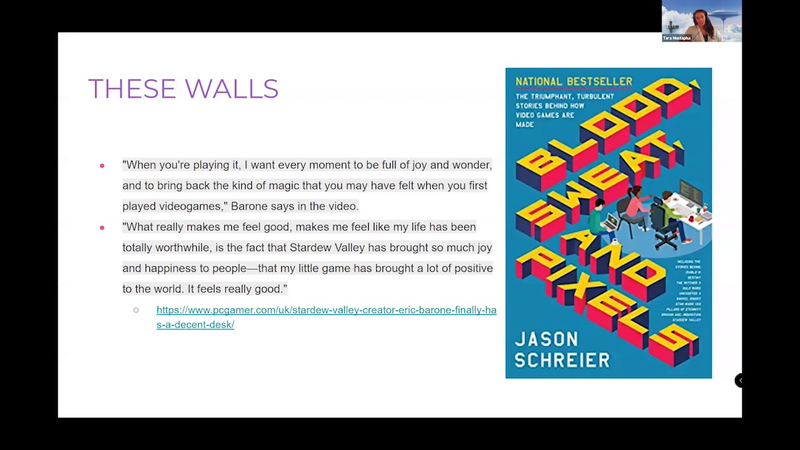
Design Within Constraints PG Connects Digital #2
Creative excellence in game development is best achieved not through limitless freedom, but through the strategic application of well-defined constraints.
- Creative excellence is best achieved by applying well-defined constraints early in production to prevent scope creep and maintain focus on a singular core vision.
- Development teams should prioritize low-fidelity prototyping to validate core mechanics before committing resources to high-polish assets.
- Rigorous pre-production planning, including the identification of specific target personas and project parameters, is essential for successful project execution.
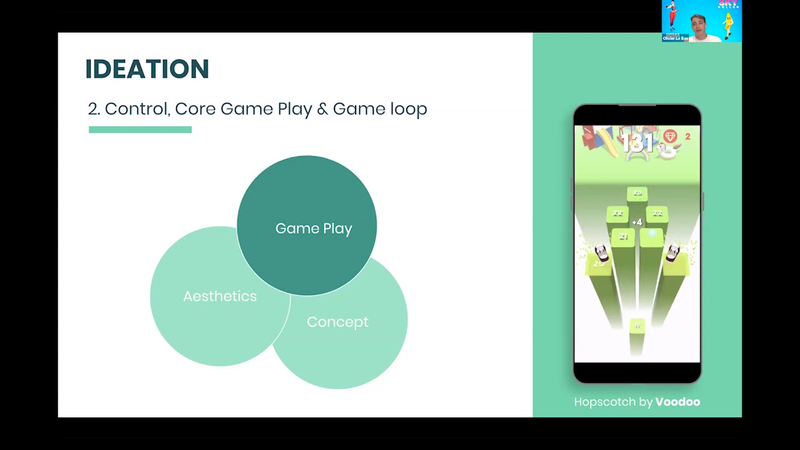
The Sky Roller Story: How we Created More Value by not Looking for Top Ranking Charts PGCD #2
Mobile game development thrives when publishers prioritize data-driven validation over the pursuit of top-ranking charts.
- Prioritize Fast Market Validation through rigorous soft-testing to identify high-potential mechanics before committing to full-scale production, as demonstrated by the 80 million downloads achieved by Sky Roller.
- Shift from an over-reliance on interstitial ads to a hybrid monetization model that incorporates rewarded video and in-app purchases to maximize the lifetime value of hyper-casual titles.
- Enhance long-term user retention by integrating meta-progression and character customization alongside core gameplay improvements like intuitive controls, optimized camera angles, and haptic feedback.

Doing Good is Hard! - The Challenges of Making Games 4 Good PG Connects Digital #2
The mobile gaming industry faces significant structural and regulatory hurdles when attempting to integrate social impact and charitable giving into business models.
- Platform policies from Apple and Facebook create significant barriers to integrating charity, with Apple restricting mentions of charitable giving to prevent fraud and Facebook frequently flagging social or environmental ad content.
- The traditional model of donating a percentage of game profits is complicated by tax regulations and the difficulty of maintaining transparent communication with players without appearing disingenuous.
- Developers are shifting toward alternative funding strategies, such as securing equity-based charity investments and using corporate sponsors to underwrite campaigns, to bypass the limitations of in-game monetization.

How Film, Games & Social Media are Merging Using AR PG Connects Digital #2
The convergence of film, gaming, and social media is being driven by the rapid advancement of augmented reality (AR) and real-time rendering technologies.
- The convergence of film, gaming, and social media is driven by the adoption of shared real-time rendering tools like Unreal Engine and Unity, which enable high-fidelity interactive experiences across all three sectors.
- Virtual production is replacing traditional green-screen workflows by using LED walls and real-time ray tracing to allow filmmakers to manipulate environments instantaneously.
- The democratization of mobile computing power has enabled social media users to create professional-grade visual effects, while digital twins provide the high-resolution scanning necessary to bridge physical and virtual worlds.
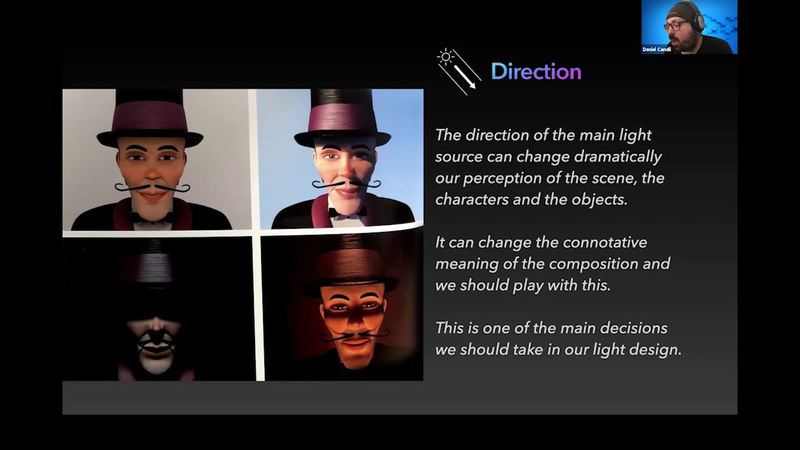
Artists...go into the Light!: Fundamentals of Lighting in Videogames PG Connects Digital #2
Effective game lighting functions primarily as a narrative and emotional instrument rather than a purely technical exercise.
- Prioritize artistic intent and emotional resonance over strict physical realism to create immersive environments that effectively serve the narrative.
- Use lighting as a strategic tool to guide player attention by highlighting critical gameplay elements while obscuring less important areas through shadow management.
- Apply principles from historical art movements, such as Baroque-style contrast and Impressionist color theory, to establish specific moods and atmospheric continuity.
Launching Spaceteam VR PG Connects Digital #2
The development and launch of Spaceteam VR represent a strategic adaptation of a classic mobile cooperative experience into the immersive virtual reality landscape.
- Spaceteam VR launched in May 2020, requiring a shift to remote development workflows and digital-only community engagement due to the global pandemic.
- The project successfully implemented cross-play functionality between Steam and Oculus Quest to maintain the original game's cooperative social dynamics.
- Technical challenges, specifically synchronization discrepancies and low player density, hindered initial user conversion rates and long-term retention.
Fireside Chat: Demystifying Live Operations PG Connects Digital #2
Live operations serve as a critical bridge between game development and long-term player engagement.
- Live operations should be treated as a service-oriented discipline that prioritizes long-term player retention and community stewardship over short-term revenue maximization.
- Developers must integrate robust data analytics pipelines during the early stages of production to inform design decisions, rather than relying on anecdotal feedback from vocal minorities in forums.
- The seasonal content model, as demonstrated by Path of Exile, is a highly effective strategy that allows players to take breaks without falling behind, thereby fostering long-term loyalty.
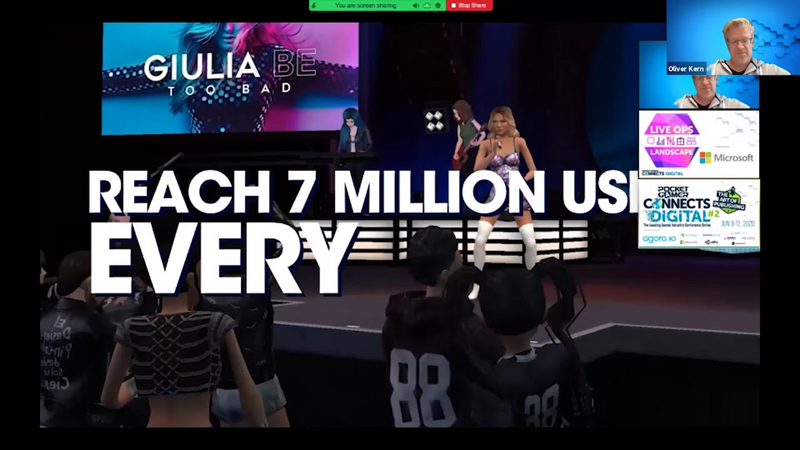
Bringing Live Events to Games PG Connects Digital #2
The integration of live music events into virtual social platforms represents a transformative shift in digital entertainment, leveraging the massive scale of the gaming industry to create high-impact, shared experiences.
- The gaming industry now possesses a larger global reach than the combined music and film sectors, with one-third of the world's population participating in gaming.
- Successful live events in virtual worlds like Avakin Life—featuring artists such as Hayley Kiyoko and Blasterjaxx—demonstrate that embedding concerts into live operations pipelines effectively drives user traffic and engagement.
- Financial models are shifting away from traditional minimum guarantees toward revenue-sharing structures based on the sale of in-game digital memorabilia and virtual merchandise.