1 free read left. Create a free account for unlimited reading + AI research.
Create free account
Designing Engaging VR & AR Games PG Connects Digital #2
Key insights
6 takeaways- 01Successful spatial computing design requires creating bespoke, tactile interactions rather than porting traditional screen-based game mechanics.
- 02The lack of a standardized input method remains the primary barrier to mainstream adoption, necessitating a focus on intuitive, arm-based controls and clear spatial anchoring.
- 03Designers should avoid high-contrast visual elements to reduce physiological fatigue and eye strain during extended play sessions.
- 04Future development must establish a cohesive design language that balances complex physical simulations with the essential requirements of user safety and accessibility.
- 05Developers must prioritize user comfort by implementing mitigation strategies for motion sickness, such as short-hop teleportation, dynamic blinders, and cockpit-style anchoring.
- 06The industry is currently transitioning from early technical demonstrations to more sophisticated, purpose-built applications that emphasize environmental integration and spatial audio.
Ask AI about this video
Transcript
I'd like to welcome to the virtual stage type Kelly from Seattle to word to chat about designing engaging VR and AR games are you there tyke hello hello hey hey sorry how you doing yes a hollow all the way from Seattle where it is a mere 8:50 in the morning I'm also running a little competition here in the background for like coolest possible backgrounds inside my wine collection here because I'm from my garage so yeah so thanks for having no you're very welcome very welcome and I'm gonna what I'm gonna do for you I'm gonna I'm gonna clear off but I'll keep my eye on the QA questions a lot come and join you at the end so okay cool great so I'm just gonna fiddle with this and say make sure it works stuff
[Music] everybody's in good form okay so can we all see that okay oh yes definitely okay so it's great great perfect we're not having ugly screen sharing things sort of sitting in the way I don't know where we'll get a little bit okay great so yeah so um it just as a brief bit of background I'm ty Kelly I have the weirdest hard-to-pronounce name in the industry probably a lot of people calling me Taggart alt or something like that that it's fine I've been in games for 20 years I've been I worked in the UK for an awful long time I was a designer at lion head a bunch of other places like that I did a lot of consulting I used to write for edge magazine and such and then I moved out to the US about seven years ago where I've heard for a couple of companies out here most recently in sort of V or and a or space say for the last four years and most recently I was a senior partner
manager magically which essentially was an external producer kind of job so I worked hand in glove with an awful lot of developers building apps building games building mostly games some educational stuff some training apps and various things like that so I've had a lot of kind of I suppose real world experience of what seems to work and what doesn't seem to work within the kind of VR a or sort of space and I thought I would dump some thoughts on you all in the hope that maybe it's helpful so okay so here we go so just to sort of do a little bit flowery first because there is an awful lot of confusion generally in the kind of VRA or world as to what's what and there's an awful lot of acronyms and confusion generally speaking so obviously you all know what VR is that's the most popular a or is obviously fairly well known through things like Pokemon go and that sort of stuff but there's sometimes some confusion as to whether a or means it would also include stuff like the hololens for instance or magically or
some of the other kind of glasses based sort of headsets and it's a little indistinct in fairness xor is sort of an industry kind of attempt to sort of call out I suppose kind of cobble together a variety of these things under one banner it's sort of fallen in and out of use in some cases because iPhone produced a version or alpha Bridget first and the iPhone last year called the X or which kind of caused an awful lot of confusion and then amore is a term for mixed reality which is using a variety of contexts one of them is Windows for example has an a more initiative our Microsoft as an a more initiative under Windows banner which is a lot of different for your headsets mixed reality also means things like mix casting or compositing or using green-screen to sort of broadcast your your VR experience using it to like live for instance or those kinds of things within the overall space a lot of us are actually kind of somewhat taken to using the terms of spatial computing instead which is fancy but is actually a reasonably good if you
like collective to just explain roughly what all of these different sort of pieces and parts actually are basically PD really literally means computing that happens within spaces so I put a headset on I put my phone up I have a camera pulling sort of you know video feed from around the world that I'm in and place graphics upon it I put a VR headset on and I'm in space that sort of idea and it sounds aspirational and it sort of hopefully gets away from some of the more icky sort of separation definitions between a or V or M or X or blah blah blah blah blah yeah so very thorough are various types of spatial computing there's a headset and handset base for example the oculus quest or the iPhone enclosed or transparent which you might otherwise called immersive VR versus transpiring a or for instance versus some mix of the two there's the low end and the high end kind of so there's everything from the low end kind of oculus go right through through two valves fancy index headset which needs a
PC to run off of and produces a really good fidelity experience but was very expensive room scale meaning can I literally move around in my space entirely in full 360 and interact with stuff versus 180 scale or 360 video or essentially sort of smaller versions of that and the vibe will be an example of room scale versus I don't know Samsung gear or something like that a more limited headset and then an increasing one which I'm calling a where versus dump that's not an official industry thing that's just something I came up with which is the increasing sort of bringing in if things like machine learning and environmental awareness and the ability of a device that you're wearing for example to actually understand not just that it's see surfaces but like what it's looking at like chairs or tables or walls or back anything and patch into you fancy things like 5g and be able to sort of connect into the world and do potentially very exciting things that's all developing at the moment so there's there's no kind of official version of that I think that is point of all that various special
computing sort of solutions differ in a variety of obvious ways so immersion is one is everything kind of black screen or can I see through use cases isn't a very important one obviously most of spatial computing would not be considered enterprise art wouldn't be considered consumer yet but it is very popular with the enterprise and education space and there's an awful lot of organizations are trying to figure out how to use viewer for training or a or for training or use a or on their smart devices for example for like I'm being data information like a lot of different things on top target market big sort of thing about ARS people don't know what the market is yet and would be are in fairness it's pretty nascent as well technical overheads do you need a computer to connect up to it exactly how hard is it to sort of get your game working for example how easy how casual is it versus park or performance there's I'll get this quest which is essentially a really really high-end mobile kind of process but involves a lot of optimization versus you know crazy and pcs with crazy
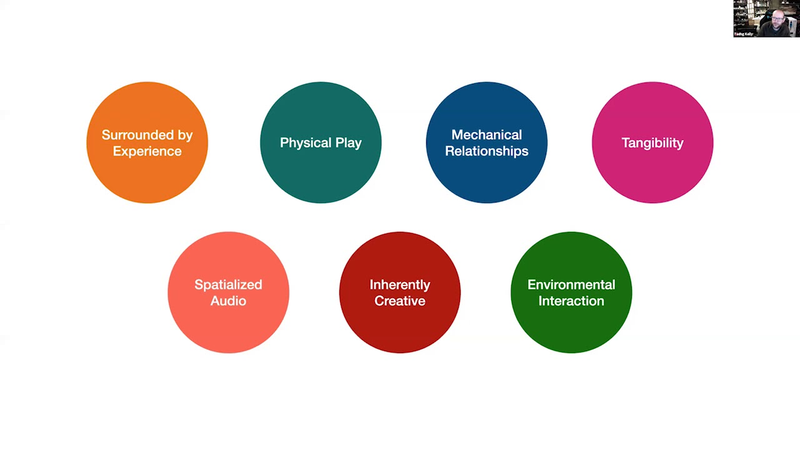
video cards attached and they can do like mind-bending mess of rendering in your eyes supportive features some platformer there's a variety of different control methods for example and a variety of different features that a lot of different platforms support and they wouldn't it wouldn't be fair to say there's a commonality between them yet and this price obviously everybody knows that high-end headsets like the hololens magic 8-1 are very expensive versus some other stuff which is maybe a little more accessible at the moment okay so that's background so what are the key strengths of spatial computing VR Aero design this is all related to how the game might actually work this broadly speaking seven things I'm Regis rapidly going to go through them there's the general sense of being surrounded by an experience so whether you're playing Pokemon go or whether you're playing super hot or whether you're playing universe sandbox the whole point is you're surrounded in all directions by the D spatial computing experience that you see so it's not like a kind of
screen thing there's an awful lot of design considerations around things like environment awareness peripheral vision not necessarily having a kind of a faithful sort of single kind of black square that you can look at like a screen and it brings a lot of both strengths and concerns with it as well this physical play huge amount of what makes VR are really fun for example is the fact you can swing your arms around and beat Sabre or that you can do like body movement or things like that mechanical relationships is an important one particularly for training this huge amount of m.a or work for example going on in the surgery space to try and teach people how to you know perform operations and one of the most media things that comes back from a lot of the feedback in that area is that junior students always immediately get like say early procedures or or basic kind of operations or things like that because they can physically see a body in front of them and put their hands in there and kind of see what they're doing as opposed to trying to read off of a off of a book or through even through YouTube videos or stuff like that
tangibility is a big one so the ability to be able to touch the world to be able touch objects is something that is very natural to see spatial computing and is something that's that really gives players an awful lot of kind of thrill and fungus they don't get another other platforms normally spaceless audio so you can hear sound way over there or you can hear that right up close in front of you isn't a very immersive aspect of especially being in general it is inherently creative and invites a lot of people to draw to make stuff to sort of try and puzzle to explore in the environment and it involves and it brings an expectation of a lot of environmental interaction being able to for example take a holographic ball in your hand and bounce it off of a real world table is a unique experience to spatial computing that you don't really get anywhere else alright so what is good spatial computing design I want to just preface this by saying this is entirely my own subjective opinion as the saying the quote above is the long-term benefits of sunscreen have
been proved by scientists where's the rest of my advice is no more bassist than my own meandering experience that's very much true I've worked on some stuff all the people have worked on some other stuff some of the stuff I've worked on our games like Polly are a music happening EXA universe sandbox was just a simulator figment which is a creative tool and luna which is a storytelling out with made by phenomenon but honestly a lot of other people who would work in this space probably have very different sets of experiences and this is by no means objective so it's entirely my opinion okay so the first thing about good spatial computing design is a lot of times most of the time spatial computing devices need to be able to scan an environment they need to be able to understand where they are they need to be able to see surfaces they need to have a moment sometimes to be able to take a complete sort of image of a room so they can figure out where everything is and that can be time-consuming it can be a really weird kind of constraints at the top of a game for instance and it can be expensive particularly if a game needs to continuously scan it can really cause an awful lot of performance hit
the developer usually has no control over the space as well it's not like making a level based game where you can just decide where everything is if you're working if you're making again it's in a real world for example playing with this table behind me that tables not moving anywhere and the Yurok leave you has to sort of consider that that is where it's going to be and things like lighting and surfaces different kinds of surfaces black surfaces example really screw up a lot of kind of meshing solutions because the infrared for example can't actually see it things like that and so it's important to keep to keep some design principles in mind one of the big ones is figuring out how to anchor your game is generally very important and by that I mean establishing an origin point establishing an object somewhere in the space that's going to act as zero zero zero that many other objects refer against which is a way to get around some of the more expensive aspects of meshing it also means keeping a sense of north sore directionality beat Sabre for example is really easy to play because everything is kind of coming at you from
one direction and you can largely and you can you can get very comfortable with that idea before it maybe gets into sort of crazy 360 modes and stuff like that avoiding fast traversal in an environment is very important so in a or for example it can be very immersive which means people players might forget that there's a low chair like off to the side in front when they might trip over something unless they're walking carefully from one space to another like they're slowing and that kind thing and similarly avoiding edging Guardian zones or you know square boxes or things like that they're kind of keep the player within a safe space there's often a temptation I think to have likes a very wide areas where lots of different things are going on but if you reach to the edge you might accidentally you know bump your hand off a wall or you might have happened to a friend of mine smash a TV accidentally or things like that so you just you have to be very aware of the environment that the the player is playing with in a good example of anchoring just as enough chance is Luna moon dis garden by phenomena which is a
game that I worked on it magically I think was the first or second third-party game that we ever launched but they needed to be able to anchor itself and need to be able to figure out where the floor was and I need to be able to figure out where the space was to be able to place all of these kind of storytelling elements and so one of the things that we came up with was this idea that the first part of the story was you would place the moon so this was literally a little kind of selector you placed on the ground and then the moon would rise about it was very cool thinking it's got a whole kind of moment to start the game it also cheekily helped to gave the game an origin point because wherever you placed that first anchor to launch the moon became zero zero zero a lot of the rest of the game could refer off the back of town so motion and balance everybody knows that Viera can make you nauseous everybody knows that it can make you dizzy everybody knows that it's the movement within vor spaces is complicated and it involves a lot of tuning and all that sort of stuff it often resorts to teleporting which is not as bad a thing as some people make
it out there is there is a sort of a concern around for the purposes of immersion particularly that the fact that you have to like a random room in order rather than walk around a room can be can be disconcerting but half life Alex actually proves that that's not true there's a there's a lot of technique around just making for example teleport short hop fast a lot not sort of so much kind of place a big selector down and then make a big butt impression like every time you want to move forward being able to literally sort of kind of like hop and can make that feel very transitional switch is which works very well another one is dynamic blinders game like Eagles flight for example creates a cone vision when you fly around so you don't get so much peripheral vision you don't get somewhere vertigo and it doesn't make you feel nearly as uncomfortable as you think it would contextualized blocking geometry for example cockpit like in elite where you can fly ramage you can actually see essentially your your spaceship controls kind of in front of you and and that gives you sort of a
somewhat unconscious anchoring in the space so the rest of the world might spin around you but it's not so bad and you generally pretty personal because I have vertigo anything that involves using a big cliff or a long drop or something I might instinctively feel like I'm going to fall off of it's generally a plus plus because it can be very disconcerting in terms of the rest of experiencing me hard to pay attention to the rest of what an experience is doing if I keep thinking I'm gonna fall all the time again I mentioned half-life Alex really worth checking out if you get the chance it's it actually works pretty well on oculus quest via the link cable for instance and yeah and it gives you a really good example of how short teleporting very fast teleporting um can be can be something you just don't really notice after a little controls are another big one so in spatial computing most control methods are really good at figuring at position so where my hands are and proprioception which is like where my head is where my body kind of roughly probably is but they don't handle
complex input very well like things like keyboard equivalent input or things like lots of complicated motions or that kind of stuff anything that involves abstract kind of impact tends to be rather tough and additionally users often struggle to find triggers or bumpers or the fancy little kind of extra bits that they use in their controls they literally can't see them even just kind of like passively and so they actually often forget that they're there they're often like plus a we're wearing out we're busy again they can't remember thumb wise where they put their stuff so you just have to be kind of aware of this you have to be forgiving of it generally all the best X or VRA or etc sort of games to date have used a combination of body movements and movement that's kind of more arm base B sabers an obvious example supernatural is another example pistol-whip is another example where super hawk is another example where you're encouraged to like be fluid
within the space it really helps you they feel like part of it be to make the if you like the active input not that imposing drawing dragging and aiming actions tend to work best so drawing the tilt brush for example it's so easy to just sit there and create sculptures for hours because you're doing things with your hands that feel natural almost like you have a pen in your hand and you're doing stuff dragging semer just grab a thing pull the thing fling a thing tends to work very well and aiming mostly works well if you give it a little bit of help some games for example we'll use tracer lines or laser beams or something like that to be able to kind of roughly know where you are because it can be difficult with envy or for some people to to actually ain't like they think that they can aim well because they think they're perceiving an actually 3d environment but they're not they're sort of seeing like everything on a single plane and it's when you try to aim stuff that your your eyes actually kind of get a little confused so I generally recommend trying to focus on broad rather than five minutes Fineman things that love an arm
swing rather than a wrist swing or a thing top or something I thought will usually work better and because the audience is not that familiar with them I'd stay away from trying to be overly complicated things with with interfaces pistol-whip for instance uses body aim and broad movement and a really go game and you should play to get the chance and they blend blend super well to form a just really compelling exciting experience the sort of game that people call cool and it is it's really really really good fun if you get the chance to play it attention and focus are another thing that are very important so obviously because somebody's maybe wearing a headset in a spatial computing environment you can't really control where they're looking it's even worse than say in a first-person shooter game where you can expect there so look around like they really can end up just like staring into shoes or staring at like something on the ground or at the wrist or that kind of thing and they can very easily miss content that's kind of being played at them as a result they also sometimes have issues with reduced peripheral vision and a our headsets
particularly fov is a big deal where you really only have a better 45 to 55 degree sort of horizontal view and that means things on the side that you might rely on players to notice they often don't and they often lose spatial memory of where they place things if they can't kind of tacitly see them so you just have to be forgiving of this you need to pace content to the player if you're going to have a story for example you need to trigger it as they look at things or as they place things or do stuff you need to involve avoid long periods of intensity where they have to pay their attention for too much time because it'll just wear them out at least to allow creative time just you know foots about time things where they can just gonna go what is that thing directionality I mentioned North Star and for example being able to sort of show where they're going a certain direction and keeping things in frame keeping puzzles and and particularly complicated sort of tasks gonna all within one frame area so puzzle AR world tour for example which is a game we launched so much it does this it's a very complicated jigsaw puzzle game where you have to like we construct the Statue of Liberty or that kind of thing and what it does is rather than kind of
surround you with it it places it all in one area on the ground that you can then walk around yourself and remember where it is but it's not using peripheral elements and it's not using those kinds of things in order to to try and draw your attention away I know I'm running out of time so I'm going to run through the last couple very fast another big one that's very important is user interface so user interface is often attached to a player camera and most other kinds of computing think of for example with here and zoom I've got like stuff on the wall here I've got like a chat window on the side I've got stuff going on I've got kind of thing in Spacely meeting it often makes more sense to anchor you eye in the world so like place a dialog in a space that somebody will walk up to or walk away from place a a menu item as an actual object in the world that people will like move over and open up and then you know pull stuff out if that kind of thing it's really very compelling and it's really important because nothing jars people I think out of especially computing experience more than a UI that feels like it's very artificial so yeah so stay within your game fiction also
just as a general point avoid white backgrounds avoid excessive reading white backgrounds on most of the screens they're available for a spatial computing right now actually cause a lot of shimmer cause a lot of eye strain so things like transparent backgrounds with white text work way better generate than sort of more traditional kind of you know page design style stuff use floaty pointers rather than like say a mess kind of like lying to grab things often you want like a little curved object kind of snaps to stuff that you're trying to grab it makes it feel more fluid this less of a reliance on precision avoid text entry and keep virtual keyboards in general and remember that you can be physical it's actually okay to like for example grab something and have a player throw it or have them slap it up on something or and it or bring it up like this in front of them with I think it often feels way better generally she'd let users move an AK in the air or AI UI UI as they want and so if they want to like put a menu over here then let them if they want to put a dialog there working with over here let them do that as well all right
I think I've got it's a cosmic trip is a good really good example game that does this worry it uses an awful lot of transparency as you can see very friendly fonts very easy bobble buttons that make sense with a vive controller and that kind of thing and then I think this is my last one so body limitations are the other thing to pay attention to so obviously users are far more likely to be standing when they're using spatial computing general they're just they walk around there in space they want to get up they want they don't really want to sit and VR and it feels strange to them if the house well you have to account for the fact that people are not fit you have to account for the fact that people might get back pain if you make them do overly flexible things like twisting around all the time I get a lot of back pain from some games for example I'm just like alucard you really need to count like incorporate things like cooldown period so if you have like a really rapid shooting or swinging sort a bit you can't have that be the entire game all the time because you'll give people heart attacks I mean chance to like breathe and sweat and generally kind of wipe themselves
off and lastly I don't want to get into too much because it is a complicated topic but it is very important to think about accessibility concerns because not all users have built the same way not everybody's the same size not everybody's the same capabilities not everybody has the same ability to do the same thing as far as like for example I might do or a back on a day and it's important because a lot of people who use spatial computing maybe do so because they're impaired in other ways and because they want to be able to experience these things so don't be tried try to keep it in mind that you will not necessarily have just lots of normative users you'll have a lot of people who come from a range of different emotions and backgrounds and supernatural which is a fitness app is by the way just a really good example of a game that uses physical motion and physical activity it's based on intensity so it's all alike it's back and forth but it's kind of set up in a workout sort of way so it's only do a few minutes a day build up like a fitness app to us rather than just kind
of like trying to kill you all at once so yeah and so I said at the top of this I said what we think we know so far it's totally subjective it's just what I think so what I've encountered so far there is no better advice than saying build things try them see what works an awful lot of testing is needed with anything to do with this kind of stuff I know a lot of like well ok and the real world is is actually good and yeah and I encourage you to experiment as much as you possibly can ok that's it wonderful thank you very much tag that's great I'm just gonna fade back into view now and join you back here in ask you that was great thank you and you know what we're actually we're OK for time got a couple of questions and we've got oh yeah we've built in some minutes of building a few minutes for questions and we've had loads so I hope you don't mind I'm gonna grab yes oxen anyway so an anonymous attendee asks about motion sickness doesn't creating focus points help avoid vertigo as a person with vertigo having distinctive clear focus points in real life helps so I wonder if it's the same in VR yeah I
think that's true I think the it's I think it's kind of it's like if there's think of it like this that when I said that like the user the one thing about the special computing tub user is they can end up looking in any kind of direction so it can be quite hard to for example reliably have them look in one direction and it couldn't be you there's a lot of tricks that involve things like light and same as you get in first person level design lighting and indicators and audio to maybe kind of pull their attention over to certain things generally may be sort of using kind of darker lighting for the this or the lowers if for example you're standing on a cliff like maybe that I can't actually see the complete extent of what I might fall into would be helpful and and things like that to maybe give an impression of the fall without actually having my eyes go her do you bid oh my god kind of thing yes it's incredible isn't it the challenges of developing for VR where it's rare to have a form of entertainment where if you get it wrong you can make your customer physically sick that's that makes you think well about one thing that I would say though is just as a sort of a thing is the motion sickness
problem really extents more exists more for V or specifically we used magically as I was there for two and a half years I would work on all sorts of apps and all sorts of experiences half of them half built and you know and bills that were broken and stuff like that and I would never experience any kind of notion of motion sickness or nausea at all I think it's because my brain can tacitly understand that it does still see real world behind whatever I'm looking at and so I always know that where the Florist I was never the wall is and fiora specifically I think it's the one that has the real motion sickness is you right right right and some other some other questions here in fact plenty so let's see what we can do here I'm gonna skip ahead to a question from another anonymous attendee this is erm a lot of rules from the early days of VR the kind of first rift and vive and so on a development they now seem to be relaxed things like it must be 90 frames per second and the notion that free movement would definitely cause motion sickness now we have the quest at 80 Hertz and free movement is more calm what other rules do you see changing as
we learn more about the medium I think deed there was a big thing at three four years ago where everybody was like you have to be room scaled or bossed there was a huge one where it's like you know if you didn't it was very elitist like if you didn't have like a full-on vive rigged with the 1080p and that whatever video card and all that kind of stuff then like you weren't doing real VR and that was I think sort of more of a there's almost like an ideological kind of point it's not true like the most popular VR headset today is still the psvr which is sort of generously a 180 VR system and as a lot of really great games on the quest is fully 360 which is great but you know it's not like high-end performance bleeding your eyes you know what there's not some really great stuff on that as well I think it's even fair to say that there's a lot of like mobile a or that's very underrepresented or or that kind of thing so yeah I actually agree with that sentiment I think a lot of the initial rules were more statements of presumption I think a lot of the the actual kind of boundaries if you like
are much much looser and much more flexible and people tend to think yes that's fair enough um a minute left so let me see if I can squeeze in a question here um kind of on that point about headsets actually do you think we'll ever see a headset that can do both VR and AR or are they just too different asks and I guess there are they're very different things at the moment AR because it's it's using a lot of things like slam and mashing and all that sort of stuff it's really built around it's like what's going on in the real world then how do i overlay on top of it the air kinda doesn't care about that so much but there is somewhat flippantly people do say that they are essentially the difference between one that has a black backdrop versus the other moments doesn't and so you can see some sort of melding of the to a certain point where it really is just I had said that you're wearing that has kind of the capability to do both the Christ actually kind of does when you're trying to put it Sam Guardian mode to work for example it's it's very grainy and and that's where stuff but it it's a are like you're drawing on the world you're you know you're setting your space and
then it goes into full VR so yeah so I don't know who will make it or what it will be called or that kind of thing but and I can see how they will those two things will meld that's good I'm look you know what tiger because actually we've got still got half a dozen questions here the people that watch you but tell you what I might grab these and just mail them to you or something like that so you can take sure sure I'm gonna I'm gonna be in the discord for a little bit if anybody wants to ping me Oh perfect so that that's that's great if folk do want to pop over to the discord and catch up with tight they're the link to the discord is hidden the meet to match platform you're funded on the dashboards if you click on the community button there you'll be able to pop in there and see there so thank you very much Neil round of applause I'll have to imagine coming from everyone I'll hopefully see you in person soon I hope for them in the meantime thanks for all this folk who gave us questions there's some great stuff there and we'll we just ran out of time so you're here watching the developer toolkit track sponsored by Agora do i oh we've got three sessions left today a couple of talks which I'm really much looking forward to in a
panel at the end of the day which I think could be great and that'll take us up to about 7 o'clock remember as I just pointed out there if you do want to catch up with any of us because the meter match platform is a great way to search for other attendees and our speakers and sponsors but also we've got a discord very many active channels in there including ones right for the developer toolkit track so do pop in there and see the link has a series in the meet to match dashboard so James do we have our next speaker this is a this is a very very interesting talk here from a master of of cg we've got Steve Williams from dream view here to talk about well t1000 t-rexes and eyebrow mites we've got a CG and VFX maestro come to talk about his work there in in in the cinema let me just see if we're here oh no we don't we don't have him unfortunately what a shame I should have fair I should have kept arguing a little bit longer we're just waiting for it for this so James our stage manager please
do well let me know if if Steve reappears he's he's got a long history in in in computer graphics including working on such projects as the Terminator films and Jurassic Park and a number of other projects and now his company dream Hugh they working in computer graphics visualization and I know that he'll have some great anecdotes to share with you there hopefully we can and get hold of them and bring them to the front of the stage what I would say of course is that this might be a good opportunity to remind you about our Meech to meet to match platform that we're using for the first time at the event if you do want to catch up with any of our speakers like tide to ask him about about about his experience in ARR mvi or or any of our other speakers and the other attendees at the event discord is great it's immediate but actually if you'd rather set up a video meeting with somebody consider drop it into the because it of dropping into the the meet and match platform you can use it to search for all attendees it'll-it'll by
default list people according to who signed up most recently I know that was a feature that people recommended there so so dude check in there but I said the discord is there so please do use that and if you are here with a game to promote you might want to consider dropping in to the journalist bar now unfortunates not a real bar we can't beam booze to you at much as I'd like to do that sometimes but it is more like the Genius Bar the journalists bar is active every day from 2 to 3 o'clock in the discord channel and if you want to meet folk from oh actually well tell you what if we what time tige if you're still in the room you're welcome to pop back in actually you is or another private message there from time we've still got some questions too that I can ping to you for you if you want to pop back into the front there well while we wait for ste type welcome back thank you for sticking around that's that's kind of quite useful oh you're muted you're muted tiger my friend preciate it so yeah James is our stage manager James if if Steve pops up do give me a shout we've got a little a little bit of time
as it happens we're very lucky because we get we had a bunch of questions for you there about VR and I asked ya if you're yeah great so um so yeah we've got one here from from one of our anonymous attendees I think I might be able to guess who this is but and by what he says he's a the question is as a sim rate racer I only play in VR now I only play in VR now if a game is flat screen only some oh by for me but where are all the all new experience is that only VR can deliver where are the old new experience well I mean I I personally think that there are or there are already several basically any any kind of experience I think that involves physical motion is something that is just transformational II different than most once they all but most platforms there is a fundamental difference between playing superhot PC for instance where it's essentially a really great first-person shooter but you're a cylinder character with a kind of a crouched state understand state and that kind of thing versus playing superhot in
a virtual reality where you literally are John looming your way around bullets like you're kind of doing a whole kind of maleic motion and stuff like that and like I say if you've got a bad back like me you're going okay I think that it's there's definitely been a lot of unnecessary vrai or as well there's been a lot of kind of work which maybe first try to take early experiences or experiences in other platforms and just kind of one-for-one translate them across or essentially port them and stuff like that we're slowly starting to see I think experiences and experimentation that that tries to find its feet a little better and tries to maybe actually just take it back to the medium maybe drop some of the constraints that are kind of presumed from other mediums not unlike the way that early mobile games maybe tried to borrow a lot from like PC games or console games and use a lot of those conventions but now you know almost none do it's the same with with spatial computing stuff that it's it's a lot of it still has a lot of hold over
particular from mobile a lot of kind of conventions or assumptions of how you I supposed to pay for instance I would come across some thoughts so and yeah we just I think we're just feeling our way yeah yeah yeah absolutely you reminded me earlier actually when you mentioned PlayStation VR which I know is super popular and actually one of the things that also chimes was one of the slides you had was about spatial audio which I find fascinating at the moment and and VR is really shown the way in what 3d audio and virtual virtual surround sound and things can do and I'm fascinated by that looking at what PlayStation 4 I was gonna do sounds incredible actually with the number of sound points they're gonna yeah yeah and it's it's very it's one of those things that it like the long history of audio people telling us that they're like underrepresented and not like people always forget about how important sound is and all that sort of stuff and that is very much true and specialized audio particularly more so there is really weird joy to literally kind of say for example / to be physically walking over to a character because you can't quite hear what they're saying and then you get up close and they go oh hey or that kind of thing and and it's it's one of the just
like it is in other formats it's one of the things that really kind of pulls you into a space we add some an app for example that I hope it's not a game but that helps kind of get working on magically called Excel which is a whole music makings for a suite I mean literally create like pianos and drums and various chimes and all that sort of stuff and you have a thousand different audio controls and to record and loop songs and loop tracks and stuff the entire things is pretty spatial so like you're up to your pan to go be and then like you move away stuff like that and yeah and it's it's it's very compelling watching a whole band essentially play in your living room is crazy I've got I'm just gonna carry on with the questions for now so lately Walker asked the question this is about a aspects actually I guess have you seen the glow or the Unreal a are glasses that coming out and if so have a look if I know of them yeah sure well the question was gonna be the question actually there is do you think
that those are the will bring a are into the into the mainstream but I guess it leads to a broader question which is you know about AR and about people's sort of understanding if they are obviously there's this AR on phones and things what do you think he's gonna make a are more mainstream so um I actually think the biggest gap that both there's supply severe or someone as well but the biggest gap that that that whole sector needs to needs to address is control method so how you it's not it's not that I'm able to hold up my phone and see like a cool creature on or I'm able to kind of do so far it's not even that I'm able to like wear glasses and have like kind of ambient data I mean it's what do I actually do with it once I'm there like and more importantly how do I do things like once I'm there and that's it's there's a number of different kind of attempts at figuring out how interaction should work everything from like hand recognition through to more complicated controllers through to there's a couple of pretty interesting frames devices like the top which is an
actual kind of keyboard thing that you put on your hand in order to sort of like topic sort of sequences stuff like this I think anybody's got a good solution for it yet but it is the thing it's the analogy that I always make is the the thing that made I phone I think different from all phones that came before other than the fact that it's cool an example and whatever is that it was the first mass device that have real finger tracking that worked very very well and didn't need styluses or keys or like you know abstract kind of inputs like that personally I think spatially buildings kind of challenge is similar it's like you we have to figure out a way to get over the the input gap and be able to really kind of help users actually figure out what to do in the space once we do that everything else I think will will fall into place eventually but we're we're kind of standing at the edge of it at the moment we don't we don't have a good answer for it yeah yeah yeah I'm a question here from Rami Mariga um back into VR now talking about that how is it possible to
make a player feel different densities if you like perhaps that they're swimming or they're inside a jello environment gravity heaviness floating can you similar those things in VR um that's an interesting question I heard that one before um I think I mean this is just off the top of my head obviously you cannot add like the you can't add weight to the player you can't go right right right but you could potentially I suppose use you know some visual effects or some shaders or something like that for maybe to sort of show streamers you know if I move my hand and environment maybe I see like after ICO or or that kind of thing to at least kind of give some sense of roughly what that is I would be worried about that making people dizzy um but but that kind thing and floating as well yeah it's it's you have to be careful like if you again go back to the vertigo example if I was a virtual character floating on the waves in a diving game or something like that you know I'd like it means that the the environment the horizon
will be doing this up and down to me some degree or others all the time I think I get pretty nauseous pretty quickly so yeah yeah it's it's interesting challenge I don't got answer that at all and in fact do you know what I feel bad because I've completely forgotten the name of the project but there's a there is a VR experience in a space station isn't there where you move around and wait where they you have to sort of pull the environment around you because you're kind of moving through space yeah yeah yeah like where you you're kind of like - yeah and it's it's it can be challenging it's I mean the one thing that maybe people say about that game sometimes it's it's kind of hard to crop quarter days you're supposed to do because it is very like do a thing do a thing though you're dead but you do sort of you have that kind of spatial motion where you're literally like you know dragging yourself around the space and that can help to make you not feel quite so crazy or quite so dizzy also weirdly maybe because you're so high off the earth like vertigo effect is not the same as like I'm gonna fall into that it's more like well this planet yeah that's good that's good look I really
appreciate you coming back you know we've got a few more for questions we but I have the word from our stage manager that our next guest is here so and what I'm gonna suggest and I really appreciate you doing a few minutes because that's great and actually I should say the audience thank you very much folks for your questions and clearly they really engage with this there's loads more I'm gonna give I'm gonna send those to you I cuz there's some great questions in there but folks do hop over and see if you can grab a plug in one of our other meeting platforms thank you very much appreciate it and like I said I will raise a glass next time I see you in person which yeah thank you so folks thank you very much and thanks to so for all your questions there on VR and AR it's great to have a chat with Tyco there and share some of his experiences you
Summary
Spatial computing, encompassing virtual, augmented, and mixed reality, represents a transformative shift in game design that prioritizes physical interaction and environmental awareness over traditional screen-based mechanics. The primary thesis holds that successful development in this medium requires a departure from porting conventional gaming experiences toward creating bespoke interactions that leverage the unique tactile and spatial capabilities of hardware. By focusing on how players inhabit and manipulate virtual spaces, developers can unlock deeper levels of immersion that are impossible to achieve through standard interfaces.
Achieving this potential requires rigorous attention to user comfort and the mitigation of physiological challenges such as motion sickness and eye strain. Effective design strategies include the use of short-hop teleportation, dynamic blinders, and cockpit-style anchoring to stabilize the player’s perspective. Furthermore, developers must account for the unpredictability of real-world environments by utilizing intuitive, arm-based physical controls and avoiding high-contrast visual elements that induce fatigue. Because the industry currently lacks a standardized input method equivalent to the touch interface, designers must prioritize accessibility and clear spatial anchoring to ensure that experiences remain intuitive across diverse physical capabilities.
The industry is currently in an experimental phase, transitioning from early technical demonstrations to more sophisticated, purpose-built applications. While spatial audio and environmental integration are critical for enhancing presence, the most significant barrier to mainstream adoption remains the persistent input gap. Overcoming this hurdle will require the industry to move beyond experimental hardware constraints and establish a cohesive design language that balances complex physical simulations with the necessity of user safety. As the field matures, the focus must remain on creating seamless, comfortable, and highly responsive interactions that define the next generation of interactive entertainment.