Game Design reports and market data
Documents
Let's make a PICO-8 Game in 30 Minutes!
PICO-8 functions as a specialized fantasy console engineered to facilitate rapid game prototyping through a highly constrained, integrated development environment.
- PICO-8 functions as a specialized fantasy console that accelerates prototyping by integrating sprite, tile, and audio editors into a single environment, bypassing the overhead of traditional game engines.
- Developers can achieve rapid, pixel-perfect prototypes by leveraging modular, state-based Lua scripting and existing open-source codebases, such as the movement logic from Celeste.
- The platform enforces strict token limits, requiring developers to prioritize efficient code and modular design to maintain functionality within the console's constraints.

How Do You Make VR for Everyone?
Virtual reality currently stands at a critical juncture where the transition from a niche technology to a mass-market medium depends on overcoming systemic fragmentation and exclusionary design practices.
- Developers should prioritize accessibility by design, such as implementing hover mechanics for ground-level objects to assist users with mobility issues, rather than treating it as an afterthought.
- The VR industry must move away from 'walled gardens' and proprietary systems toward open-source protocols and shared documentation to prevent fragmentation and lower the barrier to entry for new developers.
- Diverse teams are essential for creating inclusive VR, and funding should be directed toward diverse creators and unique content rather than relying on traditional, non-scalable game design paradigms.
Creating the Soundscape of 'It Takes Two'
The development of It Takes Two required a specialized audio strategy to address the inherent challenges of a split-screen cooperative experience.
- Hazelight Studios developed a custom spatial panning system for 'It Takes Two' that decouples attenuation from panning, allowing the game to prioritize the closest listener for volume and the listener with the best forward angle for directional positioning.
- To manage split-screen audio, the team implemented a system where non-spatialized 2D sounds are panned toward the specific player's viewport—May’s world slightly to the left and Cody’s to the right—to maintain mix clarity.
- The audio team utilized 'bigness' and exaggeration, inspired by Pixar, to emphasize important gameplay elements and maintain a clean mix during chaotic sequences by ensuring the most critical sounds are prioritized in the soundscape.
Building a Mixing Sandbox for 'Just Cause 4'
The development of the audio mix for Just Cause 4 at Avalanche Studios centered on transitioning from a traditional, compression-heavy approach to a modular, system-driven "sandbox" framework.
- Avalanche Studios transitioned from a dynamics-driven mix in 'Just Cause 3' to a state-based, siloed architecture in 'Just Cause 4' to eliminate audio pumping and CPU-heavy side-chain compression.
- By implementing granular microstate snapshots for vehicle audio, the team reduced the authoring time for a single vehicle mix from several hours to just a few minutes.
- The team abandoned traditional side-chaining and compressor-based mixing in favor of a priority-based system that uses game-design parameters to modulate EQ, balance, and spatial imaging in real-time.

Blockchain Gaming for Dummies with Ethan "Crypto Kid" Levy
Blockchain gaming represents a fundamental shift in digital entertainment by transitioning in-game assets and currencies from closed, developer-controlled databases to tradable, player-owned tokens.
- Blockchain gaming shifts in-game assets from developer-controlled databases to player-owned, tradable tokens, formalizing secondary markets that previously operated as illicit black markets.
- The intrinsic value of in-game assets is driven by player demand and utility rather than the underlying volatility of the host blockchain.
- Developers must adopt central bank-style economic models to manage tokenomics and mitigate inflationary pressures within decentralized game economies.

So I got this email from a game dev ("TELL ME I'M GOING TO BE OK")
The primary concern addressed is the anxiety surrounding the use of pre-made assets in commercial game development and the fear of being labeled an asset flipper.
- The stigma against 'asset flipping' is caused by a lack of visual and auditory cohesion rather than the use of store-bought assets themselves.
- Developers should adopt specific art styles, such as stylized, low-fidelity, or pixelated aesthetics, to unify disparate assets into a singular, intentional look.
- The 'spotlight effect' causes developers to overestimate public scrutiny, as audiences are generally indifferent to asset origins if the final product is engaging.
Honoring the Blade: Lethality and Combat Balance in 'Ghost of Tsushima'
The primary objective in the development of Ghost of Tsushima was to reconcile the mechanical requirements of a 30-hour open-world action game with the core samurai fantasy of lethal, high-speed sword combat.
- To maintain the 'samurai fantasy' of lethal blade combat, Sucker Punch limited the number of hits required to kill enemies, keeping the engagement window short even as players progressed through 30 hours of open-world gameplay.
- The team avoided traditional RPG-style level scaling—which often relies on artificial health bars and 'skull' indicators—because it undermined the grounded, realistic nature of the game's combat.
- Developers implemented a stagger meter system to force offensive play, allowing players to break enemy defenses using specific stances rather than relying solely on parrying, which had become a repetitive, dominant strategy.
Skill Transference - Extra Credits - Game Design
Video games serve as more than a source of entertainment; they function as effective training grounds for developing a variety of practical, real-life skills.
- Video games function as low-stakes, iterative environments that allow individuals to cultivate complex professional competencies like goal setting, resource management, and strategic planning.
- Research from Nottingham Trent University and University College London indicates that game mechanics, specifically feedback loops and goal-oriented tasks, directly foster increased perseverance and independence in players.
- Strategy games improve self-regulation and impulse control by requiring players to consistently balance immediate short-term gains against long-term objectives.
Making Your First Indie Game (5 Tips for 2021 & 2022!)
The primary objective for aspiring indie game developers is to successfully transition from hobbyist to professional by prioritizing the completion of a first project over the pursuit of a perfect "dream game."
- Prioritize project completion over perfection by limiting scope, as time is the developer's most valuable resource for long-term sustainability.
- Develop a highly polished prototype to secure external funding from sources like publishers, Kickstarter, or platform deals, which provides the necessary accountability to finish the project.
- Build a community early through consistent social media engagement and devlogs to generate the momentum and wishlist requests required for visibility on platforms like Steam.
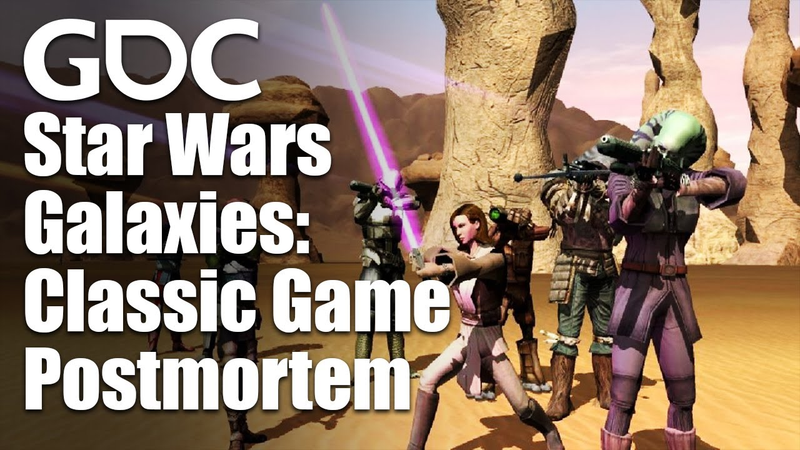
Classic Game Postmortem: 'Star Wars Galaxies'
Star Wars Galaxies represents a landmark experiment in early 2000s massively multiplayer online game design, prioritizing player agency and sandbox freedom over traditional quest-driven progression.
- Star Wars Galaxies suffered from a rushed development cycle, with the team forced to launch the game after only two years and nine months of production, resulting in a poor initial user experience and high player churn.
- The game pioneered advanced technical features for 2003, including a procedural terrain generation system that allowed for runtime building placement and a character customization system utilizing morph targets.
- The game's economy was entirely player-driven, requiring users to bootstrap resources from nothing, which created deep engagement but caused significant database stability issues.
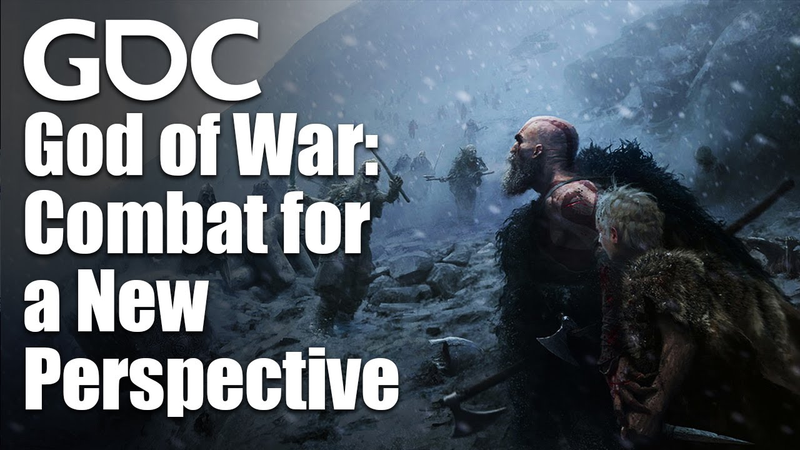
Evolving Combat in 'God of War' for a New Perspective
The transition of the God of War franchise to an intimate, over-the-shoulder camera perspective necessitated a complete overhaul of combat mechanics to preserve the series' signature offensive power fantasy.
- To maintain an offensive power fantasy with a restricted over-the-shoulder camera, developers implemented a data-driven zone constraint model that forces enemies into a predictable crescent-shaped area in front of the player.
- An aggression token system limits the number of active threats simultaneously engaging the player, preventing them from being overwhelmed by off-screen enemies.
- Combat fluidity is maintained through a hybrid targeting approach that combines analog stick input with motion warping, removing the necessity for traditional lock-on mechanics.

"King Me": A Defense of King-Making in Board Game Design
Modern board game design is currently constrained by an obsession with fairness and the elimination of king-making, a trend rooted in 19th-century Victorian moralism that equates victory with merit.
- Board games are fundamentally storytelling mediums, and designers should prioritize narrative cohesion over the modern industry obsession with artificial fairness or catch-up mechanisms.
- Designers can mitigate player frustration in high-conflict games by providing players with diplomatic flexibility and meaningful agency, even when they are no longer in contention to win.
- The modern design ethos of 'fairness' is a relatively recent development rooted in 19th-century Victorian morality and the rise of mass-market manufacturing, rather than an inherent requirement for engaging gameplay.