VideoNaavik
Fandoms, Writing Moats, and the Future of Interactive Fiction (FIX)
28 Apr 202662 min video
Transcript
Welcome to the Navit Gaming Podcast, where it is our mission to explore the business and future of video games. We bring together the industry's brightest builders, investors, and thinkers to keep a pulse on current events, dissect emerging trends and games, share lessons learned, and have a great time. This podcast is also part of Navik's growing ecosystem which ranges from free and premium research to consulting and advisory services. For more information, visit www.navic.co. Today's episode is brought to you by Model AI, a team using the latest breakthroughs in agentic AI to transform how games are tested. Instead of relying on brittle scripts or deep integrations, Model QA+ uses computer vision and reasoning models so AI agents can actually play your game, finding bugs the same way a human would, only faster.
Born from a company Pivot earlier this year, Model AI was rebuilt from the ground up to tackle one of gaming's hardest problems, generalizable gameplay without any integration work. The result is a blackbox QA platform that's fast, scalable, and learning with every run. Check them out at model.ai to see how AI is reshaping game QA and learn how your team can benefit. Now, let's go to the episode.
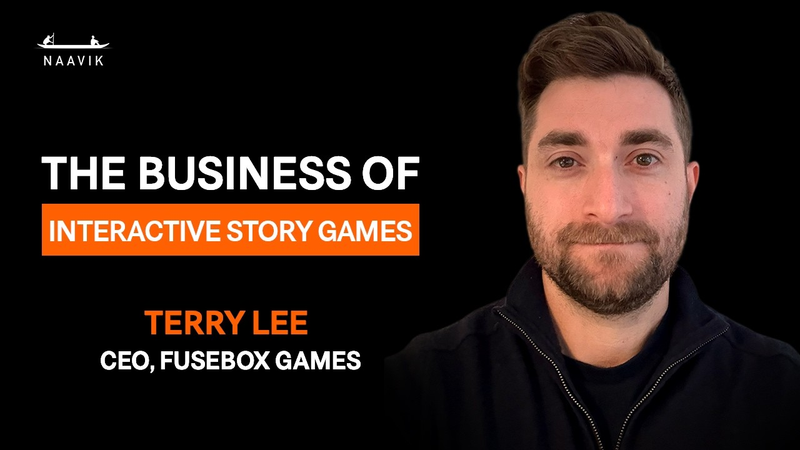
Welcome to the Navag Gaming Podcast. I'm your host, Kaylee Moore. Some of the most interesting businesses in mobile right now are the ones that most traditional gamers wouldn't pick up. They're the ones that are built around IP that live on our TV screens with a hyperengaged audiences and monetization models that are rewriting what engagement looks like on mobile. Today's guest is Terry Lee, who's the CEO of Fusebox Games, a studio that made a name for itself by taking the shows that everyone's obsessed with and building games around them that are even more addictive than the originals. Terry
joined Fusebox Games at a moment when the studio was struggling with only one season of content a year, losing money for most of it, and has since helped turn it around in more than a $30 million business with some of the most engaged players in mobile. We're talking a 12% payer conversion rate in a genre where 5% is considered exceptional. Today, we're going to explore what it actually takes to build a content machine around licensed IP. Why Fusebox Games treats its writing team as its biggest competitive advantage, even in this world of AI. We're also going to explore what the Love Island community tells us about how fandoms move between TV and games, and what Terry has learned about building a career worth following, including lessons from his recent book. Terry, welcome to the podcast.
Thank you. It's great to be here.
So, let's dive in. I want to start simple for anyone who hasn't come across Fusebox games before. Can you give us your elevator pitch? What you make, who plays it, and what makes you different?
Sure. Yeah. So, Fusebox games, uh, we our focus is on interactive fiction, free-to-play games. Um, so the way that I kind of explain this to people that don't know interactive fiction, it's like those choose your own adventure books we used to have when we were little where you kind of read through and then you make a choice and it says go to page X and you go through um and then you kind of read through and you're kind of choosing your own adventure. You're, you know, you're writing your own story. Um, now that obviously happens in traditional games, but um but but there's also kind of player action in those games. There's normal gameplay. Um whereas interactive fiction definitely skews more towards kind of reading um uh and and less gameplay. So the gameplay is the is the kind of the reading. So that's our our core focus and we make those games for IP uh specifically. So for Love Island or Big Brother or Traitors. Um and the free-to-play aspect is a really
interesting one as well because um again like you you know when when you comes when it comes to um monetization and um uh you're talking about what makes players convert through storylines. It means that you know like a traditional TV show you would have a hook at the end of every episode to kind of bring people back. we have hooks every, you know, every few minutes and those hooks are kind of monetized. Um, that's the kind of the 12% conversion rate, um, that you were talking about. Um, what makes us unique? Um, I think it's probably just the quality of our of our writing and of our narrative. Um, we have other competitors in the space. Um but they definitely skew more towards the more hyper casual um and and kind of large amount of quantity of content and user generated content versus very kind of bespoke writing which is which is what we do. So every piece of our our content is scripted and kind of like
meticulously um like edited to make sure that um you know the the quality is there. and we're going to dive a lot deeper into both how you guys approach writing in the interactive fiction angle and also monetization, but I want to hear a little bit more about your role. So, I believe that Fusebox Games started over a decade ago in 2014, right? But you joined a couple of years back at a really pivotal moment for the company. I know when we did our prep call, you mentioned that you joined when the studio was struggling around financially. I want to hear about what you walked into and what were the first things you focused on to turn things around.
Sure. Yeah. So, Fusebox has gone through quite a few iterations over well as you would expect over such a long period of time. Um, and interactive fiction is only actually a fairly recent uh you know adoption in in the in the in the grand timeline. Um so so when I joined we had uh Love Island the game and even
then Love Island the game in itself was successful um in terms of coming off of the back of COVID and uh Fusebox had been subject to the same overhiring and over kind of success during the COVID period that a lot of other games studios had gone through and subsequently have have struggled in. Um so when I joined we were on the back of I suppose that struggle where the the audience had had disappeared to a certain extent um and we were left with a fairly inflated team. Um and and the you know the monetization had had kind of come off a cliff a little bit. Um and so when I joined we had one season a year of content. um I suppose to backtrack like I joined as as as kind of head of studio um but but from a product background. So I came into into um Fusebox with this idea of I play the games and I' and and
I'd understand there's lots of improvements uh bringing my kind of freeto-play knowledge. There's there's there's a fantastic amount of free-to-play improvements for Love Island that that that weren't there and and and actually there was, you know, I still have the pitch deck that I that I did for my interview where there's just like there's so many free-to-play mechanics and things and I was like there's there's 20% growth on this game, right? Just just with free to just with free-to-play uh mechanics that that that didn't exist in the game. Uh I quickly realized that our biggest problem was not actually uh the uh the monetization. Um it was you know so like you know the average revenue per user average revenue per user was actually pretty good. Um but the uh the amount of content that we that we had and the amount of content that we were releasing was was way too small. So for for the headcount that we had. So, as you mentioned, we were releasing one game a year, uh, one season a year and, um, whilst we were releasing that content, our really kind
of hardcore fans were playing that content and paying and it was fantastic, but there was was only one season. And then all of the other months of the year that we didn't have content, we were essentially losing money and paying for an expensive team. Um, at that moment, we also had a studio in LA. Um so so we were we were paying kind of quite expensive um you know salaries and and kind of setup costs to to maintain a studio in LA. So the first thing was to focus on streamlining some of those things. So we remove I basically removed the studio in LA. Unfortunately we had to wind that down. Um but actually when it come when it comes to things like um like efficiency of working across those kind of time zones, it wasn't just the salaries. It was also the kind of the you the the logistics of managing uh a studio where both teams were required to work on the game together and so just
handover times and the logistics of of that was really didn't work and and really were impacting team morale. So the big thing was cut to start off with and then and then start to focus on essentially building uh building a pipeline to to deliver more content
and you saw a lot of success. So I know that you went very quickly from going to one season of Love Island uh content a year to three and then I believe you said from 10 million to 30 million in roughly two years with fewer people which isn't a normal trajectory. Can you walk us through I mean you just shared you know a little bit about what had to change when you first took over the role of CEO but it sounds like you saw results quite quickly.
Yeah. So I suppose to to to to um to put it into into context. So at that point I was still ahead of studio. Um so so really my main my main focus there was was um firstly the optimization uh and
we still had a we still had a C the old CEO at that point um but the biggest change was actually just challenging the team to do more like I don't like I know this it might seem like a bit of a copout answer but but I think in this day and age sometimes just asking very difficult for for people to do very difficult things is is not done the way that it used to be. Um and you know we we sometimes try and um beat around the bush or try to kind of like go nicely softly softly. Um but ultimately the business was losing money and so you know I kind of I I I ran an all hands and I read the riot acts to everyone and I said look you know the business is losing money. I can guarantee you because this is what the data said. I can guarantee you if we deliver three seasons a year, this will be an incredibly successful business.
Um, and obviously it's very easy to say
that. Yeah.
And you know, a lot more difficult to do, but I actually find that a lot of times people
don't just say it, right? Like you just, you know, they think about the challenge and they try and overthink the, you know, like how to get there and work it all out before just saying we need to get there. And it was very binary. it's either we get there or the studio uh the studio closes. Um and so you know and and people having jobs is generally you know a good motivation and continuing to have jobs is a good motivation for people. So in that sense it we were quite lucky because the data was just very obvious. We just need to deliver more content. Um how we got there was a lot of hard work from from from everyone else and not that much hard work from me funnily enough. like you know actually then you know the the the the onus of of like delivering that plan went onto the senior team, the heads of departments to to kind of push forward and really my my job at that point was to work with the
the then um like board members before we we were acquired. So to work with the board members to to generate confidence that this was a business that that you know that they could invest in and we were we were basically out of money at that point. So we needed more investment from the existing board. Um so my job was to inspire confidence kind of up and down right so to the board members that we we could do this. We knew what we needed to solve and to the team um that you know if we do this we can we can deliver. Um and practicality like practically how did we actually get there? We we spent probably 6 months we invested pretty much 6 months of of solid time on pipelines and tooling and and revisiting like how we made the content. Uh at that point we were using external an external kind of development team um and just there was just so many inefficiencies in in the process and and how we you know and how we delivered content. And so we stripped away the
external team. We brought we brought some functions internally. Um and and we uh yeah we invested in tooling. We built our own we built a lot of our own tools to speed up um implementation of of like of content. Um and yeah like you said uh we actually ended up delivering three seasons a year with less people because because of that because of that focus. And you also ended up getting acquired after this too as well, right? Can you can you share that experience?
Yeah. So, so at that point I was uh I was still um head of studio um and the the old CEO had left. So the about a year after I joined, the CEO left um and I was pretty much the only the highest person in the business as a head of studio. So, I was working with the board to kind of run the studio. Um, and the board obviously the the board members had very very um experienced people and and so they kind of helped me run the
studio. Um and we uh we picked up a CEO, a very experienced CEO, good at like found a CEO who um whose dream it was essentially to sell the business. Like once once we'd got the business to generating profit, we had a very tired board at that point. The business has been around a long time. The cap table is I think 200 plus people. So there's a lot of minor investors, not a lot of major investors. Um, everyone's fairly tired of fuse box at this point like and and they're looking for an out which is absolutely you know which is absolutely spot on. Um, so and I'd never sold a business. I had no experience at all or any contacts contacts in that area. So I may I moved to COO and continued to manage the you know the the operations in the studio and to continue to push things forward and and increase our revenue. Um, and then, uh, Shakip, who is the CEO that came in, uh, to sell the business, did a
fantastic job of of, uh, going out there and and and kind of drumming up interest in Fusebox. Um, and we eventually, yeah, we sold to, uh, Nazara, who are our parent company, and we're very happy. Um, and then Shakip moved moved on because he, you know, that was, you know, he's got his own things to do. He really just came into to focus on the sale. And then I moved into the CEO position after the sale.
Amazing. So now I want to focus a little bit more on the monetization success. So how I found out about you guys is I I told you this on our our prep call, but when I start my my team calls every Monday we share about the games that we played over the weekend or new games. And I had a team member who said that she's continues to play the Love Island game and that she spent thousands of dollars on it. and I wasn't really familiar with you guys and it came out that she's not the only one on our team who's obsessed with the Love Island game and who's also spending lots of money
and you mentioned that you have a 12% con paid conversion rate in a said the industry standard is 5%. That is a wild number. Can you speak a little bit of how how the interactive narrative component is you attribute to that 12% metric?
Sure. Yeah. Yeah. So I suppose and also a bigger component to that is the way that we do user acquisition to start off with. So we target only payers. So so we focus so instead of going for mass as in like you know just targeting installs um we specifically target payers. So, so that in that in just in general improves our conversion rate, but but what you get there is you get it's more expensive to acquire those players, but then you but then obviously you are getting higher quality players like from the from the start. So, so essentially we have our volumes of acquisition are lower, but we're getting quality people
that we know are in there and we don't really try and reach for speculative like installs. So, so that attributes to higher conversion rate in general. And that's and that is already different to to some casual games, you know, or hyper casual games where they generally go for mass. So, they will just higher they will just buy players rather than payers. Um,
so it's not all it's not all just fuse box magic. There is a there is method to the madness. But but but to but to acquire payers, you then have to have a lot of confidence that you can actually make them pay.
Yeah. because if you acquire payers and they don't pay, you end up losing money very quickly. Um, and that is a knife edge that we we work on every every week. So, we have a fantastic uh uh director of growth that that is is looking at like our UA dashboard all the time, making sure that we never go over that line. So, we're looking every day at cohorts that we acquire. Are they
making money? Um, and so it's a ve it's very time intensive, but it means that we're acquiring great players to start off with. So already we've got two big things going for us. We've got we've acquired people that we know already pay in other in other aspects of their entertainment life. So whether it's other apps or it's yeah, it's other games or they've paid on something to do with Facebook or Tik Tok or Instagram. So we so we already have that in our back pocket that we know that these are that the intention is high. Um and we always and we already have the IP. So we already have trust signals which again when you are building a free-to-play game one of your biggest um one of your biggest kind of hurdles to start off with is trust, right? Because people will part with their money if they trust that the quality that what they're going to get back is is right. The way that I kind of put this is um it's like it's very
difficult. Let's say for example, you want to um I we want to get our garden redone, right? And we're willing to spend the money, but we're not willing to spend the money on someone that we don't that just some like random builder or some random person off the street, right? So you you hunt for people that you've got um that you know that someone else has used them and you know they've got references or whatever, right? you you're willing to part with money but only for people that you trust because you don't want to get scammed. You don't want to waste your time and your effort and your money is is exactly the same for games, right? So, so we already have that element of of trust because we're we have an IP attached to our product. So, we have two fantastic things start going for us before players even um you know even read one one line of dialogue. Um, but then comes the dialogue, right? So then comes the actual like what what makes Fusebox tick and and how do we get to that conversion rate? Um, and essentially the the it boils down to
just the the absolute quality of the writing team and and the art team to to to look at data and to understand what people like, what people um you know what how people convert. Um, and I think that's the I suppose it's the magic, you know, the magic source of Fusebox is we don't just have writers and we don't just have artists. We have people that are incredibly interested in business and data. And to work in freetoplay, you need a special type of person. You don't you don't just need generic artists and generic writers. You need people that are interested in business, that are interested in the psychology behind what makes people um excited to come back and to do things, you know, you're you're and to pay. Um and so we train people pretty much from the ground up in terms of use of data, in terms of, you know, like running AB tests. So every time that a player will read a
line of dialogue and and or and or or go through and do a premium choice, that premium choice is being tested. is being reviewed. Every player that goes through, every player after the first cohort of players that go through will maybe see a slightly different version of that um that that's more efficient in either retention or um conversion. Yeah. So, it's it's a it is a it's a it's a perfect blend almost between creativity and unit economics. Can you give me an example of a premium choice that's become a runaway hit from a monetization standpoint?
Um, so off the top of my head, I probably wouldn't necessarily know a specific premium choice, but what I could tell you is um an a really good example of how we how we do this. So um in season 7 we had uh a love interest called Alex who um has became become
like this this this scenario has kind of become our kind of poster child for for how Fusebox do what we do and why we do what we do. So um for context for the audience like we we don't just release a whole season of content and then players play through that season. We release seasons over a set period of weeks like a TV show, right? So you can't just in play season the the newest season of Love Island. You have to play what we call a volume which is three episodes and then you have to wait until next week. Um now there is a bit of method to the man is apart from the fact it makes it easier to create a season because we're still kind of writing the end of the season as players start the beginning of the season. But the interesting thing is we are looking at the player performance and the player data weekly. So, every time we release um every time we release a volume of content, at the end of that week, the data team will sit down and they will present to the entire company how that volume has performed, the the
love interest, where our players are going in terms of all of the different routes. Um, but then we will start to build suggestions based on on player behavior. So, Alex is a fantastic example where um he was one of the many love interests that you that a player could choose during the start of that season. And actually we found overwhelmingly that players tended to try and couple up with Alex and he was just a runaway. Um and and sometimes you can predict this stuff but a lot of the times you you I think it would be humorous to think that you could just predict it every time. So this is why we look at the data. So actually what happened in that situation is we then rewrote later parts of the season to have more of Alex but also to monetize more of Alex. So there's this constant evolving uh of the storyline as players are playing through which you wouldn't get if you felt like you were just playing the game. You wouldn't kind of have that idea. You would think that it's all just rewritten already. Yeah. But it's
actually being constantly rewritten based on the data which is something that most games can't do. Like most games what you would do is you would redesign a level based on a cohort of people that have already played that level. Right? So, everyone, let's say it's like a I just use Candy Crush as an example, but like let's say you have a level of Candy Crush that for some reason converts people really well because of like it's the right balance of gameplay and time and and skill. Um, but you and you get some learnings from that. What you what the team would do there is they would update that level to, you know, to make it more efficient, blah blah blah. But then the cohort that that data came from would move on. they'd be going on to the next level and the next level and the next level and it's a very linear progression and so the benefits would only then be for the people that haven't reached that level yet, right? the new players coming through. But for us, we can we can change the data so that later on that same cohort
that had that interest and showed that data is now being we're now basically rewriting content for that cohort, which is the which is a an absolutely fantastic way of releasing these games. I love how active the Love Island game sub subreddit is, especially alongside the fandom around the TV show, and it feels like those communities really blend into each other. How closely do you and the team pay attention to the game subreddit and wider community conversations? Does that feature into your data?
We have a bit of a a lovehate relationship with the the subreddit community, I think. Um, so they're they're obviously an incredibly dedicated community and they are and they are I would say, you know, the the the they're a vocal minority, but they're a strong they're still a strong um, you know, uh, you know, like um, qualitative data point for us.
Um the reason why I say it's kind of a lovehate relationship, it is previously we did have uh community presence where we we kind of interacted with the community. Um and I don't think it was managed particularly very well from our side. Uh and and in general when if you want to interact with a community you have to be consistent and you have to follow through with the things that you say. Um, and this was kind of before my time, but there were certainly, you know, we we did have a community manager and I don't think the studio was really in the right place to not just to engage. Engagement is easy, but like follow through is difficult. Um, and you get it becomes very disingenuous very quickly if you don't follow through and explain why you haven't followed through or you know, you don't kind of Yeah, you don't keep the back and forth communication. Um, and people get very fed up if you know you're engaging and it feels like you're engaging and and that they do have some
kind of input and then actually they just don't because there's no capacity. The the studio is struggling. Um, and the reason why like we also keep the community slightly at arms length from from our side. Um, is it is quite a um it's a quite an opinionated community. Um, and there has been a couple of times um, whilst I've been here where we've we've had some junior staff that that have been really affected by their work going out in the community and being absolutely decimated. Um, and so my direction to people in the business is like senior people look at the community. We want to keep our finger on the pulse of what's going on. But generally, I don't like junior people going out and and and and scrolling through the subreddit because I think it is difficult for for more junior people to to kind of to work in that environment. Like the internet environments and subreddits etc are all wild west places to be. Um but but they
are valuable data points and they are our fans. And so this is a very timely because actually we just hired a community manager yesterday.
Well, she well she started yesterday in fact. Um so we so it's been part of on it's been like on my to-do list to to re-engage with the community but but we needed to build the capacity at Fusebox to actually follow through with with with you know our interactions with the community rather than just you know engaging with them and and and nothing else. Um, and now we have built much more like of a structure at the business. We've hired more developers. We've, you know, we we've just hired a product director. Um, so, so there's more capacity now. We're not on firefighting mode as a studio. There's more capacity to engage and follow through with with community interaction rather than just engage. Um, and so we will be moving back out into the the
into the, you know, the the community and doing a lot more there, which I think is incredibly important for such an active community to be to to for us to actually engage with them. And hopefully we'll land that, right? I think it it is still a difficult thing to do and to do well. Um, and I think you need some people with kind of quite thick skin to to to do that. So, but yeah, I mean the community is is, you know, is very strong. We have just traditionally managed it very poorly.
So, that's fair. And I know we're talking mostly about Love Island, but you do have other beloved games, too. So, you know, Love Island, I know, is a long-term beloved IP. You've also done Big Brother, which you've described as a bridge into more group dynamic uh storytelling. and traders, which everyone is very excited about, is your next big bet. How do you think about moving community across these different types of IP, or are you focused on
building new ones from scratch as you launch new games?
So, we're we're actually more focused on building a fusebox community rather than individual game uh like individual IP communities. Um because whilst there is crossover between between like like people that watch the show and people that play the game um we also see from from some minor engagement we do with community around like you sometimes we do like surveys etc. Um not that many people do still watch the show. Uh I you know I I think there is a moment where we've we've taken some people into kind of more of a fusebox community and more of like they they like what Fusebox does and actually the show might have moved they might have moved on from the show. Um I mean I think everyone dips back into Love Island every now and then but but but certainly our focus is is to build a fuse box community people that love what we do. um rather than build like different pots
and then try and link them together. So like you know a traitor's pot and a a Love Island pot and a and a big brother pot is we've got a level of confidence now that people love what we do. Um and so that's our kind of community uh focus. Um obviously that you you still get people coming in from traitors that may never want to play Love Island because they are we you know we have they are fairly you know very different IPs. Um, so I don't think there's necessarily we wouldn't try and cross-promote someone in terms of you should you're a Traitor fan, you should come and try and play Love Island necessarily because of the Love Island IP, but more because of the the that it's a fusebox game.
Yeah. Interactive storytelling component, right, that can cross all genres if you like that type of gameplay.
Yeah, exactly. Yeah.
So, I want to talk a little bit about the other IPs, too. in your mind, what did Big Brother let you explore that
Love Island couldn't either creatively or commercially?
Yeah. So, so, so we were actually really excited and and we are very excited about the Big Brother IP. The biggest thing for us is in the world of interactive fiction, specifically on mobile, um, most games out there are love related, right? The the core focus is relationships. Um but more more than just relationships, relationships more on the romantic side. Um so so that's obviously Love Island, you know, in in a nutshell. Um and even our competitors is pretty much always ingring on the side of you know like relation like love relationships etc. Um but interactive fiction, you know, and relationships like are very broad, right? Like you you you can create drama and um and relationship uh like situations in in almost any IP. Um and that's the great thing about
interactive fiction is is that it's just storytelling, right? It's it's just relationships and and drama and you can have relationship and drama anywhere. But what we were unsure about with with, you know, with Big Brother or with moving away from, you know, from just purely romantic games was whether or not the audience was actually there, right? So, so, you know, we picked up the the the Big Brother IP. Um, and that was really a stepping stone because there there is still a bit of you kind of still have a bit of romantic relationships in in Big Brother and there is in the game. Uh, and there has been in the TV show. Um, but really it it it enabled us to start to move much more and test the waters I suppose in terms of just like romantic relationships not being the cornerstone of why someone would play the game. Um, uh, and so we launched, you know, a short season of Big Brother to start off with, which was only 16 episodes. Normally our seasons are around 42. Um,
and so we released a a shorter season just to test the water, just to see how how how things went. And Big Big Brother pretty much has the same KPIs as Love Island. Um, so not in terms of LTV because there's not as much content out yet. Um, but in terms of um in terms of conversion, in terms of retention, in terms of average revenue per user, episode onep episode retention, it's it's pretty much as strong as Love Island. Um, which proves to us the it proved to us at the time that, you know, that these games can, you know, interactive fiction can exist in a world that isn't just romance. Um, yeah,
that's really exciting. And you have traders coming actually. Do you want to do you want to share what Traders is in Q and the Navic Gaming Podcast audience knows knows about the the show and therefore the game, but I'd love to hear you introduce Traders and then also talk about why why you were the obvious partner to create that game.
Sure. Yeah. So, Traitors is is a fantastic IP and and I'm going to butcher this because I think it probably came from somewhere some kind of format even older than the one I remember, but I remember it mainly from um there's a card game called Werewolf, which is a fantastic game where you kind of have a deck of cards and two people play werewolves and uh and and it's it's about group dynamics. It's about lying. It's about like you like how to um stitch other people up, how to make friends is so it purely is like the d that group dynamics, right? So so and a lot of intrigue and a lot of yeah like backstabbing. Um I'm sure werewolf comes from somewhere else but like that's as that's as far back as I kind of remember the the kind of the approach. But traitors itself is an idea exactly that idea where you have um basically like traitors and faithfuls. So you have a group of people
that go off I think in the well in the UK it's a castle. I think in the US it's also a castle. It's a castle in most places but I think it could be big mana houses etc. Um, and they go off onto a location and you have traitors and uh and faithfuls and and the general concept is that uh the traitors have everyone has to last to the end. Um, and uh traitors can essentially kill people off over over the period of the TV show and the faithful have to try and root out the traitors and they do that by voting at the end of each day on a big like round table. Um, and everyone will hold up their votes and whoever gets the most votes gets voted off. Um, and you know, and so it's it I mean that is the the general premise of it. Um, there's so much more that goes into the you know, the the the actual kind of the the fundamentals of the of the of the show. Um but it it just creates the most
fantastical moments because um you know the way that the c you know the way the camera work is done in the show like like I think the show really takes takes it to another level in terms of just the just like seeing the group dynamics and seeing the camera work. Um and the the traitors know who each others are. So, they're trying to strategize, but the idea being that at the end of the t at the end of the show, if there's a if there's a a traitor left in the final kind of few people, then they get a prize pot of money. So, they've managed to lie and steal and cheat their way to to the end. Um, but if there's no traitor, then the faithful essentially get money. Um, as a very high level. Yeah. So, I know that Love Island and Big Brother, they skew very heavily female, but with Traitors, how are you thinking about the audience mix from a gender standpoint? And will this shift any of your designer writing choices?
So, it I mean, so so yeah, so in general, the Traitor's IP, you know, just just on the surface is a lot more mixed, right? So it's a lot fe a lot less female um dominated than Love Island but Big Brother was also um a shift in the direction of less female you know orientated IP. Um so we have been moving kind of in that direction already. Um, and our writers uh kind of understand how to how to write, you know, write Big Brother and to and to write these scenes because the romance side of things and the love side of things, you know, that they are a critical part of of of, you know, of the IP and of the writing when it comes to Love Island, but they're it's still just a tool in a writer's toolbox. And actually if you if you strip away love related aspects and you think about just the fundamentals of what the writers are doing they essentially they're essentially just creating drama right but whether or not that drama is love related drama or essentially it's relationship related drama and
relationship related drama can be in a love format or it can be in a you know like in a different format in terms of a different type of relationship. So in in in your question about the writing generally we've we we the same team that can write love island can write um traitors uh because it is is it's the fundamentals that that are are the strength of the team. Uh in terms of our target audience in general the interactive fiction mobile target audience skews heavily towards women anyway. Um, now whether that's a chicken or egg because most of the games out there are romance related and and um and women generally play like the romance related games over over men. Um, so whether yeah whether it's just because the games that exist in that in that genre are already skewed towards um like you know a female audience. Um, so I don't but I I don't think I don't generally see that our audience will
change that much. I think it will still be predominantly uh uh women. I mean in Love Island we're 95%. I think Big Brother I think it's about 88%. So I think traitors maybe come down maybe could come down to 75%. Um but the interesting aspect is you you always play a woman in our games. So there is no option to play a male main character.
That's interesting.
Um yeah, it's something we've explored. The problem is because we write all of our content and as much as the the people on Reddit might might say that it's all AI generated like you know it it's not and and so we're writing every line of content. And the problem with bringing in a male main character is you essentially have to rewrite the entire season. um you you know you we'd have to go through and rewrite everything or we'd have to create a very specific season of content where you know it where you played as a male character. And we're
not beyond doing that. It's just and people will hate this. It's just the data doesn't support doing it. The return on investment of for us to spend an entire writing team doing that is not worth the amount of players of our player base that would actually play a male main character. Um that may change as we see our audience shift um and and some um like some of our female players want to play as male characters, right? So I'm not saying that it's just as simple as a binary, you know, if you're a male you want to play a male character. Female you want to play a female character. that there is a there is a growing audience that wants to do it. It's just it's not enough for us.
I want to dive into something you mentioned in the answer to this question of people on Reddit accusing your games of being written by AI. One of the things I found most interesting is that you've grown your writing team significantly in a period where a lot of
studios are cutting back on writers and you've described your writing team really as your moat. I would love to hear a little bit more about your thinking and how much you've grown the writing team and how important it is to Fusebox Games to have those writers.
Yeah. So I think so our writing team now is a third of the business. um more than a third of the business. Uh so we have 21 writers. Um and I think so when I joined we've maybe had maybe nine. Uh so so yeah it's it's grown significantly. Um so like like you said so writing really is our moat and actually any content like any of our content is our moat, right? So even even art in terms of we do we do use AI for some of our artwork. Um but the quality is is still defined by the people that
we have. So, so for both art and and narrative, we look at AI as a as a tool to optimize and to get more out of the people that we have rather than a cost cutting exercise for removing the people that we have because and and this is where every studio has to come up with its own its own kind of path through through the you know the kind of times we're living in. But like for us, we purposefully focus on optimization and using it to to to you know to make people more efficient and and get more out the people we have rather than the other way round because if we use if we use AI as a race to the bottom, right? So like how how quickly can we you know reduce our bottom line? Um it opens us up to being disrupted by two people in a basement that can make interactive fiction games, right? because there's not a lot complicated about what we would do if we were just using AI because because we would get
the same output as as anyone else could get, right? The the reason that that we we can do what we can do and we can get 12% conversion and is that the artwork and the and the narrative work that our team create um is, you know, is taking like a lot of detail. There's a lot of care. there's a lot of like you know like things that go into that and if we're just to race to the bottom and use AI then we'll be using the same tools as anyone else can use. Um so that's kind of the kind of the the biggest focus there. I mean we are still we are still you know investigating AI and understanding how it's going to affect our business and we still have the same pressures as every other business of how do you you know optimize your costs in a world you know where you know where AI is a thing. Um and we're you know we're taking kind of baby steps to to try and and get there. Um we're using AI heavily in in data and and things like that. So in some places
we're using AI very heavily. Um but in terms of content creation we're very much light touch um at the moment. Um and that's not to say that we won't we won't increase that over time. Um but it's certainly it's a very small amount of of what we currently do.
All right. I want to continue the AI conversation but through a different lens. You recently published a book CEO and 16: Lessons to take your career to the next level, which walks through a lot of your learnings for people at any point on their career path. But you also mentor uh younger people getting into the games industry. And I think you have some really interesting insights into how young people are approaching AI, which could harm their ability to get a job. You shared with me an example of a junior artist talking about how she doesn't use AI on her resume. I was hoping that you could walk the audience through that.
Yeah, absolutely. Um, yeah. So, I mean, it was actually more even more explicit
than that. It was specifically anti-AII on on her CV, right? So, so it wasn't even leaving it as a generic as in not not actively mentioning it. It was actually actively mentioning against using AI. Um, so yeah, this came about in kind of one one of my mentoring sessions um where I was reviewing her CV. Um, and uh, yeah, so she had she had, you know, on her CV that that she doesn't use AI and won't use AI. Um, and so I I questioned I questioned that and I said, "Look, what what how have you come to this? Everyone's got their you everyone can have their own opinion, right? But like how have you come to this opinion and how have you come to this kind of stance?" and she'd said that on LinkedIn, one of the um art directors that she follows, like she really loves his his his kind of artwork and he's he's quite kind of prominent in the industry. I won't say who it is, but but is vocally anti- AI. Um, and so, you know, from her point of view, this is someone that she looks up
to that that has has made it in the industry and and is saying like that that he won't use AI and he won't hire anyone uh to use AI. Um, and I think the shocking thing for me at that point is just I suppose the the you know the the issue with a a very junior person that is just starting out in the industry taking um a very hard stance and advice from someone that has basically made it already and has career capital to be able to take that stance, right? And and I think there's there's such a there's such a like chasm between between those two those two example those two you know those two people um you know this is someone that's probably going to retire in 5 years 6 years and can just ride the wave of that particular opinion right and and has so much career capital that it that's fine um and you know I actually I actually count a lot of us that are in the industry right now
to be quite lucky that we've we've we've I think we've just pipped in at the right time in terms of AI where we've got to senior positions enough that it's going to be a lot less disruptive to us than newer people coming in uh to any industry, right? Um and so if you're in a job right now and and and you're worried about AI, I mean, we we should all be worried about AI, but but like I would count yourself quite lucky because the the generation after this is going to have a much more difficult time. They haven't managed to get in job experience. they haven't managed to crack that from junior to mid-level to mid-level to senior. Um, and that's going to be the most disruptive uh like generation of people coming into the industry. Um, and so it really annoyed me. Like I I I kind of got a bit wound up because because it's it's it's the irresponsibility of someone that knows they have a platform um to to kind of to to to have such binary pos such a binary
position um without any uh caveat to it whatsoever, right? like a pure call out of of you know of like being in a binary position and no and no wiggle room no not taking into account the platform that they have and the people that that that read you know and follow them. Um, and I and I think that's a big problem in in in LinkedIn on LinkedIn in in in general, but it's also just I suppose a bigger problem. We won't go in too far, but like into society itself, right? We've somehow lost the ability to like to be able to have multiple positions on something or or to be open to something. It feels like now we just instantly jump to binary positions for or against. It's like we've lost the ability to be able to have a discourse where you can recognize someone else's opinion or someone else's situation is different to yours and that may require a slightly different approach or a different opinion to yours.
I mean, especially on socials where
people are competing with attention, right? You have
exactly contrarian view.
And I completely agree with you. The people who are starting out their games careers now have a a very different battle ahead of them than we did. If you could hand one chapter of your book to someone who's entering the game studio space who who wants to work in games and stay and say start here, which chapter would you choose?
So I think yeah, so I think if it's someone starting out then um there's a chapter in the book called uh work life balance will keep you average. Um and really it's the same problem uh that I see in terms of the AI and social media is this championing of you know not just work life balance because work life balance you know a balance can be uh many different things for many different people but there's a big push on you know leaving at 5:00 and and demonizing
overtime um to the point where you know you are you people that are working overtime a questioned like you know oh like why are you working over time are you okay you shouldn't be working after hours you should um and and I think there is a there is again a big problem where we we have heavily indexed on well-being which is absolutely fine like we we should people should be taking into account their well-being and their mental health um but in general I think we've also lost the lost that kind of idea of you know people there there are limited resources there are limited jobs. There are limiting there are limit there's limitations everywhere around you and and if you are trying to balance your work life in your 20 in your 20ies your early 20ies. If you're trying to color code your calendar for well-being, you are going to lose out to someone who's not you are going to lose out to someone who is pushing harder, who is, you know, who
is still managing their time and managing their mental health but like managing themselves in terms of seasons, right? And I go into seasons a little bit and I think it's becoming quite a thing actually like seasons of of of um you know of of of life. Um but like you will have seasons where you need to push, you need to sprint, you need to put a lot of work in and and be seen doing it. It's a sad it's a sad thing that you you shouldn't expect to need to be seen doing more things or or training yourself or getting further getting ahead. But that is that is the reality of of in the workplace is is people that people that um work harder that um that that grow themselves instead of waiting to be grown um get further in in business. Um a and again on this idea of the of LinkedIn is there's there is a lot of now of more senior people saying yeah you know you should be putting down tools at at 5:00 and and going and doing social things and stuff like that. It's
just like but those people weren't actually doing that in their 20ies. Those senior people were still in the office working weekends like growing themselves. Even if even if you're not working at your job,
yeah, you side hustle,
you should then be side hustling or you should be just growing yourself, doing courses, like like learning more, doing whatever. Um, but just to think at night at 5:00 that's it, I'm done. I'm not going to do anything to do with my career, anything to do with business. I'm just going to, you know, go and do something else or relax. It's like people have earned the right to do that because they are now in senior positions. And if they go on LinkedIn and they say, "You should be doing this, like color code your calendar and and make sure that you're doing all these different things." It doesn't work for everyone. It works for people that have made it. Um, and so my big my big push in the in the in the book is is to is to help people understand that and and but also to understand that that doesn't also mean just burn yourself out like
like you you but you have to take personal responsibility for your time and and and how to push and when to push and understand when you're in a season of push and when you're not because I think one of the biggest misconceptions about if we were to say people, you know, should work overtime is that you shouldn't always do it. You should have a goal and an ending. Right? If you're just doing it for the sake of doing it, if you're just working 3 hours more every day to get more of of what you've got done, you are going to burn out because you you haven't got an end goal. You haven't got a there isn't like you haven't structured it like, okay, I'm doing this
to be strategic, I think. Yeah, I'm doing this because of this and and when I've done this, when I've achieved this, I'm then going to have a bit of a relax, you know, I'm going to I'm going to kind of, you know, I'm going to I'm going to take my foot off the gas a little bit. Um, and and and kind of and regain my energy.
I think this is very wise advice and we're going to make sure to link your book in the show notes below like
readers want to check it out more. Okay, I have two final questions for you. Are there any types of shows or IP that you'd personally love to adapt into games that might surprise people?
Uh, so the surprise people is probably the tough question because I'm a I'm pretty basic at heart. Um, and uh I'm not particularly creative as a as a person. Um, I kind of go where the money is. Um,
scratch the surprise part of that question. What's on your IP wish list then? even if it's the obvious answer.
So, I've got an aspirational IP which I I don't know if there is any ever any possibility we would be able to get. And even I get raised eyebrows in the studio. Um but is friends.
I love it.
I I grew up with friends and uh and my wife is obsessed with Friends. Like she can pretty much goes to sleep watching watching it. Um, and the interesting
thing about Friends as a as an IP is it was never there was never it was never there was never any kind it was never gamified. Like there is there's there's a board game which I think is a trivial pursuit version of Friends.
Interesting. Um, and then there was, you know, there's t-shirts and there's and and there's the the the normal accepted kind of um, you know, uh, like merchandise, but for such a huge huge like genre defining IP, there was never anything else. Um, you know, it's a very odd kind of odd thing. And so I think there is there is a massive opportunity for us to be able to not to not to use the you know the the original cast or anything like that but like the concept would be something like you you are you are a new housemate in those two apartments right so you're a new housemate that comes in and there's completely different you
know there's a completely different cast but you're just retracing the dynamics of so you're going you know you're you you're in one of the apartments and there's there is the same little there's the same dynamic because those the way that friends is is still the same as anyone that has a shared apartment, right? I lived in a shared apartment in London, right? Those fantastic dynamics are timeless.
Yeah,
absolutely timeless. And the stupid things you get up to like in shared apartments when you're Yeah. when you're in your kind of like your 20s and 30s. So those dynamics still exist. And I think, you know, being able to tap into some of the iconic places like Central Park and and and stuff like that and just for players to almost like relive the locations without reliving the characters.
It's also probably the perfect time with nostalgia coming back too. And I think the show probably ended 20. Is it 25 years?
That's crazy, right? Something crazy.
Makes me feel very old. Well, okay. I hope this works out. I look forward to playing the friends game. And then to close, what is your favorite Love Island
game moment or storyline?
So, I think um Double Trouble is probably my favorite uh because there was obviously there there were twins in in the Love Island show, right? So, they they kind of managed to to find twins that would would go on the show, but I think Double Trouble for us was was really interesting. Um, mainly because I' I'd only been at the studio for for a bit and so, you know, and so it was it was one that I probably played first, like fully played. Um, which was which was which was good. But, um,
so I think just that idea of being the first season that you play of of something, you get that kind of nostalgia aspect to it or that just yeah, looking back on it. Um, but I think what it did for me rather than being particularly like like a standout episode or standout like seasonal concept was it opened my eyes to the possibility of what we can do that the
shows can't do even though they actually annoyingly they actually did do this. So, it's not the perfect example, but but when we speak to the casting director at ITV for Love Island who the fantastic and it's incredible amount of detail they go into cast all these people on the show on these shows. Um, but you can see the limitations they have. They actually have to find these people, right? So, if you want twins on the show, you've actually got to go and try and find two twins that are willing to go on a show, right? Um, and and as a and it opened my eyes to the point of like as a studio, we don't have to do that. Like we have this we we can just come up with cast because because we have that power. Um, and we've really taken that through not just Love Island, but in terms of uh in terms of Big Brother and Traitors is like we have this superpower into that any casting director would kill for, which is that we can come up with any character that we want, any background.
We don't have to try and source them, right? Like like we can just go, "Right, this would be an absolutely hilarious person to put in the Big Brother house. Let's do it." Um, and and that kind of that that moment of having twins in the game like opened up my eyes to to that. Like I say, even though actually they did have twins in Love Island, so it's not the best example, but
I wonder how long it took them to find it though. I'm sure
I think it was like season six of Love Island. Season six, five, I don't know. Yeah, it was it was a while before they they they managed it and they and and so um but there's a lot more you can do, right? There's a lot more um using that example, you can go on and find yeah, all kinds of um crazy things you can do with a story line.
Amazing. Well, Terry, thank you so much for joining us on the Navic Gaming podcast. I'm very much looking forward to playing Traders later this year. And as I mentioned, your book will be linked in the show notes. Thank you so much for your time.
Perfect. Thank you very much.
If you enjoyed today's episode, whether on YouTube or your favorite podcast app, make sure to like, subscribe, comment, or give a five-star review. And if you want to reach out, or provide feedback, shoot us a note at [email protected] or find us on Twitter and LinkedIn. Plus, if you want to learn more about what Navic has to offer, make sure to check out our website, www.navic.co. There you can sign up for the number one games industry newsletter, Navic Digest, or contact us to learn about our wide-ranging consulting and advisory services. Again, that is www.navic.co. Thanks for listening and we'll catch you in the next episode.
Auto-generated captions from YouTube — names and numbers may be misheard.
















Comments