VideoThe Game Business
Skybound cuts back indie publishing to focus on Invincible VS and The Walking Dead
29 Apr 202638 min video
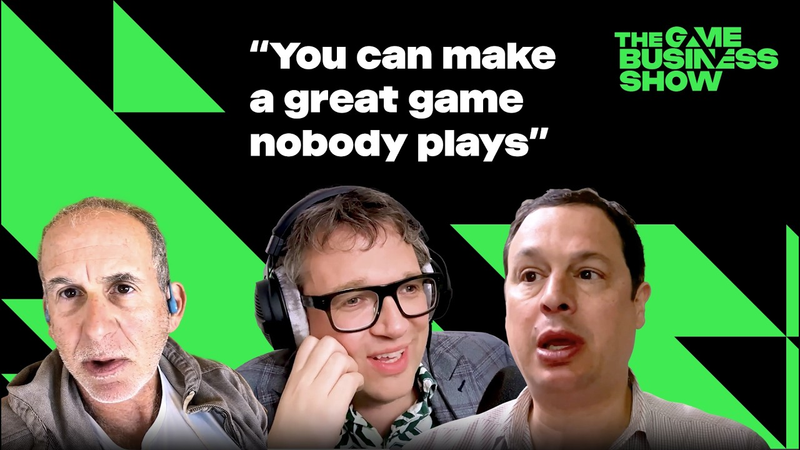
Zeros are possible. You can make a great game, right? That gets great reviews, that nobody plays.
There is a way for us to compete, maybe not with the resources [music] of a Take-Two, but it is pretty helpful to have the biggest realized TV show [music] on Netflix for like 3 years running.
And without disparaging our our partner, uh they did a crap job and those games were terrible.
[music]
Hello and welcome to the Game Business Show with me, Christopher Dring. Today we are speaking to Skybound. Now, Skybound is an independent entertainment company who that is best known for The Walking Dead comic book series, which of course later became a hit TV show, and then a hit video game franchise. Now, the company is looking to repeat the trick with Invincible, which started as an adult superhero comic book series and is now a popular animated show on Amazon. It's just wrapped its fourth season. It's the biggest season they've had so far. And this week it's making its big step into the world of video games with Invincible versus, a new fighting game in the vein of Street
Fighter, Mortal Kombat, and Tekken. Now, it's a competitive genre, but they've brought in real expertise. Skybound acquired a new studio called Quarter Up, which is made up of former employees of Double Helix. Now, Double Helix was behind the underrated and legitimately excellent 2013 Killer Instinct reboot, which was a free-to-play fighting game that was made for Xbox. Now, with Invincible versus out this week, I had a chance to interview David Alpert, who is the CEO of Skybound Entertainment, and Jon Goldman, who's the co-chair of the company. We had a candid chat about Invincible, The Walking Dead, the company's unique approach to developing IP across mediums, plus what they hope will be the next big cross-media IP. Check it out. Hello David. Hello Jon. Welcome to the show.
Thanks for having us.
I'm going to start by talking about Invincible. I actually knew very little about it before this chat. I knew I know it's been a hit TV show. I know it was a comic series before that. But looking it up, it's not new at all. It's back in 2020 2003 when it first when it first was launched, at it sort of found
a new life because of Amazon.
Yeah, you know, the our partner Robert Kirkman created Invincible with his artist Ryan Ottley in 2003 and when it first came out, it was it was pretty it was pretty successful, but people didn't quite know what to make of it in the at the very first iteration. The first few books feel you know, until don't want to ruin it for those who haven't seen it. But you know what? At this point you should have seen it. It's great. You should read it. It's amazing. But until there's a there's a mass murderer pretty early on. So it feels like a kid show or kids comic until you get to that mass murderer and then things take a real turn and you start to see what Invincible is all about. We had actually had a number of opportunities. You know, one, the comic's been incredibly successful since it was published and we had actually had a number opportunities with different partners to turn it into different media opportunities, but it wasn't until our partnership with Amazon that is actually the Twitch guys who really sort of were beating the drum for how much they
loved Invincible matters. It's their favorite comic and they had originally wanted it to be a Twitch original, which I thought was kind of a cool thing. We were talking to them and then our partners at Amazon were like, "No, no, don't do it. You can't do it Twitch. You have to do it us." So we said, "Okay." And we were excited to do it. And they've been they've been great partners ever since. But you know, the other part is doing a hour long ultra violent animated show. It's never been done before and we weren't really willing to compromise on either the quality, the look and feel, the length, or the violence. Like all those things were really sort of essential to what we're trying to build. So it took a while to find the right home.
Brilliant. Invincible has been in games before. You did I think is it Invincible presents Atom Eve with Prime Gaming? There's been a mobile game I think with Ubisoft. You've had some partnerships with Fortnite. How is has that all informed what you're doing here with Invincible verse?
It's part of testing the the waters. That's kind of how we've done things
with Walking Dead in the past as well. We we do some licensing deals, we do some integrations, we we believe that Invincible is perfect for video games, but we like to just confirm that uh gamers like it before we um invest heavily behind it. And that all, you know, it passed all those gates.
Mhm. This game that's coming up, Invincible versus it's from uh an internal studio that you launched um Quarter Up. Why do it this way? A lot of entertainment companies are sort of choosing to partner with independent studios. Why why launch your own? Why develop your own?
So, nobody cares about it as So, we don't see ourselves as an in a first of all as an entertainment company in the typical sense where we've got sort of a main uh projection of our IP and then everything else is ancillary. So, our IP and our fans are the sort of things that play well in games, comics, TV, merchandise, and we feel we need to
have control over all these things working with people who really care. And by the way, the the basis of the Quarter Up team were people used to work at my old video game studio a long time ago. So, I didn't They were like young guys then, so I didn't know them, but that's a happy coincidence that it's a it's a tight um it's a tight circle. Um but, we don't see this as just a uh let's do a uh licensing deal with a big publisher and make a little bit of money and see what happens. Like, this has to be something our fans are uh in love with and that we're proud of. And you can't always do that by offloading it to someone else.
I'm going to hit it from a slightly different angle. Um I agree with what you said, but the a lot of folks look at games in the sort of the traditional film TV side and they think of it as a revenue opportunity. But for us, any artistic [clears throat] or commercial endeavor has a is there there's an intersection between those two things, right? There's and you know, I know some people will snicker when I say this, but there's there's art in the
comics of Invincible, there's art in the TV show of Invincible, and there's art in the game. Um and I don't just mean art in terms of drawing, I mean art like you have to be an artist to make it there. And so some people will look at purely the financial track record of a game studio when trying to determine, "Hey, is this a good partner for us?" Whereas for us, like really what's important is like these guys make kickass games. Like it wasn't just, "Hey, let's build a studio." It was that Mike Willett and the guys who were behind Killer Instinct, one of like the coolest fighting games of all time, they wanted to put the band back together and they wanted to build something and they effing loved Invincible. And they're like, "We want to do a fighting game that's for FGC and it's for Invincible fans and we want to make it awesome." And so that sort of that was the value proposition and that was exciting to us. A talented technical team that understood the genre intimately and had massive love for the IP. So that's why we're like, "Hey, this this this is a strategy that makes sense.
It's about that passion combined with technical know-how."
Mhm. Then one last one last point on that is you you weren't aware that it Invincible came about in the early 2000s, but it's already sort of an institutionalized fan among super fans, so we see it as something that's now made the 20-year mark, so it could make it to 50. It's like it's a really well-established IP for um for a Skybound type of fan and we want to make sure that uh video game players like this and like it a lot and respect what we've done. That's super important.
You You obviously you join things up too, right? I think I read you've you're introducing a character in the game that's coming to the comics. I hope I can get this right. The writers on the TV show involved in the game. I guess that's a lot easier to do when you're all part of the same family and and can sort of feed into each other.
You know, one of the things we think about, Christopher, is you know, I think a lot of people fail when they go from when they hop from media to media and try to bring their sort of their understanding and learnings from one into another and sort of think that their media is sort of dominant, right? So, you see uh film and TV execs trying to make games and they don't know what they're doing. You have game people trying to make uh you know, film and TV and it doesn't work. You have comic people doing everything everywhere. So, for us, we were trilingual at birth, right? So, the company was born with John's a video game dev for decades. I've been in sort of film and television and comics and games for decades. Uh and our partner, Robert, is, you know, the largest independent comic book creator of all time. So, we understood those businesses intuitively uh and they were our native languages. So, when we built Skybound, it was very much about like, how do we actually integrate those things as one unique opportunity to sort of serve the IP that we're so passionate about as opposed to
do this here then make money there, right? It's really about we want to make the IP that's a world we want to live in, spend time in, connect it with brands through all the different opportunities and engagement points that we can and sort of build a ongoing live community in every way in which we can.
The model seems to be well, at least on the basis of the Walking Dead and Invincible here, but you seem to be establish an IP start in comics, get it established in TV before taking it to games. Is that Am I right there? Is that Is that Is that the deliberate um strategy?
Deliberate, yes. Yeah. Like you you we wanted create, you know, comics gives you the freedom to create a fantastic IP and experiment in a um you know, low consequence mode. TV popularizes it. Like people see our stuff all over the world. Um and then video games, of course, are a big big investments. We want to make sure that there's a you know, a large
group of fans ready to uh embrace it. And in order to do that, we also need to make a hit TV show, which turns out we have a pretty good track record of that.
I'd say the other thing, Christopher, is that um content discovery content, you know, sort of publication is easier today than it's ever been. But content discovery is probably harder today than it's ever been. So, launching a new product today is incredibly difficult. So, for us, get a comic book out into the market, still has to be great. Our comic books have to be profitable, but sort of it's not an R&D sector for us. We get them out into the market. We find is there an audience there? Do people care? There's some really good influential people there that So, we see not just sales results, but is this resonating with the right group of folks? If it is, we then sort of use television to say, "Hey, could we go from hundreds of thousands and millions of people to tens of millions of people?" Uh and then if we go there, then it's like we can start underwriting uh into the game space ourselves. And that's when things get really exciting.
Focusing on Invincible versus for a bit. I mean, it's obviously a fighting game. And I know that the I know the Double Helix folks who worked on Killer Instinct and and as I mean, I'm an old school Rare fan. But obviously the bar and I know the bar in that genre is really high. Um I see the investment that goes into Tekken and Street Fighter and Mortal Kombat and even to things like Dragon Ball. How do you decide on things like genre? What Why Why Why did you go down that route?
Well, it makes a lot of sense for the IP. Like Invincible has a lot of fighting in it. You got a lot of characters, hundreds of characters that we can expand the fighting game over years and years and years. Um and sort of underlining what DA said earlier, we have a great fighting game team. Like that's essential. Um and I'd say a final point, you know, it's mostly an arena-based game. So it's, you know, there are much bigger genres we could, you know, we could have taken on an open world uh thing with Invincible. And so it gives
us some constraints. Yes, it's super expensive. We're competing against giants, but it actually has some limitations that allow a newcomer to um you know, edge our way in. And we'll we'll find out, you know, we'll find out, but early signs are are pretty awesome.
Yeah, so we're getting some buzz out there. I see it's got some decent wish lists and and certainly uh but it's a very demanding audience.
Very demanding audience. But you know, but we think of it as sort of two there was the opportunity was in the fact that uh the FGC is pretty stable, right? There's been a lot of iterations with the same games and people are sort of hardcore set in their games, right? They they're Street Fighter players, they're MK players, right? Whatever it is, they have their their game of choice. But there's a whole generation of people that love Invincible that might might be perfect for fighting games that probably haven't picked one yet because they're like, "Hey, I'm 20 years old. I don't know, like am I going to play Mortal Kombat when
there's been, you know, 20 editions of Mortal Kombat that I haven't played before and I'm going to get my ass kicked because I don't know any of the combinations or moves or I don't know all the backstory and lore?" Whereas they're native to this environment. Um and then the the other thing is is I don't know if you've seen the show, but you know, some episodes of the show there's like 10 or 15-minute long fighting scenes that are just awesome and emotional and powerful that people go crazy for. So when they say, "Hey, I want to see more of this." getting them a fight a fighting game is it is actually the opportunity that they're looking for because they want to do their own thing.
Mhm. Strategically, we're in between some release windows uh and I'm from the very beginning, we have stayed close to the fighting game community, got their feedback, showed them early builds. We have tried to show them the utmost respect and shaping this game and I feel them pulling for us.
Um so, there's no guarantees in in life, but it feels like we're on a great runway.
I went to Evo for the first time last year, or the European version, the one that was in Nice.
Yeah.
And it blew my mind. Um and it there was an announcement for character in a Dragon Ball fighting game that's like 10 years old and they went crazy.
Crazy.
Yeah, so it's uh it's it's uh it's phenomenal. It's like a different world from well, from the one I'm used to.
It is. I mean, Evo Evo in Las Vegas is over 100,000 people. Like it is a hot it's a conference in its own right. You know, so this can this community is passionate. Um they know what they like and we've tried to listen to them to help them get what they like plus a little bit uh of something maybe they didn't expect.
One of my favorite moments though, Christopher, about this whole process was just coming out of the beta, um we had the head of the studio of Quarter Up, Mike Willett, playing our head of publishing, Shawn Mackiewicz, uh who publishes the
comics. And uh Shawn was just getting his butt kicked and he went over to ask Mike for pointers and he's just laughing about how poorly he did. And Mike's like, "Oh man, you need to work on your grip strength." And Shawn laughed thinking he was a joke. He said, "No, no, no, seriously, I'll get you some I'll get you some tools. You need to you really need to work on your grip strength." And just the whole idea that Mike was approaching with that level, like it's sort of shocked Shawn's like his mind kind of ex- Yeah, he's like, "Oh,
I mean, it's serious. Mike's a Mike's a martial artist, too. Like he's in he's in good shape and and, you know, like fighting is a passion through and through in work out of work.
Yeah.
So, again, can't emphasize how important that is.
Obviously, this was the IP at the moment. You'll be you A lot of people know you for The Walking Dead. Um what did you learn from your experience The Walking Dead games that you're applying to this? Is there anything you've learned?
It's a great question.
Dave, I've got I've got tons there. Do you want to go?
Yeah, I think that the we've had a number of games in The Walking Dead
universe that have been uh very successful. You know, one thing that's different is we have a split license there, so there's some games that come out that we don't have things to deal with. Um and without disparaging our our partner, uh they did a crap job and those games were terrible. Um generally because they embraced that point of view. But, that was a joke. I am disparaging our partner. They did an absolutely terrible job making those games. Um the
Honesty's the best policy, Dave.
I'm I'm being honest. The uh when we succeeded, it's because we've embraced what's uh central and core to the brand or to the property. Um I feel like the Telltale game is a perfect example of that where we that we set out to be like, "Hey, this is a zombie story that makes you cry, that makes you emotional." And so, the goal for the first season of Telltale was, "Hey, we want to make a story that's going to make you cry uh at the end of season 1." And that was sort of like very much the goal. But, otherwise, it's like, "How do you stay true uh
to what's going on?" A lot of people want to come in and make make the zombies fast, make it just like a quick-twitch uh trigger shooter. But, that's not what is true to the brand. So, the more true that we are to why people love the underlying brand, the better off we're going to be. And then on top of it, you still have to find great gameplay, right? The game itself has to be great. We always say that if you encounter you never know where you encounter your fan, right? The first meeting you might be your game, it might be your t-shirt, it might be your piece of merchandise. And if that's bad, you're not going to come in. If I had encountered Game of Thrones first uh in their game space, I would never would have gone and read all the books and watch all the shows, right? It's You have to You never know where you find your fan. So, you have to treat every There's no ancillary, everything is primary.
That's right.
I was going to talk about The Walking Dead for a second, but actually I find this really interesting because um John, I think I read it in an interview you you said that Skybound you you just what you just said there, David, that it's not a bunch of like ancillaries off a main thing, everything is primary. And
I think what you were saying is that video games are not spin-offs of comics or the TV shows, they're not a merchandise. It's
No, look how much Look how much money people spend in video games and how much time they spend in them. And so, they're good. You have to respect them. Um you can't give them uh crap. That's like that's like a dereliction of of duty in our opinion.
I find this quite interesting because I look at the Super Mario Galaxy movie, right? And love it or not, whether or not you think it's a good film or not, and I know lots of people don't, Nintendo did treat it like it was their big thing. They even said it was their main Mario Brothers 40th anniversary thing. And I think that's probably the right approach. And then I look at the new James Bond game that's coming up. And I looks fantastic. I've heard good things as well.
I would have rubbed. Yeah.
It's got a starry cast, it's got a big theme song, and importantly there's no there's no James Bond at the moment in the film world. The only actor playing James Bond in 2026 actively is Patrick Gibson. Um and wouldn't it be cool if this if they treated this game like it's
the next big Bond thing, if Patrick is on Jimmy Fallon chatting about it. And but I have to imagine it won't get that. I don't mean I don't I'm making the assumption. I'd love I'd love to be wrong.
You know You know it's a deal. Yeah, you you just don't know, but when I look back I you know, the last time there was a great Bond game was really GoldenEye, right? And they also did a fantastic job. So
Yeah. Yeah. Yes.
It really depends how you're organized and this may be too deep in weeds, but if you are a typical entertainment company and you license out the game and you get, you know, million dollars up front, couple million dollars guarantee, that all drops to the bottom line. So you're happy with that and you don't really have an incentive to do something bigger. That that doesn't that doesn't work for us. We've seen what happens when uh when they go wrong because of what DA described with that split license. Like you can actually devalue and harm a franchise. And because this is all we do, we don't make
anything but our own stuff, we can't afford to let that happen.
I would You you preempted a lot of my questions. I was going to say that in the past maybe Well, we're trying to be helpful.
Yeah, you're being very helpful.
I mean, in the past in the I think it I think to the 1990s and you could have just said, "Oh, the game was rubbish, but that was just the game." If it was a game adaptation of a film.
Well, here's here's the big difference. Like can't read your age completely, but you look relatively uh younger. And so back in the day it was a different it was a different game. Like everything's distributed digitally.
Yeah.
Back in the day there was a box after launch, you'd have to hit GameStop so you had like two weekends to sell something GameStop or someplace else. And your business model was it's too much of a pain in the ass to return a game to GameStop. And uh that model doesn't work anymore. And some people still try to do it, but you get your ass handed to you.
I guess that's why it's important as well to do what you're doing in-house, right? You know, you talk about this in-house studio. You have a little bit more I mean, I know you have control anyway you work
with an independent studio, but there's that that um
You you don't [clears throat] though, Christopher. Like, you know, you It's possible to find a partner that treats your baby the way that you want that you would treat your baby, but it's rare, right? You know, you understand that you cuz the thing Here's the thing, right? John and I and Robert, we're we're owners of the principals of the company. So, we're not going anywhere. So, while we we're we're professional business people and so we manage earnings the way everybody does. We're not we're not worried that we're going to be gone next year from the business, right?
And we're not looking for and we're not looking to Oh, this will be a great stepping stone to do something else because what else would what else could be more fun than what we do, making these franchises and bringing them in TV, comics, games? Like this is the holy grail if if you want a career in this industry.
But I've been working on this for I've been working on Invincible for since it was launched. So, 23 years I've been working on it. And I anticipate working
on Invincible and Walking Dead and all the other IP that we own for the rest of my career, right? So, um if if I put out something bad next quarter, next year, even if I make a little bit of money, it it puts me in the hole. It's things I have to sort of remake back, right? It's a it's that long-term vision that we're able to execute because I know that if nothing else, if everything else at Skybound doesn't work, Walking Dead and Invincible are going to be around for for decades to come.
Yeah, we had a whole company based on that. You know, just so happens we've got hundreds of other IPs and we're the biggest independent repository or IP library in the world because everything else has been bought by bigger players. So, we've got lots of stuff to work with, but we've got a couple of golden eggs that we need to take care of.
I want to make sure I get this in clear in my head. So, what was this This is more for my information. How did the split licensing thing What was that about then? What How did that
There's a great story. There's a testament to DA's deal making. You
should tell the story.
So, um just a little backstory. Um I came to I came to Los Angeles in 2001, so 25 years ago. And within a few months of landing in LA, uh there was two people that I met. Uh one is Robert Kirkman and one is John Goldman. So, um we all sort of shared this vision that comics, film, TV, and video games were sort of much more closely intertwined than previously thought. And you know, today that's kind of obvious. You look at the state of games in Hollywood. It's like and comics, they're super intertwined. But back then, it was really very far from the truth. We were coming off of the Doom movie, right? So, uh not the highest point of uh you know, cross media adaptation. And Sony had just passed on buying Marvel for $15 million because they're like, "Oh, we already got Spider-Man. Everything else is junk." So, that was Yeah, we don't need that other stuff. Yeah, that was the that was the approach at the time. Um and so, we we thought that, "Hey, you
know, people people love IP. They love stories and they want to they we think of it as because if you're in film, you think about movie theaters. And if you're in TV, think about, you know, people watching at home. If you're in games, you think about people buying at the time discs and now playing on on computers, right? But the fan is just like, "Hey, I love this, right? I love I love Doom. I love World of Warcraft. I love Harry Potter. I love Walking Dead." Whatever it is. They want to be in that world. So, like, what if we built a studio that was organized around that? How do we sort of think about that approach? So, Robert created Walking Dead in those three. Um and instantly, the sales of the comics started going up and up and up. Hollywood came calling. They wanted to make a TV show based on it. And they're like, "Great. We'll make a TV show and you'll give us all the rights and um that's it."
And we're going to get you 250 bucks or something.
And we're like, "No, that doesn't really make any sense. It's not what we're going to do. And people told me like, "Hey, that's
that's the deal. Like you either take it or you or you're not getting a deal." And because the comic was doing so well, and Robert was able to sort of have the fortitude, we said, "Great. Like we're going to make what we think is important, the list of things that we need, and you either take it or you don't take it." And so literally I got told every cliché. They're like, I literally was told, I swear to god, "You'll never eat lunch in this town again."
Oh, classic.
But wait, that person ended up asking to produce a show with us 5 years later, but different story. Um but I when they said that to me I was like, "I don't even know what that means. Like I'm going to eat lunch today. I have lunch at my house."
I know. And like we like lunch a lot. Like
Lunch is like one of my top five meals, you know what I mean? It's like one of my top five meals.
Those are like fighting words when like you're going to tell me I can't have a meal, that's that's terrifying.
Um but we we held out and we put our demands there. But and what was great was the book just kept getting bigger and bigger and more popular and more popular. And we eventually, you know, 6 years in had a bidding war where people
finally came to the table and acknowledged that they were like, "Hey." And this was the the the line, "The rights that you're looking to reserve will only matter uh if this becomes the biggest show in the world." Cuz at that point there never been well, there've been small TV things, but there've never been a real game based off of a TV show at that point. There's never been something substantial. So um that was how how it happened. But they're like, "Well, if we create characters, if we have things, we have the ability to do stuff with that." And so we finally said fine to that. Um but that was sort of how we built the business. We launched Skybound um when we put uh Walking Dead into production. So uh The Walking Dead TV show and Skybound are exactly the same same age. So we are we will be uh sweet 16 um this coming June.
I see. And the bad game I guess is part of that new character. Um
They've done a bunch of games and and the good the good part about it is that fans at this point are so discerning. They know. They see Skybound on the box
and they know that that Walking Dead game's going to be good. They see them the logo there, they know it's good. They are just the you go to Reddit and Reddit will tell you you go to Discord, Discord will tell you. You go to any social media site, they'll tell you stay away from that. And it's obviously a cash grab and not something that's been uh made with love and fun.
Walking Dead must be quite hard though because it's obviously the the obvious thing to do would be to do something like a big You know, I think of games like Resident Evil Requiem which I know is a very different vibe to like a zombie game. Obviously super high-end expensive video games to make which is by the way fighting games are as well. That must be challenging when you want to sort of when you've got such a strong IP and and the competitors in games are so high-end and so expensive.
Yeah, I think the real lesson from the Telltale games is that if you can straight connect with fans emotionally, that's more important than mechanics and fit and finish and that's that was a real early lesson that
we've tried to bring to everything we do. So, there is a way for us to compete uh maybe not with the resources of a Take-Two, but it is pretty helpful to have the biggest realized TV show on Netflix for like 3 years running even though it's like 20 years or 16 years old or whatever. Like that that's a big deal um that sort of I think really highlights the difference in our strategy.
Yeah, I was really and you know, you talk about we just had the
I bet you I bet you didn't know it was as popular as it still is. Like it's not it's not like a a little backwater show. It is still bringing new fans to this universe.
seeing billions and billions of minutes consumed every year in The Walking Dead universe.
Wow. You could quite rightly correct me there cuz obviously some of The Walking Dead folks made Dispatch, didn't they? Which came out last year. And that's done millions of copies. And don't get me wrong, I don't think the game's cheap,
but like it's not it's not Take-Two either.
Yeah.
I guess that's the model.
I think it's a pretty it's a pretty solid experience. They they took that lesson and it's it's very satisfying on its own terms.
Um obviously one of the things I when I was looking into what you're up to, I did come across all your published games you do with indie developers. Um some really well-received indie games. What How does that fit in to what you're doing?
You know, we've had a a number of different approaches and strategies to try to figure out how to play in the gaming space. You know, I think there was a you know, we've always thought and and maintained that our game developers, whoever the creative lead is, is is much of an artist and creator as uh whoever's running our show or creating our comments or podcasts, right? So, that's been sort of a central core tenant for us is that yes, we need a business lead in there and a production lead, but we also want to make sure that we're thinking about it creatively. And I think in the beginning for us it was like, oh well, then we should do the same model that we're doing in comics and
television in the game space. And um I think there was So, we got some really cool stuff and we were able to find some interesting opportunities there, but ultimately I think launching a brand new IP in this ecosystem while completely possible, like you know, Dispatch shows that you can you can do that. I think it's really hard. Um and so, thinking about it as a not just as a one-off, but as a business, we were thinking about like, hey, how do we make something sort of tied directly to Skybound and take advantage of what we have? So, one of the great things for us on the comic is not only do we have we have the comic, we set the art, we set the mood, the vibe. We have the animation studio that we built ourselves. So, we actually do all the animation for the show. Um that animation team works with the character designers for the game. They do that uh the automatics for uh for the game. So, there's like a direct interaction. The writing staff or there's an able to sort of overlap so there could be narrative interaction. Um our licensing and merchandising
programs when we do sort of product is able to sort of help sort of promote when we do activations for for the game. And then we're able to use all that buzz and coordinate around the release, right? So, uh today is the finale of season 4 of Invincible. What you'll see is actually most shows at this point are melting ice cubes as they lose audience uh like almost a kind of DLC basis. The attach rate goes down. Invincible's the rare show that season over season is increasing. Season 4 is almost quadrupled the audience size of season 1, which is uh insane. Uh we've hit over 4 billion minutes viewed at this point. So, it's kind of a a really massive audience there. And right as we finished that, we're then able to use that as part of our go-to-market strategy next week coming out right after the finale when the social media engagement and people are talking about as much as possible. Boom, we're able to put the game into market. So, you know, the challenge for us at this point um and I think for the game industry as a whole is that, you know,
zeros are possible. You can make a great game, right? That gets great reviews and nobody plays. And I It's like that's I mean, that's That is the reality, right? That and that's terrifying. So, for us as uh business leaders, we were trying to find everything we can do to ensure to de-risk and ensure success and maximize upside while also preserving the integrity of the brand. And partnering with all these different things helps us to de-risk cuz we know that those are proven pipelines. Um and we know that there's an audience there. We then have to just be effective with our communication to them, but that's that's why, right? So, we started in this place, we had some successes, we had some failures. Uh we probably had more failures than we had successes, to be honest. Um but we learned that going to market is really difficult, and it's only going to get harder. So, we really want to figure out how can we be a little bit more um yeah, a little bit more smart about it.
Couple other points is we did treat it a bit like our comic
book business, and for Invincible, versus, by contrast, we've not only built a development team, but we've built a top-flight marketing and publishing team. The level of activations over these next couple of weeks, it's like four or five things a day. We hired top team members from Blizzard and other places, and so we we've upped our game. We learned a lot in the indie publishing, but we've upped our game a tremendous level, and we felt if we're going to spend all those resources, we should do it on our own IP.
Okay. I'm worried about the time, so I'll ask this, this is my end my ending capping question I always ask. Where would you like to see Skybound in maybe 10 years?
Uh Jared, do you want me to go first?
No, I can I can take it. So, I would love it if we have another one or two big IPs, and we've got some things on the bubble. We've got a uh vampire fiction that
actually uh built in England with uh English creators, great voice cast that blew up in audio, like really big. We're taking that to TV. We have a hunch that uh vampires work with video game players, just like zombies and superheroes, so we feel pretty good about that. But I think we're doing video games in a new way, working directly with our fan and I can't say this is yet a consensus among all the owners, but I think there'll be an opportunity for people like us to uh reinvent how we bring uh television to fans as well. So when we look at the long term, it's all about not working through other people, intermediaries, distribution channels. We think we want the closest possible relationship with our fans. Uh you know, disintermediated from other parties. We think that allows us to do our best work.
You know, I think the part of the path to get there
is one is the continued success of our of our brands that we have out in the market now and we're seeing that. Um you know, knock on wood, the audience reacts and the fans react to Invincible versus the way that they seem to be right now. All All indications are positive, but until you Everybody has a plan until they get punched in the mouth, right? And so
[clears throat]
we're about to get punched in the mouth real hard next week and we'll see we'll see we'll see how that goes. Um and assuming that goes well, um we then have we do have like a five-year plan to sort of build out additional capabilities and sort of expand out the things that we can do from a fighting game to sort of build bigger and more immersive experiences both for Invincible, Walking Dead, and our other IP. And I think that really is is exciting when we can actually start thinking about not just what are the bounds of the medium and how we can tell stories differently and connect with the audience in a in a different way.
What is that other IP? Or can you not
tell me?
Oh, we can tell you.
I mean, yeah, go go ahead. And also, you know, if you're pulling together like for just work reasons, it's all on our you know, website too, but there's there's over 250, so we can't list them all
the the the the the vampire fiction was called Impact Winter. It was fantastic. It was a Audible original we did first as a podcast. It actually was the number one Audible original of all time. And I was first time they took a podcast off platform, they took it to Spotify and Apple podcast and went to number one on both of those charts. And now we have a deal at Netflix as to do as a TV series with the director of The Hunger Games. And so we're hoping to be in production on that soon. No date to turn.
Brilliant. Well, thank you David. Thank you John. I look forward to that. I look forward to Invincible versus. I hope it becomes a staple of Evo tournaments going forward. Good luck with it all and yeah, thank you for your time.
Thank you. All right. Thank you. Have a good day.
That's it for today's edition of the Game Business Show. Thank you to David and thank you to John for joining us there and for that candid conversation. I will be keeping an eye on Invincible versus when it launches this week. We will be back of course with more news analysis interviews and opinion in the days and weeks to come. If you don't want to miss an edition, make sure to sign up for free at the gamebusiness.com and you'll get an email every single time a new edition is out. There is also a paid tier that we have which includes a bonus podcast and a monthly report. If you're enjoying these podcasts and want to see them continue, please do consider becoming paid subscriber. It makes all the difference. Genuinely it does. But that's it for me today. Until next time, thank you for tuning in.
Auto-generated captions from YouTube — names and numbers may be misheard.
Skybound is fundamentally restructuring its business model to prioritize the internal development of its core intellectual properties, specifically Invincible and The Walking Dead, over the publishing of third-party indie titles. This strategic pivot centers on the establishment of the internal studio Quarter Up, which allows the company to exert direct creative control and ensure that video game adaptations align seamlessly with the established tone and quality of their existing comic and television franchises. By moving away from external publishing, the organization seeks to mitigate the risks associated with licensed game development and protect the long-term value of its brands.
The core philosophy driving this transition is the treatment of video games as essential, primary components of a franchise rather than secondary merchandise or spin-offs. By integrating animation, writing, and marketing teams under one roof, the company aims to foster a cohesive cross-media pipeline that builds audience engagement before committing to high-stakes game production. This approach emphasizes emotional resonance and brand integrity, aiming to avoid the common pitfalls of low-quality licensed titles that can dilute fan loyalty.
Looking toward the future, this model of vertical integration serves as a blueprint for expanding other successful properties, such as the audio-drama-turned-Netflix-series Impact Winter. By bypassing traditional intermediaries and fostering a direct relationship with its audience, the company intends to create a sustainable ecosystem where creative output is consistently high-quality and deeply connected to its source material. This shift represents a deliberate move toward a more controlled, brand-centric development cycle that prioritizes the long-term health of its intellectual property portfolio over the volume of its publishing output.

The Game Business · 2026

The Game Business · 2026

The Game Business · 2026

The Game Business · 2026

The Game Business · 2026

The Game Business · 2026

The Game Business · 2026

The Game Business · 2026

The Game Business · 2026

The Game Business · 2026

The Game Business · 2026

The Game Business · 2026

The Game Business · 2026

The Game Business · 2026

The Game Business · 2026

Deconstructor of Fun · 2026

CD Projekt · 2026

CD Projekt · 2026

Naavik · 2026
The Game Business · 2026
The Game Business · 2026

Deconstructor of Fun · 2026

Deconstructor of Fun · 2026
IGN Entertainment · 2026
Comments