1 free read left. Create a free account for unlimited reading + AI research.
Create free account
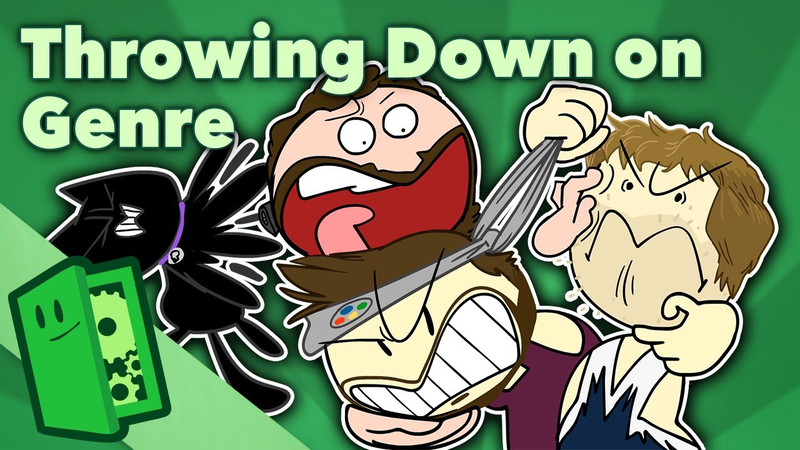
Throwing Down on Genre - A discussion on Fighting, Sports & Wrestling video games! - Extra Credits
Key insights
6 takeaways- 01The sports simulation classification is supported by the industry's reliance on iterative, annual release cycles that prioritize roster updates and authentic athletic presentation.
- 02The fighting game classification is supported by core mechanical similarities, including two-player combat systems, health depletion mechanics, and the use of special move meters.
- 03Wrestling games prioritize the illusion of choice and dramatic storytelling over the balanced, competitive mechanics essential to the fighting game genre.
- 04Professional wrestling video games occupy a unique hybrid genre that defies traditional classification as either pure sports simulations or fighting games.
- 05The genre has expanded to include titles focused on match choreography and management simulation, further distancing it from strictly player-controlled combat.
- 06The lack of a rigid definition reflects the genre's established identity as a distinct blend of sports presentation, fighting mechanics, and narrative-driven performance.
Ask AI about this video
Transcript
I was on a call with Jeff and Eddie recently discussing some upcoming EC episodes when somehow we got derailed and began talking about wrestling games. Specifically, what genre we each thought most WWE wrestling games fell into. I said they were most likely sports games, whereas Jeff suggested they were fighting games, and Eddie said they were neither and sort of both. So, since we all can't be right, there was really only one way to resolve this. In the ring! Thanks so much to Morning Brew for headlining support for this episode. The following contest IS SCHEDULED FOR ONE FALL. Introducing first, accompanied by his manager Joey, he's the voice of victory, the DM of destruction, the glad cat dad, Matthew Crow! Ooh, excuse me. So, I posit that wrestling games like the WWE 2K series
are sports games. I mean, think about it. They've been coming out regularly since 2000, often with roster updates as different athletes get hired, retire, or move on to other future endeavors. And sure, they'll come up with small iterative updates to core systems, but really what you're buying the latest game for is to get the most up-to-date roster, just like with an NFL or NBA game. Furthermore, these games present an authentic athletic competition, even though we all know it's fake. Now, before Eddie and the whoa, uh, entire comment section jump in to tell me I'm wrong, let me clarify. Pro wrestling is an authentic display of athleticism that has fixed results. But the wrestling we see on the screen in the game is presented as if it were an actual competition, and most wrestling games don't play into predetermined endings. Besides, since their beginning, many of the games have tried to look like the television events themselves, incorporating modern TV language like dynamic commentary, on-screen graphics, and so on. And since they emulate the fantasy of the sports aspect of sports
entertainment, well, that makes them a sports game to me. And that's the bottom line, because Stone Cold said so. Wait, who's that coming to the ring? Next, weighing in at 600 by 900 pixels, he's the slayer from San Diego, the purveyor of puns, our sublime studio director, JEFF JEFF ZATKOFF. JEFF ARGUES THAT AT THEIR CORE, wrestling games are fighting games. At a base design, a fighting game features two fighters or teams of fighters who use a variety of moves to wear each other down and ultimately declare one side the victor. And while it may have a sports presentation wrapper, from a mechanics perspective, wrestling games feature two wrestlers or tag teams who use a variety of moves to wear each other down and ultimately declare one side a victor by pinning them. Fighting game. Jeff also points out that wrestling and fighting games have been sharing design DNA for decades. As wrestling games refined their tag team
mechanics, other fighting games started to introduce them to the point of even calling groups of fighters in those games tag teams. Conversely, the idea of building up a power meter to pull off a special move started in fighting games, but wrestling games have adopted it at various times throughout the years. So, he argues that games with such strong design overlap should be categorized in the same genre. Oh, man. With Jeff Zatkoff turning this son sideways, it looks like Kroll might be laid out on the mat, which would be convenient cuz that's kind of my name. BUT WAIT, WHAT'S THIS? FROM UNDER the ring with a steel chair comes the slayer of word count, the murderer of darlings, the red light renegade himself, former fantasy wrestling champion, Eddie Eddie wants to demolish both our arguments, saying that wrestling games were a hybrid genre of sports and fighting games that now isn't quite either. Hey, watch where swinging that thing. He argues that because wrestling is fake or predetermined, that's exactly why it's not a sports game. Games like
Madden and MLB The Show are about the fantasy of sports competition. Sure, but players know that the competition is still authentic. With wrestling games, it's not just about the fantasy of sports competition, but also the illusion of choice. People win and lose not by dramatic necessity, but by player skill. It emulates the fiction of professional wrestling as an authentic sport, but they also recognize the dramatic weight of TV storylines. Meaning as new versions of wrestling games come out each year, a wrestler with previously bad stats may suddenly get more powerful as they get more popular on TV. As to why it's not a fighting game, while the actual moment-to-moment wrestling is a big part of the experience, it's not always the exclusive focus. Fighting games themselves live or die off tightly balanced mechanics, and their players can sense the impact of even a small change to a beloved character's move set. But that kind of specificity often seems to be a secondary consideration in wrestling games. Heck, some wrestling games like Fire Pro Wrestling World, with its match rating system, encourages
match choreography to generate crowd excitement over just beating up your opponent as quickly as possible. Then others, like WWE SuperCard and Journey of Wrestling, actually don't even allow the players to wrestle at all, opting instead to simply watch the match results unfold based off previous choices. So it's a hybrid of sports and fighting games, but wait a second, doesn't every other video game hybrid have a long chain of genre connections? Like for instance, Returnal is a rogue-lite 3D platforming bullet hell. Warframe is a looter shooter with light MMORPG elements. Even the Professor Layton games are puzzle adventure mystery games. And I mean, who doesn't want to play the latest open-world rogue-like RPG shooter visual novel Undertale sim, right? But then when you look at wrestling games, they're just wrestling games. Huh. So to put the final nail in this coffin match. Eddie argues that since overtime wrestling games have simply been referred to as wrestling games, they've become their own genre entirely. OOH, THAT'S A BIG SWING FROM EDDIE THERE. And there's the referee with the bell.
So, since this one's going to go down in the record books as a no contest result, we'll leave it up to you to decide a winner. Are wrestling games sports titles, fighting games, their own genre, or anything in between? Let us know where you land in this squared circle debate in the comments below, and also in the poll we just posted over on our community tab. Who knows? Maybe if this match gets particularly heated, we might even do a live debate sometime over on the Twitch channel. Just no thumb tacks and flaming tables, please. You got to save something for the pay-per-view. Or if you'd rather engage in a service that is the polar opposite of pay-per-view, but also still rhymes with it, then you'll love today's sponsor Morning Brew. If you didn't already know, Morning Brew is a free daily newsletter Monday through Sunday that gets you caught up on the most important news stories of the day in tech, finance, business, and entertainment. Meaning, you can get caught up to speed every morning in just 5 minutes through a witty, irreverent, and informative summary of the day's important issues. Now, I myself am a recent convert to Morning Brew. The newsletter, not the caffeine, but you knew that. Whereas
Jeff has been an avid reader for ages, and we couldn't be happier that the Brew Crew wanted to sponsor our channel. Oh, and it's also completely free. You hear that, Zoe? Our doom scrolling days are over. In fact, in just one sitting, I learned how Juul settled a lawsuit in North Carolina paying $40 million due to their targeting minors with their ads. Then I got a look at how the Mobile World Congress trade show kicked off in Barcelona, and that some banks are actually letting workers work from home indefinitely, solidifying sweatpants as a preferred dress code. AKA, precisely the mix of news I'm interested in reading. And the best part is Morning Brew is completely free and takes less than 15 seconds to subscribe. Just click on the link in the description below to get Morning Brew for free, and you'll get a newsletter you're psyched to start your mornings with, while at the same time helping out Extra Credits without spending a penny. Thanks for that. A legendary thanks to Ahmet Ziyad Turk, Joseph Blain, Alicia Bramble, Kyle Murgatroyd, Casey Muscha, Orioles 1, and Dominic Valenciana for all of their support.
Summary
The classification of professional wrestling video games remains a subject of debate within the gaming industry, specifically regarding whether they function as sports simulations, fighting games, or a distinct hybrid genre. The central thesis posits that while wrestling games share mechanical DNA with both sports and fighting titles, they have evolved into a unique category that defies traditional genre boundaries.
Arguments for categorizing these titles as sports games center on their iterative release cycles, which prioritize updated rosters and authentic athletic presentation, mirroring the structure of annual franchises like the NBA or NFL series. Conversely, the argument for classifying them as fighting games emphasizes core design mechanics, such as two-player combat, health depletion, and the use of special move meters, which are foundational to the fighting genre.
A third perspective suggests that wrestling games represent a hybrid genre that incorporates elements of both, yet ultimately functions as its own entity. This view highlights that wrestling games often prioritize the illusion of choice and dramatic storytelling over the tight, balanced mechanics required for competitive fighting games. Furthermore, the existence of titles that focus on match choreography or management simulation—rather than direct player-controlled combat—demonstrates that the genre has expanded beyond simple physical competition. Ultimately, the lack of a singular, rigid definition suggests that wrestling games have successfully established their own identity, characterized by a blend of sports-style presentation, fighting-game mechanics, and narrative-driven performance.
















Comments