VideoDeconstructor of Fun
Breaking In & Leveling Up: Meet the Game Industry’s Next Generation
30 Sept 202453 min video
Transcript
this podcast is brought to you by apps flyer in today's Digital World understanding your apps Journey from Discovery to download is more than just insightful it's essential enter apps fer the leader in Mobile attribution and marketing analytics that allows you to measure the full potential of your marketing efforts making every ad dollar work smarter with apps flyer that's your new reality dive deep into Data driven insights that reveal exactly where your users come from and how they'll interact with your app apps lier where your app's potential meets [Music] performance hello everyone and Welcome to our deconstructor of fun interview series I'm your host Jen donaho a co-host of this weekend games and a strategic marketing consultant at Jaden Inferno Consulting in beta hat if you
listen to deconstructor of fun hopefully you do you know that many of the hosts were a little bit of dinosaurs we've been in the game industry for a really long time and the industry is evolving so much so that gen Alpha is now playing games and gen Alpha are those you know kind of 12 13 years old or under and gen Z are now making games and so for some of us Gen X here I think it's important for us to explore and learn what it's like to be the next generation of game makers how is that feeling you know the world is so different than when many of us came into the industry and so the goal for today was to really speak to some folks that are 30ish and under not to be too specific on age but some of the folks that are now coming in representing different disciplines they work on different platforms even Roblox wanted to make sure to talk about what's going on in the ugc world as well to hear what your experience is like and maybe help game industry
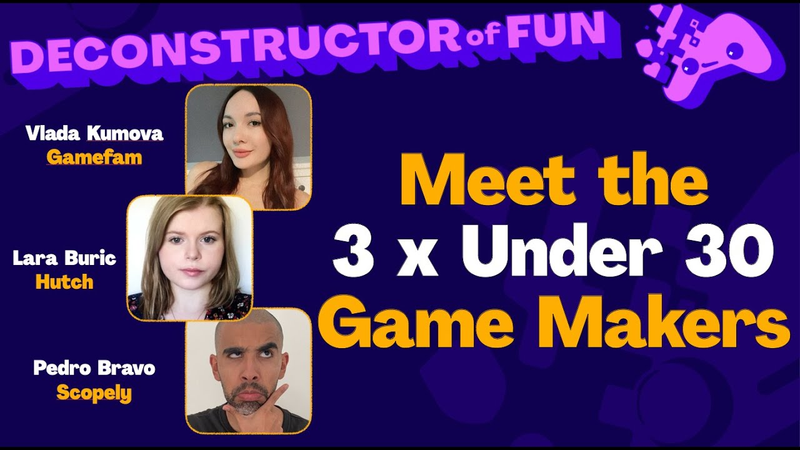
leadership get a different perspective on what it's like and as we interview a bunch of CEOs and Founders it it is certainly a certain kind of perspective and so this all came about I did a talk with Eda in a women's group and one of the folks attending an ally he said you know hey I would really love to hear more perspectives from you know more Junior people or more younger people I sometimes I try not to make it about the age as much as it is about the experience level but I'll probably mess that up and do both of those today so that's the premise for the conversation I'd like to introduce our three guests that have come in and are willing to talk about their experiences I'm not going to poke them about the games or you know try to pull out any numbers for them this is just about their experiences because our first guest is Pedro who is the lead pm on Monopoly go as much as I want to ask him everything there is to know about Monopoly go he is not here for that purpose Vada is a game producer at game famam and Laura is here
as a game designer at hutch so instead of me doing a whole Spiel why don't you all do a brief introduction of yourself what's your role in your company you know what kind of platforms are you're working on like I said I try to get a mix of people across different disciplines so Pedro why don't you go first yeah well first of all thanks so much Jen for inviting me to kind of speak here on the panel I really appreciate it I've been a longtime fan of the podcast it actually helped me get my first job and learn about the gaming industry as Jens I work at Monopoly go I've been on this team for four years now right now I lead a small pod we build new features I built a lot of fun things on Monopoly go that players love and see every day it's been a wild ride and I'm very excited to share some thoughts today oh that's amazing I know that the Marvel collab is launched yesterday maybe I'm I'm yes yesterday yeah you're right yeah I can only imagine having also worked at scope Le I love to say that worked on version one with mosimo
back in the day when I was there and so I'm just I'm thrilled at the success that the game is having all right vat let's hear from you what's your background or what are you up to so my name is V and I'm currently working as a game producer in game f one of the projects I worked on was Barbie Dreamhouse tun on Roblox in partnership with Mattel and currently I'm working on the fortnite side with a game which has not been announced oh amazing and I think I often say I worked at Mattel as well cuz I worked in the toy industry and that Barbie game on Roblox is constantly in the top 10 if not top three if I remember correctly so Kudos on that amazing work and then Laura tell me about yourself and what you're up to I'm a game designer at Hutch which is a mobile game studio and I've worked on games like top droids and more recently F1 clash and I do a lot of
systems design right now but I've done a fair bit of liveops in the past as well oh that's amazing so you get to touch a lot of different aspects of games on the mobile platform so thank all three of you for coming this this is fantastic so I think I always like to go back to how people get into the game industry for me it was very difficult to break in because I started in the toy industry and as I was interviewing a different companies they were all like well thank you you've never made a game before even though you've got 10 years of experience working at Disney Mattel and Hasbro we don't care luckily I got into to EA because EA had signed a 5-year jaal with Hasbro and they were like oh [ __ ] we need somebody that knows kids and family Marketing in these Brands and help us translate that into the game Space so I'd love to hear a little bit for you all how your origin story came about into the game industry Laura why don't you go first yeah so I'm GNA touch on this a bit later but obviously as the game industry is evolving there's been a ton of progress in terms of universities is offering a lot of programs nowadays
to study games so that's the route that I took I did game development and design at the University of Essex and so I am probably the freshest person you could talk to in terms of this because this is my first industry job after I have graduated with about two years of experience now so yeah that's my origin story I would say I'm amazed that they even have video games in University not an option for me back in the day Pedro what about you my story starts with an early rejection coming out of undergrad I was obsessed with League of Legends for a while and I applied a riot quickly got rejected after a hiring manager interview and I did not look back at gaming for a bit uh I went and and worked at a tech company called bware was a consultant there for a bit got to see what PMS do and I I really fell in love with with that role felt like you
know I had the tech background for my graduate degree but I didn't really understand the business side so I wanted to be to Tech PM work at Google or Microsoft or something like that so I went and sorry Crest if he's listening to this but I I did go get an MBA at UCLA I did an internship at Amazon and I I realized you know I I was a senior PM there at AWS and I I love the role but I realized I didn't really love the product that much I I wanted to work on a product that i' love to enjoy and engage with and I wake up excited for so I started thinking what do I like to do every day I spent a lot of time playing games spent a lot of time sleeping and I love to watch TV with my wife so I realized you know I can only monetize one of those things and create a job out of one of those things and it was gaming so I declined an offer from Amazon and proceeded to be unemployed for 5 months while I tried to look for a job in gaming I applied to scopely and a ton of other jobs scopely was nice enough to interview me for four different roles every time they told me hey you know we like you but you don't
you don't have experience in gaming so we're not really sure but eventually I realized I had to do something to kind of set myself apart from the rest and show that I do have some sort of knowledge and I had been listening to to deconstructor fund for about six or seven months now and I heard every single episode at that point Eric seert wrote a great book I read that I started doing a ton of research and then I just started to write a lot about the games industry one of my deconstructions got picked up by Iron Sour's level up I started including that in all my applications hoping that that would maybe get me a leg up and then I finally interviewed with the Monopoly go team and I looked out and getting a job here so that's how my journey has been but it was it was a very Rocky and long road to get here fantastic story of perseverance I love how you thought about thought leadership this is actually advice I gave to my customer service rep at data Ai and he really really really wanted to break into the game industry and so I advised to him I'm like listen you have a really good sensibility you're really
smart why don't you just go start writing about your thoughts on the game industry put it on LinkedIn and he's actually at solsten now and so he finally broke in and so I'm so I'm super proud of him so I'd love that advice Vada let's hear about your origin story yeah so I started my journey in game production after graduating from game design major and I was like very inspired and had the thick pink glasses and high expectations so it was really painful to break it and finding a first job was not very easy to be honest but I was overly confident in my skills maybe a bit delusional which convinced all the HRS and I just apparently got hired in maybe a few months after I started looking for a job so in the beginning I worked at a
game designer but it really quickly turned into a mix between design and production because there was a need for someone who can lead the team so basically I switched my role to a producer in about a year after I started working and since then I was just fortunate to work on a variety of games from Mobile to PC and currently working on Roblox and fortnite that's amazing that you were able to kind of shift Your Role a little bit is having game design and being a producer really beneficial to you I would imagine for sure I think it's really close roles actually and designer also needs to know a lot about production and have an understanding how to break down the tasks for the people so I think my transition was super smooth and I still use my game design skills in my work till now makes sense great so the first topic I wanted to
throw out to all of you was actually I I asked you all you know what is it that you want to talk about what is it that you think the audience would really want to hear and thank you first of all for that I also asked the community for a bunch of questions so what we're going to talk about today is an amalgamation of everyone's thoughts on the topics but the first one that I thought was really interesting was I don't know I I I made this up based off of something you all said which is the hiring bipolar disease that each of these companies has so in the current environment I think we all know it's really challenging there's a lot of layoffs budgets are really tight is everyone wants really cheap labor and so they want junior folks but then they don't want to actually spend the money to train them because anyone who is senior they have to focus on getting things done and so no one actually has the time to train the cheap labor that everybody wants and so it's this kind of like schizophrenic bipolar you know one or the other so there's so many talented
Junior folks that are really wanting to enter the industry but they do need that really strong you know senior leadership they somebody needs to Yo to them so in this particular case I'd love to hear if this is actually happening to you how this is feeling and what can people do about it what do you need from that junior level to get that training so that you can really come in and be that rock star that everyone wants you to be so in my experience I found that every interview process that I've gotten far on the rejection always seems to follow the same pattern which is to say we would like someone with more experience but we like everything else you had to say and I think generally that's a fair thing to say but as a young person in the industry and someone that's trying very hard to prove myself because of that it does feel demotivating to very rarely be given the chance to do so and I can't say I don't understand the risk that comes with hiring someone that still has a lot to learn
but in an industry as young as this one and that seems to all very recently have become more widely accessible so obviously I'm saying that in terms of you know all these new University programs sprouting and things like that it does feel somewhat oldfashioned to not welcome new Talent into the pool and not to mention somewhat unrealistic as well what have you experienced at Hutch that has helped you get training and learn is there anything that you can point to that has been helpful honestly being on the job is much different to actually learning about what game design is or game development is there's so much you can learn but when you actually get to experience it and you know get put into the deep end and actually try and you know develop some of these Concepts that you're thinking of it's a much different experience and I think getting the chance to work on slightly different disciplines of game design as
well like with liveops and with systems design I think was very beneficial to kind of just see different parts of what I liked about game design being given the chance to really experiment and take on more responsibility I think is obviously very very vital to my development as as a game designer it's funny it's almost like the advice is for universities to figure out how to get more hands-on experience to the folks during University I know when I went to USC last week they all do projects and part of the projects are they're they're working on a game and USC publishes the game was that your experience or was it a little bit different for you Laura it was very different I think because of the newness of these kind of programs it's quite hard to know what to go for I I did see a couple of programs that really emphasize this kind of work like very Project work I think Falmouth has a
really cool program where they're trying to mimic this kind of like Studio culture which I think is very cool but in my experience it was more like we were computer science students a few more modules that were a bit more geared towards game design and programming and things like that so I wouldn't say it was the best kind of experience you could have it didn't really yeah the projects weren't super geared towards game and I think maybe that's kind of what's lacking there but either way it it was still a good enough foundation for something else understood how about your foundation Pedro from a PM standpoint I found through my long hiring Journey that it's it's very very difficult to break into the industry and it still continues to be like that there there's a lot of other industries that are very much organized they have a clear Talent pipeline they they kind of bring in new folks constantly and it's a much easier path to break into to that industry say Tech or consulting or
banking or whatever it might be I feel like video games is still lacking very much here in this flow and I'm worried that it could eventually hurt the industry if we don't start to kind of grow this young base of new game developers I also worried too that there's a lot of senior talent that haven't had the opportunity to kind of manage a younger generation yet and it it kind of goes both ways there's the aspect of training the new generation of managers and also training the new generation of game developers I feel like a lot more of the industry has to be more open to taking risks and hiring the younger generation if we want to grow as an industry overall now that goes with the caveat of we're in a very rough time right now where a lot of people are being laid off unfortunately and it's been really rough for a lot of folks and there is a lot of senior Talent out there looking for work so it still very much concerns me and I I don't have a clear-cut answer but I like the idea of these programs becoming more mature where these students are kind of building games and kind of getting into
the the nitty-gritty cuz I I only really learned about what it's like when I got thrown into the fire right like I I could I could theorize you could read you could learn a lot you can come as prepared as you as you want but until you get thrown into the fire you won't really see how the day-to-day work goes and how to really make an impact on your organization so no I hear that challenge one of the things I did at Riot on our team was when we had somebody new join I would pair them with a peer buddy and so I would find someone hopefully that was their same skill set or discipline and they might have been on a different team or a different game but I would ask them to be buddies and I would ask them to kind of look out like a peer mentor so that they had somebody to talk to and say Hey you know I'm living this challenge because you know as a manager of a cross- discipline team too like I can't and nor do I have the time to train them on every little thing and then sometimes there are learnings that you all have so I don't know if that's a solution for some folks is to do peer
buddies or peer mentors I don't know just a just an idea to throw out there for folks um V what has been your experience with training or needing training I imagine in the world that you've been in and and going from game design to production it's been kind of an interesting Road and then you're on Roblox and making games for robloxs at gamef fam which is a very very new company on a new platform everything's new for you so what's your experience yeah so I didn't feel lots of struggles and my learning process was always really smooth so I would love to cover more of like Solutions I would say and I think there are like few ways to approach the question in general like first of all I think that the learning and training process highly depends on the way Junior person enters the industry so like first option is just to start with small companies or startups
where you can get more responsibilities and like a larger spectrum of things you have to manage without anyone who can actually coach you so there are two options you die or survive because you have to learn by yourself while like trying to prove your ability to take lots of responsibilities and adopt past at the same time and second one is getting as a junior in a bigger company which might mean having limited amount of responsibilities but at the same time great leads great projects which could go to your portfolio so like both are good depending on your goals and probably character so I would say you need to realize which company you're going to and what you're ready for and comfortable with and if I'm giving advice to older generation who for example doesn't have time or maybe doesn't have enough experience I would
say at least make sure you're creating an environment where and you or young employee can feel equal and listen without all this hierarchical pressure and it will in my opinion open up unlimited opportunities for their growth because from my experience which I've got working with some younger people as a producer some of the young Specialists are really really shy in the inning and if they see that their opinion is valid equally and they're trusted just helps them to gain some confidence open up and as a result report about issues earlier and deliver better results in general learn faster Etc so like of course there are some limits on the seniority level still matters you don't have to become like besties or I don't know start recording Tik toks together but in my
experience when you just let people be comfortable and more open with you they're giving so much more great ideas and what's sometimes even more important they talk about their frustrations and issues to you meaning that you can identify those faster and solve those which is beneficial for the company and for the person as well I think it's also important to realize that it's like right now it's not only Juniors who needs training with like the rise of Roblox fortnite platforms it has to be like a mutual exchange of knowledge and experience between two generations like younger people are much more aware of the trends and have some natural Sense on what works and does not especially on those platforms for example so it's really important for the leads as well to be receptive to like younger people ideas even if they're going against some
things they used to do in traditional gaming three fantastic things so number one I completely agree on this I can't tell you how many people reach out to me and they're like my kid wants to get into video games and they applied to Nintendo Riot and I'm like no if they're right out of college sorry Pedro you kind of had this is you is it is very difficult and no major game company is going to hire somebody with no experience I'm sorry it's not the case which goes into a lot of what you said which is go get experience at a startup at an indie at a company that is willing to take less experienced people because you know they can and they can you can work on that get something under your belt and then that way you can start to build that experience to then transition one day to work at the the major company and then I love what you said about the idea of everyone actually but especially manager being really open in creating a
safe environment for junior folks to be able to build that trust that they feel Listen to I just listened to a great podcast about how to do really good one-on ones where the one-on-one that the manager's role is to just be there for the employee and the employee needs to run that meeting and all the manager needs to say is how can I help you what can I do to support you what is it that you need for me to be better at your role and I think that simple formula is super helpful and then your final Point super amazing is you know senior people don't know it all and it's kind of the reason why I'm doing this call actually and Vlad I'm going to hit you up after this because Roblox and ufn to me are just it's a whole new world for us that have grown up in very traditional gaming and I think we all as the older guard need to listen so awesome stuff the next topic that I had is kind of interesting and V you you kind of touched on this the idea that you all are starting the
lead teams you all have people starting to work from you and you're like hey I actually need training but now I have a you know a group of people and so actually when I was kind of in your boat I was under 30 and I was at Disney I was leading a team and every single person on the team was younger than me and I walked in and you know they're all looking at me like what's this kid doing going to tell me what to do and you know part of the challenge that I had was like how do I win these folks over and how do I really lead them and and so you know my strategy was just to number one showcase that I I really wanted to lift them up and not take credit for their work I wanted to Showcase their superpowers I wanted to build trusts with them and and show them that I kind of knew their [ __ ] and and knew my own [ __ ] and got street cred V I think you're in the same boat what is it that you're encountering and what do you advise or recommend that other folks do in that situation push sure I had really similar experience to you and I think big reason for that is one of my first
companies I worked in had quite young employees in general except senior producers and directors so I was equally respected and I find it quite funny actually but I never had a chance never had a chance to feel myself Junior like at all or to feel that there's someone much older and wiser than me it was even though definitely those people had more experience and I learned a lot from them so I just figured out why fast that my age won't matter if I know what I'm talking about and if I'm capable of delivering good results and yeah I think in fact my first experience affected me to the point that I can't even be in the companies where I have no word or people are telling me what to do like I do feel of course some pressure to prove myself every time I'm in a new team but I don't
think it's like related to my age or experience plus recently I think that when you're working in online or remote environment as I do right now for example sometimes even HRS don't ask your age I didn't put my age on CV and I don't remember being asked even once so like everyone is just assuming how old you are just based on how you talk and how you show your I love what you're saying about just show up with confidence and it's not always easy to do that but having that confidence can really help you berro did you give a similar story yeah I can definitely speak to this too I mean joining a very senior team is very difficult but I think as long as like someone as us joins a team with a very open mind and like f focuses on the work to be done a lot of those concerns kind of start to go away it's also important to have a really strong and open team right that is open to creating something
great and who cares who is in the room to try to build this thing I've been fortunate enough to be a part of teams that are are are more just focused on creating the best work possible and you know when there's like design debates or production debates about what to prioritize or this or that it's important to kind of voice your opinion and and make sure that the best opinion Rises and and makes it through right and a lot of times it'll it'll be someone else a lot of times it'll be me but I think just trying to focus in on the work and not so much on who has more experience or this that just trying to source as many ideas as possible and being open is the most important thing to kind of be successful as a team no it makes sense and those are great kind of pieces of advice or ways to look at it what do we wish would change and so there are a lot of common you know game industry practices that you know maybe should be phased out or maybe should be changed we should pivot how we think about it we should evolve how we think about it you know I think about things like crunch or you you have to be a hardcore gamer to come in and have
experience so those are just a couple of ideas but what do you think we should change in general what common practice should change Pedro why don't you go first crunch has has been a long-standing problem in the industry and I would say at least in my experience it's it's definitely improved I still hear a lot about Crunch and and it being a serious issue it's interesting given the context of this new generation that's coming in because this new generation of game developers is very much in the Camp of work life balance is really important I'm not going to live to work I'm going to live to live and the type of crunch culture really goes against that and and it's going to be hard to convince a new generation of game developers to come in and I I I fear that we're going to lose a lot of of really valuable Talent if the industry doesn't shift towards less of a work crunch culture and more of a do as much as we can in the hours that we can and trust your employees to get the job done when they need to get it done there's other areas and and regions that are still well into crunch you know I've heard that a lot of Eastern
developers can hire thousands and thousands of employees and work all day long seven days a week trying to get things out so this is a major challenge for Western developers and I don't have an answer it's definitely going to be an interesting thing to watch as the industry progresses over the next few years to see what's going to win out I know Mishka has strong opinions on work life balance and trying to get the job done and and what how do those two things play against each other and the other topic hardcore gamer I I had this experience when I was you know trying to apply for jobs for many months where a lot of the times I'd be in interviews and if I hadn't played Diablo 2 for a thousand hours leading into the gaming industry I would I would be immediately dismissed by a lot of ogs that are in the industry and it's sad to see that because I I feel like we're missing out on a lot of talent if we kind of throw away a lot of applications just based off of who is a hardcore quote unquote gamer and I think the way that the mobile industry is growing the way that the console and PC industry is growing
like we need to be a lot more open to different disciplines different opinions it can just be some dude that's been playing you know Diablo and C 5 their whole life and you know is is an expert on that right it has to be more variety more willingness to listen to different opinions and voices because everyone's a gamer now uh the population and the diversity of Gamers has has blown up over the past 10 years and we need to make games for these people that's why the industry is growing so fast you've heard of heroic Labs by now and we keep talking about them because in today's mature Market you need every Edge to be successful rather than spending those precious company dollars on building game Tech focus on building your game and shipping it get into your players hands faster and grow your community heroic Labs is Battle tested partner and friend of the podcast their Tech enables you to be flexible creative and scale for Success heroic Labs has your Tech stack covered whether you're looking for a worldclass backend game
server an amazing game development framework Fantastic live Ops tooling or reliable Mass scalability heroic Labs has solutions for all of these challenges and it's not just us a deconstructor of fund praising heroic Labs the company works with some of the world's biggest Publishers on many of the Beloved games focus on your game save a big chunk of cheese and avoid Tech risks with heroic Labs step in into the future of game monetization with exola the premier partner for game developers seeking to expand their reach in Revenue exola provides a robust Suite of tools designed to enhance user acquisition maned subscriptions and streamlined Payment Solutions worldwide unlock new markets and maximize profitability through their customize secure payment architecture and dedicated support team exola powering game developers to achieve Global success
[Music] one of the things that we did well when they hired me I didn't play League of Legends now I had worked on a competitive MOBA Eda and I had done research on League of Legends but I wasn't a player and when I joined was about the time when they started to relax that restraint and so they actually set up a system and a ranking depending on the role they called it kind of of like relationship to the game and so you know many roles it you don't need to be a player you just need to understand what it is to be a player of League of Legends now there are some roles at some companies where if you are not you know very deep into that genre and play pattern and Dynamics and design you kind of need to know that stuff and so different roles had different like relationship to the game requirements that they had and I thought that was a really interesting and appropriate way to think about it so that you could maybe not close off yourself from really
great talent that might not love your game so that was just one thing Laura talk to me a little bit about what you see is needing to change in the industry I actually thought pedor had an interesting point that I wanted to pay you back off of because I've had a completely different experience in terms of work life balance for example I currently work in a company that does a 4-day work week and that's something that they've been triing for a long time uh and I'm not by any means an expert in how this all works in terms of you know productivity and whatever I can tell you that our results were very positive and I personally feel like the work life balance can be achieved at least in this kind of structure it doesn't feel I could I feel like I can do all of my work on time but still have that extra day of weekend and rest so I think yeah that's something that I would love to see in the future more companies trial out and see how it goes because yeah I
think it's a it's a really good step in the right direction in terms of this ongoing problem that has been going on for a very long time my other point that I wanted to make is that I think the expectation is that in a lot of smaller Studios with lower head counts for example you'll always be sort of expected to do roles that fill multiple quote unquote shoes which sometimes means certain people will be stretched out too thin unfortunately and that doesn't always lead to good results I feel and I think it's interesting because on the flip side what I've been seeing kind of recently is the emergence of these kind of more specialist roles like Tech Design Tech artists even lops designers very specifically and I think it would be great to see these kind of roles become more fully integrated into more Studios because it means people will have more opportunities to stand out particular and ideally the workload maybe maybe not
so much the budget could be better managed when more of these kinds of roles exists and yeah I'm kind of looking forward to seeing how this part of the industry is going to develop in the future oh interesting so the idea there is that there are Specialties that actually could give more opportunity to people because you can go deeper into different areas specialize maybe take some of the work load off of other people who were I I call it cognitive overload right the idea that or contact switching the idea that in your life you know you have to be like I need to do a meeting now I need to do this and now I need to do this and now you have to do that across so many different things is that a problem that you face actually in your role Laura like is there like a lot of context switching and so this is a solution that might help you I think so definitely especially as someone that has worked on two different projects within my company that both felt really
very different in terms of what I was doing as a role but in general yeah I definitely think that there is a struggle that I've identified where there would be more benefit if there were people that were specialized in in certain things that could kind of devote their time to this because otherwise it always kind of feels like you're yo-yoing between these two kind of very important facets maybe of your role and yeah I think the kind of what you were mentioning the the possibility to kind of specialize and just really hone that specific part of a role I think is really important and I think it will speak a lot to kind of what we can see in terms of how people's talents will eventually progress in the future interesting FL what what are some of the things that you would like to see changed I think for me it's creating a for a friendly and informal
atmosphere I think lots of companies are moving towards that goal right now but there are still few which tend to keep things very serious all the time and like from the younger people perspective there are I think few reasons why it's important for example some young Specialists tend to work really really hard and burn out fast as well so having more friendly environment I think longterm just prevents fast burnouts because they can focus on playing some games together sending memes joking about the issue uh they face during the meeting on the standup For example so it just helps to relieve some tension and I personally notice that for example in game f which is fully remote work setup and we are working through Discord
people are much less tense when coming to the meetings when they know that they can put some funny Discord songs make a joke instead of just like purely talking business and that's it so having a tone in an environment that you know isn't super serious all the time listen I would love that having worked at the bigger companies yeah it is it is difficult when you're expected to be super button up I mean Pedro you probably know that from the PM world and working at some of the places that you worked like we have to remember games are fun like we're not operating on somebody's brain we we're making interactive experiences where the whole idea is that what we're doing is fun now on the flip side of that does that go too far have you seen it become too casual and friendly to where people relax on getting the job done that's one of my fears as a manager is that it
almost goes too far and then people are joking around too much and they're playing games too much have you all had that happen I personally never experienced that okay I think people are capable of just distinguishing when it's time to have some fun and when it's time to get serious so our productivity only grew with that never had any issues yeah I know that the industry has a bad history of of knowing when is fun and and playtime and when is work time you know speaking about my own experience and not about scopely obviously I found that it's all about trusting the people around you but also holding them accountable right it's very important to trust the people around you to get the work done that they need to get done and be in a in a relaxed environment knowing that they will get it done if they don't get it done though it's always important to hold them accountable and kind of loop back and make sure that they know and yet you know that this works still get done this is important so I try to create a very fun and relaxed culture as
well in my team it's really important because if your team is relaxed and they're working and they're having fun the work is going to show the features that you're creating the games you're creating are going to reflect that relaxed and fun type of nature if you're always serious all the time it's very difficult to be creative it's difficult to kind of collaborate and and create with other people it's it's difficult to build relationships with the people around you as well so it's important to kind of have it relax and fun fun type of culture in order to create the best games that we can no I I listen I agree 100% I think having a company values and a company culture that allows for people to feel like they can be themselves I guess I wanted to ask a little bit about how far does that go though how far does it go I know there's a there's a lot of controversy especially in the US about like how much of yourself are you allowed to bring to work and is there a line that is too far for some folks it
does feel like there's a lot more coming into work that isn't just work how do you feel about that how do you I mean I'm not talking like politics or anything like that crazy but how much of yourself do you want to bring to work or do you think is beneficial to bring to work I think especially for the manager it's really important to find this like sinin balance between still being professional manager and oversharing so me personally I'm not bringing too much of like my personal to work it's more I'm just trying to keep things casual and I'm trying to show a very clearly when it's a moment to talk make jokes and when it's a moment to like you know concentrate on working so yeah I think it's important not to go too personal for sure but there is no rules I think it's possible to Define
how to make that it's just a feel I think managers especially need to have to just make sure that it's not going too far got it there is no recipe I found that to be the case that there is no recipe it's a difficult line to walk for me it comes down to respect and just making sure that you come into every situation the advice I always give people is talk to people how they want to be talked to and not how you want to be talked to don't make any assumptions you know the advice that I give is the very first time I work with a team I sit down with everybody individually and I just talk about like how do you want to work together what's your style do you like things written or visual you know how do you like to be communicated to how can I help you with feedback and then I tell them a little bit about me because you know you all listen to a podcast but I can be pretty pretty blunt and direct sometimes on communication I can you know just reply back with a couple of words and some people can
misconstrue that and so what I do is set the expectations up front and hey you know if I reply to you with a few words just know that I'm getting back to you quickly it is not that I am trying to be short with you so know that that my that's my intent if I give you feedback my intent is to help you grow I'm going to do that respectfully but I want to make sure that I'm giving you in the moment or as close to the moment feedback that is designed to make you kick ass and doing that has really helped me as a manager help the younger generation of folks that I work with not get their feelings hurt because I feel like something that I do is often hurt the feelings of folks who may not have had a lot of feedback when they were younger I don't know do do you all now I'm talking like a boomer how does that resonate with you all from my perspective as as the Next Generation hearing that from someone like me do I have that wrong Pedro no I mean first I I wish I would have had you a manager years years years back cuz that's exactly what I would do
too now uh it's really important to set the expectations as early as possible when someone new joins your team or when you're joining a new team you know be very loud and communicative about about what is your style how do you like to receive feedback how do you like to communicate with people how do you like to get work work done you know like being being very clear about how you like to do those things and letting the people around you adjust to you but then also learning how they like to do things and and learning how to how to adjust to them so I couldn't have said it better oh thanks flexing your style is what I I like to talk about so I want to wrap up with a final topic which is what are you excited about in the industry there's so many different things coming up and so many different changes I want to hear what you're excited about Laura let's start with you I mean you are a game designer you do all kinds of amazing things there must be so much that is just your jazzed about a lot of it probably has to do with professional develop velopment I think there's so much more that I could do and learn and
I think yeah just seeing how the industry evolves as you know as I mentioned I think it's such a young industry and being part of it as a young person as well and seeing that growth I think is going to be super super cool nice Pedro you have thoughts yeah I think first of all seeing how much is published now in terms of like Game Theory game development process I feel like you know 10 or 20 years ago it was really hard to learn about what game development is like and it it was hard to find content to kind of learn now now there's a ton of books there's there's a ton of great podcasts there's a lot of ways to kind of dive into the game industry and and start to learn how it works so I'm very excited about the content side of things and kind of being able to open open up doors to a lot of people that that prior would maybe have never learned about about how the industry works and then the other thing is just how this new generation is just fully embracing
gaming as a part of their core lifestyle it's very much a normal thing for the vast majority of of of kids in high school and middle school to to meet up on the weekends or after after school go and play some Roblox go and play some fortnite it's going to be a huge Boon to the industry in a couple of years and it's going to be really interesting how games continue to integrate themselves into the lives of people every single day I grew up playing games every single day but I know that wasn't the norm for a lot of people and now our generation is really growing with that and I'm excited to see where this goes there there's a lot of opportunities in ugc Co-op collab play you know a ton of other of other areas so yeah I'm very excited to see what the industry looks like in 10 years amazing Vada what do you see for me it's not only about younger people just playing games I think it's hard not to not just that these days there are so much more opportunities for younger people people to independently work on their games and
monetize them like I'm coming from the more traditional background originally and I had like lots of IND dabs around me and I worked on mobile publisher side and creating a game to release and especially monetizing those seemed extremely hard for me like I was working on my own game myself especially during University times where I had to face some difficulties with quality standards for traditional games and all the struggles with Publisher etc etc and same when I was working on the publisher side for mobile we were testing so many games and they were really small amount of games which actually had potential to be monetized because like building the right economy and firsttime user experience for mobile is extremely difficult in my opinion plus generally as I said there are lots of requirements for the skill set of the team on
programming and art side so when I saw some Robux games for the first time it was quite mind-blowing for me because comparing to traditional games chance to make the game uh people will play is so much higher like there is no High Mark on Graphics the engine is really accessible and easy to learn and I think publishing process is also really straightforward and people are less sensitive to like you making some mistakes comparing to mobile for example and I'm not saying that everyone can make a successful game there and it's it's still a hard work but comparing to traditional gaming I think it's a really like great opportunity to consider for independent developers and also I piece as well yeah something that I see so my
kids are 17 and 15 and they have been playing Roblox and Minecraft and fortnite since they were seven and five actually probably more like five and two they've been playing ever since it's been around and the first thing I noticed with Roblox and fortnite is they're having full-on social conversations while playing a game it's like them you know for us Boomers it's like when we used to go to the mall and hang out now they do that inside of these games while playing a game together so that was the first thing that was kind of this this like was mind-blowing to me is that they have the ability to do two things at once like playing a whole game of fortnite while running around and trying to invade everyone and then talking about school and all the drama going on was crazy and then the second thing with Roblox is I've gone in and played a bunch of the experiences and I as a gamer I'm like oh my God this is like the worst game of all time it looks like [ __ ] like what you actually do here it feels really stupid and again that's my perspective
growing up playing very cultivated crafted experiences do you guys think that the like the expectation for the kinds of experiencers are going to change with this next Generation because they're growing up with like a Roblox or they're growing up with like a hyper casual game I guess I'm worried that the craft of like high-end game making might not be as appreciated anymore because of these more lower end social experiences I'm throwing this at you because I'm just musing but anyone want to take that one I can say that I don't think that traditional gaming won't be like popular anymore but I do feel that definitely like right now fortnite at ROBLOX it's not just games it's literally a Social Hub like where players can hang out collaborate and also even create their own content so it's like about community and experiences that go beyond
traditional win or lose mechanics and I think that right now players just want to feel a part of something larger and I do think that Roblox and fornite are successful because it's a metaverse and a community where everyone can add their own value to it so probably for the generation of people who are playing Roblox I think there is a need to create an experience for adults which is similar to that I think it might have some potential as well oh I love it thank you for that well thank you in general for all of you coming on and sharing your experiences this is really helpful for me I hope it is for our audience I really look forward to hearing how people react to this so thank you very much that concludes our dive into the next generation of of game makers and see everybody next time you did it you made it to the end of the episode as a fan of the show it would
help us out if you subscribe and leave us a review on the podcast service of your choice more importantly are you a member of the deconstructor fund slack group if you have 5 years or more of games industry experience go to deconstructor of fund.com slack and apply to join join the games industry's best professional Community filled with peers always willing to lend a hand or subscribe to our newsletter to get all the latest insights from the deconstructor of fund content creators thanks for listening
Auto-generated captions from YouTube — names and numbers may be misheard.



















Comments