Diversity & Inclusion reports and market data
Documents
Changing the Game: Cultivating Female Talent in AAA Studios
The gaming industry faces a significant gender representation gap, with women comprising nearly half of the player base but only 22% of the development workforce.
- While women represent nearly 50% of the gaming player base, they account for only 22% of the industry's development workforce.
- Gender diversity is a strategic business imperative, as research shows that organizations with higher rates of women in leadership positions achieve greater profitability.
- Studios must audit job descriptions to remove masculine-coded language and increase female representation in marketing and recruitment materials to combat unconscious bias during hiring.
GDC Summer Live Podcast - Day 1
Game accessibility functions as a critical design philosophy centered on the removal of barriers to play, ensuring that all users can engage with challenges in ways that accommodate their individual needs.
- Accessibility is a design philosophy focused on removing barriers through granular, customizable options rather than simplifying gameplay or compromising creative vision.
- The U.S. market for accessible gaming includes 46 million potential players with approximately $21 billion in discretionary income.
- The Accessible Player Experience (APX) framework advocates for integrating physical, cognitive, and mental health barrier mitigation early in the development cycle through iterative, data-driven testing.

The Keys to Game Management - Management Culture Around the World - Extra Credits
Effective game studio management requires an understanding of diverse cultural frameworks, as leadership styles vary significantly across global regions.
- Effective game studio management requires synthesizing diverse cultural methodologies rather than relying on a single, universally applied leadership style.
- Middle Eastern management often follows Theory X, positioning the leader as an authoritative teacher who provides structured pipelines and protects the team from external interference.
- Western management typically utilizes Theory Y, which emphasizes individual autonomy, personal responsibility, and a collaborative, non-hierarchical structure that encourages learning through trial and error.

Best Practices for World-class Recruitment | PocketGamer.biz RoundTable
Effective recruitment in the global games industry necessitates a multi-tiered strategy that prioritizes internal mobility and career development to sustain morale.
- Prioritize internal mobility and career development to sustain employee morale and long-term retention.
- Reframe job descriptions as sales pitches rather than rigid checklists to expand the talent pipeline and avoid discouraging qualified applicants with arbitrary requirements like specific years of experience.
- Guard against homogeneity in hiring by balancing employee referrals with targeted networking and headhunting to ensure team diversity.

Panel: Inspiring the Next Generation of Talents PG Connects Digital #2
The global games industry is experiencing a period of significant maturation, transitioning into a robust, geographically agnostic sector that offers diverse career opportunities beyond traditional programming and design roles.
- The games industry is shifting toward a geographically agnostic model, creating a broader range of career paths that extend well beyond traditional programming and design roles.
- Bridging the gap between academic preparation and studio requirements is the primary challenge for new entrants, necessitating a focus on soft skills like adaptability and cultural alignment.
- Industry growth requires formalizing entry-level pathways, such as internships and apprenticeships, that prioritize candidate potential and resilience over rigid academic metrics.
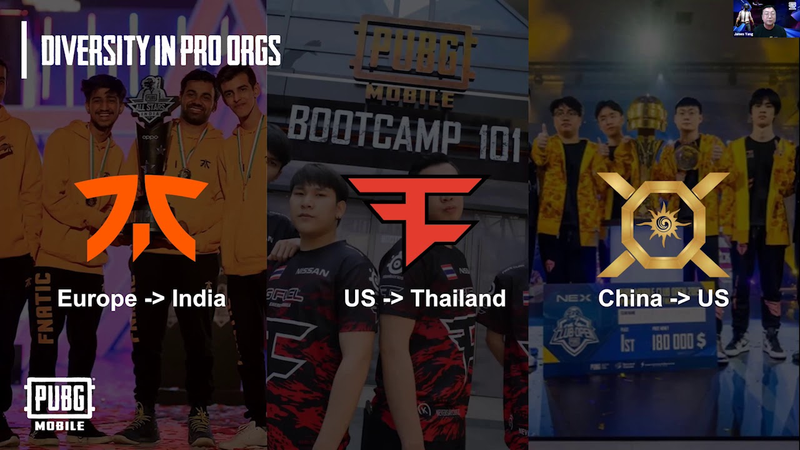
Superstar Session: Levelling the Playing Field: Mobile Esports Driving Diversity PGCD#2
Mobile esports serves as a primary catalyst for global inclusivity, fundamentally democratizing competitive gaming by lowering the financial and technical barriers associated with traditional PC-based platforms.
- Mobile esports democratizes competitive gaming by removing the high financial and technical barriers inherent in traditional PC-based platforms.
- The sector experienced rapid growth between 2019 and 2020, with viewership reaching 56 million and total prize pools doubling to $5 million.
- To maintain competitive integrity, developers must strictly decouple monetization from performance by limiting in-game purchases to cosmetic items only.

Improving Diversity in the Games Industry | PocketGamer.biz RoundTable
Diversity in the global games industry encompasses both visual representation across all levels of seniority and the integration of varied cognitive perspectives.
- Diversity in the games industry is a strategic business imperative that drives creative innovation and expands market reach by moving beyond stereotypical character tropes.
- Organizations must transition from passive recruitment to proactive strategies, such as rewriting job descriptions for accessibility and engaging directly with minority-focused communities.
- Retention of underrepresented talent requires fostering inclusive workplace cultures through mentorship programs, flexible working policies, and equitable meeting practices.
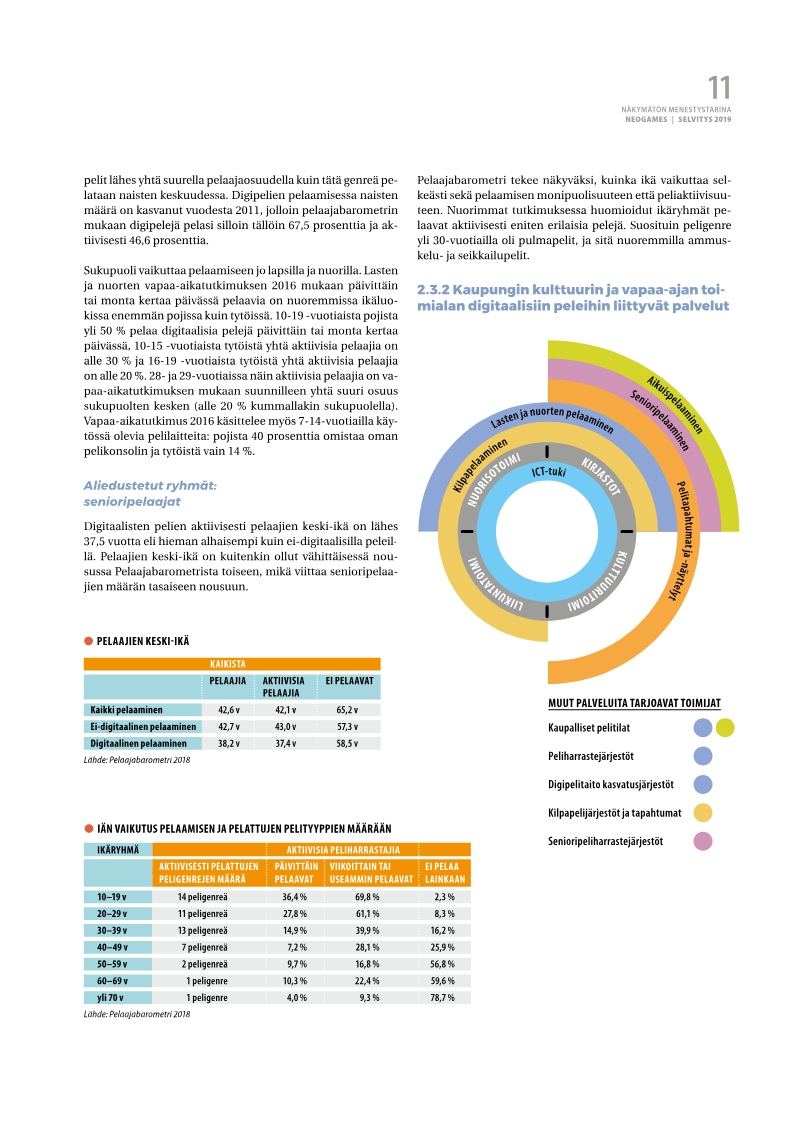
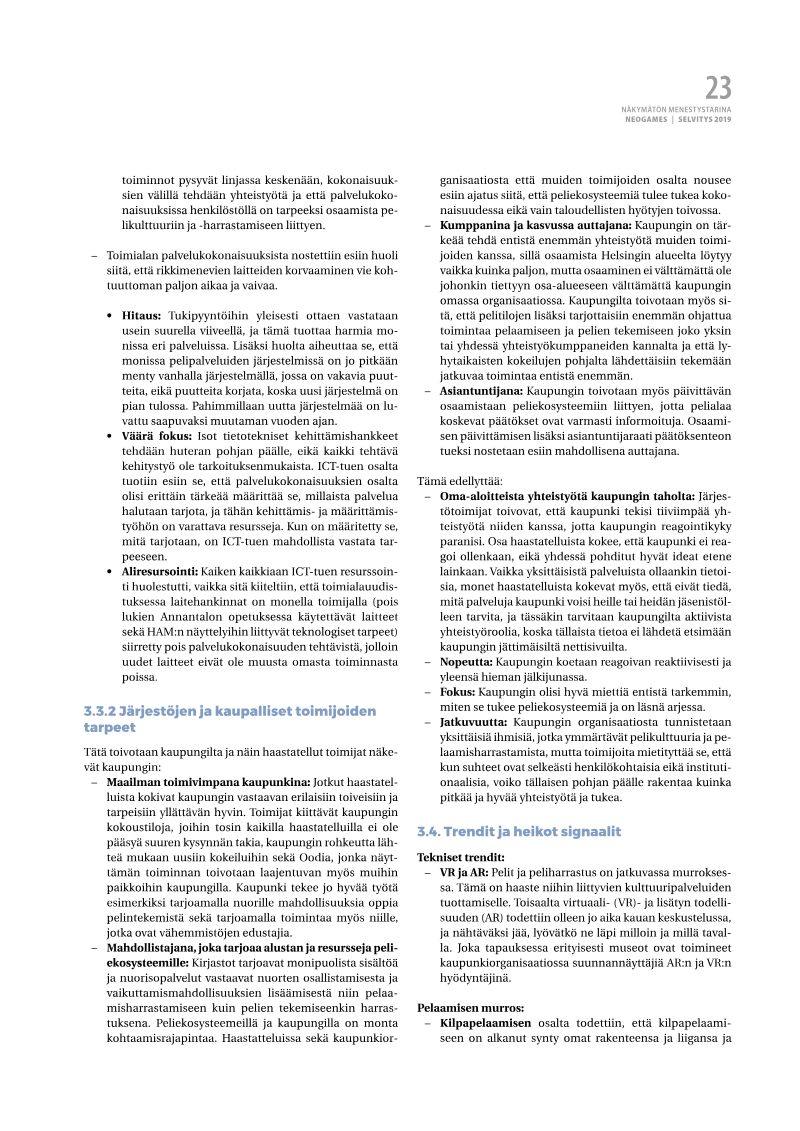
Invisible Success Story: Game Activities in the Culture and Leisure Sector in Helsinki
Helsinki stands as a global leader in the mobile gaming industry, anchored by a robust development ecosystem that generates 1.65 billion euros in annual revenue.
- Helsinki’s mobile gaming industry generates 1.65 billion euros in annual revenue, supported by a robust development ecosystem.
- The city leverages municipal infrastructure—including libraries and youth centers—to integrate gaming into public services for digital literacy and social inclusion.
- Current municipal gaming initiatives are fragmented and hindered by inadequate data collection systems like GIZMO, which underreport usage and overlook non-PC gaming formats.
Game Narratives for Diverse Audiences | PGC Digital #1
The gaming industry faces a critical need to evolve its narrative strategies to better reflect and attract diverse global audiences.
- The industry must move beyond the 'everyman' white male hero archetype to reach untapped global demographics and reduce toxic gatekeeping within player communities.
- Adopting 'hopepunk' narrative themes—which prioritize empathy, vulnerability, and collective action—allows developers to move away from stagnant 'grimdark' tropes.
- Gameplay mechanics should be realigned with narrative themes by incorporating non-traditional verbs, such as the mischievous exploration in 'Untitled Goose Game' or the delivery-focused tasks in 'Death Stranding'.

Cultural Intelligence: Skills to Thrive in a Global Industry
Cultural intelligence serves as a critical competency for professionals operating within the global gaming industry, where the ability to navigate diverse environments directly correlates with innovative output.
- Teams with high cultural intelligence generate up to three times more innovative solutions than those lacking this competency.
- Cultural intelligence is defined by four measurable dimensions: drive, knowledge, strategy, and action, which should be assessed against global norms rather than static benchmarks.
- Misunderstandings in global game development often stem from the friction between high-context and low-context communication styles.
Representing LGBT+ Characters in Games: Two Case Studies
The development of respectful LGBT+ representation in video games requires a deliberate, research-driven approach that prioritizes the lived experiences of the community.
- Effective LGBT+ character design is built on four core pillars: realism, consideration, explicitness, and respect, ensuring characters are fully fleshed-out individuals rather than defined solely by their identity.
- Narratives must prioritize character agency and consent, allowing individuals to disclose their identities on their own terms rather than through external imposition.
- Studios should integrate diverse voices into development teams and utilize external consultants, such as GLAAD or diversity readers, to ensure authentic and respectful portrayals.
Baked in Accessibility: How Features Were Approached in Borderlands 3
This analysis examines the integration of accessibility features into the development of Borderlands 3 at Gearbox Software.
- Integrate accessibility into the development culture by maintaining dedicated communication channels, such as internal chat rooms, to keep the topic in the foreground throughout the entire production cycle.
- Empower cross-functional teams to experiment with accessibility solutions; for example, Gearbox’s effects director independently developed a tiered loot beam system that used varying heights, bloom intensities, and particle densities to convey rarity information.
- Prioritize direct user testing with the target audience, as the lack of thorough focus testing was identified as the primary flaw in the Borderlands 3 accessibility implementation.