Diversity & Inclusion reports and market data
Documents
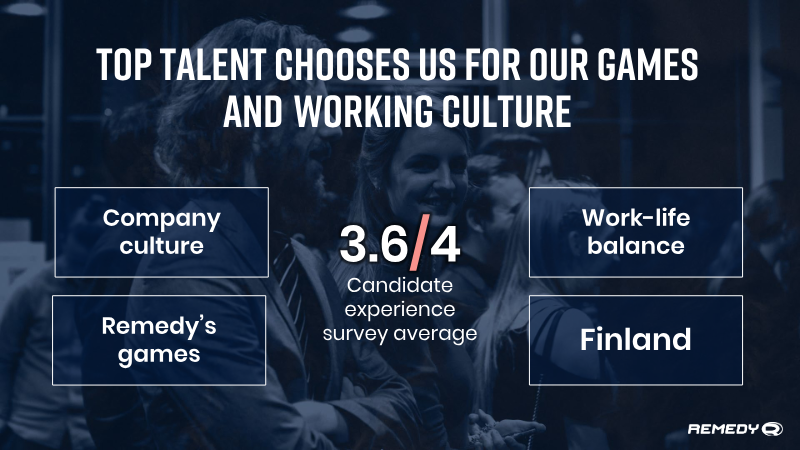

Remedy Capital Markets Day 2020: A Highly Attractive Home to World-Class Talent
Remedy Entertainment positions itself as a premier destination for global gaming talent by fostering a creative, high-performance culture that prioritizes employee engagement and professional development.
- Remedy Entertainment successfully reduced its annual employee turnover rate from 14.3% in 2017 to 7.1% by late 2020.
- The studio maintains a highly selective recruitment process, hiring only 42 individuals out of 2,620 applicants between January and November 2020.
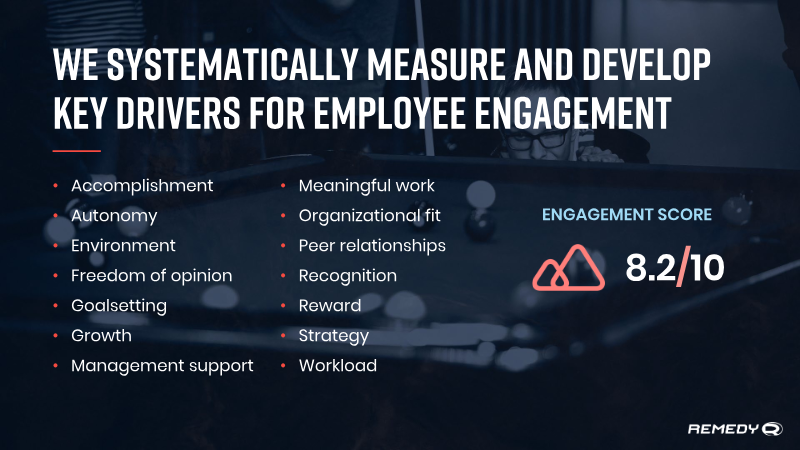
- Internal organizational health is strong, with employees reporting an engagement score of 8.2 out of 10, driven primarily by autonomy and clear goal setting.
Developer Satisfaction Survey 2019: Industry Trends and Future Outlook Report
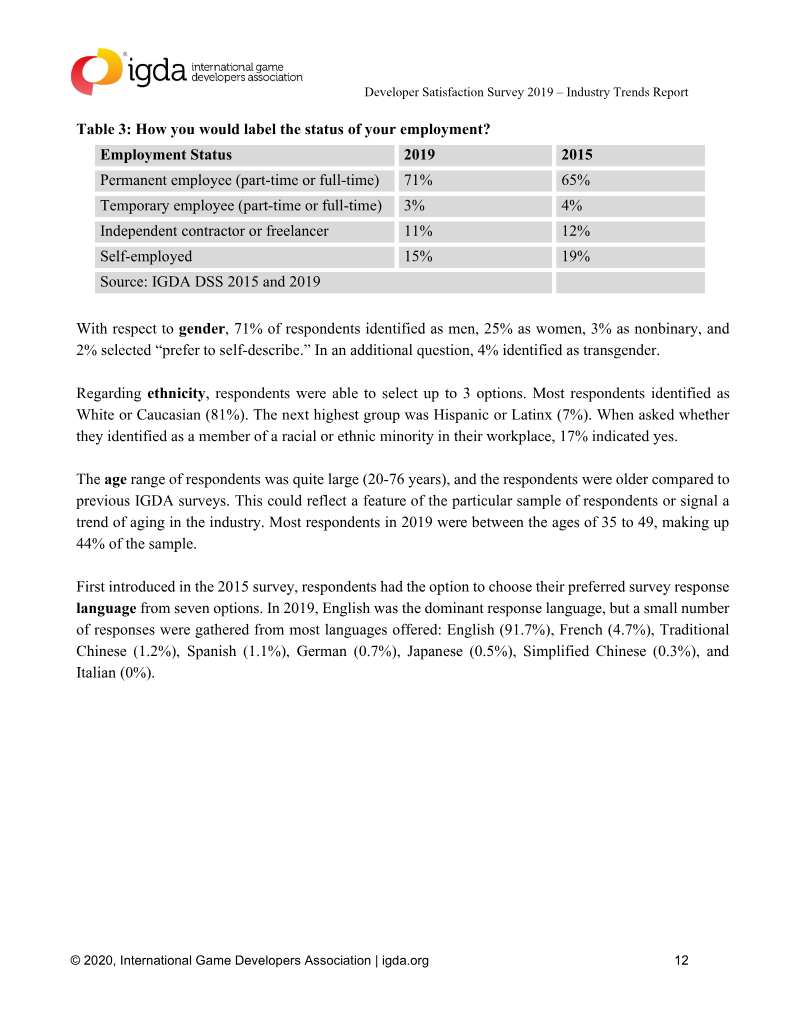
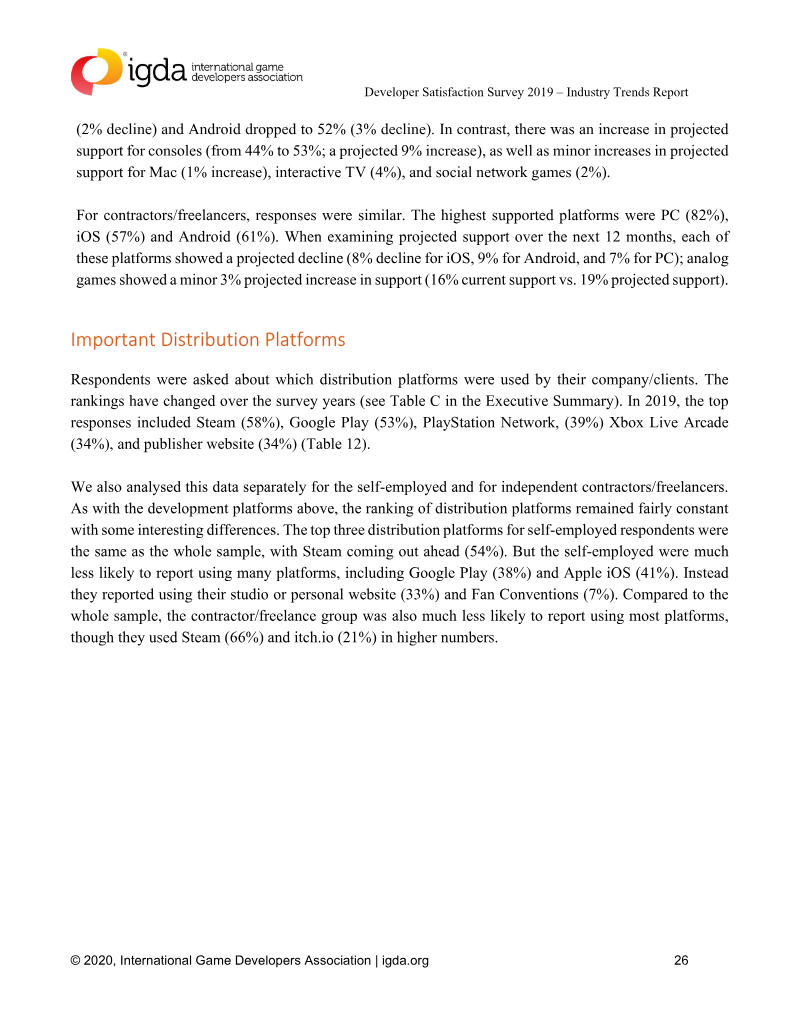
The 2019 game industry landscape reflects a period of significant transition, marked by a tension between technological innovation and systemic workplace challenges.
- 90 percent of industry professionals project moderate to considerable growth for the sector over the next three years, driven primarily by investments in PC and console platforms.
- Nearly 50 percent of the game development workforce supports unionization as a mechanism to address professional grievances and improve workplace standards.
- The industry is experiencing a decline in job satisfaction and growing pessimism regarding its current trajectory despite a strong focus on game design and storytelling.

How Games Help People with Disabilities Featuring Hawken Miller | Game Dev Unchained Episode 238
Video games function as a critical medium for social connection and competitive engagement, particularly for individuals with disabilities.
- True accessibility in gaming requires integrating people with disabilities directly into development teams to ensure features are core to the design process rather than treated as an afterthought.
- Developers can effectively dismantle physical barriers to entry by prioritizing adaptive hardware and fully remappable control schemes.
- The industry's shift toward aggressive live-service monetization and casino-style engagement loops risks fostering player addiction and contributing to developer burnout.

AMA: Accessibility Q&A with Karen Stevens
Accessibility in the gaming industry is most effective when integrated into the initial design phase rather than treated as a late-stage retrofit.
- Accessibility must be integrated during the initial design phase to avoid the high technical costs and complexities associated with late-stage retrofitting.
- Developers should leverage platform-level tools like screen narrators and specialized hardware, such as the Xbox Adaptive Controller, to ensure broad compatibility.
- Standardizing accessibility features—including robust text-to-speech and menu narration—across major franchises like Madden, FIFA, and NHL creates a reliable experience for players.

AMA: Diverse Teams
The game industry faces a persistent stagnation in diversity, characterized by Black representation remaining at a marginal 1–2% for over three decades.
- Black representation in the game industry has remained stagnant at a marginal 1–2% for over three decades.
- Systemic hiring barriers, including an over-reliance on elite university pipelines and subjective cultural fit assessments, must be replaced by a focus on candidate capability and direct outreach to historically Black colleges.
- The industry’s reliance on unsustainable development models like crunch culture and rigid, traditional hiring backgrounds limits both creative potential and long-term cultural relevance.
Accessibility Best Practices: In-Game Communication
Accessibility in modern gaming functions as a critical bridge between diverse player needs and digital environments, requiring developers to proactively eliminate mismatches that hinder engagement.
- Prioritize legible typography by using a minimum font size of 28 pixels tall and 3 pixels wide on a 1080p screen, while maintaining a 4.5:1 contrast ratio to ensure accessibility for all players.
- Implement a 'welcome screen' or 'hospitality screen' that allows players to configure essential accessibility settings, such as volume and communication preferences, before the game fully installs or begins.
- Provide menu narration to assist players with vision impairments, using either pre-recorded audio for straightforward implementation or text-to-speech engines like IBM Watson or CMU Flite for dynamic, scalable solutions.
Adapting: Working in Games with Chronic Illness
The game industry faces a significant challenge regarding inclusivity, as approximately 60% of U.S. adults live with a chronic disease.
- Approximately 60% of U.S. adults live with a chronic disease, highlighting a critical need for the game industry to adapt its high-stress development environments to be more inclusive.
- Early disclosure of chronic illness is recommended to proactively secure necessary accommodations, such as ergonomic equipment, flexible scheduling, or remote work, before health crises occur.
- Workplace accommodations should be framed as essential tools for equity rather than preferential treatment to ensure employees can maintain productivity without exceeding their physical limits.

Hidden Histories
Women have served as foundational architects of the computing and gaming industries since their inception, functioning as the original programmers and technical pioneers.
- Women were the foundational architects of early computing, serving as the original programmers who developed essential technologies like early compilers, assembly languages, and the software used for the moon landing.
- The current gender imbalance in technology is a mid-20th-century cultural construct rather than a reflection of aptitude, emerging as programming shifted from a clerical task to a high-prestige, lucrative profession.
- Systemic exclusionary labor practices and social norms were intentionally used to marginalize women, creating an artificial divide that persists in the modern industry.

AMA: Mental Health Q&A with Eve Crevoshay
This discussion addresses the systemic challenges of mental health within the video game industry, focusing on the root causes of burnout, the normalization of mental health conversations, and the responsibility of leadership in fostering supportive work environments.
- Mental well-being in the game industry is a structural responsibility rather than an individual one, requiring intentional design at both company and community levels to address systemic toxicity and unsustainable labor practices.
- The 'myth of passion'—the industry-wide expectation that employees should sacrifice personal boundaries for their work—is identified as a primary driver of burnout.
- Leadership must actively model healthy behaviors, such as disconnecting from work and setting clear boundaries, to empower employees to adopt similar practices.
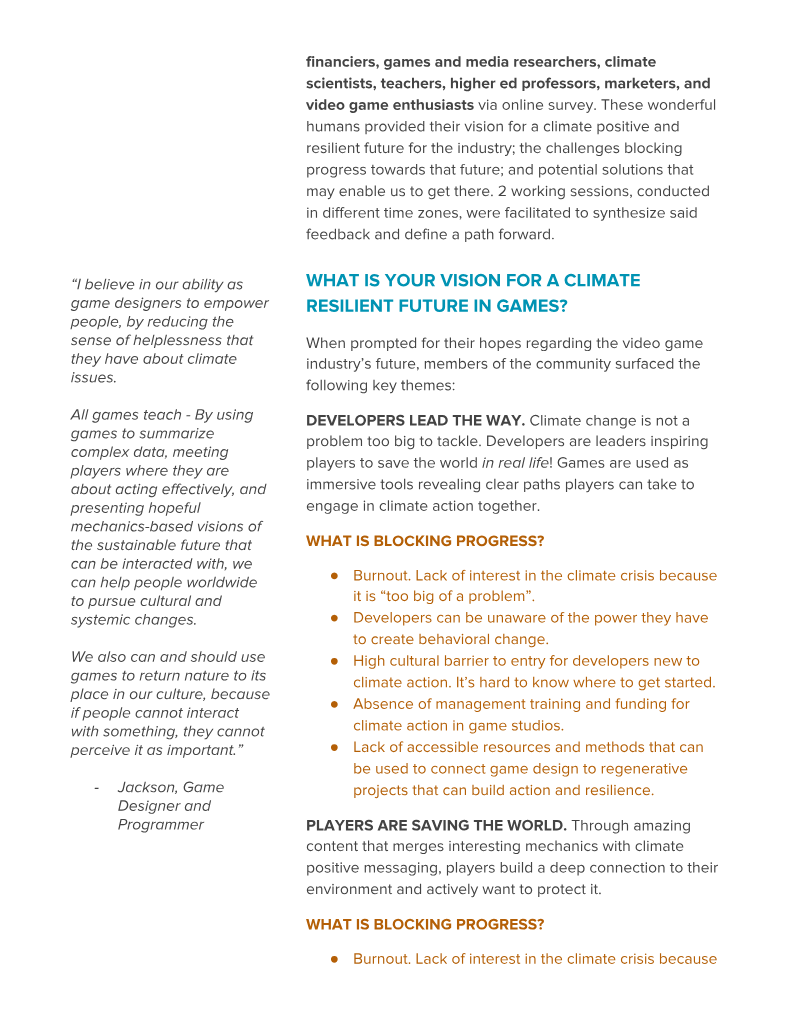
Climate SIG 2021 Planning Sessions Recap
The International Game Developers Association (IGDA) Climate Special Interest Group (SIG) aims to foster a climate-resilient video game industry by mobilizing developers, establishing sustainability standards, and leveraging gameplay to drive real-world environmental action.
- The IGDA Climate SIG has established four core pillars: raising industry awareness, promoting energy-efficient software design, enabling climate-positive content, and facilitating behavioral transference between gameplay and environmental outcomes.
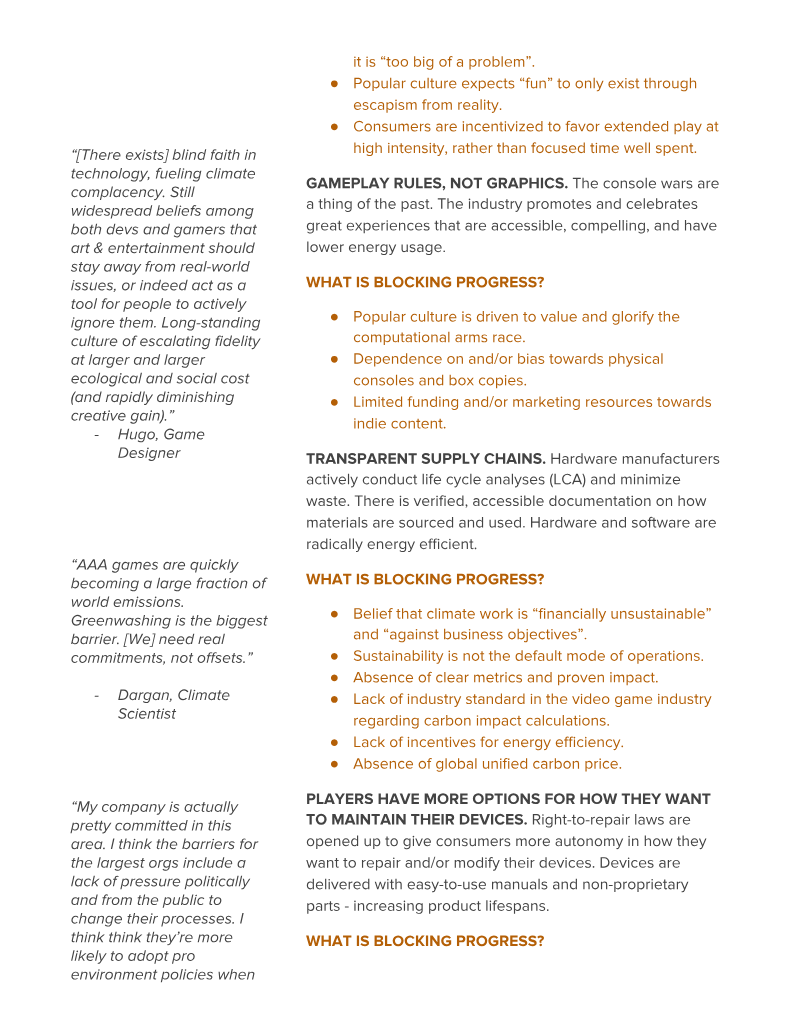
- The industry’s 'computational arms race'—characterized by a reliance on high-fidelity graphics and rapid hardware consumption—is identified as the primary driver of environmental impact.
- Feedback from 17 diverse stakeholders identified industry-wide burnout, a lack of standardized carbon metrics, and the cultural separation of art from real-world issues as the primary systemic barriers to sustainability.

R-E-S-P-E-C-T: Practical Tips to Prevent Abuse & Build Team Trust
Workplace harassment remains a systemic challenge within the gaming industry, with data indicating that 60 percent of women and 20 percent of men have experienced abuse.
- Workplace harassment in the gaming industry is a systemic issue, with data showing that 60 percent of women and 20 percent of men have experienced abuse.
- Leadership must dismantle the 'indispensable genius' myth by ensuring that no employee is shielded from accountability, regardless of their perceived value or performance.
- Organizations should treat the reporting of incidents as a positive indicator of institutional trust rather than a management failure, while providing clear and accessible escalation paths.
Disrupt the Game Industry Culture for Good: Starting from Square One
Systemic inequality within the video game industry requires a fundamental shift in how organizations approach diversity, equity, and inclusion (DEI).
- Organizations must transition DEI from a secondary initiative to a core business imperative to drive innovation and better serve global player communities.
- Meaningful progress requires moving beyond performative gestures like conference sponsorships toward systemic internal changes, such as auditing executive leadership composition and addressing pay disparities.
- The 'activation trinity' framework mandates that leaders move from intellectual understanding and empathy to tangible, vulnerable actions that hold high-performing but toxic individuals accountable.