AI reports and market data
Documents

MDM Podcast, S07, E13: Google navigates the AI advertising era (with Dan Taylor)
The advertising landscape is undergoing a fundamental shift into an AI-driven epoch, characterized by the transition from manual, keyword-based search to conversational, intent-oriented interactions.
- Google is shifting from keyword-based search to conversational intent, using Gemini to better understand complex, multi-turn queries and improve ad ranking efficiency.
- AI Overviews and AI Mode are currently monetizing at parity with traditional search, serving as new engines for brand discovery by matching ads to the context of AI-generated answers rather than just search terms.
- Google is transitioning away from manual keyword management toward automated, AI-driven campaign systems like Performance Max, which leverage machine learning to optimize performance beyond what manual control can achieve.

🚨📢 BREAKING NEWS: Unity kills ironSource, Meta lawsuits, AppLovin moves
The mobile gaming and ad tech sectors are currently undergoing a significant transition characterized by market stabilization, consolidation, and a shift toward operational efficiency.
- The mobile gaming market is stagnating, with in-app purchase revenues plateauing at $20 billion for three consecutive quarters and download volumes hitting multi-year lows as of Q1 2026.
- Unity is restructuring its ad business by sunsetting the ironSource network and divesting its Supersonic publishing arm to prioritize its Unity Vector ad stack, which has achieved 15% sequential growth.
- Meta is moving toward a fully autonomous AI-driven advertising model by 2026 via its Advantage Plus and Andromeda systems, shifting the focus from manual campaign management to creative diversity and first-party data.

TWIG #378: Mario Smashes the Box Office, Take-Two Cuts AI, and Monopoly Go Goes Social
The global video game industry is currently navigating a complex structural correction defined by a paradox of record-breaking revenues and widespread workforce instability.
- The video game industry is experiencing a structural correction characterized by record revenues alongside widespread workforce instability caused by post-pandemic over-hiring and market oversaturation.
- Early-stage venture capital deal volume has reached multi-year lows, while Saudi-backed entities remain the primary drivers of current merger and acquisition activity.
- Younger demographics are shifting preference toward low-friction, social-first titles like Monopoly Go, forcing developers to move away from traditional AAA production cycles toward more iterative, accessible models.
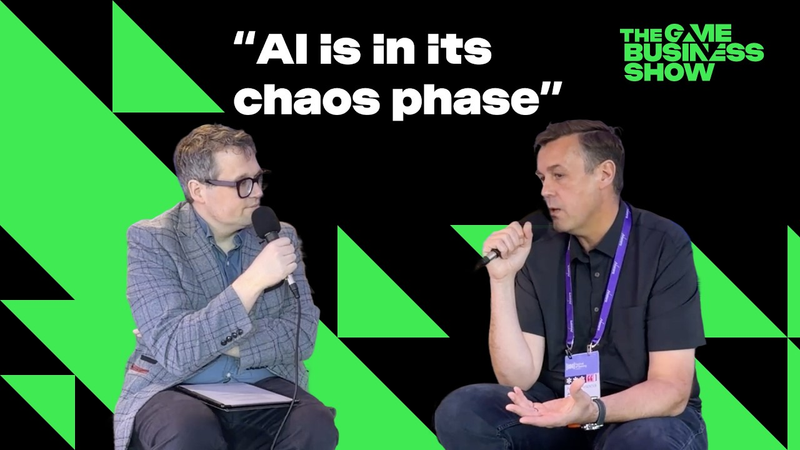
One of the world’s biggest game makers reveals ‘the uncomfortable truth’ about AI
The game development industry is currently navigating a volatile transitional period characterized by widespread AI adoption alongside significant professional skepticism.
- Approximately 90 percent of game developers currently utilize AI tools, yet over 50 percent of the workforce remains skeptical regarding job security and creative quality.
- The industry is currently transitioning from a phase of novelty-driven AI demos to the development of governed, legally secure, and reliable production pipelines.
- Sustainable AI integration requires studios to pivot away from flashy, single-prompt generation and instead focus on automating repetitive, mundane production tasks.

How Game Devs Use AI Today
Artificial intelligence is currently transforming the global game development landscape by prioritizing operational efficiency, cost reduction, and workflow optimization.
- Game studios are increasingly using AI to optimize Live Ops, such as the case where a studio reduced the team required to maintain 'Sunrise Village' from approximately 25 people to two by implementing AI-assisted content production.
- Large publishers like Nexon and Embark are leveraging AI to reduce internal 'blindness' by integrating company-specific data into models, aiming to improve decision-making and development efficiency.
- AI is currently being deployed across the entire game development pipeline, starting with pre-production ideation at companies like Capcom and extending to rapid prototyping that allows teams to test new game modes in hours rather than weeks.
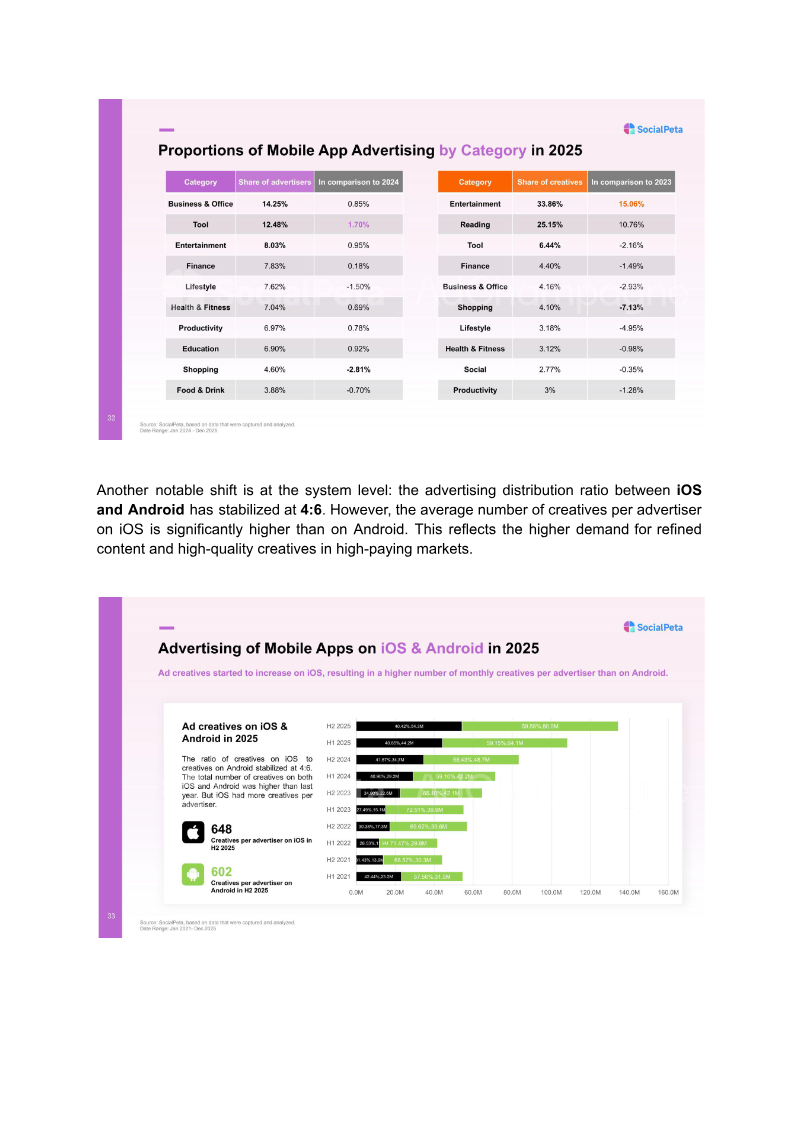
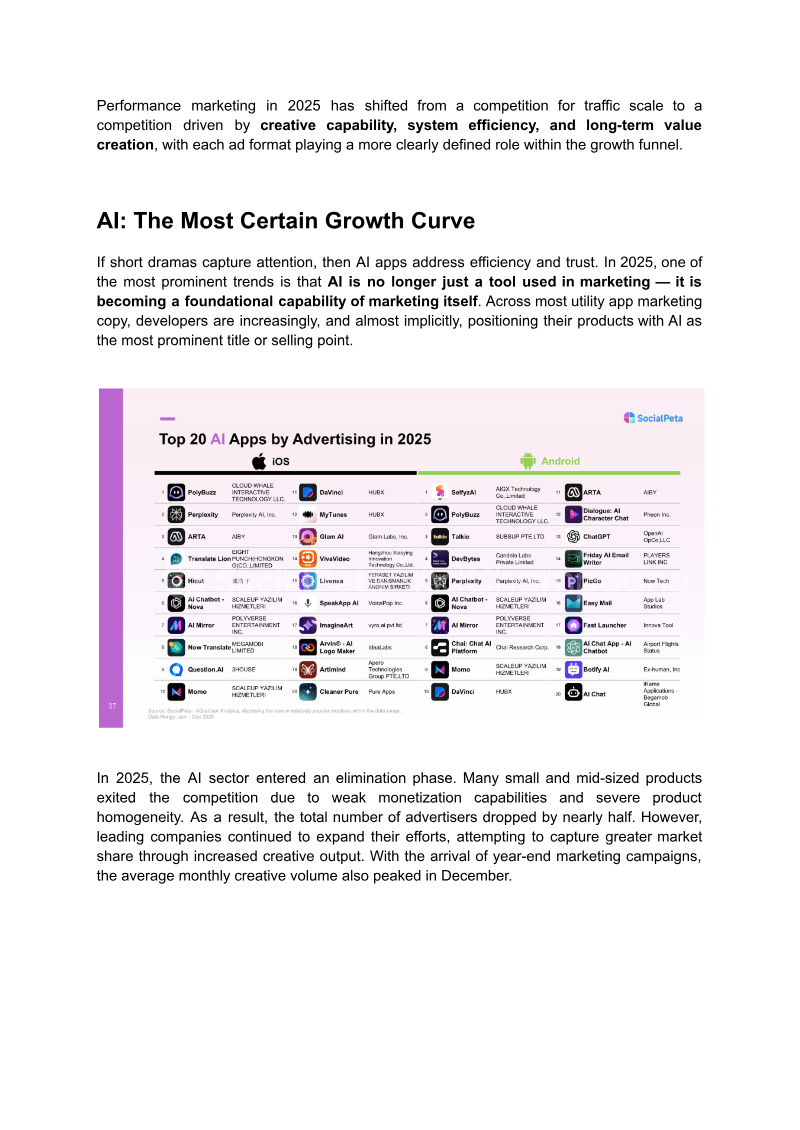
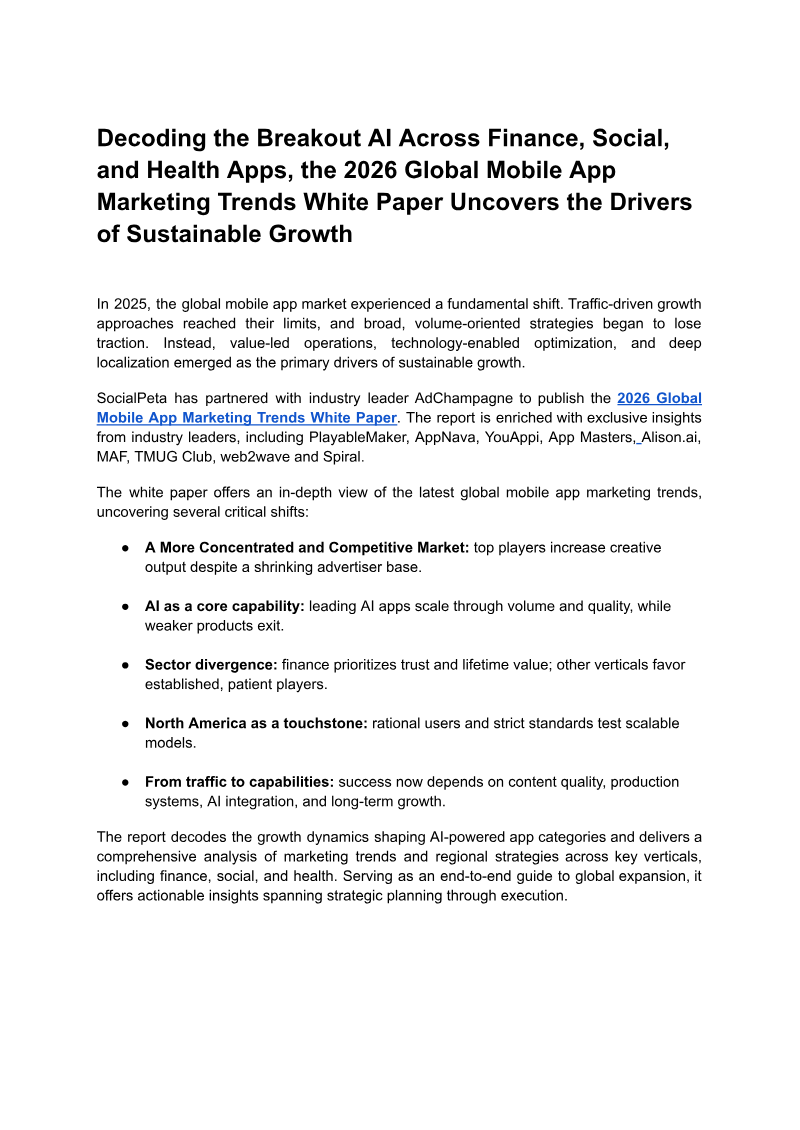
2026 Global Mobile App Marketing Trends White Paper
The white paper argues that the 2025 mobile app market has shifted from volume-driven traffic growth to value-centric, technology-enabled optimization.
- The mobile app market has shifted from volume-based growth to a quality-focused model, evidenced by a 16.7% YoY decline in active advertisers alongside a 73.3% surge in creatives per advertiser.
- Global user acquisition spend grew 13% YoY to $78 billion, with the increase driven almost exclusively by iOS advertising.
- Video remains the dominant advertising format, accounting for approximately 70% of social media inventory, while static and playable ads are relegated to testing and engagement signaling.

🚨📢 Breaking News: New Ubisoft Mobile Shooter + Layoffs, Layoffs and Closures
The gaming industry is currently undergoing a significant period of contraction and strategic realignment, characterized by widespread layoffs, studio closures, and the cancellation of long-term, high-budget projects.
- The gaming industry is undergoing a major contraction characterized by widespread layoffs and the cancellation of high-budget projects due to unsustainable North American development costs.
- Eidos Montreal cut 124 jobs and canceled a project that had been in development for over seven years at a cost of hundreds of millions of dollars.
- Unity is divesting from its game-publishing arm, Supersonic, to pivot toward an ad-tech model focused on AI-driven user acquisition tools.

🚨Tactile & Loomit: How Top Games Make Money From Ads
Modern mobile game monetization requires a sophisticated balance between maximizing ad revenue and protecting the integrity of in-app purchase ecosystems.
- Developers should shift from static monetization models to hyper-segmented strategies that use geography, platform, and spending history to ensure ad revenue is incremental rather than cannibalizing in-app purchases.
- To protect long-term retention, studios must curate ad quality by requesting conservative creative formats, monitoring ad duration, and actively swapping formats to prevent aggressive ads from degrading the user experience.
- Studios should prioritize a 'buy-over-build' strategy for ad infrastructure, leveraging specialized external tools to manage complex auction dynamics rather than maintaining internal systems.

Data Doesn't Solve Problems. Decisions Do.
The modern gaming industry faces a critical inflection point where the abundance of raw data often obscures, rather than clarifies, the path to sustainable growth.
- Studios often suffer from a lack of clarity rather than a lack of data, meaning the primary challenge is moving from data collection to actionable decision-making.
- Data should not be treated as a siloed black box for specialists but as a shared resource accessible to design, product, and marketing teams to align on unified goals.
- Data maturity, defined by the robustness of a pipeline, is distinct from data sophistication, which refers to the ability to use that pipeline to drive specific business outcomes.

The Prosperous Society, Part 2: The Human Nexus of Commerce
The integration of artificial intelligence into commerce should prioritize the enhancement of human agency and creative fulfillment rather than the total automation of purchasing decisions.
- Integrated retail platforms like Amazon’s Rufus possess a strategic advantage over independent AI agents because they control comprehensive data feedback loops and avoid the monetization constraints faced by third-party intermediaries.
- Agentic commerce models are economically inferior to advertising-driven systems because they struggle to incorporate private value signals like profit margins and long-term customer value.
- The shift toward autonomous purchasing agents risks compressing product variety and imposing rigid cost structures that are unsustainable for many retailers.

The First AI Game Creator's Brutal Truth About Game Dev
Modern game development is undergoing a fundamental shift where the focus is moving away from technological novelty toward the mastery of player-centric design.
- In the gaming industry, the difference between an 80% finished game and a 100% polished, high-quality product is not linear; the 100% version can generate $100 million in revenue while the 80% version may only earn $10,000.
- AI is highly effective for non-creative technical tasks like writing SQL queries and managing data dashboards, providing a 20–30x speed increase in those specific workflows.
- Using AI for core game architecture is a high-skill endeavor because the probabilistic nature of AI can introduce technical debt and broken code if the developer lacks deep knowledge of the underlying interfaces and system constraints.

What Actually Works in UA Now (Meta Explains)
Meta’s recent organizational restructuring reflects a strategic pivot to better support the gaming industry following the disruptive impact of Apple’s App Tracking Transparency (ATT) framework.
- Meta has re-established a dedicated global gaming unit in London to prioritize gaming-specific performance marketing signals over general e-commerce models following the impact of Apple’s App Tracking Transparency (ATT).
- Modern user acquisition success now relies on a high-velocity creative factory model, where top studios test dozens of creative variations daily.
- Creative assets function as the primary mechanism for audience segmentation, replacing manual targeting by providing algorithms with the signals needed to identify high-lifetime-value users.