VideoMobile Dev Memo
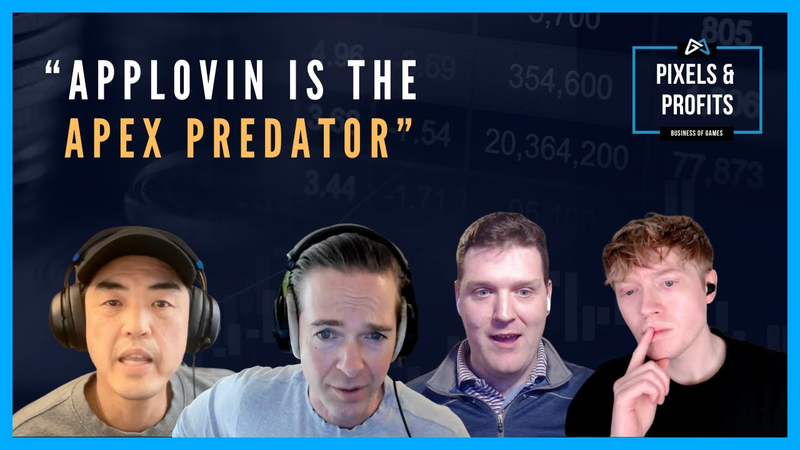
MDM Podcast, S07, E13: Google navigates the AI advertising era (with Dan Taylor)
14 Apr 202646 min video
Transcript
Branch [music] is an AI powered MMP that helps growth teams see exactly where to put their dollars to bring users in the door and keep them coming back. If you haven't had a chance to check them out, now is the [music] perfect time to do it. They've recently updated their look and feel to reflect the innovation that's happening in their product, and they want you to celebrate with them. Head [music] to branch.io/about and sign their virtual guest book. You'll be entered to win one of a number of prizes, [music] including a $1,000 Southwest travel voucher, a personalized growth strategy session [music] with our consulting services team, or some sweet premium branch swag. Go check it out. That's branch.io/about. The problem is that the distinction needs to be drawn between the [music] competence of the economists and the correctness of their analysis. [music]
Welcome to the Mobile Dev Memo podcast. I am your host, Eric Seford, and I'm joined today by Dan Taylor. Dan, welcome
to the podcast.
Great to be here, Eric.
So, we have a lot to talk about and I'm excited to have our conversation. Before we we dive in, could you please introduce yourself to the audience?
Sure. So, I'm Dan Taylor and I'm a vice president in our global advertising business. I've been with Google for about 20 years. Uh, always on the business and advertising side. Today I focus on ads commercialization focused on bringing our AI powered advertising products to market with a particular focus on measurement and our advertising platforms today. oftentimes I'll have senior people from you know the bigger platforms on the podcast and you know they'll have been with the company for like a pretty long tenure and I'm just like just always curious to ask like what and this is maybe you know a lobby of softball here but like what's the evolution of Google been like over 20 years because I mean that's that's a pretty remarkable amount of time to spend with a company but but also like the internet has just fundamentally changed in that time. I just be curious to maybe just if you just riff for a minute about like what you've seen change in the internet landscape and
like because obviously Google would be kind of a front row seat to that.
Yeah, sure. I joined Google from traditional broadcast media and I was brought in as part of a crop of advertising executives to convince large brands and agencies that search engine marketing was important. So that was a moment in time and about a year into Google we acquired YouTube and wanted to convince brand advertisers that online video was going to be important. And so, you know, that was kind of a a moment where we were relatively early in the industry of consumers were spending a lot of time on digital, but the advertising landscape was still, you know, strongly and firmly rooted in in, you know, linear television and broadcast media and and that was kind of a a phase where we were bringing people along not only on the consumer ship, but the technology shifts. And then, you know, fast forward a few years to mobile. I think that really supercharged a lot of people's attention on how rapidly and quickly things were changing
and how the tools and technology needed to adapt and and no one knows that better than you do, I think, in terms of, you know, how you got started with mobile dev memo and and and all of that. just consumer time being spent. The need for publishers, advertisers, and agencies to adapt to those tools and technologies has really been how we've been spending our time the last several years have been like following consumer trends, adapting our technologies, and getting advertisers and and businesses to come along on that journey with us. In terms of like the overall shifts, it's really just been about how are consumers spending time, how are marketers investing their dollars and measuring accordingly. I think most interestingly and more recently, I've been thinking about this shift from traditional media not being able to measure really that well at all to in digital, oh great, I can measure something. But we were largely measuring like proxy metrics to moving towards okay I want to measure something that
actually matters whether that's you know profit or conversions to now like all right I've largely got a lot of dollars spent in digital I now need to understand which of those platforms and players are driving the most incremental return for my investment. So it's really kind of moving more and more towards business outcomes and not just proxy metrics today.
Yeah that's that's fascinating. So I mean I I guess you know kind of when when you sort of survey your your your career at Google I mean I guess you you've got like the consumer adoption of the internet epoch which like seems like I guess quaint right but that was a dramatic shift in behaviors at that time and then the mobile epoch I would imagine is stands out right as like a distinct period and then now you know and this is kind of teeing up the first question here but probably you see it as the the AI epoch and and how like all of consumer behavior and and the way in in and advertising to a large degree is is aligning around that. Is that would that be like a kind of accurate characterization?
Yeah, I think so. I tend to look back to
look forward and I do see a lot of parallels to, you know, these big consumer and technology shifts and there's a lot of parallels to, you know, the shift to consumers online, the shift to broadband and online video, the shift to mobile and now today's shift with AI. Although the shift with AI feels faster and bigger than the ones that came before it. I spoke at IO I want to say three years ago and one thing I was struck by was there was like this policy track that I was on and and this I guess you would say at that moment in time we were sort of like in the early innings of kind of the the this AI consumer adoption cycle right and the speakers from Google side they did sort of highlight like the application of LLMs across the consumer surface area within Google's portfolio historically right and So, you know, so I remember someone making a point and like I I just never really thought about it, but it was like what do you think autocomplete is? That's that is we were just applying an
LLM. Now, it's obviously it's not comparable to like the scale of the models that we use today, but like they they were kind of making that point that like look I mean this this technology is new with respect to like a chatbot, but it's not new and you know obviously the attention is all you need. That was 2017, right? So like that's years and years, but that was pretty interesting. Maybe talk to me about that because like being inside the company I mean it would have seemed slower and more incremental evolution of this tech and then all of the sudden it be you know the consumers became aware of it right did but from your perspective and it had just been something that you know it's it's been incrementally getting better and better over time and now we've got something to release to the public and they'll be seeing it for the first time but actually we've been using it internally for some time. Is that kind of how that evolved
in some ways? And I think the you're right going back, you know, a really long way thinking about how even when you go into google.com many years ago when you would start to type a search query, you would get this autocomplete and a lot of that would be driven by what are other people searching for and can I can I make that easier for you or smart reply in Gmail or autocorrect, you
know, misspellings or and you're starting to see that in Workspace and things like that. And so I think we've started to see some incremental changes over time. It was this moment where consumer attention started to really go to oh generative AI can really be seen and felt. But you know for probably a good decade we had been using predictive and analytical AI in our advertising and our consumer tools. I mean go back to like GDPR and ATT and we talked about you know advertiser metrics and and measurement and optimization. We had built this promise up of being able to have a really strong way to measure advertising. And then that got fragmented really quickly as you went from desktop to mobile to connected TVs to privacy and browser changes. And we had to build a lot of technology to project and estimate conversions or
audience behaviors where we couldn't actually see it. And that was all AI technology in the background. But as soon as you started to bring that stuff to the foreground, consumers started to say, "Oh, okay. This technology is real, but it's been real for a while." So I think maybe to answer your question in an endound way, I think the generative AI technology really just came to foreground in the last couple years in ways that consumers noticed.
Right. Right. And and and also it benefited from the rebrand, right, from ML to AI, right? I mean, and you know,
Oh, for sure. I think we were using the phrase automation and we're like, no, no, no, it's AI. [laughter]
Yeah. So, one thing that the the whole, you know, the sort of like prolonged at waiting period, a lesson that it bestowed upon me because remember like they announced it and then they delayed it, right? And so it was that's why it was it was supposed to be iOS 14, it was like 14.6. But one thing that taught me was was how ill equipped a lot of advertisers are to adopt these technologies. Maybe that's changed in five years, right? Because I was that's
some time ago, but like half a decade ago. But but because I remember in that time in that like waiting period I got, you know, contacted by like large advertisers. Hey, help us. We need to adapt these conversion values, right? We need to build some sort of predictive mechanism for LTV against these conversion values. And it was like, okay, the very largest advertisers had trouble. And maybe some could do it, some couldn't, right? And like and and so then you just there you did see this dependency on the biggest platforms because it's like that's the only option for this happening is depending on on the big platforms who have the tech who have the expertise right who have the ML engineers the the infrastructure to to do this. It was really that was a wakeup call to me because I felt not you know I felt that
yeah these tools are available and like they've been democratized in a lot of ways by the open source packages that you could use right tensorflow right for instance you know or pietorch whatever your flavor is but no even then it's hard and that's why the largest platforms I think then as a result of that's I mean pmax probably accelerated as a result right I mean so that's why you've seen a lot of these systems develop I think it is downstream of of
that now it would have happened Anyway, but I think there was an acceleration to that and it does show that capability divergence between the very largest platforms who have these massive armies of people that are like very skilled, very, you know, have a ton of domain expertise and advertisers and there just is that gap probably gets wider by the day.
I'd love to to touch on that one thing because it brings something to mind for me. There's actually two polarities that I've seen on that front. The first one is is on the track that you mentioned which is you know as there's been fragmentation in the you know identity and the and the tracking space and we've built a lot of these AI powered systems to help advertisers kind of smooth out the bumps to help reach audiences at scale and deliver on their advertising goals. The other thing that's happened though is that advertisers have really gotten smart about taking control of their own data assets, their own first party data. And so, you know, getting their own tagging infrastructure
and analytics set up in house, starting to build their CRM system connectors. If you're a lead genen advertiser, really understanding what kind of data you can send to the platforms that you're working with to tell them which conversions you're sending them actually turned into a profitable sale versus which ones were useless to them in the end. And so two things happen, right? One is yes, there's these AI powered tools that help them drive scale faster, but also they're learning that like the data that I send into those platforms to drive results for me actually matters a heck of a lot more than just turning it all over to the platforms to figure it out for me. And so I thought it was an interesting polarity that both of those things happen at the same time.
That's a very astute point, right? And like that's that's something I believe as well. I mean, I've called this like the measurement renaissance.
Oh, for sure. Like all of a sudden MMs are like in vogue again, right?
Exact. you know, back to the talk about back to the future. So, I had Carl Mao on the podcast a while back who's like, you know, a legend in the brand marketing space. He's a professor at Duke and we were talking about this and we were talking about like, you know,
how funny is it that MM are like at the forefront of measurement now? Because if you told someone that in like 2018, they say, "What are you talking about? Like that's preposterous, right?" And but it forced the discipline. It forced the discipline of relying on like kind of holistic measurement, sort of weaning off a lot of these deterministic signals because you lost access to them. And I do think in a lot of ways it enabled a lot first of all more rigorous measurement right which you know MMs and but incrementality testing and you know Google's got Meridian but Google's led the way here for a while they had the you know there was a skunk works project within Google that made lightweight MM right I mean that wasn't even an official product that was just a couple people thought people need to have this.
Yeah. So again, like that was a big investment for us and productizing that with Meridian last year was a really important thing for us and not only open sourcing that, but you know, working with thirdparty partners to put those models to work inside of of their MM to make sure that our our media and the the organic search prior and things like that are being baked in. So, it's been yeah, it's been a really interesting again back to the future moment, but
also really critical in this AI powered moment because I think the m the data that you bring in to steer the AI actually matters a ton and it's a differentiation for marketers to get it right.
Well, thank you for segueing me because I would have kept us here for the whole hour. [laughter]
Oh, good. I segueed you. Yeah. Anyway, yeah, sure.
Speaking of AI, um, okay, so so Q4 earnings, Google reveals AI overviews queries doubled since launch. Talk to me about what's behind that. So, are users adapting search habits to AI overviews? So, are they writing queries that are more likely to sort of be answered or answerable by a AI overviews or or has the AI overview's coverage increases? Is just more like a coverage effect?
So, people's expectations and behavior changed as we brought AI to search. And so, it's a little bit of what we talked about a moment ago. They're seeing AI overviews. They're seeing AI mode. And it's like, okay, I can ask new and different types of questions, things I wouldn't have come to Google to ask before, longer, more complex, even visual. You know, we talk about Google
Lens and that's 25 billion searches a month today. And so that's leading to growth in overall queries, including commercial ones. And so I talk about this thing where, you know, you no longer have to think about the right way to search on Google. You just ask the question. And so people are moving away from keywordies to more conversational and intuitive experience. And that is what's triggering more AI overviews and that's driving more usage of AI mode as part of that expansion. Along with that is coming Gemini's better understanding of these longer and more complex queries. So it's more about how user behavior is changing as opposed to how we're tweaking the experiences.
It's funny that you mentioned that because I was talking to someone the other day about how, you know, historically search had been a skill, right? It was a consumer skill because you needed to know how to construct the query, right? And you know to be concise
coax it out of the search engine. Yeah.
Exactly. And then like you know how to structure it such that you know you were putting the focus on the keyword that you cared about but there was enough detail there to like maybe parse out different variations of the data and and
like you just get I feel like you it's a more forgiving interface now like when it's conversational. Is that do you think that's right? Is it
that's absolutely right. I mean, I was on a car drive last night and I used AI mode and just had a conversation and it was easy. It was just easy,
right?
And so it turns out when you make search easier, people search more,
right? And and you know, you just get more shots on gold in a sense, right?
Yeah. Exactly. Yep.
Mobile game developers no longer need to pay up to 30% [music] in major app store fees. With Exolo Web Shop, you can create a direct storefront, cut fees down to as low as [music] 5%, and keep players engaged with bundles, rewards, and analytics. Start today [music] at exola.com. That's xsol.com [music] or use the link in the episode show notes. Okay. Can you give any updates on AI overviews ads monetization relative to
legacy search? So the last data point was that AI overviews is monetizing at par. Is that is that still the case? Can we still say that?
Yeah, that's right. So AI overviews are still monetizing at par, which is a strong base. What's been really interesting on the ad side there though is with customers is how AI overviews is becoming a more powerful engine for brand discovery, creating new opportunities to get in front of customers earlier in the journey. And so what I mean by that, it's part of that expansionary moment that you hear us talking about. And so AI overviews, AI mode are matching ads not just to what the consumer is searching for, but also to the context of the answer. And so like for example, when when an AI overview is a, you know, an AI generated snapshot in the results, the aha moment for advertisers has been an ad can appear not just based on what the person searched for, but what shows up in the AI overview. And so I can give you an example from my own life. So I travel a
lot for business. My wife is now sometimes coming with me now that our son's off at college. We started talking about bringing our cat as the cat, I guess, gets lonely. I don't I don't really know. It's hard to tell. So we search, how do I bring a cat on a flight? That's the type of search that triggers an AI overview. And our search models break down that question into smaller subtopics. Liz Reed calls that the query fan out technique, right? And the AI overview shows airline policies. You have to pay apparently vaccine info depending on where you're going, how to keep them calm, and that you need a compliant pet carrier. That all lathers up to that broader question. Now, in the old days of search engine marketing, most companies are not going to bid how do I bring a cat on a flight? But that pet carrier information in the AI overview triggers a new ad opportunity for companies like Petco, Walmart, or a company called Cat in the Bag that sell pet carriers. And now that's a new ad opportunity that didn't exist before for advertisers. And so it creates new monetization opportunities.
Oh, that's really fascinating. So, so you've got the, you know, sort of probably less distilled like from a keyword perspective query, right? And it's almost like you're kind of parsing out the relevant keywords to then have bids be submitted against, right? That that's really fascinating. Is that kind of right?
Yeah. I think the piece that was a little underappreciated by me at the beginning and and many of our advertisers is that not only is it hard for me to predict what people are searching for and my keyword strategy is not as nimble to the these new ways that people are searching but I also have these opportunities with AI overviews where what's in the response can be a commercial opportunity
right
that wouldn't be I mean you know it brings people kind of down the funnel if you will as part of their discover recovery journey and that's been part of the expansionary opportunity.
Yeah, that's that's really I guess I just never really considered it from that angle, but you know, it makes sense. There's just it's the stuff that you bring in
itself has keywords, right? I mean, you've got this this conversational query, this natural language query that's not keyword distilled because it doesn't need to be and that's not how people talk, right?
But you break it down in your head. Oh, there's five or six questions inside of that question. Right.
Right. Right. Like when you say I want to plan a trip to you know San Francisco this summer there's seven or eight things inside of that
right
question right airline hotel things to do weather etc right
right right right well that's that's a nice setup for my next question which is so AI mode queries again revealed you know this was this was disclosed in the in the last earnings so they're 3x longer than legacy search I mean that makes sense right it's a conversational format right it's conversational interface how does impact ad ranking. Right? So, if we think of there's a lot of additional context there. It's like we were talking about like this was a skill before. I need to know how to prompt in a sorry, know how to search. I need to know how to search such that I'm making a very, you know, dense nexus of keyword information that that Google can
then parse out to sort of rank the relevant links. Right now, with AI mode, I'm just giving you a lot more stuff. And now, just to be clear, I'm talking about now AI mode for the listeners, not AI overviews. So, how does that in and so and you know this was touched upon in the Q4 earnings call but I would just love to hear more about this like how is this contributing to ad ranking? How is this giving more information to ranking those ads?
Yeah, there's two pieces to that. So, first these longer more conversational queries they just give us more to work with, right? There's more context to better understand uh the commercial intent and a better signal for our ad systems to work with. Now, historically, serving ads on these longer and more complex searches was challenging, right? Like like that keyword ease thing we were talking about a minute ago. So, Gemini has dramatically improved our ability to better understand those longer and more conversational queries, particularly in non-English language, as we've really seen a huge improvement there. So, that's helped us capture interest in new forms of search. The
other half though is our ability to predict which ads are going to perform best, which gets into the ad ranking question that you had. So for every ad, you know, we generate a prediction of how well that ad's going to perform against a given query. Is the user going to click on it? Are they going to convert? And so in addition to better understanding the intent behind someone's query, we also have dramatically improved predicting how well an ad's going to perform against that query. And so we've been making these improvements to search query understanding at a rate of about one launch per month for the last two years. This also we touched on this on the earnings call too leading to a 40% reduction in irrelevant ads which for me I was like what our ad system for 25 years has been working quite well. But it turns out with Gemini we've we found a whole bunch of new headroom on ads quality.
I think this is like my favorite topic at the moment. It's LLM based rank ranking. It's so but it's it's fascinating because to your point I mean
this is a domain that's had the benefit of you know 20 years of the best data scientists, ML researchers, ML engineers.
Yeah. I mean hundreds of experiments and changes every year. Yeah.
And you're you're seeing these these significant improvements on that baseline and and it's it's fas there's actually really I don't have it pulled up unfortunately. I mean I'll link it in the show notes. There's a really great paper from Google on the use of LLMs for ad ranking which it's because you just get so much more data to bring to bear. Yeah.
In determining will this convert like will the user click this? Does this match what they want? and and you get like you know this just semantic understanding to apply to that whatever the input is whether it's just a you know there's they're browsing YouTube or whatever or they're searching or whatever they're on a social media feed like there's some context and it's very shocking to me like how big the improvements are here.
Yeah. I mean it turns out that you know prediction is the perfect problem to put AI against.
Right. But so talk to me so that on that topic that expansion I want to kind of anchor to this idea and I think this is a couple years old so I don't know if it's like it's current or but it's kind of an infamous statistic that that Google shared is that 80% of Google search queries were not monetizable right there's just no commercial intent you know from this skill that the user has needed to enable to to get the right links out of the out of the search result. How does that change in the AI overviews? I think you kind of hinted at this, but I'll just sort of ask it more pointedly. In the AI overuse, AI mode interaction models. Is that part of the expansion here? It's just like, well, anything can really be, you know, sort of commercially tenable because we can parse out a lot more information in this conversational format.
I don't think we've updated that stat, so I don't know if it's a current one or not, but our core philosophy remains the same, right? We show ads when there's commercial intent. What has changed is our ability to spot it. And so, you touched on that. It's true that the vast majority of searches never involve an ad because ads are meant to be helpful to
your search. And so if you're looking for today's weather, the most helpful thing is going to be a direct answer. Probably not an ad. We're seeing more than 5 trillion searches on Google a year, but the overall number of queries, including commercial ones, are going up. That's largely because of our investments in AI, like AI overviews. You know, we talked about ads above, below, and within AI overviews, and we're we're feeling good about the results we're seeing there, including new opportunities. As we think about like these new experiences in AI mode, for example, we're just testing ads in the US today, mostly focused on getting the experience, the user experience, right? AI mode's something between a chatbot and a traditional search engine. We're kind of like reimagining uh search with AI, a conversational experience, but grounded in the full information of the web. And so in our test, what I think is really interesting to touch on here is we're being thoughtful about where and how an ad might show in a person's journey. So we've got, you know, we're testing some formats and things like that. But a key learning from our testing is not where on the page, but where in the journey an ad is
served, right? This isn't like enter a query, get a result, move on. It's about when ads are useful and relevant, they're appreciated, they don't disturb the experience. And so if it's a conversation in a multi- query journey or session, if you will, right? Putting an ad too early, not going to be a good experience. So an example, about a year ago, I got into running. I'm ready to move to 10ks and I don't run that far on a regular basis. So I'm going to use AI mode for tips on how to train for longer distances. What's a good heart rate? Variable weather this time of year on the East Coast, nutrition, things like that. It's a longer, more complex query. I'll probably do a couple of follow-up questions onformational needs. But if you throw me an ad for new shoes right up front, you've kind of lost my trust. Not really a great experience. But if I dig in and ask follow-up questions, I could learn that like collagen could help my joints because I'm an older guy. There's some opportunities where ads might be welcome and the right answer to my need. And so we're really figuring out where in the monetization or where
in the experience monetization makes the most sense in things like AI mode. And so that's what we're looking at right now.
So maybe just just to just to dig in here for a bit. Yeah.
Sounds like you're talking about is kind of stacking the the conversation based on I don't call it like the level of insight delivered, right? So if I'm just kind of kind of high level conceptual question ad wouldn't make sense. It's just too aggressive. But like as you sort of like deliver more and more information to the person to such that you know they're now they're like kind of more primed to buy then that's the right time to show an ad. Is that or are you thinking about so I guess the question is like are you thinking about this within a single conversation or is this like across multiple conversations over time is the question. I guess I break that into a few things with AI overviews. Taking that back, that's an extension of more or less traditional search, right? It's a it's a a it's a representation of the traditional search result that has more information and that's an expansionary opportunity and we're finding new opportunities to monetize there both by understanding the
longer queries better and also the context of the page which we talked about. In AI mode, we're finding opportunities to monetize in those longer, more conversational back and forths, and we're trying to find the right user experience and the right ad formats to introduce there. I'm mainly talking about at this moment, like within a single conversation, but you could see how that might be something you would introduce over time. So, you know, one of the things that consumers expect from their AI powered experiences is a is context. They want to make sure that they understand experiences over time,
right? Got it. Okay. So, I I wrote a multi-part series, also did like a podcast about it called Google's Gambit. The idea of Google's gambit was that, you know, there's this absorption of engagement that used to be directed externally, right, as a result of the the links into AI overviews and AI mode. So, in that, you know, in that piece, I wasn't making a normative argument. It was just an observation of incentives, right? That makes sense, right? And especially given the consumer shift into to AI interaction. So, what do you think? I just I would just love to get
your like kind of big picture sense here like what are the long-term consequences of this on Google's advertising business where and where does this take search?
So we do see this as an expansionary moment overall. I think AI is helping people ask new questions enable businesses to grow in new ways but we also see it creating new opportunities for creators on the web. We talked a little bit earlier about you know this is a big technology shift. This reminds me that pivot to mobiles. We talked about changing how consumers are engaging with content and platforms including our own. You know, as we're enabling more and different types of question with search and AI, our ads focus is creating opportunities for businesses, more relevant ads, but also providing improved tools for content creations. You know, whether that's asset studio and ads or all the tools that we're giving to YouTube content creators as well. I think as consumer behavior and time spent on these new experiences evolves, we'll experiment with formats, measurement to adapt to those business needs. But I also see AI enabling greater discovery on the web, right? Helping people go deeper in the research, discover sites and new brands
and authoritative sources they might not have otherwise found. I think that is one of the things I personally have enjoyed and one of the things we're focused on in the Google search experience in particular. It's grounded in the information around the web. And so one of the things that it is really interesting about AI overviews is it very much focuses on here are the authoritative sources around the web. Here are clicks go link and learn more. And perhaps more than any other company, we're we're committed to making sure that we're sending quality traffic out to the web. And I think that's remains central to our approach.
You know those channels your colleagues [music] keep bragging about, the ones getting all the credit? Yeah, they might be doing squat. Attribution makes every channel look like a hero, [music] even when it's a zero. Incremental tells you who's actually doing the work. It's like a lie detector for your marketing budget. Start using incremental today. Get your demo at incremental.com. [music] That's n cmt.com.
[music] Mention that you came through the mobile devmo podcast for a special 15% discount for the first 6 months. Can you talk to me about how Gemini is being applied to the ad stacks? That was discussed in the earnings call. Yeah. And you know, ranking ranking is one piece of that, right? What are the other touch points, right? And and I'd actually love to hear anything that you could share about like how it's being applied in the the YouTube context, but you know, we've got obvious applications like create creative generation, right? That makes sense. I think everyone understands that. Yeah. We've got LLMs for ad ranking, re-ranking that we talked about, but like talk about intent classifications. What are the applications that maybe surprised you too? I'd be interested to hear that. Yeah, for sure. So, we're deploying Gemini models across Alphabet, which means that when Gemini gets an update, ads gets an update. So, Gemini 3 in our search models or Nano Banana 2 in Google Asset Studio. I start with that because while that may seem obvious, but given the pace of AI innovation and launches, that speed to market has been a real
advantage for our customers. I think about Gemini and our ad stack in three ways. Number one, new AI user experiences like AI overviews and AI mode. It's inspiring greater search usage. Number two, we're better understanding the new ways that people are using search, these longer and complex queries, and we're increasing our ad quality based on that. We talked about that, too. Third of all, which we haven't talked about a ton yet, advertiser tools are making it easier for to capture these new opportunities. And so, I'll talk about that a little bit. three things on advertiser tools campaigns creative assets and in product advisors I think camp on a campaign side the days of kind of keyword lists are fading we tal the keyword east thing consumers are no longer really searching in fragments they're searching conversationally and so our AI powered campaigns are helping partners adapt to this new way of searching and so AI max is a good example of this performance max is another it's helping advertisers who
have search campaigns or keyword based campaigns expand in these new ways that people are searching and reach billions of net new searches they simply weren't reaching before. On the creative side, whether it's tools like Nano Banano and BO3, Gemini is fueling creativity at a scale that would have been really impossible due to time and budget constraints even a couple years ago. This gets deployed by advertisers in AIAX, in performance max, and also in asset studio. And then finally, inproduct advisors. These are things like ads advisors in Google ads and displaying video 360 or analytics advisor. These are kind of like inproduct assistants that help you, you know, set up campaigns, find new insights, uh troubleshoot ad creative that isn't running and things like that. Just, you know, less time hands- on keyboard and and more time uncovering insights and moving faster. So, all of those things really help advertisers capture the opportunity for the new ways that people are searching. and and you know, as I mentioned before, take advantage of these new updates as soon
as they ship.
I'd love to to just hover on the campaign management piece for a second because I think that's one one thing that's like sort of underappreciated is how long that's existed within the Google ecosystem. It had a different name. It was UAC.
Yeah.
Universal App Campaigns.
I was on that project back in the day.
Well, that was the OG PMAX. I mean that was the original that was the original end to end automation system and you know I wrote a piece about it
when it was first introduced which was you know the idea was like hey we're going to consolidate all these app camp and so so just to clarify for people that are not familiar UAC and you could search on on mobile dev memo for I don't remember it's called but universal app campaign search for that you'll find it but this was 171 18 I think do you remember
earlier
earlier 16 yeah
so the idea was like hey we're going to consolidate all these these disperate campaigns that you've got running into this one system and we're going to manage a lot of the variables that you normally would attend to in an automated way and and you know I wrote a piece that somehow managed to upset Google and
upset all the readers which was that look you know this helps Google this is good for Google but hey advertisers it's good for you too because you know what you're probably not as good as Google as this and you know that I think that argument is still valid I wrote a piece a while back called satisficers remorse which basically makes you know this the same point like if they're meeting your needs you're better off like and so even the control maybe has been surrendered and to some extent but like you're still better off and you you probably couldn't uh achieve the same outcome on your own right and that but that was the point I was making with UAC as well but like that worked really well that and and so I pointed to that I think in the Google's Gambit podcast but maybe it's a different podcast but I I made the point that look if you looked at you know that was the original one UA I see and then meta followed or Facebook at the time followed with like a AEO and VO and stuff and as those tools got brought to
market ad spend went up you know there wasn't this mass extinction event of UA managers in fact there were more hired and I even had a bit in the podcast about like hiring trends using I think BLS data so it's like the market expanded this was expansionary and it was because you know like you know and the biggest platform forms adopted this and so I I was making the case that like you know there there's this panic about AI and like mass layoffs and I think but if you look back at the history of what these things have done they've been very expansionary for digital advertising and you know you you could make the argument I made the argument for the broader economy as a result and you know what else went up was app attribution providers to help under make sense of how well it was performing and how you should report back on the measurement aspect to steer the AI in the right direction so like it's back to that earlier conversation the data that you provide those tools and systems to steer it in the right direction actually matters,
right? Well, yeah, because that birthed these systems birthed what's now known
as signal engineering, but back then would have been just like, you know, figuring out like what's what's the right postback? What's the right postback to send to indicate that this is a quality user? I mean, that kind of birthed that whole feedback loop.
Yep. And it's it's like, you know, and and kind of going to the very start of the conversation, it's like, I mean, I get that it's maybe uncomfortable for advertisers, but the reality is, you know, you look at the investments being made by these huge platforms. You can't match that. You can't match the domain expertise. You don't have these kind of this kind of talent internally. You just can't. It's not possible. It's [laughter] just and so it's like, yeah, there's there's incentives involved. Of course, we're in an economy, but like at the end of the day, you're getting access to firepower that you wouldn't have access to otherwise. And if the outcomes meet your expectations, which is which, by the way, is the entire point of these systems because that's what you provide it with. That's the input, there's nothing really to complain about. Well, look, 12 of my 20 years at Google have been in like the
product go to market side of the house and I spent a lot of it on audiences and inventory and that side of the house. But you know the last few years I've been really focused on data and measurement because in an AI powered world to your point like if that's steering a lot of the decision making on an individual ad placement where the leverage and where the fulcrum is is what outcome you're telling it to optimize for
right
and where I see most marketing organizations pivoting their energy these days is there. And so I think that is the right move.
Yeah. And that's that's you know what I've called or I I'm not the one that came up with the term but signal engineering, right? That's that whole exercise.
Yeah. I like that term. I had I actually hadn't heard that one. Yeah. Yeah.
So I picked that up from the CEO of Voyantis. I'm an investor in Voyantis by the way disclosing. But I think he came up with it. But it's just the discipline of recognizing that the onus is on me
the advertiser
to determine how good is this user.
Yeah. Yeah. AI is only as good as the fuel you give it. Right.
Right. Exactly. Okay, I want to switch gears a little bit. Can you talk to me about direct offers? Talk to me about, you know, that that launched what, two months ago. Tell me how it's going.
Yeah, we announced it in January at NRF. And so, it's a good example of how we're looking to reinvent ads for the new era of search. So, it was a new type of ad format that we're in piloting built specifically for AI mode. Since we've only kicked it off at the beginning of this year, I can touch briefly maybe on how it works and then what we're seeing. So, I'll start with an example. It basically is introduces an offer in the AI mode experience based on where the user is in the journey. So it talks a little bit about how we talked about, you know, where someone is in the journey as opposed to just showing them an ad immediately. So I recently got a new laptop. It's bigger than my old one. So I need a new bag. I used AIM mode to research stylish neoprene backpacks suitable for men in business settings that are under 200 bucks. Can fit a
14inch laptop. So I asked Google a couple refining questions. How many pockets does it have? And then Google elevates the most relevant products to meet my needs. But often you're only ready to buy if you're getting a great deal. And so with direct offers, relevant retailers give a special discount like 20% off or free shipping, which is what I'm looking for. And a sponsored offer can be helpful at just the right moment, helping you get better value while assisting the retailer in closing the sale. So, it's still early, but we're seeing some good product market fit and really strong interest from advertisers. So, we're testing with Petco, ELF Cosmetics, Samsonite, Rugs USA, Chewy, L'Oreal, and and Shopify merchants. We're hoping to have more to share in the coming weeks. I don't have any performance stats to show, but it's a it's promising experiment. I think it's a good example of the types of things that we're looking to experiment with where you know like in a traditional search engine marketing campaign you would just show that offer
to everyone but in an AI mode experience we want to be able to understand where someone is in their journey and find oh this is a moment where someone's ready to buy and this could be the thing that gets them over the edge.
Got it. I think it was at the same event. What was it the retail something forum? What?
Uh national retail federation.
That's right. Okay.
Oddly held on a Sunday, but
that's right. I remember being bewildered like how is there new
on a Sunday but I guess cuz you know you got to get back to work. Yeah. [laughter]
So I think also announced at this event was was UCP. Is that right? Or is it is just thereafter if it wasn't at the same event.
Yeah that's right. Yeah. Universal commerce protocol. Yeah.
Okay. Maybe just kind of give us the same same style rundown like how has that been received? Like how's it working?
So I think in a high level agentic or AI assisted commerce is starting to become a reality. you know to to you know we've had a lot of interest in response to that universal commerce protocol and I think the reason for that it's a common language to better enable businesses to
connect with AI agents as part of the shopping journey right so we've been focused on making sure that we get the building blocks in place to support the shopping journey in this new era from discovery to checkout so we built this in partnership with retailers but it's an open source protocol so anyone can use it or of course using it for new shopping experiences on Google. So we started by rolling out a new UCP powered checkout. So in the US shoppers can buy items from companies like Etsy and from Wayfair right in AI mode in search and also in the Gemini app without ever leaving the conversation. And so at Shop Talk, actually in March, we announced new capabilities like adding multiple items to the cart, catalog features, and supporting loyalty programs to make shopping more connected across the web. And companies like Commerce, Inc., Salesforce, and Stripe also announced they're going to implement UCP on their platforms in the near future. So I think
at a macro level the industry is still in pretty early stages but are you know kind of flocking to this notion of commerce protocols for the technology to scale so that buying agents and retail agents can talk to each other in a way that is frictionless and secure and that retailers can still own that transaction and that relationship with the end user needs to be open and collaborative and by all accounts that seems to be how this is being received. So, it's been really successful so far.
And I think one one of the questions I had when I first read about this was like what what's the tie-in with ads? I mean, is this specifically for ad interactions or is this for anything?
There's not a tiein with ads directly. I think that it's just really important for us to make sure that we enable retailers and consumers to have a frictionless experience. I think that consumers love the fun parts of shopping like being inspired by a new brand or virtual tryon and things like that. They don't love the frictionfilled parts like find it at this size or find it in this
price or fill out my CVV code and remember my loyalty program. And so these sorts of protocols take the uh the friction out of the shopping and that's the piece that we're focused on. So my I remember my reaction and you know that's clarifying right that it's not distinctly as product but my reaction at the time is so if you imagine like this this kind of protocol space is going to get pretty fragmented and it kind of it already is right to a certain extent but it probably become more so the reason someone would be incentivized to adopt UCP is because they're already buying ads on Google right like that's got to make that's got to be a motivation for adoption to some degree right I'm already buying ads if if I'm going to prioritize these where what might I prioritize very well is probably the place where I'm buying ads and then I can integrate in that way. Is that I mean does that make sense or am I off? We're thinking more expansively than that. So you know we've got a shopping graph of you know 50 billion products. We want we want consumers to discover products across on
Google whether they're buying ads from us or not. And so there's 50 billion products that are discoverable on Google and we refresh two billion of them every hour. And there are many merchants that buy ads on Google to support that and there are many merchants that don't. All right, I'm cognizant of the time. I want to I want to kind of just just finish on just one question. So, what do people most commonly get wrong about Google's advertising business? What's the most common misconception? What's the sort of like highest density misconception you you could disabuse somebody of? Like what what are people just generally wrong about when they think of of Google Ads?
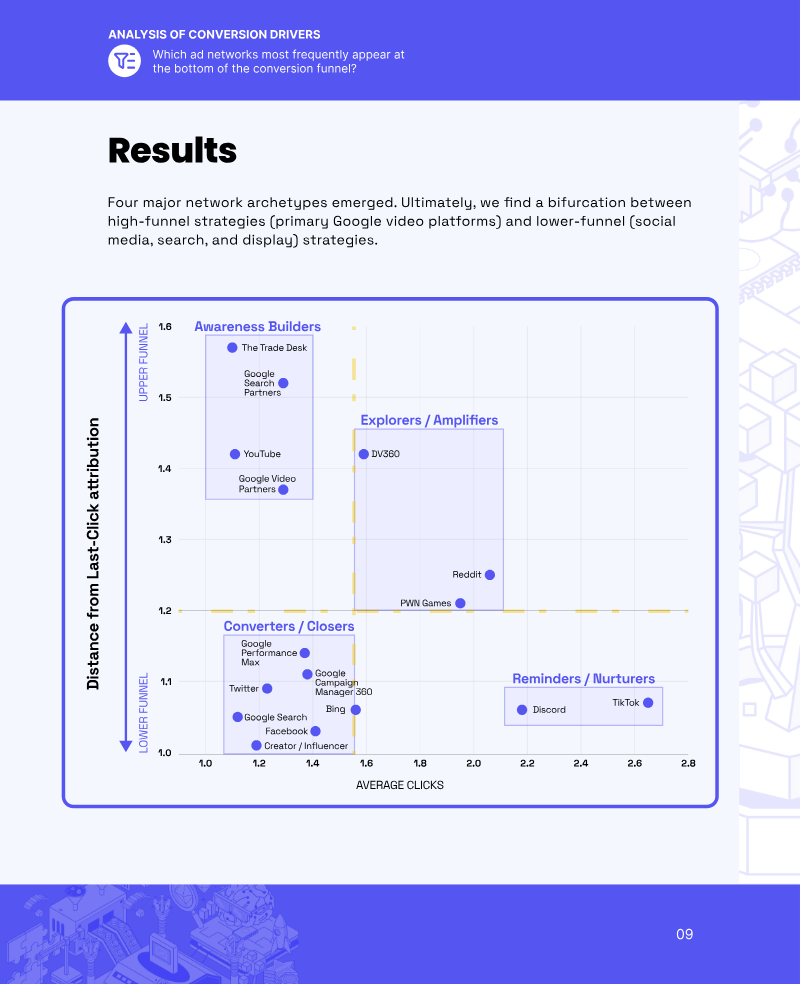
Uh, a common misperception is that search is purely a lowerfunnel tool. You know, Google search doesn't just close the loop for brands. It often opens the loop. You the reality is that search is a massive engine for brand discovery. You know, over 70% of shoppers come to Google search open to trying new brands or products and that's actually expanding with AI. And we talked about that a bit. And of course, YouTube offers incredible opportunities for brands to tap into moments of discovery.
The connection between the two is also interesting, right? People come to Google for everything from quick questions uh to high stakes decisions to engaging with trusted creators. And we're helping bring more of these insights to advertisers with tools like attributed branded searches is just one example where we can report to advertisers when consumers search for a brand after they see a video ad on YouTube and ways to engage differently with them based on that. We'll have more on that in the works, but we're really focusing in on helping advertisers understand how they can capture opportunities uh with consumers when they're earlier in their decision journey because there's a tremendous amount of opportunity right within Google search is not a place where you just capture demand. It's where discovery starts and decisions are made.
Dan Taylor, I appreciate your time. I appreciate you chatting with me. Thank you very much. And I appreciate you and the whole team for making this happen. Thank you very much.
Yeah, Eric, it's a pleasure. Thanks so much.
[music]
Auto-generated captions from YouTube — names and numbers may be misheard.
Key insights
6 takeaways · ~2 min read- 01Google is shifting from keyword-based search to conversational intent, using Gemini to better understand complex, multi-turn queries and improve ad ranking efficiency.
- 02AI Overviews and AI Mode are currently monetizing at parity with traditional search, serving as new engines for brand discovery by matching ads to the context of AI-generated answers rather than just search terms.
- 03Google is transitioning away from manual keyword management toward automated, AI-driven campaign systems like Performance Max, which leverage machine learning to optimize performance beyond what manual control can achieve.
- 04The Universal Commerce Protocol (UCP) is enabling autonomous shopping within AI interfaces, allowing users to complete checkouts for retailers like Etsy and Wayfair directly within Gemini or search without leaving the conversation.
- 05The decline of deterministic tracking signals has forced a renaissance in Marketing Mix Modeling (MMM), with Google open-sourcing its 'Meridian' tool to help advertisers maintain rigorous measurement standards.
- 06Google is introducing new ad formats like 'Direct Offers' for AI Mode, which present promotional content based on the user's specific stage in the shopping journey rather than immediate transactional intent.
Ask AI about this video
Cite this video
Citation
Generating citation…




















Comments