AI reports and market data
Documents

Data Science at Games Studios | Andre Cohen Head of Data Science at Tilting Point
Data science functions as a critical third pillar of revenue in modern game studios, operating alongside in-app purchases and ad monetization to drive profitability.
- Data science functions as a critical third pillar of revenue alongside in-app purchases and ad monetization, focusing on optimizing user acquisition bidding and return on ad spend.
- Successful data science teams prioritize robust data engineering, quality management, and pipeline maintenance over complex machine learning research.
- Studios should focus on pragmatic, short-term projects that directly address core business constraints rather than esoteric, long-term research initiatives.
A Cost-Benefit Analysis: Is That New Tech Worth It?
A cost-benefit analysis (CBA) serves as a critical decision-making framework for game developers and technical artists to determine the financial and operational viability of implementing new technology.
- A cost-benefit analysis (CBA) provides a data-driven framework to evaluate new technology by comparing it against the baseline of existing workflows to ensure ROI and productivity gains exceed implementation costs.
- Direct costs for new technology must include hardware, software licenses, and labor hours, while indirect costs must account for overhead such as workstation maintenance and administrative support.
- Risk assessment should be integrated into the analysis using techniques like the Monte Carlo method to account for uncertainty, inflation, and opportunity costs.
Machine Learning Summit: Successfully Use Deep Reinforcement Learning in Testing and NPC Development
Deep reinforcement learning serves as a transformative methodology for modern game development, shifting the industry away from rigid, manual scripting toward autonomous systems capable of sophisticated playtesting and naturalistic non-player character behavior.
- Deep reinforcement learning (RL) agents map game observations to actions by maximizing rewards received during gameplay, allowing for the creation of complex behaviors without explicit programming.
- Integrating human demonstrations with reinforcement learning can significantly reduce training time; for example, using roughly 10 demonstrations reduced training time by over 50% in some scenarios and by 25% in the bubble-shooter game Snoopy Pop.
- Domain randomization—varying aspects like lighting, textures, and layout—is essential to prevent agents from memorizing specific levels and ensures they generalize effectively to new, unseen environments.
Machine Learning for Optimal Matchmaking
TrueMatch represents a fundamental shift in competitive gaming infrastructure by replacing static, manually tuned matchmaking rules with a dynamic, machine learning-driven framework.
- TrueMatch replaces static, manually tuned matchmaking rules with a machine learning framework that dynamically optimizes parameters every fifteen minutes.
- The system achieved a 72% reduction in player wait times compared to traditional, static matchmaking configurations.
- By utilizing a weighted utility function, the system allows developers to explicitly quantify and balance the trade-offs between match fairness and latency.

Machine Learning Summit: Ragdoll Motion Matching
Modern character animation is undergoing a significant evolution through the integration of physical ragdoll simulation with data-driven motion matching.
- Modern character animation is shifting from rigid playback to physical ragdoll simulation combined with data-driven motion matching for real-time environmental responsiveness.
- The system utilizes reinforcement learning, specifically actor-critic methods and policy gradient techniques, to map continuous state inputs to physical actions.
- Neural network policies treat actions as Gaussian distributions, iteratively optimizing the mean and standard deviation to improve movement stability and minimize falls.
Beyond Game Economy Design - Increasing Profit Through Intelligent Revenue Optimisation
Revenue optimization in mobile gaming extends beyond core gameplay design, requiring sophisticated, data-driven strategies to maximize player retention and monetization.
- Implementing automated loyalty programs can significantly boost key performance metrics, with one case study showing a 21% increase in day-one retention, a 24% increase in time spent in-app, and a 75% increase in average revenue per user (ARPU).
- For games heavily reliant on ad revenue, loyalty programs can act as a gamification layer that drives engagement, resulting in observed increases of 56% in day-one retention and 93% in total ad revenue.
- Effective revenue optimization requires moving beyond core gameplay loops to analyze thousands of player data signals, allowing developers to predict behavior and deliver personalized 'next best actions' for individual users.

Privacy First! Mobile Engagement in the Fast Emerging New World
Mobile engagement strategies are currently undergoing a significant shift, moving away from traditional server-side push notifications toward on-device, edge-computing models.
- On-device edge computing solves data privacy compliance issues for GDPR, GDPR-K, and COPPA by keeping user data and unique identifiers on the device rather than transmitting them to the cloud.
- Push notifications should be treated as a core component of user experience, as 68% of user journeys for apps like Twitter begin with a notification.
- Moving notification logic to the device allows for real-time, context-aware delivery based on user behavior—such as device unlock patterns or charging status—rather than relying on server-side scheduling.

Panel: The Toxic Content Dilemma – Is In-game Game Chat a Lost Case or Can it be Saved?
The integration of in-game chat serves as a critical component for fostering community, increasing player retention, and gathering valuable user feedback.
- In-game chat is a critical tool for community building and player retention, as it allows developers to capture valuable, free feedback on features and user sentiment.
- Relying solely on human moderation is insufficient for modern platforms, particularly when managing high volumes of content across multiple languages, time zones, and 24/7 operations.
- AI-driven moderation tools provide essential scalability by offering instant feedback to users, which serves as a learning mechanism to discourage bullying and toxic behavior before it is published.
Eos is Alive: The AI Systems of Final Fantasy XV
Final Fantasy XV utilizes a sophisticated, multi-layered artificial intelligence architecture designed to create a cohesive, autonomous, and reactive open-world experience.
- Final Fantasy XV utilizes a three-tiered AI architecture consisting of a Meta AI (director), Character AI (individual intelligence), and Navigation AI (spatial positioning) to manage game progress and NPC behavior.
- The Character AI system employs a hierarchical 'AI Graph' that nests state machines within behavior trees, allowing game designers to create complex, scalable decision-making structures without deep programming knowledge.
- To maximize efficiency and reuse, the system uses an 'overriding' function that allows designers to customize specific common logic states for individual monsters or characters without rebuilding entire AI graphs.

Indexing and Iterating Design Space Permutations
The design of complex game systems often involves managing vast state spaces that can be modeled as combinations or permutations.
- Perfect hash functions enable mapping complex game states directly to memory indices, eliminating the overhead associated with traditional hash table chaining.
- Mathematical ranking and unranking functions allow for the conversion of board configurations into unique integer indices by calculating the number of skipped states.
- Permutations can be mapped to numerical values using mixed radix representation, with efficient linear-time algorithms available to replace slower quadratic-time ranking methods.

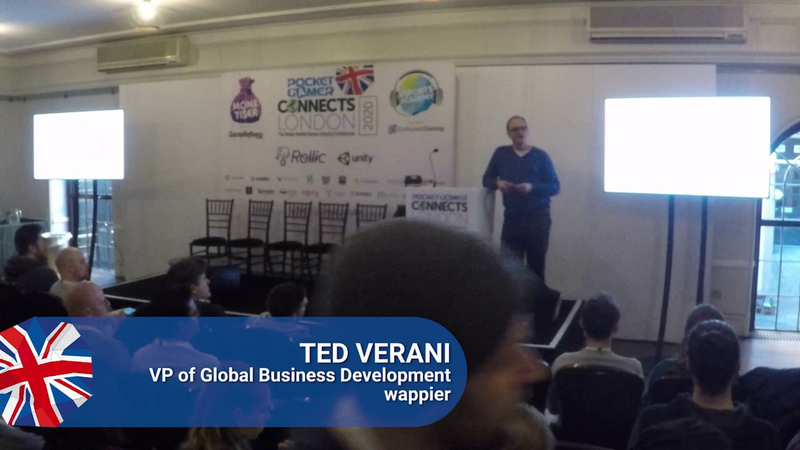
Wappier on using loyalty programs to improve retention in games
Wappier leverages artificial intelligence and machine learning to optimize mobile game revenue and player retention through dynamic pricing and automated loyalty programs.
- Wappier uses AI and machine learning to optimize mobile game revenue and retention by analyzing approximately five weeks of player data to establish behavioral baselines.
- The company optimizes storefront pricing on a per-country basis to correct mispricing caused by standard app store currency conversion rates, which often fail to account for local price elasticity.
- Wappier implements automated, points-based loyalty programs that operate outside of core gameplay, functioning similarly to airline mileage programs to increase session frequency and length.

Animation Isn't the Answer
The modern landscape of game development demands a fundamental shift in how animators and engineers interact, moving away from rigid departmental silos toward a model of deep, iterative collaboration.
- Game development success requires moving away from rigid departmental silos toward a model of deep, iterative collaboration between animators and engineers.
- Studios should prioritize the development of hybrid professionals who possess the skills to bridge the gap between creative nuance and functional engineering.
- Technical systems must be designed to serve creative intent, ensuring that high-fidelity artistic vision is not compromised by underlying software architecture.