AI reports and market data
Documents
Brain-Computer Interfaces: One Possible Future for How We Play
Brain-computer interfaces represent a fundamental shift in the future of interactive entertainment, aiming to transcend traditional input methods by directly measuring a player’s internal neurological and physiological states.
- Brain-computer interfaces (BCI) enable the transition from subjective player surveys to objective, real-time monitoring of neurological and physiological states like engagement, frustration, and cognitive load.
- Developers can use granular data from EEG, fNIRS, and fMRI technologies to optimize game design elements and accelerate iterative development cycles.
- BCI technology facilitates adaptive gameplay by dynamically adjusting difficulty, narrative pacing, and reward structures to maintain a player's optimal flow state.
AI's Ever-Growing Presence in Gaming: $1.8B in VC Investments
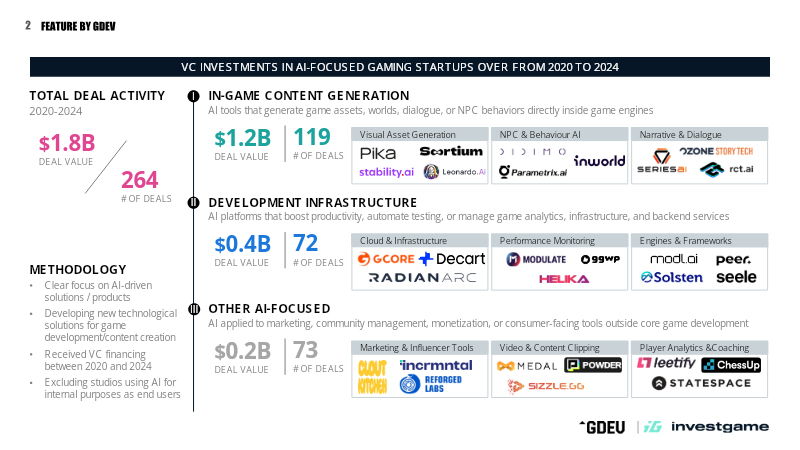
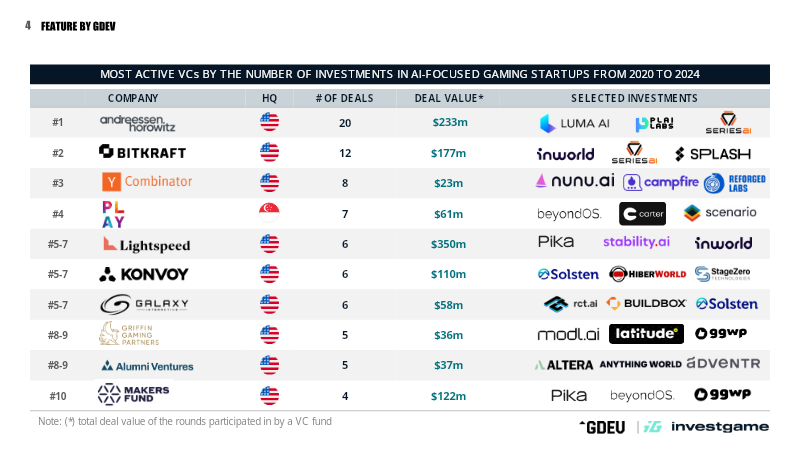
Venture capital investment in AI-focused gaming startups has experienced significant growth, totaling $1.8 billion between 2020 and 2024.
- Venture capital investment in AI-focused gaming startups reached $1.8 billion between 2020 and 2024, with deal value growing at a 35% compound annual rate from 2022 to 2024.
- AI-focused startups now account for approximately 65% of all gaming infrastructure deal activity, reflecting a strategic pivot toward specialized verticalized tooling over general platform investments.
- In-game content generation tools lead the market with $1.2 billion in funding across 119 deals, followed by $0.4 billion for development infrastructure and $0.2 billion for marketing and analytics.
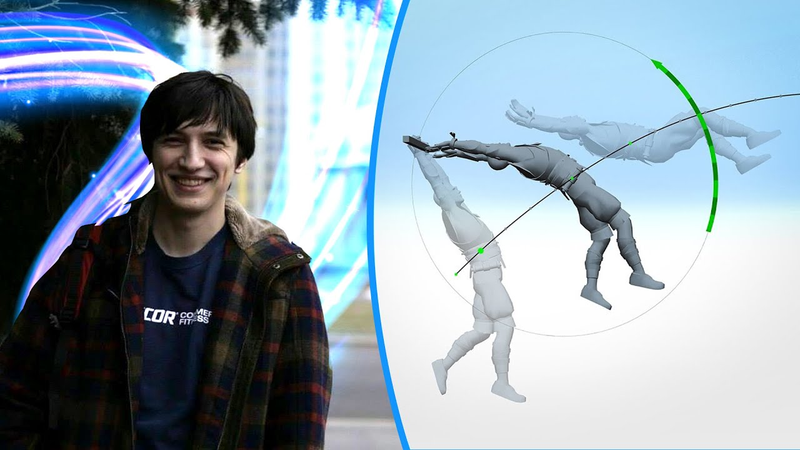
Cascadeur: Changing the World of Animation One Frame at a Time with Alexander Grishanin | GduX.me
The animation industry faces a persistent challenge in achieving physical accuracy, as traditional 3D tools often lack integrated systems for tracking center-of-mass and inertia.
- Cascadeur integrates physics-based simulation directly into the 3D animation workflow to automate the calculation of ballistic trajectories and angular momentum.
- The software utilizes neural networks to allow animators to achieve realistic, physically accurate movements like parkour and mid-air rotations without the need for expensive motion capture.
- The platform aims to disrupt the dominance of legacy software like Maya by offering a modern, accessible alternative that prioritizes physics-compliant movement.
The Alchemy and Science of Machine Learning for Games
Machine learning is fundamentally transforming game production by shifting development from manual, rule-based programming toward data-driven automation.
- Machine learning is shifting game production from manual, rule-based programming to data-driven automation, specifically for generating complex assets like real-time animations, dialogue, and lip-syncing.
- Studios are successfully integrating experimental machine learning tools by colocating researchers with developers to prototype solutions using proprietary datasets.
- Automated systems are currently most effective for scalable, complex tasks such as traffic simulation, game balancing, and automated quality assurance testing.

Embracing Complexity and Compliance in Modern UA
Modern mobile user acquisition demands a sophisticated, data-driven framework that integrates paid advertising with continuous App Store Optimization.
- Successful user acquisition requires balancing CPI against LTV, with evergreen games like social casino titles supporting higher CPIs due to multi-year player lifecycles, compared to hardcore games with 6-to-12-month lifecycles.
- Internal Business Intelligence (BI) systems are essential for modeling user behavior, such as tracking spin frequency in casino games to identify potential high-value 'whale' players and predict purchasing patterns.
- App Store Optimization (ASO) remains a critical, ongoing process; top-performing products often manage pools of over 10,000 keywords, requiring constant exploration and re-testing of previously underperforming terms.
Math for Game Programmers: The Math of Deep Learning
Deep learning functions as a specialized form of differentiable computing, where developers construct large, complex computational graphs to approximate functions that map inputs to outputs.
- Deep learning functions as differentiable computing, utilizing massive computational graphs with billions of parameters to approximate complex functions that map inputs to outputs.
- The primary utility of deep learning is its ability to process high-dimensional data, such as audio, video, and images, to identify complex decision surfaces that traditional rule-based systems cannot.
- Training relies on gradient-based optimization and backpropagation, which use the chain rule to iteratively adjust weights despite the non-convex nature of the problem.
Math for Game Programmers: Harmonic Functions and Mean-Value
Harmonic functions and mean-value coordinates serve as essential mathematical frameworks for procedural geometry and mesh manipulation within modern game development.
- Harmonic functions satisfying the Laplace equation enable smooth, natural transitions across triangle meshes by defining scalar values based on controlled boundary points.
- Cotangent-weighted discrete Laplacians allow developers to model complex surface behaviors using sparse matrix systems, avoiding the high computational cost of topological calculations.
- Integrating Lagrange multipliers into least-squares solvers allows for the enforcement of specific boundary constraints, facilitating intuitive interpolation across arbitrary mesh geometries.

Choice Design With Zachtronics' Matthew Burns - GDC Podcast Ep. 2
The evolution of game design increasingly favors narrative depth over traditional player agency, particularly when exploring complex societal issues.
- Limiting player agency in narrative-driven games like Eliza can increase emotional resonance by avoiding the reductive outcomes often found in procedural simulations.
- Transitioning from AAA environments to independent development allows creators the necessary latitude to integrate human-centric storytelling into systems-based frameworks.
- Modern game design is shifting toward sustainable work-life balance and the exploration of complex societal themes, including artificial intelligence, mental health, and corporate ethics.
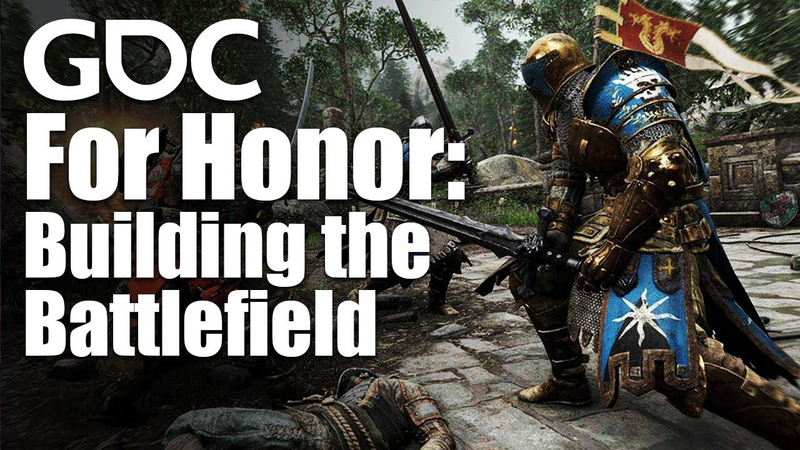
Deterministic vs. Replicated AI: Building the Battlefield of For Honor
The architecture of For Honor relies on a deterministic, input-driven simulation model designed to facilitate high-fidelity, skill-based melee combat.
- For Honor utilizes a distributed peer-to-peer deterministic simulation where only player and AI inputs are transmitted across the network, ensuring all clients reach the same game state without synchronizing complex object properties.
- The game architecture treats AI and human players identically, using a shared 'Katana' state machine tool that allows designers to define character states, movement, defenses, and branching conditions without hard-coding logic.
- To manage large-scale battles with up to 200 actors, the team replaced complex, costly platoon-merging logic with simple flocking rules to handle movement and target acquisition efficiently.
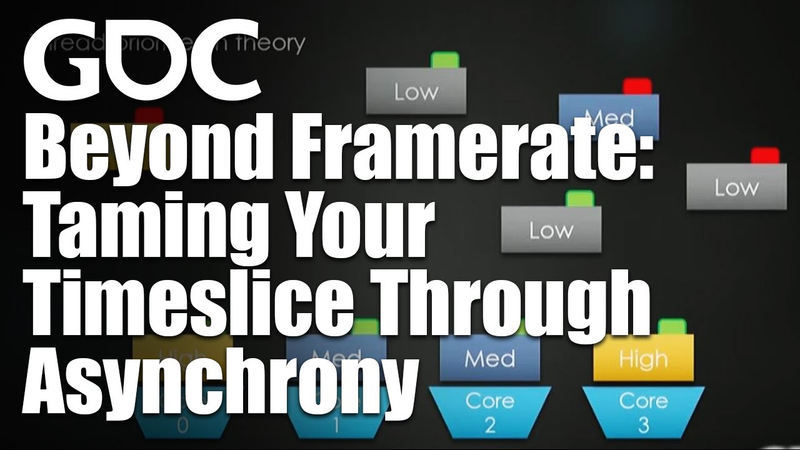
Beyond Framerate: Taming Your Timeslice Through Asynchrony
Real-time game artificial intelligence frequently encounters computational bottlenecks when constrained by standard frame-based processing.
- Transitioning AI processing from standard frame-based execution to amortized, multi-frame task distribution prevents computational bottlenecks and ensures consistent performance.
- Implementing a custom scheduler within a thread pool is superior to traditional background threading, as it avoids common issues like thread contention, priority inversion, and unpredictable latency.
- Tasks should voluntarily yield execution by using the CPU’s timestamp counter to monitor duration, ensuring they pause before exceeding a strictly defined time slice.
Art Direction Bootcamp: Building a Creative Future with Artificial Intelligence
Artificial intelligence represents a critical evolution in game development, functioning as a transformative tool to mitigate industry-wide burnout and unsustainable production costs.
- AI integration shifts the artist's role from manual execution to high-level creative direction, allowing for faster iteration by automating repetitive technical tasks like fluid simulations, lighting, and texture generation.
- The adoption of assistive intelligence serves as a solution to the industry's sustainability crisis by reducing the unsustainable production costs and technical complexity that currently stifle creative risk-taking.
- AI acts as a force multiplier for smaller teams, enabling them to produce high-quality content and achieve results that previously required large, resource-heavy workforces.
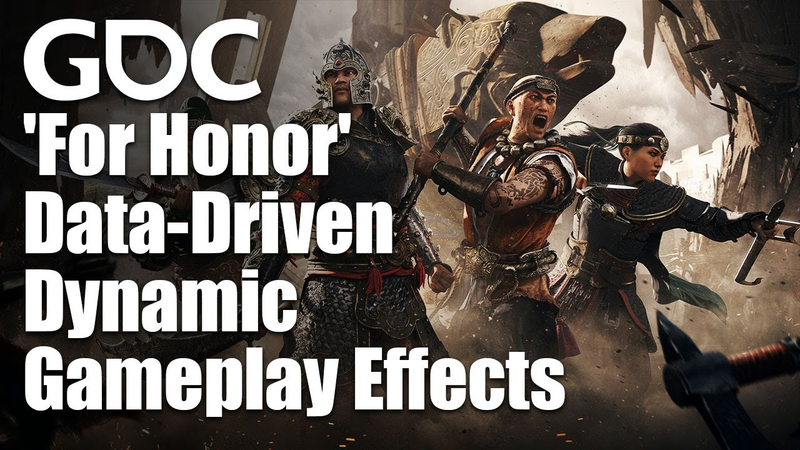
Data-Driven Dynamic Gameplay Effects on For Honor
For Honor employs a modular, data-driven modifier system designed to decouple gameplay logic from core programming, thereby granting designers the autonomy to iterate on mechanics without constant engineering support.
- Ubisoft implemented a data-driven modifier system for For Honor that allows designers to dynamically create gameplay effects—such as stat buffs, AI decision-making, and attack properties—without requiring additional programming code.
- The system utilizes a modular architecture where modifiers can be applied to various entities, including players, NPCs, capture points, and interactive objects, enabling high reusability across different game features.
- To manage performance under a load of approximately 3,000 queries per frame, the team implemented entity-specific caps, limiting soldiers to 6 active modifiers while allowing players a higher threshold.