AI reports and market data
Documents
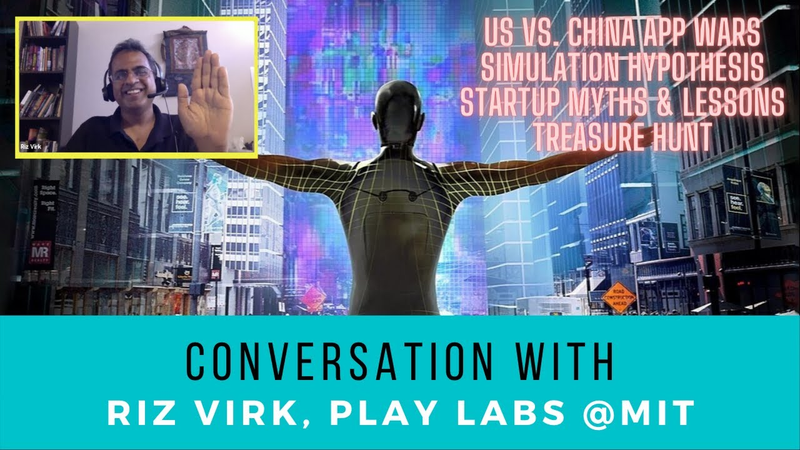
Riz Virk on US vs. China App Wars, Simulation Hypothesis (Life is a Game!), & Startup Myths
Mobile applications have evolved from simple content delivery tools into critical geopolitical infrastructure, marking a shift from regulating content to controlling the platforms themselves.
- Mobile applications have transitioned from simple content delivery tools into critical geopolitical infrastructure, leading the US, China, and India to treat platforms as matters of national security and data sovereignty.
- The global tech industry must adapt to an era of economic protectionism where foreign-controlled platforms face persistent regulatory scrutiny and complex cross-border ownership requirements.
- The simulation hypothesis suggests that reality functions like a sophisticated video game engine, drawing parallels between quantum physics' observer effect and the information-based structure of the universe.

T1000’s, Trex’s & Eyebrow Mites PG Connects Digital #2
Steve Williams, a veteran computer graphics pioneer and former chief animator at Industrial Light & Magic (ILM), provided an analytical retrospective on the evolution of computer-generated imagery (CGI) during his session at Pocket Gamer Connects Digital #2 in June 2020.
- The transition from stop-motion to digital assets in films like Jurassic Park proved that CGI could replicate physical realism—such as breathing and weight—that was previously deemed impossible by industry experts.
- Technological breakthroughs in visual effects are driven by a synergy between creative curiosity and the inevitable progression of hardware capabilities.
- Modern real-time rendering, exemplified by Unreal Engine and productions like The Mandalorian, represents the next phase of visual evolution where any imagery is theoretically possible given sufficient computational power.
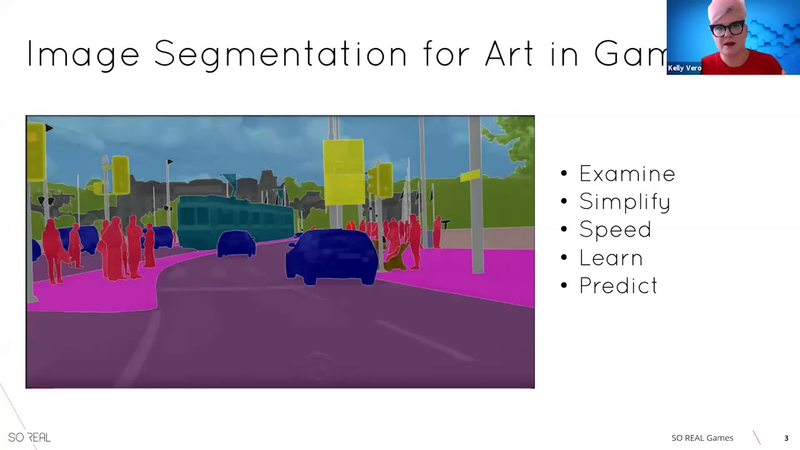
Working Smart - Machine Learning in Art Asset Creation for the Games Industry PG Connects Digital #2
The integration of machine learning into art asset creation offers a transformative approach to game development, primarily by accelerating production timelines and automating complex workflows.
- Digital twinning utilizes CT scanning and automated platforms to convert physical objects into game-ready assets, bypassing traditional manual modeling and CAD-based workflows.
- Machine learning algorithms use image segmentation techniques—including thresholding, histogram analysis, and the Otsu method—to automate the reconstruction of complex objects by clustering vertices and structural data.
- Automating the art pipeline through algorithmic checks for vertex counts and file storage significantly reduces the need for human intervention in quality assurance and project management.
Deep Learning: Beyond the Hype
Deep learning and reinforcement learning are fundamentally transforming game development by functioning as trainable, high-performance function estimators.
- Deep learning and reinforcement learning are shifting game development from scripted mechanics to trainable function estimators, enabling advancements in automated motion capture, voice synthesis, and facial animation.
- The primary industry objective is to move beyond combat-centric gameplay toward immersive role-playing experiences featuring complex social interactions and emergent, human-like behaviors.
- Practical applications, such as those seen in Battlefield 1, demonstrate that neural agents can successfully navigate complex 3D environments and prioritize resources.
Knowledge is Power: An Overview of Knowledge Representation in Game AI
Effective game artificial intelligence depends less on the sophistication of underlying algorithms and more on the quality and structure of the data provided to agents.
- Effective game AI relies more on the quality and structure of data provided to agents than on the complexity of the underlying algorithms.
- Developers should categorize information into three distinct types: static environmental data, dynamic spatial data, and specific entity details to improve agent reactivity.
- Implementing spatial tools like smart objects, tactical maps, and influence maps allows agents to interpret their surroundings efficiently for complex decision-making.
How to Use Machine Learning, Live Telemetry Analysis, and Computer Vision to Manage Communities
Modern game development requires a fundamental shift toward integrating community management as a core design pillar rather than a reactive support function.
- Integrating in-game social features like chat systems can double player retention by providing a space for social interaction and peer-to-peer assistance without leaving the game environment.
- Successful game communities rely on 'social loops'—mechanisms where social notifications, such as clan messages or shared tactics, trigger further gameplay and engagement, mirroring the core game loop.
- Developers should implement lightweight replay systems that record event data rather than raw video, allowing for easier analysis and the automated generation of highlight reels for player sharing.

Panel: Machine Takeover - Improving Your Game With Machine Learning & AI - PGCD#2
Machine learning is fundamentally transforming game development by shifting industry standards from static, rule-based state machines toward dynamic, data-driven systems.
- Machine learning is shifting game development from static, rule-based state machines to dynamic, data-driven systems that automate labor-intensive tasks like animation and lip-syncing.
- Advanced implementations, such as the Drivatar system in the Forza series, demonstrate how machine learning allows NPCs to evolve based on player interaction rather than relying on pre-programmed behaviors.
- The industry is democratizing access to AI through tools like the Unity ML-Agents Toolkit and open-source frameworks, allowing smaller studios to implement sophisticated agents without large-scale research infrastructure.
Robocalypse Now: Using Deep Learning to Combat Cheating in Counter-Strike: Global Offensive
Counter-Strike: Global Offensive maintains competitive integrity through a sophisticated, multi-layered anti-cheat strategy that balances technical mitigation with deep learning innovation.
- VACnet, a deep learning model trained on historical human review data, achieves conviction rates between 80% and 95%, significantly outperforming the 15% to 30% success rate of manual player reports.
- The Trust Factor system maintains competitive integrity by isolating suspected cheaters into separate matchmaking pools, effectively containing the impact of malicious actors on the general player base.
- VACnet identifies suspicious behavior by analyzing granular telemetry, including weapon performance, hit results, and player view angles.
Chatbot Game Manifesto: Golden Rules for Making a New Kind of Game
Chatbot games represent a distinct genre of semantic, narrative-driven experiences that prioritize emotional engagement over traditional mechanical inputs.
- Prioritize deterministic design and meticulous writing over complex, opaque machine learning systems to maintain precise control over the narrative experience.
- Mitigate the 'chatbot trap' of repetitive AI responses by utilizing large databases or modular sentence-building systems capable of generating millions of unique lines.
- Design systems to handle player input failures gracefully by employing evasive, open-ended responses and explicitly confirming when the AI has successfully parsed a specific intent.
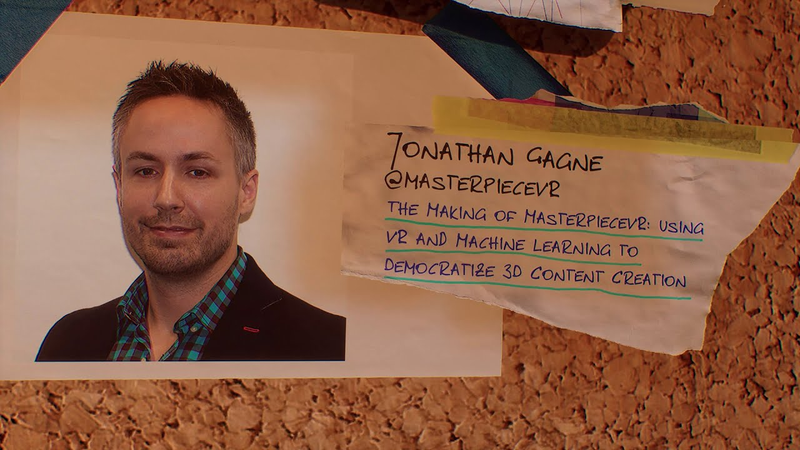
The Making of Masterpiece VR with Jonathan Gagne | GduX.me 2020
The democratization of 3D content creation relies on shifting from traditional 2D interfaces to native virtual reality environments.
- VR-based 3D modeling, supported by machine learning, can increase production speeds by up to 10x and reduce the learning curve by a factor of 200 compared to traditional 2D interfaces.
- Masterpiece VR currently supports a user base of over 30,000 individuals and maintains seamless integration with industry-standard pipelines including Unity, Unreal Engine, and Substance Painter.
- The VR industry is maturing through the combination of high-fidelity software and lightweight, cloud-enabled hardware, with a long-term shift expected toward augmented reality as motion-tracking constraints are resolved.
Face-to-Parameter Translation via Neural Network Renderer
The face-to-parameter translation technology addresses the labor-intensive nature of character customization in role-playing games by automating the creation of in-game avatars from a single user-provided photograph.
- The technology automates character creation by translating a single photograph into game-engine-compatible parameters, significantly reducing the labor required for avatar customization.
- The system utilizes a three-part neural network architecture, including an 'imitator' trained on 20,000 randomly generated parameter sets to replicate game engine rendering behavior.
- By combining a face recognition network and a semantic segmentation network, the framework uses gradient descent to iteratively optimize facial parameters until the digital character matches the input photo.
Building An Intelligent Game Testing System in Netease MMORPG Games
The rapid evolution of large-scale MMORPGs like Justice has rendered traditional manual and script-based regression testing increasingly unsustainable.
- Netease transitioned from manual and script-based testing to an autonomous AI architecture to manage the complexity of over 15,000 quest steps in the MMORPG 'Justice'.
- The system utilizes Markov decision processes, Monte Carlo Tree Search, and Upper Confidence Bound algorithms to autonomously navigate game environments and generate optimal testing paths.
- Integrating Natural Language Processing to extract intent from quest descriptions allows the AI to prioritize player actions, resulting in a threefold increase in search speeds.