1 free read left. Create a free account for unlimited reading + AI research.
Create free account
Privacy First! Mobile Engagement in the Fast Emerging New World
Key insights
7 takeaways- 01On-device edge computing solves data privacy compliance issues for GDPR, GDPR-K, and COPPA by keeping user data and unique identifiers on the device rather than transmitting them to the cloud.
- 02Push notifications should be treated as a core component of user experience, as 68% of user journeys for apps like Twitter begin with a notification.
- 03On-device processing can significantly improve engagement metrics, with some apps seeing click-through rates increase by up to 10 times compared to traditional cloud-based notification methods.
- 04Implementing a pre-permission dialog that explains the value of notifications, such as special offers or free giveaways, can significantly increase user opt-in rates.
- 05Personalizing notification content with user names or specific gameplay milestones, along with the strategic use of emojis, provides a measurable lift in engagement, though the impact of emojis typically declines after six to eight weeks.
- 06Standard server-side notification delivery suffers from reliability issues, with approximately 2.5% to 2.8% of push tokens changing monthly due to OS updates and system throttling.
- 07Moving notification logic to the device allows for real-time, context-aware delivery based on user behavior—such as device unlock patterns or charging status—rather than relying on server-side scheduling.
Ask AI about this video
Transcript
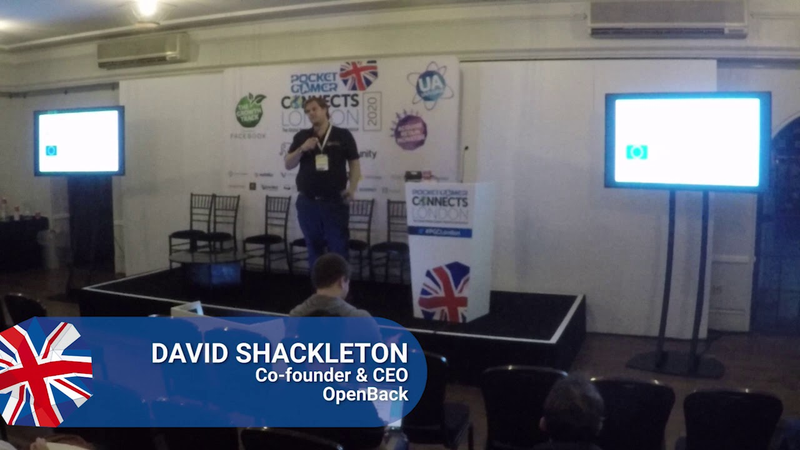
[Music] that's a great round of applause I haven't even said anything yet let's see if I get a round of applause at the end and so my name is Ed David Shackleton I am I'm the co-founder and CEO of open back so open back is a platform a solution to help improve user engagement and also customer experience when it comes to app messaging so push notifications and in-app messaging and so my background I'm a co-founder of is about 15 years ago called ding which is not in gaming but it's a mobile top-up app and we do five hundred million dollars in mobile top-up all over the world and it was during that scaling up with that business we've had 250 people
that I became obsessed with push notifications and I saw this whole new way to talk to consumers talk to users of apps and what got very frustrated where a lot of the times push notifications wouldn't get delivered so we'd send out a notification and half the people in the office wouldn't receive it and we could never really understand why and so I spun up a sort of a separate team and that's really where the genesis and what came out of open back sorry that came open back this platform which lots of gaming apps gaming's game insight jumpstart games and lots of other apps outside of the gaming sector as well use us to do a better job of push notifications so I'm gonna talk more generally about different industry trends different themes and I got to sort of share our views of what we think the future as it relates to messaging and user engagement through push and in up will happen so I'm going to touch first around mobile engagement and some trends and some best practices and things we see working there I'm going to
talk about data privacy which is a really hot topic I'm going to talk about in relation to mobile engagement and then at the end I'm going to talk more generically about edge computing and how edge computing and um device computing is helping apps do a better job of mobile engagements now at the end of the day these three topics are core to the solution we've built out and open back what I'm just going to talk generically about it and there's lots of learnings and stuff here if you decide to build out parts of this yourselves or you know approach your developers to build out you know stuff stuff along these lines yourselves so please share with me if it becomes a sales pitch because that's not my intention when I definitely won't get a clap if that happens so I think everybody here will will know app success is very hard retention 714 day retention particular very difficult to do and you'll all want to talk to your users more often you'll want them to come back into the game to play more do more hopefully maybe doing and I appeared up in-app purchase and but it's
tough because you've got to balance that with pissing off the customer pissing off the player and so they either turn off notifications which stops you from talking to them again or worse they'd sort of delete your app and have a bad experience we ultimately believe and probably one of the first things we talk about is you should think about push notifications as part of your user experience in your game and every game is different to put so many of a user's journey or their experience when playing starts with a push notification telling them something and coming back in outside of gaming we're doing some work with Twitter at the moment around their push notifications 68% of people that come to the Twitter app that experience starts with the push notification and so we're very strong and have a core belief around your UX your design it should start with the notification because a lot of times that's where that user journey starts and the lock screen on your device has become the home screen now and it's you know its core territory and I think push notification every app
every game is different we know we often get asked for stats and I have a best practice guide I can send to anybody and what you do see massive increases in retention over a period of time again outside gaming what interesting to share and better work with Farfetch'd a luxury fashion app they now sell more from their push notification campaigns than they do from email and email newsletters that's traditional e-commerce but it does show how much consumer behavior and user behavior with their phones is changing you'll also see the OSS or both iOS and Android continue to innovate and every major you know release and sometimes dart releases of the mobile OS has improve what's possible with push vacations there's a couple of years lag to games and apps actually taking advantage of this technology so we're working on a couple of projects with gaming apps where we take advantage of interactive notifications so you could actually extend the gameplay to start from the notification screen so it could be there's a particular game we're working with Rocchi you'll get notified
if somebody's attacking you in the game multiplayer game and you'll be able to turn on your shields from an interactive button on the lock screen of the device so you're starting to see more and more of these sorts of capabilities be available on the operating system and therefore available to anybody with iOS or Android app there's loads of examples if you check out our Twitter feed of people make you know doing horrible things with notifications delivering the middle the middle of night you know sending out the wrong content sending out you know through whatever system errors or fat-finger issues or whatever it is you know multiple notifications multiple times and users do punish for that behavior you know people will opt out will turn off notifications you know we're able to track not just as do people just turn off notifications but in iOS do they decide to sort of deliver silently and so you know it doesn't appear in the lock screen it still gets the Notification Center ultimately the biggest advice when it comes to mobile engagement is the moment of delivery
matters hugely people get a notification they'll either click on it and engage and sort of follow through into you know deep link into wherever in your app makes sense and if they don't they'll ignore it right and it'll just sit in the Notification Center and until it expires interestingly notifications in the Notification Center expire some arbitrary random number protectively between 10 and 16 days we haven't been able to reverse engineer for iOS or Android exactly what makes a notification disappear from a Notification Center if you control the moment of delivery and we talk about moment and encourage people to think about the moment of delivery is not just time so not just the time you know convention you might send from server side or the time that you schedule a local notification but think of time as being multiple contextual things a moment could be when somebody unlocks their device and it's between 6:00 and 8:00 p.m. and they're sitting on the couch at home that's that's a moment defined by more than just you know the hours on the clock
kind of small but if you email me I'll send them to you this is some data across a whole bunch of anonymized data across a whole bunch of different apps and what really what it's showing here on these charts you can kind of see the difference between different regions right so if you look at the top US and Canada this is the time of day that somebody clicked a notification not what it was delivered to their device or not what it was sent from server side what you'll see is that distribution across to do 24 hours in the US people much more likely to click evening time UK and Ireland clustered I'm from Ireland so I want to get Ireland on the slide and you know it tends to be a higher chance of click-through of an interaction earlier in the day actually I don't there's another slide that sort of breaks it for middle eastern Russia as well which I can send to anybody a couple of other quick ones and doing a what we call a pre permission dialog so when your app pops up looking for permission to send that user notifications you're better to put up a dialog before that and explain some reason why you should give permission so maybe you tell them
there's occasionally special offers or there's free giveaways or you know whatever the message case makes sense for your game and the other one is if if you have you know within your UI either within your interface if there's a way to sort of have a persistent reminder and so something to tell somebody if they've turned off notifications try and encouraging them to to give you that that's a chance to send the messages and re-engage with them content personalization so this is actually the content of the message huge impacts to click throughs and engagement if you personalize that content it could be their user name could be their real name if you if you have us we're going to talk about data privacy in a minute and or it could be something to do with the last level they completed or you know whatever the case may be but making that notification or personal to that user has a massive impact on how many people will engage further with us and emojis work for about six to eight weeks so you'll get a good lift and click through by using some emojis we've never seen it go negative and if that
makes sense you'll see a spike in click through and then app opens in reengagement and that lasts but it does sort of the impact declines over time okay I'm gonna talk a little bit about data privacy so this kind of horrible data heavy slide text heavy slide so really you know I guess the data privacy when it comes to kind of mobile games think about this obviously GDP are and what's nicknamed GDP RK in Europe which is GDP arcades around kids so if you have players that are under 16 in Europe you need to think deeply about these four sort of buckets of area and in the u.s. it's the Federal Trade Commission the FTC whose legislation is Coppa for them a child is defined as under 13 and then more recently you've kind of got the California CCPA which is just kind of come into law recently so that's some of the key legislation to think about but it does break down into consent and
so asking users for the appropriate permissions depending on what data you collect and often there's a bit of thinking and interrogation that needs to go into that on consent users have to be able to access their own personal data and move it around manipulated ultimately it's their data they have to have the right to be forgotten so you need to give them an option to delete that error delete their data and can be automated can also be an email to customer support as well and then some different legislations will require you to control where that data is stored and the big one when it comes to mobile games and we we haven't seen a single fine based on this you know alone but the FTC in the u.s. does consider push notification tokens as personal data so you'll see a lot of like work with Disney recently they don't do any push notifications on their app because they're terrified the FTC will find them there are you know large
well-known group that they would get a fine if they did it and the reason it is is because when you install an app on your phone and allow push notifications there's a unique token and you collect or your vendor collects that token to the cloud and you can use that to send that one person a message back so that's why they've decided that there's a lot of industry debates back probably ten years ago around that being considered because Europe is gray on this topic at the moment now the FTC has done some industry engagement and there was a deadline of 11th of December I think it was its 11th of December for industry to make submissions so there is a new version of copper and which we think a draft version will be shared at some stage during 2020 as the best information we have but it is something to keep an eye on and we expect to see more of I mean the the recent YouTube fine you may have seen is a small enough amount of money I'm around content on YouTube being tagged for kids or not and YouTube were fined and have now
implemented that to a lot of content producers weren't so happy about it if you think you fall within this so you have kids playing your your game you know one thing we recommend is sort of do a data journey mapping right what data what unique identifiers if any are leaving the device what are you collecting so moving into edge computing and where we sort of see the future so we do think push notifications are very broken you know if you think about how you and how your app engages with users you really can't do that much more typically than you could do with email 10 years ago right you so to collect information from your app to cloud to server-side you decide which users are going to get you segment the users in the cloud you send them some content you know you track how many notifications you've sent from server side and you can correlate that to how many people opens your app but there's big challenges so delivery rate is a challenge that most people don't know exists so the longer it goes from when somebody last opens
your app the lower the delivery rate for a remote push notification sent out a lot of the challenge of this gets a little technical but when you collect this push token the push token can change so sometimes if there's an operating system update or break the stage and if there's an operating system update I'm gonna leave somebody else fix that system update it can change so we see two and a half percent 2.8 percent of tokens change month-to-month as you bleed some bleed there and then also firebase and an apples APNs delivering you see some losses there there's lots of first-in first-out type rules the biggest factor in the poor delivery rates is actually the device so your device and mobile OS will throttle how often your app can check to see if there's notifications to conserve battery we see edge computing and device side on device being I guess a pervasive trend in general edge computing is all around
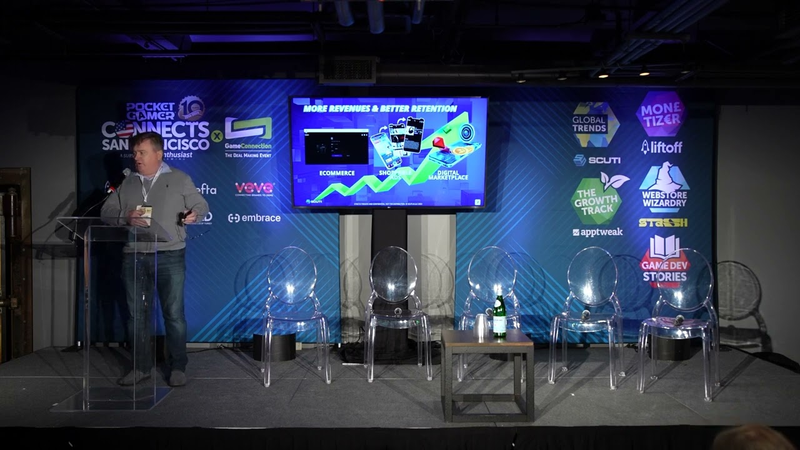
processing data closer to where that data is consumed so it could be you know a data center that's closer to you or it could be a data center and there's lots of solution providers you know that on your mobile network besides your device which cuts down latency also reduces cloud cost because more of that processing is happening out on the edge and it does have data privacy advantages because all the users data does not have to come up to cloud systems to be processed we believe that edge can be will unlock and enable people to do an awful lot more and improve this notification layer and this sort of primary interface on the device we think that controlling the messaging to users from the app that's in their pocket is a key thing that just must happen so in a 10-year view your apps on your phone and your smartphone gets smarter it's going to be smarter and smart about when it presents things to you and that could be a special offer for a purchase in a game or it could be a reminder that you know to turn your
shields on enabling your app on the device to control what notifications happen you obviously can do things in real time because it's all happening on device you're able to not just deliver notifications and you're also able to take them away again or update the content right so we work with the largest Rugby app in the world and when there's a when your favorite team is playing and thus they score points the score and the game dynamically updates on your lock screen right so for a game that could be you know the number of minutes until you respawn or whatever the use case may be you can also control the moment of delivery so your phone knows when it's been unlocked or you can use machine learning to figure out when somebody's at home without ever tracking their location by using accelerometer Wi-Fi and charging patterns and then you can also see far more on the on the metrics side of things so you can see not just did you send it from server side and but did you somebody read your notification and swipe it away so again an it solves on the delivery
side so if we have a sort of recommended set of metrics you should think about for app messaging again controlling the moment and I think the impact we see from customers and with our customers and their users is much higher opt-in rates people give permission for longer and more people give fish to send these notifications and the click-through rates can be times four I mean we have customers sort of ten times their notification rates by taking advantage of this so we believe that edge computing and on device is going to be a key future trend and Iran making notification is more reliable and data privacy compliant so that is why I had to sprint at the end there I'll blame the stage falling apart for that does anybody have any questions do we have time questions got time for one quick question if anybody's got one not even required nothing thank you very much for your time anyway
[Applause] [Music]
Summary
Mobile engagement strategies are currently undergoing a significant shift, moving away from traditional server-side push notifications toward on-device, edge-computing models. This transition is driven by the need to improve user retention, enhance the user experience, and navigate increasingly stringent global data privacy regulations, including GDPR-K, COPPA, and CCPA. Because push notification tokens are increasingly classified as personal data, developers face heightened risks regarding compliance and potential regulatory fines.
The primary thesis is that moving messaging logic from the cloud to the device—edge computing—solves critical industry pain points. Traditional server-side messaging often suffers from poor delivery rates, as mobile operating systems frequently throttle notifications to preserve battery life, and token synchronization issues lead to data loss. By processing data locally, apps can achieve higher reliability, lower cloud infrastructure costs, and improved privacy compliance, as sensitive user data does not need to be transmitted to or stored in external cloud systems.
Best practices for mobile engagement emphasize treating notifications as a core component of the user experience rather than a secondary marketing tool. Data suggests that personalized content, such as referencing specific in-game achievements or using user names, significantly boosts engagement. Furthermore, implementing pre-permission dialogues and utilizing interactive notifications—which allow users to perform actions like activating game shields directly from the lock screen—can drastically increase opt-in rates and click-through performance.
Ultimately, the future of mobile engagement lies in context-aware delivery. By leveraging on-device sensors like accelerometers and charging patterns, developers can identify optimal moments to engage users without invasive location tracking. This approach enables real-time, dynamic updates to notifications, ensuring that messaging remains relevant, timely, and compliant with evolving privacy standards across global markets.
















Comments