AI reports and market data
Documents
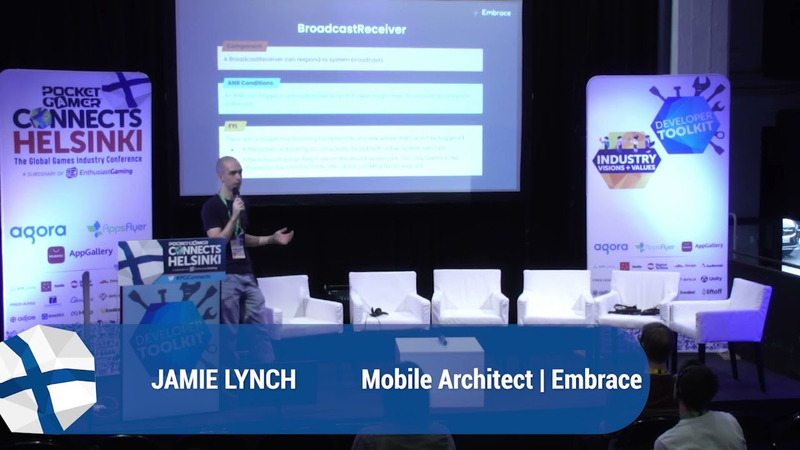
How the Android Framework Monitors, Processes, & Triggers ANRs
Application Not Responding (ANR) errors represent a significant challenge for mobile developers, as they negatively impact user experience and trigger penalties within the Google Play Console.
- ANRs negatively impact Google Play search rankings, organic traffic, and revenue, making them a critical performance metric for mobile developers.
- ANR thresholds vary by component: 5 seconds for Activities, 10–20 seconds for Services, 10 seconds for Broadcast Receivers, and as little as 1 second for Content Providers.
- Standard stack traces often point to the wrong culprit because they capture the state at the moment of the dialogue rather than the root cause of the main thread blockage.

Learn how to leverage machine learning with Moloco
The primary objective of Moloco is to leverage machine learning (ML) to facilitate profitable user acquisition for mobile game developers and advertisers across the broader app ecosystem.
- Moloco leverages machine learning to automate user acquisition and performance optimization, positioning its algorithmic approach as superior to manual management in the face of data privacy constraints and market volatility.
- The company has achieved a valuation of $1.5 billion and maintains a portfolio of approximately 150 clients within the EMEA region.
- Effective implementation of Moloco’s machine learning tools requires advertisers to minimize manual interventions, allowing algorithms sufficient time to learn and optimize performance.

How to Encourage Social and Emotional Learning In-Game in a Data and Research Driven Manner
The integration of social and emotional learning (SEL) into online gaming environments offers a transformative alternative to traditional punitive moderation.
- Star Stable Online implemented an AI-driven intervention system that reduced harmful in-game messages by 5% with 98% statistical confidence.
- The intervention replaced traditional punitive bans with real-time, non-judgmental prompts that encouraged self-reflection, empathy, and social awareness.
- To ensure accuracy, the team customized their AI model by training it on community-specific data, preventing misinterpretations of game-specific slang like horse breeds or levels.

Full-Body Animation Generation for Expressive NPCs
This presentation outlines a deep learning-based framework designed to automate the generation of high-quality, expressive full-body animations for non-player characters (NPCs).
- The framework utilizes a U-Net architecture for full-body animation and CNNs for processing, enabling high-speed generation: 15-second facial sequences are produced in under 6 milliseconds, and 20-second body sequences in approximately 600 milliseconds.
- The system replaces traditional manual animation and motion capture by using neural networks to map speech and text inputs directly to synchronized physical behaviors.
- To ensure high-fidelity output, the methodology uses time-aligned phoneme sequences for lower facial animations to bypass audio-specific noise and word sequences for upper facial expressions.

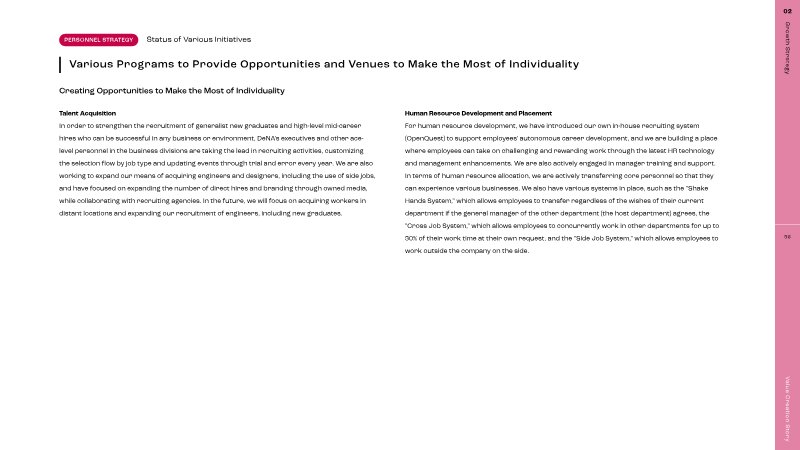
DeNA Integrated Report 2022
DeNA is undergoing a strategic evolution to diversify its portfolio into two primary pillars: "Entertain," comprising Games and Live Streaming, and "Serve," focusing on Healthcare and Sports.
- DeNA is pivoting toward a dual-pillar strategy of 'Entertain' (Games and Live Streaming) and 'Serve' (Healthcare and Sports) to balance stable cash flow with high-growth sectors.
- Fiscal year 2021 financial results included 30.5 billion yen in profit attributable to owners and a 13.2% return on equity.
- The Game Business revenue declined to 74.7 billion yen due to a lack of new hits, while the Live Streaming segment grew 1.4x and the Healthcare segment achieved its first quarterly profit.
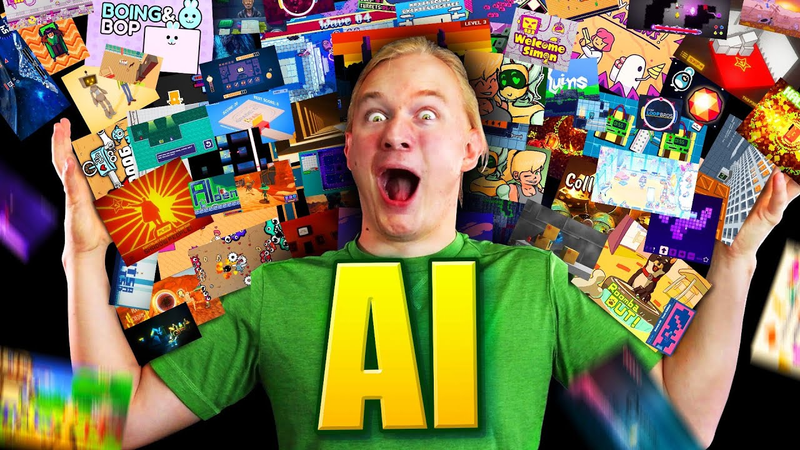
We Made 1,018 Games About AI
The Wowie Jam 4 game development competition challenged participants to explore the potential of artificial intelligence beyond its traditional role as a combat antagonist.
- The Wowie Jam 4 event resulted in the creation of 1,018 unique game entries over a period of three and a half days, demonstrating the feasibility of rapid development focused on AI collaboration.
- The competition successfully challenged the industry-standard 'combat antagonist' trope by requiring developers to design games centered on friendship and meaningful interaction with AI companions.
- Successful AI collaboration in game design relies on clear communication methods, including visual cues and speech bubbles, alongside the establishment of shared goals like cooperative navigation or music.
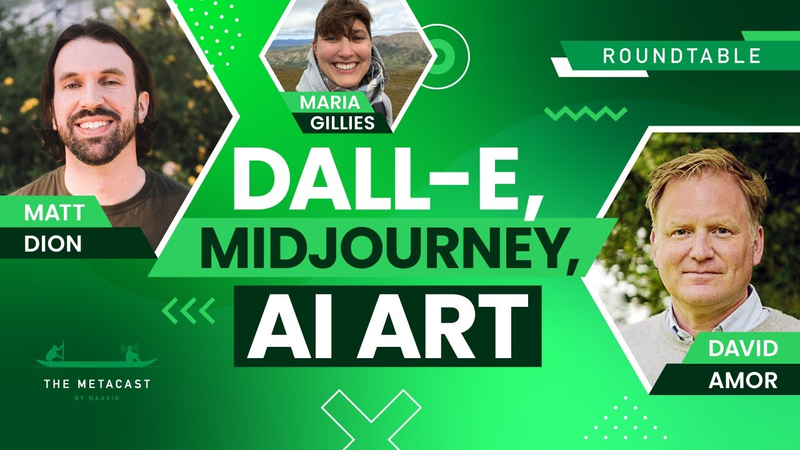
AI Art: DALL-Eks or High-value Disruptive Innovation? - The Metacast by Naavik
Generative AI tools such as DALL-E and Midjourney are fundamentally altering game art production by democratizing content creation and accelerating concepting, pitch deck development, and marketability testing.
- Generative AI tools like DALL-E and Midjourney are currently augmenting artistic workflows by accelerating concepting and pitch development rather than replacing core creative roles.
- The industry is shifting toward proprietary, brand-specific AI models, creating a demand for hybrid 'data scientist artist' roles to manage these specialized tools.
- Sony is aggressively expanding its mobile and multi-platform footprint, evidenced by the acquisition of Savage Game Studios and the creation of a dedicated mobile division to extend flagship IP reach.

Emotional Neural Style Transfer: Expressing Character AI Emotion through Paintings
This research explores the integration of neural style transfer (NST) as a novel medium for character AI to express emotion within video games.
- The research implements a system where character AI emotions, modeled via OCC and PAD frameworks, are expressed by dynamically applying neural style transfer (NST) to the game environment.
- The technical architecture utilizes conditional instance normalization to support four distinct NST variations: basic, blending, mask-based, and color-controlled style transfer.
- To preserve GPU resources for primary game rendering, the system performs CPU-based inference using TensorFlow Lite, ensuring compatibility with Unreal Engine 4 and various console architectures.
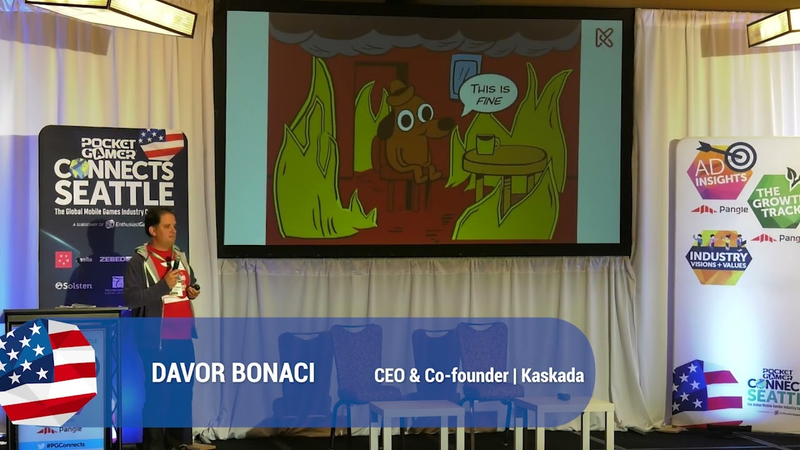
Boost Engagement in Your Game by Supercharging Live Ops With Time-based Machine Learning
Machine learning serves as a powerful tool for mobile game developers to enhance player engagement, retention, and monetization through personalized experiences.
- Effective machine learning in gaming relies on event-based data—such as session starts, wins, losses, and spending—rather than static demographic data, to predict future player behavior based on past patterns.
- Predictive modeling should focus on achievable, short-term goals like seven-day engagement or churn rather than attempting to predict long-term metrics like 365-day lifetime value within the first few minutes of play.
- The most predictive features are discovered by mapping player events onto a timeline, allowing models to identify specific moments of friction or engagement that influence retention.
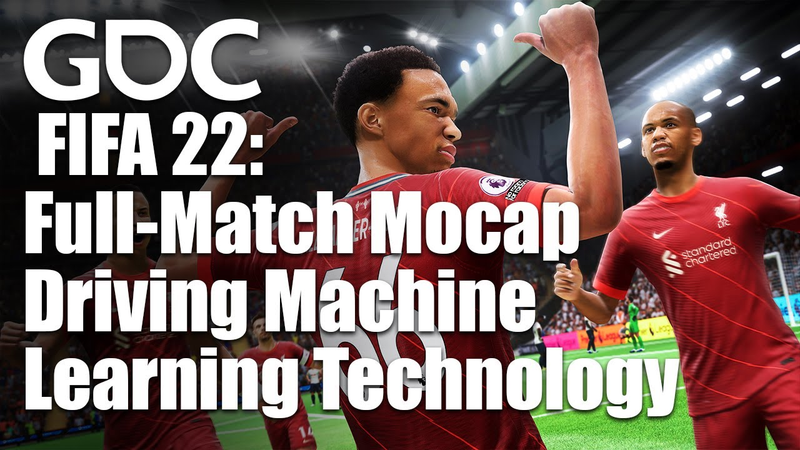
'FIFA 22's' Hypermotion: Full-Match Mocap Driving Machine Learning Technology
Electronic Arts has fundamentally transformed the animation pipeline for the FIFA franchise by shifting from traditional studio-based motion capture to full-match data acquisition.
- EA captured 11-vs-11 professional football matches using Xsens motion capture suits to generate over 4,000 new gameplay animations for FIFA 22.
- To resolve player drift and provide spatial context, the team integrated Local Positioning System (LPS) data using Wemo Pro sensors, achieving tracking accuracy within five centimeters.
- The team reconstructed 3D ball data by triangulating coordinates from eight static 8K cameras (50 fps) and calibrating them using known field landmarks instead of traditional checkerboard patterns.
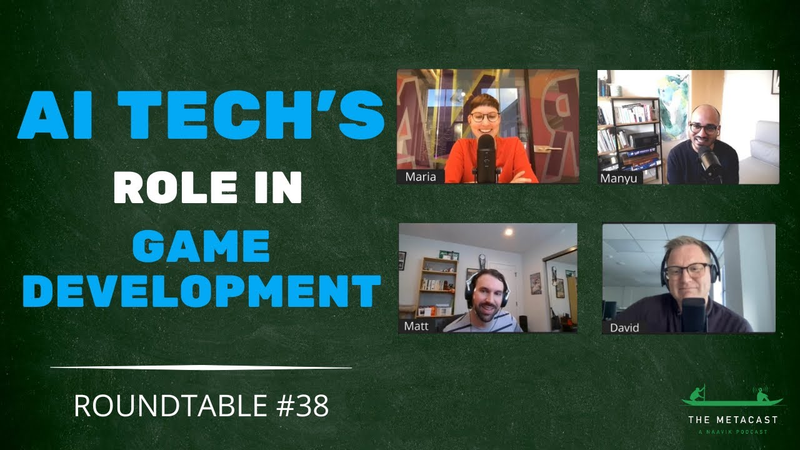
The Metacast by Naavik: Roundtable #38 - Can AI Tech Innovate Game Development?
Artificial intelligence is poised to reshape the gaming industry, primarily by enhancing the cognitive capabilities of non-player characters and streamlining technical development workflows.
- AI integration is currently bifurcated between operational backend efficiencies and unproven core gameplay applications, with hand-crafted content still outperforming AI-generated alternatives in player engagement.
- Venture capital investment is heavily targeting the development of emotionally responsive, intelligent NPCs, exemplified by companies like Inworld AI, despite ongoing challenges with the uncanny valley and technical limitations.
- AI is delivering measurable value in technical workflows such as automated quality assurance, voice synthesis, and world-building, providing clear paths to cost reduction.
Engaging Bots for Multiplayer Games
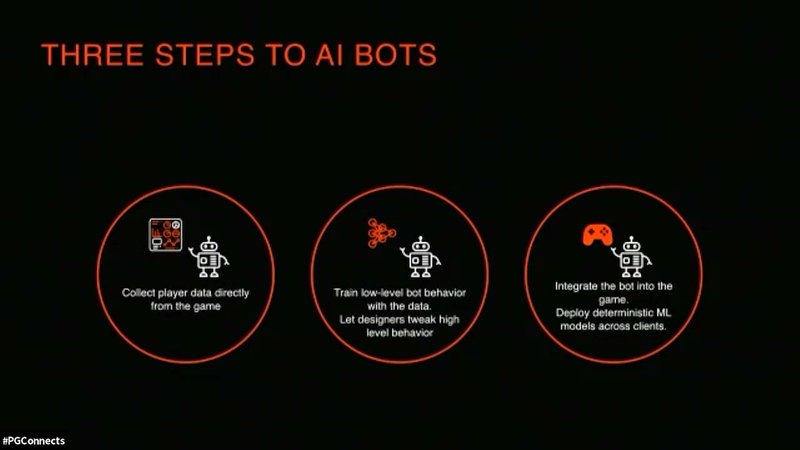
The integration of artificial intelligence bots into multiplayer games serves as a critical strategy for maintaining player engagement, ensuring consistent matchmaking, and improving first-time user experience (FTUE).
- Integrating machine learning-driven bots into the game 'Forge and Fight!' resulted in a 50% increase in day-one player retention.
- A hybrid AI architecture—combining finite state machines for strategy and imitation learning for combat—achieves sophisticated bot behavior without the high computational costs of deep reinforcement learning.
- Training effective imitation learning models requires relatively small datasets, often involving less than ten hours of gameplay.