AI reports and market data
Documents

Driving Emotionally Expressive NPC Animations and Behaviors with a Designer-Friendly Pipeline
The emotional pipeline presented by Square Enix’s Advanced Technology Division provides a designer-friendly framework for creating responsive, emotionally expressive non-player characters (NPCs).
- Square Enix’s Advanced Technology Division developed a three-module pipeline to drive NPC behavior: an emotion module based on the OCC model, a mood module using a 2D Pleasure-Dominance (PD) space, and a personality module for behavioral modification.
- The system maps game events to specific emotional triggers, which subsequently influence an NPC's long-term mood to dictate variations in animation, speech, and decision-making.
- Designers can manage system complexity and balance NPC behavior using heat maps to track mood distribution and influence score tables to analyze the impact of specific emotions.

AI Rules At PGC London 2023, Big Fish Games’ Daniel Helmhold On Epic Branding For Every Budget
The mobile gaming industry is currently undergoing a significant transformation driven by the dual pressures of technological advancement and shifting market dynamics.
- The mobile gaming industry is shifting toward AI integration to democratize production and streamline workflows, allowing smaller studios to compete more effectively with larger entities.
- Privacy regulations like Apple’s App Tracking Transparency have created a persistent discovery crisis, significantly inflating user acquisition costs and forcing a move away from traditional growth strategies.
- Developers are increasingly adopting games-as-a-service models to prioritize long-term sustainability, focusing on community building and live operations to extend the lifecycle of titles.
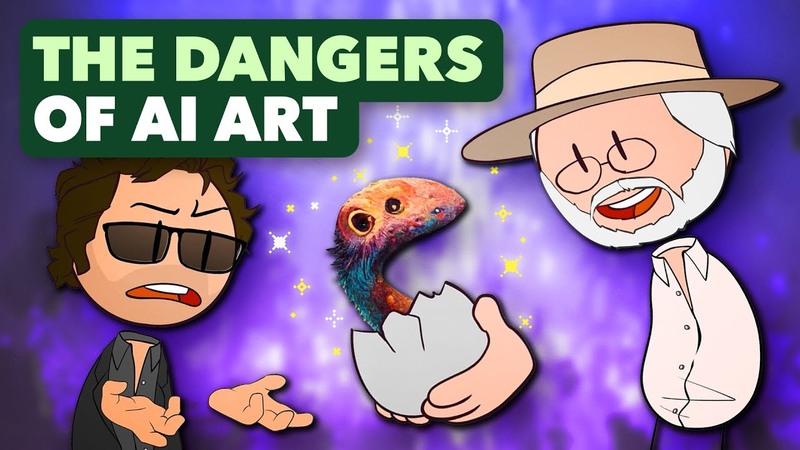
AI Art: Copyright, Ownership and Infringement (oh my!)
The integration of artificial intelligence into game development presents significant legal challenges regarding copyright infringement and intellectual property ownership.
- Content generated entirely by artificial intelligence is currently ineligible for copyright protection under United States Copyright Office standards, leaving studios unable to legally protect purely AI-created assets.
- Studios should maintain significant human authorship in the creation or modification of game assets to ensure clear copyright assignment and strengthen legal ownership claims.
- Developers face direct liability risks if they prompt AI to replicate existing copyrighted characters or if they use AI services that prohibit commercial usage.
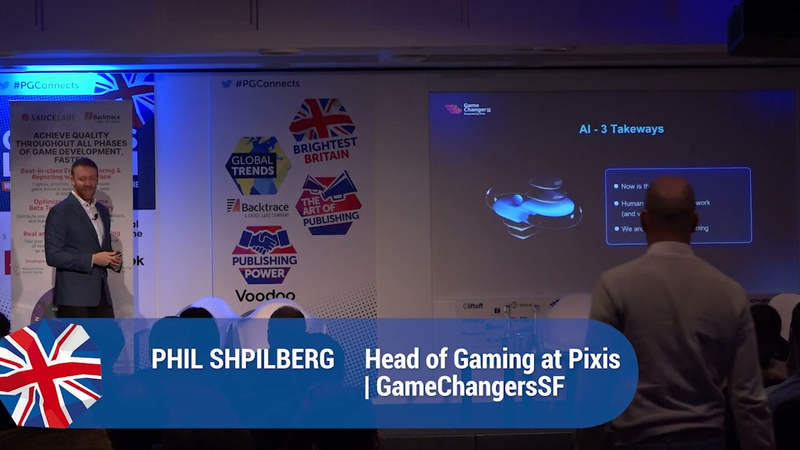
User Acquisition AI, Past, Present, & Future - PHIL SHPILBER of GameChangersSF
The integration of artificial intelligence into user acquisition (UA) represents a fundamental shift in the gaming industry, moving from human-led, rules-based management to automated, data-driven optimization.
- AI-driven user acquisition systems consistently deliver a 20% to 80% improvement in return on ad spend (ROAS) compared to traditional human-managed campaigns.
- Automated systems can process 1.5 million data points and execute 2,000 actions per month, replacing approximately 400 hours of manual human labor.
- The current UA landscape is divided into three modules: mature governance AI for bid and budget management, behavioral-based targeting AI, and evolving creative AI for automated ad testing.

Demystifying Machine Learning for Programmatic UA & Retargeting - Joseph Iris, Persona.ly.
Machine learning in programmatic user acquisition (UA) and retargeting is often misunderstood as a "black box," but it is fundamentally rooted in statistical modeling and data-driven decision-making.
- Machine learning in programmatic UA optimizes bidding and creative selection within a 100 to 300-millisecond window during real-time auctions to maximize ROI.
- Privacy-centric shifts like iOS’s SKAdNetwork require a transition to contextual targeting, utilizing NLP to create app embeddings that identify relationships without granular user-level data.
- Multi-armed and contextual bandits enable real-time creative optimization by dynamically allocating inventory based on specific user attributes.

Moritz Baier-Lentz: The State of Gaming VC - Naavik Gaming Podcast
Lightspeed Venture Partners has established a comprehensive investment strategy to navigate the evolving gaming landscape, leveraging $18 billion in assets to support studios, platforms, and infrastructure technologies.
- Lightspeed Venture Partners manages $18 billion in assets and has deployed over $300 million across more than 30 gaming investments, supporting companies from seed-stage to pre-IPO.
- Early-stage gaming valuations are projected to decline by 30% to 50%, prompting investors to prioritize lean operations and profitability over deal volume.
- Startups are advised to maintain at least 24 months of runway and focus on achieving tangible market milestones rather than relying on speculative capital.

2023 Is Going To Be A Rough Year For Game Developers
The rapid integration of artificial intelligence into game development workflows presents a significant challenge for independent developers, signaling a potentially difficult period for the industry.
- The integration of AI tools like ChatGPT, Midjourney, and automated audio platforms is lowering the barrier to entry for game development while simultaneously threatening to saturate platforms like Steam with low-quality content.
- Market saturation from AI-generated titles creates a significant visibility challenge for high-quality, human-centric projects attempting to compete in an increasingly crowded digital landscape.
- AI is actively transforming core production workflows, including story generation via large language models, image synthesis for concept art and textures, automated sound composition, and functional code generation.

AI Art Changing 2D Art and Concept Design Forever with Michael Shinde | 312
The rapid integration of generative artificial intelligence into the creative sector has fundamentally altered the landscape of 2D art and concept design, sparking a profound tension between technological efficiency and ethical responsibility.
- Generative AI is fundamentally shifting 2D art and concept design workflows by enabling rapid prototyping, pitch art, and marketing asset creation at unprecedented speeds.
- The current AI development model relies on non-consensual datasets containing copyrighted works, creating significant ethical and legal tension regarding intellectual property rights.
- AI remains a non-intentional tool that lacks human subjective intent, emotional depth, and the ability to perform complex tasks like precise anatomical rendering without human oversight.
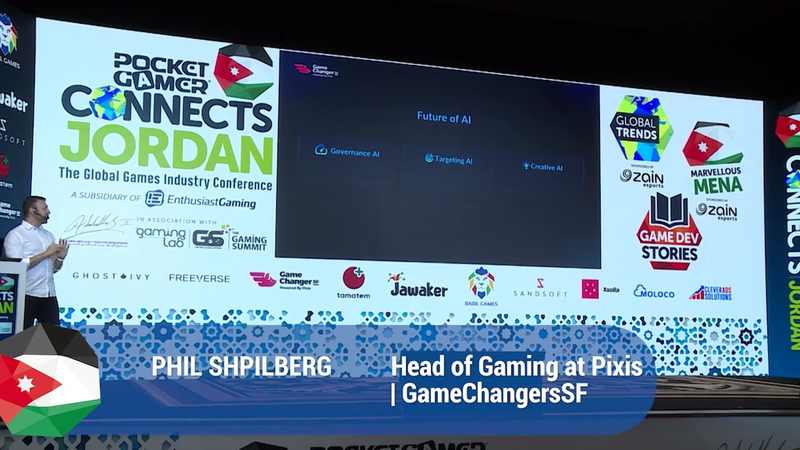
Trends in AI for UA in Mobile Games - Phil Shpilberg, Head of Gaming at Pixis, GameChangersSF
Artificial intelligence is fundamentally transforming user acquisition (UA) in the mobile gaming industry by shifting from rules-based automation to self-learning systems.
- Integrating AI into user acquisition workflows delivers ROAS improvements ranging from 20% to 80% by optimizing budget management and bidding.
- AI systems outperform manual analysis by removing human bias and identifying high-value player segments that traditional demographic assumptions often overlook.
- Current AI marketing tools are primarily effective on platforms with API accessibility, such as Google and Facebook, which collectively represent 70% of total mobile game ad spend.



Creative Industries in the UK Report
The United Kingdom’s entertainment market reached a historic peak of £11.1 billion in 2022, representing a 6.9% year-on-year increase and nearly doubling its total value since 2015.
- The UK entertainment market reached a record £11.1 billion in 2022, a 6.9% year-on-year increase that nearly doubles its 2015 valuation.
- Digital services now dominate the landscape with a 91% market share across video, music, and gaming sectors.
- The video games sector is the largest segment at £4.66 billion, with digital software sales—driven by mobile and console DLC—accounting for 90% of that total.
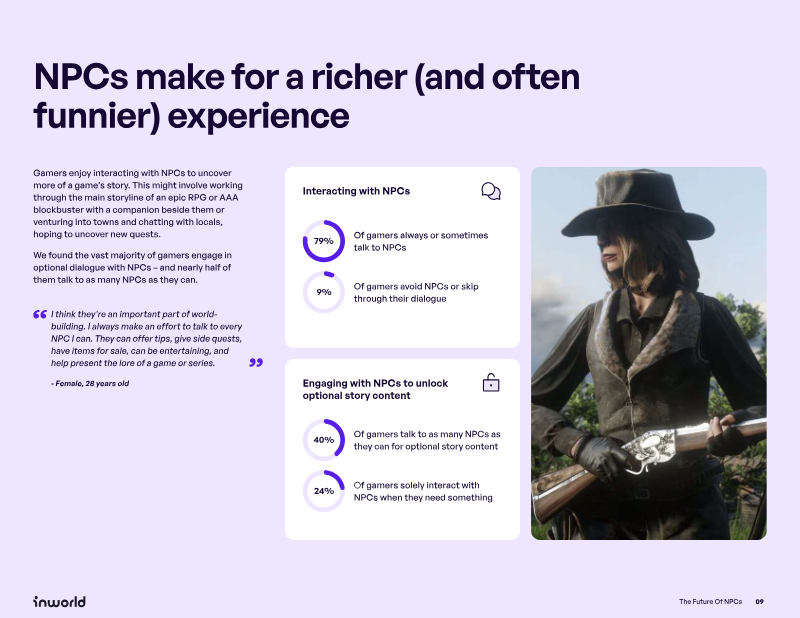
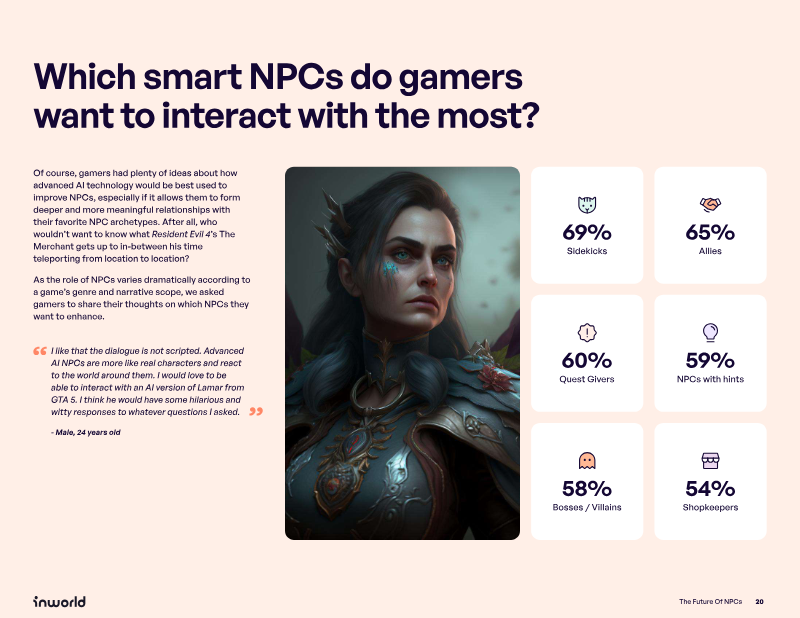
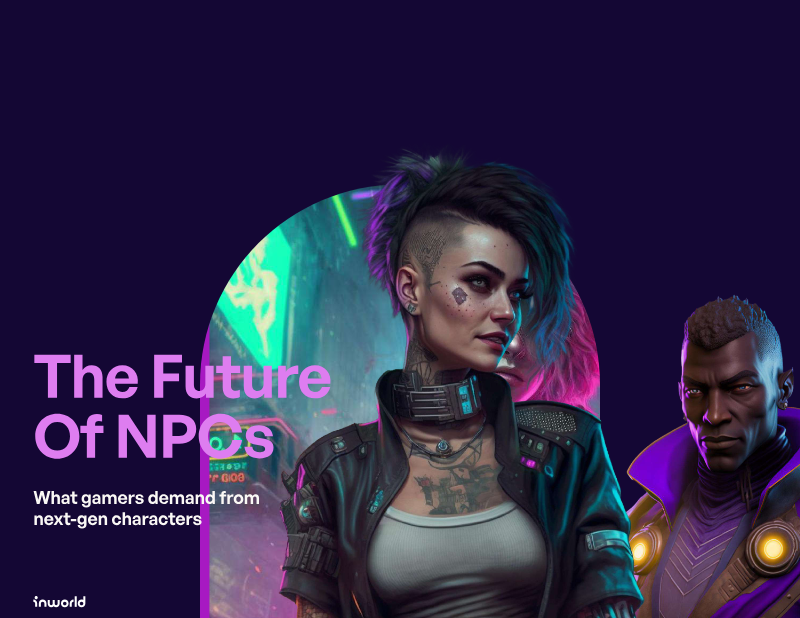
The Future of NPCs
This analysis explores the evolving role of non-playable characters (NPCs) in the video game industry, arguing that while graphical and narrative technologies have advanced, NPC interactivity has remained stagnant.
- 99% of gamers view the integration of advanced AI into NPCs as a positive value add for the industry.
- 81% of players are willing to pay more for games that feature intelligent, AI-driven characters.
- 79% of gamers report an increased likelihood to purchase titles that incorporate advanced AI NPC capabilities.

Our Deck Building Game Evolved Into Something Unexpected!
The development process of a new indie title reveals the critical importance of rapid prototyping and maintaining a clear design vision.
- Prioritize gameplay feel over initial design assumptions, as the team found that complex card-based mechanics felt like an exhausting math problem rather than an engaging experience.
- Avoid the 'fail fast' trap by avoiding long periods of complex architecture; the team spent 30 days on a complex code structure before realizing the core mechanics were not viable.
- Validate core gameplay loops early by creating 'quick and dirty' full-scale prototypes that encompass both early and late-game experiences.