AI reports and market data
Documents

Why Most New Games Still Face-Plant — and How Player Insight Can Flip the Script
High-budget game development frequently falters due to a reliance on late-stage quantitative data and a fundamental disconnect between internal creative visions and actual player experiences.
- Many modern game launches fail despite development and marketing costs exceeding $200 million, primarily due to a lack of consistent player feedback and validation during the development cycle.
- LiveAware addresses the 'echo-chamber' development problem by providing a platform that captures, analyzes, and organizes player feedback from sources like Discord, YouTube, and surveys into actionable insights.
- The platform utilizes AI to surface specific player comments and gameplay issues, automatically routing them to relevant departments like art, design, or engineering via Jira integration.

AI & Game Development: The Current State of the Art | BITKRAFT Summit 2024
Artificial intelligence in game development is shifting from a focus on technical novelty toward a strategic emphasis on product-market fit and tangible player value.
- The primary challenge in AI game development is not the underlying model technology, but rather the product-market fit and the ability to create compelling player experiences that enhance retention.
- Riot Games prioritizes AI integration that supports core gameplay and player retention, deliberately avoiding flashy, disruptive features that do not directly improve the player experience.
- Roblox is investing heavily in a foundational 3D model to simplify content creation, identifying 3D generation as a major, largely unexplored frontier compared to text and image modalities.

The number of video game articles dropped by over 100,000 in Q1
The video game media landscape is undergoing a profound contraction, characterized by a 13% decline in output that saw 100,000 fewer articles published in the first quarter compared to the previous year.
- The video game media landscape experienced a 13% decline in output during Q1, resulting in 100,000 fewer published articles compared to the previous year.
- Editorial capacity has significantly diminished, with the industry losing nearly 3,000 press contacts over the past two years.
- Major media outlets are narrowing their editorial focus to high-traffic coverage of major titles, while smaller publications are shifting toward subscription models and B2B services to combat volatile ad revenue.

Kingdom Come: Deliverance 2 director hopes “AI revolution” will allow him to make games faster
The creative director and co-founder of Warhorse Studios, Daniel Vávra, discusses the successful launch of Kingdom Come: Deliverance 2, which achieved 2 million units sold within its first two weeks.
- Kingdom Come: Deliverance 2 sold 2 million units within its first two weeks, meeting internal projections based on pre-order data.
- Warhorse Studios scaled its team to 250 employees over a six-year development cycle that included navigating the COVID-19 pandemic.
- The studio attributes its commercial success to maintaining creative autonomy under Embracer Group, avoiding the trend-focused 'corporate product' model common in modern AAA development.

The Harsh Truths Behind Venture Capital No One Tells Founders with Lightspeed's Mortiz Baier-Lentz
Venture capital in the gaming and technology sectors operates on a power-law distribution where success depends on identifying rare, high-conviction outliers capable of achieving multi-billion dollar valuations.
- Venture capital in gaming follows a power-law distribution, where firms prioritize high-conviction outliers capable of achieving multi-billion dollar valuations over incremental growth.
- Gaming-specific venture capital experienced extreme volatility, ballooning from $500 million in 2019 to a peak of $10 billion before undergoing a necessary market correction.
- Investment firms are shifting away from siloed, sector-specific funds toward unified, global strategies to allow for cross-pollination of expertise across enterprise, consumer, and gaming domains.

How To Make Games In 2025 (Jabrils) — Full Time Game Dev Podcast Ep. 041
The game development industry currently faces a critical inflection point regarding the integration of generative artificial intelligence.
- The game industry is shifting away from the generative AI hype cycle as the technology currently lacks the deep-task competence required to produce production-ready 3D assets.
- A significant disconnect exists between the massive capital investment in generative AI and the actual productivity gains realized in game development pipelines.
- Market dynamics are expected to bifurcate, with human-authored experiences likely increasing in value as consumers learn to distinguish them from mass-produced AI content.

The Secret Sauce Behind $30M/Month Mobile Hits 🧪 Creative trends in Mobile Games - March 2025
Mobile game developers are currently sustaining massive monthly revenues by prioritizing iterative creative strategies over original gameplay innovation.
- Established mobile games are achieving all-time high revenue by recycling 5-year-old concepts and enhancing them with AI-generated visuals and animations.
- Games like Golden Goblins are hitting record revenue spikes, such as $230k in a single event, by leveraging long-standing gameplay loops.
- Creative strategies centered on 'near-death experiences' and high-stakes drama—such as characters in saunas or burning houses—are currently driving high performance in UA campaigns.

Is AI Going To Destroy Game Development?
The integration of artificial intelligence into game development has emerged as a significant ethical and practical dilemma for the industry.
- The game industry is bifurcating its AI adoption, widely accepting tools for technical tasks like debugging and boilerplate coding while maintaining strong resistance toward AI-generated visual art.
- Critics argue that AI-generated assets lack human intent and possess a recognizable, sterile aesthetic that devalues traditional craftsmanship.
- Market forces are expected to drive long-term adoption, potentially leading to a model where human-made content is marketed as a premium, certified category.
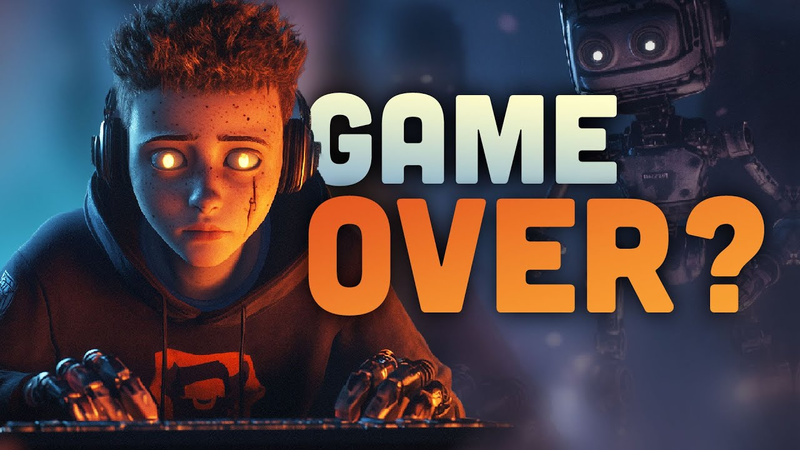
Is AI Going To Destroy The Indie Game Industry?
The discussion explores the existential and practical impact of artificial intelligence on the indie game industry, specifically addressing whether AI can replicate the human-driven, artisanal quality of independent titles.
- AI excels at synthesizing existing concepts, such as combining two genres to find a 'midpoint' of value, but struggles to generate truly original ideas that fall outside the bounds of its training data.
- The 'smell' of AI-generated content often stems from a lack of specific, intentional creative direction, as AI struggles to maintain the cohesive vision required for complex game elements like cutscenes.
- Game development involves thousands of granular creative decisions—such as camera framing, timing, and visual effects—that require a human director to ensure the final product is not aimless or 'mushy'.

Leadership, AI, and Mobile Growth – Insights from AppsFlyer’s CEO and co-Founder, Oren Kaniel
Organizational success stems from a deeply ingrained, customer-centric culture that prioritizes shared values over rigid documentation.
- Organizations must treat AI as a core strategic superpower rather than a simple efficiency tool to avoid obsolescence, as the technology represents a shift more significant than the mobile revolution.
- Successful organizational scaling requires a customer-centric culture that prioritizes shared values and employee empowerment over rigid documentation to prevent mediocrity.
- AppsFlyer is positioning itself for a potential IPO by focusing on enhancing market trust and building secure infrastructure that bridges the gap between privacy compliance and AI innovation.
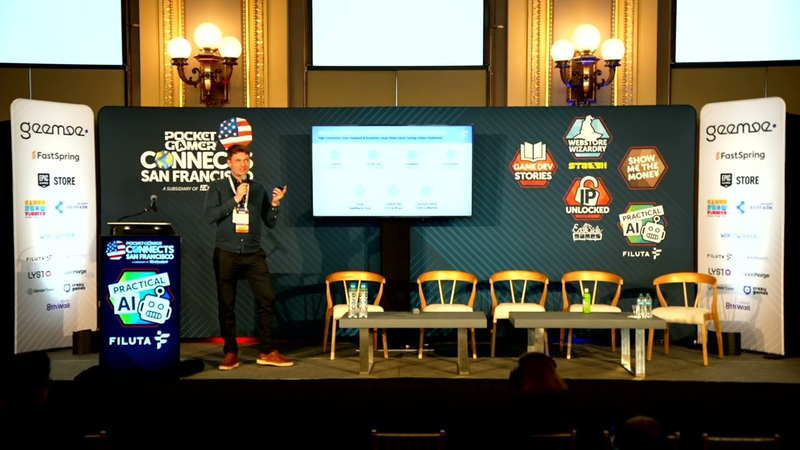
Session: Effortless Game Testing With Planning Agents - Filip Dvorak, Filuta AI.
The gaming industry is currently undergoing a significant shift in quality assurance (QA) as the increasing complexity of modern titles—driven by the intersection of multiple subsystems like inventory, crafting, and monetization—creates a combinatorial explosion that human testers can no longer manage.
- AI planning agents can automate approximately 65% of manual test scenarios currently stored in large-scale spreadsheets, offering a scalable alternative to human testing.
- Filuta AI's testing agents are reportedly 17.5 times more cost-efficient per dollar spent than traditional human QA outsourcing.
- The use of AI agents eliminates the need to maintain individual test scripts, which can cost roughly $3 per line of code annually in traditional automated testing environments.
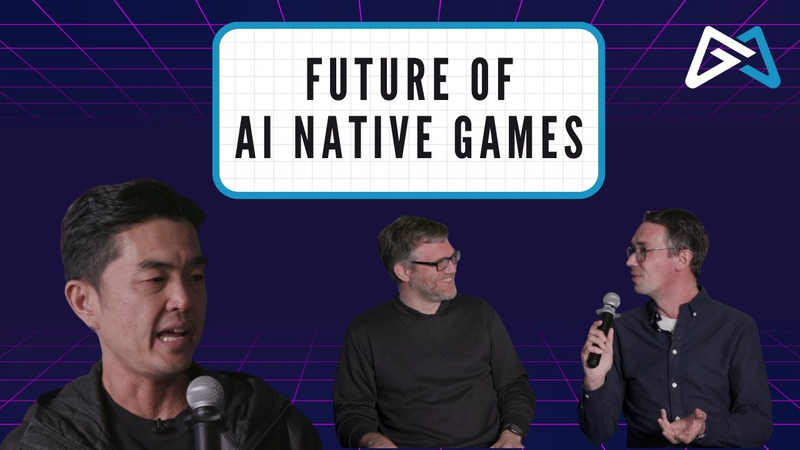
Why Traditional Game Dev is Already Obsolete
The game development industry is undergoing a fundamental transition toward AI-native production, a shift that prioritizes emergent gameplay and dynamic, rulings-based systems over rigid, pre-programmed architecture.
- AI-native game development enables emergent gameplay where systems dynamically generate content—such as narrative events, items, and interactions—that were not explicitly programmed by developers.
- The integration of AI into development workflows is shifting the industry toward an 'organizational meta,' where traditional roles like engineers and product managers compress into hybrid positions like 'product engineers' due to increased individual capability.
- AI allows for a shift in production cycles from years to minutes, enabling developers to respond to real-time cultural trends and memes, fundamentally changing the relationship between producers and consumers.