VideoDeconstructor of Fun
Leadership, AI, and Mobile Growth – Insights from AppsFlyer’s CEO and co-Founder, Oren Kaniel
3 Apr 202581 min video
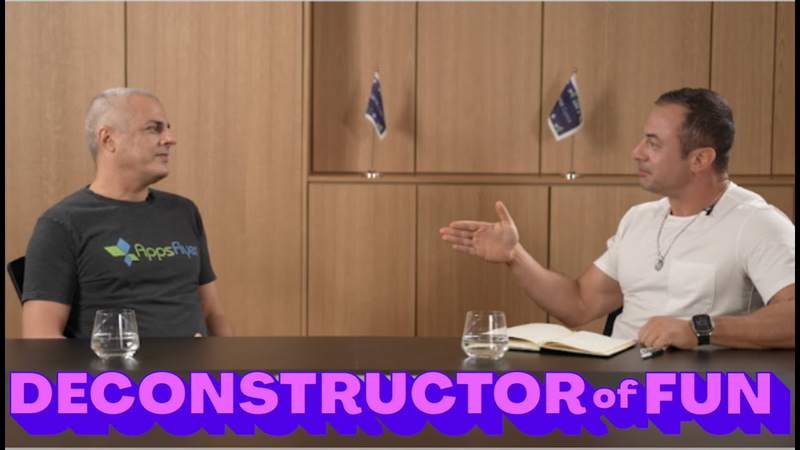
[Music] Here's how you describe yourself on LinkedIn. I love this. I'm having fun building the best company I would like to work for. And as an employee, we are customer obsessed company that aims to provide exceptional experience to all stakeholders, clients, partners, employees, candidates, vendors, the entire market and our communities. So, I read this and I want to ask like what makes Apps Flyier uh the place you love to work at? You know, I uh I probably wrote that um description years ago. Um and thank you for for the reminder. I I've been with it for many years actually. Um, and I think that these few words really describes how I feel about um the company and how I feel about life, how I feel about the journey. Look, I started the company not in my 20s like many other
entrepreneurs. I had the opportunity to work uh for several companies. Um and I started uh after when I was uh 36. Um so I had some idea on how companies operate. Uh large companies, smaller companies, very small companies. Um and I saw a lot of good stuff that made me feel like an owner, made me feel like a founder, that made me really be all in about what I do. um to really make me feel obsessed about the problems and how to solve the problems and and thinking about them, thinking about them through uh the weekends and and the nights and reading and learning and educating myself and then in the middle of the night I had this idea and I just stop everything and I just oh I have this this this this is brilliant and let's
let's do that and when you know when I'm talking about it right now I feel it in my body. Um, and I I didn't have kids, so I I could I could stay up uh whole night. Um, and and I felt like when in these moments, it wasn't like, you know, the entire time in in my in the other workplaces that I've been, but in these moments, I felt like I'm in this zone of of of really a making a significant impact to the company that I was working for. Um and second is how I personally and professionally developed. Um and I really loved it and so it wasn't something that was created during that when I was working. I think that this is something that I carried from the time that I was a kid uh doing bunch of different things and work and kind of entrepreneurship when I was a kid. Um so it wasn't something that is uh new to
me. uh just was kind of an evolution of how I've been thinking about life and work when I was a kid and then uh working in national companies and I saw a lot of again like I said like really a lot of good stuff and a lot of uh I would say bad and actually disaster stuff that is uh counter counter counterproductive to the companies themselves um I don't know if they know it they don't don't know it but uh when a company knows was something what it means because group of people uh most probably not synchronized about so many things. So I learned a lot of stuff during that time. Um and I thought that if and when I'm going to create something um that I'm actually going to work for, right? I I'm an employee. I'm an employee. Uh I I come to work every day, right? Uh I I I want to get excited
when I come to work and I want to get excited when I see the people. Uh I want to get excited uh uh to work on new problems. I want to get excited working with brilliant people. I want to get excited when we work together on on some significant challenges together and we have some failures and we're making mistakes together and we make it we make uh huge successes together. Um and I think that this is this is this is really brilliant. I have this me personally I think that this is something that also wasn't kind of established enough that I think I think it was even before that I have this really kind of uh harmony between my uh my kind of personal life and professional life and work um I like to work with great people and I think that this kind of friendship that creates through work is something that I'm personally taking for my entire life. Um, so I I work I started a company um
with a childhood friend Chefman and we started uh in school and we went to university together. We've been traveling at America together and um and then we started uh working on it and and we started to work with Lisa and and then Lisa became my uh wife. uh still we still three of us work together like uh 12 13 years after um and I work with a lot of people that I knew before great people uh and and and just I think that creating this really incredible journey is something that I just absolutely enjoy and I think that also uh I have like a very different different ver definition of fun. What is fun? You know, it's going to the beach is fun. I don't, you know, so for me fun
is is is really enjoying this journey. And and I think that to enjoy this journey, uh you you must have challenges along the way and and not just walking the park. This is not something that you're going to remember. You're going to remember if you're going to hit by an egg. over over dinner. Uh, right. This is something that you're going to remember. Maybe that point of time that wouldn't be so pleasant, but you're going to remember that. Then you're going to remember that as a as an experience. Anyways, yeah, off topic. But moving back to these words, I had this really clear understanding that when you start building something, you're creating this DNA from the get-go. You start from scratch. Um and once you start building this culture that is referred as a DNA when what is a DNA? DNA this is some not something that you can change. So I also uh uh maybe somewhere else in the LinkedIn I don't
know maybe was deleted um that I say that the creation of a company the creation of this culture the creation of this DNA is an irreversible process. So once it's an irre reversible process, all the companies that you see today were created by an irreversible process and they're the products of they're the products of uh of their early days. Now I don't want to say that this is not something that you can change. I mean the early days is dictating the destiny. I don't I don't say that. Uh but yeah, it makes things much much much much easier um much easier and I think that we've seen some some companies going Microsoft is a good example, right? Uh but still the foundation is very strong. So we've done and I've done a lot of things uh to make tests a reality and this is
still work in progress. This podcast is brought to you by Apps Flyier. In today's digital world, understanding your app's journey from discovery to download is more than just insightful. It's essential. Enter Apps Flyier, the leader in mobile attribution and marketing analytics that allows you to measure the full potential of your marketing efforts, making every ad dollar work smarter. With Apps Flyier, that's your new reality. Dive deep into datadriven insights that reveal exactly where your users come from and how they interact with your app. Appslier where your app's potential meets performance. There are founders who write the principles or a manual even like this is how we behave in this company like the famous Nike elementalist or 10ist and then there are other ways of building this DNA and that is that that the founder of founders are incredibly well aligned through their background but
also very much involved in the building of the company. the type of people they bring in. So organically they seem to be growing that even without documentation. Have you done both documentation and this sort of organic or is it mainly organic that you've just hired people who are very aligned to who are very obsessed like you are with solving problems. Yeah. Uh that's a really good one. So I can tell you for us uh we never documented that even not till today. No. So this is kind of on the to-do list for the last uh 13 years. Um, and you've grown a lot because you were about handful of people almost 13 years ago and now you're over a thousand. Well, 13 years ago we were me and Lisa. That's a handful of people. And Lisa and myself didn't come from the industry or advertising or marketing or digital whatever. We were come coming from technological background. Lisa came from internet marketing and advertising. So we didn't know what's a campaign. So
anyways, moving back to to to to your question about the values, I think that there's enormous amount of uh pressure or force um on every company to become average. Um and and and I actually feel so theoretically uh it makes sense, right? Because you hire you hire from what average uh not to say that people average in in in the wrong way but they come from average companies because this is the average right so you try to hire from great companies but in the end also then becoming average because everybody using kind of the same I don't know best best practices what's so best about I mean this is just you know common practice where they don't want to take risk everybody is doing this and that's been let's do this um so in terms values uh um we we never documented them. Um we never wrote them on the on the walls. Um I thought that defining uh
company culture is much more complex. Um uh just to write few words about it. Um and also you need to kind of evolve and and and not kind of set the stone set that in stone and also because it's a very global company and you know we work really truly global um I I I I saw that I can learn that we can learn so many things from so many nationalities so many backgrounds um and then we thought okay so maybe we can create some some some kind of uh really high level to allow people to think so they can really bring themselves into kind of a new environment. I believe that the environment is really instrumental. You can hire whatever you want. You create an environment for that either to flourish to be successful or not. So the environment is really really important. Um and then I thought how can
we create an environment um that makes people feel themselves that they can feel free to make mistakes that they can feel free to bring their knowledge and be background that they can feel free to ask questions maybe even stupid questions right that they can feel good coming to the office that they can feel good um you know uh just being themselves like they're being with their friends right um um so we've created like like these kind of two things uh or kind of a framework to think about when when you're making mistakes. Is it good for our customers? Does it make you more proud? And you need to have a yes to the to these simple questions. And I think that the one thing is is it good for our customers? stupid question but you just it's magical because people when they ask that across the company it makes sure that everything that we do serving our customers because this is what the people need to do maybe directly or indirectly serving the customers this is why we exist this the reason for us for
for existence um customers is everything u and then u uh does it make you proud I also think that this is really instrumental uh because this is really connecting to the emotional uh feeling of of every single person and employee in the company and and and they come from kind of different background. So I think that they also you know bring their personality in um and also kind of the ethics right so if you see something that doesn't make you proud to be part of this community because this is really kind of a global community and I want people to come and be proud of this community and their peers and colleagues and all that. So these are the two things the environment and the uh is it good for our customers does it make you proud and then um seven years ago uh we've I've created we have created kind of this uh beliefs what the learnings
that we had up until now it's kind of a list of 16 16 different things one of them is thinking like a founder making mistakes is part of learning process learning is instrumental uh being all in kind of list of beliefs that I thought or think and actually this is happening. This is more of a breathing kind of list that you can develop this list along the way. Um and also put more content into it. So if you really look deep in the website, you're going to find it and then every section starting to have a link. Why do we feel like that? And just more of a thought around it. So culture is more complex. You can ask about culture. You can you know um you know even yeah if it was simple there wouldn't be so many books about it. That's why I keep asking the same questions like how did you build your culture and and moving back I think
that culture is the most important thing for every company. Not for not for us it's everything. It's everything. This is the single point of thing that will dictate your destiny in success. I met your you know your leadership in your team and and people are ex-founders in your leadership team and they have been with you for a very long time 6 10 years and um my first question would be like how has your leadership style evolved from you being three people to over a thousand people I think you have like close to 20 offices around the world how have you basically evolved from from being that very product focused product ccentric founder to overseeing entire business with so many people and so many offices. Your job has pro probably changed every two years or 3 years that the company has. Yeah, it's changing all the time. At at the at the beginning I I don't think that that was kind of u intentional really at the beginning
you're just trying to survive you know live through the next day live through the next month live through the next quarter. Um, so this is really a survival kind of thing. So we've been, three of us been working without funding, without salaries. I completely finished all my savings. Um, my personal expenses, you know, I reduced that almost to zero. Uh we we we were in different accelerators uh just to have a free place to sit with air conditioning, coffee and um and soda water. Um we went through like three different accelerators. I think that we got uh no whether a no or no reply. Dozens and dozens and dozens and dozens of investors. People didn't believe in this. people didn't think that this is going to work, that this is uh even
possible. And then um I thought, you know, it. Uh I think that we're on to something big. Um because people really need it. Maybe the investors don't get it and they will. Um maybe they won't and maybe they're right. Maybe this is just yan or whatever. Mhm. Or feature is not going to work or whatever. But we knew um and we saw it with our customers and and the market that people really need it. And I thought to myself, let's start from the end. Let's just, you know, we can build the product. um we can get some customers um and just let make them successful and make them happy using the product because in the end the investors the VC is going to call your customers and they call the customers they're going to hear they want to hear what's the value you know is it instrumental is it mission critical how do you feel about
it what's the placement all these you know normal questions and I said to myself you know what let's stop investing in creating beautiful decks and business plans and all this stuff at the early stage or seat stage. Um, it's really The most important thing is delivering value to customers now. And then I thought why would we take money from someone that maybe we are not convinced with the value that we can deliver. why you know even ethically and then I completely stopped uh meeting investors um heads down creating the product meeting customers um giving them the SDK trying to and then we had all these experiences working with customers this is really magical these early days and then you
you had this kind of imagine you imagine how it's going to be and then you see the reality and this is even bigger. You you thought that this is this problem and then you see that this is this size problem this huge problem that people don't see. Um so heads down created the product. Um got a little bit of funding. Um that was you know we finished it uh fairly quickly. So not like siege stage right now millions of dollars. We got $500,000. Then I had this Excel file uh because once you once you don't you don't have revenues you know it's only one way down. Um so I had this simple Excel file time to live. This is that was the name of the file. It was confidential only me. Uh and then it was like five months, four months, 3 months,
two months and then it's getting getting to two months and I'm like should I say something to the team? Um and then we started generating a little bit of revenue. Um that's a different story and how and what this is really interesting but put that aside. Um and then I think that from that moment um well we can talk about it for an hour now. Um we realized that we are not onto something big and also uh more investors uh got it. Um and I think that it worked because you know investors start reaching out to us because they heard about what we do from their portfolio companies. So all of a sudden it was complet completely flipped from no reply to no to to you other bad I don't know it's not ne it's bad experience I think that was a good experience I think that we we talked about it yesterday that I had no gave me more
power more fire every time I got more fuel in the tank more fuel in the tank more fuel in the tank oh it's not possible I'll show you that it's possible It's not coming from the ego kind of thing. Mhm. It's just turning these experiences uh into learning experiences. U because I never said that they know everything. I just because look I came into this industry knowing nothing. So my z my beginning point was knowing nothing. So I had to listen I had to be very close to customers. I had to open my ears and mind to new ideas and then bring my fresh beginner's mind into the game. And I think that was just happened that I was a beginner in kind of an industry that was working in a way just for me didn't make sense
and I thought that someone need to solve it whether it's going to be me or us or someone else. Attention app and game developers. Are you ready to unlock the secrets behind the world's top performing apps and games? With Sensor Tower, you get the ultimate competitive edge. Whether it's breaking into new markets, fine-tuning your UA strategies, or boosting monetization, dive into data like never before. Track global trends across app stores, analyze market leading inapp purchase and inapp ad strategies, and benchmark your performance with realtime insight. The best part, Sensor Tower doesn't just deliver data. It helps you turn it into action with intuitive tools and expert analysis. It's everything you need to make smarter, faster decisions. Thousands of app and game studios from indie creators to global giants trust Sensor Tower to help them win. So why
not you? Start your free trial today at sensortowwer.com. That is sensortow.com. It's very clear that you've built a very entrepreneurial organization. Your beliefs are around entrepreneurship and that is that is quite typical for founder companies. And so I'm going to I'll read just one chapter of this is Paul Graham's um if this is blog or he's a founder of Y Combinator uh but he talks about the founder of Airbnb coming in and giving a speech to the Y Combinator people and uh so Brian Chesky and the the theme of Brian's talk so I'm quoting him was that the conventional wisdom about how to run large companies is mistaken. As Airbnb grew, well-meaning people advised him that he
had to run company in a certain way for it to scale. Their advice could be optimistically summarized as hire good people and give them room to do their job. He followed this advice and the results were disastrous. So he had to figure out a better way on on his own, which he did partly by studying how Steve Jobs ran Apple. So far, it seems to be working. Airbnb's free cash flow margin is now among the best in Silicon Valley. So um the the interesting part about that one was when a founder an entrepreneur uh adapts like the the moral of this this um this this short blog post was uh studying how a founder somebody who's built company from nothing who's gone through nobody believing in what they're doing innovating something new and and and gone to a certain stage where now everybody believes in them and says now you have to run your company like everybody else does uh informal process
are in managerial alignment that kind of way and that tends to be problematic and then they revert back to the founder mode even at a scale. And so kind like my my question for you in regarding this, we we discussed this yesterday, but my question for you is like more about like how do you keep that entrepreneurial spirit alive in a company that is scaling like over a thousand people already and then probably growing even more. Um and and with so many people there will be more processes and like how do you keep that entrepreneurial spirit going? It's it's it's really hard to relate because this is much more complex and Brian said that in few few words and sentences. Um I think that this is much more complex than that. I can say uh what worked for us and not it's not necessarily going to work for someone else. Um, I believed in bringing great
people and setting for them the ground to be very successful in a way that they couldn't even imagine that before. Mhm. Um sometimes you know when you know someone really good professionally personally then you just imagine uh the current problems challenges and what we need as a company and that's imagine who should do it and I'm not saying can or should do this or should this or create an environment for them to be successful. Sometimes I assign many of the people that are here for 10 years and more, 90 years or more are doing things that they didn't imagine before. Um, and when I presented that to them, um, it was kind
of for even for them for for themselves was something okay. Uh, I didn't think about it. Um, so I really think that bringing great people and creating the environment and I think that one of the learnings from the companies that was working before was what is a company? Company is kind of a machine um that brings talent into opportunities and give them kind of an environment tools to go ahead and do it. um talent and passion. So I can I can give you a story about that. Yeah. Um I was working um well it's a it's a long story but I just go directly to that. I was working I I was a software developer and I really enjoy writing code. uh but I really really really was
interested in the product and the customers and the value creation and our products are being uh uh shipped to the market and our customers are using them and and I thought that this is going to be I can be a much better software developer if I really know how the customers are using this product. So I I asked the VP RNA maybe you can break someone from sales or customer to tell us how this product is being used didn't work and I didn't get that uh because it was a an engineering center uh of of an American company a US-based company so we didn't have this kind of visibility and then I moved to uh um I I really wanted to go out of software uh and move more towards customerf facing role um I didn't care about compensation. I didn't care about anything. I didn't care about the prestige of the title. I didn't care about anything. I wanted to work for in a company that they can see all the
departments, product, marketing, sales, engineering, everything. And I want to work as close as possible to the customer. I don't care which which position how much I pay. I you know, I remember um a software developer was really high in demand. So, obviously, I had to decrease my my salary and everything. But, you know, I had no family and everything, so I just didn't care. Um, uh, I think that that was one of my one best moves in my in my in my in my career. Um, and and over there I was working for for for this company and and kind of field work with customers. Um, and I was working closely with services um, and product and also sales. And then um I started to develop really good relationship with sales. Um, I thought that I can I can be really really good in sales because I knew what I'm talking about and you know how most of the sales people at
least no offense uh didn't know what they um didn't know the product and I thought if you actually knew the product you could have been selling like tons of it right like much more um and then we I started to meet this VP of sales in the same company then we said, "Look, I want to really work for you and and and be uh the sales team." And then he said, "You know what? I think it's a good idea, yada yada." And and and we started to kind of uh discretly meet that my boss not going to know about it. Um and you were still an engineer. No, no, no. So now I was in the services. Uh anyways, as soon as they found out that they want to move, they said, "No, you stay here." Um and you know, I just remember the feeling that I had so much, you know, passion, do something.
Um and and they they just just stopped it from from happening. And I'm like, look, you have someone that is uh I think I did a really good job um with a lot of energy, with a lot of passion and and I I I I think that I can do something. I didn't ask for a title. I didn't ask for more money. I didn't ask for anything. I just asked for, you know, different role. Yeah. And the VP of sales thought that it's it's a good idea. and just this conflicting thing within the company didn't allow that to happen. So I said I said to myself look I want that you know the people in this company will be able to move to different roles and I don't want them to feel kind of embarrassed from my from their managers to kind of even learn not even explore learn about different functions different positions. So it's more important to deliver value to the customers than to control like because
the because you're talking about situation where companies have you know hierarchy they have control this is this person is mine this person is yours. Yes yes yes running this looking at the company best interest and looking at the company best interest it means that sometimes you need to let go your best people. Exactly. Exactly. So the question is how do you maximize the career lifetime value of the individuals that work in this company. So the same goes on the assignment of different people give them the environment and and let them go after the passion and also explore different things. Now what I'm doing right now it's not something that I could imagine like I don't know years ago um when I was a software developer right but this is life and I think that creating moving back to your first first question about about the creation of the company and the culture that was instrumental to me web stores you've seen what good looks like but have you seen great app charge is the direct to consumer platform backed by the likes of supercell and built by monization pros
from moonactive platika huge games and others People who know the difference. App charge powers over half a billion dollars in transaction a year for top studios. Optimizing every detail. Deeply personalized web store offers, custommade design, industryleading monetization features, in-game payments SDK, and more. 70% of top grossing games already have a web store, but the one scaling fastest, they're doing it with app charge. Learn more at appcharge.com. How do you find the people who will thrive in this type of an environment? Like do you have certain type of questions or do you just trust the people that are hiring are being hired by you or your leadership that are all aligned on the and it organically happens that you bring in people that are self-starters that can move into different roles and and just focus or obsess about customer. There are some personality things that I don't want to
say cannot be changed but when it's a personality thing it's really hard to change and once you put someone in an environment the environment has significant influence on the individual so even if you are I don't know pessimistic person this is really hard because this kind of negative negativity ity is has stronger influence when it comes in small numbers versus um something someone that is optimistic in epistemistic environment. So uh this is this is also the risk uh of that. What what I'm trying to say is that um the environment and how people behave has significant influence on how people think and also some things that you might think this is personality that is unable to change. I can give you a few stories. uh Iran Leler who is uh the CEO
uh of the company I knew him uh working in Nova when I was a junior software developer when you look at him work you think that he's the founder of the company that was like huge company 20,000 employee so it's he's not the founder he's very young also and everything he's not the founder but you know the way he behaved the way he was working, the dedication, the determination, being all in, really thinking like to ponder. I'm like, and it didn't have a senior titan. It was in QA. Yeah. So, became friends. Uh because I I became also attracted to this because this is we're very different. Uh but there some similarities um like all these and we became friends. I'm not a great you know process. Yeah. oriented person, more of a product. Yeah. And I said was, "Wow,
we need someone like this." And then we talked and then we said, "Okay, what's which positions?" We didn't even know. And I said, "Look, let's just come over. We'll figure everything out. I mean, I have so much work for you and you know, for the title, let's call you VP of projects." Okay. VP of projects. So, this is what he this that was his title, but he was doing everything. Yeah. like all the operational stuff you know and the go to market and then that across the company so so and then he became the CEO that you know back then I didn't even know what the COO does or whatever uh but that's that's that's one example and I have multiple examples like that um and and so basically that happens organically like you you notice that people have these certain characteristics that are very entrepreneurial even I don't know if I don't know if it's organic you need to have some kind of you know vision to different things right so
for the for that story we I initially and then we and myself had this vision and how it can look like um let's say in the next year or two years and then we will figure this out because I thought there are so many things and I still think there's so many things to do in the company so many things to do in this ecosystem And sometimes you just need to have you know this kind of a reason uh to bring someone in um and then you can maybe build something for the next uh even six months or one year and once you do that there's so many things and then you can find yourself doing different things. You met B he he was entrepreneur in residence with a gal that that running multiple products. He sold his company. He finished with that. I met him and Sunday. We talked about some position or whatever. And
then I thought, look, I think that you need to be in product because I remember him, you know, building products when we were kind of in the garage stage. Um, and then he continued to meet more people on Monday. Tuesday I came in the morning and I come early. usually he's already there in the cafeteria with his laptop. Yeah, I'm meeting these guys and these guys and and and on Wednesday um I gave him a contract uh start date Sunday. Yeah. Because he came in the day um and I told him look the the position is to do nothing for 3 months. It's a good position. And he said look I cannot do nothing. Look, you see, you see me, I cannot even be one one day in my in my in my house doing nothing. I I came here so early because I I I I have to do something. Um and I told him, look, you need to be patient because
there are so many opportunities and so many things here. Just promise me not to do anything for 3 months. And he said, you know what? Um I'll try. I don't think that it's going to be more than two weeks. And after two weeks, he told me, Luc, you're right. I I I I think that yes I need I I do need more time. So and then he found different things and built new products and existing products and then evolved new products and now he's leading all the new products and growth products. So sometimes lack in ways or any other uh mapping service you can set the destination um but the road there can change because you don't really know you don't not only that you don't really know you don't really know fully the people in front of you the person in front of you and you don't feel really know the problems that you currently have because you don't know everything and the future product
problems that you're going to have. So bringing great people in and be very flexible in how you assign different things because this is this is same as kind of an explore exploit problem. Mhm. You need to explore enough and once you find something, you going all in about it. You cannot go and chase 30 different positions. Yeah. And this also the basis of all in you can interview into 200 different companies. But then you select one um no matter what how you feel about it, you go in all in with your time. And the same goes for the position within the company. So sometimes you need to explore and give yourself more time to explore until you go learn about something so that you're you're absolutely convinced so that you don't have second thoughts when somebody else something else comes in like oh actually this is a better opportunity but I already started working on this one. So, uh, I I get that, but that's
that's one thing. Uh, but I think that long-term implications of sometimes decisions like this, the decisions are irreversible. No one will bring your time back. So, if you work on a product or project or B project, the the result of the long term can be installed. It's huge, right? So sometimes it's really good to take some some break one months, two months, three months, even more to figure out. And I wanted to like I want to revert back to some of the some of the topics that you raised and kind of like the beginning of the company where where you were running out of money and you were bootstrapping spending your savings and probably during the last few years not last few years but in 2020 with the with the privacy changes that was probably another sort of a big influence on the business that that brought a lot of stress. And then my question is more like how do you lead through these type
of a tough times because you said like when you had your burn rate or or when that Excel calculations of money but you never want to show it to others so that they are not stressed and and so I'm I'm trying to understand like how do you now go through through difficult times is transparency really important? Look, this is this is really interesting because I think that sometimes transparency is something that is misused. Um, you know, the fact that they didn't share that Excel file with the few only few people, right? Um, that is it was it the right thing to do? I think that back then definitely is. Yeah. Because of mainly two reasons. A I saw how we can get out of it. I was convinced. What? B I told them in high level what is the situation and what we need to do. So they had this problem in mind but it wasn't as accurate as okay the ones um I think that this is not a needed information for them to
operate in their best because it increases the stress without yeah I don't think that that was needed so I took the stress on me and I said I'll put it in my back but this is what we need to do uh we need to get money as soon as possible and we've created like we were successful uh we started generate money fairly quickly. Uh Lisa started to uh actually bill our customers. We didn't have the ability to bill. Oh, that's right. So business. We had this pricing. It was in the email. It was here, but we didn't have the ability to actually build customers. So she started to kind of create PDF files and and send that of email. So that that your bill that was completely manual process and we started to receive checks in the mail actually up until now. some customers that are with us for 12 years still sending checks in the mail. So that was one. The other one is is is really interesting and I don't want to say that over in the podcast but uh for
examp um back then um Apple had um affiliate program. So in the affiliate program you basically send traffic to the app store. App store was a new thing. Yeah. So they wanted traffic to the app store. They wanted traffic to the IQs, the download zones and stuff like that. Um, so the affiliates just needed to create this code and when you send traffic to the app store, you get 5% 7% of what the person is purchasing in a look back of 30 3 days or five days. I don't remember. Yeah. Um, and I said, "Wow, we we we're selling a lot of traffic." Mhm. So I I applied for the affiliate program. I got the code. I told put that code in the links please and not redirects. So basically Apple was saving our asses uh back then because
that was kind of really an immediate income. Yeah. Uh Apple was paying on time. Um we had nice amount of traffic and fairly quickly it was covering our expenses. That's so from really being so these the these two things really saved our ass. Uh thank you Apple. Elevate your game development with Heroic Labs, the cuttingedge platform for building multiplayer games. And you need an edge to be successful in today's gaming landscape. Their scalable Nakama server empowers you to create compelling realtime multiplayer experiences effortlessly. Benefit from features like in-game chat, leaderboards, matchmaking, and more. All designed to enhance engagement and retention. Whether you're developing for mobile, console, or PC, Heroic Labs gives you the tools to bring your community together. Unleash the full potential of your game with Heroic Labs, where every developer is a hero.
So leading through tough times I would say like the way I'm hearing you say clarity is more important than transparency because you were very clear on what are the goal but without burdening people with with the details would that be a good assessment? You know what without getting into too much worrying you need to create an environment for them to be successful and uh to be trustworthy. So they they they to people to trust you that you're not you're not you know keeping information they need you need to have. Yes. Right. So in that specific very moment I thought that this is something that have the odds to hurt us significantly. And I knew that uh we can get out of it. I understand and be successful. Um I have another question like regarding these. So so a lot of you know but any
founder entrepreneur goes through tough times. One of the uh interesting question is is like everybody goes through tough times. Yeah or not. No well everybody. Yes. Well, matter I meaning people who are leading others when you're going through tough times like how do you behave in those tough times like those are the most challenging elements whether that is like some people would push for transparency which seems like a very easy answer but to me it always like I'm trying to balance myself like you said like what is giving enough information without burdening others from doing what they need to how do I not outsource my problems to everybody else because that could happen but the other one that I have a question about is like uh a lot of things have been you especially recently promoted this this concept of vulnerability. And so is it important to be vulnerable and share your challenges or is it more important to be stoic and lead them or is it like a sort of a hybrid model where there are people who
you're being vulnerable so that they can help you properly and then there are other people who you need to be sort of a you know a bedrock uh somebody who they can trust is not stressed. It's like it's okay. We we know that the other person is charged, you know, seems to have it all together. Like I'm I'm trying to understand what is the valability cuz like cuz I feel like the pendulum is switched so much on like everybody needs to be vulnerable. But if if I'm being led by somebody who who is overly vulnerable, I'm like, I don't think we're in a good place. I I think you're right. I think there's no uh silver bullet for it. I think that you know what work what works for me is just being myself and sometimes I do get emotional and uh sometimes I uh also have tears in my eyes and different you know look I work with people for many many years and uh these are more than than friends that
I don't know I don't know the definition for it I feel so much commitment to them and then to me and to the company and what we do and and we also believe that this is really huge part of our lives and we we would carry that till our you know last day. So this is really strong emotion connection. So I I can easily have tears in my eyes and I feel it right now um when really thinking about the the the people and the journey and everything. Is it vulnerable? I don't know. I just this is how we feel and I think just creating this kind of uh really magical journey together. Um back to your question um I think that clarity is must have. This is very clear. Okay. People need to have clarity what's going on what they need to think about and what not. Um they need to have trust. They need to have confidence. Now if they have confidence if uh the leader is like you said probably not. It should be a combination and um
and I I I don't think that you can fake uh these things at least for not for me. I'm I'm I'm a very uh what you see is what you get. It's very open book. So for me so I I like you know people say that CEO life is uh is lonely. I don't feel lonely. Absolutely not don't feel lonely. You feel lonely when when there is a gap between how you feel and how people perceive how you feel. This is where you feel lonely. Interesting. That's a that's a good concept. But it's also a testament of you've been able to build a team around you where that allows you to be yourself. Absolutely. And then that's uh and then they can be themselves. Yes. And I've seen that with with your interaction with your, you know, with your team. It's it feels like like you've known each other for years, which is true. That's how you behaved. Look, we been through so much together, you know, also in the personal life. and uh you know kids and uh when you go yeah
last question about your leadership style um and just leadership over maybe I will understand it finally yeah what's my leadership style I don't know well actually it's not even a leadership style it's more about question of like has your has your style of leadership the way you think about leadership changed throughout this these years I mean it has like let's put it that way but are there situation where you're doubting like yourself and the way you're leading and your direction and and how do you push through that? Let's that's actually the most important because everything changes. Yeah. And and like Yeah. Yeah. Uh first of all, you know, looking back, I'm a very very different person than I was when I started the company 10 years ago even and even 5 years ago. Very different. I'm proud of it. Uh so every year I have this version. Okay. or in version 24 or in version and I'm preparing for or in version 25. So my birthday is the end of December. So it's like really easy for
me. So every year I'm I'm trying to say okay what's the version? What's the previous version? How can they improve version? So, so I have this kind of uh and also I think that executives and specifically CEOs u do not have this kind of a structure um that um you know I don't have a manager right so that's that's a disadvantage right so no one can tell me hey I think that you've done well here but here I think that your reaction was whatever so or whatever give me feedback about my development what should I develop what what should or not. So I have to develop that myself. I have to have this kind of self disciplines. I have to develop like awareness of myself and and and really try and and aim for feedback from from my surroundings um that I can evolve and develop myself. That's crucial and I think that this is crucial for me and crucial for for leaders and definitely CEOs uh but for everyone it's it's not
easy to receive feedback. So even if I had a manager, would the manager would be really helpful in de developing myself and giving me the hard feedback that is not so convenient for me to hear? Yeah, probably not. This is really hard to find like and this is how we train our managers to also give feedback that maybe it's not it's a bad feedback or negative feedback, but this is the most positive feedback that you can get on the manager that can really get you better. That's the goal. That's the goal. We cannot grow as a company if you're not growing. Okay? And growing is hard. You go to the gym, it's hard. It's hard. And hard things makes makes you stronger. And and and I think that this is a thing of a manager as well. Now, moving back to the leadership style. So, I have this kind of a framework that that helps me simulate different things. So my one framework is to let myself go to to write down a job description of what this company needs as CEO, as COO, as a chief product
officer. Write the job description. Look at it because no one better than you knows what this company needs. And I can promise that there is a gap between what the company needs and this job description and yourself. Now you sleep on it for one day, for one night. You wake up in the morning and say, "Okay, this is me. What's the gap? Analyze the gap. Where can you get better?" Because if this gap is going bigger and bigger and bigger, it's going to go blow up. Yeah. So this gap should be constant or getting smaller and smaller, but the demand the company demands more because the company is growing. It's becoming more complex. and you have this and you have iOS and you have all that. Okay. So this simple simple simple training of the mind is uh I think
that's someone that something that really helped me grow and and and many other people around me and the leadership grow. Look, Ran was the first one in marketing. Yeah. He didn't run marketing before and now he's the CMO of the company for the last 10 years. Ze, chief customer officer. He was a support engineer when we hired him. When I hired him, I knew him from another company. He was individual contributor. He wasn't he wasn't a manager. Listen, he didn't run a team. I I wasn't even a team leader. Barak the same chief product officer. Elad running all our partners for the last 11 years. He was individual contributor. He wasn't even a manager when I hired him. So everybody grew from really individual contributors into where they are right now with with so many things and this is one of the frameworks. So I don't even know how to approach this question so it doesn't become too over comprehending but I'd
ask this like this is the most interesting question that I tend to ask from from from CEOs like not publicly but try to understand like how are they using AI to build a sustainable mode for their business because like most of the times everybody uses the same AI tools and that is you get efficiency you get productivity but you're not going to be significantly better than your competition or you won't have anything that they won't be able to acquire in a short amount of time. But how do you see AI being the something that is so fundamentally core to to your company's competences and and ability to to win in the market? First of all, I believe very very clearly for the last two years that AI is going to change everything about everything in our lives. I believe that significant amount of software that is being used right now at just 80% is
absolutely going to go to the garbage should go garbage very soon. I think that this is really something that you cannot even predict and how it's going to evolve. The way AI is introduced to the world is really interesting. Could have been something else. uh it could have been something else but the way it was uh shipped right now for various reasons and we need to have another podcast on that is really interesting AI I have no doubt that this is the largest revolution ever created even more than the smartphones and when the smartphones were created when I started the company I thought that the iPhone is going to change the world in such a radical way uh that I wanted to be part of it and I thought really And I I still thought about it uh I don't know up till two years ago that I'm not going to live in my life I'm not going to live through such a revolution
um like like the smart but not the smartphone as as a device the smartphone as a thing that really influenced how we do everything right helps in every aspect of our lives. Yeah. And I think that AI is going to be faster and bigger and in a way that is uh very unpredictable. But one thing for sure, it's a superpower. And if you're not going to use your super power whether professionally or in the company, you're out of business. And you probably in some companies are already walking dead without them knowing it because I feel and I see that every day that people do not grasp the magnitude of the change. Um and I think that it's really smart people and and the more technological they are uh the less understanding they they have or belief that they have and how significant it is because they are binded to what they know and how normal software is
operating and all of a sudden you have something that is not even imagined. So what you just said I think that many companies are behind because people don't see it yet. Um, and you say more efficiency. I don't think that companies are are really using it uh as of yet. So, I think that there are two few buckets for it. And again, I think that we're just at the beginning, but I think that we're getting to the point that this is really exponential uh in the development and the models and the adoption of it in different products. Now we introduce few products that I I and I'm a product person and I think that I'm very innovative. I didn't think that it it's even possible to do that with software and we have this general availability for these products right now things that we couldn't imagine that is that are possible. It's it's this is this is really insane. So there few buckets I mean we can go
deeper into different buckets. You have the efficiency. Yeah. I think that the way companies operate are so not efficient. Um, and uh my my dream is that when you bring a human being into into the company, they need to have the tools, they need to have the information, they they need to do what the human being can and that the machine cannot. And now we're doing a lot of stuff that the machine can uh uh do. We just need to design it and and build it. And this is something that we work on it uh uh internally in the company. So everything internal that's huge you can imagine how you run the company the product engineering so many things and then um uh you have that on the product side building new products or enhancing existing products uh that's that's huge how um customer experience look like thinking about the supports we have thousands of support tickets every month this is ridiculous I mean you can have a conversation with you can fix the things before they even exist you can actually
understand what the what the other person trying to do with the platform even before the best service is no service and I think that we're getting to these days on the company side but outside the company I think that the AI is going to change how we interact with devices I don't want to even say smartphones how we interact with devices I think that uh the chase for for home home screen I mean home screen is is is really meaningful in in in in businesses. I mean Google search is a home screen. This is is really changing because AI is going to be I believe it's going to be the primary interface Mhm. for technology. But if it's a primary interface for technology all of a sudden people taking actions um and operating different services with this interface. So how do you do measurement? Uh right. So we introduced this uh uh measurement
solution for JPT. Oh wow. We actually built the product with APIs that you can interact with an AI and then you can book uh this you know vacation or or flight and we can connect the dots and and connect interaction to an action. This is what we do with app. This is what we do with web and connecting the dots and and we want to do the same with AI. So that so many things and I believe that the how devices look right now with this all these squares and what I want to do and I this is this is like for me this is really like riding the horses instead of driving the car but it's just I don't even want to say that this is a first step this is this is this is 0 0 one step in in making this uh obviously Apple's working on it and I think that this is you know my view this
is really existential um also it creates a lot of AI a lot a lot of issues with with data because you know in the end of the day what's AI AI it's the compute this why Nvidia is Nvidia the compute the GPU the storage you have the AI the model itself and you have several companies the developing models right um I don't want to say commodity uh because it's it's it's it's not but the fact that it's available to everyone everyone in kind of a for let's say then you have the data and the data is the thing that create a context the data where you can think the data is as a prompt or the data that is that you train uh the model the model and the compute and the storage with that the data is absolutely worthless. Um and we we hold and store uh the data uh and process the data for our
customers. So uh we what what we want to do is to enable our customers and partners to maximize their data in in different ways and AI is is instrumental in this and would you say and the thing is and the thing is how do you how do you balance this AI which is data maximization give me as much data as as as possible and data privacy and security which is data minimization minimization and how do you combine these two and and I think that we've been well we've been investing in this privacy preserving and enhancing technologies uh not for AI initially the thing that happened in 2020 which was iOS 14 so we really been all in about developing this this this privacy enhancing technology that was even before but iOS 14 was really pushing us uh to be the best in the world uh in privacy enhancing technologies data clean technology
technologies and then AI came like two years after I mean AI came it's like in the end of 2020 with the release of Chad GPT to the public um and then we saw wow this is amazing we've built something and then we can apply AI in it and then all of a sudden you can apply AI models without exposing the data you can do data collaboration without exposing each other data and you can do magical stuff with it and AI is really kind of okay take as much data as you want but I'm not exposing my data right I'm not giving this data to maybe a competitor that you train an AI or whatever give this AI for data and then someone else can actually um be much more successful than you based on your data. Yeah. So uh what is AppSlider and why is gaming so important for you? You know in an essence we what we we we are a measurement company, an attribution analytics company. We're a platform that allows you uh a to connect to the entire ecosystem whether media or
not media or tech. We allow you to make good decisions about your business. Um we want to be this trusted platform that companies would think oh this is so important we should be building it but we can really we cannot build it not because of the software because of the connectivity in the ecosystem. So it doesn't make sense for any company in the world to do what we do because of this network that we have and work with the Intel market like all the Facebooks and the Metas and the Googles and the Apples, Snaps and the Tik Toks of the world to create this uh really a platform that you can off the box work with so many companies instantly. Um so we are a measurement company. We want to be your trusted uh environment uh advisor. Um it's I think that you know
starting the company uh it was instrumental for us to be and stay independent and unbiased. Um there's so many things that we could have done uh and make much more money faster um that would contradict that and contradict our long-term view and contradict um our ability to build what we built. So we said no to so many things and we stick to our truth and I think that this is what created this trust with the market and we started with how we started a company that we didn't come from the market. So we had to be very close to our customers. So our customers were everything from the get-go. We want to listen. We want to learn. This is why we have these events. We we have these events to be because we want to look to our customers in the eyes and really figure out what the problems are and how we can improve not from knowing. We know a lot, right? So we work with the most sophisticated
companies and people in the in the planet. So we can also learn a lot. now uh but uh I think that this is where the product meets the reality and that's absolutely amazing. So being very close to the customer really being at at their uh uh shoes um and that allows us to build new stuff with with our partners really innovative part stuff with our partners and that's kind of the flywin because we work on behalf of our customers. We work really good with with the largest platforms in the world. Um, and this is really kind of creating this amazing flywheel that is really benefiting the entire ecosystem and also for us, right? But we always put not even our customers, we put the ecosystem at the front with really a significant part of the ecosystem. And you think about it, this is kind of a connecting tissue across so many companies and how
they operate and how they um integrate with each other. This is really kind of a platform, right? Uh so it's not a measurement company only. This is a platform. Now this platform is is is not only for operating. This is also for applying other technologies like all the work that we do with the marketing clouds with Adobe's and the Salesforce and the Ora of the world analytics platforms engagement platforms marketing automation companies um and now with AI uh models and AI based companies. So um this is kind of our next uh iteration because building of platforms allow us to build more services but most importantly allow other other people to build more services on top of it. This is the basis of the privacy cloud marketplace and everything that we do around data minimization and privacy enhancing technologies. So the most trusted attribution or measurement partner especially and that helps with
uh with of course the biggest cost that we have which is user acquisition making sure that that the decisions made there are correct. But why gaming like why why specific gaming is really interesting uh vertigo first of all uh the the most innovative uh tech oriented that really put a lot of effort in it. Uh so I don't think that you can find this kind of thing in other verticals. So that's one. Uh second thing that a lot of UA people for gaming uh that are really innovative, really really smart and we see them develop and move into different companies. So we have bunch of uh we have like 100,000 people marketers UA marketers that using our platform on a regular basis. Now think about these 100,000 people. they move from company to company and some stay in in gaming and some move to other companies and we see a lot of more traditional enterprise companies hiring from gaming companies UA UA people. So
we saw a lot of banks yes banks hiring UA people from from from gaming to to help them build their mobile uh strategy and everything. And obviously when I look at the platform, I want to make sure that they they have such a good experience working with AFA that they're going to bring us to the new company that they work for. And if they're already working with they're saying okay that's great after is already there. Let's let's you know do what we need to do. So and let's scale it and so many other things that we can do with the so uh we really I think the best sales and marketing are people that using the platform and again once you touch so many people and they move from company to company and that there is a huge talent in gaming um that is uh sometimes not in masses but uh but even if it happens with you know tens of thousands of Well, this is this is this
is very significant. Got it. So, it's influential like spearheader. Yeah. you know a bank that is or any other service even e-commerce even e-commerce and especially in the west that mobile app was kind of a new to I'm not talking Asia Asia was Asia something that really pushed us because they've been using applications before we or in the west in the US uh you know 95% of transactions happens in mobile application uh because this is this is everything right don't have credit card they don't have computers boom directly to app. Um so we've been learning a lot in Asia and then build a platform to the to the west and in the west and especially in Europe. Okay, privacy, compliance, robustness, all that. So we took that to Asia and the same goes um and everybody wins, right? So gaming, okay, maybe if I compare compare gaming to banking and other more traditional businesses that that care more about privacy and security and all that stuff,
really important. gaming companies care less about that and that's okay this is the nature of business but I think that once you have innovation and you have privacy security compliance together everybody wins so gaming companies are winning more privacy more compliance more data security and now more AI because you can actually apply AI models without exposing your data you can collaborate with other companies without exposing the data you can work with different companies without exposing your whales to to your competitors and and all of a sudden and you have churned that you don't even know what's happening but you have turned let's spend more uh but what you don't really know that the data is flowing somewhere and someone is targeting your wells you just don't know it but we've been building these privacy enhancing technologies for the enterprise and all of a sudden we can apply that to uh to to gaming so everybody is a winner so I think that was some some in the early stages that people told oh you enterprise you're this you're this no we everything we everything we have a
really really strong believing that we want to serve two people in the garage and we want to serve the largest companies in the world. We want to serve gaming and banking and insurance and streaming and dating and everything because we can learn different things and put everything into the platform. Um, one one model that uh really resonated with me when we started a company it would sound funny is word. Mhm. Microsoft W. You know word is being is very successful today because they made it consumer in a way and then once you use something at home it becomes a tool and then you come to work and then you want to use the same yeah lotus give I know this the software from home so so what is a word it's a enterprise it's business it's a small business it's everything and because it's everything
it's very success uccessful. I'm not saying that this is true for all the products, but I thought that for Abstar, it is the right model. That's that's a really cool approach, very strategic, very long thinking. So, we talked a lot about everything. We talked about Apps, we talked about games, we talked about your leadership style, we talked about the beginnings, the middle. Let's last question is like there's a lot of things happening with Appslar, a lot of really interesting things. A lot of things we've been reading through the news, you know, a potential IPO, etc. What are you looking forward the most as you're continuing this this journey for now 13 years and forward? So you mentioned IPO. I think that IPO is can never be the goal. It's it's a way for you to achieve your goals. It's a way to for you and for us to move forward towards our purpose as a company. Um so that's that's one. Um and I think that I think that be by being public uh we'll be able to do much more
on the ecosystem. We'll be able to have more trust in the ecosystem. When we say to the market, hey um 100% of our revenue is coming from selling our software. Yeah, we sell it. We say it for years, but you know, I I really want to, you know, be public and and you know, open everything up in in terms of being transparent in market in the ecosystem. Um uh I think that it will allow us to really build really cool stuff in terms of the platform in terms of the measurement. Um so we discussed about measurement. I think that this is a big still huge problem to solve. That's one. Second thing is how do you uh create this kind of layer of data including attribution data, including measurement, including user journey um in an organized way so you can apply new innovative services on top of it. Um and
our goal one of our envirants things that how we operate we didn't talk about that so we didn't talk about everything um is is enabling innovation and for me enabling innovation is really open opening up u APIs and access to data in a privacy enhancing manner and everything that our customers will be able to enjoy new innovations happening in the market uh without going through uh two years of compliance and information security. Our um assumption is that you're going to see thousands and thousands and thousands of new companies and new AI services. Everybody's going to promise the word for you. And they might be right, but you won't be you won't have the capacity to onboard thousands of customers of uh vendors. You won't be able to go through information security with your compliance. You want you just want uh people don't just you know
gaming is easier right but more traditional industries or the rest of the verticals you're going to go through and also in gaming right also gaming the various is really big some care less some care much much much much more with some gaming companies that really give good competition even to the most enterprise or banks or stuff like that in terms of compliance and and permissions and security and all that. So, you know, opening that up for for other people everywhere in the world to build new stuff so customers can push the button um without taking risk uh enjoying the benefit and if it works, boom, amazing. Uh let's go for it. And if not, no. Um I think that this is the only way because privacy and security are not going to go away. Actually, the opposite. It's going to increase and increase and increase and increase from one end from but from the other end
going to have more and more innovative services in a way that if you're going to miss some or few of these services you might go out of business because a competition going to do that. So how do you solve this paradox and this is something that we're working on. Super exciting times. Absolutely. Absolutely. I'm I'm I'm getting challenging but more tools. I personally so excited so excited. I can see that. Uh because there's so much unknown. I'm looking forward to uncover the unknown. One step at a time. Well, thank you. Thank you. You did it. You made it to the end of the episode. As a fan of the show, it would help us out if you'd subscribe and leave us a review on the podcast service of your choice. Those stars and likes, while a small action on your part, mean a lot to us and help to grow the show. More importantly, are you a member of the Deconstructor of Fund Slack group? If you have 5 years or more of games industry experience, go to
deconstructorof fun.com/ Slack and apply to join. Join the games industry best professional community filled with peers always willing to lend a hand. Or subscribe to our newsletter to get all the latest insights from the Deconstructor of Fun content creators. Thanks for listening. [Music]
Auto-generated captions from YouTube — names and numbers may be misheard.
Organizational success stems from a deeply ingrained, customer-centric culture that prioritizes shared values over rigid documentation. By empowering employees to make decisions based on customer impact and personal pride, companies can avoid the mediocrity often associated with standard industry practices. This approach requires leaders to act as architects of an environment that aligns exceptional talent with meaningful challenges, fostering a high-performance machine that scales effectively from startup origins to global operations. Effective leadership in this context involves managing the career lifetime value of employees, maintaining strategic transparency during periods of uncertainty, and engaging in constant self-evolution to meet the shifting demands of a growing enterprise.
The current technological landscape is defined by the rapid, transformative potential of artificial intelligence, which represents a shift more significant than the mobile revolution. Organizations that treat AI as a core superpower rather than a mere efficiency tool will secure a competitive advantage, while those that fail to integrate it deeply risk obsolescence. This evolution is particularly critical in the mobile measurement and attribution sector, where the industry faces a paradox: the need to balance stringent privacy and security requirements with the demand for rapid AI-driven innovation.
AppsFlyer exemplifies this strategic pivot by evolving into a comprehensive platform that leverages privacy-enhancing technologies to maximize data utility. By maintaining independence and a bottom-up adoption model, the company serves a diverse client base, with a specific focus on the gaming sector as a primary driver of innovation. Looking toward a potential IPO, the objective is to enhance market trust and accelerate the development of secure infrastructure. This approach allows businesses to deploy cutting-edge technologies without the friction of lengthy compliance processes, ultimately bridging the gap between data security and the necessity for technological advancement.

Deconstructor of Fun · 2026

Deconstructor of Fun · 2026

Deconstructor of Fun · 2026

Deconstructor of Fun · 2026

Deconstructor of Fun · 2026

Deconstructor of Fun · 2026

Deconstructor of Fun · 2026

Deconstructor of Fun · 2026

Deconstructor of Fun · 2026

Deconstructor of Fun · 2026

Deconstructor of Fun · 2026

Deconstructor of Fun · 2026

Naavik · 2026

Sensor Tower · 2026
Deconstructor of Fun · 2026
Adjust · 2026

Deconstructor of Fun · 2025
Deconstructor of Fun · 2025

GamingReport · 2025
Deconstructor of Fun · 2024
Naavik · 2024

Deconstructor of Fun · 2026

Naavik · 2026

Deconstructor of Fun · 2026
Comments