AI reports and market data
Documents

10 x Co-Development Trends: Why the Best Studios Are Scaling Without Hiring
The game industry is undergoing a fundamental shift from traditional outsourcing toward integrated co-development models.
- The industry is shifting from transactional outsourcing to integrated co-development, with 70% of publishers now allocating over $6 million annually to external partners to scale production without permanent hiring.
- Artificial intelligence is a primary driver of pipeline efficiency, with 78% of publishers currently utilizing AI for ideation, concept art, and quality assurance.
- Publishers are prioritizing long-term, high-trust relationships over switching vendors, as the value of established integrated workflows is seen as superior to the potential cost savings of new partners.

MAU'25 Live Special: The Bold New Era of Rewarded Gaming & UA in 2025
The rewarded gaming landscape is undergoing a significant transformation as platforms transition from traditional Android-centric models to more complex, multi-platform ecosystems.
- Rewarded gaming strategy for 2025 is shifting from Android-centric models to iOS expansion, requiring a move away from last-touch attribution toward rigorous incrementality testing.
- Measurement frameworks now rely on a triangulation strategy that combines last-touch data with causal incrementality testing and self-reported user insights to validate growth.
- Successful geographic expansion, particularly in competitive markets like South Korea, now mandates deep culturalization through local staffing and region-specific reward structures.
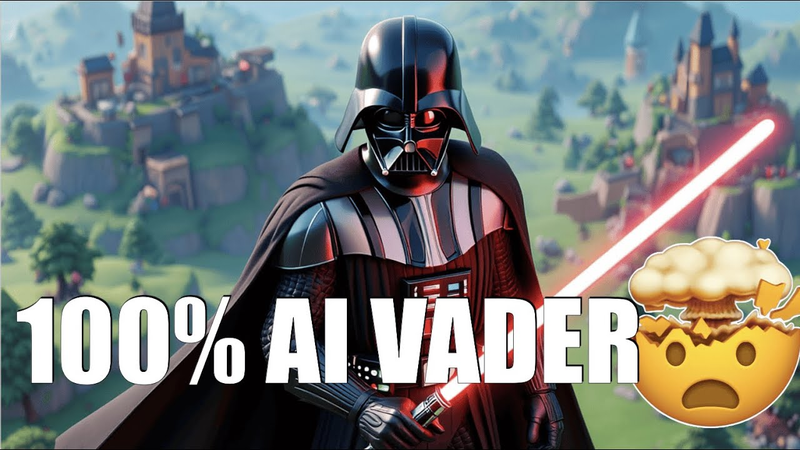
Darth Vader Goes AI in Fortnite + Google’s Veo 3 Changes Everything
The current landscape of the gaming and media industries is undergoing a significant transformation driven by rapid advancements in generative artificial intelligence.
- Generative AI models like Google’s Veo and conversational agents in games such as Fortnite are automating creative pipelines, potentially lowering the barrier to entry for high-quality asset production.
- The industry is experiencing a shift toward agentic AI models that promise to optimize marketing and creative production, threatening to make legacy mass-media approaches obsolete.
- There is a growing industry divide regarding the efficacy of high-budget TV campaigns for mobile games, with critics arguing they fail to deliver clear ROI compared to data-driven user acquisition strategies.

Week in Mobile Games E54 - Fortnite’s Epic return and the challenges of launching a game in 2025
The mobile gaming landscape is currently defined by a volatile intersection of regulatory shifts and extreme market saturation.
- Pokémon Trading Card Game Pocket reached $1 billion in gross player spending in 204 days, outpacing Pokémon Go, which took 282 days to achieve the same milestone.
- Epic Games is currently blocked from releasing Fortnite on the US App Store, as the company refuses to exclude the US market from its update while Apple maintains restrictions on alternative payment links.
- Industry experts agree that launching a mobile game in 2025 is increasingly difficult due to heightened competition and the dominance of established titles that capture the majority of player time.

TWIG #332 Finland’s Game Industry Woes, Supercell's Transmedia Moves and Roblox's Commercialization
The global gaming industry is currently navigating a period of significant structural realignment, characterized by the decline of established regional hubs and the aggressive pivot of major platforms toward monetization.
- Take-Two Interactive recorded a $6.2 billion write-down on its Zynga acquisition, highlighting the significant financial risks associated with large-scale industry consolidation.
- Finland’s game development ecosystem is contracting, with talent and investment shifting toward emerging hubs like Istanbul due to widespread layoffs and studio closures.
- Roblox is pivoting toward a business-centric model by integrating physical e-commerce and Shopify support to meet investor demands for increased commercialization.
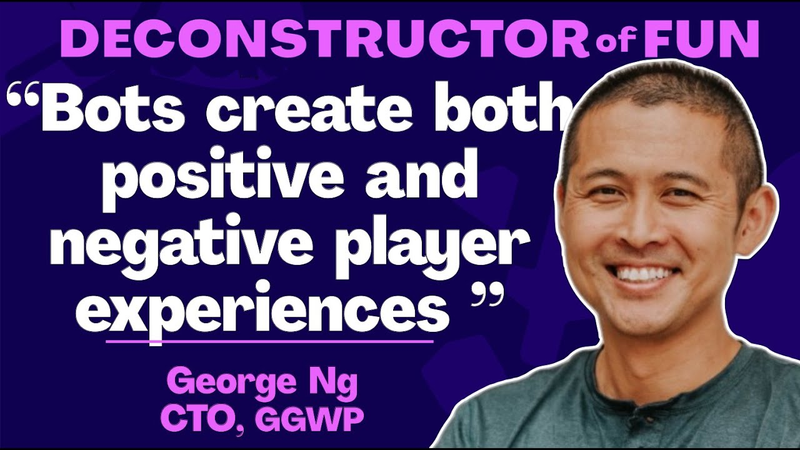
Bots in Gaming: The Good, The Bad, and The Future with GGWP's George Ng
The integration of bots in gaming represents a complex, evolving landscape that balances player experience, game design, and security.
- Bot impact is defined by origin: developer-created bots enhance onboarding and immersion, while player-created bots drive anti-competitive behavior, toxicity, and player churn.
- The industry faces a resource-intensive 'cat-and-mouse' game where studios must balance the high cost of sophisticated anomaly detection models against the scale of their player base.
- Cheating trends are regionally distinct, with North American markets primarily seeing competitive-focused exploits like aimbots and boosting, while Asian markets are dominated by gold farming and real-money trading.
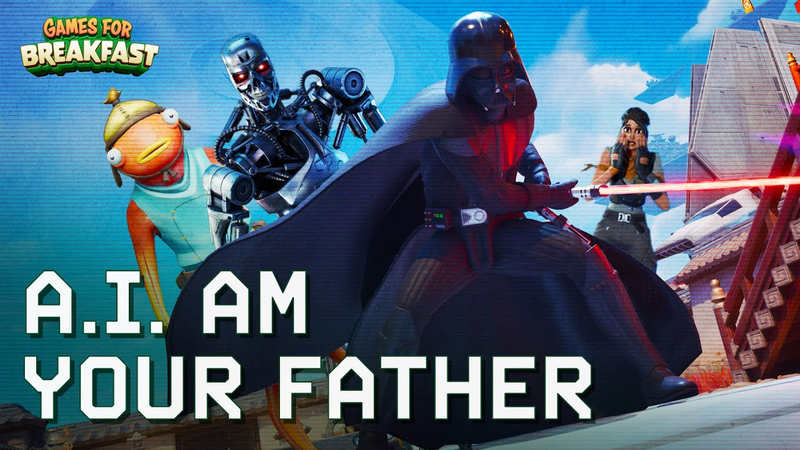
Fortnite Fumbles Darth Vader, Nic Cage as Madden & HBO drops MAX | Gaming News | Games For Breakfast
The gaming industry is currently navigating a period of significant transition, characterized by a tension between aggressive monetization strategies and the need for authentic creative integrity.
- The gaming industry is facing a critical tension between aggressive monetization and creative integrity, exemplified by premium pricing models in high-profile crossovers like Magic: The Gathering and Final Fantasy.
- The premature implementation of generative AI for voice acting in Fortnite has created significant reputational risks, highlighting that novelty cannot replace the immersion provided by professional human performance.
- Labor standards are shifting as workers at companies like Blizzard (Overwatch 2) and VFX departments successfully unionize, signaling a move toward improved labor relations despite ongoing industry-wide monetization pressures.

The Evolving Future of User Acquisition with Mistplay's CCO Aaron Thandi
The mobile gaming loyalty sector is undergoing a strategic shift toward long-term engagement, moving away from traditional offer-wall mechanics in favor of AI-driven matchmaking.
- Mobile gaming acquisition is shifting from short-term retention metrics like D1-D7 to long-term lifetime value (LTV) and high-value user cultivation.
- Platforms are replacing traditional offer-wall mechanics with AI-driven matchmaking to provide personalized game recommendations that foster sustainable engagement.
- Strategic success is increasingly measured by time spent in-game rather than session frequency, as the former serves as a more reliable predictor of future player spending.
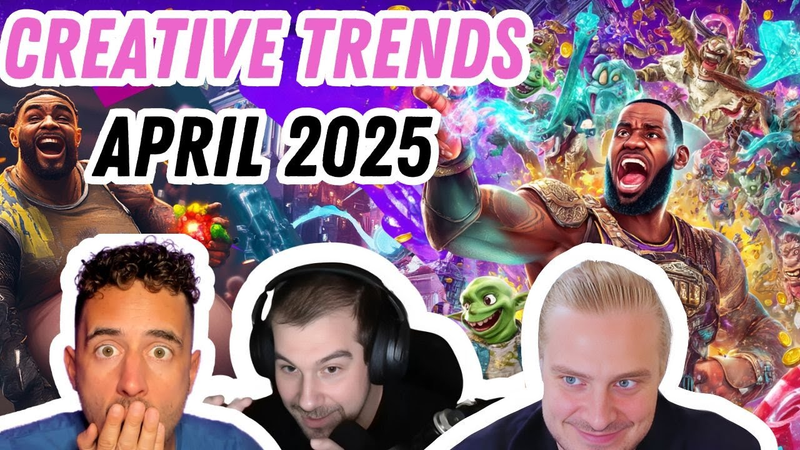
💥 The latest WTF ads pushing the creative envelope: Creative Trends You’ll Regret Missing April 2025
The mobile gaming industry in April 2025 is defined by a rapid shift toward AI-generated creative assets, specifically five-second hooks designed to capture immediate user attention.
- Mobile gaming studios are increasingly adopting a hybrid creative workflow, using AI to rapidly generate five-second hooks before manually refining high-performing concepts into polished assets to fix technical errors.
- Market leaders like Golden Goblins and Royal Kingdom continue to dominate through a combination of celebrity endorsements and consistent in-app purchase revenue.
- Developers are combating user fatigue by prioritizing 'weird' playable formats, such as POV-style interactions and genre-bending mechanics, over original intellectual property.
The BILLION User Goldmine: Gaming with AI + Telegram (DEEP DIVE)
Telegram has emerged as a high-growth distribution frontier for the gaming industry, mirroring the viral potential of early social media platforms.
- Telegram serves as a high-growth distribution channel that bypasses traditional app store friction by utilizing HTML5-based architecture and the TON ecosystem for crypto-native transactions.
- AI-native operational models allow studios to accelerate development cycles by five to ten times compared to legacy production methods.
- Messenger-based gaming platforms leverage social mechanics like referral loops and collaborative leaderboards to bridge the gap between Web3 infrastructure and mainstream user accessibility.


2025 GDC Trends Report: Connecting the World Through Games
The global game industry in 2025 is defined by a strategic pivot toward practical generative AI implementation and sustainable monetization models in response to market saturation and rising development costs.
- The mobile in-game advertising market reached $100 billion in 2024, officially surpassing revenue generated from in-app purchases.
- Financial instability has forced 56% of studios to rely on personal funding as the publishing landscape becomes increasingly selective.
- The industry is experiencing a 17% layoff rate, which has served as a primary catalyst for the formation of the United Videogame Workers union.

Do It Better: Creative Production with AI
The integration of artificial intelligence into creative marketing production is fundamentally shifting the industry from a model of static, mass-produced content to one of dynamic, personalized, and iterative storytelling.
- AI should be utilized as a collaborative partner to automate repetitive tasks, allowing creative teams to focus on high-level strategy and core development.
- Marketing strategy is shifting from static, mass-produced content toward dynamic, personalized, and iterative storytelling models.
- Effective video marketing now prioritizes continuous, data-driven content streams tailored to specific user segments rather than relying on a single 'hero' creative.