VideoDeconstructor of Fun
The Harsh Truths Behind Venture Capital No One Tells Founders with Lightspeed's Mortiz Baier-Lentz
22 Apr 202593 min video
Transcript
[Music] Moritz, welcome to the podcast, good sir. Thank you. Thank you. You're a light you're a partner at Lightseed Ventures as as as far as I know. Maybe not after this podcast, but but at least at the start of this podcast, you are and it's great having you back on like this is your fourth time. It might be. Yeah, it might be might be the last time, but for definitely the the fourth time. Yeah, I like the foreshadowing. The questions are going to be rough. We showed you a list and we're not going to end any of those. We're going to go right in. Well, I was shown this list literally two minutes ago. That's true. We want to keep you on your toes. Um, great to have you here. And let's talk a little bit about you. So your background just for those who haven't listened to the three previous ones we we I think we covered in your background a little bit in the first one but just so for the context for the people um you're from Deutselland Germany um Hanova that's
right Hanova memory good nice city known for great great music um and you you you have quite a career kind of like on type you but not in the sport you started off with with the professional gaming And how did you end up in the US? Yeah, barely professional, I think, if if that was a thing at the time. But, um, yeah, I guess I I grew up to not too much of a parental expectation. Um, my parents both dropped out of high school. My brother dropped out of high school and they asked me to please finish high school. I thought it was well doable while also playing a bunch of Diablo I that was my game of choice. Um, fell in love with it in around 20201. Um when we also got finally connected to the internet in our little cow town in Germany near Hanover. Near Hanover. Not Hanova. Yeah. Um and yeah, I mean I really I really played it for the love of the game first and foremost probably, you know, 10 hours a day when whenever I could for for seven or eight years. Um
peaked at global number one twice and softcore in 2003 and and hardcore in 2004. Um and made some good money with in-game item sales which were choppy. Uh back then eBay was in its first year in Germany. Um all of this was I guess technically never my IP and also untax child labor and yeah um I only I only unpacked the whole gaming past many years later when I applied to business schools in the US. I wrote my Stanford essay about Diablo I. So jokes on them now. and uh um did not go straight back into gaming after business school. Now it's actually pretty popular like uh I think in any given business school class either at Stanford or Harvard you have five or 10 people. Um, Activision has this very popular rotational program and and and other when I was there it was not a thing to go in into gaming or come
from gaming and so hired very traditionally did the least gaming thing possibly arguably uh and joined Goldman in the investment banking division with a suit and a tie in New York hardo M&A and IPO banking um for enterprise IT initially um did that for two years and then in in 2016 I looked the gaming industry, which was about $ 160 billion dollars at the time, no down year since 1997. We had just uh helped with the um King acquisition. Um and it just dawned on me that this was probably a space that warranted more proper commercial attention and it was somewhat neglected by the banks, the consulting companies. Um no other bank had a gaming practice. I think McKenzie was just starting a gaming practice at the time and um it was one of those moments where you could just beautifully argue from first principles and make a case for something and and so I did and started the gaming practice in 2016. Um worked on it for 4 years. I think it's been be become a um
a major component of the the Goldman franchise and you know himal took over in 2020 when I left and he's been crushing it and um I went into gaming VC from gaming banking not not much more noble um but a lot of fun uh joined Bitcraft early um had three fantastic years there and very proud of what we built uh scaled it together to almost a billion in assets under management and uh ultimately um joined Lightseed pretty precisely two years ago. Um lead gaming and interactive media there. Now tell me a little bit more about Lightseed cuz Lightseed is a big fund like one of the top what would say top 10 largest funds in the world. Yeah. Um we'll come back in in March when it's probably more like top five. Um yeah, the the word is on the street that this current round went pretty well. Uh well still in progress but so so far so good. Um yeah we uh so
we're about 30 billion in assets under management right now. Um it's a firm that has its history in enterprise. So started as a a pure early stage enterprise VC firm and over the past two decades expanded into consumer fintech healthcare and um it's also one of the few firms and I think the only you know tier one scale VC firm that takes a genuine global approach. So we have offices in the US but we also have offices in Europe um in London, Paris, Berlin, have been in Tel Aviv for a while. Um India, Southeast Asia, China. That's actually rare. Most most tier one VC firms I would say are US plus um or have a you know one or two partners in in Europe. But we we think we're at a point in time where you know talent is genuinely globally distributed. Um we have the tools and the technology to
enable people around the world. And I think extraordinary ideas can can come from anywhere. Yeah. And it's no longer dependent on physical proximity. Uh whether that's you know the traditional San Francisco Bay area ecosystem or other hubs. What's the difference between working at a at a prominent V gaming VC fund like Bigcraft, which is not small for gaming VCs, it's it's top player, to going into a generalist fund where you're running the gaming side, but it's a a gigantic fund. Yeah. Um I like the idea of joining Lightseed. I had my thesis at at point in time but I was worried that maybe it wouldn't work out in in reality which was I think the most interesting things in gaming they fall into intersections. I mean now you know obviously the intersection of AI and gaming is a is a big part of the hype. But even if you look into topics like you know AR or AI enabled hardware devices, these are topics that permeate
enterprise domains from machine learning to computer vision to in some cases custom chip design and and I actually really enjoy bringing in those um you know partners from enterprise from consumer depending on what we're looking at. If it's a if it's a game studio, you know, we have Paul Murphy who leads Europe for Lightseed who actually founded two studios and um you know that's my partner here in in Europe for anything gaming. He has that New York startup Two Dots dots which which sold to um Take Two and uh he also founded Gy. Nice. Yeah. So, so he he's great for anything game studios. Um, and then game platforms I look at with my partners from the consumer team. um depending on whether it looks more like social media or maybe an you know e-commerce application or gamified consumer and um you know when we go into tech whether that's engines or AI topics
these are things I look at with my partners on the enterprise team and I think we're always when an opportunity this is not just gaming related but when an opportunity comes into light speeded there's usually a partner who's best fit in terms of topical expert expertise to look at it. We call that internally the number one number one on the deal. It's the the check writer who puts their name um against the investment and then we compose deal teams dynamically and to some extent we even compose IC's dynamically. So what's an IC sector IC? Um it's a that's investment committee. So effectively every investment requires a vote. Um it doesn't have to be consensus. Uh for us it's typically four out of six at least have to support um a deal in including the person underwriting it of course and it's it's working really well. I think it's hard to um promote this cross- sector collaboration when you have actually delineated funds. So we don't have a
gaming fund, we don't have an enterprise fund. We all all investors at Lightseed collectively across geos across sectors invest from one fund. The fund is technically delineated by stage. Um, but also my incentives and my compensation are cross stage. So even though I focus personally on the early stage, my personal dollars and and success from from light speeded is derived across all the activity that we do as a firm equally. Web stores. You've seen what good looks like, but have you seen great? Appch charge is the direct to consumer platform backed by the likes of Supercell and built by monization pros from Moonactive, Platika, Huge Games, and others. People who know the difference. App charge powers over half a billion dollars in transaction a year for top studios, optimizing every detail. Deeply personalized web store offers, custommade design, industry-leading monetization features, in-game payments SDK, and more. 70% of
top grossing games already have a web store, but the one scaling fastest, they're doing it with app charge. Learn more at appcharge.com. That's uh and so what's the difference between that type of approach and let's say A16Z that famously has divided in into like American infrastructure or something like that and that was like gaming even has its own brand A16Z games that's a comparable in terms of a size fund. Yeah. I think the the argument for what A16Z is doing is by separating it into into individual vehicles, there is naturally more internal competition. And that's not necessarily a a bad thing, right? You want everyone to hustle. Um, every every domain needs to carry its own weight in the way that they also need to fundra separately. you know, to some extent by by and large the the A6
and Z games fundraiser separate from the main fund. Um, and that can be a good thing. Um, you know, ultimately you want people to be incentivized to really crush it in their respective domains. uh to um give it their all and and I think also to maybe make organizational decisions on whether certain domains are also topics for the next fund vintage or not. for us um for us this works well and I think it's actually pretty difficult to set up this cross- sector cross geo collaboration because you have to ultimately make sure that everyone's intellectually honest enough to elevate the things that they really believe cross the global bar. There's no there's no um deployment pressure naturally on anyone. So we we you know we we don't have to deploy in games. If if we think that in 2025 we didn't find anything
that crosses the global bar then we won't invest in games. Probably not be great for me. I'd you know have to reinvent myself if if that were the case. But it's a hypothetical scenario that works on on a fund level for us. It wouldn't work if it's a separate fund that has deployment guidelines and needs to make sure that you know within three years a certain amount of capital gets deployed in the market. But I like to think a flexible model is a better model ultimately for LP returns cuz you're otherwise creating I mean you otherwise creating just a constraint optimization problem. you're you're solving for multiple local optima versus solving for one global optimum. Let me d this down. So correct me if I'm if if I'm wrong. If you have a fund like a big fund, let's say you have, you know, $10 billion fund and that is divided into smaller sections, gaming, fintech,
biotech, clean tech, whatever it is. In those type of situations, these these sub funds are able to make decisions rather quickly and they're all experts in that field, but they're also tied to deploying exactly to that field. And so the cons is that that you have to deploy even if it's uh not growing at the moment or when the thesis was done. Uh compared to in a larger fund where you are at, you're making the the the best possible investments overall for the venture. But the challenge is is that you go to U IC, so investment committee, and you give your vote on a fintech investment. And so you're not an expert in that. You got to become an expert overnight. So it's a lot of reading, a lot of learning, but I'm sure you provide excellent material for for that. And you have to weigh in on something you're not an expert on. But, you know, I don't know if that's a pro or a con. It used to be like that for us where we had one IC for everything. That has
changed, too. So we have we we try and move decision-m velocity as close to um the centers of expertise as possible. So we have a gaming IC, a consumer IC, an enterprise IC and those that that is where those decisions are made. So part of the organization makes investment decisions that then affect the entire fund. And you're totally right. I mean, I see our life sciences and and biotech memos and I frankly shouldn't be voting on this and and I don't. What are the sort of non-negotiables when getting an investment from Lightseed? Everyone at Lightseed has a bit of a different investment style. So, ultimately it comes down to partners' preferences. And I'm sure the answers also differ by sector somewhat naturally. But if I'd have to tease out one common thread, I mean, two things I don't like to negotiate on are truly extraordinary founders. And that's a
loaded term, right? And you can discuss all day long what that means. And we do and we recalibrate internally all the time, too. Um, and sometimes you you think you understand the spectrum of possibility and and you meet just outlier people that have you rearrange your scales a little bit. Um, which is something I I genuinely love about the job. I um I like this uh phrase of unique insight that if true is profound and I think that's a powerful way to describe an extraordinary founder because when you spend all your time in gaming or in your area of expertise the truth is that in a given call or pitch you're not genuinely learning something new like it fits within the frameworks that are, you know, repeated over and over in in in
the industry. But sometimes there are pictures where your your perspectives genuinely get challenged or you learn something new that is so intriguing and so interesting and and and has you sp has you spent more time with something you otherwise would have never um thought about. Um and and those instances are like particularly I would say that happens maybe less than once a month. Um, and those are that's a strong signal to lean into and spend time with that founder, understand where they're coming from. Um, why they have these perspectives and I love to unpack uh contrarian thesis. I think you know one one thing that gets talked about sometimes also is TAM. I I think it's it doesn't matter targetable market. Yeah. Soi size of the market for the best things doesn't matter because some
people will create markets and and um you know the the types of founders that share this unique but but if true profound area of expertise that those are typically the founders that that go after things that don't neatly fit into spreadsheets. Um, so that's something I like. How is this spotting going on? Like how do you know that somebody is truly exceptional? Do you spend time with them uh on, you know, on site physically or does it come through your video calls or like how how how does that happen? In initial meeting for me typically is over Zoom. um probably 80 or 90% of initial meetings are I think without exception at light speeded any company I've ended up investing in that there was extensive time spent in person um just spend you know over the last two weeks there's one um investment that we
ultimately didn't pull the trigger on but I think within like four or five days it was over 10 hours spent with the founder including over a weekend um and it was one of those intriguing cases that why did they reject you? Skip the other way around. No, I think I mean look we is it's very compelling but I think there were on our end a few too many question marks but it was a great it was a great process and um incredible founder truly incredible founder. What does this entail like spending a lot of time? Does it mean like you go to their offices or you said on the weekends do you meet some like like what I'm just curious about the process of of understanding that that this is truly exceptional uh team or a founder. Yeah, you never know. Our job is not to predict the future. Our job is to see the present clearly. And so there
are precursors of greatness. But look, the reality in in venture is most things don't work out in early stage investing, right? So that's baked into the the investment strategy and that's fine. Um that's also why, by the way, I I find this this narrative um of oh look at all these game studios and most of them don't work out. So it's it's not a venture investable category. Well, that's true for everything in early stage venture capital. you know, you can you can say the same about SAS software, which is the bread and butter of the, you know, US American uh venture capital industry. And so, yeah, most things don't work out. That's that's that's priced in, right? Um cuz when they work out, they get pretty expensive. And if we look at historically how our funds have been returned, um you know, we're on on vintage 15 now. Um there's typically I would say a handful two handful of companies among a
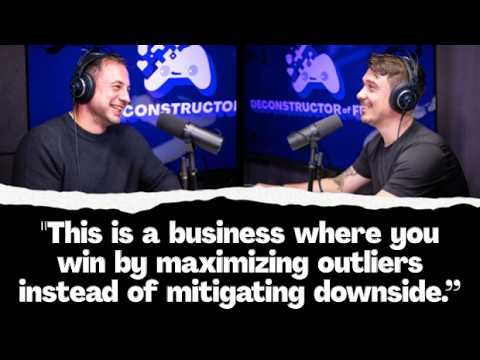
few hundred in each fund. Yeah. that really mattered for the fund. And and you know, we we internally we also ruthlessly focus on those impact companies and and make sure that we enable and elevate them as much as possible cuz you know to some extent this is not a um this is not a a business that you win by mitigating your downside. This is a business that you win by maximizing the few outliers that that are naturally created over the you know 5 6 7 years of of a funds investing period. Most don't work out. Can you talk to me about what works out and like how does that look on a financial perspective? Like what are the percentages that you're aiming to own and what is the type of an exit and then let's unravel through that to other type of funds and how they do their investments. But on on Lightseed's perspective like what is a investment that works out? I mean in terms of ownership percentages in the early stage
we typically try and get to about 15%. Um let's say 10 to 20% is a good range. Um because obviously there will be future funding events. There's solution. I mean we you know if if if we like our portfolio companies we obviously keep layering in capital. I think there are now a few companies where um across light speeded funds we have a couple hundred million dollars of our capital deployed against into individual companies. It's a value proposition for us as well to be be able to kind of like layer in capital all the way through you know possibly an IPO or a scaled exit. Um for us we are currently investing from a $7 billion family of funds. Our LPs, I would say, expect at least a 3x on that, 4x better. Um, that's what we've historically delivered for now almost 30 years with quite some consistency, which helps with fundraising in an environment like the
current one where I think it's more challenging certainly than by and large we've experienced it in the 202022 period, not just for startups, but also for fund managers. And so to return I mean this is high level math but to return a 7 billion fund 4x you know that's 28 let's call it 25 for for sake of math. If you own 5 to 10% at point of exit that means you need to deploy the $7 billion into things that ultimately will create a consolidated 250 to500 billion in exit value. So when you have to invest in companies that together are worth you know 250 to 500 billion the question is how much does it matter to be in a company that ultimately becomes a $1 billion company. You literally don't feel that in the fund even five you barely feel. So, so you know 10 you
start feeling investing in a $50 billion company at 10% gives 5 billion back into the fund. That's not even one turn on the fund. So it's basically this ruthless focus on things that can have massive massive scale. Um and look, you know, hitting a $50 billion company is extraordinary and and a turn on this fund is extraordinary. And obviously ultimately those turns will be made up probably out of, you know, 20 plus key companies um that in aggregate get you hopefully to at least 3x of like a 4x 5x fund. But that's the fund math. And so you could have one of these work out tremendously and most of them work out not at all and still drive a pretty meaningful result for LPS. $50 billion exit is insane cuz like a deck of corn would be already, you know, a win for almost
anybody, but for you it's like, "Oh, cool. That was nice. That was like a that was like an appetizer." And I don't know. We're very happy with $10 million companies, just to be clear. take a corn, but it also then I think it the it frees you up a little bit also because you when you invest or make investment decisions in early stage, you kind of want to ask yourself, do you see the light at the end of the tunnel for this to become a $5 billion plus company within call it seven years? Mhm. And while you can never predict that, of course, right? Like there's a lot of things that look like they can and they don't for various reasons. That's super difficult. Execution's difficult. You don't know what competition is going to do in the next 5 years. Market changes. All kind of issues, talent problems. Um but surprisingly, you will actually often look at something and there is no
light at the end of the tunnel. There genuinely is for a lot of things no way. like you cannot articulate a way to get to $5 billion. So, so that's out. And I think actually there are a lot of projects in gaming that fall into this category. Mhm. Like to get to 5 billion for example in gaming tech. There's only two examples or I mean there's some privately traded companies like Perforce for for example. There's really only the two engines. I mean if you if you broke Applovin Yeah. Applovin is a good good example actually. Um, it's kind of like sometimes the question like what's the platform? Adtech is definitely there. Ironosource I I'm not sure what what the price was, but yeah. So, but but it's probably fair to say there's a handful or maybe two handful of of companies that crossed that bar ever. Yeah. In in game tech. And so, kind of begs the question, how good is it actually of a business to um serve game developers? It's a
relatively small market. Mhm. Versus other SAS categories. Yeah. Versus content and all that. Oh yeah. Or anything that markets to all developers. Gaming tech is something of course naturally I've been looking for. It's it's not something for the biggest funds. Mhm. But there are interesting like there's intersection of gaming tech and broader tech like let's say discord as an example is um is is something that I don't know what their valuation is but it has to be in billions. So when they kind of move outside gaming just like apploving uh I feel like the valuations keep going up and that kind of leads to my question. Um the current valuations in gaming are not great. Like we saw Plarium being sold basically at 1x revenue multiplier. Another easy brain company was sold again a little bit over a billion that was I think it was 2x revenue. like how do these current valuations play into your into Lightseed's investment thesis? Yeah, I
mean you can look at it or you can ignore it because investing now will be an exit in seven years and market cycles are probably going to look very different. But I mean obviously the intellectually honest answer is you should look at it and and you should take into consideration and you probably want to peel back a layer and not just say oh so studio investing doesn't work or you know or edtech is broken and and doesn't work. Then the question is why right like what what kind of studios by and large might not work. What are the patterns of those? Is it a specific platform? Is it uh life ops issue? Is it um a mismatch between development budgets and what comes out on on the other end. So we're we're trying to have those discussions in internally. Um, you know, and I think it's good that different funds have different strategies, especially as it comes to studio investing. Yeah, I think platform
and tech investing in gaming looks a little bit more like traditional venture capital. You know, that's something that team at Lightseed could probably also do without having a dedicated gaming professional. just consumer software or enterprise tech with the exception that it serves, you know, initially at least the gaming audience or the gaming industry. But yeah, as you said, a lot of these breakout cases, they um they either move from serving game developers to going broader and and and serving developers, global software developers or or a game from a gaming audience to a broader consumer audience like in the case of Discord. or they um they move from being something for developers to being something for everyone and and enter domains like UGC or enable uh creation to
non-professionals. I mean this whole class of AI enabled UGC um you know prompt to game like we're kind of at the cusp of actually enabling quote unquote everyone to make a game and there's so many different approaches to to do it and it's early right so I think it's very easy to fall in love with the thesis um absent of real product market fit just because it's an interesting topic or you can envision a future where this would be the is this is another fallacy of uh of investing I think um it's very easy to to see certain futures and be quite certain about them ever existing and it's really hard to time them and for us we don't just need to be right on a certain type of future we certainly need to be right on the timing for it and great example is AR do I believe that ultimately we'll all wear smart glasses
100%. Like I'd be shocked if that were not the case. However, I don't think it's going to be the case in the next 5 years. So, it's probably not a sensible investment strategy for this fund. And so, this is this is something I spend a lot of time on trying to figure out. I mean, there's so much interesting stuff on the AI front that fits into that and we talked a little bit about it yesterday. um you know, generative games, whether that's using existing infrastructure, um you know, engines, codebase, assets, but in a in a semi-automated or automated way to basically create games. That's kind like the the that's one type to do it. Then there these generative video models, and that's gotten a lot of attention initially in research about half a year ago, and then over the past few weeks, we actually had to we we saw a few pop up um online. And you can play around with uh the Oasis model, for example, play what people dubbed
dementia Minecraft. It's not an experience that's very engaging or retaining. I don't think many people came back on day two, but it's besides the point, right? It's it shows that this is somewhat possible that that training cost and inference cost are reasonable enough to put that out there and in the hands of millions. And obviously, it's only going to get better from here, right? If you go back and look how dogs looked in Midjourney three years ago, they all had seven legs and five eyes and everyone was making fun of it. And now it looks pretty good. Yeah. Um and so we might see the same uh play out for generative video models, there's generative scene models where instead of being trained on on 2D video data, which people call 3D, it's very confusing. You always add the the time dimension to it too. So moving from 3D i.e. 2D to 4D models, i.e. 3D, um, and train on actual threedimensional data. Could be interesting. I
personally I don't think we'll see AAA titles done this way anytime soon or possibly ever. Mhm. Attention app and game developers. Are you ready to unlock the secrets behind the world's top performing apps and games? With Sensor Tower, you get the ultimate competitive edge. Whether it's breaking into new markets, fine-tuning your UA strategies, or boosting monetization. Dive into data like never before. Track global trends across app stores. Analyze market leading adop purchase and inapp ad strategies and benchmark your performance with realtime insight. The best part, Sensor Tower doesn't just deliver data. It helps you turn it into action with intuitive tools and expert analysis. It's everything you need to make smarter, faster decisions. Thousands of app and game studios, from indie creators to global giants, trust
Sensor Tower to help them win. So why not you? Start your free trial today at sensortowwer.com. that is sensor.com. There are some hard issues I think in the way that image and video are and this is a simplification. Image and video models are pixel based and and and games are state based and so um that doesn't help. Uh if you if you think of a complex game like Diablo for example where you have characters, character classes, um skill points, skill trees that all uh interact with with each other. You have items, various item slots. The items have all kind of pre-rolled, randomized prefixes, suffixes. Um your damage is a function of attack speed, enemies resistance, etc., etc.
Even all the video information in the world probably makes it borderline impossible with a transformer-based model to infer all the underlying algor algorithms and codebase. And so I don't think the the games will these generative games or generative experiences they probably look going to look a little bit different from games and that's fine and maybe that's actually taking a lot of attention and mind share nevertheless just like mobile games look quite different from PC and console and you know are now the biggest um the biggest platform within the global gaming industry. Strauss Zelnik is the CEO of Take2 Interactive. Uh regarding AI, he said, I'm quoting, "I would love to say that it's going to make things cheaper, quicker, better, or easier to make hits. I don't think that's the case." So, he kind of basically shut it down to some extent that the help from AI is not not going to be so dramatic as the most bullish
scenarios are talking about existing games that they are developing themselves. Yeah, I there's two ways to use AI in games and we primarily see the former and I think it's the less interesting of the two which is um I think that's mostly what Strauss is talking about use it in pre-production production to as he said be a little bit underway faster um cheaper I don't know about better necessarily and it feels like most of the stuff is helping you get to human grade quality but with shortcuts. But either way, this is where probably 80% of the AI companies in gaming are focused today is is accelerating devs or maybe replacing devs. I think the more interesting applications are in in that second category, which is use it to drive novel gameplay. Previously, I like this term, previously impossible experiences, exponentially more
immersive. Yeah. If that's I mean you know AI NPCs are like the classic example. I think you know I don't think you want to play your game then there's one random NPC that you can go to and ask like a chat GPT and you're like cool I'm done with this now for for after an hour I'll go back to the actual gameplay. So it obviously needs to be integrated. Um you know I think aic simulations at scale could be really interesting like what if you can really bring entire cities and towns to life. Um it's boring. Yeah, I mean just walk outside. That's the real world. Yeah. Um, yeah, great great graphics, shitty story. From stress to Crest. So, let's talk about like Crest has been so on our podcast, Crest has been quite um well, not not unusual himself. So, quite um critical of big VCs, especially in gaming. And if I'm misrepresenting him, I don't know, but I'll try to kind of summarize his point. Um, he talks about
big size VCs, so probably multiple hundred millions to a billion and more investing purely in the game in his view creates impossible to return scenarios. So if we think about games that that or game companies that would exit, they would need to be 5 billion or more for exit. And there hasn't been many of those exits in gaming. I think Supercell was five and then the second time they sold was 10 and that's like one of the most valuable companies. King was I don't remember what it was between four and six I think when Activision acquired it. So these are like the top companies and the exits haven't been you know they have been considerable but not of the same magnitude. He talks about that the one of the driver for a big size gaming VC fund or any VC fund is the more capital you pull the bigger management fee you get because typical structure correct me if I'm wrong is 2120 so basically saying
that you're annually you take 2% of the entire fund size as your management fee and the fee is what that pays for everything for the salaries for the lawyers for the research you name it in order to run your fund efficiently And then 20 means you take 20% of DPI. So meaning that um if you if you have a $1 billion fund, you return two billion, you can take 20% out of the second billion after you've given 80% of what you made back to LPS. So limited partners, meaning the the investors. And his point is that if the fund is very large, then the 2% is actually a lot of money. And that he says does not create the same type of impetus for the investors to seek for returns because they're kind of you know in terms of a general partner they're kind of doing good. They might be getting millions in salary um just for managing this fund and of course like junior associates are
probably not that well paid. And then the final one, because these size are getting bigger in size, they're starting to compete in the type of auxiliary services they're offering and almost becoming like mini publishers. Uh having all kinds of different like not all but there are large funds that have multiple different type of experts that they can you know hustle around between the investy companies making them more attractive. But at the same time uh he's arguing that that's not the job of an investor. investor is helping with the capital for the company to grow. There's some advice and so forth, but they're not publishing games for their for their companies. They're assisting in a totally different level. So, the three challenges, so impossible returns, uh big management fees, and playing a publisher. What do you think about this? Yeah, I think there's actually a great answer for all of these. That's why we have here as per usual, Mr. Crest. Um, so impossible to return. You said you kind of need these $5 billion exits and
there's very few. I mean, okay, this representing I I can be Chris. I'll start yelling at you. So, I think the the most expensive um game studio rounds, those rounds that big funds like Andre like us actually participated, I think it kind of caps out at about a hundred million valuation. So just to name it, if you get to a 50 to a $5 billion exit, it's like a 50x on that investment. Yeah, that's crazy good. So that's pretty good, right? You can have 10 that go to shambles and then on average that's a 5x. Great fund. So take one that goes to 5 billion, take take nine that go absolutely to shambles. You can't even recoup your your capital. Great fund overall. So I I'm not sure if that that holds, right? We don't need a 5 billion exit for things to work. Actually, in in this case, for the most expensive thing, you know, a 300 $400 million exit would
work nicely with with the return math for the fund. So, I think it's probably a little bit over overdrawn. Um, the second one on management fees, I think it's a common criticism of large funds. I I would say that dynamic definitely exists. All right. I think there there is a clear incentive for fund managers to raise large funds because you can almost you know I think there are instances where the business has become managing management fees and not managing good investments. The truth is also so let's let's see where this where the management fees really acrue at a firm like light speeded it probably affects maybe 5% of the people who work there and those aren't even the ones driving most of the the investments at that point in time. They're really concerned with organizational leadership. So people like me who drive
uh sector areas, the partners across enterprise, consumer, healthcare, fintech, they don't see any of the excess management fees is is the truth. And so for them, the dynamic and the incentives actually remain unchanged. I think it'd be not intellectually honest to just dismiss this topic. And that that dynamic certainly exists for we for this next fund that we're raising. can't take too much can't talk too much about it, but we could certainly make it a lot larger than what we'll ultimately end up announcing. We um we have to be careful not to make funds so large that we can't deliver on what is historically been expected in terms of TVPI and and DPI cuz it's great to take all the money you can get raise a 40% 50% above target fund um have a
blast compromise over a three-year investment period because now you you have to logically lower the bar because you need to get more dollars out with the same people over the same time frame. So I mean almost almost by pure deduction average quality of investment would go down almost by extension returns should come down. So it's a dangerous game and we want to scale in a way where we feel that with the team we have with the bar we have we always have a strong case that we can service those dollars. Mhm. Um and so yeah I mean on our side there's there's consciousness around this too. be easy to get a quick short-term win on management fees, but if you compromise real returns, you might not have a firm five, six, seven years later. Yeah.
And it's probably not the smart long-term strategy. Um, and then and then the third one was the the third one is playing a publisher. So, having too many services. It's also something that that Mitchlowski has been doing these uh jabs at at some larger VCs that have added a lot of auxiliary services and kind of making the point that that's not what venture capital is about. Like you shouldn't add all this extra just because you've grown in size. Um just rather limit the size of the uh of of the capital you take as as you're saying you're limiting and focus on what you do rather than adding all this extra. I think it's a very simple answer. Venture capital is in the business of returning money to LPs. So if there and I don't think there's one right approach to do it. The world changes. How founders view VCs changes. Um benchmark has one model. A6Z has a different model. I think they're probably on on two opposite
sides of the spectrum. Um and by the way obviously it's in a V is any in any VC's interest to position themselves well against anyone else. So to some extent that's also a dynamic playing out here. But look the the job is to build the funds that have the best return math for LPS. If you think the most important thing in a given market and this changes whether it's you know quote unquote a VC market or a founder market where you know VCs have to say or or you know founders have the choice um respectively. If you think you have such a convincing pitch with these auxiliary service that that you provide and you know we we make some conscious choices there too like we run gaming and interactive media at Lightseed pretty lean as as you know um so you can also be a big firm with a small setup we have integrated functions across talent PR
marketing but you know we don't we don't intend to and and I don't think we'll ever provide publishing support in in house and we also partner with third parties on on a lot of these topics but ultimately yeah you got to deliver nice returns and I think for some firms quite successfully I would say by and large for Andre it's been working out really well the whole thesis to build a content organization to build this support infrastructure this was something that Andre came up with many years ago and that's actually why they're a household name today and Um, and so I think it's short-sighted to say this is the right way to do venture capital. It's almost like saying this is the right way to do a business or start a company or scale. There's always different flavors to it. It lends itself also to the style of founders of of VC firms and I think there's beauty in in them being different just like we like our
portfolio companies to be different and ultimately founders have the choice. Exactly. You said like 300400 million exits are perfectly fine which have been several but not too many. And when we think about the game industry as a whole, it has consolidated rather quickly especially during the 2020 2022 kind of the whole mobile just suddenly like clinched together and then you know the Microsofts and and and all of that kind of happened at the same time. Where are we headed in in that? like does that have an impact to the M&A activity? So M&A acquiring companies and again if they're just trying to explain this to uh to dumb people like myself if there are less acquirers to the fieldman's like myself there are less acquirers um that means that they are looking for bigger deals and or a bigger size of a companies and so if the midsize acquirers are being taken out of the market let's say take 2 acquires Zingga and now Zingga is not conducting the
same type of M&A activity and the the targets that day two are looking are probably much larger than what Zingo would be looking at before just hypothetically. I'm just using examples. And when you take these sort of a uh mid-level uh acquirers off the market, then that creates a bit of a vacuum in the exits because now there won't be probably that many under $100 million exits and everything that they're looking for is probably companies that are making hundred or more millions a year. and then that limits the amount of companies that are possible and then so forth and so forth that kind of reduces the uh the M&A activity. How does this hypothesis sound? And the consolidation I'm more worried about is actually just consolidation of how many titles make up the the you know large chunk of the gaming revenues. So, I think it's gotten harder and harder for games to push into real scale of commercial success and um
you know to some extent it's just efficiencies that large players are drawing from their IP around UA obviously and and and other factors and I think that's actually something that keeps me up at night. on the M&A front maybe I I don't spend too much time thinking slashw worrying about it. You also to counter that you have the positive dynamic that now you have other media companies. Um you know I guess Netflix is a is a great example. New York Times technically a gaming it's a publicly listed gaming company. So so there's all these divisions um from you know non-endemic or non-traditional acquirers that are also filling in the void that that you're describing. So, and again, it's I think it's always a little bit difficult or dangerous to pay too much attention to these moments in
time or like points in time because making an investment decision today will drive an exit in seven or 10 years. And so really the question is what's the M&A landscape going to look like in 2034? I don't know man. You know what I know is working with extraordinary people on groundbreaking ideas that challenge the status quo is probably a good way to invest. And that's honestly the most important thing you need to get right and then a lot of the other things around you especially the things you can't control I wouldn't worry too much about it. Yeah. Okay. That's a good answer. Um you mentioned the consolidation in terms of uh consolidation of revenue. That's um that's that's true. The other part is just how that scale and that top position affects their economics of those companies is that they become so much more efficient than those that are challenging them. I was I remember I was
looking at Robloxes like how much these guys spend on marketing. They essentially control the UGC to a large part, probably make most of it, like Minecraft the second. And they spend less than $40 million a year on marketing, which is absurd because if you want to challenge the incumbent, then that incumbent not only is a decade ahead of you, but also is not even spending on marketing. It's it's Yeah. I don't know. It's just a comment. So the the the way to kill incumbents is to reinvent. Exactly. And not beat them on their home turf. So the question is who's going to become the Roblox of AI, right? When when [Music] when I mean, yeah, kids and teens are playing those games, but kids and teens aren't really building those games. Everyone I mean, not not the listeners of this podcast, but I think the public perception is Roblox is a platform for kids to play games and for kids to build games. By and large, kids aren't building those games. It's professional developers, right? So how does a
platform look and what does it need for kids to build these games, right? And probably AI is is an answer here or part of the the answer. So I mean Roblox is heavily investing into AI. Roblox might as well become end up becoming the Roblox of AI themselves. But by and large history repeats itself on this and it usually doesn't work out that way. And when you have transformational shifts like the introduction of the internet, the introduction of the mobile phone, the introduction of cloud and now again I think the introduction of generative AI or you know other AI technologies, you usually have a um a value transfer from incumbents to challengers. Now AI is a little bit different some people argue just because how important scale is in in terms of um capital availability for compute uh for data for talent and so there is
certainly that dynamic but I'm I'm honestly I'm just a hopeless optimist and a firm believer in in the fact that there's always going to be these things that start small that generate momentum that attract the best people the best people want to work on interesting stuff. The best genuinely best people in the world by and large they don't want to work for big companies. And um the best people always win. All right. Agree to some extent. You have to have a little bit of luck as well. It helps. This podcast is brought to you by Appsflyer. In today's digital world, understanding your app's journey from discovery to download is more than just insightful. It's essential. Enter Apps Flyier, the leader in mobile attribution and marketing analytics that allows you to measure the full potential of your marketing efforts, making every ad
dollar work smarter. With Apps Flyier, that's your new reality. Dive deep into datadriven insights that reveal exactly where your users come from and how they interact with your app. AppSlire where your app's potential meets performance. We mentioned A16Z multiple times. So Andre and A16Z is the same thing just for the listeners. Um and that is a prominent venture capital firm in the US. They have uh they have some interesting models that they use for the size of a fund that they have. So A6Z games is a prominent game investor. They have two funds. I think first one is about 600 800 the second one is at 600 or 800 either or well over a billion that they're investing and they're become much more prominent name through speedrun uh a concept where multiple time of years they sort of create this um uh incubator in a way so m teams from
around the world apply they bring them in either SF or LA they work for eight weeks they make a prototype and then they're showing this through these really really cool events that that A16Z throws uh where a lot of investors from all the funds come in and watch these pitches and then are following the investments together with A16Z. Uh that model has been in many ways praised by the founders but has also been criticized by other funds and of course Eric Crest. What what's your take on on this model? Not per se that you know have running an incubator is a legit model but how does that type of a model sits with a larger fund we're talking about a fund that has to return over 600 million and they're essentially doing preede investments so investing early into a team um pros and cons like can you can you talk through it as a as a you know experienced investor of a large fund yeah I mean it's almost directly opposed
to the model we're running which is about two investor per year. Um, so that's my answer. If I would be against it, I'd say, okay, this is pretty difficult because we're going to do a lot of investments and that means we will have a lot of founders that we have to cater towards and we that will strain us really thin because you you write couple of big checks a year. You get about two to three companies you invest annually maybe sometimes even one sometimes even zero and so that allows you to focus but your investment size are it's not as distributed but now I'm I'm at A16Z I'm looking at more it's more it's interesting strategy conservative I understand that good for you I'm going to do something different I'm going to get into as many deals as possible early on I'm going to look at the market I'm going to have them come to me in the earliest phases where my initial check which I believe is 750 is going to get nice portion of that
company. I'm able to follow through and um and through that my deal flow is huge. I get a big portfolio of a lot of small companies. I don't care if if 90% of them go to zero, but at least I'm able to follow through as a lead investor into their subsequent rounds. And I'm also able to pull in the larger VC community through my events that are really cool and the coolest locations and everybody wants to come in and everybody does come in and they and we can invest together into a lot of these uh exciting startups that we present in really good way at our bianual speedrun events. Morren, what do you think about my concept? Do we really have to talk about speedrun this much? Yes. I mean I mean cuz cuz like there's a like I want cuz there's Eric Crest is has been you know critical of it but Eric Crest is not experienced investor. He's not really known to criticize things. He's usually optimistic about everything and supportive and complimentary and
complimentary and uh but this particular thing he has been criticizing and and I would like you to uh to strongman it. Look I mean I think good things or at least good things singular so far has come out of speedrun which is K. um which you invested into which we uh colette the series A together with Andre. Um so it's certainly a model that can work. Um I mean the one thing I will say is is you can you know you can take it apart from a from an investment ownership returns perspective. The other thing that's that's really not trivial is the amount of people it takes to run it. I think I would probably think that twothirds of the team is involved with speedrun to a large extent and so that's a big organizational choice right I I don't think there's actually any other fund who could even run this if they wanted what do you think about this
criticism of not criticism the challenge of this is also that not only are you getting a lot more founders that that are expecting your support let's say I'm I'm going through successfully through speedrun enjoying tremendously an amazing 8 weeks. I gel with my co-founder. We show a demo standing ovation and we get the check. And now as we're going through towards our seed rounds, following one, I'm expecting support from Andre. And if we are speedrun number five for example, there's been already 250 companies in addition to the big investments that have been made but the team is probably not increasing by 20% after each speedrun. I think that would that be a challenge like the expectations versus what you get as the amount of company increases. Do you see that as a challenge or the good thing that it does is it provides capital for a lot of ideas in the gaming industry. Right. So should should also be pointing
out that whether it's a good thing for Andre. I think the jury is still out on it. Is it a good thing for the gaming industry? I think almost certainly yes. Right. Because you you have a lot more shots on target for cool and interesting stuff in gaming and interactive media. So maybe maybe we'll give him a positive shout out for that. Yeah, I definitely give a positive shout out. I mean Andrew Lee, Josh Lou, Robin Gu, they have been working really hard on this and and I've been to the speedrun events. They're really well done and yes, it's a very positive. I get constantly people reaching out founders asking how they can, you know, go through to speedrun or go through speedrun. I don't know what it takes to go through, but I'm definitely helping them out to to get to that. So there's tremendous amount of demand. Um, and yeah, I think it makes sense that that what you pointed out like like emphasizing that you've been funded by the speed round speedrun because that might take away the edge of
let's say you're going through a follow round, let's say a seed, then you would expect that Andre would cover the entire seed because they're such a big fund or at least majority of it. And if there's a signal that they're not investing into your startup after you've gone through their um initial speedrun accelerator, that could be a potentially a pretty bad signal for other VCs, right? The harsh truth is I don't think VCs owe their portfolio companies follow on investments. I mean obviously you want to make sure that there is the capacity for a fund to layer in capital over time and and help you grow and maybe that also includes growing internationally and having physical presence in other you know domains that you want to may enter. If you're doing a good job, your VCs will invest. Actually, if you're doing an exceptional job, they'll preempt it. And if
not, does it warrant additional capital? The sober answer is probably no. Now, obviously, it's not that black and white. And obviously work and support my companies more than I should sometimes. Ultimately our clients ultimately are our LPs. Our clients are not our portfolio companies and founders. And it's not a great thing to say on a podcast, but that is the reality of of venture. I don't necessarily think about it like that on a day-to-day business, but it has implications when it comes to capital and follow on decisions because that's where you need to remind yourself sometimes as a as a VC is like getting to exceptional returns is exceptionally hard, right? Like most VC firms don't even return the fund. It's like the average is kind of like.9x return. That's pretty bad. Yeah. But it's almost it that that's why it's called venture capital. Yeah.
[Music] Um but on average average not median it works out quite nicely. This is this is actually this is a case where average versus median makes all the the difference for this asset class. Um but building good funds over and over again like across 10 20 vintages is probably something in the organizational DNA and the way decisions are made and the quality of deals you see how you pick how you support how you drive exits that that clearly is repeatable even though there is all this uncertainty involved when it gets spread over enough companies by enough people that are all making high conviction bets across sectors, across geographies, pull it together in one fund, it works and it it it has worked really well for us. And so actually for
this for this current fund we're raising, we're actually not changing much. We're not changing the size of our early stage vehicle. Um we're upping our growth vehicle a little bit. Um, we're not changing the team. We're not changing the sectors we're investing in. We're not changing the way we make decisions. We're collectively happy with how we run the current fund and our LPs are happy too. Otherwise, they wouldn't be coming in again. That is a method that works well for us. So, you know, you can look elsewhere and praise and criticize and draw inspiration, but you can also sit with the fact that whatever you have going is is working well. And so, you probably want to do more of that or or you just want to keep doing exactly that. I understand the point of of LPs. So your investors the the people and the well not the people in your case the
entities that invest into Lightseed Ventures are its main clients um and the founders are not of course that's a roughly said it doesn't mean that you don't because if you don't serve your founders you won't get founders especially you won't get exceptional founders the one thing the one thing I do in competitive situations is I always invite prospective founders to talk to my existing portfolio founders and I'm not going to go to uh you know my portfolio site and cherrypick who they talk to. I literally just invite them to talk to whoever I work with or where I'm on the board. I think that's very powerful and that's how you win competitive situations is you can you can talk up your yourself all day long, right? You can bring up all your team. We have a reverse pitch presentation that shows you how great Lightseed is. And you know, we obviously we always want to make sure that we really hear hear and can demonstrate our understanding of the portfolio company we're trying to work with. But the best thing in the world is them calling up
someone else who was in the same decision and deciding or even in some cases has a couple of the other funds you're considering on the cap table too or on the board too. Those are extremely powerful situations. Um, that is just a very credible zero way of trying to figure out like who's who's great at telling you what they'll do for you versus who actually does minor acts of magic for you on a weekly or bi-weekly basis? Do you have to fight a lot for deals? Fight? No. Physically, no. Come on. But I mean like r Okay, fine. Rarely. Yeah. Rarely. No. Physically. No. Rarely. Physically. R. No. But but like you know I I of course I don't interact with with funds of your size. The the truth is for most of the things we invest in, they don't have a pretty PowerPoint presentation and then some Google sheet
where they reach out to 100 funds and they track like the first meeting, the second meeting and all that kind of stuff. It's usually not like most of the things we invest in look more like founders already know the five parties they maybe want to work with. They reach out to five, they get three term sheets. Mhm. So my job is being one of the five that gets asked and my job is to win um against the other two term sheets. Mhm. And how do you do that? Just by showing the track record. talk to these ones and I think I think I think founder references are critical. I think in those competitive situations and we talk about internally we talk about dominating um time and mind of founders. So, it is I think it's genuinely valuable to spend time in person um to show that you can even in those initial conversations where you're
actually both trying to get to know each other. You you're we're kind of like buying and selling at the same time, you know, we're still doing diligence. We're getting to know at the same time for some situations, you know, from the get- go. This is probably one where you even in the first conversation want to share a little bit about how Lightseed works with founders and you you you're immediately in some kind of reverse pitch motion and you probably have like 10 hours of that in in a successful case all over a couple days. [Music] Um yeah, again ultimately founders choose who they want to work with, right? Um, and also really listening what they care about. I I don't think there's a companies are unique, founders are unique. Every deal develops its own character or dynamic. Sometimes uh sometimes my wife
asks me like, "Oh, so did you um oh this thing did did you did you end up doing it or like or um uh did it work out or did it not work out and like or where does it stand?" And sometimes I think to myself to even just answer the question, it would take me like 10 minutes to rattle through everything. So I'm just sometimes I'm just like, "Oh, it's complicated." So there's these things all look different. Yeah. It's kind of like the beauty of the business too, right? And so when you but when you only pull the trigger two or three times a year when you find something you like or you think that could be a good fit um oh you can really fully dedicate yourself to this you know that sometimes takes 80% of two or 3 weeks just a deal motion. So you do have to fight for for the deals because when that good good good things are in demand. Yeah. Exactly. That's what that that's why I was asking it cuz and when you fight you fight against I'll just say yes next time. Cuz
and when you fight you fight with other top funds. Yeah. But rarely physically. No. Well rarely but sometimes you need to. Whatever it takes. Whatever it takes. Those situations I typically win. Yeah. Good. Good. At least the uh the physical confrontation is is where where you excel. So, um, you want to raise your arms high and and be as intimidating as possible. Yeah, if you're a bear. Um, but, um, but is there a I don't think the bears know it. It's it's against bears. It's not for bears. But they do raise up. They do. Yeah. When they kind of like come, don't they? At least in movies. I haven't seen bear in in that close to one. Um, is there a is there a tough time raising right now or not? Like what's the current environment for VCs? So basically for not for light speeded can I say for others because I know you might be very successful in the way you raise and you cap how much we don't know that but presumably you will say that you are
you're fortunate uh but let's say in general we're talking about venture capital is currently harder to get investments from uh from LPs so limited partners given and I'm focusing on gaming given that we had this roller coaster of a thing of 2020 and then the whole dissolution of both the public companies, the exits, everything in gaming is not looking good, the layoffs, the like all the negative news and then when you look at the fund returns of those funds that raised during that time which was a lot easier than it is now and the returns are looking pretty bad. Is it now on the upswing or like what what's going on with uh with with venture capitalist raising money because for the listeners it's important not that you care about venture capitalists. I mean, many people who do listen to this do, but it's important that venture capitalists have money because that money goes to founders. And when that money goes to founders, we got more companies. So, we want venture capitalists to have money. Game devs, here at Heroic Labs, we know that great gameplay is what
players love, but integrating metagame features like challenges, progression, and rewards is crucial for retention and monetization. But coding them is a tedious and timeconuming process. That's why top studios have turned to Hero from Heroic Clabs. Hero provides a complete suite of battle tested metagame features that are quick to implement, letting you spend more time on the core gameplay experience. Ready to ship fully featured engaging games? Check out Hero today at heroiclabs.com. There's two separate dynamics going on that aren't helping. One is as you described I think there have been woes in the gaming industry over the last what kind of 18 months after like a zerp/co high that created a lot of fat cats as you like to call them cat cough and fat cats that decide that that treat over there is just too far away. Exactly. And also
Lightseed is not immune to making big investments during the peak times maybe before your time even. There were big investments into gaming companies that are made sense during that time but are now looking like did we overpay for this? It's kind of perhaps even over especially in in I think in in growth territory. This probably for large funds like the the roughest mistakes were probably growth investments during that time which I can't take any credit for it but that our growth team actually navigated quite nicely. So we were underexposed in 21 and 22 and then we've been very active actually in in 2023 and 24. Um but look that's not that that predated me and then also it's not where I focus. I do occasionally um look at growth opportunities too. So my my work's not limited to early stage but so just to answer your previous question you have you have that dynamic that is an industry specific dynamic and then
you have also the fact that yes during 2020 and 21 and we benefited from it at Bitcraft to a large extent too. I think it was an extraordinary good time for new fund managers, emerging fund managers to raise funds. Yes. And there was significant appetite for that strategy and that asset class um at a time where by and large everything was going up and the more risk you took the more it went up and so that just lended itself to you know venture frothy times high net worth individuals family offices overindexing on venture capital and I think overindexing is probably a fair way to describe it and I would you know I think it's dangerous just to look back and this is this is you know this is particular to the gaming VC industry maybe because that really only has existed in a in in a meaningful shape if
I'm not mistaken pretty much kind like around 2019 and going forward like if you look at if you looked at total assets under management in 2019 across all gaming funds maybe there was something like $500 million across all funds right and Now it's 10 billion, right? 20x, something like that. [Music] Um, so it's probably fair to say that this is normal and and that not 2020 or 21 course was normal and and that's the reality you have to work with. Yeah. Yeah. I I just mentioned that in the sense that that um that it was like the numbers are not looking good for those funds at least at this point of time. Of course over the next years they will improve but it's hard to be raising your next fund if your last fund is on the down percentiles when you look at the crunch
base or whatever metrics you you I think I think some of funds are actually doing quite a lot better than than that. I think we have a few gaming funds from those vintages that are actually in in top desile positions across all fund fund managers um across strategies. So I'm not sure if that's necessarily true. One dynamic that I don't see anyone mention that I actually think about that makes things a little bit more challenging for gaming VCs is and again it's it's beneficial to sit in a um firm like light speeded where you just see a lot of the stuff that happens in in in in completely different domains like enterprise or or healthcare is that um I think gaming VC funds are weighed down by the dynamic that the more exposure you have to game studios and especially the the AAA kind like PC console studios, they can't be breakouts before they launch, right? You can record markups on them. Um, but how far
can you really go on on pre-launch markups? Maybe like 5x in a in a fantastic case. in other industries like you know life sciences or um or uh cyber security or I mean really a lot of enterprise domains you can launch a product with much less capital you can completely blow up in year two year three you could theoretically make a 100 million in ARR in year two or three of the company theoretically and again it's an outlier-driven business. Mhm. And so you see some of these emerging fund managers that get one or two of those right outside of gaming. Mhm. And that's also what you have to compare yourself to as an emerging manager. You're basically making a decision investing in a game store. You're making a decision that this can't be more than 5x in the first 3 years. And so that that weighs down
vintages from from 2020 21 right now as well. They could come out on the other end quite strong. Yeah. But it doesn't help it doesn't help with fundraising right now. And I I think that plays a role. No one talks about that. I'll finish up with three different questions for you. Very well. Okay. Let's do number one. By the way, I I think all the questions I don't I don't think any of these questions that you asked today were on this list that you showed me two minutes before. I bamboozled you. I want you I want I want to catch you as as your more itself. Raw. Yeah. Raw. I want to catch you raw. That's why I came in to your hotel. Anyways, uh wake you up. Anyways, um three questions. Uh number one, do you think we'll have game specific funds in future? Yes. Next question. Good. Um, I think look I
all I'm saying is like this is a relatively new thing and I'm asking this because I would hear from from people sometimes you know of of course I would like to have game specific funds. That's I don't have a I have a against that but I've heard multiple times being said last time yesterday at your party a certain person told me in a sauna he's like I don't think um I don't think there's a future for a game specific cont like interesting I'll ask this tomorrow. Let's let's take it apart. So, what's wrong with the gaming industry? I think not much. It's it's a great sophisticated form of entertainment. It's the most complex form of entertainment that we have. It's superior to any other form in entertain form of entertainment in many ways, primarily in the ways that it's more immersive. It's interactive. Because it's interactive, it can be social. So, it can take these social platform dynamics. Um, I think that's that's tremendous. And by the way, you have massive societal tailwinds still going. Uh,
everyone growing up today is a gamer. That was not the case. And it still translates into additional growth and and and eyeballs. Um, then you have tech tailwinds, AI, other other much more foundational tech advances that just make things better. Demographic tailwinds. demographic tailwinds. Uh yeah, I mean demographic and technology technological tailwinds. And so I I don't see how this industry is not going to have not going to continue to have a blast over the next 10 years plus. So then the question is will value so if there's value creation then the question is how will value be distributed? Is it going to acrue all to the incumbents or is there room for for newcomers? I don't know. My general take is there's always room for if we've learned anything about any industry including gaming there's always room for newcomers and especially when there are transformational shifts and we are in one right now. It's
actually a pretty great time to be investing. And I like to show the uh the graph where you zoom out and shows the game revenues from 70s to current and it's just like doubling all the time. And there are years where it contracts and then there's years that grow. By the way, there's so few years where it contracts. There were some like in the 70s and the like whatever collapses since 1997. It's there's been like three or four down years just like what last year or two years ago like you know it goes it goes it after insane growth it goes down 5% and everyone loses their mind you know well because everybody is in the in in today and not in in you know in the zoomed out. This year is a growth year and next year will be a growth year. Okay. Let me ask you uh another one um the second one. What one or two bold predictions do you have for the next few years regarding game industry? I have one that's non-gaming that I really like to shoot. Yeah, I I um I spent a lot of time or I have spent a
lot of time including at Bitcraft but also at Lightseed looking into XR and um it's it's difficult especially for a fund of our size because in the beginning we talked a little bit about you know can where's the light at the end of the tunnel for maybe a $5 billion accident. Yeah. So for VR, the install base is fair to say too too small to at least back vertical applications, including games um that can get there. Could you could you invest in in V VR hardware or middleware that would drive returns like that? Maybe. But it's it's hard because this is just a domain that's so overfunded by by big tech and you know Meta and others almost have unreasonable um incentives to own that platform and are willing to spend you know spend against it in a way that's not defensible for a financial investor to
to their LPs. Um, but I think rather than um getting uh hung up and falling in love with this idea of wearing smart glasses that augment your visual field. Um, AI actually now makes possible a class of hardware devices that could be more in the realm of logical augmentation. These could be glasses, they could be other form factors. We know there are some people working on um uh basically you know ear earbuds with with cameras but something that can take in the the user's field of view. So and then combine it with advances in AI to basically help us make sense of the world because it it's it skips the visual augmentation. you can actually press it into a form factor that's reasonable um that can that you want to
live and and can can that live on your face um for 18 hours a day that can have a battery that lasts throughout the day and some of these will come out in the next call it 3 years or so I think it's going to be that is going to be an awesome new compute platform I don't think primarily for gaming to be honest it's just going to be a really helpful device to make sense and and and navigate the the world. Um, so it's not like uh on the your on your left eye there's a constant Tik Tok reel just being swiped. Yeah, I mean that's that's the other thing I apart from challenges in optics, field of view and resolution, the fact that you can't really produce black on on so like replacing traditional screens on on those devices is far far far out. Even though some some projects like Orion make it look like it's in reach, I think actually it's really not. But even if it were,
I'm not sure people want that. And and I think I think AI enabled hardware in combination with traditional screens, laptops and and mobile phones is going to be pretty killer. And this thing is going to be able to to see your screen on your phone, on on your desktop, on your laptop, and help you make sense. You could literally look at something and and say, "Hey, can you can you spot the mistake here or or what's what's going on or do you have suggestions for this email that I'm writing?" And it would just automatically maybe it's even connected directly to your to your laptop and or your brain through. Yeah, that's going to take a little bit. Again, that's probably not in the 5 to sevenyear time frame. I do look at invasive and non-invasive BCIs also, but this is this is one where you know the the end of the tunnel is kind of like firmly cemented and no light shines through the cracks. But we will have that I I you know you're asking for bold predictions. So we'll go from here we'll go to AI enabled hardware. Mhm. Soon in the next
3 years we'll probably have smart glasses. I mean, I like to think in the like within 10 years, and I'm actually also deeply convinced that within our lifetime, we'll switch to what's then the ultimate computing platform, which is brain computer interfaces. And when do robots kill us? Uh, what was that again? What was light speeded prediction on that 35? Yeah, the official firm prediction. Um, yeah, actually I take back the BCIS because on that note, um, this is this is why we invest so much in AI, you know, because if you befriend the robots, they will kill you last. That's true. You want to be the surrogate of the for the for the next master race of cyborgs. Um, bold prediction for sure. If you look at from different perspective, could be exciting or scary. Nevertheless, really good one. Last
question. Um, how has becoming a father changed you as an investor? Not sure it changed me as an investor much. Although it is it was a bit uncanny that um literally as we came back from the hospital, the one call I really wanted to take during my paternity leave was uh the one that led to the K investment. Um which is a a platform for age appropriate gaming experiences for kids and teens. And so I think my my team got a kick out of the fact that I thought that's that's how I should use my uh paternity leave was to make a parenting related gaming investments. And so it'd be ironic to sit here and tell you it didn't influence my thinking, but I I have the illusion that it it didn't. It at least it brought a new perspective. Yeah. I mean, this one is a this one is
a problem that needs fixing whether you're a parent or not. Yeah. Um and uh it has good traction and makes good money. So that always helps with being interested in investing in something. Um I I think so my my personal relationship with gaming I really think of it as um you know in my formative years this beautiful foray that taught me to dissect complex systems to break them down to put them together in ways that other people weren't thinking about it. It's kind of like you know breaking the meta really is kind what it takes to to have an edge on on everyone else. Um, you know, chasing global optima, not local optima. I I mean there might be a lot of retroactive rationalization here but I really I really think thinking that way and obsessively thinking that
way during my formative years I mean if there's a if there's a nurture component to it and if it's not all just nature then that was a big part of my nurture self-induced and had later on profound applications for things in academia, in professional life, in sports. And so I I think play is important. I mean ultimately there's only work and play. Yeah. You know play play is safe experimentation where failure doesn't mean death. But play is the only time when you actually learn new skills, things, ways of being. work is putting all the things you learned during play to work, but it's more just execution. Um, AI algorithms work very similar, but it's explore and exploit. So, I want my
uh daughter to have that and have as much systems thinking in in play. I think there's going to be the realization that screen time is a big issue and that's going to come. Yeah. So, right now I have this romantic perspective that the more gaming the better. And I think luckily I'm married to a person who will reel me in and then hopefully we'll find a good middle ground. Yeah. That's and not up this kid completely. Well, there's always another one. Uh but I I do the venture strategy. Yeah. one out of one out of 10. But I do have to say you approach uh uh parenting to some extent like a light speeded partner because yesterday you were showing us growth curves of your daughter compared to normalized and you were showing this is 99 percentile. Look at my child and it was
way above it. So this is a very light speed way of raising kids. It's over 99%. Yeah. She has she has one performance metric in her life so far which is body length. Yeah. But you crushed it. Yeah. She's crushing it. Good. Good. More metric. She's putting other babies in the hospital to shame. Yes. She's an exceptional baby. Yeah. Extraordinary. Extraordinary. Extraordinary baby. Yeah. Congrats on your extraordinary baby daughter. Thank you. And more. It's as always a pleasure. Yeah. Thanks. I mean, I I can't I can't believe that I'm getting invited back to this thing, but yeah. You know, thank baby Jesus. So on that note, thank everybody for listening and thank you more. I think they're all gone at this point. They're all gone. Yeah. But you know the employees that you forced to listen and your the four people that are still with us and the portfolio companies that will be quizzed based on this podcast. That's right. Still there. Goodbye. Goodbye. Thank you. You did it. You made it to the end of the episode. As a fan of the
show, it would help us out if you'd subscribe and leave us a review on the podcast service of your choice. Those stars and likes, while a small action on your part, mean a lot to us and help to grow the show. More importantly, are you a member of the Deconstructor of Fund Slack group? If you have 5 years or more of games industry experience, go to deconstructorofund.com/slack and apply to join. Join the games industry best professional community filled with peers always willing to lend a hand or subscribe to our newsletter to get all the latest insights from the deconstructor of fun content creators. Thanks for listening. [Music]
Auto-generated captions from YouTube — names and numbers may be misheard.


















Comments