AI reports and market data
Documents
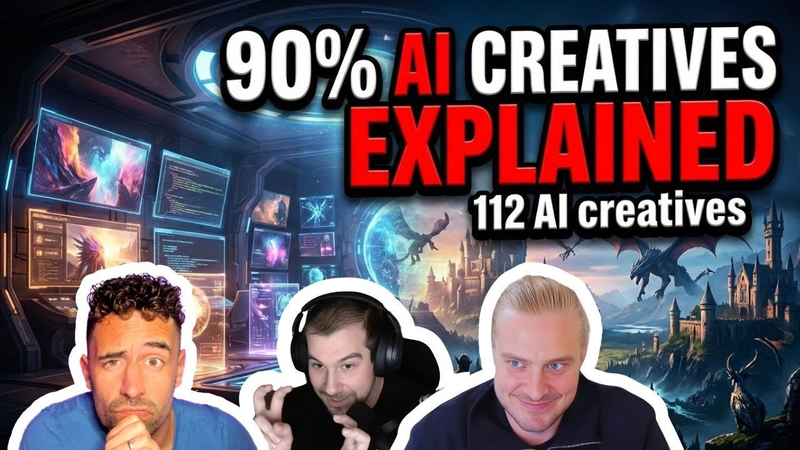
🤯 AI ads evolved from fake gameplay into full world simulations
The mobile gaming industry is undergoing a fundamental shift in user acquisition strategy as developers transition from traditional, manually animated advertisements to sophisticated, AI-generated creative assets.
- Mobile game developers are shifting from deceptive 'fake gameplay' ads to AI-generated, high-fidelity world simulations that offer superior engagement and conversion rates.
- Leading titles such as Dark War and Top Heroes now rely on AI for 80% to 90% of their total marketing output.
- Generative tools like Genie 3 allow developers to create interactive, visually consistent environments from single source images, significantly outpacing traditional animation pipelines.

Pocket Gamer Connects London 2026 preview | Week in Mobile Games podcast
The global mobile gaming industry is currently navigating a period of intense structural transition, characterized by a shift toward artificial intelligence and a re-evaluation of long-term corporate strategies.
- Playtika is reducing its headcount by 15% as part of a strategic shift to streamline operations, specifically citing a transition toward AI and automation to replace headcount-heavy processes.
- Meta is cutting 10% of the staff at its Reality Labs division, which employs approximately 15,000 people, signaling a continued contraction in the company's investment in virtual reality.
- Paramount has initiated legal action against Warner Bros. to force financial disclosure and analysis of a competing acquisition offer from Netflix, which Warner Bros. previously favored over Paramount's bid.

TWIG #366 Türkiye’s Looming Winner and GenAI Gamer Backlash
The global gaming industry is currently navigating a period of structural transition defined by shifting monetization models, the aggressive pursuit of operational efficiency, and the integration of generative artificial intelligence.
- The global gaming industry is shifting toward operational efficiency and rapid content iteration as venture capital investment stalls and total M&A transaction values collapse.
- Epic Games is pivoting Fortnite to a creator-led transaction model to challenge Roblox, though the strategy faces ethical and legal scrutiny regarding gambling-adjacent mechanics.
- Chinese publishers are aggressively expanding into Western markets, now accounting for a significant share of the $25 billion global annual spend on user acquisition.

Red Dead Redemption, Moon Active, Playtika, Liftoff, 2025's top games, data, jobs and more
This analysis examines the state of the mobile games industry as of early 2026, focusing on performance metrics, corporate restructuring, and market trends.
- The mobile gaming market is dominated by a few high-earning titles, led by Honor of Kings ($1.68B in China), Last War ($1.57B), and Roblox ($1.5B) in 2025.
- Strategy games remain the industry's most lucrative genre, generating $13 billion in total market revenue during 2025.
- Playtika is restructuring its operations by laying off 500 employees to pivot toward AI-driven automation and a leaner corporate model.

There is no such thing as a video game industry
The video game sector is currently undergoing a profound structural transformation, characterized by widespread layoffs, shifting corporate priorities, and a fundamental move away from the notion of a monolithic industry.
- The video game sector is no longer a monolithic industry but a fragmented attention economy where games compete directly with social media and streaming platforms.
- Legacy AAA development models are facing diminishing returns due to high production costs and a disconnect between traditional console titles and the preferences of younger demographics.
- Modern audiences are increasingly migrating toward accessible, low-fidelity platforms such as Roblox and Fortnite, necessitating a shift in production strategies toward mobile-first habits.
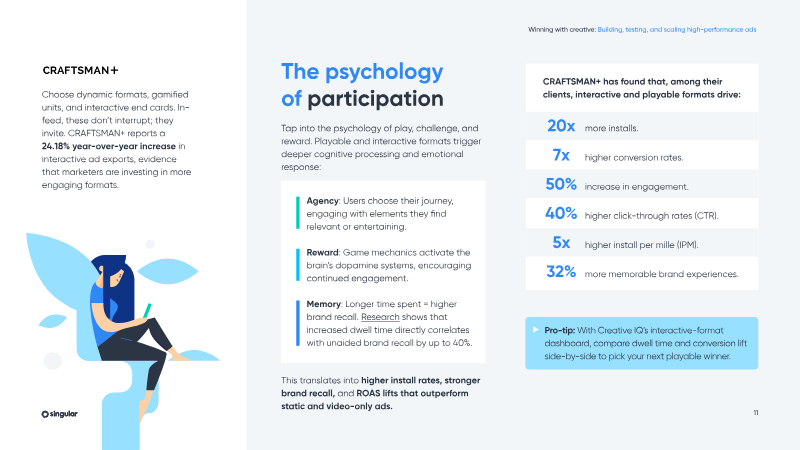
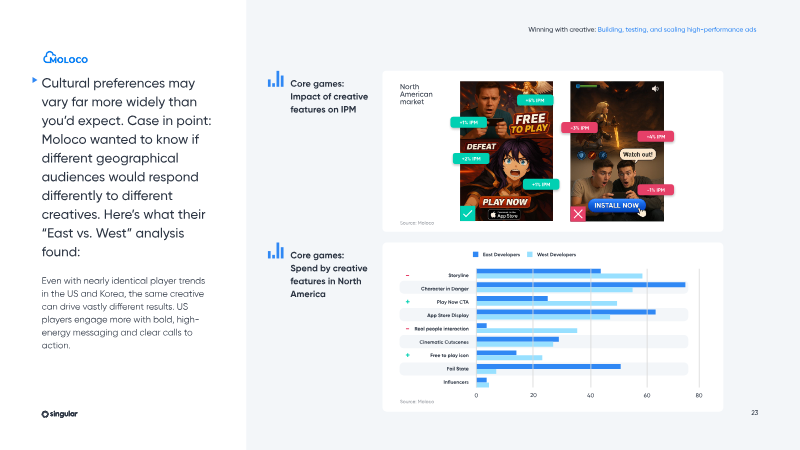

Winning with Creative: Building, Testing, and Scaling High-Performance Ads
The purpose of the analysis is to demonstrate that creative content remains the decisive lever for growth in an advertising environment increasingly fragmented by privacy constraints and platform diversity.
- High-performance ads achieve a 350% lift in ad spend when winning templates are paired with top-performing assets.
- TikTok-first video structures—comprising a hook, body, and close—can increase purchase intent by up to 77% when using 30-second, sound-on formats.
- AI-driven content creation tools, such as TikTok Symphony, provide a 57% efficiency gain in the production process.

Split Fiction’s Josef Fares on Clair Obscur success, AI fears and EA’s reputation
Josef Fares, the creative director of Hazelight Studios, emphasizes a philosophy of prioritizing creative vision over market data to drive game development.
- Hazelight Studios has achieved significant commercial success by prioritizing creative vision over market data, resulting in 27 million units sold for 'It Takes Two' and 12 million for 'A Way Out'.
- Josef Fares explicitly rejects taking Hazelight public, arguing that the pressure to satisfy stock market stakeholders forces companies to prioritize short-term financial gains over long-term creative quality.
- The studio maintains a staff of approximately 80 employees and operates under a co-op-only design philosophy that intentionally avoids risk-averse, data-driven decision-making.
Larian Loses the AI High Ground, Farewell to Anthem, and Minecraft Goes Mini! | Games For Breakfast
The gaming industry is currently navigating a period of intense friction between corporate efficiency mandates and a deeply skeptical player base.
- The gaming industry is experiencing a widening divide between AAA studios prioritizing shareholder-driven cost-cutting and indie developers who maintain a focus on human-led creative innovation.
- Generative AI integration in game development is facing significant player backlash, with critics arguing that reliance on AI tools leads to a regression in emotional resonance and craftsmanship.
- Labor instability remains a critical issue, highlighted by the closure of Ubisoft Halifax following unionization efforts and ongoing allegations of union-busting at Nintendo.

2026 games industry predictions and trends | Week in Mobile Games podcast
The global games industry enters 2026 characterized by a strategic pivot toward operational efficiency and diversified revenue streams.
- The games industry faces potential hardware cost inflation in 2026, as the high demand for RAM and GPUs from AI companies drives up component prices, potentially delaying future console and mobile device manufacturing.
- Chinese publishers are exerting increased global dominance in specific genres, with Micro Fun leading in the merge category and First Fun and Century Games capturing significant market share in 4X strategy.
- Generative AI adoption is expected to become more brazen among large game companies, shifting from experimental use to the widespread integration of AI-generated assets in marketing and development workflows.

Mobile Dev Memo Podcast, Season 7, Episode 1: GenAI in CTV advertising (with Jonathan Moffie)
Generative AI is fundamentally reshaping the Connected TV (CTV) advertising landscape by dismantling the high financial barriers that historically restricted the medium to large-scale brand advertisers.
- Generative AI is lowering financial barriers to entry for Connected TV (CTV) advertising, allowing smaller, performance-focused businesses to compete alongside large-scale brand advertisers.
- By automating creative asset production and adapting social media content for television, AI is unlocking previously dormant CTV inventory for local and performance-driven marketers.
- The integration of generative AI with ad servers and mobile measurement partners enables real-time optimization of creative variants based on downstream KPIs like app installs and direct purchases.
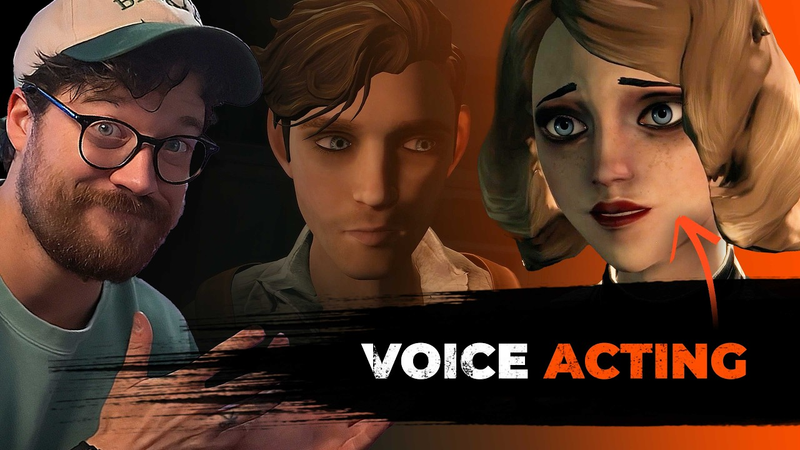
Twisted Tower Devlog (Adding Voice Acting!)
In the context of an increasingly crowded 2026 game development landscape, professional voice acting serves as a critical differentiator against the proliferation of AI-generated content.
- Prioritize human voice acting over AI-generated audio to differentiate your game in the 2026 market, as human performances provide a level of authenticity that AI currently lacks.
- Direct voice actors to focus on acting rather than just reading lines by encouraging them to use physical movement and facial expressions during recording sessions.
- Provide clear emotional context for every line of dialogue by using a shared document to specify the intended feeling or tone for each segment.

Retargeting Masterclass: From Angry Birds to AI Ads
Retargeting has transitioned from a peripheral marketing tactic into a foundational pillar for maximizing player lifetime value and optimizing advertising expenditures within the mobile gaming industry.
- Retargeting inactive users is a critical strategy for evergreen games, with a 14-day window often serving as the optimal period for paid re-engagement campaigns.
- Updating game icons can significantly boost organic returns, with some developers reporting a two to three times increase in organic returning users after implementing new icon designs.
- To accurately measure the effectiveness of retargeting and avoid cannibalization, studios should utilize ghost bidding or hold-out groups where a percentage of the audience is excluded from seeing ads.