Transcript
This week there have been layoffs at Ubisoft Meta and more. Larry and Batrracks on AI Battlefield 6 numbers fall and we debate the notion that perhaps there is no such thing as a video game industry. [music] Hello and welcome to the game business show. My guest host today to debate that question around the existence of a game industry is analyst, development leader, consultant and creator Nicholas Lavvel. But before Nicholas joins us, there are some stories for us to look into and dive into. Um, it's been a week of layoffs. January, we start to see these. Um, and of course they continue all year as they have done now for a few years become a little bit desensitized to them. But Ubisoft has cut 55 employees from it. Ubisoft Massive and Stockholm Studios. It follows the launch of its voluntary redundancy program if you remember that. The teams remain working on the Division 3 and additional content for the Division 2 as well as an unannounced tech project. It follows, of course, the closure of Ubisoft's Halifax studio last week, which will see 71
employees leave the business. There's also talk of cuts at some of other Ubisoft studios around the place. Ubisoft has been gradually cutting away at its staff count now for quite a while. um at the end of its 2023 financial year. It said it was looking to cut save €200 million euros from its business at the beginning of financial year 2026 but actually achieved that back in September. Um in fact it said it beat its target of €200 million euros. It's now set another target of another hundred million euros in cuts by its 2027 financial year. That's compared to its 2025 number. So we should expect a consistent drip feed of these Ubisoft cuts going forward. It still has well over 16,000 employees. is in fact closer to 17,000 remains a very very big business. Um but it needs to make those cuts. It's obviously changing its business and its structure and its focus. Um but these stories are just going to keep coming out from Ubisoft. Um but probably one of the more one of the one of the shops um is I mean there's been layoffs also at Warner Brothers and Unity but the other sizable one this week has been Meta. Um
so what Meta have done is they have closed Twisted Pixel Games, Szara Games um and Alate Studio. They made uh Twisted Pixel made Marvel's Deadpool, Szara made Asgard's Raph, and Amateur made the VR port of Resident Evil. Um they're also no longer supporting uh too much the VR fitness app Supernatural, the developer of that. So there'll be cuts there. A thousand employees apparently are being affected by this. Investors have been pushing Meta to cut costs in this sort of space. Ultimately, this this part of its business is delivering billions of dollars in losses. The company isn't in bandit. This is part of this metaverse business. Basically, the company isn't abandoning metaverse, but it is shifting towards wearables. So, those are those augmented reality glasses, which it's doing with Rayban. It's really disappointing news cuz the VR industry is going through a tough time. Cloudhead Games, actually, you may have seen the story a week ago. They're the game the company that makes the pistol whip VR game. They've just cut 70% of its workforce because of the state of the market. Um, the VR industry is changing a little bit. Uh when I last
covered it, premium games was still a thing. But apparently it's now all free to play VR titles such as Gorilla Tag. That's one of the popular ones at the moment. And of course, this news from about Meta, which is what by far the biggest manufacturer and creator of VR headsets, is going to be a concern. Sony has already backed out of the market. For example, although Valve is reinvesting it with its upcoming Steam frame, there's a new report that came out this week from Game Discover, the the Game Discover newsletter. it does a big chunk on VR and it found that outside of the sim sports or shooter genres, new premium games on VR are selling just a few thousand units at best. I think we're going to dive into this actually. I think this is an area of the industry we don't cover too much. It is relatively small but I think it's interesting to see what's happening there. Um but it's not good. It's tough. Uh there's still money to be made but not a lot. Um so that's that's the layoffs that we've had. Um and they're for specific reasons. Ubisoft and Meta are in unique situations and circumstances. Uh what is uh a little bit also a big trend that I I'm not bored of talking about but it's g I think we'll soon get bored of
talking about it is around AI and I wanted to so I wanted to cover Larian's U-turn on AI. If you haven't seen this story I don't often cover the social media fer around AI but this one was an interesting one. Bloom did an interview in December with Larry and CEO Sven Vinky. The idea is uh he says that they use AI to explore ideas, flesh out PowerPoint presentations, develop concept art, write placeholder text. That's not unusual. Lots of companies are doing this. Um, but they said no AI generated content would make it into the final game and everyone is more or less okay with it within the company. People were not happy. There was a big backlash to it on social media. A lot of noise. There's always a lot of noise on social media. It's not always worth paying attention to. However, um, Larian has uh paid attention to it. Winky responded online saying, "Uh, excuse the know holy holy uh um holy guys, we're not pushing hard for or replacing concept artists with AI. We have a team of 72 artists of which 23 are concept artists and we're hiring more. The art they create is original. Uh I'm very proud of
what they do." I was asked explicitly about concept art and I used a gen. I answered that we use it to explore things. I didn't say we use it to develop concept art. The artists do that and they are indeed world-class artists. Now, that was the situation in December. You know, he tried to defend it. People were still attacking it. Um, even people within the studio were calling out Larry and Sven on on this subject. So, he's taken to Reddit and says, "First off, there's not going to be any gen AI art in Divinity." So, they've made a slight change here. I know there's been a lot of discussion about us using AI tools as part of the concept art exploration. We already said this doesn't mean the actual concept art is generated by it, but we understand that's created confusion. To ensure there's no room for doubt, we've decided to refrain from using Geni tools during concept art development. That way there can be no discussion about the origin of the art. Uh he did deny that they would use Genio in the future. Having said that, we continually try to improve the speed of which we could try things out. The more iterations we can do, the better in general the gameplay is. We think Gen AI can help with this. And so we're trying things out across departments. Our hope is it can aid us to refine ideas faster,
leading to a more focused development cycle, less waste, and ultimately a higher quality game. important thing is you know creative assets will not be used will not be generated by AI it's all using real people now look this controversy this debate is is the industry and not just the industry the world is trying to work out what is the best way of using this technology and and consumers do are quite good judges of this there was some effort to condemn our raiders developer embark for its use of AI including a really critical review from Eurogame on the subject because it uses AI now the AI it uses is a is a system trained on real voice actors and The bill voice actors were paid to be clear for this and it generates dialogue for its system where it sort of items, locations, directions to sort of show where things are going to be and other contextual lines quickly. So, you know, it's it's dialogue that can be quickly created. This was condemned by some corners of the internet, but it really has had no impact on wider consumer interest. Um, Art Raiders are now sold an incredible 12.4 million copies, including 2.6 million in 2026 alone. the
Steam rating for the video game remains very positive. Um, so that AI system there seems to be okay with that. You know, it's actually in some ways might be seen as a better suit uh for the game. Look, but it can vary. We've had we've had review bombings with AI based games, particularly games that use AI generated art and text and there are legitimate concerns around it. I've got concerns around AI and it's often around sort of educational experience. You may know, if you're watching this on the video, you may notice I'm not in my usual studio. I am actually uh at an event. I went to see Epic this week and we were having dinner and we discussed uh the importance of experience when it comes to using AI and it actually triggered a when I was in um LA last month I met journalist that has an incredible amount of work and he told me he uses AI for questions for interview questions and I was a bit stunned by it because I don't do that. I go through a very long grueling process. It's not grueling, but it's certainly a long process to try and make sure I have some good questions. And I thought maybe I
was missing a trick. So on my way to an interview, I'd already planned for the interview. I'd already done the questions. I sort of as an experiment put into Google what questions I should ask. And the questions Google spat out were okay. They were okay. If an intern had come up to me and given me those questions, I'd have gone, "Yeah, they were right." But I knew they weren't. Some of them weren't going to deliver good answers. I knew that. Some of them weren't that interesting. And some of them, frankly, were somewhat offensive, but I knew that. I could tell instantly that the questions I'd asked were better because I've been doing this for 20 years. I know how to do interviews. Uh, broadly speaking, I know what questions um will likely deliver the best conversations and which ones won't and all that kind of thing. And that comes from just doing it and making mistakes over 20 years and getting it wrong, which I've done plenty of times. I know that cuz I've got that experience. And when you bring in new people who are using AI to ideulate and iterate and give them a foundation. Oh, I just I just use AI to give me the base so I can build on top of the base. But if you
don't know, you've got to know. You've got to have that experience of knowing what's good and what's not good. I do worry that AI is going to sort of make that harder and harder for the younger generations to be able to do. Regardless, the idea of AI as an ideation tool, as a means to find out information and compile things together, that is being used by a lot of companies now. Actually, I was I've just done a presentation where I've gone through 80 episodes of the game business show and pulled out clips and about certain topics, including we did one on consoles, mobile, and AI. It's for a presentation I was doing. It took me ages to do, and it wasn't until later someone said, "Why don't you just use AI to do it?" You know, give you that foundation, ask AI to pull out these clips. Will it have led to a better presentation? I'm not convinced, but I can see why that might have been useful. Actually, look, this conversation will a big one going forward as we work out what works, what doesn't, what is reasonable, what is ethical, what is fair. What I do keep hearing is that companies that are cutting costs are holding back hiring are asking their teams to deliver more with either no additional headcount or with fewer staff. And that is pushing people
towards the sort of AI technology. Any hopes that it won't affect the jobs market, I think, is naive. I think it definitely will. So, yeah, big conversation around AI. We're going to talk about it quite a bit, I imagine. But uh I probably won't do any many individual episodes on the subject. I think it's probably going to be more of a ongoing question that I ask uh people in our interviews. Before I move on to Nicholas, uh I want to quickly touch on Battlefield 6. We talked about it a lot last year. It was a huge success. The outsold call of duty in in a lot of markets. Flew out of the traps in October, but it actually has had a bit of a tough time since then. The battle royale mode that came in November. November was a good month for Battlefield 6 overall, but the battle royale mode didn't do too much. And December the numbers are really worrying. So, I've got the Ampair Analysis charts for December. This is the player charts. 16.4 million people played Battlefield 6 across PC and console in December. That may sound great. 5.3 million on PC, 4.7 million on Xbox, 6.4 million on PS5. It's still a healthy number, but it's a drop of nearly 11 million players over in November. Battlefield 6 was number two most played game in November. It's
behind Fortnite, uh, which obviously The Simpsons thing then, but it dropped to number six in December with Counterstrike 2 and Call of Duty now in higher positions. Some bits of it haven't pleased fans. I still got the review rating still okay on Steam. They've had to delay the second season of the game. The season two of the game was supposed to come out this month. It's now coming out in February. They've extended things for season 1. That won't help in the short term, but look, they've got to get this right. This is the nature of the beast. We can obsess with an ups and downs and say, "Oh, Battlefield 6 has collapsed and oh, now it's back." back. You know, uh, it's over. It's not over. It's back. It's bounced back. This is what happens in life service games. You course correct and adapt. 16.4 million players is a very big base in which to be able to adapt with. And those high points, those big peak points are never the best numbers to judge a game success on. However, uh there is definitely work to be done on Battlefield 6. Right. Um, that's it for the news today. Um, obviously if you want to hear more news um about what's gone on in the week with a little bit of analysis, do check out the Game Business Micro on Monday for paid subscribers. But that's it for the
news for this episode. Now over to me from a few days ago and this week's guest. I am now joined by business analyst, investor, consultant, author, game director, and now co-owner of Spil Studios. It is Nicholas Levelvel. Um, hello Nicholas. Welcome to the show.
Thank you for having me. Um, Spilled Milk is obviously Trash Goblin is your latest. Is that right, Kane?
Absolutely. Trash Goblin's been out for year and a half and uh well, you can see the picture behind me. I'm very pleased with it.
How are you finding life as a indie studio?
Well, that what what a loaded question to [laughter] start with. Uh it's uh it is much more fun than uh I mean most recently before that I was working as a venture capitalist and um I really enjoy the change to being the the job of Spilman Studios is to delight players. That's our mission statement. We delight players with cozy wholesome games crafted with a twist. Uh and making sure
that our primary purpose is to delight players. not to satisfy shareholders, not to make a person in a suit happy that numbers are going up, but to delight players, uh, is just much more fun than a lot of the other things that I've done.
Well, yeah, I mean, I I define your career as being the man that helps the numbers go up. That's
Well, yes. Exactly. Exactly. I mean, I think Yes. I mean, I was, you know, investment banker first and then very focused on freeto play, focused on how to make money when everything is going free. But all of it starts, I think, with the idea that success when people can get almost unlimited entertainment for almost no money. Um, in order to connect with your audience, you have to delight players. You have to let the people who love what you do spend money, preferably quite a lot of it, on things they really value. All of those involve making sure you're satisfying your players. The job is not to extract money from people. The job is to give people something they want that they're prepared to pay for. Uh, and it's really
nice to be actually doing it at an operational level, not just at a theoretical level.
Wow. Wow. And you work with Kickstarter, too. Trash Goblin was a Kickstarter.
So, Trash Goblin was a Kickstarter. It was a tough early days for Trash Goblin. We were trying to raise the funding at the absolute death moment for sort of indie games sort of 2022 2023 when funding just dried up for all the reasons I'm sure you know but the overinvestment during the long COVID pandemic combined with a change in interest rates meaning making risk projects seem much less attractive than just sticking your money in the bank combined with a glut of content. Uh we picked 75 publishers all of whom turned us down.
Wow.
Uh actually I mean one of them we got to the stage where we went into a meeting which we thought was to sign the publishing contract when they said actually for reasons beyond our control we have to pull out uh at the last last minute which was tough. I mean we came
very very close to running out of money. We had to let some team members go. We said, "If the Kickstarter works, we'll bring you back. But we have to say now if we're going to meet our obligations to um sorry, bring you back, we would offer you the chance to come back because we'd made them redundant. It was it was their their choice." Um but we believed the Trash Goblin demo. We' taken to shows and got very good positive feedback. Places like EGX and uh Resed, I think it was Res. I wasn't doing that bit so I can't remember which show it was that was there. Um and the player reaction to the demos which we had and to the prototype which we'd built both in person and when we shared it around the industry and eventually when we put it up on Steam was fantastic. So, we believed we had something uh and when we took it to Kickstarter, we raised just under £100,000 on Kickstarter, but it which is
not enough to make a a game. I mean, you know, I think that is one of the things the wider audience hopefully begins to understand. Most Kickstarters are not enough to fund a game, but they are enough to contribute to a game. and they really demonstrate traction that there were 2,000 people who want this game enough that they're prepared to pay meaningful money for something which may not happen. I mean game development is risky but they were prepared to take that gamble and that unlocked some further funding. Uh we got funding from the uh UK government from the UK content fund. We also had some work for higher work as well. Uh we worked with our friends at Future Lab to make the Watson Grommet expansion for Powerwash Simulator. Uh which was really fun to work on. Um and fits our mission. Delight players cozy Holston Games crafted with a twist which often means a slightly British sense of humor.
So Wallace and Grommet fitted that uh perfectly and that essentially bought us
enough time to get to early access. That bought us enough time to get to 1.0. So, yes, we I mean we love Kickstarter and we actually have another Kickstarter coming uh later this month for physical merchandise related to Trash Goblin uh which uh we have announced. I have to make sure I can what I can say, but we've announced it's coming. Uh not exactly what's in it yet, but um we have an audience of more than 60,000 people who uh like or love Trash Goblin. We hope love. Uh, and so we're giving them an opportunity to get some cool merchandise, but also help us continue to develop more content for Trash Goblin, new prototype ideas, and keep keep moving forward to the next Kickstart or the next funding conversation.
Sounds exhausting.
It is. I mean, it is. It is. I mean, we've got a great team of makers and then we have me and Andrew working on Andrew Smith. He's the original founder of Spilm Milk Studios. Uh working on I
mean he's the creative lead but also working very closely with me on the business side. Uh and we're trying to find a sustainable route for uh indie development in 2026 which is really tough. Really really tough.
Yeah. It sounds like multiple revenue streams really. You got multiple different ways of funding it having to go through all of that work for hire. And whenever I catch up with him some my indie friends and they're out there and they're pitching things and they've got projects and side projects and other ideas and work for higher bits and bobs, I just it's just if I it feels like a constant battle. I can understand why you get these particularly during the p so many people decided to sell at one point during the pandemic when it was just like I'd love to not have to worry about that anymore and not constantly be fearing um where's the next paycheck coming from um for the team. um
which I I mean I feel sorry for some people who sold. So the roll seven team I think sold genuinely believing that this was offering stability and security
for the team
but it just reaches the stage where uh I'm trying to remember the name of the um character in the fifth element who can just wake up one morning and go fire a million people. You know that that is the difference once you're owned by a large organization. You can get caught up in the we've got to cut 10,000 people. Where are we going to find them? And if you are not integral to the mission, then you can easily have less stability as part of a large organization, not more.
I did I did speak to one founder that did that that sold their business and their business is still owned by a major company. It's doing all right, but he said to me he kind of misses the hustle.
Yeah. Um Oh, no. So, completely. So, we're we're try we're not trying to do work for hire in the way that we used to. We used to uh Andrew describes it as doing the indie thing, just doing anything that was interesting that paid. That was the model. We're now trying to really focus on this cozy space, this area where there are plenty of games
designed for lean forward, high intensity. We're trying to make games that satisfy. I wrote about this in the Pyramid of Game Design, one of the books I wrote, the the desire to potter, to just kind of tinker around the edges and make progress, have fun, but not necessarily with a with a fail state closer to the sense of gardening or doing a crossword rather than the entire highintensity stakes of chasing somebody across rooftops to assassinate them. We think there's a market for both types of game and the cozy end which doesn't necessarily mean deeply comfortable. I mean our art style is uh is not your classic kind of pastel kind of what a lot of people think of cozy. It's got its own edge and that's intentional.
There's a bunch of YouTubers and you probably know all this because this is your market. There's a bunch of YouTubers where their specialtity is cozy games and horror games. And for me, I I spoke to Blumhouse and I cuz they've got a cozy horror game coming out, what they may have already had out. And I asked them about um why this is a thing.
And they said it's knowing the emotional what you're going to get out of the game when you go. That's what they believe anyway, that you know, you go into a horror game, you know, you're going to get scared. You know, you're going to feel this way. You go into a cozy game. There's an element of safety in knowing it even if you know the knowledge is you're going to be uncomfortable, which I thought was interesting.
Well, no, I think that's true. And I also think some of cozy is about fail states and intensity. So the traditional AAA audience, which is slightly more using the battle types of killers, explorers, socializers, and achievers. They're a bit more about beating other people, you know, pushing the boundaries kind of stuff. Um, horror doesn't have to be like that. I mean, Andrew believes that any game can be cozy. you know, Doom could be a cozy game if you chose to take that IP and not the game, but the IP could have a cozy experience that still fitted uh fitted the brand. And I think with the horror example, some of the coziness comes with the making the fail states forgiving. Uh not about the
try try again of the 1980s arcades, but about uh making progress through the game. It's a little bit like the change in board games uh from the kind of Monopoly, which I hate, to the Euro games where everybody's playing right to the end instead of this slow attrition knockout where you can be knocked out and spend an hour sitting around waiting for your friends to finish the game. Modern Euro games like Katan or Ticket to Ride or something, everybody's playing to the end and then you figure out who's won. Uh just quite a different mentality and I think Cozy is coming into that space which let's let's all be part of this. Um whether it's cozy multiplayer or cozy single player, it it's not centered on failure.
H I also have Kickstarter coming on the show in a couple of weeks.
Oh, fantastic.
Yeah, cuz I haven't really spoken to them in years. It was just uh uh but it does seem to be a slight well I guess in the situation we're in there slight increase in interest around what Kickstarter might be able to bring. So, I'm really interested in that because
there are so many cautionary tales. Like, for example, we knew going into Kickstarter that it wasn't enough money to make the game. Uh, but we had a plan for getting from the Kickstarter to early access with other sources of money. Um, I think if people are coming into Kickstarter as a sort of last ditch, in the same way we're seeing a whole bunch of games coming to either early access or to Steam generally where they've run out of funding, so they've had to ship it in case it works. Um, I think Kickstarter will see some of that. Um, and I hope not too much because obviously lots of failed Kickstarters will, you know, sour the pot for everybody. We want su, we want all Kickstarters to be successful and then for the finished product to
to happen. Um, I mean, on the same day we came out, I'm trying to remember the name of the game, it was Stormgate, I think, which was going to be the Starcraft beta. Um, we launched our Kickstarter on the same day they launched theirs. They funded more than we did, but I think we might have shipped a better rated game because we had a a more realistic understanding of
what we could achieve with the budget that they had, whereas they were AAA trying to deliver AAA without quite enough runway and budget. I've heard I mean we the early days of Kickstarter and the playonics and those sort of things where ultimately it was useful it got them going but it's you know they didn't come back to Kickstarter after that that's all I can say. Um
yes so I think we probably will about to do our second as we said and particularly in this world where we are now where any kind of external funer wants to see evidence of traction uh which largely means can you show me that your game is already successful before I'll give you any money. Um, Kickstarter is a helpful sort of middle ground. It's demonstrating that with provable numbers, with people putting their hands in their pocket and putting money on the table, not just voting, but paying for I want this thing to exist. That's quite powerful in a world where you need data
and, you know, traction data points to show to potential funders that you've got something real on your hands. Well, we've gone on a sort of 15inute uh [laughter] [clears throat] which I love. It's the nature of a podcast, I guess. But the reason why I invited on the show is because of this talk you did that I attended back in December. I mean, it's probably worth giving a bit of background actually because I've been toying around with an article. Um I have been for quite some time. Um and it's called there's no such thing as a video game industry.
Yay. Um, and the inspiration actually it's a slight it's a different thing because when the inspiration for me started with a mate of mine, he's now the creative director on Fortnite, but at the time he was leading Call of Duty War Zone. He's a guy called Ted. He was at, he was at the awards event I was at and I was chatting to him and this other guy I know who's making a single player horror game came along and we were all chatting together and he kept joking. He was being joking. It was all very friendly, but he kept calling Ted as part of the problem. Um, you're sucking all the time out of the market and leaving nothing for the rest of us. And this narrative, I know where it comes from because I've been writing about it, stems from these reports, these articles
about how new releases these days are only competing for like 12% of play time. So much time is spent on older games and live service titles and Fortnite and War Zone and all those sort of things. And and that and I think, you know, I actually think that understanding of the broader market and the attention economy and the challenges of it, I think is really valuable. But I couldn't get my head around this conversation because the guy was ripping Ted, but the games they made were completely different. And on my mind, they played completely different roles in in anyone's entertainment life. If I'm playing Call of Duty, it's cuz I might want competition or I want uh to hang out with my friends or maybe a mixture of both. That's what Call of Duty, which is Call of Duty War Zone, offers.
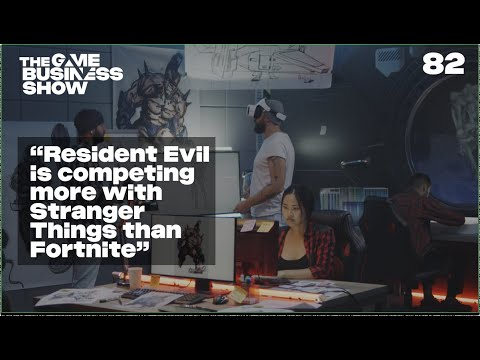
If I'm playing a horror game, I don't I can't remember the name of this game, but I could call it Resident Evil. it isn't, but I'm I'm playing Resident Evil for the story and to get scared or for the adventure basically. And I said at um I said to him at the time, um surely you should be more worried about Stranger Things than Call of Duty. And
anyway, that's where it sort of started for me, you know, shouldn't Candy Crush be more worried about, you know, Tik Tok than and I'm sure they are than Final Fantasy. And and so I started going to around with this idea of just reframing the industry for certain people because it seemed to be that this one example seemed to be this guy that was obsessing on the like on the the time thing,
but I never really got it done. And then I interviewed Owen Mahoney. This was back in November, I think.
And he's the former boss of Nexon. For those that don't know who missed the interview, you can listen to it back if you want. And Nexon has this view also has a view where their view is there isn't one game industry. There's four. And they split it into online hardcore, offline hardcore, online casual, and offline casual. So online hardcore would be like Battlefield. Yeah. Offline hardcore would be Last of Us, you know. Yeah. Online casual,
Clash of Clans, offline casual, um, Candy Crush, that sort of thing. And Nexon was doing it because they needed to focus their business. So they decided which of these segments do we focus on? And then naturally for them it was online hardcore stuff. Um, cuz that way
they economy, strategy, skill sets. It was the perfect thing. and um and you know it's worked for them and then I went to your talk nick which had the same title as it basically which is no such thing as a games industry but it was again a different
a different take
a different take on it and I thought anyway I thought let's get on a call let's have a chat about this um but honestly I'm talking about this because I was in the room and there'll be people listening that most people listening weren't so talk us through it what is your take so I think you're absolutely right there is a zeist uh at the moment uh of there's no such thing as the games industry and I think it's a lot to do with maturity. Like the industry is beginning to slow down in its global growth in terms of uh simply new demographics, new territories, new platforms. You know, we haven't seen the explosive growth since you know mobile uh really took off and totally changed the paradigm. So it is quite normal that as things stop growing, you start thinking about how to segment things uh
better. The genesis of mine starts not not massively different from yours that we don't talk about the screen industry meaning Hollywood movies and broadcast TV uh including streaming and what my kids called long form content by which they mean short YouTube videos uh and then Tik Tok as in really short YouTube videos. Those are four completely different uh markets and we think of them differently. We don't talk about the size of the global screen industry covering all of those elements, but because we've been fighting for legitimacy for so long, we try to go on and on about how we're bigger than Hollywood, you know, we're bigger than movies. Uh to which most analysts of the screen industry goes, "Yeah, but movies are tiny." Like in the UK, there's uh 20 billion of spend on TV every year. I'm pretty sure it's dollars. It could be pounds. It was a a quote. It's sterling. I've just looked it up on TV. That includes streaming. That includes the license fee. That includes advertising.
Games in the UK is only five billion. We're only a quarter of the size of just the TV segment. Not including um uh YouTube, not including Tik Tok, not including the Hollywood box office. We're bigger than Hollywood, but to screen analyst, Hollywood's not that big. It's at the top of the funnel in terms of kind of Oscars and in terms of awareness and and so on, but it's not that big an industry in its own its own right. We were so busy trying to prove that we were big and important, we lumped everything together. And now as we're starting to grow, as you've just just set out, it's stopping our ability to understand what's happening in the business or where our competitive threats are or what we should be making for our players by lumping them all together. The the troubles of AAA are not the troubles of Supercell trying to break out a brand new successful mobile game. not the troubles of Spil Studio
trying to get I mean we'd be we're pretty happy with 60,000 players we'd be delighted with 250,000 you know that kind of uh that kind of model
but there are games that sell 5 million copies and that's a flop you know totally different model so that is sort of the heart of it um I I can tell you my breakdown if you want
yeah please because you you broke it down was it indie AAA forever games
and mobile
and mobile and And actually what I was largely what I was thinking about because I I mean Owen's uh Owen Mahoney who I've known not well but I've known for since he was at EA uh 20 years ago um I love his analysis very clever man. You should now that he's not employed by a large corporate and he's able to speak his mind he's absolutely worth following uh because he doesn't have to stick to the script anymore which is fantastic. Um but the um his analysis follows a very traditional kind of four quadrant analysis. Mine happens to be in four quadrants, but they're not really
quadrants. And it was more about starting from what does success look like kind of what do the consumers need and what do the marketing or financial consequences of those things kind of matter. So AAA huge budgets, high production values, often offline. Uh they don't have to be, they can be multiplayer in it, but they I think of them as separate from um from the forever games, which might have AAA production values, but a totally different set of kind of business models. Those AAA games have huge costs. And it's almost like so few people can afford to compete that you can be successful simply by being the only person who's big enough to make a game in that space. Um I mean Bobby Cotch followed that strategy. Activision Blizzard for a long time. He would just outspend his competition. And people like Idos and Code Masters just couldn't compete trying to compete head-on in the same uh same content. And I contrast
that with forever games where the I mean I define every game not entire F forever game not entirely by platform. They're largely PC and mobile but they're not really defined by a platform. They are really defined by somebody saying no I'm not a gamer. I just play League of Legends. I just play Fortnite. I just play Roblox. Um they've they have as your friend at the award ceremony said sucked an audience away. But, you know, I I quite like calling them black hole games for that reason, but Forever Games is more uh is more positive. But in terms of business models, those games, they can start off cheaper than a AAA game. I mean, they're not cheap, but they can start off at a lower cost because they know they're going to keep building them. But success for them comes from essentially the content treadmill. Not above the line marketing, not a moment in time like Grand Theft Auto 6, which is, you know, so big everybody scrambling to get out of the
way of that time when it's launched, but from once you've got people in, you put real effort into never letting them go by updating the content and everything else. On mobile, the entry budgets, I mean, they're not as small as they used to be, but they are lower at $1 million, $5 million budget. you could even get out for less. Um, but in particular here, innovation and gameplay are not particularly important anymore. User acquisition spend is where the innovation is happening, where the expertise is. Um, I was told by Google that you can't launch a new game for less than $50 million these days. I mean, they're selling advertising, so they would have a a reason. Yeah, exactly. So, you can't take that number at face value,
but it it's I want to be careful. There is definitely innovation in this space. The emergence of merge moving from uh cons uh from match three to merge from merge three to merge two from the detailed story lines that now underpin
these games. There clearly is innovation but the majority of the budget by a long way goes on user acquisition spend not on content creation. So again totally different set of business problems and success. And with indies, we're largely driven by community and a niche. It's why Steam is so good because unlike anywhere else, you can build a relationship with your customers and they'll talk to you. Uh mobile customers don't talk to developers, but Steam customers do. Steam players do. [snorts] So, it enables us to find a niche and really satisfy them. But that becomes very hard to scale. If you're lucky, you get a breakout hit the same way that lots of uh people are toiling away hoping to be the next great uh Lee Childs or something, but pretty well all writers are broke uh except for the five who you can name who are multi-millionaires and that encourages people to keep trying. What we're trying to do is build a sustainable business,
but it's about indie, it's about niche, it's about community, and that can be very hard to sustain in the other. So all four of these segments, they require very different strategies. And I think we get into the most trouble when you try and well, we've seen people try to take AAA type thinking and bring it to the indie space and fail. We've seen AAA thinking come to Forever Games and fail. We've seen mobile stagnating. Stagnating a bit is a bit unfair, but uh these industries totally different as you said earlier.
Yeah. I mean, the thought that you I mean, you say that we people can get in trouble when they move things across, but also it's like I I was I've been thinking about Art Craters lately because it's so well over Christmas and um it has I think I looked at the credits of that game. It had 670 people on it, right? And it took seven years to make and it didn't that's nowhere near the amount of people who made Assassin's Creed Shadows, much smaller than Assassin's Creed Shadows. It was a $40 game, but there's no way in the world
you can't call that AAA in my head. Like, it's it's not double A. It's way bigger than double A. It's definitely not indie. Um, and yet and yet it's I I when I talked to them, it did feel like they'd taken or at least maybe maybe it wasn't indie thinking. Maybe it's a just original thinking entirely of like how can we make AAA work in a less how can [clears throat] we attack that challenge?
And I felt when I was talking to them, there was an element of going, hey, indies have done this. This is what it's like being at an indie. Can we can we be a middle ground between AAA and indie in terms of what how the studio is structured, how it works. I also then think of AAA game like Hitman and Hitman's a single player but you know offline game except it isn't. They've taken the live service model and they've gone how can we take this forever model and apply it. No Man's Sky did the same thing. how can we apply it to this, you know, a AAA game in their case or an indie game that and they've sort they've gone into these other these other boxes. They've taken some form of learning or inspiration from it and then made it made then sort of applied it. So I guess
there is there are a few examples of people trying to take one thing from another. I don't know the individuals there but I think humility goes a long way. So in other words the we know what we're doing they don't. So we'll just do it will be better. You saw that in the early days of mobile with a whole bunch of people going, "Mobile games are rubbish. We know how to make games properly so we can make mobile games and most of them failed and had to buy successful mobile games businesses who were mobile first." That hubris that we've been doing this for a long time, we know what we're doing gets in the way of actually learning and adapting. So I do not believe that these four categories I mean the the lines are blurred in the extreme. Owens are a bit more specific. You can kind of
even his like even he says things like you know Call of Duty an offline game and an online game. Exact.
Yeah. But what it really boils down to I I I don't really I don't search for truth as much as I search for
usefulness. So in other words, if a framework is useful, I care slightly less if it's definitely true. I'm not an academic. I am an operator.
This is just reframing things. I think that's the way I look at I say just but it's a way of just looking at the industry in a way of going how you think about it like this. The way I was doing it was um in a way you know you sit there and go how where does I was sitting there going I have my boxes were there's story games
and there are uh games are like sports and there's games which are social games you just hang out with your friends and then there's sort of
what's my fourth box I think one of them was I had an idea of toys being one of them where people just sort of oh that's it just past time something to do on the toilet yeah cross words Tik Tok um Candy Crush something to just do and and I had like in stories it was you you're competing with movies and TV and stuff, but then you sit there and go, "Where does The Witcher 3 fit into this?" And you s it's probably about three of those boxes and and you sort of go and it was the reason why I was doing it was to sort of go focus on your competition and the way that Owen was doing it was
working about how the business should focus, what skill sets they need, what expertise they were needed. So yeah, what you're saying is true. You know, this is just a way of thinking about things in a way that might be helpful for your business. I mean it's it can be as messy or as simple as you want to make it I think but anyway sorry I interrupted I think
no no no I agree entirely I mean your categories um story driven well there's two elements the first is that as an industry we have got more sophisticated about thinking about uh our audiences uh over Christmas people were asking me so you know what demographics do you make your games for and I go we don't we don't make games for demographics we make games for player types like we we've moved on from Bartle killer achiever explorer socializer. Killers want to beat other people and play Call of Duty. Achievers want to see numbers going up and play a lot of free-to-play games and love achievements. Uh explorers want to understand the world. They play open world games and they uh love bits of GTA. And uh socializers don't care what they play. They're just playing what other people are. Uh Roblox and Fortnite
uh obviously there, but also Among Us and Peak and and all these other games. I like Bartle's framing because uh it's only four and it's nice and easy, but it's obviously very simplistic and we're all a bit of everything, but it's still a useful start. And then and then Quantic Foundry have got a more advanced one. They've got 12 categories. Uh they start out with six and said social, but then well social can be competitive or social can be communitydriven cooperative. totally different motivations between whether or not you're hardcore, I want to beat you in FIFA or I want to work together. So, we make games for uh we think about our players in terms of their motivations, not in terms of demographics. We do think in terms of platform, but that's mainly because nobody else has cracked community and hence indie in the way that Steam has. And a and indie needs a community, I think. I mean, sorry, you can get lucky and have a massive breakout hit without community, but to
have a sustainable business, I think you need to have an audience who you have reasonable faith will buy your next game. That's what I think you need to be successful and community drives that. I'm talking about player types there because that comes into your your categorization. The person who wants Candy Crush might also do the crossword or the Wordle or the New York Times connections every day. They don't want a cross word to get harder as they get better at it every day until eventually they fail and have to go back to the beginning like a rogike. I mean, that's just a ridiculous idea. Uh they want to sit down, spend 20 minutes, do the crossword, feel good about themselves, and wait for the next cross word tomorrow. And we didn't think like that before. and that fits in your pastime games. Um, and then there are times when those same people want to go and play tennis or badminton or football or do a park run or something and beat their personal best and then they're in your sports category. So, I agree with you entirely.
Yeah. Well, it's it's um for me I a bit
of a think is that when I want to see my friends, a lot of them don't play games. When I want to see I go to the pub, right? I've got kids now, so that doesn't happen very often, but that's what I do. Um, and so but during the pandemic when I couldn't do that, I played Sea of Thieves with them. And that was and that was and that and I'm the same person. So, you know, for me, I am uh I tend to see games more as toys. It's something for me to to play around with. Mario is my thing. I like to sort of in the same way I like to play Lego. I do it to relax, but also a bit of challenge and a bit of, you know, and um
and that's the way I I like it. I don't tend to do much live service or online social games or competitive games, but I do get competition from other areas and those and that's where they're competing. I always see Roblox in a way because I've got my kids aren't quite into Roblox, but they've got friends who are and I just think it's just the playground, isn't it? It's just kids making up games, literally making up games and playing them. And it's what that's what I used to do in the in the playground. And um and I guess they may probably are doing that in the
playground as well. And I and I yeah it's I would just say the same thing but but it's uh I I just I just sometimes think you know we can get lost in the yeah as I say at the beginning of this I think we can get lost in the in the it's I think it's having like that thousand foot view of what's going on and the pressures. Tik Tok's definitely taken time out of the market. It's definitely taking up people are now spending more time maybe on those pastime activities than they were you know 5 10 years ago whatever. So there's definitely that's definitely an impact and I think it's worth thinking about that and being mindful of people's time and how can you fit into that and and just thinking about those things a little bit but I just think it's dangerous to be obsessed with it and um I think you just need to look as you know whether it's because of the economies or the skill sets you need or who your audience is knowing you know and also sort of jumping a little bit there but also the innovation because one of the things I was talking to Owen about is I started talking to a lot of companies about focusing in we need to focus and some companies. That meant when I first started to Ubisoft
about it, that meant making Assassin's Creed, right? And I thought, well, that is great, but that's that's where's your innovation? Where's your where you going to find your next success? If you're just going to make the same game and just drive it drive that, where you going to do it? And Owen's point was the focus doesn't mean focus actually means innovating, but knowing the box you're innovating within. It's it's it's it's going, you know, don't try and do something that you have no idea how to do. look at what you're doing. I do a podcast of I've never done video podcasts before this last year, but I know how to do business journalism. I've been doing it for 20 years. So, it's it's it was applying it was putting a bit of innovation. Well, I mean, other people have done this. I'm not breaking any boundaries here, but but um but it's for me it's doing something different and within a box that I I already inhabit. And I think all of that is why this sort of activity is useful. Um
so as a very junior banker one of the first things I was told I mean obviously most most acquisitions fail which is one of the reasons I left uh because it was the job was to sell deals whether they
were good deals or not but um but the things which will definitely fail you can either do what you're already good at in another country or do something else in your own country. If you try and do something you're not already good at in another country you are completely stuffed. It won't work. You're taking two steps.
And I think that's the sort of thing you're talking about. It's about let's imagine that the job is to expand a franchise. Well, I need to keep the innovation in that franchise or I can stay within the genre and the game world, you know, the game styles and rules and player expectations that I'm excellent at and try and move a sideways from that. But trying to jump both at the same time is a very big big risk. Um I think there's another lens which I talk about which is um financial risk versus operational risk. I like to pretend that risk is like energy and can't be uh destroyed, can only be transformed. Uh it's not quite, but there is an element where the more money you spend, the less uh if you spend more
money, operational risk goes down. You are less likely to have a buggy game. You're less likely to have a game that is not going to find any audience at all. But your financial risk, your number of times you can take that gamble, that bet has increased massively. Big companies are much more comfortable with financial risk than with operational risk. Startups have no money. So they have to be comfortable with operational risk. Shipping to early, us going to Kickstarter with just a demo, us coming to early access. We could do that because we didn't have any choice. Like we had to we had to accept the financial sorry the operational risk because we had no other choice. And to be fair, the players understood that. So therefore, they had different expectations. you know, EA can't bring out a game in early access in the way Trash Goblin came out uh because EA has all the money and players expect them to have uh all the money. So, I think some of what we're talking about here is as a world has changed, people are used to the primary thing being to reduce
operational risk, which means spending more money. But actually, the market has changed. Where people are spending are changing, how they're spending their time. And you'll see this with your kids. They don't care about production values. Like, they just don't. Mine are 15 and 17 now. And as I'm talking around, there are a few people who care about the visuals, but their favorite game is a browserbased firsterson shooter because it's easily accessible with graphics which would look not out of place in the early 2000s. And they love it. Um, and we're here are we spending uh Los Angeles Seattle level of budget on AAA content which an audience under 25 doesn't care about. Uh, we I mean I think we have some real problems uh coming uh on that area sadly.
I do think we can start getting quite good-looking games now without having to spend um that amount of money.
Totally. And also depending on where the staff are, I always find it um somebody
commented on a on I talking about Kingdom Come Liver 2 doing really well with 4 million and they went they went well that's got to be a failure for a AAA game and went not AAA game made in the Czech Republic though. Um [laughter]
but also just to be clear selling 4 million units being a failure is insane. I mean that's like
it wasn't a failure. That's but we do but you but Battlefield 6 is a fascinating one and my my you know it's done these incredible numbers. It's beaten Call of Duty. it's done this incredible thing, but the free-to-play battle forward mode hasn't seem to have done quite so well. And there's sort of there's some talk around the game now amongst the industry chatter about I think it's missed. How could that miss? How could something that's done that well be considered a miss? But then that's just the nature of it. And as we were talking earlier, um [clears throat] it's it's but going back to um uh the the the kids expectations, it's one of my favorite things. It's not my favorite things. It's I mean huge exaggeration. It's something that I do from time to time. It's my favorite games machine because I'm a slightly older person is the Nintendo Switch 2 now, but it was
the Nintendo Switch before because it fits into my life. I love proper games, whether that's the right way of calling them. I love deep games, but I just
don't have the capacity, you know, I've got to play them when, you know, I'm sitting with the kids getting to sleep or whatever, you know, and it it fits into my life so great and I love it. And every now and again I'll just sit there and put a tweet out or whatever and say Nintendo Switch is the greatest games console of all time and then watching the replies of people how have you seen the frame rate in game Y and I went nope I didn't notice. Um and and they can't get their head around that. And it's because because there is an audience that demand that that demand that technical thing. I did a I did a I did a experimental I sometimes put out little comments just to see what people think and I said I don't think we need a new console generation till 2030 right just to see what the reaction was and it's or we're already hitting a ceiling and I went but nobody cares about that ceiling. I just in you know Sean Leen's comment which we know we got to the point where um uh we're getting graphical capabilities only dogs can
hear was was one of my um
and and I I just I Pokemon's another one. Pokémon gets hammered for not looking great or not running great yet still sells 20 million 30 million copies cuz I don't think the people that play that game it bothers them that much. I'm sure they'd love it to look nice of course but it's not it's not the reason why they play it. I agree entirely. So I actually had a fifth category uh at the talk which was Nintendo because no analyst or anybody else uh ever ever gets it right to saying what Nintendo should do or will do. Uh you're always never bet against them and you're always wrong. uh is based uh you're always wrong about whatever you think they're going to do. But I think some of it is that it does seem as if the console generation, the console companies have decided their audience is you and me and they're just going to age up with us and put higher and higher price points on it, meaning that there's no new players coming through. This is an anecdote, but I asked my kids friends if they wanted a console and not one of them said yes.
The only reason why people do want uh console, I think, is if they started being big football fans at the age of under 10 and then they wanted FIFA and then they're on the platform. But without that, their parents aren't letting them play the games the consoles are also famous for the um kind of shooter games at that age. So they get into those types of feedback loops because I talk about this a lot but the reason why shooters are so popular is quite heavily because we haven't found anything else as good as shooting missing correcting and fit and hitting that feedback loop is incredibly quick and incredibly satisfying. And then if you add on top of it the fight or flight that it's kill them or they kill you which means that the intensity is ramped up. Nothing else comes close to that feeling. Uh, in terms of that kind of gameplay, sports isn't bad, but you're not at the same level of intensity trying to score or defend a goal as you are trying to kill or be killed. I mean, it's just a a diff it's the same
feeling, but it's turned up to 11 in a shooter. What Roblox and uh, Fortnite have done is make that slightly more acceptable to parents because it's not about gritty realism. It's about the same joy. But once people have gone into that visual world, I mean, you know that the professional Counter-Strike Go players turn off all of the graphic enhancements because they just want to see the Matrix, so they they win. Our next generation are being trained on these platforms. Meanwhile, the console response is to push quality and expense. I don't know. I No, no. I'm deeply concerned about it. And not because numbers are down this year or whatever. That happens. We go through those sort of moments.
Absolutely. because I don't know where the innovation's coming from. The fact Xbox basically tapping out of the console market means that I think it's a bad move for competition. I look at, you know, Sony at one point were doing eye toys. Even when they were doing VR not that long ago, they were doing new things and they were trying to, you know, hey, what can we create in the living room space that gets people together? They seem to have just gone, well, we're just going to make these
high-end incredible story games, which is great. I, you know, people of my age want that, but who's talking to the Roblox generation? Who's talking, what are you doing to bring them in? what new things you bringing in to bring new audiences. Even Nintendo Switch 2 and Switch 2 has a lot of more flexibility. It's a lot more of a unique device, but um it's quite pricey. It's not um it's it's it doesn't the games they're launching they've launched with it in its first year. Okay, games release, you know, development cycles schedules are what they are, but they're not perhaps side of Mario Kart, which is a bit of a I always think it's a game people get alongside another game. There's not a lot there. It's it's very core. It's very playing to the bass. And um
and I'm I actually quite excited by next playground, which is just a connect because it's it's a it feels, hey, let's try and create something that might talk to people and and beyond the same old console games. Look at the top selling console games, the most played console games. They're the same games every year. Look at the top games, top played
Steam games. Sure, Counterstrike and a few others are in there, but so is schedule one and dispatch, and that's where a lot of the
the new is happening. And I and I don't see a lot of the new happening in the console space. Um, but that's almost a different conversation. We could go down that route. I I think there I mean, I think there is a lot uh to be said though. I'm also, amongst other things I do, I'm non-executive director at Thinking, which is the largest karaoke channel on YouTube. Oh, yes. And that uh is really interesting because we're looking at um to take Singstar as an example when Sony brought SingStar out and change and the whole rock band and those things the living room playing together which was a big part of our kind of teens or 20s that was around when we were there in the '9s and early 2000s before the plastic market crashed. Um, the kids who want to do that sort of thing now are just putting YouTube videos up on the big screen and singing along to them. They are making memes of
videos and sending them to their friends. They are lip-syncing. They're doing things that don't require the console and the hardware by rent permission because with a mobile phone in everybody's pocket, a camera in everybody's pocket, the connection, uh, a lot of the stuff that was the exclusive preserve of consoles is now much more accessible with a device which everybody wants more. Every kid wants a phone more than they want a console. So, they've got that first.
So, you're in that place. So, I think there's it's not just a console problem. It's that we had a you know when Singstar came out there was no other way of doing karaoke with your friends. There were a handful of bars that offered it. There was I mean lyrics still involved listening to a tape or the radio or a CD and writing them down. It's the early days of the internet. So you could go to textbased sites and get the lyrics and singar came along and solved it all for you. That was a radical offer. Now all of the things which team star offers except production values are freely available to every kid on their device or their parents device.
Um what a different competitive space and that was back to your very original point with what are you competing with? You're competing with a lyrics site or uh uh things specifically for the example of singingstar but that broadens out to the entire industry. I was on a podcast talking about the next playground and they said is it competing with Nintendo and I think actually I think it's more competing with uh Jackbox games and and Netflix actually with what they're doing with their family games with phones and TV screens. I think that's the space they're playing in which is this and um and I you know and you have to you know a lot of that stuff streaming and anyway
so I think the Netflix read Steven Statillo's list of all the games he played last year and the ones he played with his family were Netflix streaming Boggle and other elements which I thought was interesting because it's the first time I've seen Netflix successfully put a game out which somebody said oh this is really good and you should play it uh as opposed to this was interesting uh and you should look at it for interest. Uh that was just
quite a change. I think the TV, the console used to be the only way to play games on the TV. That is beginning to change and I think that is a potentially interesting space. But wow, what's the business model of a game on a TV? Who owns the who owns the OS? Who owns distribution? What's the equivalence of the app store? That's a whole bunch of new questions which we don't understand yet. I've taken up too much of your time. I thought we'd keep this a lot shorter, but here we are. Uh and we're going down se loads of different avenues. I'm going to stop us.
Understood.
We should You should come back on though and we should do some more. Um the Netflix stuff does interest me. I'm hoping to get them on soon. Um I want to end very quickly though. What are your hopes for 2026 at the start of the year?
Wow, there's quite a lot. I would hope to see fewer layoffs, but sadly I don't think I will see no layoffs. No.
Uh I hope that for us in particular that uh two things happen. One is that uh people do like merchandise uh for our Kickstarter, but also that we are able to get a second game into people's
awareness so that we have a sense as to whether or not the world of Trash Goblin uh is uh is exciting. Um I'd quite like to see some form of world peace, but you know, that seems wildly uh wildly um optimistic. For the game industry as a whole though, I've spent the last two or three years feeling quite negative like money fleeing, uh, jobs going, uh, publishers retrenching in terms of risk. I'd like to see I'd like to The thing I hope for most is the beginning of a turn in sentiment where more people believe there is a sustainable career and business in making video games. That's what I'm hoping for. Um, I think I might be a year too early. I think that might be happening in 2027, but you got to have some optimism to be a game creator.
Yeah, I also think there's a little bit more clarity around what works and what
doesn't. And I think back I think knowing is is is one step towards solving the problems. Anyway,
yeah, absolutely.
Thank you, Nicholas. It's delighted to have you on. I hope the trash copy and merchandise launch goes well and your second title gets some traction.
Yes. Check us out on Kickstarter from I think the 21st of January.
Oh wow. Busy month.
Very busy month.
Quick start to the year. Well, thank you so much and thank you for everyone that's listening at home. That's it for today's episode of the Game Business Show. We will be back with more news, analysis, and interviews in the coming days. If you want to make sure you don't miss an episode, head to the game.com and make sure to subscribe. Until next time, thank you for tuning in.
Auto-generated captions from YouTube — names and numbers may be misheard.





















Comments