AI reports and market data
Documents

Interview with Troy Baker: Could we see video game actors on Jimmy Fallon?
Video games have solidified their position as a primary medium for sophisticated storytelling, moving beyond their historical status as a secondary industry to become a central pillar of modern entertainment.
- Video games have transitioned from a secondary industry to a primary pillar of modern entertainment, driven by the increasing integration of high-profile Hollywood creators.
- The industry’s capacity for fostering deep empathy and human connection is fueling a cultural shift that makes the future mainstream visibility of game actors on platforms like late-night talk shows inevitable.
- Human-centric performance is the industry’s primary defense against artificial intelligence, as automated tools lack the capacity for the genuine artistic expression that audiences increasingly demand.
AI Makes Gaming More Expensive, Rainbow 6 Hacked, and Our Gaming Resolutions! | Games For Breakfast
The gaming industry entered 2026 facing a severe hardware affordability crisis, characterized by a sharp decline in consumer spending to levels not seen in decades.
- Star Citizen has reached $1 billion in crowdsourced funding without releasing a finished product.
- GOG has been sold and will operate as an independent entity separate from CD Projekt, with future operations pending further clarity on their roadmap and game preservation efforts.
- Steam's 'Best of 2025' data reveals that top-performing games are categorized into platinum, gold, silver, and bronze tiers, providing insight into player behavior across diverse gaming demographics.

Why short drama is beating games at Engagement & UA (Holywater's Bogdan Nesvit Explains)
The entertainment landscape is undergoing a fundamental shift as short-form drama platforms emerge as primary competitors to traditional mobile gaming for user attention and acquisition budgets.
- Short-form drama platforms are directly competing with mobile games for user attention and acquisition budgets by utilizing web-based, direct-to-consumer funnels that bypass traditional app store constraints.
- These platforms operate on high-volume production cycles, releasing hundreds of series annually to maintain continuous user acquisition funnels and optimize payback periods.
- Artificial intelligence is the core production engine, enabling the rapid generation of thousands of creative variations that function simultaneously as high-performing advertising assets and narrative content.

🚨📢 BREAKING NEWS: Meta Buys AI Brains, Love & Deep Space Goes Royal, GOG Goes Home
The gaming industry is currently navigating a period of significant transformation characterized by aggressive AI integration, strategic corporate restructuring, and the elevation of live-ops into global cultural phenomena.
- Meta has acquired the Singapore-based startup Manus to consolidate autonomous AI agent capabilities for its consumer and business product lines.
- CD Projekt has divested the GOG platform to co-founder Mikall Kinski for approximately 90 million PLN to refocus its corporate strategy exclusively on AAA game development.
- Gamebyte secured $1 million in funding to develop AI tools capable of generating playable games and advertisements directly from text prompts, signaling a shift toward rapid prototyping.
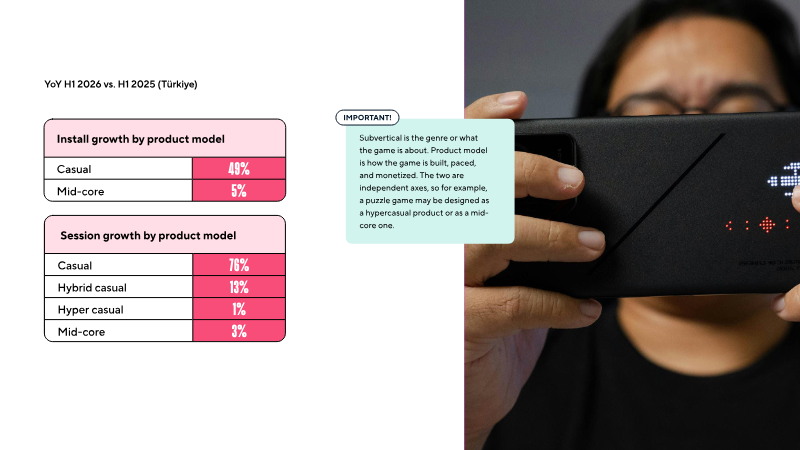


Mobile App Trends: Türkiye 2026
Türkiye’s mobile ecosystem has reached a state of high maturity, underpinned by a 93.3% connectivity rate and a demographic profile that positions the nation as a critical global testing ground for emerging digital products.
- Türkiye’s mobile market has reached high maturity with a 93.3% connectivity rate, serving as a critical global testing ground for new digital products.
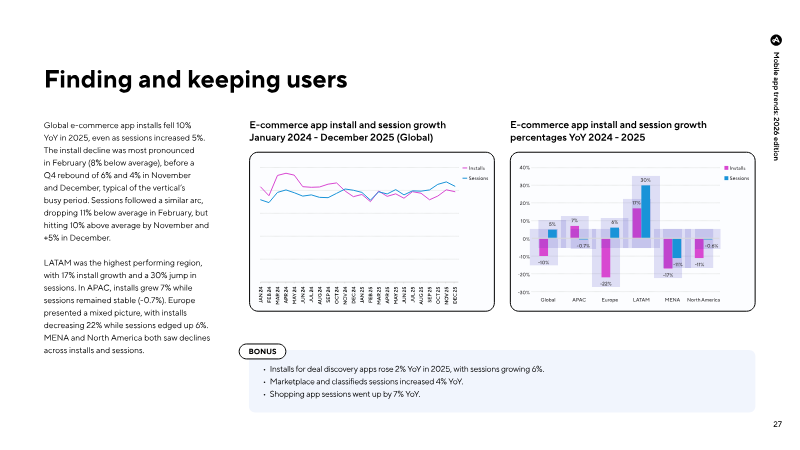
- E-commerce sessions in Türkiye grew by 4% year-over-year, significantly outperforming the global average growth rate of 0.3%.
- Gaming engagement remains robust as of H1 2026, with a 6% year-over-year increase in sessions and an average session duration of nearly 34 minutes.

2026 Global Mobile Apps Marketing Trends
The 2026 mobile marketing landscape is defined by a fundamental transition from media-centric targeting to creative-driven acquisition, necessitated by tightening privacy constraints and the saturation of traditional advertising channels.
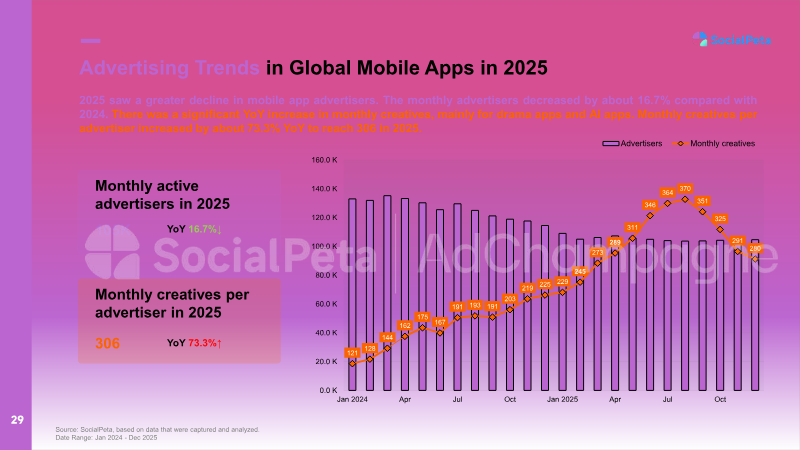
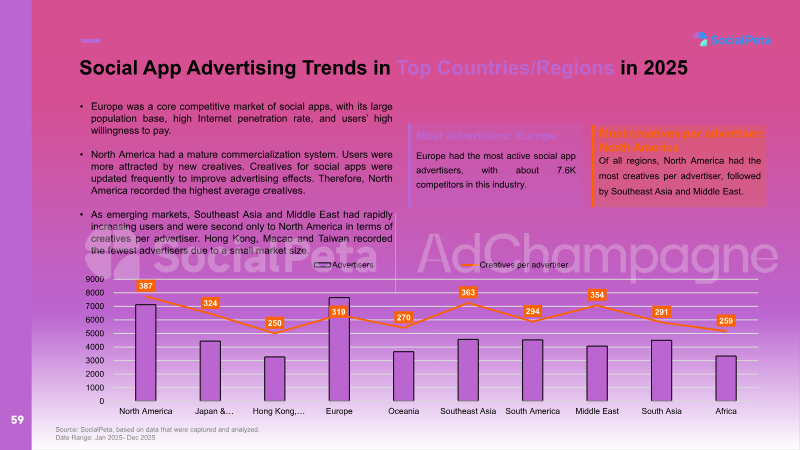
- The mobile marketing landscape has shifted from media-centric targeting to creative-driven acquisition, evidenced by a 73.3% surge in creative output per advertiser alongside a 16.7% decline in the total number of active advertisers.
- Playable ads are currently the top-performing format, consistently delivering the highest conversion metrics, scroll-stop rates, and attention duration.
- The AI application sector underwent a significant contraction in 2025, with the number of active advertisers dropping by 48%.


State of the Game Industry 2026
The industry snapshot reveals a workforce that remains predominantly male and White, yet shows growing diversity in gender identity, sexual orientation, and geographic mobility.
- Layoffs remain a critical industry issue, with two-thirds of AAA studio employees reporting company-wide cuts and nearly 20% of the total workforce having been personally let go.
- Workplace culture remains characterized by persistent crunch, as 87% of employees clocked overtime in the past year, largely driven by perceived necessity or self-imposed pressure.
- Generative AI adoption is deeply polarized, with 42% of professionals viewing it as a productivity tool while 38% fear it poses ethical risks and threats to job security.
Mobile App Trends: 2026 Edition
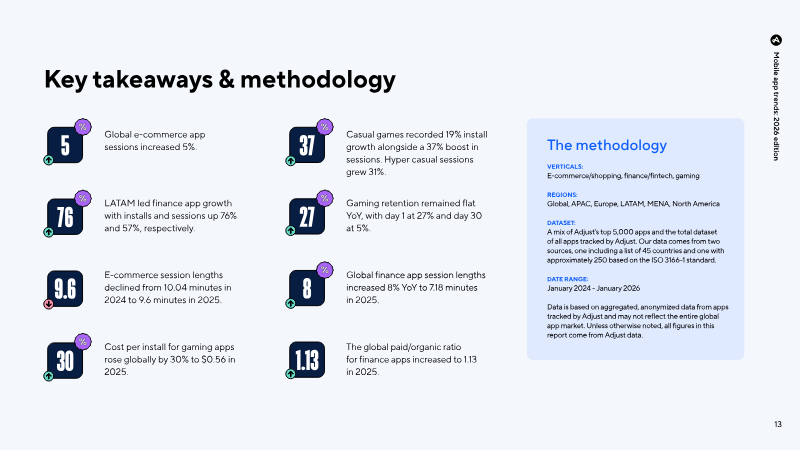
The mobile app industry entered 2026 with significant momentum, characterized by a 10% year-over-year increase in global installs and a 7% rise in sessions throughout 2025.
- The mobile app economy reached $167 billion in consumer spending in 2025, supported by a 10% year-over-year increase in global installs and a 7% rise in sessions.
- Gaming installs remained flat while costs per install surged 30% to $0.56, though casual games bucked the trend with a 19% increase in installs and a 37% rise in sessions.
- The industry is shifting from mobile-first to multi-platform strategies to address fragmented consumer journeys, supported by AI-driven predictive segmentation and cross-device measurement.
2026 Predictions: Trends in Gen AI, Gaming & Digital Ad Spend
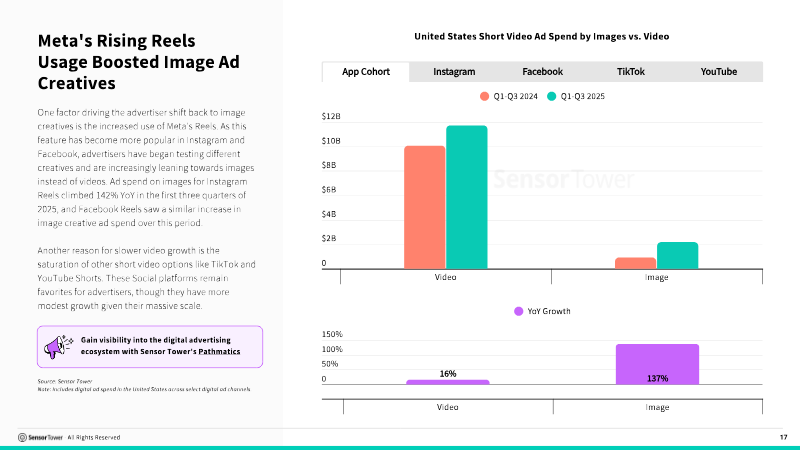
The 2026 digital economy landscape is defined by the rapid maturation of generative AI, a shift in advertising creative strategies, and the necessity for mobile games to adopt aggressive monetization models to combat rising user acquisition costs.
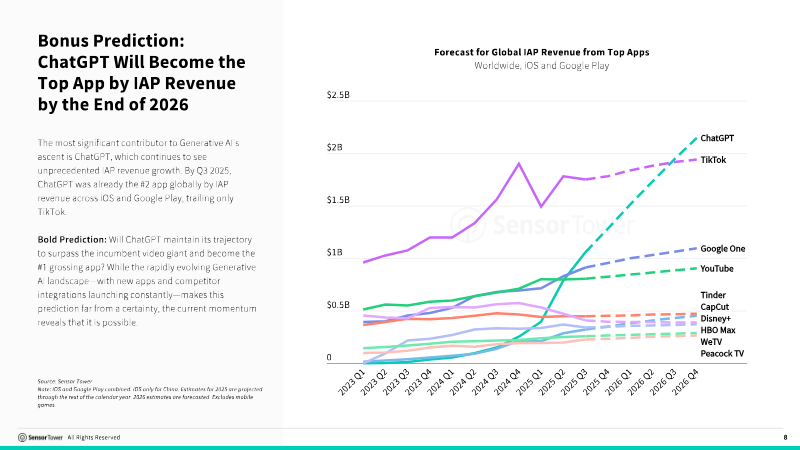
- Generative AI apps will become a top-five category by 2026, generating over $10 billion in IAP revenue, 7.2 billion downloads, and 43 billion hours of usage, representing an 82% year-over-year growth.
- By the end of 2026, generative AI traffic will surpass paid sources on more than 50% of the top 1,000 U.S. websites, up from 37% in late 2025.
- Short-drama vertical video is projected to overtake traditional OTT streaming in download volume, capturing roughly 80% of total downloads with rapid adoption in India, Indonesia, and Brazil.
🚀 Our 2026 Mobile Gaming Predictions. No fluff!
The mobile gaming industry is entering a period defined by aggressive efficiency and the strategic replication of successful market trends.
- By 2026, top ad-supported mobile titles are projected to generate $3 million in daily revenue through aggressive monetization strategies.
- Developers are increasingly utilizing web-to-app flows and browser-based playables to qualify users and optimize cost-per-install metrics before driving traffic to app stores.
- Market growth is being driven by the systematic use of genre-skinning and the repurposing of competitor assets to minimize production costs while maximizing user acquisition.

🚨📢 BREAKING NEWS: OpenAI Becomes a Platform, AI Eats Consoles, Netflix Goes All-In
The gaming industry is currently undergoing a significant structural shift driven by the rapid expansion of artificial intelligence, which is simultaneously creating new platform opportunities and disrupting hardware supply chains.
- Global RAM prices have surged by 200% due to AI-driven demand, forcing manufacturers to prioritize AI inventory over consumer hardware.
- Valve discontinued its entry-level Steam Deck model as a direct response to rising memory component costs and tightening hardware margins.
- OpenAI is positioning ChatGPT as a new distribution platform by launching an app directory that allows developers to integrate games directly into AI conversations.
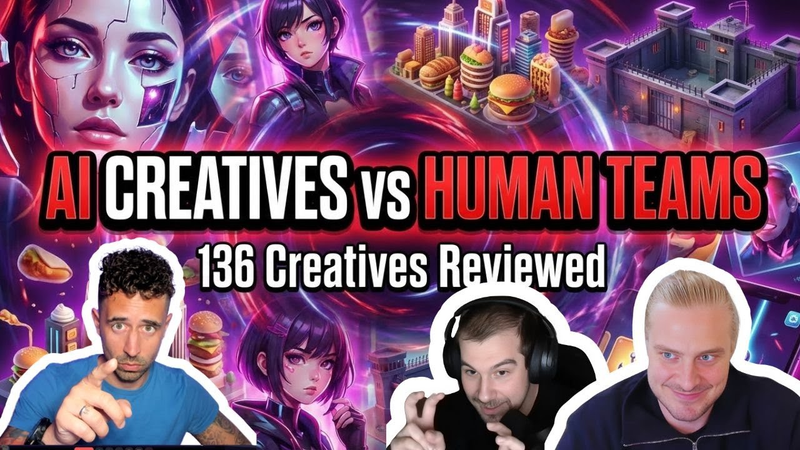
🤖 AI Creative trends November 2025: How to spot AI creative?
The mobile gaming industry is undergoing a fundamental transformation in user acquisition, driven by the rapid adoption of generative artificial intelligence for creative production.
- Generative AI has reached a level of visual fidelity by late 2025 that makes machine-generated content nearly indistinguishable from authentic user-generated content.
- Market viability in mobile gaming now depends on the ability to scale creative assets through prompt engineering and consistent character modeling rather than traditional production standards.
- Developers are prioritizing high-volume iteration and rapid testing, accepting technical flaws like inconsistent physics, lighting artifacts, and anatomical errors as trade-offs for speed and cost-efficiency.