Sweden’s video‑game sector is positioned as a culturally driven, “born‑global” industry that, despite generating more than SEK 3.5 billion in revenue and employing over 15 000 staff abroad, remains fragmented and under‑supported at the national level. The analysis maps the ecosystem of roughly 1 000 firms—87 % micro‑enterprises, 42 % with no employees, and only 1 % large companies—highlighting that 97 % of studios rely on regional clusters such as Skövde, Malmö and the northern hub, which suffer from chronic under‑financing and a lack of long‑term planning. The sector’s growth is constrained by low legitimacy, inadequate national financing mechanisms, and regulatory barriers that impede talent recruitment, especially for start‑ups and regional firms.
Key findings show a mismatch between the sector’s cultural impact—average player age 32, documented benefits for creativity, problem‑solving, STEM interest and mental health—and the absence of coordinated public‑private structures to translate these gains into economic value. Comparative data reveal Sweden’s early‑stage funding to be far below peer EU nations, while the talent pipeline is strained, with a projected need for 25 000 developers over the next decade and 40 % of the current workforce being foreign‑born. The report recommends establishing a comprehensive national game strategy, a dedicated investment fund modeled on Industrifonden, long‑term financing for regional clusters, and a Swedish games institute to de‑risk commercial projects and retain IP ownership.
To secure sustainable growth, the analysis calls for reform of innovation metrics, inclusion of game‑specific occupations in labour policy, expanded vocational and research education, and the separation of cultural and commercial funding streams. By implementing these measures, Sweden could elevate its position from the EU’s fourth‑largest producer to a leading contender alongside France and Germany by 2025.
Dataspelsbranschen · 2026
Dataspelsbranschen · 2026
Dataspelsbranschen · 2026
Dataspelsbranschen · 2025
Dataspelsbranschen · 2025
Dataspelsbranschen · 2025
Dataspelsbranschen · 2024
Dataspelsbranschen · 2024
Dataspelsbranschen · 2024

Swedish Games Industry · 2024

Dataspelsbranschen · 2024
Dataspelsbranschen · 2024
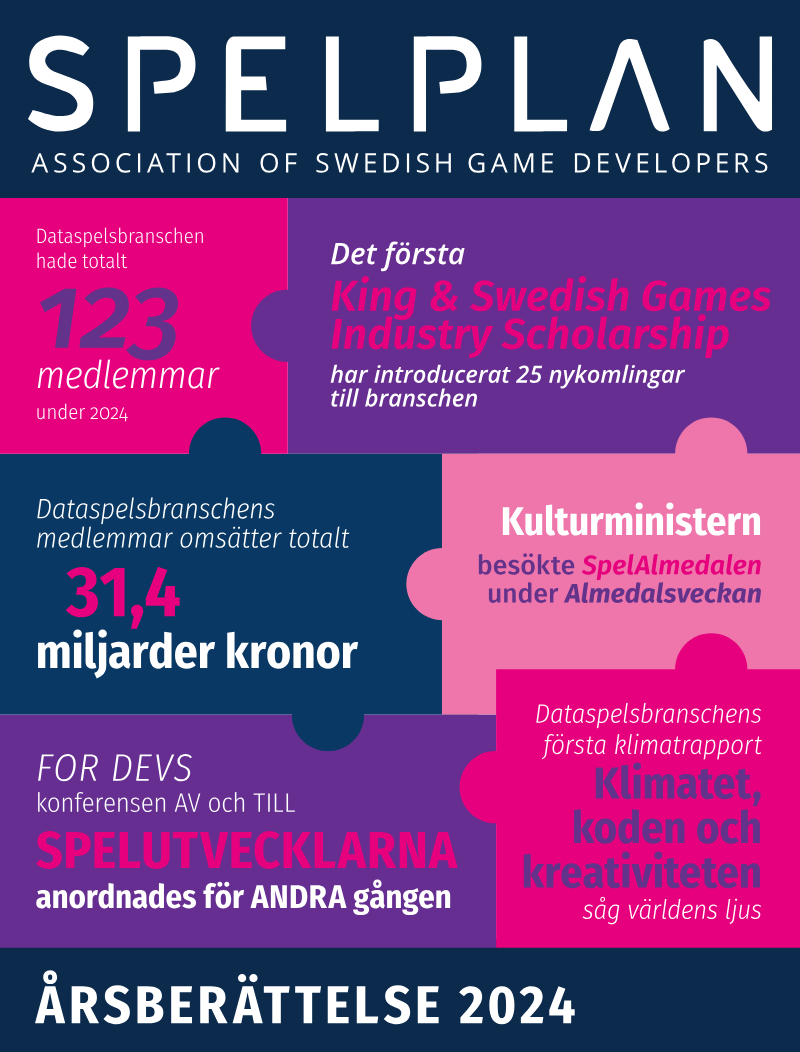
Spelplan-ASGD · 2025
Kreativ Sektor · 2025
The Swedish Games Industry · 2024
Swedish Games Industry · 2024
Dataspelsbranschen · 2023
Dataspelsbranschen · 2023
Swedish Games Industry · 2022
Dataspelsbranschen · 2021
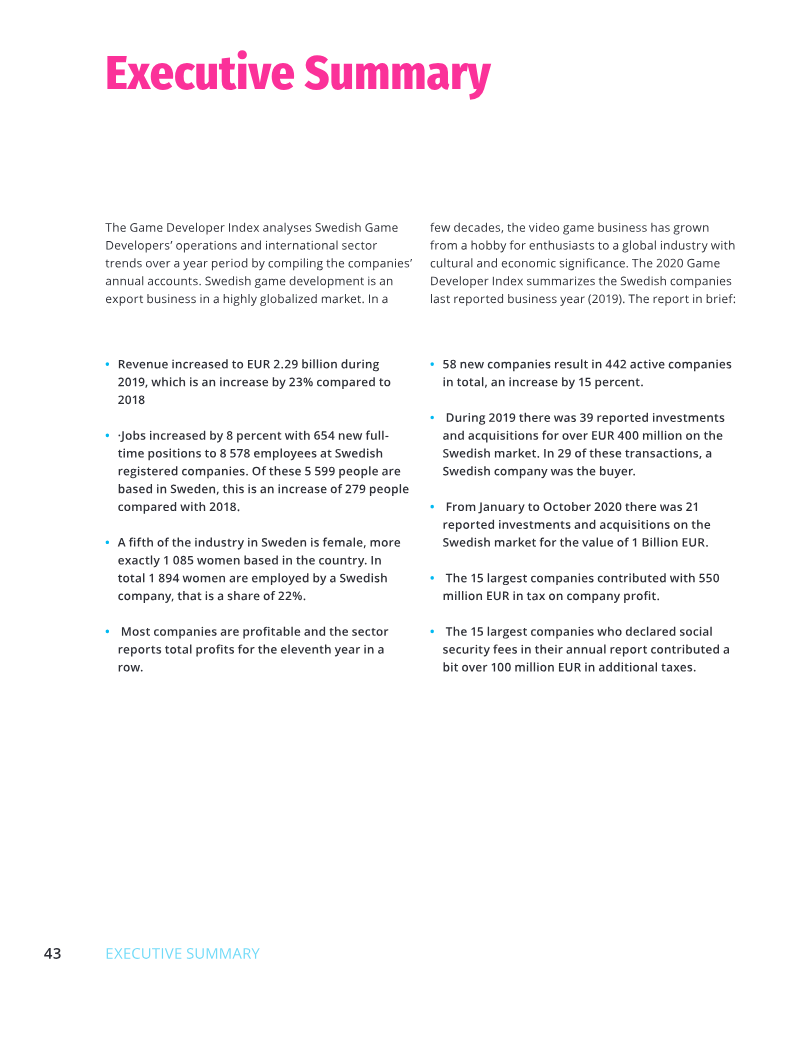
Dataspelsbranschen · 2020

Swedish Games Industry · 2019
Dataspelsbranschen · 2018
8Bit · 2026