Videojuegos en España: Impacto Económico y Escenarios Fiscales
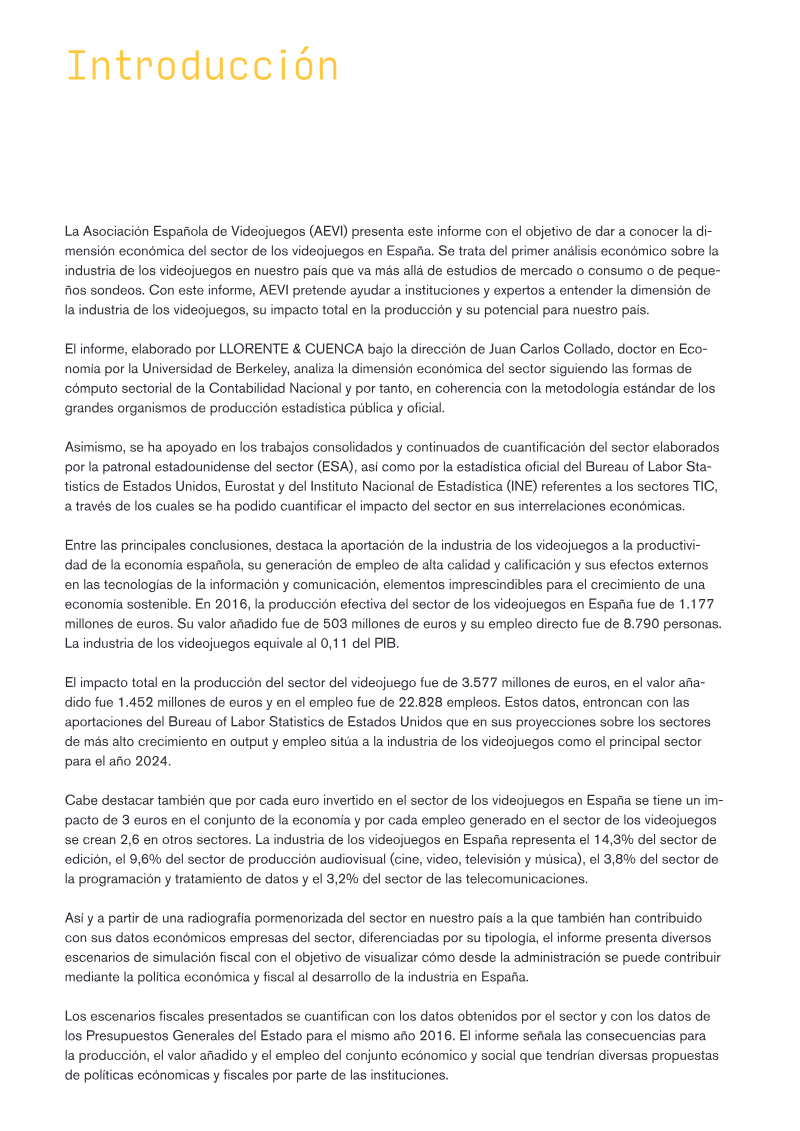
Spain’s video‑game industry is presented as a dynamic component of the national ICT services sector, whose economic relevance extends far beyond direct production. Using 2016 input‑output tables updated with INE data, the analysis quantifies the sector’s contribution to GDP, employment and value‑added, and evaluates how fiscal incentives and inter‑industry linkages shape its growth trajectory.
In 2016 the industry generated €1.177 billion in direct output, representing roughly 0.11 % of national GDP, and created 8 790 high‑skill jobs. When indirect and induced effects are incorporated, total activity rises to €3.577 billion, value‑added reaches €1.452 billion and employment expands to 22 828 positions, implying that each euro invested yields three euros of economic activity and that a game‑industry job supports 2.6 additional jobs elsewhere. The sector supplies 14.3 % of publishing output, 9.6 % of audiovisual production and 3.8 % of related services, yet its forward absorption and diffusion coefficients are low, indicating limited downstream impact compared with professional services.
Productivity analysis shows a 6.4 % annual decline in value‑added per employee within the broader editing segment, while revenue per worker remains modest at €144 k. Between 2014 and 2024, software publishing and cable‑free telecommunications emerge as the fastest‑growing Spanish activities, with annual expansions of 4.7 % and 4.2 % respectively, underscoring the sector’s alignment with broader digital trends.
Four fiscal‑policy scenarios are compared, and the tax‑credit option (E2) delivers the strongest stimulus, adding €627 million of production, €254 million of value‑added and 4 000 full‑time jobs, albeit at the cost of a modest deterioration in public‑finance balance. Methodologically, the study follows Frascati and Oslo standards, aggregates data at the two‑digit CNAE level, and employs a Leontief inverse to trace demand‑driven effects, ensuring international comparability of R&D, innovation and ICT metrics.