
Games Workshop achieved record-breaking financial performance during the 2016/17 fiscal year, characterized by a 34% increase in revenue to £158.1 million and a doubling of operating profit to £38.3 million. This growth was balanced across all primary channels—trade, retail, and mail order—and supported by a robust gross margin of 72.4%. North America emerged as the largest geographic market, contributing £57.0 million to the total revenue. The company’s vertically integrated model, centered on its Nottingham manufacturing hub, produced 30 million miniatures and launched over 400 new products, while royalty income from licensed video games like Total War: Warhammer provided high-margin supplementary growth.
Strategic priorities focused on long-term stability and cash generation, resulting in a 72% return on capital and a 76% increase in dividends per share. Despite this success, the period involved significant administrative and leadership transitions. Long-standing Chairman Tom Kirby announced his retirement, and the board addressed a technical breach of the Companies Act 2006 regarding an "unlawful dividend" payment of £1.9 million. This was rectified through shareholder resolutions to release directors from liability and treat the payment as a loan offset by future dividends.
Operational investments included a major ERP system upgrade and a continued commitment to the UK Living Wage and universal profit-sharing, which saw a £4.9 million discretionary payment to the workforce. Environmental and governance disclosures highlight a reduction in carbon emissions and an 85% waste recycling rate. While the company maintains a conservative "survivalist" fiscal strategy, its strong liquidity position—ending the year with £17.9 million in cash and no debt—underpins its viability as a going concern through the 2020 horizon.

Games Workshop Group · 2025
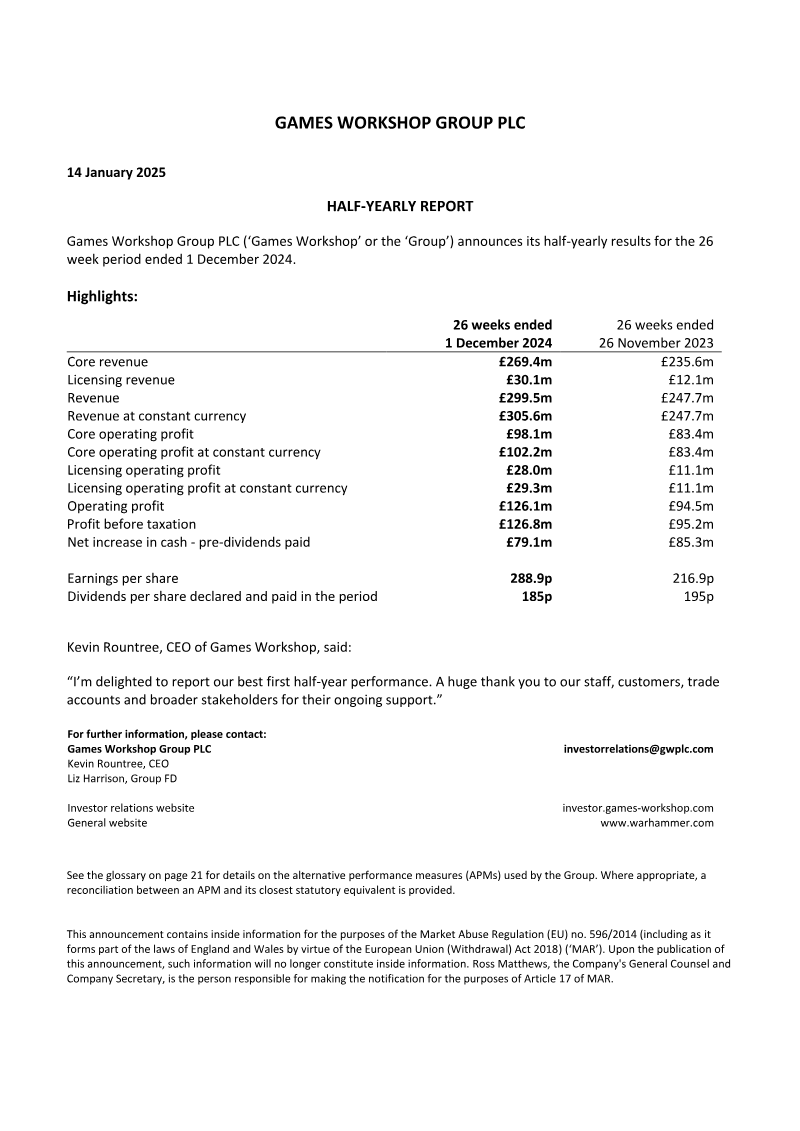
Games Workshop Group · 2025
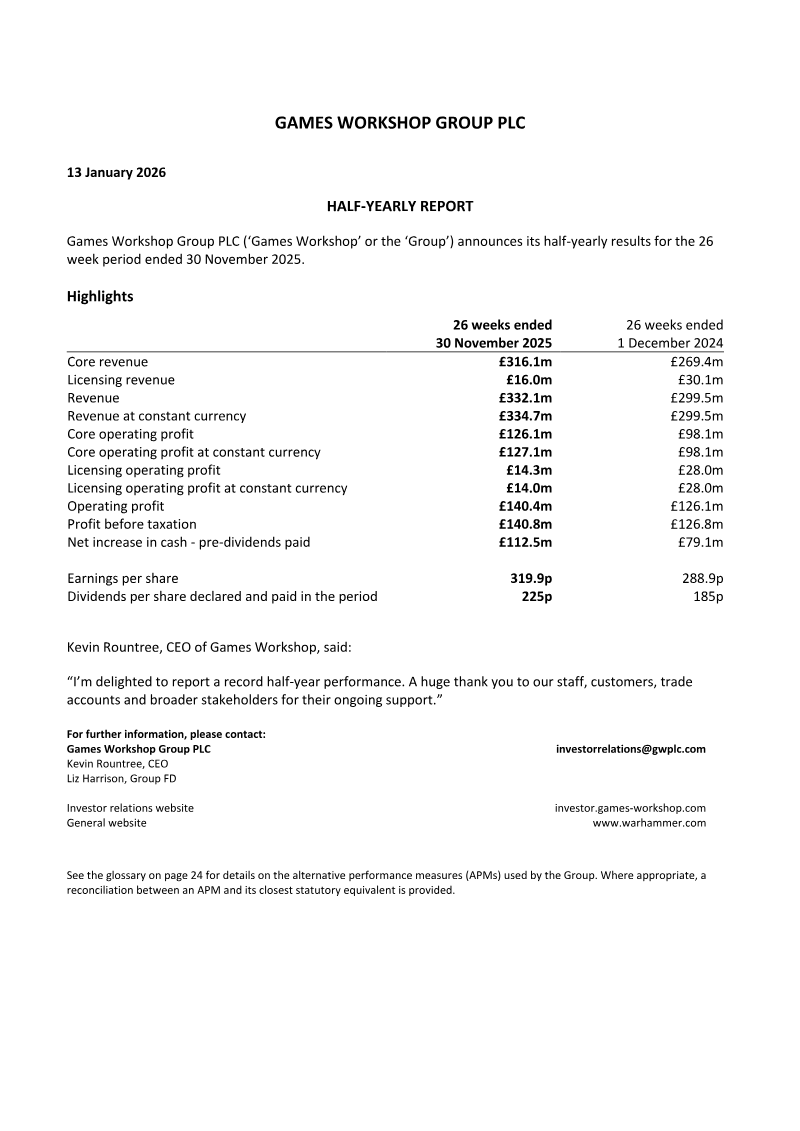
Games Workshop Group · 2025
Tencent · 2024
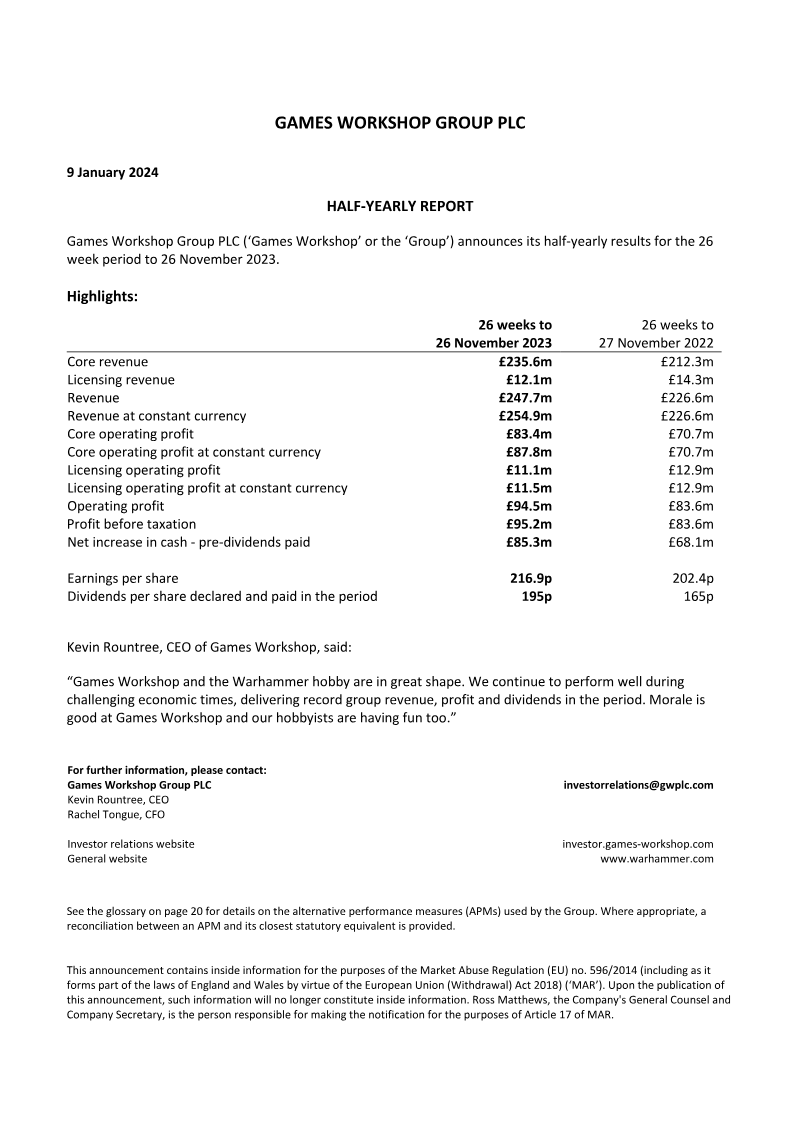
Games Workshop Group · 2024
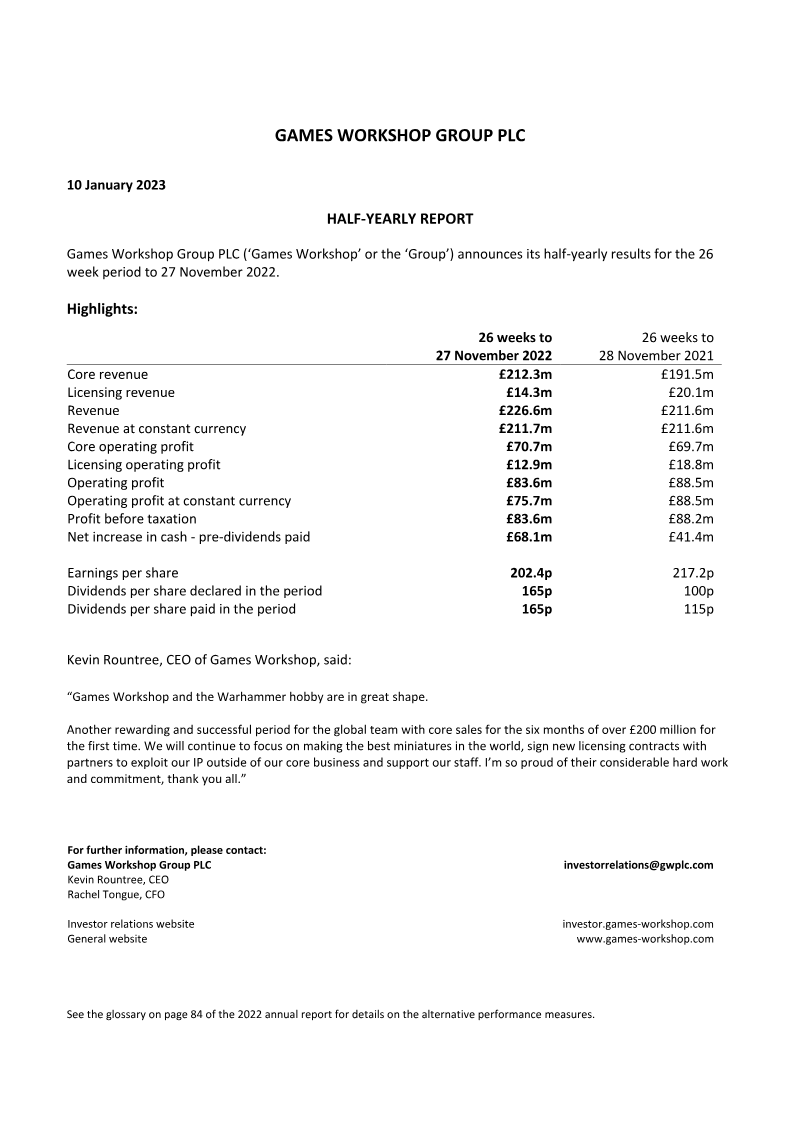
Games Workshop Group · 2023

Games Workshop Group · 2022
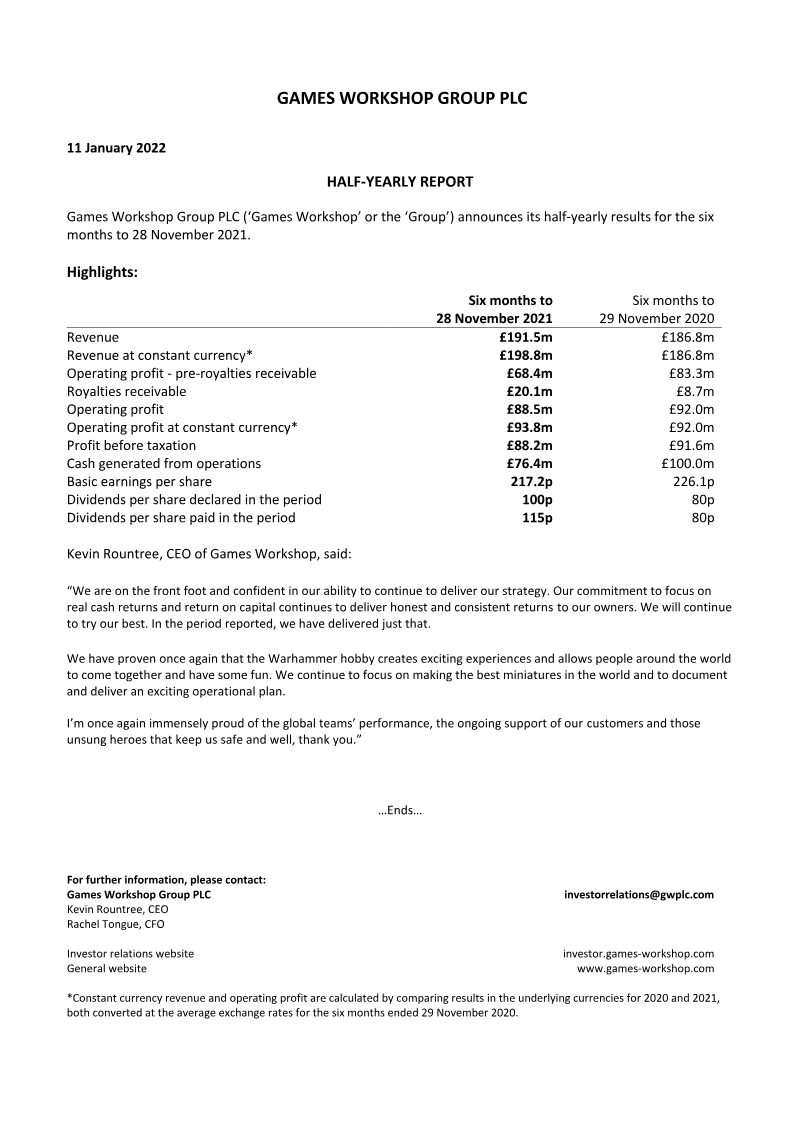
Games Workshop Group · 2022

Games Workshop Group · 2021
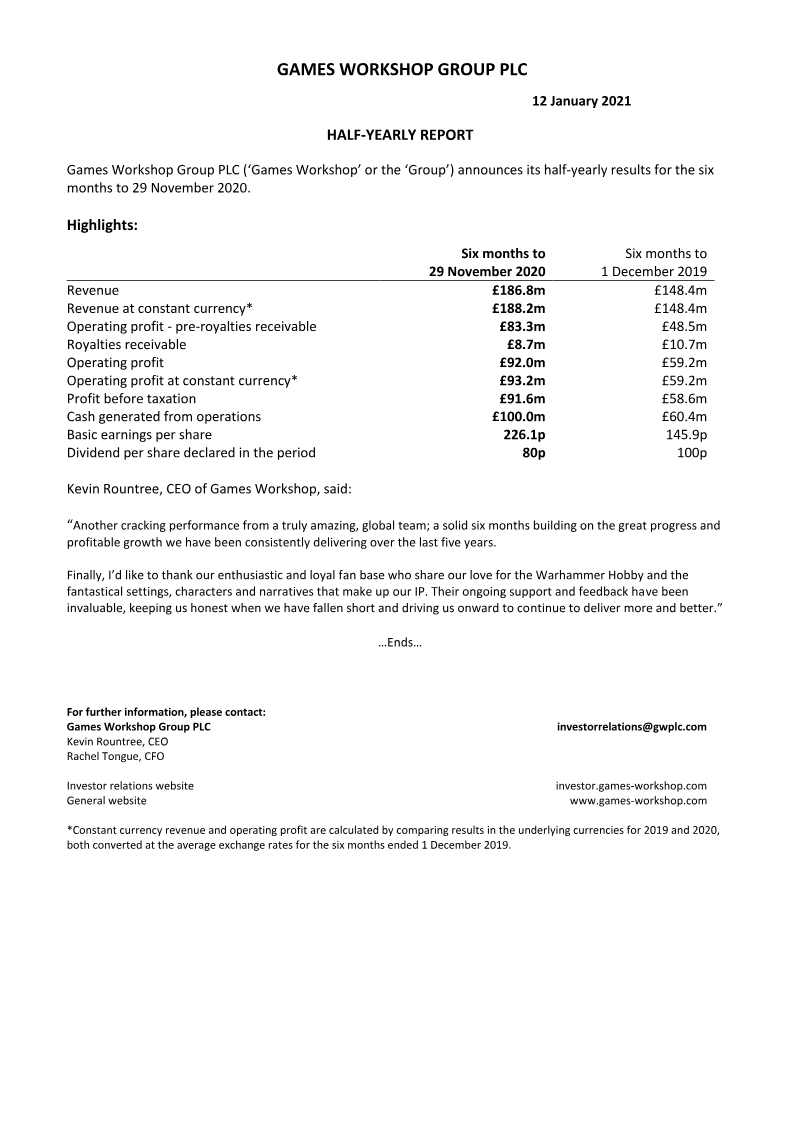
Games Workshop Group · 2021

Games Workshop Group · 2020
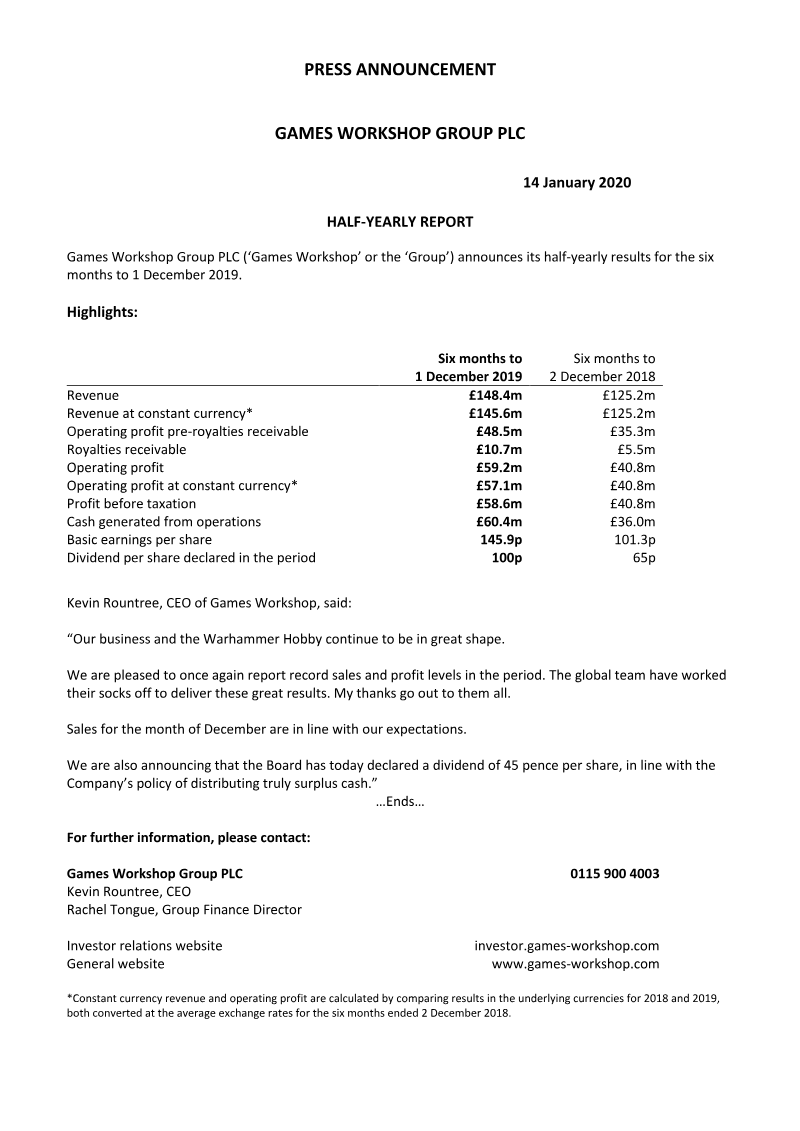
Games Workshop Group · 2019
Frontier Developments · 2026
Frontier Developments · 2025
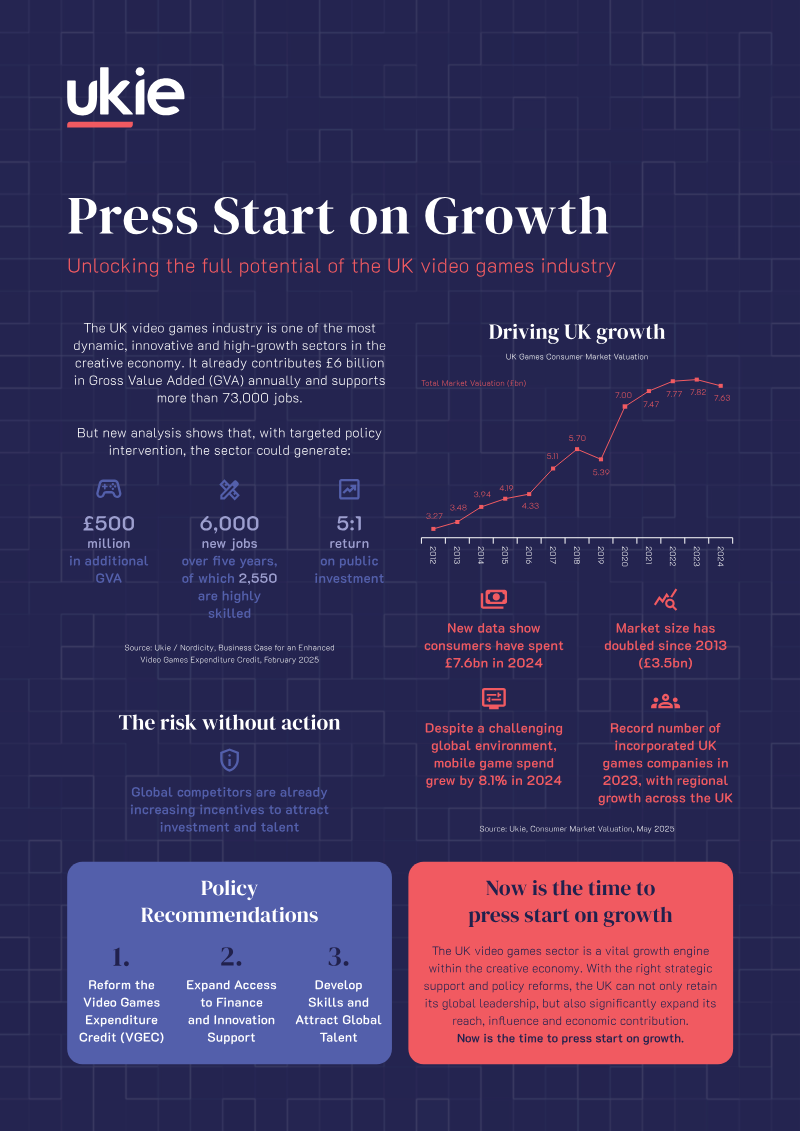
Ukie · 2025
Frontier Developments · 2025
Frontier Developments · 2024
tinyBuild · 2024
Team17 · 2024

Ukie · 2024

Ukie · 2023