Dossier de Prensa AEVI 2016
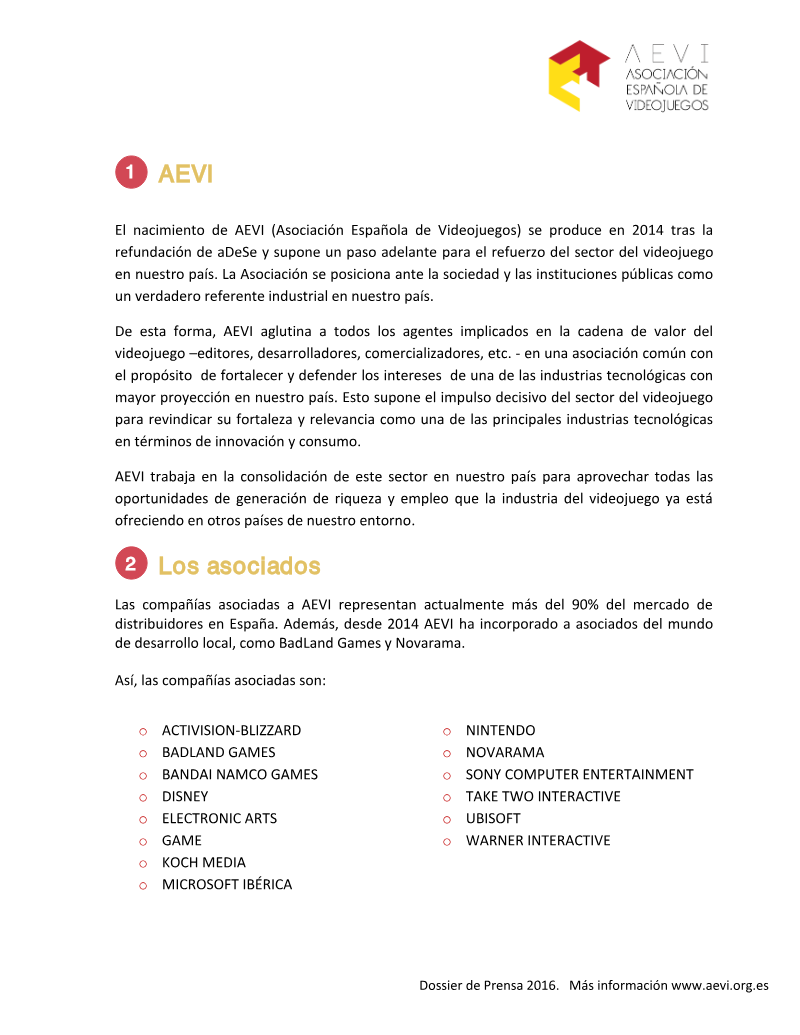
AEVI was founded in 2014 to unify Spain’s video‑game ecosystem and to position the sector as a leading technological and cultural industry. Its institutional goals focus on fostering local development, attracting investment, collaborating with public authorities, defending intellectual‑property rights, and promoting responsible consumption through the PEGI rating system.
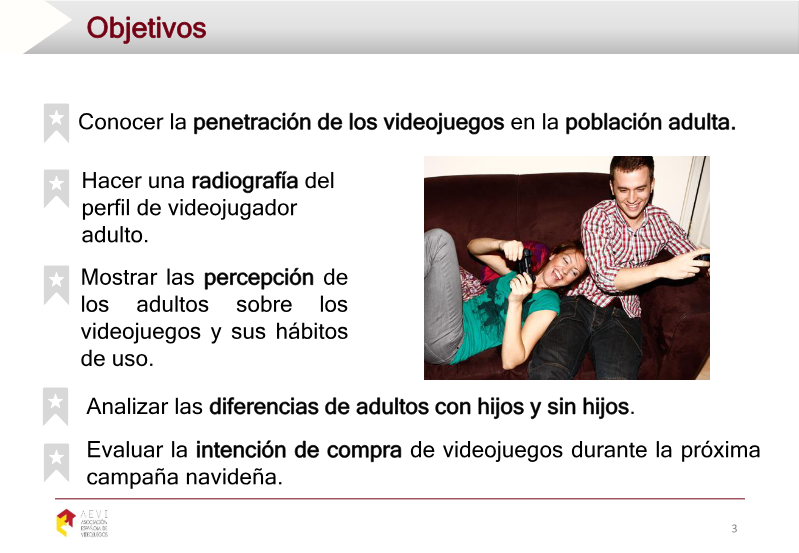
In 2014 the Spanish video‑game market generated €996 million, a 6.8 % increase over the previous year, with physical sales accounting for €755 million and online sales €241 million. Software contributed €364 million, hardware €301 million and accessories €90 million. The sector served 13 million users—36 % of the population—making Spain one of the four largest European markets after France, Germany and the United Kingdom. Players aged 11‑64 spent an average of 5.9 hours per week gaming; 40 % of adults played, 26.2 % regularly, and gender participation reached 45.3 % for men and 32.8 % for women. Physical copies remained the preferred format (7.9 million users), followed by online (5 million) and mobile applications (4.9 million).
AEVI highlighted the persistent challenge of piracy, reporting 240 million illegal downloads and 2 million physical infringements in 2014, which translated into a €226 million loss of revenue. Legislative reforms in intellectual‑property law and the criminal code were cited as recent advances in combating these practices. The association also noted a 21 % rise in development studios, reaching nearly 400 companies, and projected that employment in the sector could double to over 7 000 highly qualified jobs by 2019.
Through advocacy, data collection from sources such as GfK, ISFE, Gametrack and its own surveys, and partnerships with institutions like the Federation for the Protection of Intellectual Property, AEVI seeks to sustain growth, enhance the cultural perception of video games, and ensure a responsible, innovative market environment in Spain.