Report18 pages
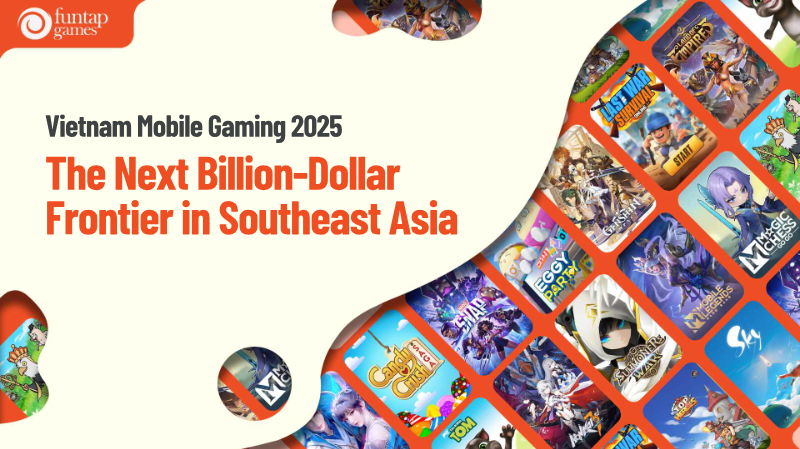
Vietnam Mobile Gaming 2025: The Next Billion-Dollar Frontier in Southeast Asia
The report argues that Vietnam’s mobile gaming sector will reach a billion‑dollar valuation by 2025, driven by an expanding user base and high spending per download. In 2023, 1.1 billion mobile users and 900 million mid‑core players generated gross revenue of approximately US$1.3 billion, with a compound annual growth rate of 9.8 % across all platforms. The analysis attributes this surge to rapid mobile penetration, widespread 5G coverage (average speed 75.7 Mbps), and a growing banking‑linked payment ecosystem that facilitates in‑app purchases.
A key finding is the regulatory shift that began in 2025, when Apple introduced a mandatory license field and the Vietnamese government revoked 1,081 unlicensed titles. This crackdown reduced total downloads by 13.7 % but created a more favorable environment for compliant mid‑core games, which now dominate the market. The report’s methodology involved surveying 250 representative titles with significant download volumes, measuring D1 and D7 retention, playtime, and revenue. Data were cross‑validated with internal tools and third‑party analytics to correct discrepancies common in the local market.
Geographically, the study focuses on Vietnam but benchmarks against other Southeast Asian markets. It notes that while daily playtime is rising across the region, Vietnam’s revenue per download exceeds that of the Philippines by at least 28 %. The report concludes that early licensing and a focus on social, competitive, and narrative‑rich mid‑core experiences—particularly 4X strategy, MOBA, squad RPG, MMORPG, and battle royale genres—will be critical for publishers seeking sustainable growth in the Vietnamese market.
- Vietnam's mobile gaming market is projected to reach a billion-dollar valuation by 2025, supported by a 9.8% compound annual growth rate.
- A 2025 regulatory crackdown resulted in the removal of 1,081 unlicensed titles, leading to a 13.7% decline in total downloads but fostering a more stable environment for compliant mid-core games.
- Vietnam demonstrates strong monetization potential, with revenue per download exceeding that of the Philippines by at least 28%.
- Market growth is underpinned by robust infrastructure, including widespread 5G coverage with average speeds of 75.7 Mbps and an expanding banking-linked payment ecosystem.
- In 2023, the market supported 1.1 billion mobile users and 900 million mid-core players, generating approximately US$1.3 billion in gross revenue.
+4
InvestGameFeb 2026

Report25 pages
Let’s Play! 2024: The Esports Market in Southeast Asia
The report examines the esports market across Southeast Asia (SEA) for 2024, drawing on a summer‑2024 consumer survey of 14,250 respondents representing the region’s online population aged 16–65. The study focuses on audience reach, engagement maturity, demographic composition, consumption habits, and monetisation challenges. SEA emerges as the world’s most extensive esports market, with a 75 % overall reach but only 32 % of viewers engaging regularly; about half of those regular viewers watch more than seven hours per week. Mobile gaming dominates, accounting for roughly 55 % of esports consumption and driving the shift toward digital-first viewing platforms such as YouTube Gaming, Facebook Gaming, and local streaming services. Gender distribution shows 43 % female viewership, slightly higher than in traditional sports, while the audience is markedly younger—81 % of viewers are Millennials or Gen Z. Compared to traditional sports, esports has a comparable male share but a younger demographic profile and higher urban concentration.
Country‑level snapshots reveal Vietnam, Malaysia, and the Philippines as leaders in regular viewership (over 70 % of aware audiences), whereas Singapore lags behind. The report highlights a significant drop‑off from sporadic to regular viewership, underscoring the need for brands and tournament organisers to build stronger brand equity and leverage influencers. Engagement data indicate that esports audiences are highly willing to pay for free‑time activities, yet they also maintain many hobbies, presenting both opportunity and competition for attention. Overall, the findings suggest that SEA’s esports ecosystem is maturing into a mainstream entertainment sector, offering substantial growth potential for advertisers, publishers, and league operators willing to invest in mobile‑centric, data‑driven engagement strategies.
- Southeast Asia is the world's largest esports market by reach at 75%, though regular viewership remains limited to 32% of the total audience.
- Mobile gaming drives 55% of all esports consumption in the region, fueling a shift toward digital-first platforms like YouTube Gaming, Facebook Gaming, and local streaming services.
- The audience is predominantly young, with 81% of viewers belonging to the Millennial or Gen Z generations, and features a 43% female viewership share.
- Vietnam, Malaysia, and the Philippines lead the region with regular viewership rates exceeding 70% among those aware of esports, while Singapore shows lower engagement levels.
- Approximately half of all regular viewers consume more than seven hours of esports content per week.
+2
DeloitteFeb 2026

Report114 pages
Vietnam Innovation and Private Capital Report: 2025
Vietnam’s 2025 Innovation and Private Capital Report positions the country as a rapidly ascending tech‑investment hub in Southeast Asia, underpinned by steady macro growth and decisive policy support. A 6 % annual real GDP expansion, a $36 B digital economy, and the landmark Resolution No. 57‑NQ/TW collectively create a macro‑environment that attracts both domestic and foreign capital. Private‑capital activity in 2024 totaled $2.3 B across 141 deals, with buyouts dominating but early‑stage venture capital rebounding sharply in the second half of the year. High‑tech sectors—particularly AI, AgriTech, Green Tech, semiconductors, and data centers—experienced multi‑fold funding surges, reflecting a shift toward technology‑driven value creation.
The labor market fuels consumer and industrial demand: Vietnam ranks second in Southeast Asia for workforce size, with a growing middle‑affluent class projected to exceed 45 % of the population by 2030. Strong education outcomes and a youthful, tech‑savvy demographic drive growth in retail, e‑commerce, digital health, and edtech. Tier‑2 cities such as Bac Ninh, Can Tho, and Da Nang emerge as new growth poles, supported by government investment in transportation, renewable energy, and digital infrastructure.
Resolution No. 57 sets ambitious 2030–2045 targets—30–50 % GDP share from digital and high‑tech exports, 80 % cashless transactions, and 2 % of GDP allocated to R&D (60 % private). It outlines strategic actions in AI, 6G, talent development, and digital governance to attract at least five global tech giants for R&D and manufacturing. Projected economic gains from AI alone could reach $120 B by 2040, while renewable energy and climate‑tech investments are already reshaping the power sector through flexible PPAs and green‑credit programs.
Overall, Vietnam’s coordinated policy framework, expanding talent pool, and maturing private‑capital ecosystem converge to make the country a compelling destination for long‑term value creation across high‑growth technology, green infrastructure, and consumer markets within Southeast Asia.
- Vietnam’s digital economy has reached a valuation of $36 billion, supported by a 6% annual real GDP growth rate.
- Private capital investment in 2024 totaled $2.3 billion across 141 deals, with a notable rebound in early-stage venture capital during the second half of the year.
- Resolution No. 57-NQ/TW mandates that by 2030–2045, digital and high-tech exports must account for 30–50% of GDP, with 2% of GDP allocated to R&D.
- The middle-affluent class is projected to exceed 45% of the total population by 2030, driving significant demand in retail, e-commerce, digital health, and edtech.
- AI integration is projected to generate $120 billion in economic gains for Vietnam by 2040, supported by strategic government initiatives in 6G and digital governance.
+1
Boston Consulting GroupFeb 2026
Report7 pages
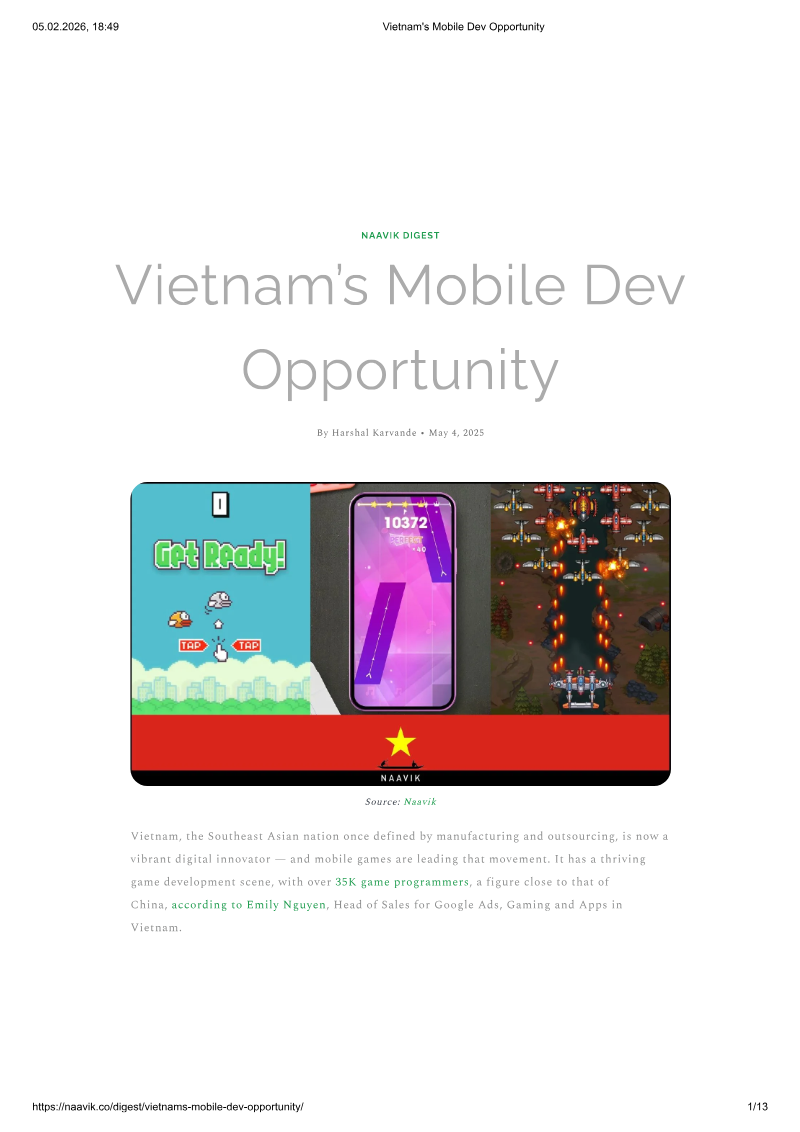
Vietnam's Mobile Dev Opportunity
Vietnam’s mobile game sector has evolved from a consumer‑centric market into a burgeoning production hub, driven by a skilled talent pool forged through outsourcing, stringent regulatory frameworks that forced local publishing entities to emerge, and the explosive rise of mobile gaming. The country now hosts over 35 000 game programmers—comparable to China’s workforce—and more than 300 active mobile publishers headquartered in Vietnam. In 2024, five Vietnamese studios ranked among the world’s top 25 publishers by downloads, contributing nearly 2.4 billion downloads and $133 million in revenue—a 67 % increase in downloads and an 82 % rise in earnings since 2020. Key titles such as Car Race, Wood Nuts & Bolts Puzzle, and Hair Salon: Beauty Salon Game illustrate the domestic IP pipeline, while globally recognized titles like Sky Garden: Farming Paradise, Magic Tiles 3, and Axie Infinity showcase the country’s capacity for high‑impact releases.
The transformation accelerated after 2013 when Vietnamese solo developer Nguyen Ha Dong’s Flappy Bird achieved worldwide chart dominance, proving that local talent could produce globally successful mobile games with limited resources. This success spurred a wave of small studios and startups, many of which transitioned from outsourcing or publishing roles to independent IP creation. Vietnam’s high smartphone penetration (84 %) and a youthful, digitally native demographic further underpin market growth.
Regulatory challenges remain: stricter limits on gaming time for minors, mandatory Ministry of Information and Communications approvals, and content censorship can constrain creative expression and international appeal. Future success will hinge on navigating the shift from hypercasual to more complex casual and social mobile games while adapting to evolving regulatory constraints. Despite these hurdles, Vietnam’s established talent base, rapid growth trajectory, and increasing foreign investment position it as a rising contender for global mobile game leadership over the next decade.
- Vietnam has emerged as a major global mobile development hub with over 35,000 game programmers and more than 300 active local publishers.
- In 2024, five Vietnamese studios ranked among the world’s top 25 publishers, generating 2.4 billion downloads and $133 million in revenue.
- Since 2020, the sector has experienced significant growth, marked by a 67% increase in downloads and an 82% rise in earnings.
- The industry’s transition from outsourcing to independent IP creation was catalyzed by the 2013 global success of Flappy Bird, which proved that local talent could achieve international chart dominance.
- Domestic market strength is supported by a digitally native population and an 84% smartphone penetration rate.
+2
NaavikFeb 2026
Report19 pages
Southeast Asia Gaming Consumer Economy
The Southeast Asia Gaming Consumer Economy report, produced jointly by Telekom Malaysia and twimbit in Q2 2022, examines the region’s rapidly expanding gaming market. Six key economies—Indonesia, Malaysia, the Philippines, Singapore, Thailand and Vietnam—account for 85 % of SEA’s gamer population, which is projected to reach 367.8 million by 2025, representing more than half of the region’s total population. Mobile gaming dominates, with 70 % of in‑game revenue and a 13.7 % CAGR in consumer spend from 2018 to 2021, totaling US$5.57 billion. Urbanisation and a youthful demographic drive high willingness to spend, with 64 % of gamers willing to pay; average annual spend varies from US$9 in Indonesia to US$189 in Singapore.
Genre preferences skew toward action, strategy and casual titles; 86 % of players engage in the top five genres. Gender parity is notable, especially on mobile where female gamers constitute 47 % of the market and are highly spend‑active. eSports viewership is nascent but growing, with SEA tournaments ranking among the world’s most‑watched events; mobile eSports is expected to lead future growth as 5G and cloud gaming mature. Monetisation remains dominated by free‑to‑play with in‑app purchases (86 % of revenue), supplemented by hybrid and subscription models.
Methodologically, the study synthesises industry interviews, published data, annual reports, and platform analytics. The report recommends that developers adopt edge computing for low‑latency play, deliver cross‑device flexibility, and build scalable cloud architectures to meet the region’s dynamic demand.
- The Southeast Asian gaming population is projected to reach 367.8 million by 2025, with Indonesia, Malaysia, the Philippines, Singapore, Thailand, and Vietnam accounting for 85% of the total regional gamer base.
- Mobile gaming is the dominant market force, generating 70% of in-game revenue and achieving a 13.7% CAGR in consumer spending between 2018 and 2021, reaching a total of US$5.57 billion.
- Monetization is heavily reliant on free-to-play models with in-app purchases, which account for 86% of total revenue, though hybrid and subscription models are increasingly utilized.
- 64% of gamers in the region are willing to pay for content, though average annual spending varies significantly by market, ranging from US$9 in Indonesia to US$189 in Singapore.
- Gender parity is high in the mobile sector, where female gamers represent 47% of the market and demonstrate high levels of spending activity.
+2
Telekom MalaysiaFeb 2026

Report88 pages
Gaming and Esports in Vietnam: A New Arena for Brands
Vietnam’s gaming and esports landscape has evolved into a high‑growth, culturally resonant channel for brands targeting the country’s youthful, tech‑savvy population. With one‑third of the populace engaged in esports and an adult gamer rate of 85 %—the highest globally—the market is driven by widespread smartphone penetration, robust 4G coverage, and a demographic where roughly 70 % are under 25. Mobile titles dominate, particularly MOBAs and FPS games, while PC gaming remains significant; casual players account for nearly half of the audience.
Consumer behavior shows intense engagement: gamers spend 1–3 hours per session, seek entertainment (85.9 %), stress relief (74.7 %), and social interaction (46.5 %). Streaming platforms such as YouTube Gaming and Facebook Gaming lead, with Twitch lagging behind. Brands that sponsor mobile esports events or partner with key opinion leaders (KOLs) can tap into this high‑interaction environment, especially as 51 % of gamers trust KOL recommendations and 42 % purchase endorsed products.
Investment trends confirm the sector’s appeal. Global esports spend reached $844 million in 2021, with 9.9 % allocated to Vietnam. In‑game advertising that offers prizes (49 %) and video content (40 %) yields the strongest purchase intent, particularly for electronics, tech, and gaming accessories. Best practices emphasize customized creative assets, reward‑based incentives, and authentic collaborations—examples include Adidas “Time In” with Ninja, Dashing’s team sponsorship, and Mastercard’s League of Legends partnership—demonstrating higher recall than traditional sports ads.
Practical engagement strategies recommend experiential pop‑ups, in‑game placements, and co‑creation with publishers (e.g., Louis Vuitton’s LVxLOL) to deliver authentic touchpoints. Cause‑based campaigns resonate with Gen Z’s social consciousness, while treating esports as a “co‑business” encourages integrated, audience‑centric messaging. Overall, Vietnam’s rapidly expanding mobile and PC gaming ecosystem offers brands a fertile arena for digital fluidity, agile research, influencer partnerships, and localized media strategies to capture high‑growth engagement.
- Vietnam has the world's highest adult gamer rate at 85%, with a demographic where 70% of the population is under 25 and one-third of citizens are engaged in esports.
- Mobile gaming dominates the market, supported by high smartphone penetration and 4G coverage, with gamers typically spending 1–3 hours per session.
- Influencer marketing is highly effective, as 51% of gamers trust key opinion leader (KOL) recommendations and 42% report purchasing products endorsed by them.
- In-game advertising featuring prizes (49%) and video content (40%) generates the strongest purchase intent, particularly for electronics, tech, and gaming accessories.
- Vietnam captured 9.9% of the $844 million global esports spend in 2021, signaling significant market appeal for international investment.
+3
Decision LabFeb 2026
Report82 pages
Vietnam Gaming Outlook 2026: Building Sustainable Growth
Vietnam’s mobile gaming landscape is rapidly evolving from a download‑centric, ad‑driven model to a hybrid ecosystem that prioritizes in‑app purchases (IAP) and subscription revenue. In 2024, the country led global Google Play downloads with 6.1 billion installs yet generated only about $430 million, underscoring the profitability ceiling of pure advertising. Rising acquisition costs, privacy‑driven signal loss, and a plateauing average revenue per user (ARPU) have forced studios to adopt IAP‑first, hybrid casual titles that deliver deeper engagement and predictable cash flows. Global IAP and subscription revenue reached $150 billion in 2025, up 13%, while Vietnam’s IAP growth surged 65 %, positioning hybrids as the default blueprint for sustainable growth by 2026.
The transition hinges on data‑centric monetization strategies. AI‑driven programmatic advertising and hybrid supply‑side platforms help studios navigate privacy constraints, while sophisticated IAP systems require clean player‑behavior analytics and structured measurement frameworks. Localized pricing—using purchasing power parity tiers, local currency endings, and one‑tap tokenised payments—can lift conversion by over 20 % and reduce checkout abandonment by up to 30 %. Integrating multi‑currency settlement through a single provider such as Airwallex adds 2–5 % to net margin without altering game design.
A phased rollout model enables Vietnamese studios to pilot in core markets, expand regionally through configuration rather than new vendor projects, and scale into high‑value markets like the US for top‑line growth and FX savings. Premium ad formats on TikTok, when matched to specific spending barriers, can boost transaction values by 20–30 % and shift campaigns from cost‑per‑install to return‑on‑ad‑spend metrics. Case studies, such as Falcon Game Studio’s pivot to a hybrid model with 60–70 % day‑one retention and a 3–5 % global payer rate, illustrate the tangible benefits of this approach.
Overall, Vietnam’s mobile gaming sector is poised to compete globally by leveraging robust payment partners, privacy‑first acquisition tactics, and a disciplined IAP strategy that unlocks higher lifetime value and sustainable studio growth through 2026.
- Vietnam’s mobile gaming sector is shifting from an ad-driven model to hybrid-casual titles prioritizing in-app purchases (IAP) and subscriptions, following a 65% surge in local IAP growth in 2025.
- While Vietnam led global Google Play downloads with 6.1 billion installs in 2024, the market generated only $430 million, highlighting the profitability ceiling of pure advertising models.
- Localized pricing strategies, including purchasing power parity tiers and one-tap tokenized payments, can increase conversion rates by over 20% and reduce checkout abandonment by up to 30%.
- Integrating multi-currency settlement through providers like Airwallex can improve net margins by 2–5% without requiring changes to game design.
- Falcon Game Studio’s transition to a hybrid model demonstrates the viability of this strategy, achieving 60–70% day-one retention and a 3–5% global payer rate.
+3
InvestGameFeb 2026
Report13 pages
Aream & Co. Gaming CEO Survey 2025
The survey, conducted by Aream & Co., gauges executive optimism regarding consumer spending on gaming in 2025 across multiple channels and functional areas. Overall, 49 % of respondents view spending as “more optimistic,” another 49 % see it as unchanged, and only 2 % are less optimistic. When broken down by platform, mobile spending is perceived as more optimistic (49 %) while PC and console views are split between “more” (15–33 %) and “about the same.” In‑app purchases are viewed as more optimistic (80 %) versus in‑app advertising (41 %).
Key challenges identified include content saturation and over‑supply, with 33 % citing these as concerns; marketing environment issues affect 49 %, and macro conditions are a worry for 17 %. Despite these, 54 % anticipate more new games in 2025, and 37 % expect higher average budgets. Marketing spend is expected to rise for 48 %, while engineering and game development are seen as more optimistic (71 % and 42 %).
The survey also highlights a strong appetite for mergers and acquisitions, with 71 % expecting more M&A activity. Advanced integration across multiple functions is viewed as more optimistic (49 %) but limited implementation remains a concern.
The data derive from a global sample of gaming CEOs, reflecting perspectives across mobile, PC, console, and various functional departments. The findings suggest a cautiously optimistic outlook for 2025, tempered by supply‑side pressures and marketing challenges.
- Industry sentiment for 2025 is largely stable or positive, with 98% of CEOs reporting that consumer spending will be either unchanged (49%) or more optimistic (49%).
- M&A activity is expected to accelerate, with 71% of executives anticipating an increase in deal-making throughout 2025.
- In-app purchases are the primary revenue driver, with 80% of respondents optimistic about growth compared to only 41% for in-app advertising.
- Investment in development remains a priority, as 71% of CEOs are optimistic about engineering budgets and 42% about game development, with 37% expecting higher average project budgets.
- Marketing remains a critical pain point, with 49% of executives citing the current marketing environment as a major challenge despite 48% planning to increase their marketing spend.
+4
Aream & CoFeb 2026
Presentation24 pages
Financial Results Briefing FY2025
GungHo Online Entertainment is currently undergoing a fundamental strategic pivot, transitioning from a primary focus on the domestic Japanese mobile market toward a global, multi-platform distribution model. This evolution targets North America and Europe specifically through the development of action-oriented intellectual properties for console and PC. The success of this shift is evidenced by the dramatic rise in the overseas net sales ratio, which is projected to reach 66% in fiscal year 2025, up from just 11.4% in 2016. Key drivers for this international expansion include the upcoming launch of Let It Die: Inferno and the continued global scaling of the Ragnarok and Puzzle & Dragons franchises across more than 150 countries.
Despite this aggressive geographic expansion, the company faces immediate financial headwinds characterized by a contraction in consolidated net sales and operating profit. Quarterly performance data reveals a downward trajectory over a four-year period, with peak values declining from over 16,000 to approximately 7,750 in the most recent quarter. This downturn is largely attributed to softening sales of legacy mobile titles and a reactional decrease in revenue from the subsidiary Gravity. To stabilize these core assets, the company is utilizing high-profile collaborations with major brands such as Sanrio and Digimon to maintain domestic user engagement while simultaneously preparing for the launch of Ragnarok Online 3 in major Asian markets.
The long-term outlook centers on a diversified portfolio that balances established mobile revenue with new, high-scale global releases. While current financial indicators reflect a period of contraction and volatility, the commitment to 100-player raid mechanics in upcoming titles and the expansion of Ragnarok X: Next Generation into EMEA markets signal a move toward more technologically ambitious projects. Ultimately, the transition toward a global-first strategy represents a necessary adaptation to the maturing domestic mobile landscape, aiming to replace declining legacy revenue with sustainable growth from international console and PC audiences.
- GungHo is executing a strategic pivot from the domestic Japanese mobile market to a global, multi-platform model, with overseas net sales projected to reach 66% of total revenue in FY2025, up from 11.4% in 2016.
- Consolidated net sales and operating profit are in a four-year decline, with quarterly performance metrics dropping from a peak of over 16,000 to approximately 7,750.
- The company is addressing the softening sales of legacy mobile titles and decreased revenue from its subsidiary Gravity by leveraging high-profile collaborations with brands like Sanrio and Digimon.
- Future growth is anchored in the expansion of the Ragnarok franchise, including the upcoming launch of Ragnarok Online 3 in Asian markets and the introduction of Ragnarok X: Next Generation to EMEA regions.
- GungHo is shifting its development focus toward action-oriented console and PC intellectual properties, highlighted by the upcoming release of Let It Die: Inferno.
GungHo Online EntertainmentFeb 2026
Presentation53 pages
Q3 for the Fiscal Year Ending March 2026 Results Presentation
Sega Sammy’s performance through the third quarter of the fiscal year ending March 2026 is characterized by a significant divergence between robust domestic gaming machine operations and substantial financial setbacks in the global consumer and mobile segments. While the Pachislot and Pachinko division exceeded expectations—driven by high-volume unit sales of titles like Smart Pachislot Tokyo Revengers—the broader group faces a projected net loss of 13.0 billion yen for the fiscal year. This downturn is primarily the result of 46.3 billion yen in extraordinary impairment losses related to the acquisitions of Rovio and Stakelogic, the latter of which was impacted by regulatory shifts in the Netherlands.
The Entertainment Contents Business struggled with underperforming new full game launches and a deteriorating user acquisition environment for mobile titles, most notably Sonic Rumble. Consequently, management has pivoted from aggressive expansion to a period of consolidation, suspending large-scale M&A activities in favor of a 20.0 billion yen share buyback program. To restore profitability within the mobile sector, the strategy now emphasizes a "regrowth phase" for Rovio, leveraging AI-driven marketing efficiencies and a transmedia approach that includes major theatrical releases for the Angry Birds and Sonic franchises scheduled through 2027.
Despite current headwinds, the medium-term outlook relies on a robust multi-platform pipeline and the expansion of the Gaming Business, which includes record-high performance at Paradise SegaSammy fueled by Japanese VIP demand. Upcoming releases for the Nintendo Switch 2 and the continued rollout of high-profile intellectual properties like Yakuza and Persona are intended to stabilize the consumer area. Geographically, the company remains focused on global markets while maintaining strict compliance with international gaming regulations in jurisdictions such as Nevada, which govern both corporate operations and shareholder requirements.
- Sega Sammy projects a 13.0 billion yen net loss for the fiscal year ending March 2026, driven by 46.3 billion yen in impairment losses from the acquisitions of Rovio and Stakelogic.
- The Pachislot and Pachinko division is the company's primary financial driver, significantly exceeding expectations through high-volume sales of titles like Smart Pachislot Tokyo Revengers.
- Management has shifted from aggressive M&A to a consolidation strategy, marked by the suspension of large-scale acquisitions and the initiation of a 20.0 billion yen share buyback program.
- The Entertainment Contents Business is underperforming due to weak new full game launches and poor user acquisition for mobile titles, specifically Sonic Rumble.
- The company is pivoting to a 'regrowth phase' for Rovio, utilizing AI-driven marketing and transmedia support from Angry Birds and Sonic theatrical releases scheduled through 2027.
Sega Sammy HoldingsFeb 2026

Report12 pages
Connecting Digital Investments and Real Estate: Malaysia’s Competitive Advantage
The analysis establishes that Malaysia’s competitive edge stems from the tight integration of digital investment flows with commercial‑real‑estate development, positioning the country as a regional hub for high‑value technology activities. By concentrating the majority of foreign digital capital within a narrow geographic corridor, the nation creates a synergistic environment where advanced infrastructure and specialized real‑estate assets reinforce each other, driving sustained economic benefits.
Data reveal that 95 percent of approved digital‑investment projects, amounting to RM 342.6 billion, are located in the Klang Valley, Johor and Penang, with the Klang Valley alone accounting for roughly three‑quarters of total digital foreign direct investment. This region hosts a diversified portfolio that includes data‑centre and cloud services, fintech platforms, artificial‑intelligence applications, and global‑business‑services/KPO operations, collectively generating RM 13.9 billion in digital‑sector employment value. Johor’s contribution is anchored in large‑scale hyperscale data‑centre campuses, while Penang’s niche lies in semiconductor‑linked activities, offering targeted opportunities for developers.
A streamlined MDLR framework, co‑created with the Malaysia Digital Economy Corporation, reduces digital‑real‑estate standards to four core criteria, shifting focus to building‑level attributes such as robust digital infrastructure, connectivity, energy resilience and security. This refined approach equips developers and investors with clear benchmarks to align property supply with the evolving demands of the digital economy, ensuring that real‑estate assets remain adaptable and future‑proof across the identified clusters.
- Malaysia has attracted RM 342.6 billion in approved digital investments, with 95 percent of these projects concentrated in the Klang Valley, Johor, and Penang.
- The Klang Valley serves as the primary digital hub, accounting for approximately 75 percent of the nation's total digital foreign direct investment.
- Digital-sector employment across these investment clusters generates a total value of RM 13.9 billion.
- Regional investment is specialized, with Johor focusing on hyperscale data-centre campuses and Penang concentrating on semiconductor-linked activities.
- The MDLR framework standardizes digital real estate into four core criteria: digital infrastructure, connectivity, energy resilience, and security.
Malaysia Digital Economy Corporation (MDEC)Feb 2026
Presentation20 pages
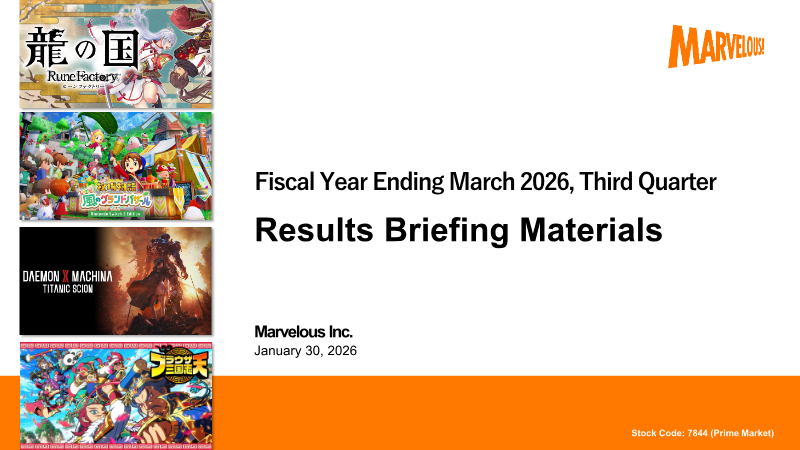
Results Briefing Materials: Fiscal Year Ending March 2026, Third Quarter
Marvelous Inc. reports a significant increase in financial performance for the first nine months of the fiscal year ending March 2026. Net sales reached 29,121 million yen, a 40.5% year-on-year increase, while ordinary profit grew 28.6% to 2,129 million yen. This growth was primarily driven by the Digital Contents and Amusement segments, alongside foreign exchange gains that bolstered the bottom line.
The Digital Contents business saw revenue jump 69.2% following the successful launches of core titles including Rune Factory: Guardians of Azuma, STORY OF SEASONS: Grand Bazaar, and DAEMON X MACHINA TITANIC SCION. While high development costs for these new titles initially pressured margins, strong sales contributed to earnings ahead of schedule, significantly reducing cumulative operating losses in the segment. In the online space, the company launched Browser Sangokushi Ten, though it noted a slow initial start.
The Amusement business remained a consistent profit driver, with revenue increasing 25.1% due to the continued popularity of Pokémon kids’ amusement machines, such as Pokémon FRIENDA and the overseas expansion of Pokémon MEZASTAR. Conversely, the Audio & Visual business experienced a revenue decline of 11.3% following the liquidation of unprofitable businesses, though segment profit rose sharply by 306.1% due to high-performing stage productions and secondary usage revenue from anime titles.
Geographically, the company is focused on the Japanese, North American, European, and Asian markets across Nintendo Switch, PlayStation 5, and PC platforms. Despite exceeding year-to-date targets for certain profit metrics, the full-year forecast remains unchanged at 35,000 million yen in net sales and 2,000 million yen in operating profit, citing potential future uncertainties in the macroeconomic and industry environment.
- Marvelous Inc. reported a 40.5% year-on-year increase in net sales to 29,121 million yen and a 28.6% rise in ordinary profit to 2,129 million yen for the first nine months of the fiscal year ending March 2026.
- The Digital Contents segment saw a 69.2% revenue surge driven by the releases of 'Rune Factory: Guardians of Azuma', 'STORY OF SEASONS: Grand Bazaar', and 'DAEMON X MACHINA TITANIC SCION', which helped offset initial high development costs.
- The Amusement business grew revenue by 25.1%, fueled by the sustained popularity of 'Pokémon FRIENDA' and the international expansion of 'Pokémon MEZASTAR'.
- The Audio & Visual business saw an 11.3% revenue decline due to business liquidations, but segment profit jumped 306.1% thanks to successful stage productions and anime secondary usage revenue.
- Despite exceeding year-to-date profit targets, the company maintained its full-year forecast of 35,000 million yen in net sales and 2,000 million yen in operating profit, citing macroeconomic and industry uncertainties.
MarvelousJan 2026

Report9 pages
Mobile App User Trends: MENA Ramadan 2026
The analysis focuses on mobile application usage patterns observed during the Ramadan period of 2026 across the Middle East and North Africa (MENA) region. The primary objective is to quantify shifts in user engagement, subscription behavior, and platform preference relative to the preceding year and a broader baseline average. Key metrics examined include overall app usage, subscription growth, in‑app purchases, and social media interaction.
Findings indicate a pronounced rise in overall app engagement during Ramadan 2026, with total usage increasing by approximately 111 % compared to the same period in 2025. Subscription activity shows a 42 % uptick, while in‑app purchase volume climbs by 91 %. Social media engagement metrics—measured through likes, shares, and comments—exhibit a 63 % increase. When benchmarked against the average growth rate for the same timeframe (2025‑2026), these figures represent a significant acceleration, suggesting heightened consumer activity during the holy month.
The data set covers all MENA markets and aggregates daily usage logs from a representative sample of mobile devices. The methodology involved longitudinal tracking of app sessions, transaction records, and social media interactions over the 30‑day Ramadan period. Comparative analysis was performed against both the previous year’s Ramadan metrics and a rolling 12‑month average to isolate seasonal effects.
In conclusion, the Ramadan period of 2026 drove substantial growth across multiple facets of mobile app consumption in MENA, with overall usage and monetization metrics surpassing historical trends. These insights underscore the strategic importance of tailoring app offerings, promotional campaigns, and user experience enhancements to align with cultural and religious calendars in the region.
- Overall mobile app engagement in the MENA region during Ramadan 2026 increased by 111% compared to the same period in 2025.
- In-app purchase volume saw a significant surge, rising by 91% during the 30-day Ramadan period.
- Social media interaction, measured by likes, shares, and comments, grew by 63% compared to the previous year.
- Subscription activity experienced a 42% uptick during the 2026 Ramadan period.
- Growth metrics across usage and monetization significantly outperformed both the previous year's Ramadan data and the rolling 12-month baseline average.
+2
InvestGameJan 2026

Report38 pages
The AI Disruption Index: How AI Is Reshaping Consumer Discovery
The AI Disruption Index demonstrates that artificial intelligence is fundamentally altering how U.S. consumers discover and purchase brands, with one‑third of adults now using personal AI agents to find products and nearly half employing AI for purchase research. A survey of 283 marketing leaders across fifteen verticals, coupled with analysis of more than 3,000 apps that collectively amassed over 200 billion downloads, confirms that AI has already eroded traditional discovery channels and is poised to disintermediate services that depend heavily on paid search and weak customer relationships.
Generative‑AI agents pose the greatest threat to news, education, health & fitness, retail, and on‑demand services, where AI can replace conventional search and recommendation workflows. Only sectors with strong regulatory or content moats—such as financial services, media rights holders, and auto OEMs—retain a defensive advantage. The study underscores that brands must embed AI‑driven personalization and deepen direct customer relationships to counter the risk of zero‑click discovery.
Mobile applications emerge as the primary competitive advantage for brands able to own the customer journey. They provide first‑party data, closed‑loop measurement, and personalized experiences that are difficult for AI agents to replicate. The report recommends three strategic priorities: investing in superior mobile app experiences, unifying and activating customer signals through comprehensive data profiles, and rethinking channel mixes to favor resilient, direct‑engagement platforms over fragmented paid or organic search. These actions will enable brands to mitigate AI‑driven disruption and secure long‑term customer loyalty across the United States.
- One-third of U.S. adults now use personal AI agents for product discovery, while nearly 50% utilize AI for purchase research.
- AI-driven 'zero-click' discovery is actively eroding traditional paid search and organic search channels, threatening sectors like retail, education, and health & fitness.
- Sectors with strong regulatory or content moats, specifically financial services, media rights holders, and auto OEMs, currently maintain a defensive advantage against AI disintermediation.
- Mobile applications serve as the primary defense against AI disruption by enabling first-party data collection, closed-loop measurement, and personalized experiences that AI agents cannot easily replicate.
- Brands must shift strategic focus away from fragmented search channels toward direct-engagement platforms to secure long-term customer loyalty.
+2
InvestGameJan 2026
Report128 pages
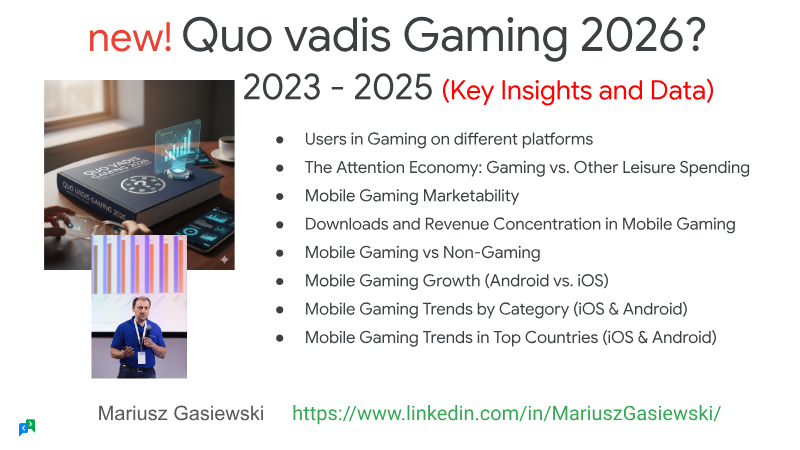
Key Insights and Data: 2023–2025
Mobile gaming drives the global industry’s growth through 2025, accounting for more than half of worldwide revenue and over eighty percent of players. Global gaming income is projected to reach $197 billion in 2025, a 7.5 % year‑over‑year rise largely powered by mobile and PC segments, while console expansion remains modest. The sector’s resilience is most pronounced in emerging markets where Android and iOS user volumes surge, yet revenue concentration persists in Western regions—particularly the United States and the United Kingdom—where iOS dominates acquisition spend.
Competitive dynamics sharpen as the top ten to fifty titles on Google Play and Apple’s App Store capture an increasing share of revenue, creating a winner‑take‑all environment. Hyper‑casual and match‑3 games concentrate U.S. spend, whereas Android strategy titles spread more evenly across Japan, Korea, and Taiwan. Sub‑genres such as chess, ludo, hidden object RPGs, and slots thrive in China, India, Brazil, and Southeast Asia, collectively commanding 15–20 % of global spend. Across most categories, day‑one retention has slipped from roughly 80 % to about 60 %, underscoring a broader challenge of sustaining early engagement.
Download patterns reveal Android’s volume advantage—about 70 % of global downloads—with the United States, India, Brazil, and Indonesia leading. iOS, though smaller in volume (30 %), delivers higher per‑download revenue, especially in China and the U.S. iOS penetration is rising in emerging markets such as Brazil and Vietnam, while Android’s share in India climbs from 18.8 % to 21.3 %. Genre‑level analysis shows modest growth (10–30 %) across most mobile categories, with occasional outliers and declines in specific niches. Overall, the landscape is characterized by rapid mobile expansion, concentrated monetization power, and shifting geographic priorities that shape strategic opportunities for developers and marketers.
- Global gaming revenue is projected to reach $197 billion in 2025, representing a 7.5% year-over-year increase driven primarily by mobile and PC segments.
- Mobile gaming remains the dominant force in the industry, accounting for over 50% of global revenue and more than 80% of the total player base.
- The mobile market is increasingly a winner-take-all environment, with the top 10 to 50 titles on Google Play and the Apple App Store capturing a growing share of total revenue.
- Android maintains a 70% share of global downloads, while iOS accounts for 30% but continues to generate significantly higher revenue per download in key markets like the U.S. and China.
- Sustaining early player engagement is becoming more difficult, as day-one retention rates have declined from approximately 80% to 60% across most categories.
+3
InvestGameJan 2026

Presentation8 pages
Major Organizational, Operational and Portfolio Reset to Reclaim Creative Leadership and Restore Sustainable Growth
Ubisoft has initiated a major organizational and operational reset designed to reclaim creative leadership and restore sustainable growth in an increasingly selective AAA market. This strategic pivot addresses rising development costs and the competitive challenges of establishing new intellectual properties. The transformation is built upon three primary pillars: the implementation of a new operating model, a refocused game portfolio with a revised three-year roadmap, and a significant rightsizing of the global organization to improve agility and reduce fixed costs.
The new operating model decentralizes production into five distinct Creative Houses supported by a centralized Creative Network and Core Services. These houses are specialized by genre and business model, focusing on billionaire brands like Assassin’s Creed and Far Cry, competitive shooters such as Rainbow Six and Ghost Recon, live-service experiences, immersive narrative universes, and casual family-friendly titles. To support this focus, Ubisoft has discontinued six games—including the Prince of Persia: The Sands of Time remake and four unannounced titles—while allocating additional development time to seven other projects to ensure higher quality standards.
Financial restructuring is a critical component of this reset, with the company targeting a total reduction in fixed costs of approximately €500 million by March 2028 compared to FY23 levels. This includes the closure of studios in Halifax and Stockholm, alongside restructurings in Abu Dhabi, RedLynx, and Massive. For FY26, the group anticipates net bookings of approximately €1.5 billion and a non-IFRS EBIT loss of around €1 billion, largely due to a €650 million one-off accelerated depreciation from canceled and delayed titles. Moving forward, the group aims to reach a run-rate fixed cost base of €1.25 billion by 2028, prioritizing robust cash generation and a more disciplined approach to capital allocation.
- Ubisoft is targeting a €500 million reduction in fixed costs by March 2028 compared to FY23 levels to restore sustainable growth.
- The company is restructuring into five specialized Creative Houses to focus on core franchises like Assassin’s Creed, Far Cry, and Rainbow Six while improving operational agility.
- Ubisoft has canceled six projects, including the Prince of Persia: The Sands of Time remake and four unannounced titles, while extending development timelines for seven others to prioritize quality.
- The company projects an FY26 non-IFRS EBIT loss of approximately €1 billion, driven by €650 million in one-off depreciation charges from canceled and delayed games.
- To achieve a target run-rate fixed cost base of €1.25 billion by 2028, Ubisoft is closing studios in Halifax and Stockholm and restructuring operations in Abu Dhabi, RedLynx, and Massive.
+1
UbisoftJan 2026
Report32 pages
Festive Season 2025: App Marketing Trends and Strategies for India
India’s festive season—from Onam in August through Diwali and Christmas in December—drives more than 30 % of the country’s annual digital advertising spend, making it a pivotal period for app marketers. In 2024, mobile games alone attracted over 3.2 billion downloads and generated $151 million in‑app purchase revenue, while non‑gaming verticals such as shopping, food delivery and OTT experienced sharp install spikes during key festivals. The data reveal a 53 % rise in mobile ad spend from Q1‑Q2 to Q3‑Q4, with installs up 36 % and re‑engagements soaring 69 % during the peak festive window, underscoring the season’s high‑value user acquisition and monetisation potential.
User‑acquisition efficiency improved markedly, with CPI falling by approximately 12 % while CPA remained stable. Video and playable ads delivered the highest ROAS—up to 4.2× in fintech and 3.8× in e‑commerce—and programmatic/OEM placements on Xiaomi and Samsung yielded significant conversion lifts, particularly in Tier‑2 and Tier‑3 cities. Creatives that refreshed weekly, incorporated localized language, and employed urgency cues such as countdowns outperformed static ads, highlighting the need for agile, culturally relevant creative and a diversified media mix that extends beyond Meta and Google into programmatic and OEM channels.
Marketers are increasingly leveraging data‑driven platforms—Singular, MobuppsX, Sensor Tower, Pathmatics and others—to optimise acquisition, retention and media spend. By integrating MAFO, iRTB, advanced fraud prevention and audience‑retention analytics, brands can reduce wasted spend, improve advertising ROI and accelerate growth across web, social and mobile channels. A unified data‑house approach enables faster campaign optimisation, measurable engagement gains and stronger competitive positioning during India’s lucrative festive period.
- India's festive season (August–December) accounts for over 30% of annual digital ad spend, driving a 36% increase in installs and a 69% surge in re-engagements during the peak window.
- Mobile gaming remains a primary growth driver, recording 3.2 billion downloads and $151 million in-app purchase revenue in 2024.
- Ad spend efficiency improved during the festive period, with a 53% increase in mobile ad investment accompanied by a 12% reduction in cost-per-install (CPI).
- Video and playable ads are the most effective formats, delivering up to 4.2× ROAS in fintech and 3.8× in e-commerce.
- Programmatic and OEM placements on devices like Xiaomi and Samsung are essential for capturing growth in Tier-2 and Tier-3 cities.
+3
InvestGameJan 2026
Report21 pages
2026 US Venture Capital Outlook
The 2026 US venture capital outlook projects a cautiously optimistic landscape, driven largely by an explosive surge in early‑stage activity and the continued dominance of artificial intelligence (AI) startups. AI firms now command 65 % of venture capital, fueling near‑record first‑financing counts and setting a high bar for late‑stage valuations. While liquidity remains the primary constraint—exit values are projected below $300 billion and limited LP enthusiasm persists—the emergence of improved secondary markets and a potential rebound in initial public offerings are expected to alleviate pressure. Multistage firms that focus on seed rounds are poised to sustain growth across both early and later stages, yet emerging managers may face fundraising challenges that could curtail diversification.
A widening gap between AI‑focused, high‑growth startups and their slower‑moving peers is evident. In Q3 2025 the United States hosted 830 active unicorns with a record $3.9 trillion post‑money valuation, yet many of these firms are liquidity‑constrained and struggle to secure follow‑on funding. AI companies dominate late‑stage deals, with median Series C and D+ valuations reaching $838 million; AI rounds exceed non‑AI deals by roughly 26 % at Series D+, underscoring investor confidence in the AI boom while highlighting potential risks if public AI valuations contract.
Fundraising is projected to rebound to $100‑$130 billion in 2026, largely driven by recycled distributions that are expected to account for roughly 70 % of new commitments. Strong exit activity through 2025 and renewed interest in AI‑focused funds—such as a $10 billion Andreessen Horowitz vehicle—underpin this outlook. However, risks remain: a potential liquidity reversal or recession‑induced sentiment decline could keep commitments below $100 billion, tempering the projected recovery.
- AI startups currently command 65% of all venture capital, driving record-high median valuations of $838 million for Series C and D+ rounds.
- The US venture capital market is projected to see a fundraising rebound to $100–$130 billion in 2026, with approximately 70% of new commitments expected to come from recycled distributions.
- As of Q3 2025, the US hosted 830 active unicorns with a combined post-money valuation of $3.9 trillion, though many face significant liquidity constraints and difficulties securing follow-on funding.
- AI-focused late-stage deals currently command a 26% valuation premium over non-AI counterparts, creating a widening performance gap between high-growth AI firms and slower-moving peers.
- Liquidity remains a primary market constraint, with total exit values for 2026 projected to remain below $300 billion despite anticipated improvements in secondary markets and IPO activity.
+2
PitchBookJan 2026

Report11 pages
Flemish Games Sector: 2025 Industry Report
The Flemish games sector demonstrates consistent growth and structural stability as of 2025. The industry, encompassing game development, publishing, support services, and incubators, has expanded its corporate footprint significantly, rising from 60 active entities in 2020 to 128 in 2025. This growth trajectory reflects a robust ecosystem that has more than doubled its number of participants over a five-year period. Geographically, the industry remains concentrated in East Flanders, which hosts 42 companies, followed by Antwerp with 33, West Flanders with 24, Flemish Brabant with 19, and Limburg with 10.
The sector is characterized by a predominantly micro-enterprise structure, with 112 companies employing between one and ten staff members. Small businesses account for 15 entities, while only one mid-sized firm exists, and no large-scale organizations with over 250 employees are currently present. Despite this small-scale composition, the workforce has seen a steady upward trend, reaching 728 full-time equivalents in 2025. This represents a recovery and expansion from the 627 full-time equivalents recorded in 2020, highlighting the sector's increasing capacity to sustain professional employment.
Financial performance mirrors this operational expansion, with total annual turnover reaching 76.5 million euros in 2025. This figure marks a steady climb from 58.7 million euros in 2020, indicating a resilient market that has successfully navigated economic fluctuations. By maintaining a steady increase in both company count and revenue, the Flemish games industry continues to solidify its position as a growing contributor to the regional economy, supported by a dense network of small, specialized development and service-oriented studios.
- The Flemish games sector has more than doubled its corporate footprint since 2020, growing from 60 to 128 active entities by 2025.
- Annual industry turnover reached 76.5 million euros in 2025, reflecting a steady increase from 58.7 million euros in 2020.
- The sector is composed almost entirely of micro-enterprises, with 112 of the 128 companies employing between one and ten staff members.
- Total professional employment in the sector has grown to 728 full-time equivalents in 2025, up from 627 in 2020.
- Industry activity is geographically concentrated, with East Flanders hosting the largest share of companies (42), followed by Antwerp (33) and West Flanders (24).
FLEGA – Flemish Games AssociationJan 2026

Report8 pages
India Player Behavior & Market Insights: August 2026
The Indian gaming landscape is undergoing a significant demographic and structural transformation as of August 2026. Female participation has reached near parity, climbing to 49% of the total player base, up from 43% in 2023. This shift is accompanied by a diversification in revenue streams, as non-battle royale mobile titles have successfully expanded their market share from 53.2% to 62.8% over the past three years. Younger demographics are increasingly gravitating toward user-generated content platforms like Roblox and Minecraft, driven by a preference for integrated social interaction and viral, minigame-based gameplay loops.
Payment behaviors in the region remain heavily localized, with the Unified Payments Interface serving as the primary transaction method for 84.6% of players. This reliance on digital infrastructure far outpaces traditional credit card usage, which sits at 31.5%. Furthermore, a notable segment of the market, totaling 31.5%, actively bypasses standard app stores in favor of web stores, third-party platforms, and top-up cards to acquire in-game content. These trends suggest a maturing ecosystem where players prioritize convenience and alternative payment channels over legacy distribution models.
Sentiment regarding generative artificial intelligence has shifted toward increased caution among both players and developers. This cooling of enthusiasm is largely attributed to economic anxieties surrounding the potential displacement of jobs within the industry. As the market continues to evolve, stakeholders must navigate these changing consumer attitudes toward technology while adapting to a gaming population that is increasingly diverse, socially connected, and technologically savvy. These insights reflect a broader trend of market stabilization and professionalization within the Indian digital entertainment sector.
- Female participation in the Indian gaming market has reached near parity, rising to 49% of the total player base as of August 2026, up from 43% in 2023.
- Non-battle royale mobile titles have successfully expanded their market share from 53.2% to 62.8% over the past three years.
- The Unified Payments Interface (UPI) is the dominant transaction method, utilized by 84.6% of players, significantly outpacing credit card usage at 31.5%.
- Approximately 31.5% of the market now bypasses standard app stores, opting instead for web stores, third-party platforms, and top-up cards.
- Younger demographics are increasingly shifting toward user-generated content platforms like Roblox and Minecraft, favoring integrated social interaction and minigame-based loops.
+3
Niko PartnersJan 2026