
World of Warcraft
GameBy Blizzard Entertainment · Released Nov 23, 2004
Reports and documents about World of Warcraft

One Legend Enters, Another One Leaves
The gaming and esports industry experienced significant leadership shifts during the week ending December 17, 2022, characterized by the return of veteran talent to established studios and the departure of high-profile figures from emerging technology sectors.
- John Carmack has officially resigned from his advisory role at Meta, citing fundamental disagreements with leadership regarding the company's VR and metaverse strategy.
- Riot Games has hired former Disney executive Cristina Fiumara as the new global head of animation content development to lead their film and TV initiatives.
- Chris Metzen has returned to Blizzard Entertainment as a creative advisor to help shape the future of the World of Warcraft franchise and other major intellectual properties.

Federal Trade Commission Officially Opposes Microsoft’s Activision Blizzard Buyout
The Federal Trade Commission (FTC) formally initiated legal action in December 2022 to block Microsoft’s proposed $69 billion acquisition of Activision Blizzard.
- The U.S. Federal Trade Commission (FTC) officially filed a lawsuit on December 8, 2022, to block Microsoft’s proposed $69 billion acquisition of Activision Blizzard.
- The FTC alleges the merger would harm consumers and stifle competition by allowing Microsoft to leverage AAA titles like Call of Duty and World of Warcraft to force users toward its own console and cloud gaming platforms.
- The decision to file the lawsuit followed a 3-1 vote by FTC commissioners.
Microsoft Prepared to Fight FTC in Court Over Activision Blizzard Merger
Microsoft is prepared to challenge the Federal Trade Commission (FTC) in court to secure its proposed $69 billion acquisition of Activision Blizzard.
- Microsoft is prepared to challenge the Federal Trade Commission (FTC) in court to defend its proposed $69 billion acquisition of Activision Blizzard.
- The company is reportedly negotiating a 10-year agreement with Sony to keep the Call of Duty franchise available on PlayStation platforms to address antitrust concerns.
- Regulatory opposition to the merger has been driven by concerns regarding market competition in jurisdictions including the UK and the European Union.
Serbia Approves Microsoft’s Activision Blizzard Acquisition as FTC Mulls Opposition
The Serbian government has granted unconditional approval for Microsoft’s proposed $69 billion acquisition of Activision Blizzard, marking a notable regulatory milestone for the tech giant.
- The U.S. Federal Trade Commission (FTC) is reportedly preparing an antitrust lawsuit to block Microsoft’s $69 billion acquisition of Activision Blizzard.
- The Serbian government has granted unconditional approval for the acquisition, joining Brazil and Saudi Arabia as jurisdictions that have cleared the deal.
- Microsoft is preparing to offer remedies to European Union regulators, including a proposed 10-year licensing deal for Call of Duty, to address concerns regarding platform exclusivity.
Market Wire: November 21, 2022
The November 21, 2022, market update provides a synthesis of key industry developments, financial data, and emerging trends within the global video game sector.
- The global games market is projected to decline 4.3% to $184.4 billion in 2022, with the mobile sector accounting for the majority of this downturn.
- Despite the overall market contraction, mobile gaming is expected to retain a 50% market share, generating approximately $92.2 billion in revenue for the year.
- The mobile game 'Goddess of Victory: Nikki' achieved significant commercial success following its November 2, 2022 launch, generating roughly $57 million in cumulative net revenue and 5.5 million downloads by November 20.
Fireside Chat: Amir Rao and Kelly Wallick on 'Hades'
Supergiant Games achieved significant success with Hades by shifting from a philosophy of constant reinvention to one of synthesis, combining successful mechanics from their previous titles, Bastion, Transistor, and Pyre.
- Supergiant Games utilized Early Access as a core development strategy for Hades, allowing the team to iterate based on player feedback and manage complex, overlapping game systems that would have been difficult to test in isolation.
- Before the 2018 Early Access launch, the studio conducted three one-month 'rehearsal' updates to test their internal production pipeline and determine the optimal cadence for content delivery.
- The team transitioned from a four-week update cycle to an eight-to-ten-week cycle during Early Access to better accommodate the needs of development and content integration.
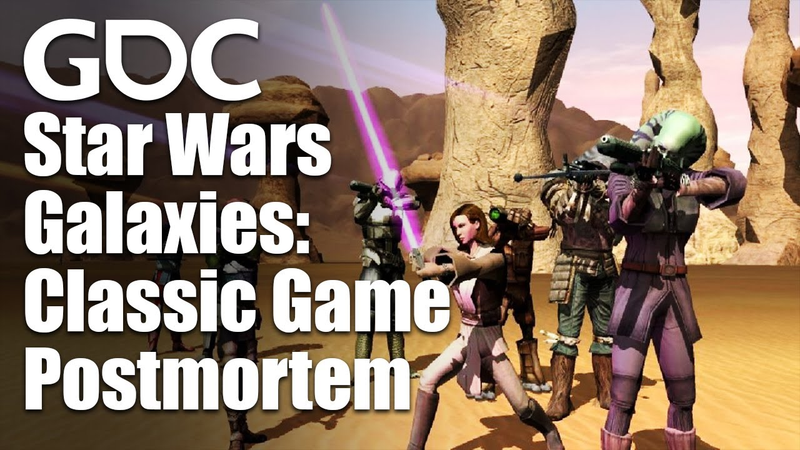
Classic Game Postmortem: 'Star Wars Galaxies'
Star Wars Galaxies represents a landmark experiment in early 2000s massively multiplayer online game design, prioritizing player agency and sandbox freedom over traditional quest-driven progression.
- Star Wars Galaxies suffered from a rushed development cycle, with the team forced to launch the game after only two years and nine months of production, resulting in a poor initial user experience and high player churn.
- The game pioneered advanced technical features for 2003, including a procedural terrain generation system that allowed for runtime building placement and a character customization system utilizing morph targets.
- The game's economy was entirely player-driven, requiring users to bootstrap resources from nothing, which created deep engagement but caused significant database stability issues.
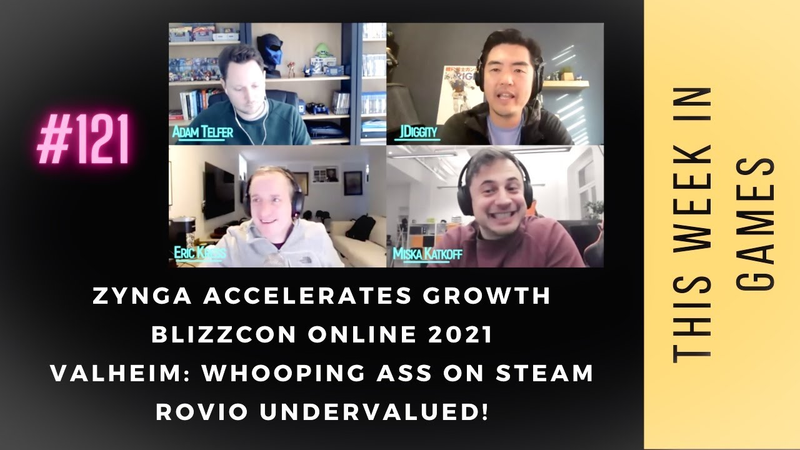
TWIG 121: BlizzCon 2021, Valheim Built By 5 Devs, Zynga Accelerates Growth, Rovio M&A Target
The gaming industry is currently defined by a tension between massive corporate consolidation and the surprising agility of small-scale development teams.
- Major industry players like EA are driving consolidation through large-scale acquisitions, exemplified by the $1.2 billion purchase of Codemasters.
- Large publishers face significant growth headwinds due to the post-IDFA environment and the technical challenges of scaling new titles while managing third-party data sharing risks.
- Blizzard Entertainment is experiencing internal development delays for major titles like Overwatch 2 and Diablo IV, forcing a reliance on legacy franchises such as the Diablo II remaster.

State of the Stream December/2020 Year in Review
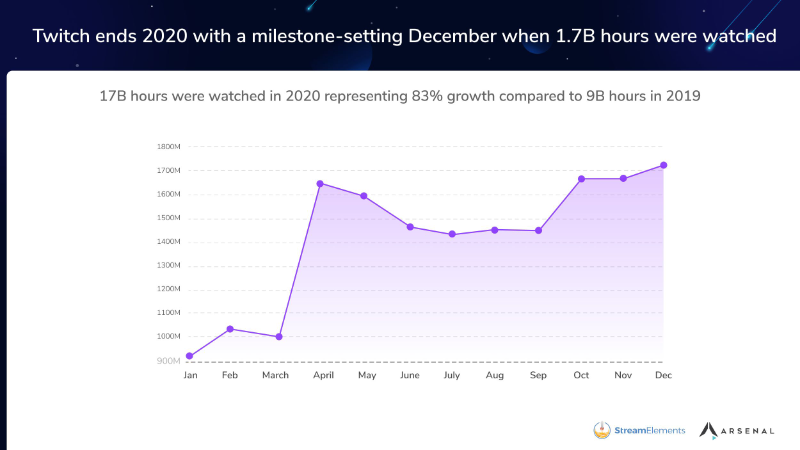
The livestreaming industry experienced unprecedented growth throughout 2020, driven largely by global quarantine measures that accelerated viewership across all major platforms.
- Twitch maintained market dominance in 2020, with the 'Just Chatting' category becoming the most-watched content segment at 1.9 billion hours.
- Valorant was the most successful new release of 2020, accumulating 737 million hours watched with a single-month peak of 334 million hours in April.
- Established titles remained central to viewership, with League of Legends and Fortnite generating 1.4 billion and 904 million hours watched, respectively.
All Aboard the Axie Infinity Hype Train
This analysis examines the volatile intersection of blockchain technology and traditional gaming, focusing on the rapid rise of Axie Infinity and the broader strategic shifts among major tech platforms.
- Axie Infinity’s play-to-earn model faces long-term viability challenges as competitors like Illuvium introduce more sophisticated financial structures, such as double-sided staking.
- Valve’s Steam Deck poses a direct competitive threat to the $11 billion gaming laptop market.
- Historical industry trends suggest that gaming 'sensations' often struggle to maintain long-term valuations comparable to established media giants like Disney.
Activision Blizzard Revenue Down 15% in Q3
Activision Blizzard’s financial performance for the third quarter of 2019 reflects a period of contraction, characterized by year-over-year declines in both revenue and active user engagement.
- Activision Blizzard reported a 15% year-over-year decline in Q3 2019 net revenue to $1.28 billion, with net bookings falling 27% to $1.21 billion.
- Total monthly active users (MAUs) across the company dropped 8% year-over-year to 316 million, with declines occurring across all three divisions: Activision (down 22%), Blizzard (down 11%), and King (down 6%).
- Revenue by division saw significant year-over-year drops for Activision (down 47% to $209 million) and Blizzard (down 38% to $394 million), while King remained relatively stable with a 1% decline to $500 million.
Gaming Bots: A Force for Good or Evil in the Gaming Industry?
The integration of artificial intelligence bots into the gaming industry presents a dual-natured impact, functioning as both a tool for player retention and a mechanism for exploitation.
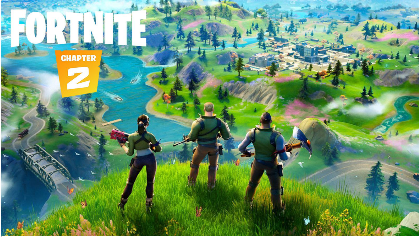
- Game developers like Epic Games and the creators of PUBG use AI bots to bridge the skill gap for new players, helping to improve retention by providing a more accessible entry point into competitive environments.
- The use of bots in titles like Fortnite is a strategic response to massive player bases—such as Fortnite's 78.3 million monthly active users as of 2019—which inherently create a wide skill distribution that can frustrate beginners.
- While bots can enhance the onboarding experience, they are also used exploitatively in MMOs like World of Warcraft and Diablo to automate resource farming, which can devalue in-game economies and diminish the value of human progression.
Companies behind it
As the documents state it.