Unreal
Game
Documents about Unreal
Unity Software (U): Huge Problems, Negative Outlook, Big Changes Required
Unity Software currently faces a critical inflection point as it struggles to transition from a growth-at-all-costs strategy to a sustainable, profitable business model.
- Unity’s revenue model is now heavily dependent on its Grow segment, which accounts for two-thirds of total revenue following the acquisition of ironSource.
- Stock-based compensation has reached 38 percent of total revenue, resulting in significant shareholder dilution.
- The company’s core Create engine business has failed to generate meaningful profits, leaving the firm reliant on aggressive monetization tactics to meet short-term EBITDA expectations.

Why I'm Sticking With Unity (Unity vs. Unreal)
The decision to continue using Unity for game development, despite significant industry controversy regarding corporate leadership and pricing, rests on a strategic evaluation of platform versatility, existing infrastructure, and technical requirements.
- Unity remains the preferred engine for projects prioritizing cross-platform accessibility, specifically for mobile, Nintendo Switch, and low-end hardware, whereas Unreal Engine is better suited for high-end 3D graphical fidelity.
- Unity’s ecosystem offers superior third-party asset availability, extensive documentation, and a larger developer community, which significantly streamlines troubleshooting and cross-platform porting.
- The decision to remain with Unity is heavily influenced by sunk costs, as existing investments in proprietary codebases and established game kits make migrating to a new engine inefficient.

AAA’s Future / Epic Layoffs / Winners, Losers & Hidden Gems
The global gaming industry is currently navigating a period of profound structural instability characterized by ballooning production costs, shifting developer loyalties, and significant corporate restructuring.
- AAA development budgets have ballooned from approximately $2 million to over $200 million, forcing publishers to prioritize established intellectual property and aggressive monetization to offset financial risk.
- Corporate growth strategies are collapsing, evidenced by significant layoffs and divestitures at Epic Games and the failure of acquisition-led expansion at Embracer Group.
- Unity’s attempt to implement a controversial per-install fee has damaged developer trust, triggering a migration toward alternative engines like Godot and Unreal Engine.
Epic Games Has Massive Layoffs
Epic Games recently announced a significant workforce reduction, laying off approximately 830 employees, which represents 16% of its total staff.
- Epic Games has laid off approximately 830 employees, representing 16% of its total workforce, to address a long-standing financial imbalance where expenditures consistently exceeded earnings.
- CEO Tim Sweeney stated that the transition toward a creator-led ecosystem for Fortnite has resulted in lower profit margins, necessitating structural economic changes.
- Approximately two-thirds of the job cuts were concentrated in non-core departments, such as administrative functions and influencer relations, rather than core development teams.

New Unity Pricing Has Leaked
Unity’s recent attempt to overhaul its pricing structure has triggered significant industry backlash, forcing the company to backtrack on controversial elements of its proposed runtime fee policy.
- Unity is revising its runtime fee policy to include a fee cap of 4% of revenue for customers earning over $1 million annually.
- The company has confirmed that installation counts will not be applied retroactively to existing game titles.
- Unity is shifting toward a self-reporting model for revenue thresholds to address developer concerns regarding transparency and tracking.

After Using Unity For 10 Years, I Have Some Thoughts
The primary purpose of this analysis is to evaluate the impact of Unity’s controversial 2023 pricing policy changes on the game development community.
- Unity’s 2023 pricing policy changes caused a critical erosion of developer trust, primarily due to the introduction of opaque, install-tracking technology perceived as invasive.
- A survey of nearly 7,000 developers revealed a significant shift in engine preference, with 42% favoring Unreal Engine for future projects compared to only 22% for Unity.
- The shift to install-based fees poses an existential financial risk to mobile developers and those using subscription models like Game Pass, where fees could disproportionately consume revenue.

Unity Sparks an Uproar / YouTube Instant Play / Roblox Developers Conference
The gaming industry is currently navigating a period of significant structural and financial recalibration, characterized by cooling investment climates and aggressive monetization strategies.
- Unity’s new runtime fee based on game installs has triggered widespread industry backlash, threatening its market dominance as developers migrate to alternatives like Godot and Roblox.
- Story Protocol secured $54 million in funding, highlighting a growing industry shift toward blockchain-based automated intellectual property management and modernized royalty tracking.
- Roblox is aggressively targeting demographic expansion and professionalization by launching on PlayStation and VR, while introducing direct USD payouts to attract mature creators.
How 'Fortnite' Designers Made Their Own Tools
The development of Fortnite necessitated a fundamental shift in workflow strategy when traditional, spreadsheet-based quest editing systems proved too error-prone and inefficient for the game’s rapid production cycle.
- To resolve a production bottleneck where quest creation took days and was prone to errors, Fortnite's quest team empowered designers to build their own tools using Unreal Engine's Blueprint-driven Editor Utility Widgets.
- By shifting tool development to designers, the team reduced the complexity of the quest editor from six pages of tightly packed properties to a more user-friendly two-page interface.
- The new designer-centric workflow allowed for the creation of quest templates, which enabled fine-grained control and automated the addition of specific event rewards across multiple quest types.
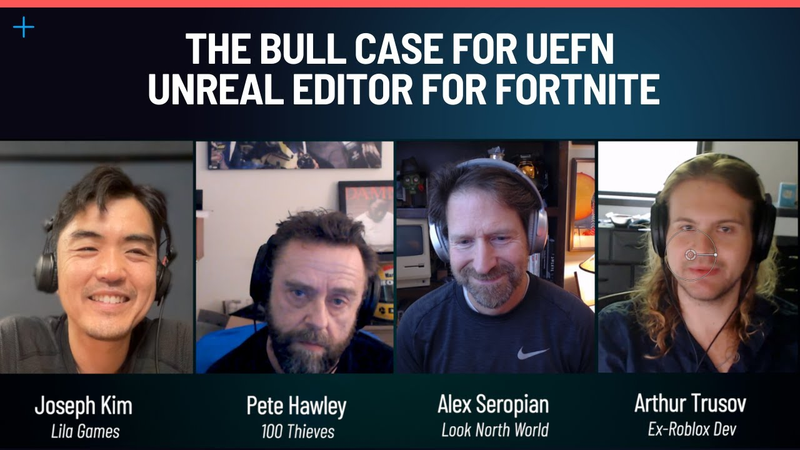
Why legendary developers are jumping onto Unreal Editor for Fortnite (UEFN)!
Unreal Editor for Fortnite (UEFN) is emerging as a transformative platform for game development, attracting industry veterans by bridging the gap between professional-grade Unreal Engine capabilities and the massive, pre-existing audience of the Fortnite ecosystem.
- UEFN enables small teams of approximately five people to develop and ship high-fidelity game experiences within six-week cycles.
- The platform provides a competitive advantage by combining professional-grade Unreal Engine tools with access to Fortnite’s massive, pre-existing player base.
- UEFN is positioned as a higher-quality alternative to platforms like Roblox, prioritizing technical fidelity and customization over short-term content trends.

How 100 Thieves is Building Beyond Esports
100 Thieves functions as a diversified gaming lifestyle brand, deliberately moving beyond the traditional esports model to establish a sustainable, multifaceted business.
- 100 Thieves is diversifying its revenue streams beyond esports by operating independent business units, including the apparel brand Higround and the energy drink line Juvee.
- The company is shifting its business model from aggressive, unchecked growth toward a strategy focused on operational sustainability and strict fiscal discipline.
- To ensure long-term viability, 100 Thieves advocates for publishers to spin off esports divisions into independent, third-party operated entities to better align commercial incentives.
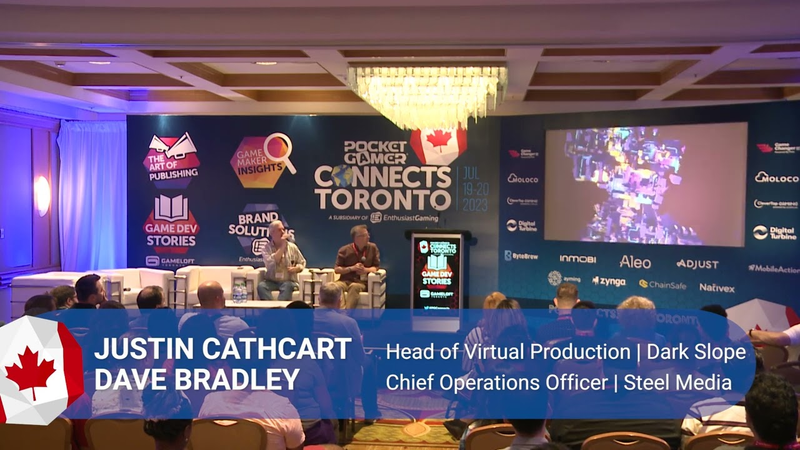
Fireside Chat: Virtual Production: A Peek Behind the Curtain for Game Devs & 3D Artists
Virtual production represents a significant technological convergence between the gaming industry and traditional filmmaking.
- Virtual production leverages real-time game engines like Unreal Engine and Unity to display 3D environments on LED volumes, enabling in-camera visual effects (ICVFX) that replace traditional green screens.
- The Virtual Art Department (VAD) serves as the essential bridge between traditional art departments and technical teams, focusing on optimizing 3D assets for real-time performance on LED walls.
- Industry organizations such as SMPTE are currently working to establish necessary standardization protocols for metadata, color science, and interoperability between game development tools and film production requirements.
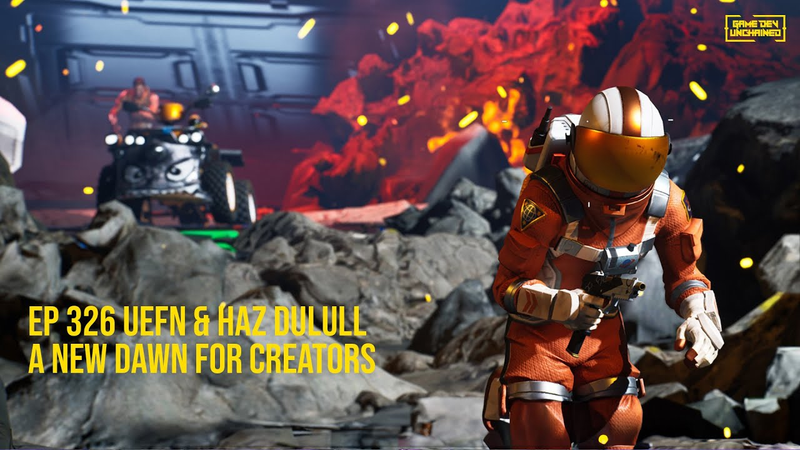
UEFN & HaZ Dulull- A New Dawn for Creators | 326
The convergence of film and video game production is fundamentally reshaping the creative landscape, driven by the widespread adoption of real-time technologies like Unreal Engine.
- Real-time technologies like Unreal Engine have equalized the quality threshold between animated cinema and game cinematics, allowing small, remote teams to produce high-end 4K content without massive studio infrastructure.
- Unreal Editor for Fortnite (UEFN) provides a direct pipeline for creators to distribute interactive experiences to massive, global audiences on major gaming consoles.
- The 400MB memory limit within UEFN acts as a constraint that forces optimized development and encourages creative experimentation for branded experiences.