Toy Blast
Game
12 documents in the library are about Toy Blast, from writers such as Deconstructor of Fun, AppMagic and GameRefinery. Each has a summary and key insights with the page they come from.
Connections
The documents about Toy Blast on the inner ring, the other games and companies they name on the outer one. Select a cover to see it up close and open it in a new tab; drag to move, pinch or Ctrl + scroll to zoom.
Key figures from the reports
Mobile titles accounted for 97% of total revenue, with key performance drivers including Toon Blast, Toy Blast, CSR Racing, Empires & Puzzles, and Merge Dragons!.
Game World Observer, 2021 · Zynga Reports Record-Breaking Revenue, Buys Golf Rival Developer StarLark
Zynga acquired Peak Games for $1.8 billion to bolster its 'forever franchises' portfolio, specifically targeting the long-term revenue potential of Toon Blast and Toy Blast.
PocketGamer.biz, 2020 · PocketGamer.biz Podcast Episode #6: Zynga buys Peak, Sonic the Hedgehog movie sequel, and more!, p. 4
The publisher's revenue is heavily concentrated in two titles: Toy Blast, which generated $602 million (51%), and Toon Blast, which generated $556 million (47%).
Sensor Tower, 2019 · Peak Games Exceeds $1 Billion in Lifetime Player Spending
Documents about Toy Blast
Clickers Genre Explained
The evolution of the clicker—or blast—genre represents a strategic shift from deterministic, puzzle-heavy gameplay to a more casual, luck-driven experience.
- The blast genre shifted from high-friction, strategy-intensive puzzle designs like Pet Rescue Saga to streamlined, luck-driven mechanics that prioritize accessibility.
- Toy Blast and Toon Blast successfully captured market share by replacing complex scrolling boards and saga maps with static board structures that lowered the barrier to entry.
- Toon Blast achieved significant commercial success by refining the blast model, eventually generating double the revenue of its predecessor, Toy Blast.
The 'Impossible' Evolution Of Toy Blast
The evolution of the mobile game Toon Blast serves as a case study in revitalizing aging titles through rapid feature adaptation and aggressive live operations.
- Toon Blast achieved a significant revenue surge in late 2023, successfully decoupling its financial performance from the broader, declining blast subgenre.
- The rapid integration of the 'Super Light Bulb' mechanic—adopted from Royal Match within three months of its industry emergence—was the primary catalyst for growth.
- The Super Light Bulb feature revitalized the game by adding strategic depth to the core loop, allowing players to clear entire colors or double special item effects.

How Toon Blast Became the Best Business in Puzzle
The mobile puzzle game Toon Blast has achieved a remarkable financial turnaround, demonstrating that mature titles can significantly increase revenue despite a shrinking user base.
- Toon Blast achieved a massive turnaround by increasing its US ARPDAU from a range of $0.17–$0.38 to $2.00–$3.00, resulting in monthly revenue stabilizing above $35M in 2024 despite a 90% decline in downloads from its peak.
- The integration of the 'Super Light Ball' feature—a mechanic popularized by Royal Match that doubles the effect of special items—acted as a critical revenue driver by increasing difficulty headroom and leveraging loss aversion during out-of-moves prompts.
- The game’s live-ops strategy shifted from short, isolated daily events to longer, overlapping formats that compound player engagement and purchase opportunities, mirroring midcore progression systems.
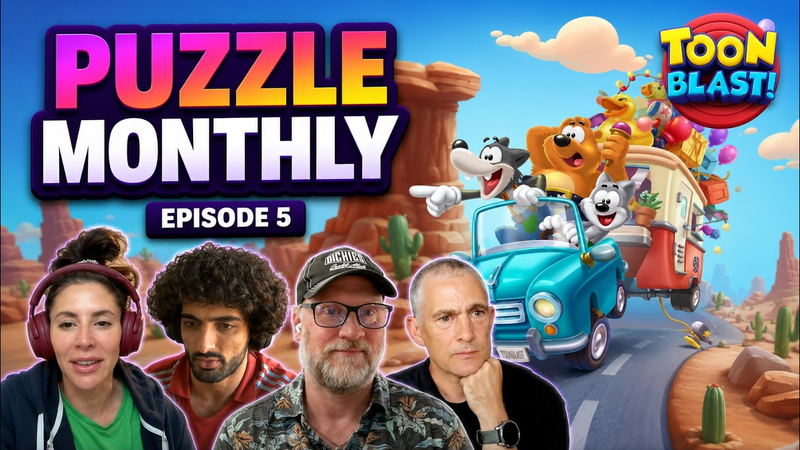
Puzzle Monthly #5: The Secret Behind Toon Blast's Success
Toon Blast maintains its market dominance by fundamentally evolving the clicker sub-genre, moving away from the deterministic, high-friction gameplay that characterized earlier titles like Pet Rescue Saga.
- Toon Blast achieved market dominance by replacing deterministic, high-friction gameplay models found in titles like Pet Rescue Saga with a more accessible, luck-based experience.
- The integration of the 'Super Light Ball' mechanic served as a critical driver for increasing both player retention and revenue by enhancing the core board-clearing loop.
- The game successfully transitioned from short, isolated events to overlapping, long-term engagement structures, effectively revitalizing performance among a mature user base.
Casual Games Report H1 2026: Growth Beneath the Still Surface
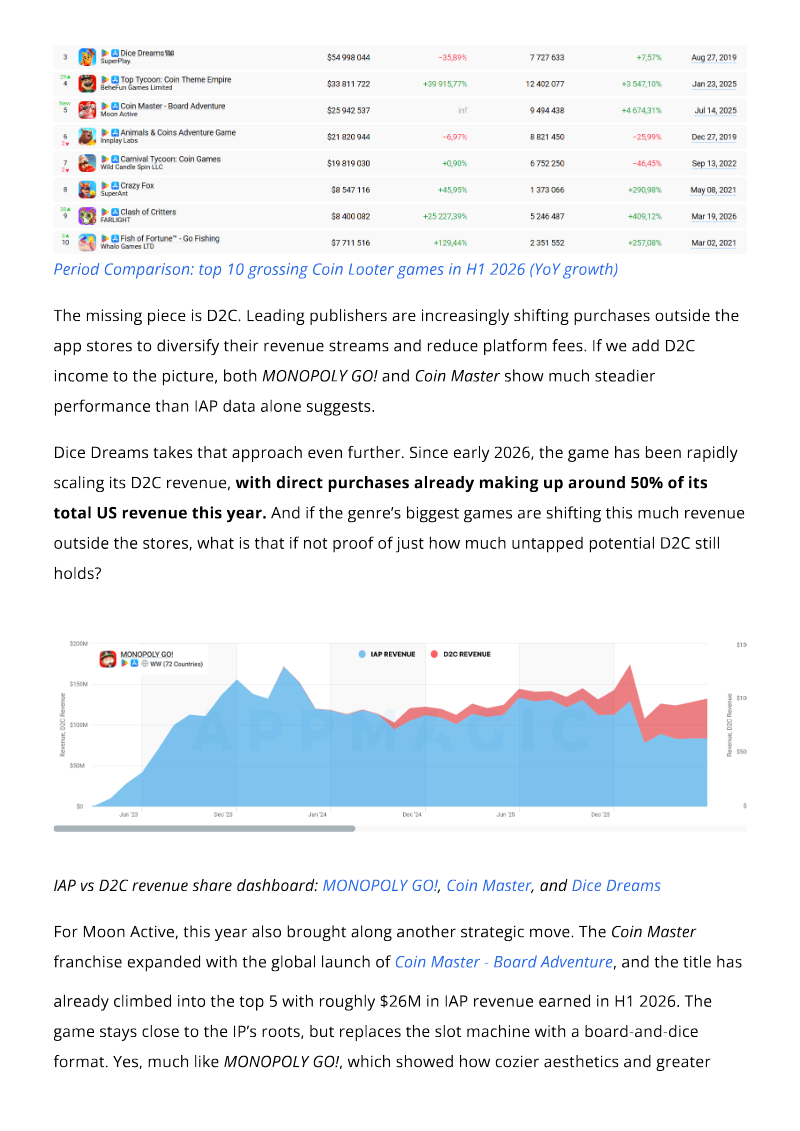
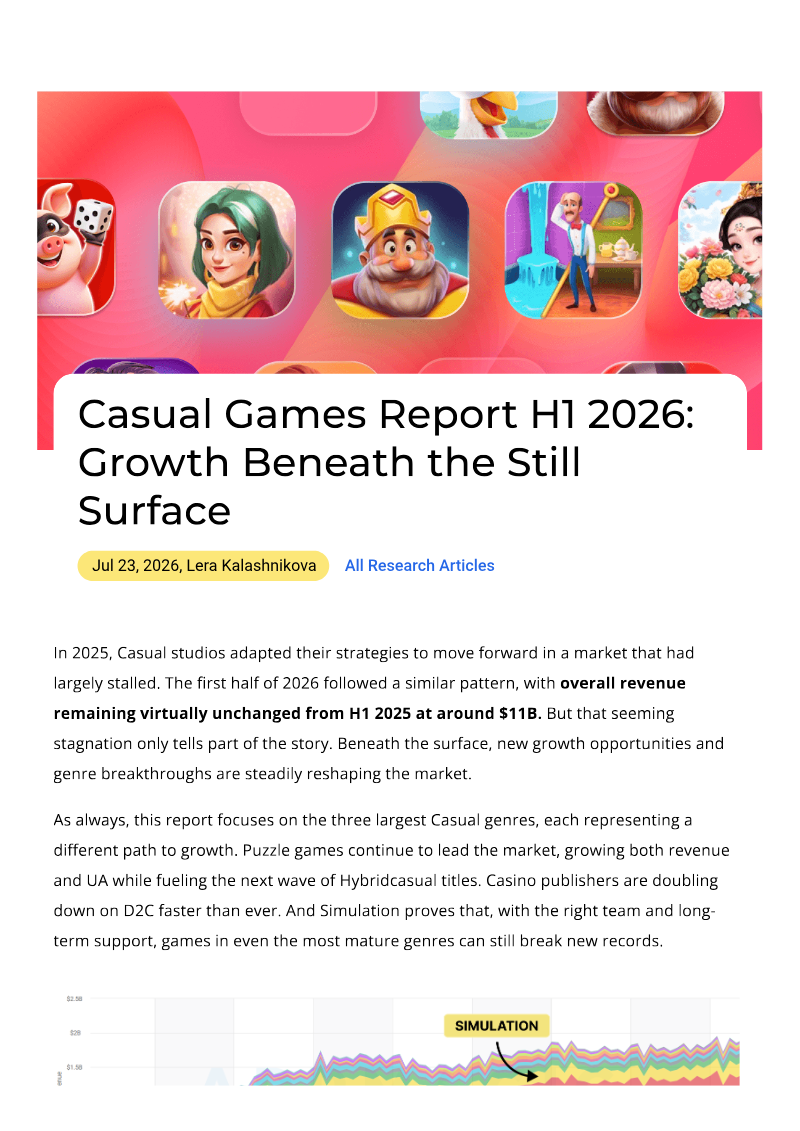
The casual gaming market maintained a stable valuation of $11 billion during the first half of 2026, characterized by a strategic shift from high-volume experimentation toward the refinement of established gameplay loops.
- The casual games market remained stagnant in H1 2026 with $11B in revenue, mirroring H1 2025 performance despite significant shifts in genre-specific growth.
- Merge-2 is the fastest-growing casual genre, nearly doubling its revenue to $1.2B in H1 2026 with a 20% year-over-year increase in downloads.
- Match-3 remains the largest puzzle subgenre at $2.4B, with Dream Games' 'Royal Kingdom' reaching the #3 market spot through a strategy of scaling limited titles and integrating diverse mini-game events.

Daily Missions in Puzzles: Why Should We See Them More Often?
The mobile puzzle game industry is increasingly adopting daily mission systems to drive player retention and habitual engagement.
- Mobile puzzle games are shifting from passive login rewards to explicit, gameplay-driven daily mission systems to increase session frequency and habitual engagement.
- Centralized daily mission structures are replacing fragmented, time-limited event models previously popularized by titles like Candy Crush Saga, Toy Blast, and Project Makeover.
- Games such as Royal Match and Time Blast are leading the industry transition toward explicit mission integration to shorten user funnels and clarify value propositions.
Time Blast: Reinventing the Blast Genre
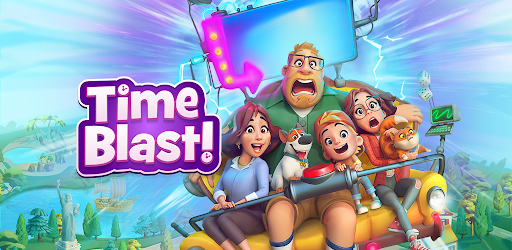
Time Blast, a mobile puzzle game developed by Playabit, serves as a case study for the potential revitalization of the stagnant Blast subgenre.
- Playabit’s Time Blast attempts to revitalize the stagnant Blast subgenre, which has recently lost its second-place market position to Merge games.
- The game integrates Match-3 mechanics—specifically propeller power-ups, swappable power-ups, and non-stacked combinations—to increase player agency and randomness compared to traditional deterministic Blast gameplay.
- Time Blast differentiates itself from market leaders like Royal Match by utilizing a unique, quirky visual style and high-quality asset clarity.
Zynga Reports Record-Breaking Revenue, Buys Golf Rival Developer StarLark
Zynga achieved record-breaking financial performance in the second quarter of 2021, reporting $720 million in revenue, a 59% increase year-over-year.
- Zynga reported record-breaking Q2 2021 revenue of $720 million, a 59% increase year-over-year.
- Zynga announced the acquisition of Chinese studio StarLark, developer of the mobile hit Golf Rival, for $525 million in a deal expected to close in Q4 2021.
- Zynga finalized its $250 million acquisition of Chartboost to bolster its mobile advertising and monetization capabilities.
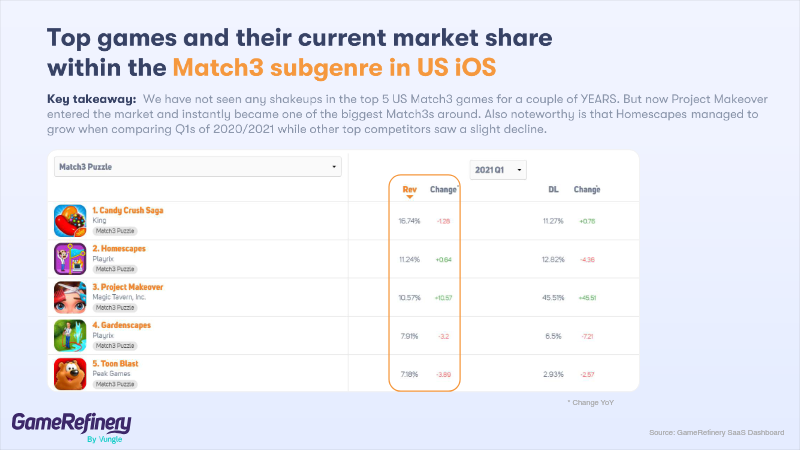
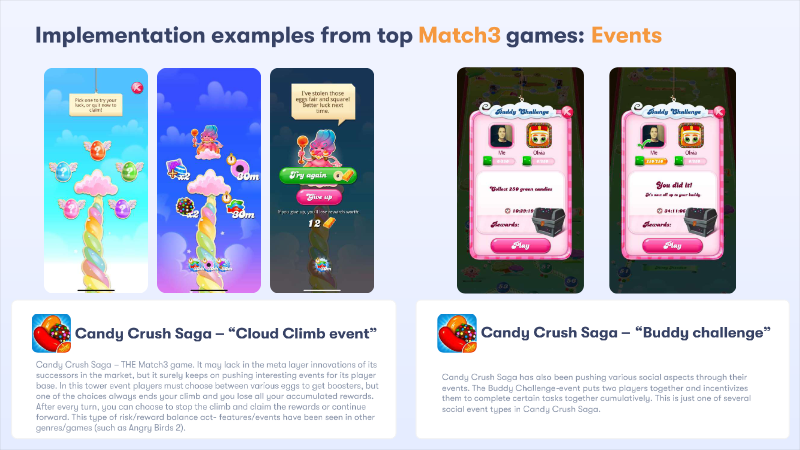
Match3 Genre Snapshot: US iOS (May 2021)
The Match3 subgenre remains the most lucrative segment within the US iOS mobile gaming market, accounting for approximately 16% of total regional revenue.
- As of May 2021, the Match3 subgenre accounts for approximately 16% of total US iOS mobile gaming revenue.
- No new Match3 titles entering the top 500 grossing rankings over the last 18 months utilize standard swapping mechanics, indicating a shift toward gameplay diversification.
- Modern Match3 success is increasingly driven by meta-layers, specifically decoration and customization features seen in titles like Royal Match and Project Makeover.

PocketGamer.biz Podcast Episode #6: Zynga buys Peak, Sonic the Hedgehog movie sequel, and more!
Zynga’s acquisition of Peak Games for $1.8 billion marks a pivotal expansion of its forever franchises portfolio, specifically targeting the sustained engagement of titles like Toon Blast and Toy Blast.
- Zynga acquired Peak Games for $1.8 billion to bolster its 'forever franchises' portfolio, specifically targeting the long-term revenue potential of Toon Blast and Toy Blast.
- Epic Games is actively challenging mobile app store ecosystems by advocating for an independent iOS storefront, though industry skepticism persists regarding the technical feasibility of such a platform.
- Casual gaming giants like Rovio and Playrix are pivoting toward mid-core development by acquiring studios such as Dark Fire Games and Cateia Games to integrate RPG mechanics and narrative depth.
Peak Games Exceeds $1 Billion in Lifetime Player Spending
Peak Games has achieved a significant financial milestone, surpassing $1.1 billion in cumulative gross player spending.
- Peak Games has surpassed $1.1 billion in lifetime gross player spending as of Q2 2019.
- The publisher's revenue is heavily concentrated in two titles: Toy Blast, which generated $602 million (51%), and Toon Blast, which generated $556 million (47%).
- In Q2 2019, Peak Games generated $192 million in revenue, marking an 11% year-over-year increase from the $173 million earned in Q2 2018.

Toon Blast and the Death of Saga
The mobile puzzle game industry is undergoing a fundamental shift as developers move away from the traditional "Saga map" progression model.
- Peak Games abandoned the traditional linear 'Saga map' UI in Toon Blast to prioritize live events and social features, signaling a shift away from the model popularized by Candy Crush.
- The decline of Facebook integration as a primary driver for social virality and player retention has forced casual puzzle developers to adopt guild and clan systems similar to mid-core games like Clash of Clans.
- Engagement and competitive events, such as 'Star Chests' and 'Crown Rush,' have become the primary drivers of revenue growth and player retention, replacing the passive progression of the traditional Saga map.