Transcript
[music]
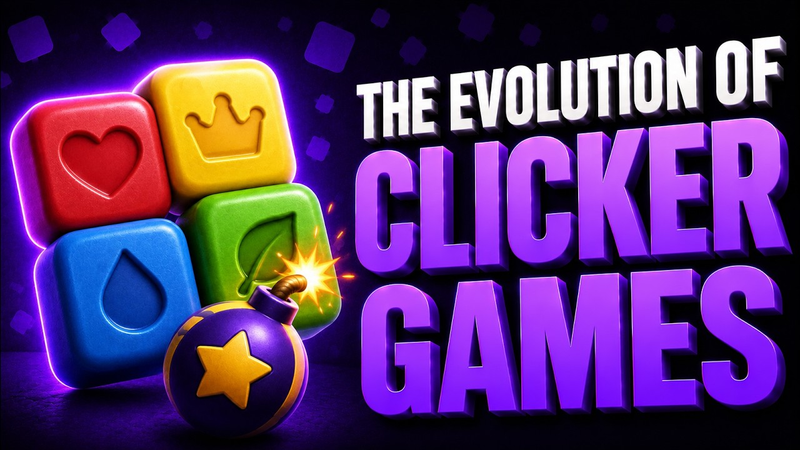
So, let's talk about clickers, which is I mean, we call it blast, but it's clickers and and it's a match-two clicker, which is like, you know, this is a this is a old word for it. We worked on a couple of them at King. Biggest one was Pet Rescue Saga. That was the time when Toy Blast came out. And there's a huge change You still go and download Pet Rescue. It's still out there. It's a very interesting game to compare with the blast games. And the reason it's interesting is it's a very, very puzzly game. It was the game the CFO and the CMO liked the best. Anybody who likes math equations with proper answers, they like these kind of games. There's a correct answer. It's not a luck box. And so the problem with it is it ends up not being casual enough. So, a lot of people don't enjoy it. We saw a really wonderful curve. That's one of the rarest things to see in games. So, usually what happens if you look at like the amount of people that succeed on the first round. Like so, you get this like curve of like this amount of people succeed and then like slowly and then it
moves down to 100% of the people succeeding. What you saw with Pet Rescue is it was lower and went up for a little bit because it took you a couple rounds to figure out what the correct answer was. And then once you figured it out, you could solve it. But that meant the game was built around this friction. As a sidebar, that used to be considered very bad in puzzle. Now, there are a bunch of puzzle games like the solitaire associations, which to me work just like Pet Rescue. They're hard as You have to play it three times. Block Gems is also hard as You have to play it multiple times to figure out the answer. Those are things that we considered bad back then with Pet Rescue. We're trying to solve When the blast games came out, they took a whole bunch of stuff. Toy Blast basically took clicker, match-two, and made it more like Candy Crush. The way the board was structured, the entire feel of it, it felt like there was a lot more luck and a lot more fun involved and not as much strategy. And that was huge. Toy took off, did really well, and then pretty soon after that, we were running
experiments inside of King also at this time, but I mean there was everyone had saga maps back then. That was like the thing. You couldn't launch a game without a saga map. And they ripped the saga map out of or I mean made Toon Blast without a saga map. And that game took off. Completely focused on gameplay and good events. And I think it did double the revenue that Toy Blast did.
I'd forgotten that about Pet Rescue. And it was the same with Diamond Digger, right? Like every level you were rescuing the pets. You had to get them from the top down to the bottom. And so the variation in the level was like the shape of the board that you had. Yeah, completely different to what Toon Blast is like now where you basically got pretty much always a square board and it's just a bunch of blockers and can you blow all the stuff up before you run out of moves, which most of the time you can. Like there's no like mental strategy required at all really. It's just like, are you paying attention more than 5%?
Yeah, but I mean it's more fun. It's more dynamic. It is less puzzly. I just I mean there's a couple games that I've been into where you pretty much fail every two or three times before you figure out how to how to win. And some of them are pretty sure even engineered that way, which is really very interesting.
Are you thinking of Sheep and Sheep?
[laughter]
No. No, that's amazing. I would have loved that. What a great thing.
I don't know that.
So when I was still working at Big Fish looking at new game development and it's not a clicker and not a blast game, but we were looking at tile maps. So these are in the tile busters category. There was one game called Sheep and Sheep. It had three levels if I remember correctly. And the third level was virtually impossible. You were expected to fail. And if you remember how if you think about how Mahjong works, the tiles are stacked. So the order in which you pick them up can be increasingly important, but you can't control the order in which they're fall if fallen, right? So you pick up the wrong tile, you fill up your board and you fill up your trough and then you're stuck and then you basically lose the level. So, yes, so I was thinking that was one of the hardest games I ever played within
but the way it was designed was an intended fail rate for the third level.
[laughter]
Older game.
It's also I mean
So, what you're saying Dave is like before Toy Blast and Toon Blast came onto the scene, the blast market basically was too much deterministic almost to the point where like you said how color block jam and most of the association solitaire association games are like today and Toy Blast and Toon Blast sort of randomized it or made like luck a key part of the core game play experience.
Basically, they just took a match three game and instead of playing match three, you had the clicker in it which meant that you could keep the blockers and the boosters, you kept a solid screen instead of these scrolling levels. Both Diamond Digger and Pet Rescue were scrolling levels, you know, you play it and you scroll all the way down. And sometimes you'd make a decision early on that messes it up so some block falls off or something goes wrong way and then when you're at the bottom, you can't even finish it cuz the way the puzzle ends. It's a very different design,
instantly better, clearer in retention early and made obviously better.
Let's go back in time in our time machine. If you had taken Pet Rescue Saga and made those two changes, so you made it easier like Toon Blast and you removed the Saga, do you think it would have had a chance to see the success today that Toon Blast is seeing?
I mean, it would have been like four times the size of it. Um that's because uh at the time um people were playing Candy Crush and then bouncing around all the other King games and the audience was just bigger and there was no other competition. So, it would have been, you know, 10x the size of the blast games but just because there was I don't know, a tenth of the competition.
Yeah.
Yeah.
And the audience was massive already.
And then Toy Blast came out, when was that? 2015-ish?
14-15, yeah.
Toy Blast was October 2014 was the soft launch and then hard launched in 2015. And but Rescue Saga for context had already been out since 2012, so about 3 years.
So, like we're going to we're going to
talk about the more kind of like nuanced differentiations that Toon Blast had more like closer to current time, but since Toy Blast and Toon Blast introduced that more, you know, let's say fun experience the uh blast game and like they established it basically in 2014-2015 with Toy Blast. Do you think there is a like a specific or there are a set of reasons that no other team was able to replicate what Toy Blast and Toon Blast has done so far? If the core gameplay was like so obvious and it has been on the market for more than a decade. Because Toon Blast is by far the best blast game right now. Toy Blast is by a large margin is the second one and the third one is away from Toy Blast. So, like do you think there are certain reasons why any other team wasn't able to replicate it?
These games are like maybe like 2 billion and 1 billion each, so it's like 3 billion dollars, which is pretty good. But, I mean it's not like Coin Master is
what I mean is Coin Master at 10? Gardenscapes, Homescapes, Candy Crush. I mean these games are all probably over 10 billion. So, I mean the the the market opportunity if you're a team thinking who should we go after? It's also maybe one of the brilliance of the blast games. They didn't go like head-on against a match three and try to take down the match three. They picked like the third best, you know, like the clicker. I mean at that time it was maybe like match three and then bubble, right? Bubble shooters were probably considered number two. And then clickers, like I mean so so it was like going after the third and doing it much better. You created a great business.
Cookie Jam?
Cookie Jam, Farm Heroes Saga.
Panda Pop?
And Panda Pop, right? So, what did they have? They had the match Nice job, Laura. Jeez, go to the tank. Go [laughter] to the tank. Um They went after match three and bubble shooters, you know? I mean, the real question maybe we should be asking our wonderful audience is why isn't anybody going after revolutionizing bubble
shooters? Where'd that go? That was a big market, you know? Going after the clickers was like a humble Like, I think nobody was even scared of it. It was like, "Uh clickers, no market." It's like it didn't really matter much, you know? It way over performed, but most people didn't even think it was going to do that well. And I think most people think that like, I mean, it's only now I think I think we're in a renaissance of puzzle games. There's all sorts of interesting puzzle games coming out and way more innovation and way more trying new things, which is a lot of fun. And, you know, not all this like everybody piling in thinking that they're the next match three geniuses.
In retrospect, you can look at it and be like kind of relatively it's not as big as other genre, but like at the time we were kicking out everybody was kicking out games. It still happens now like left, right, and center. And it just so like looking back from this perspective, you can see that Toy Blast did become a thing, not a massive thing, but Toon Blast actually is like a decent business. That's the kind of evolution of what happened. Toy Blast could have been nothing.
Do you know what I mean?
We also know that the teams that made those games were like, you know, unbelievably high-quality teams.
[music] [music]
Auto-generated captions from YouTube — names and numbers may be misheard.














Comments