1 free read left. Create a free account for unlimited reading + AI research.
Create free account
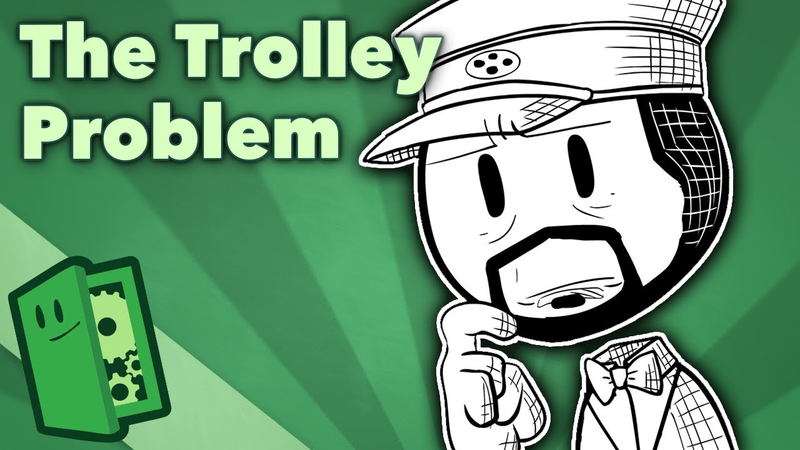
The Trolley Problem - Designs With No Right Answer - Extra Credits
Key insights
6 takeaways- 01The trolley problem, formalized by philosopher Philippa Foot in 1967, serves as a foundational ethical framework for evaluating the trade-offs between inaction and active intervention in life-or-death scenarios.
- 02The trolley problem has transitioned from a purely theoretical thought experiment into a practical design consideration for real-world technologies like autonomous vehicles and medical triage systems.
- 03Game designers utilize the trolley problem to move beyond binary morality systems, forcing players to confront their personal ethical codes through irreversible, high-stakes decisions.
- 04By removing the possibility of a 'correct' answer, developers create immersive environments that mirror the complexity of real-world ethical dilemmas.
- 05Titles such as Telltale’s The Walking Dead, Life is Strange, BioShock, and Fallout effectively implement this design to prioritize player self-reflection over objective correctness.
- 06In gaming, the primary value of the trolley problem lies in the philosophical reasoning behind a player's choice rather than the specific outcome of the narrative event.
Ask AI about this video
Transcript
Hey everyone. Wow, why is there music playing at the beginning of the episode? Oh, right, right, right. Now I I get it, but I don't think we should really do this. It seems a little cheap, right? Oh, what the heck. Clang, clang, clang went the trolley. Five folks stand on the rail. Save five lives and kill just one. From the moment I heard it, I felt morally indecisive. Alas, this isn't the long-awaited Extra Credits episode about the correlation between old movie musicals and game design. Though I am pushing for that one soon, Judy. Rather, today I'm going to need your help with a different philosophical challenge in a train car. So, hop aboard. This episode is brought to you by .site domains. If you're looking to build a website, you can find a short and memorable domain name on the .site domain extension. To register, visit www.get.site
and use the code Extra Credits to get 50% off your purchase. The trolley problem is a well-known ethical thought experiment that recently popped back into pop culture via the fantastic television show The Good Place. Seriously, side note, go watch that show if you already haven't. It's phenomenal. As Judy tells us, the trolley problem was crafted in its current form by British philosopher Philippa Foot in 1967 as part of a larger ethical question. It goes like this. An unstoppable trolley with only you on board is racing out of control toward five people standing on the track. Now, why they don't just move, Professor Foot doesn't say. But wait, there's a junction ahead of the trolley with a side track diverging from the main line. And you can easily pull a lever to divert the train if you so choose. But wait again, you can also see a single different person standing on said side track. So, what do you do? Do nothing and let the trolley hit the first five, or pull the lever and doom the one lone victim? One school of philosophy argues that deciding to pull the lever and thereby sacrificing one person to save five is the best course
of action, while another says that the act of choosing to kill either one person or five people is morally wrong. So, to do nothing is correct. This brain teaser has been with us in one variation or another since 1905, when philosophy professor Frank Chapman Sharp presented a variation of it to his undergraduate students. In Sharp's version, rather than being on board the trolley, they were standing next to the tracks near a lever that controlled track operation, but the lone victim on the side track is their own child. Yeah. And while this may seem like an entirely make-believe scenario, many people are confronted with situations similar to this in real life. For instance, physicians with limited time or resources during a pandemic may be forced to make decisions about which patients they can treat. Should they struggle to save the most serious cases or treat a greater number of patients who have a better chance of surviving? Not to mention the trolley problem is an issue now being debated in regards to a completely different vehicle, one where the decision isn't left up to a human at all, but rather software. Of course, here I'm referencing autonomous driverless vehicles that are in theory supposed to make our roads safer. But if a car with
four people in it is crossing a bridge when someone steps out in front of the car, how should the car react? Do we want the vehicle's software to value the driver and passengers more, or should it cause the car to swerve off the bridge to save the life of one pedestrian? But regardless if a human or a machine is making the call, what is the best solution to the trolley problem? I mean, what would you do? Fortunately, not only is this question a great conversation starter at parties and a terrific icebreaker on a first date, or maybe not, it's also an ethical conundrum we as gamers face quite a lot. Because many of the games we play force us to make choices like the trolley problem all the time. And the best part is, in games, designers don't need there to be a right answer. In fact, in most cases, designers want both sides of every choice to be meaningful to the player's experience. For instance, think about the life and death decisions healers make in MMOs like World of Warcraft or Final Fantasy XIV. When fighting a raid boss, do I heal the tank that's protecting our team or the mage who's really toasting that sucker with her
pyroblasts? It's a difficult decision and my resources are limited. So, with that in mind, let's look at some games that revel in their trolley problems. And it's not hard to start with Telltale's The Walking Dead. In that series, almost all the trolley problems are life and death where you're weighing various characters' lives against each other. Save Carley or Doug? Save Shawn or Duck? Kill Lee? No, not our writer. We need our writer. And those were just some of the choices in season 1. But whichever the player chooses, the choice is meaningful to them because of the philosophical weight that's tied to their personal understanding of that choice. Another great example is the choices we're given in Life is Strange. From telling about the gun to dealing with Victoria to confronting Kate. Situations like these affect both the player character Max and you as the player playing the game in multiple meaningful ways depending on your own code of moral ethics. And many game endings feature trolley problems. The choices of what you do with BioShock's little sisters, the moral conundrums you face at the end of a Fallout game, the list could go on and on. But what if you want a bucket of trolley problems all in
one place? Then try Dr. Trolley's Problem. Oh, yeah. It's a game featuring dozens of ethical problems inspired by You get the idea. So, when looking at the trolley problem, it's important to realize that it's really not a test of right or wrong. It's a challenge to the ethical systems of those who take it. One life or five? Intervene or do nothing? But now I want to hear your thoughts on this. So, I'm going to leave you with a hopefully meaningful choice. In the comments below, either share some of your own examples of great trolley problems in games and tell us what you thought of those or just tell us what you would do in the classic trolley problem and why. Until next time, everyone. Okay, so Judy, would you say that the contrivances of everyday people bursting into song and dance is your medium essentially locking folks into a modal state or would you kind of consider that more like a quick time event? Once again, thanks so much to dot site for sponsoring this episode. If you're anything like me, every time you have an awesome idea for a domain name, god, it's already taken. What does that say about my creativity? Don't worry about that. You can find the perfect domain name for your business, portfolio, or
whatever awesome thing you're cooking up on a dot site extension. In fact, after redoing our website, we moved it to extracredits.site because we'll be easier to find. Plus, dot site domain names can be found on popular registrars like GoDaddy, Namecheap, and many more. And if you click below, you can get your very own dot site domain for as low as a buck 99. And after you found the perfect domain name, be sure to use the code extra credits at checkout for an extra 50% off. Legendary thanks to Ahmet Ziya Turk, Alicia Bramble, Casey Musgraves, Dominic Valenciana, Gunnar Clovis, Kyle Murgatroyd, and Orioles 1 for helping to make this show possible.
Summary
The trolley problem serves as a foundational ethical thought experiment that challenges individuals to weigh the value of human life when faced with limited, often tragic, choices. Originally formalized by philosopher Philippa Foot in 1967, the scenario forces a decision between inaction—allowing a greater number of deaths—and active intervention, which results in the sacrifice of a single individual. Beyond its philosophical roots, the dilemma has evolved into a practical concern for modern society, particularly regarding the programming of autonomous vehicles and the triage decisions made by healthcare professionals during crises.
In the context of game design, the trolley problem functions as a powerful narrative and mechanical tool. Rather than seeking a singular correct answer, game developers utilize these scenarios to force players to confront their own moral frameworks. By presenting choices where both outcomes carry significant weight, games move beyond binary morality systems. Titles such as Telltale’s The Walking Dead, Life is Strange, BioShock, and Fallout exemplify this approach, requiring players to make difficult, often irreversible decisions that reflect their personal ethical codes.
Ultimately, the trolley problem in gaming is not a test of objective correctness but a mechanism for player engagement and self-reflection. By placing the burden of choice on the player, designers create meaningful experiences where the outcome is less important than the philosophical reasoning behind the decision. This approach transforms the game environment into a space for exploring complex ethical dilemmas, mirroring real-world challenges where there is often no perfect solution.
















Comments