1 free read left. Create a free account for unlimited reading + AI research.
Create free accountWhitepaper DiGRA
1 free read left. Create a free account for unlimited reading + AI research.
Create free accountWhitepaperDiGRA
The paper argues that game designers often reuse mechanics from earlier titles, which limits originality.
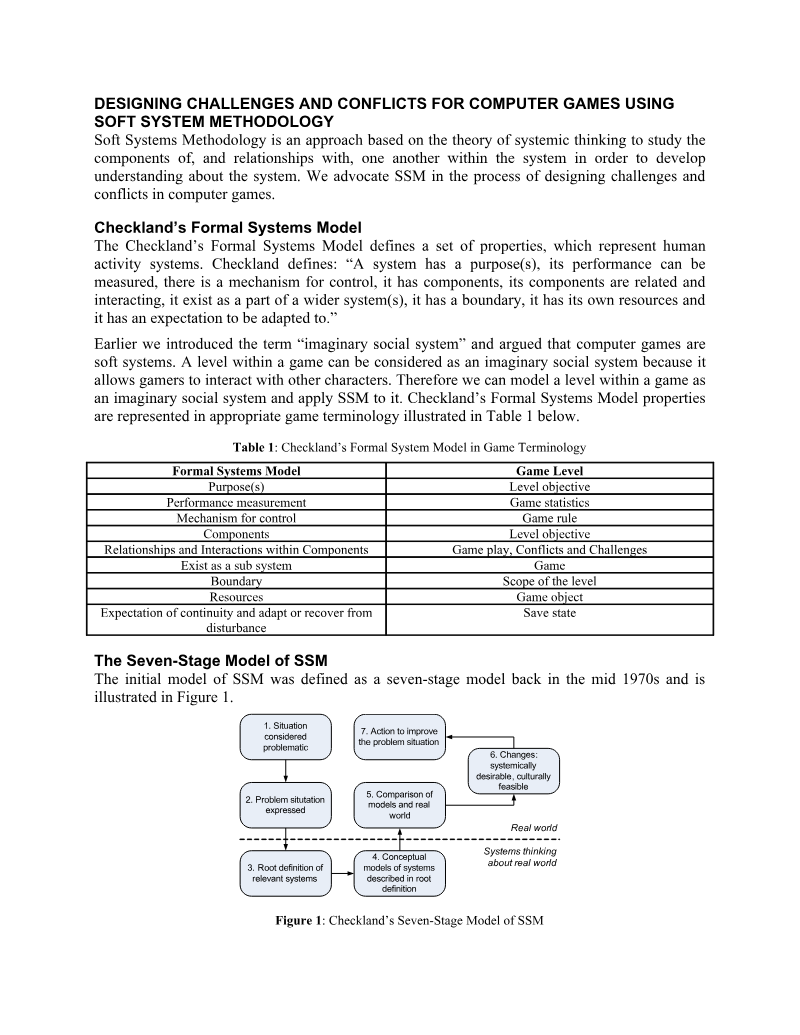
This paper proposes applying Checkland's Soft Systems Methodology (SSM) to computer game design as a structured tool for formulating challenges and conflicts. Its central argument is that game designers, particularly newcomers, often rely on familiar mechanics from earlier titles, which limits originality, and that SSM can provide a systematic way to generate and refine novel game ideas. The authors contend that although games are not soft systems in the strict sense, a game level can be modelled as an imaginary social system and analysed using SSM's concepts and procedures.
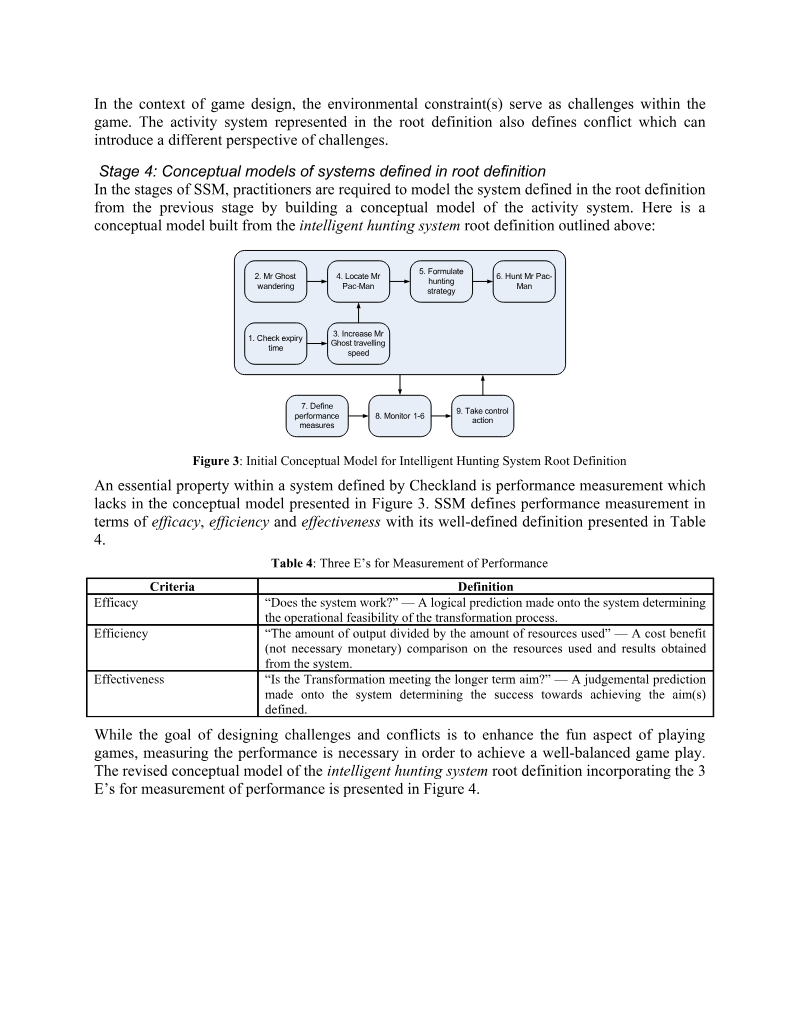
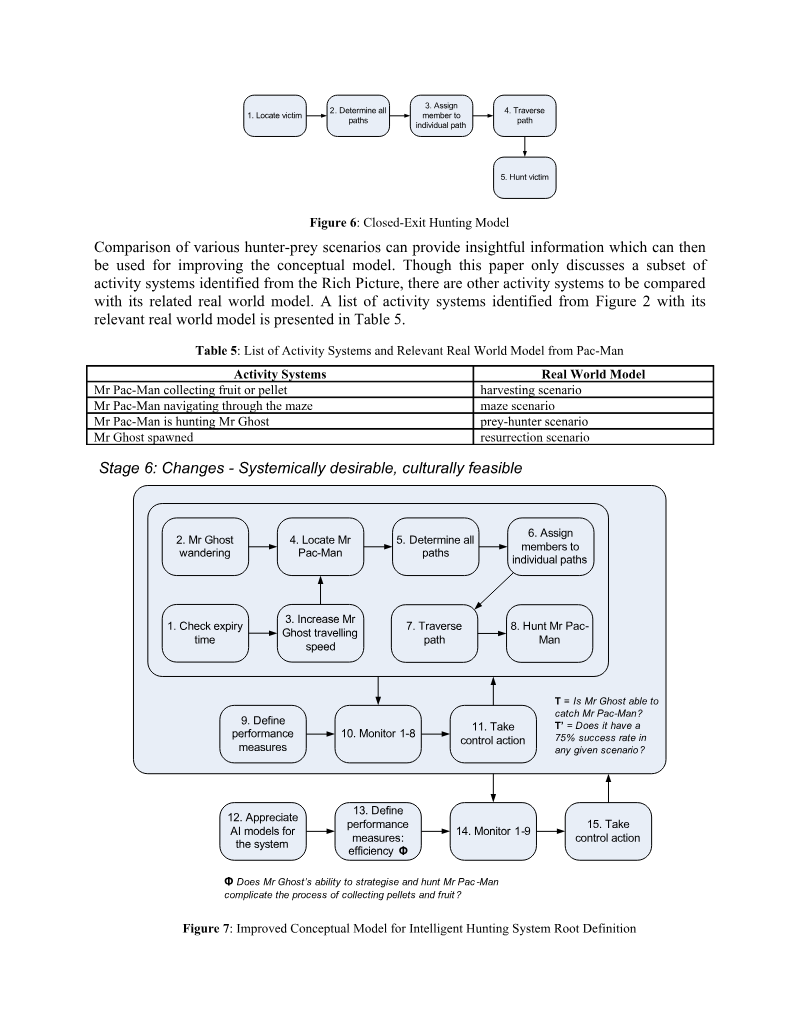
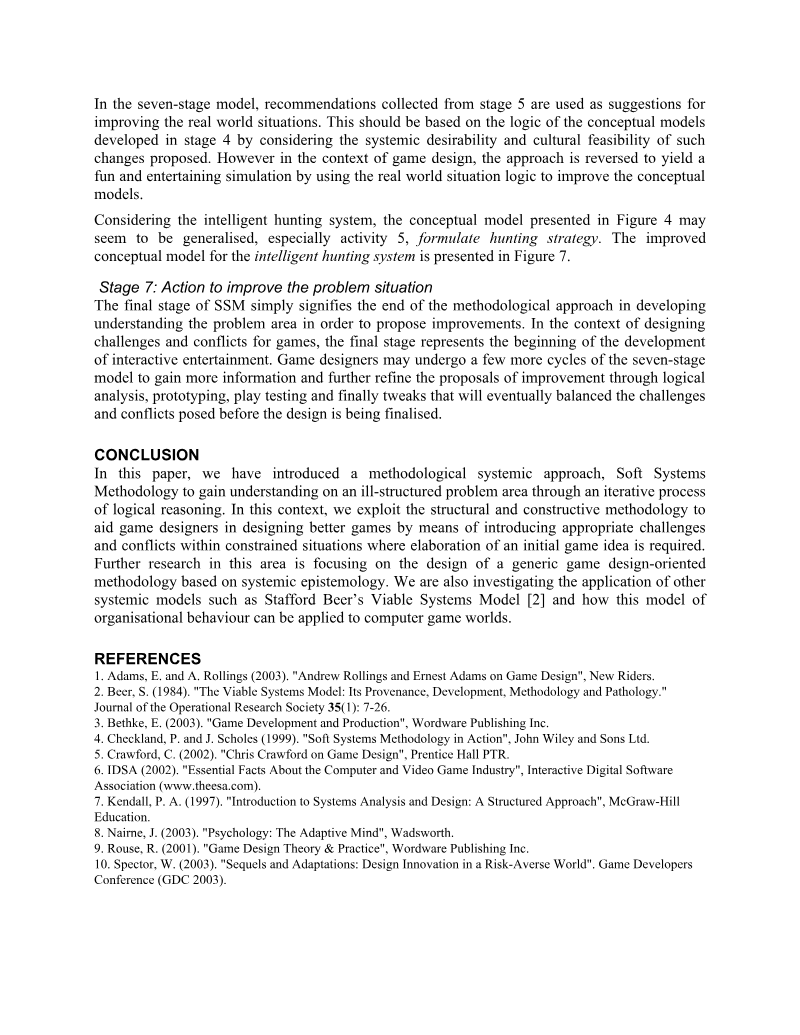
The paper supports the importance of challenge with a cited industry statistic, noting that 71.4% of gamers play because games are challenging, and it argues that conflict intensifies challenge by opposing player objectives. To operationalise the approach, the authors map Checkland's formal systems model onto game terminology, then walk through the seven stages of SSM using Pac-Man as a worked example. Methods include Rich Pictures, CATWOE analysis, root definitions, conceptual models, and the three E's of performance measurement (efficacy, efficiency, and effectiveness). The "Mr Ghost hunting Mr Pac-Man" activity system is developed in detail and benchmarked against real-world hunter-prey models such as wolf-pack and closed-exit hunting.
The scope is conceptual and illustrative rather than empirical: the work relies on a single game example and makes no reported evaluation with designers or players. Future work is identified as developing a generic systemic game design methodology and exploring Stafford Beer's Viable Systems Model for game worlds.
Each row is a game or company this document names, each column a document, oldest first. A mark means that document names it. Select a row to see those documents.
DiGRA · 2012
DiGRA · 2012
DiGRA · 2012
DiGRA · 2012
DiGRA · 2012
DiGRA · 2011
DiGRA · 2011
DiGRA · 2011
DiGRA · 2011
DiGRA · 2011
DiGRA · 2011
DiGRA · 2011
DiGRA · 2009