1 free read left. Create a free account for unlimited reading + AI research.
Create free accountWhitepaper DiGRA
1 free read left. Create a free account for unlimited reading + AI research.
Create free accountWhitepaperDiGRA
Distilling the key insights…
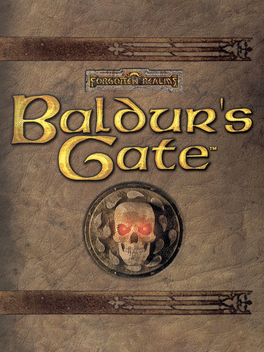
This paper by Daniel Kromand proposes a categorization system for video game avatars, aiming to establish an operational model for describing how avatars are designed. Drawing on Marie-Laure Ryan's concept of possible worlds and Murray Smith's distinction between central and acentral identification, the author argues that avatars are best understood by placing them along two continua: one ranging from open avatars, whose personalities and abilities are shaped by player choices, to closed avatars, whose traits are predetermined by the developer; and another ranging from central identification, where the player inhabits the avatar through causal control, to acentral identification, where the player relates to the avatar as an emotionally separate third person. Merging these axes yields four archetypes: central-open, central-closed, acentral-open, and acentral-closed, each illustrated with examples such as Baldur's Gate, Pac-Man, The Sims, and Little Computer People.
The analysis draws conclusions about the design implications of each category. Central-closed avatars, including many big-brand characters like Lara Croft and Mario, support strong recognizability and marketing, while central-open avatars encourage replayability and personalized self-image. Acentral-open avatars, exemplified by The Sims and Tamagotchi, reward organizing sequences of actions over isolated skill, whereas the acentral-closed category is found to be the least viable for games due to its limited player agency, though the author suggests it may suit film-like or pornographic applications. The paper also acknowledges that some avatars shift categories within a game and that the framework extends to multi-unit strategy games.
The work is primarily conceptual and theoretical, grounded in a review of ludology and narrative theory rather than empirical data, surveys, or sampled player studies. Its scope spans a broad range of games from the 1980s through the early 2000s, and its stated goal is to provide a terminology and theoretical basis for avatar analysis rather than a definitive psychological account of player-avatar relationships.
DiGRA · 2012