1 free read left. Create a free account for unlimited reading + AI research.
Create free accountWhitepaper DiGRA
1 free read left. Create a free account for unlimited reading + AI research.
Create free accountWhitepaperDiGRA
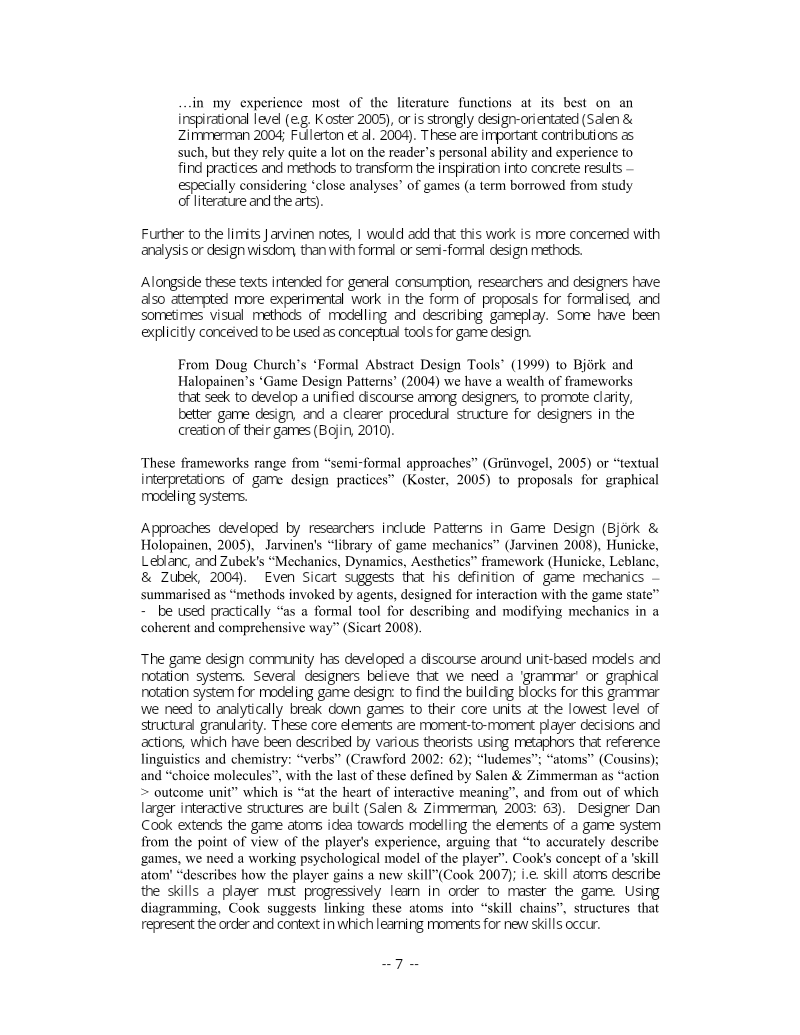
The authors argue the common binary obscures a range of phenomena produced by interactions between temporal frames. They reconceive both real-time and turn-based play as such interactions.
"Temporal Frames" proposes a formal analytical tool for studying how time operates in games, grounded in a relationist view in which temporal properties arise from relationships among events rather than from time as an independent container. The authors identify four recurring frames: real-world time, gameworld time, coordination time, and fictive time. Their central argument is that games rarely operate within a single frame. Multiple frames often coexist or succeed one another, and meaningful analysis depends on identifying each frame and the ways they interact. Examples drawn from titles such as Pac-Man, Civilization, Animal Crossing, and Half-Life illustrate how these frames shape player experience.
A key contribution is the critique of the familiar real-time versus turn-based binary, which the authors argue obscures a range of distinct phenomena produced by frame interactions. Through sequential and embedded arrangements of frames, games generate temporal anomalies such as temporal bubbles, warping, and non-uniform temporality. Cases from Final Fantasy XII, Animal Crossing, Civilization, and Grand Theft Auto III serve as evidence. The authors position their event-based framework as a unifying alternative to earlier taxonomies, including Game Design Patterns and Elverdam and Aarseth's meta-categories, by treating the temporal frame as the basic unit of analysis that makes interactions explicit and open to study.
The work closes by proposing an "Interval Control" category to capture how players determine when the next game cycle begins, a function currently dispersed across existing ontological categories. It reconceives real-time and turn-based play as interactions between frames and introduces "availability" and "immediacy" as concepts implicit in prior scholarship. The authors also treat categories as having central and peripheral members rather than discrete values. A forthcoming analysis of time-manipulation mechanics in titles such as Viewtiful Joe and Max Payne is promised as an extension of this framework.
 Grand Theft AutoGame · DMA Design · 1997 · 485 documents
 Animal CrossingGame · Nintendo Entertainment Analysis & Development · 2002 · 87 documents
 Max PayneGame · Remedy Entertainment · 2001 · 55 documents
 Half-LifeGame · Valve · 1998 · 33 documents
 Grand Theft Auto IIIGame · DMA Design · 2001 · 7 documents
Each row is a game or company this document names, each column a document, oldest first. A mark means that document names it. Select a row to see those documents.
DiGRA · 2012
PocketGamer.biz · 2025