Monster Hunter
Game
Documents about Monster Hunter

Capcom Results of Operations and Strategies: First Half of Fiscal Year Ending March 31, 2009
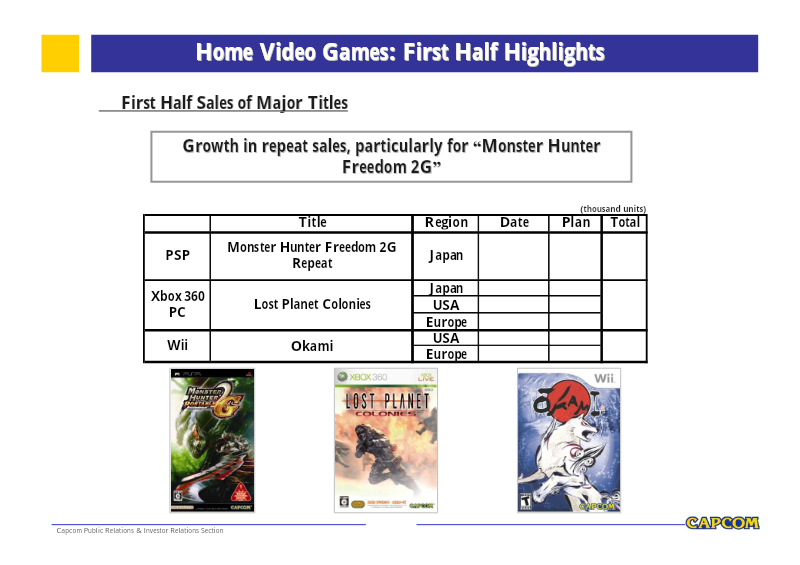
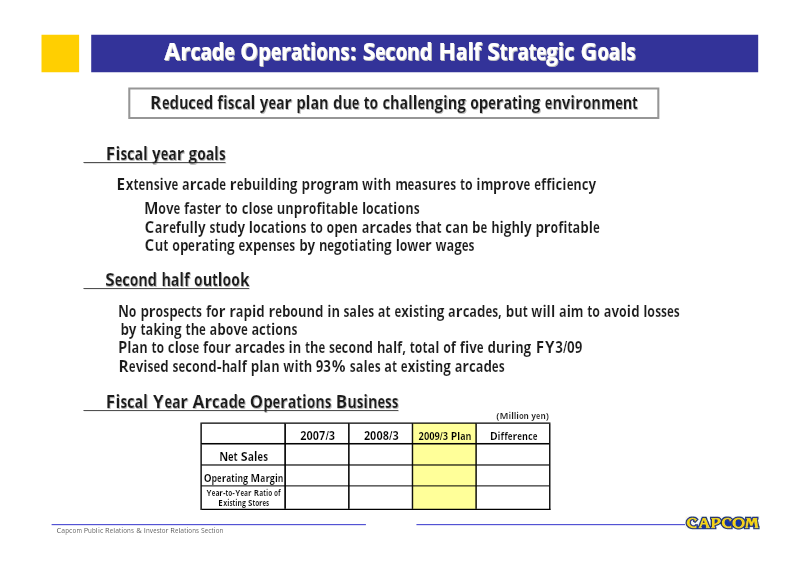
Capcom’s financial results for the first half of the fiscal year ending March 31, 2009, reflect a period of strategic transition characterized by strong profitability in the home video game segment, which offset significant underperformance in arcade operations and content expansion.
Capcom Fiscal Year Ended March 31, 2009: Additional Information for Results of Operations
Capcom’s fiscal year ending March 31, 2009, was characterized by record-breaking sales performance driven by the success of its home video game division.
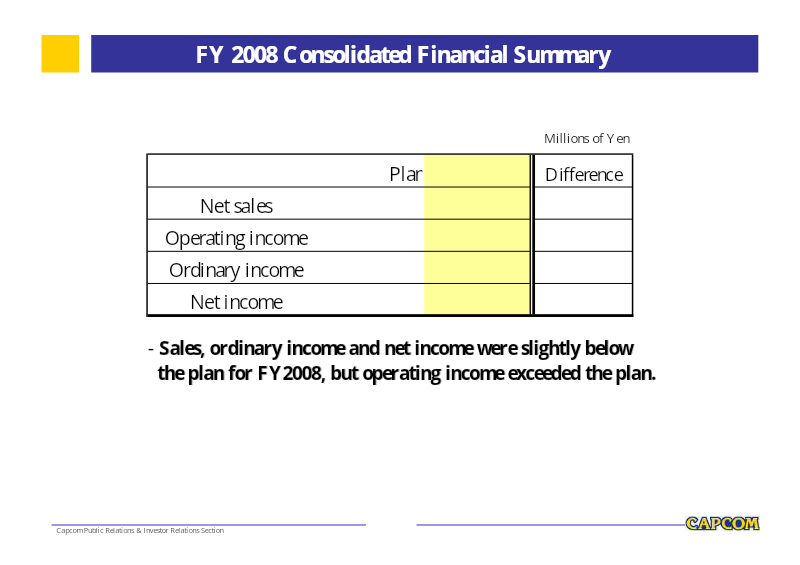
- Capcom achieved record-breaking consolidated net sales of 91.878 billion yen for the fiscal year ending March 31, 2009, a 10.6% increase over the previous year.
- Operating income reached 14.618 billion yen, successfully exceeding the company’s initial internal projections.
- Growth was primarily driven by the Home Video Games segment, specifically the success of three double-platinum titles: Resident Evil 5, Street Fighter IV, and Monster Hunter Freedom 2G.

Capcom Overview of Strategies and Plans: Fiscal Year Ending March 31, 2010
Capcom’s strategic roadmap for the fiscal year ending March 31, 2010, centers on aggressive international expansion and the maximization of its core intellectual property portfolio.

Capcom FY2007 Mid-Term Financial Results Briefing Session
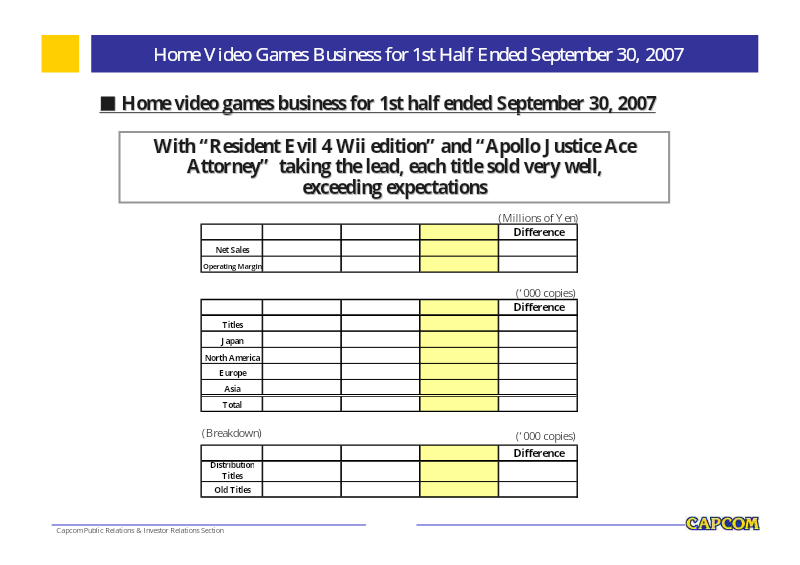
The Capcom fiscal year 2007 mid-term financial briefing outlines the company’s performance for the six-month period ending September 30, 2007, and provides strategic adjustments for the remainder of the fiscal year.
- Home video game performance exceeded expectations, driven by the success of the Ace Attorney series and Resident Evil 4 Wii edition, the latter becoming the first domestic third-party title to surpass one million units.
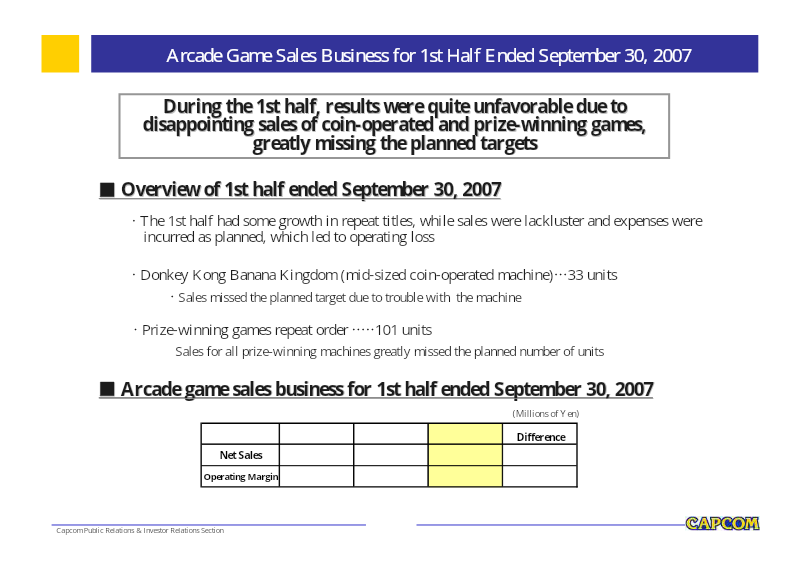
- Arcade operations revenue declined to 88% of the previous year's levels due to heightened competition and the rising popularity of home consoles.
- The arcade game sales division recorded a significant operating loss, largely attributed to a product recall of the Donkey Kong Banana Kingdom coin-operated machine.
Capcom Third Quarter Report: Fiscal Year Ending March 31, 2008
The Capcom third-quarter report for the fiscal year ending March 31, 2008, details a period of mixed financial results characterized by strong growth in home video game software offset by significant underperformance in arcade operations.
- Capcom’s home video game segment grew by 23.3% in net sales, driven by the success of titles like Resident Evil 4 Wii edition and Monster Hunter Freedom 2.
- Consolidated net sales rose 4.8% to 51,655 million yen, though operating income fell 8.2% to 6,101 million yen due to poor performance in other segments.
- The arcade operations segment experienced a 62.2% drop in operating income, with sales falling to 86% of the previous year's levels due to increased competition and shifting consumer preferences.
Capcom FY 2007 Consolidated Financial Summary
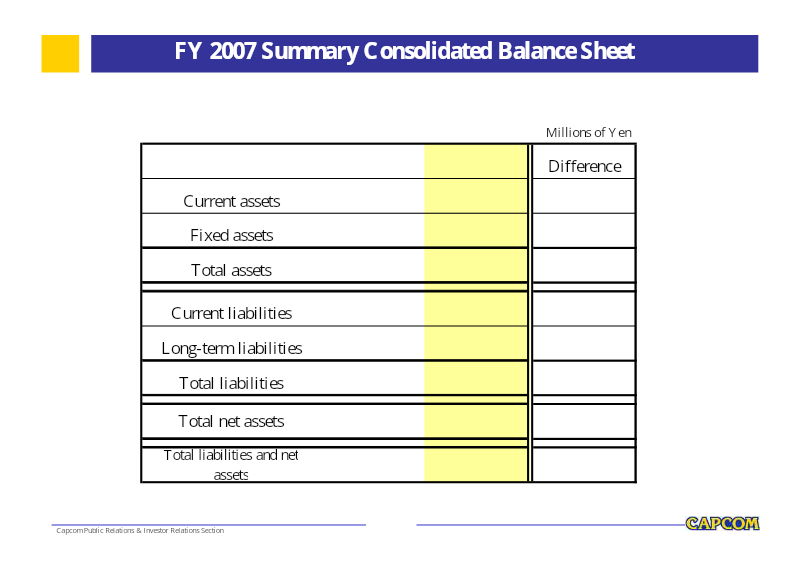
Capcom’s fiscal year 2007 consolidated financial summary details a period of significant growth, characterized by strong performance in the home video game segment and a successful expansion of international operations.
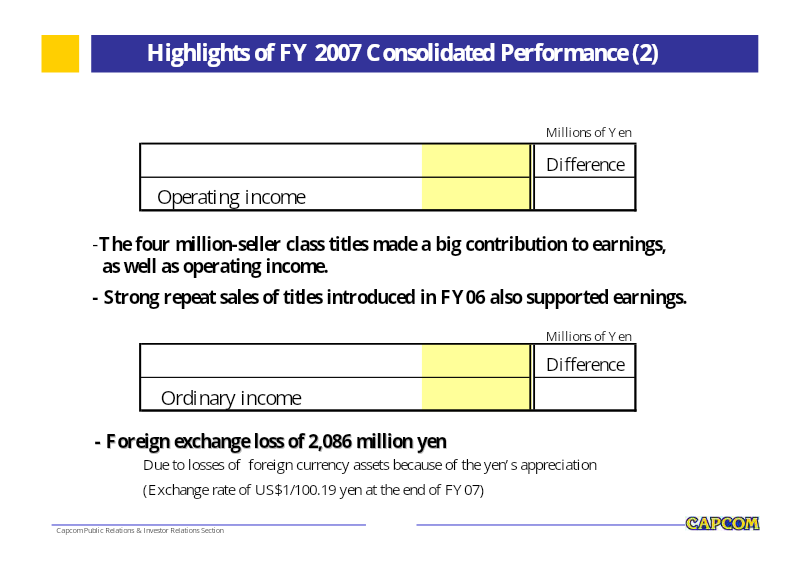
- Capcom achieved net sales of 83,097 million yen for the fiscal year ending March 31, 2008, marking an increase of 8,555 million yen over the previous year.
- Operating income reached 13,121 million yen, exceeding the company's original financial projections by 31.2%.
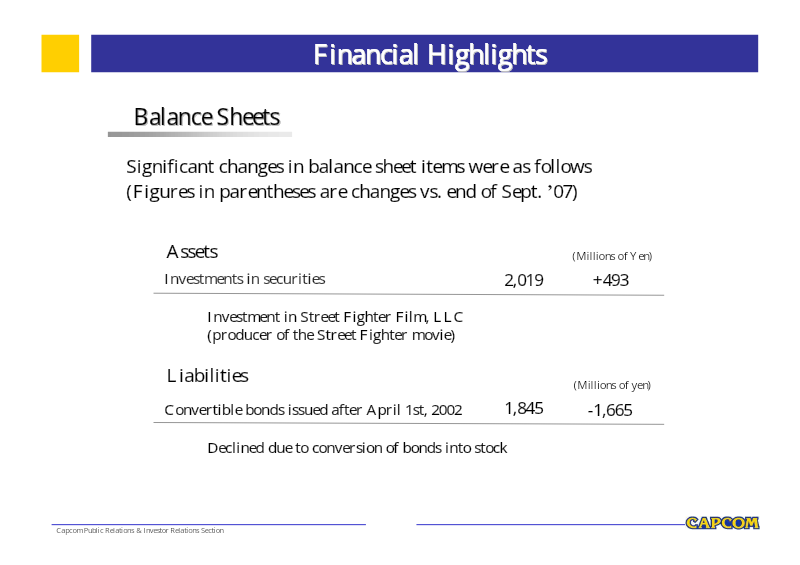
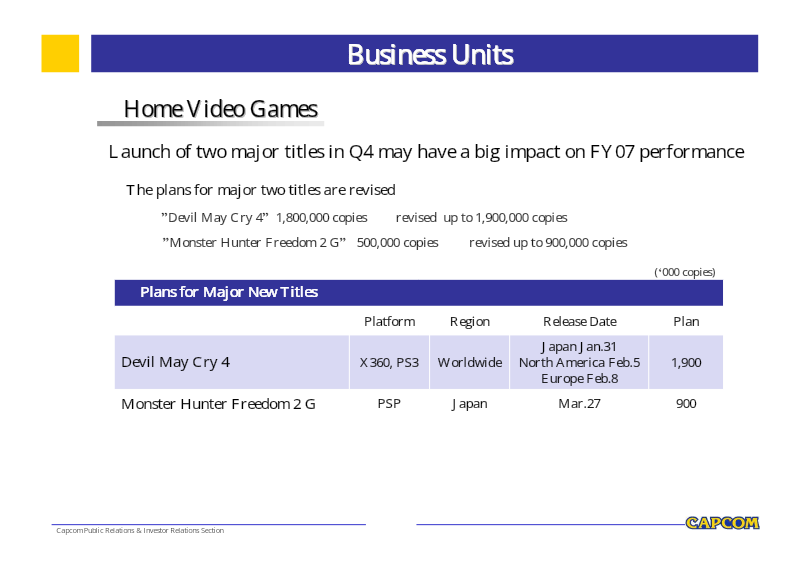
- Growth was primarily driven by four million-seller titles, including Devil May Cry 4 and entries in the Resident Evil series, alongside sustained demand for the Monster Hunter Freedom franchise.

Overview of Strategies and Plans: Fiscal Year Ending March 31, 2009
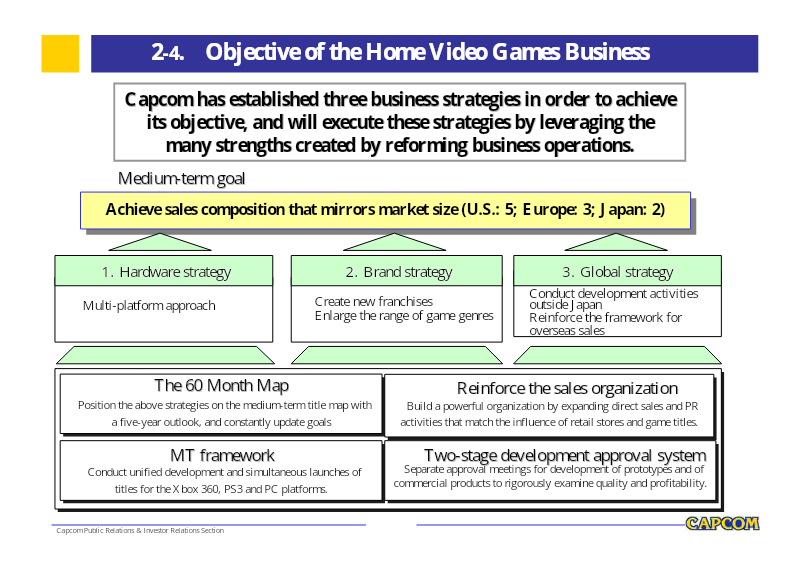
Capcom’s strategic roadmap for the fiscal year ending March 31, 2009, centers on maximizing the commercial potential of its intellectual property through a Single Content Multiple Usage model.
- Capcom targets 18 million unit sales for the fiscal year ending March 31, 2009, by focusing on core franchises like Resident Evil and Monster Hunter.
- The company is implementing a 'Single Content Multiple Usage' strategy supported by the proprietary MT Framework to streamline multi-platform development and expand its global footprint.
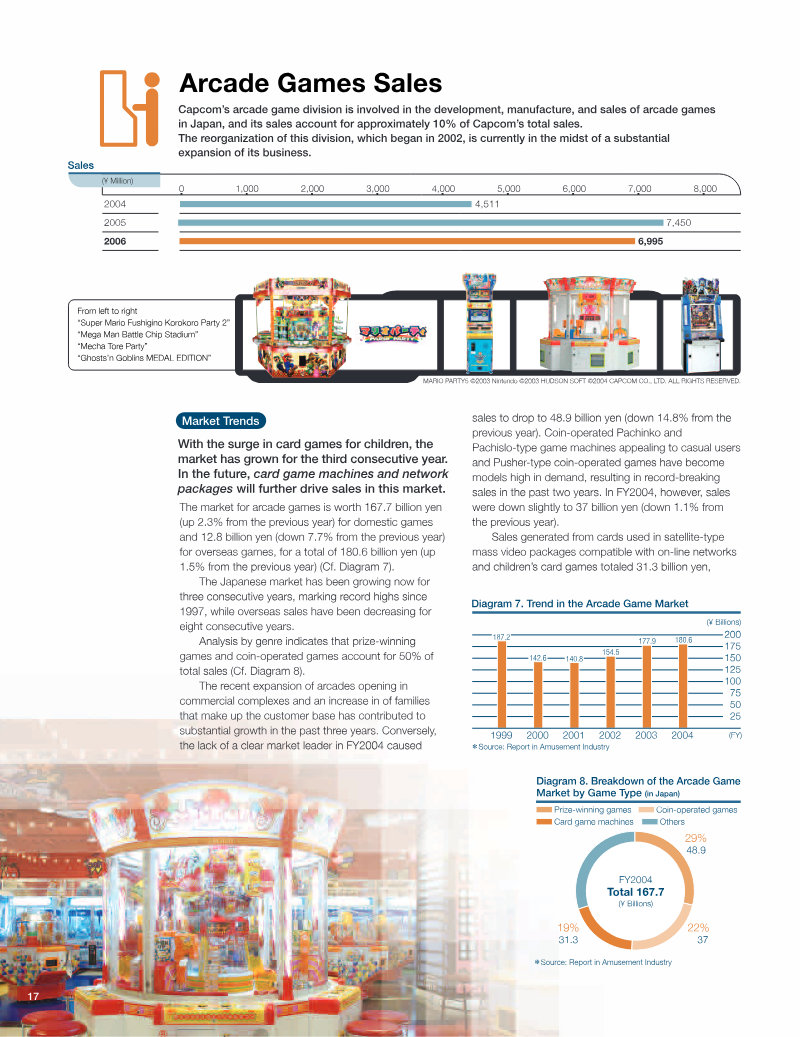
- Arcade operations are being restructured through a 'scrap and build' program and a strategic shift toward large-scale shopping center locations to improve profitability.
Capcom Consolidated Financial Statements: Year Ended March 31, 2007
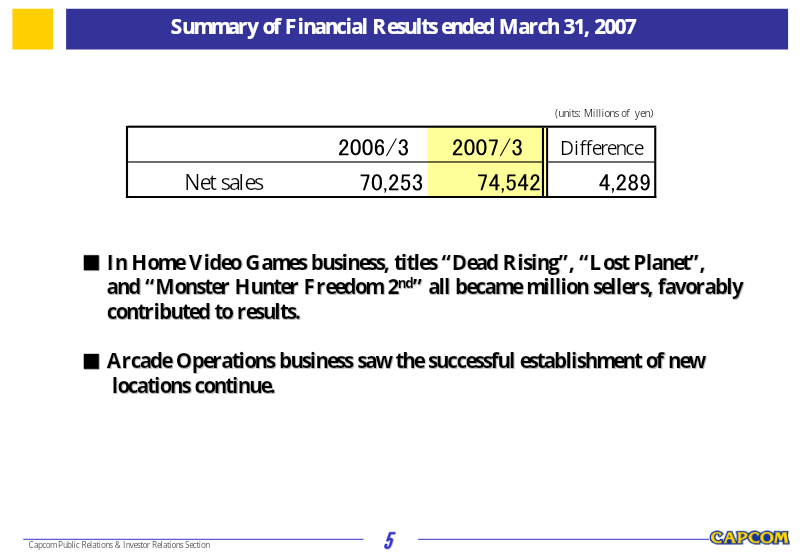
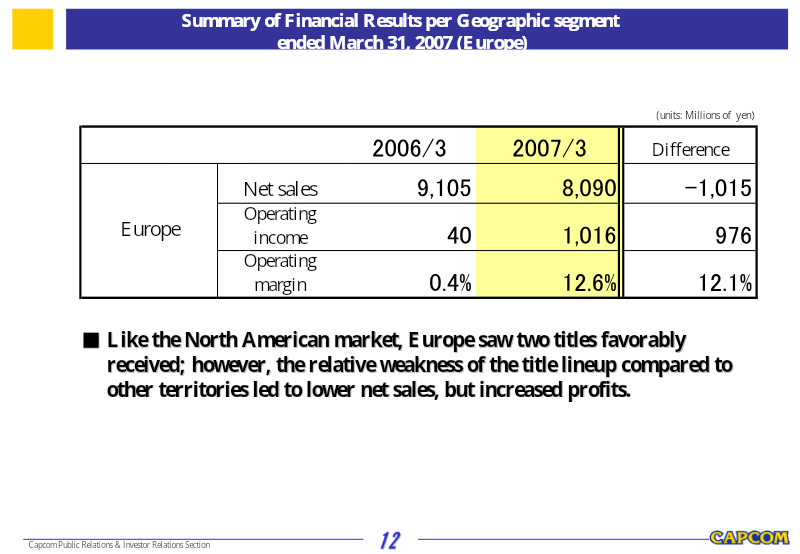
Capcom’s consolidated financial statements for the fiscal year ended March 31, 2007, detail a period of strong operational growth characterized by significant revenue gains and improved profitability across key business segments.

Capcom Business Divisional Strategies and Projections: Year Ending March 31, 2008
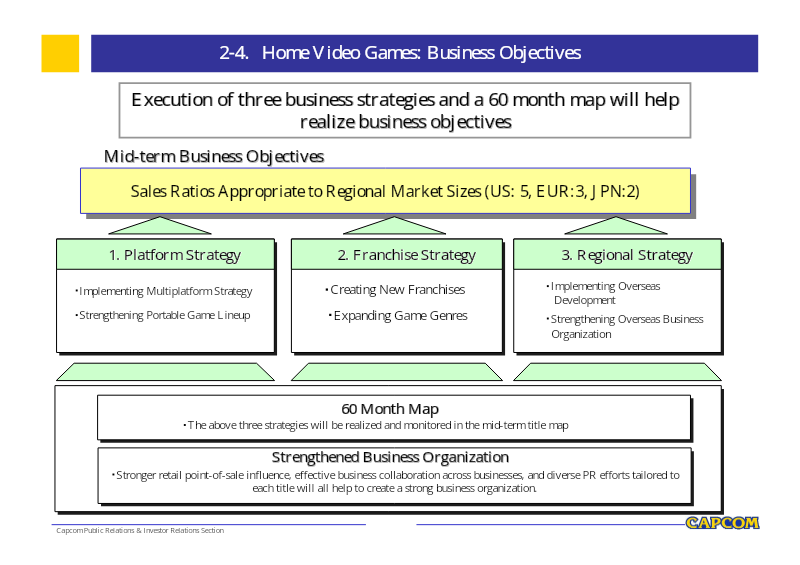
The business strategy for the fiscal year ending March 31, 2008, focuses on leveraging core intellectual properties across multiple platforms and business segments to ensure sustainable growth.
- Capcom projects net sales of 78 billion yen and an operating income of 10 billion yen for the fiscal year ending March 31, 2008.
- The company is shifting toward a diversified business model that integrates home video games with arcade operations, mobile content, and pachinko/pachislo to maximize the value of franchises like Resident Evil, Mega Man, and Monster Hunter.
- To offset a projected revenue decline in the home video game segment caused by a lighter release schedule, Capcom is prioritizing growth in arcade operations and content expansion.
Capcom Annual Report 2008
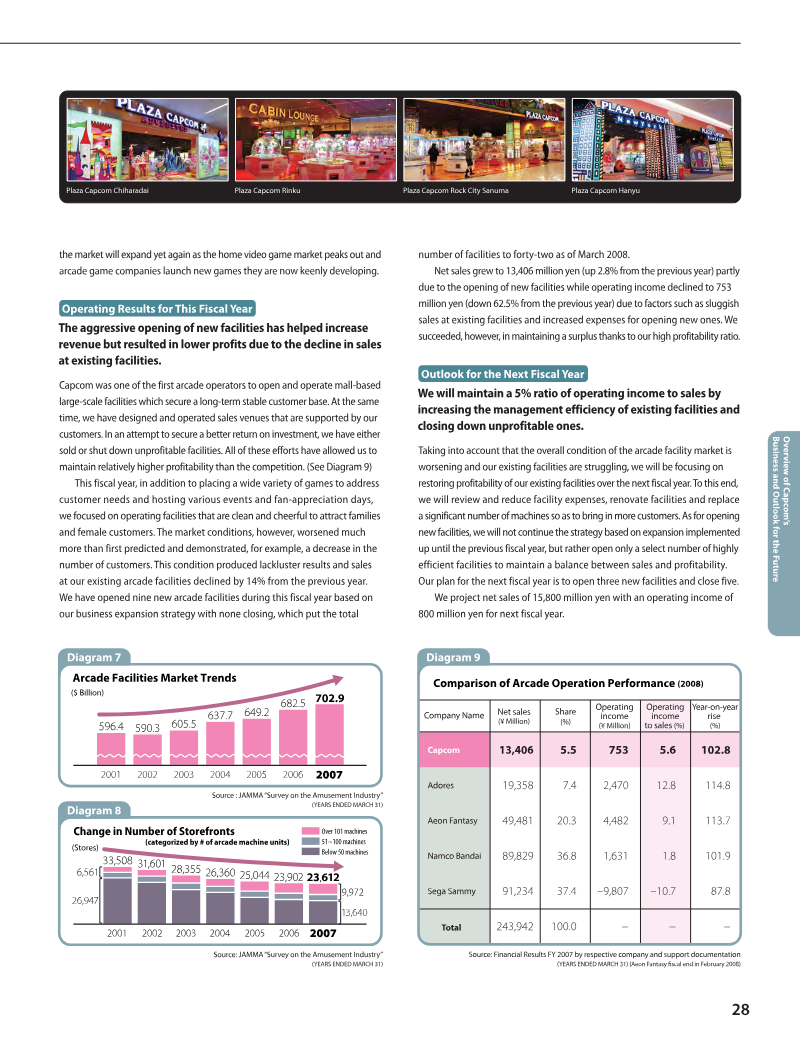
Capcom’s 2008 fiscal year marked a significant milestone, celebrating the company’s 25th anniversary with robust financial performance.
- Capcom achieved strong fiscal 2008 growth with net sales rising 11.5% to 83.1 billion yen and operating income surging 36.6% to 13.1 billion yen.
- The company’s 'Single Content, Multiple Usage' strategy and multi-platform development, supported by the proprietary MT Framework, drove success for titles like Devil May Cry 4 and Monster Hunter Freedom 2G.
- Capcom is targeting a balanced global sales distribution of 2:5:3 between Japan, North America, and Europe, supported by its status as a top-five mobile publisher in North America.
Capcom Annual Report 2006
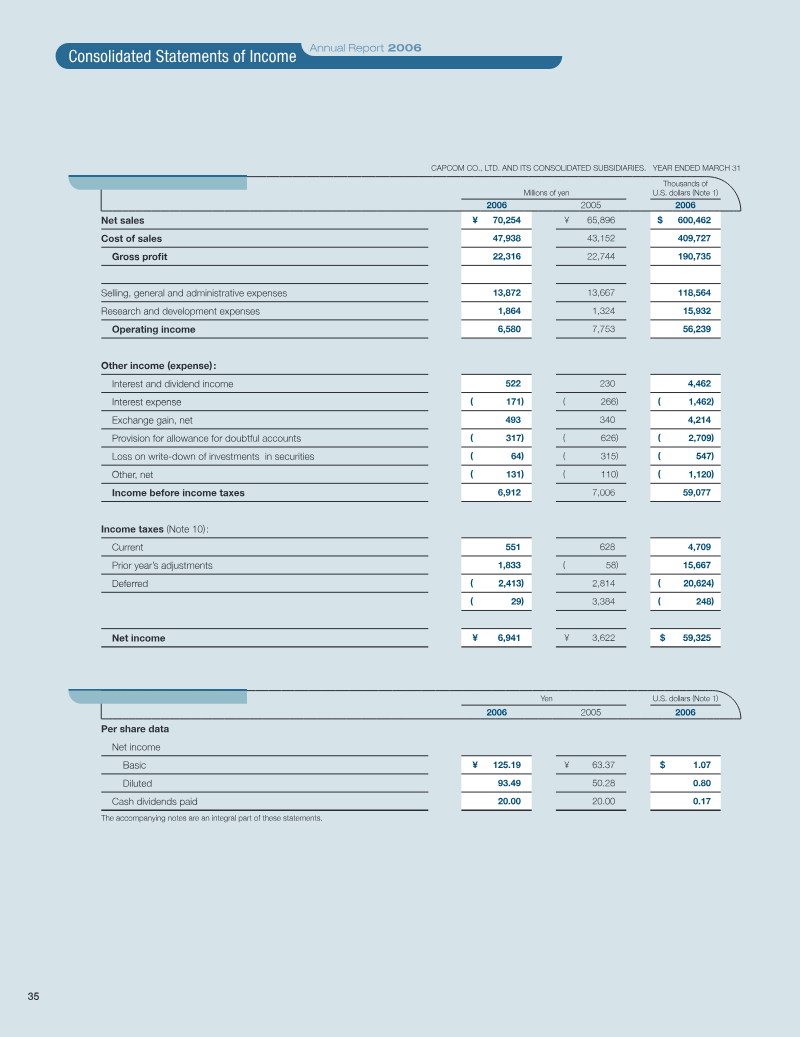
Capcom’s 2006 fiscal year performance reflects a period of strategic transition characterized by a 6.6% increase in consolidated net sales to ¥70,254 million and a significant 91.6% rise in net income to ¥6,941 million.
Capcom 3rd Quarter Report: Fiscal Year Ending March 31, 2025
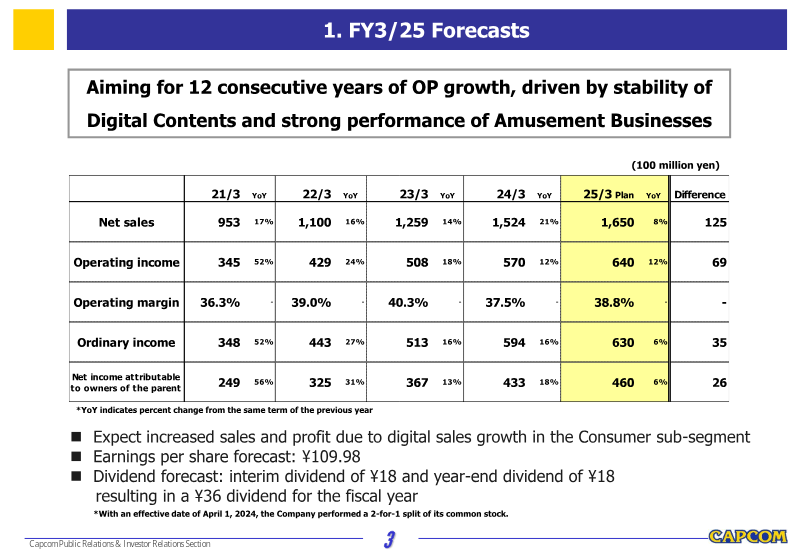
Capcom’s third-quarter report for the fiscal year ending March 31, 2025, confirms that the company remains on track to meet its full-year financial targets, aiming for 12 consecutive years of operating income growth.
- Capcom maintains its full-year forecast of 165 billion yen in net sales and 64 billion yen in operating income, aiming for 12 consecutive years of operating income growth.
- Nine-month results ending December 31, 2024, show net sales of 88.8 billion yen and operating income of 31 billion yen, reflecting a year-over-year decline due to the timing of major title releases.
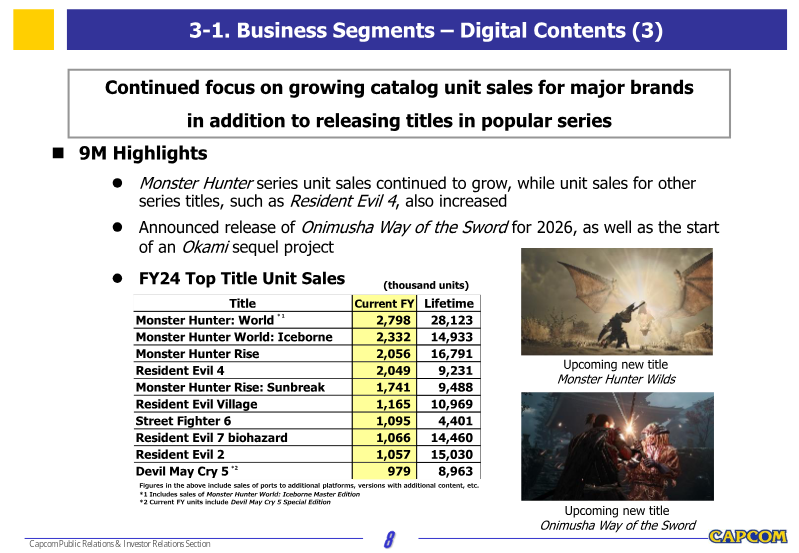
- The Digital Contents segment remains the primary revenue driver, supported by strong catalog sales from the Monster Hunter and Resident Evil franchises.
Companies behind it


As the documents state it.