Hay Day
Documents about Hay Day

Farmville 3 by Zynga | Soft Launch Review
FarmVille 3 represents a strategic effort by Zynga to revitalize its presence within the competitive farming simulation genre.
- Zynga is leveraging the FarmVille brand equity to compete against established market leaders like Township and Hay Day in the farming simulation genre.
- The game features high-quality visual fidelity and refined system balancing but relies on traditional mechanics like animal gacha and farm-hand management rather than gameplay innovation.
- The title currently faces challenges with long-term retention due to a fragmented progression architecture and a lack of cohesive, story-driven monetization.
Supercell Revenue Topped $1.4 Billion in 2018
Supercell maintained its position as a mobile gaming powerhouse in 2018, generating approximately $1.4 billion in gross revenue.
- Supercell generated approximately $1.4 billion in gross revenue during 2018 across its portfolio of five active mobile games.
- The newly launched title Brawl Stars grossed $46 million between its global release on December 12 and the end of 2018, putting it on track to exceed $60 million in its first 30 days.
- Clash Royale remained the company's top-earning title in 2018, accounting for approximately $597 million or 42% of total annual revenue.
Design in Depth at Supercell: Why Great Ideas Aren't Enough
Game development functions as an iterative navigation of complex systems where initial concepts serve only as starting points rather than blueprints for success.
- Game development success relies on iterative navigation of complex systems rather than rigid adherence to initial conceptual blueprints.
- Economic stability is best achieved by anchoring in-game goods to production time, creating scalable frameworks that allow for adjustments as player behavior evolves.
- To sustain engagement in competitive titles, developers should decouple personal progression from character-specific performance to encourage experimentation with new content.
Animal Crossing: Pocket Camp — Can an Old Dog Learn New Tricks?
Animal Crossing: Pocket Camp serves as a strategic bridge between Nintendo’s established console legacy and the mobile gaming market.
- Nintendo uses mobile titles like Animal Crossing: Pocket Camp primarily as brand awareness tools to drive hardware sales for the Nintendo Switch rather than maximizing mobile monetization.
- Animal Crossing is a significant franchise for Nintendo with over 30 million units sold, positioning it ahead of other established series like Metroid (17 million) and Fire Emblem (10 million).
- The game monetizes player impatience by gating progress behind time-locked tasks, allowing users to pay to speed up crafting and collection processes rather than utilizing a Gacha system.
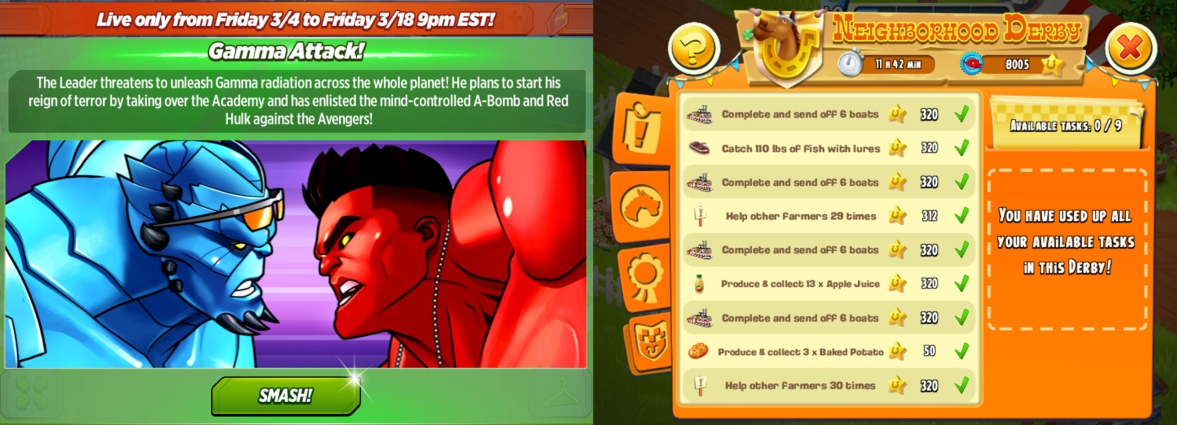
Feature Spotlight: In-Game Events and Market Trends
In-game events have evolved from simple, occasional holiday-themed additions into essential, core components of successful free-to-play mobile games.
- Over 50% of games in the iOS US Top Grossing 100 utilize a combination of both recurring and non-recurring in-game events, compared to less than 25% of games outside the top 100.
- In-game events are no longer considered optional enhancements but are now a standard expectation for mobile games to maintain player engagement and improve KPIs.
- Recurring events provide a predictable, looping cadence that integrates into the core gameplay experience, while non-recurring events offer unique, time-limited content to drive excitement.

Biz Daily: Will Supercell ever release another game?
Supercell maintains a rigorous development philosophy characterized by the willingness to cancel projects that fail to meet exceptionally high internal performance standards.
- Supercell maintains a lean workforce of approximately 130 employees while generating over $1 billion in annual revenue.
- The company employs a rigorous 'kill-your-darlings' strategy, intentionally canceling underperforming projects during soft-launch phases to avoid the long-term operational costs of non-profitable games.
- Supercell’s portfolio, anchored by Clash of Clans, Boom Beach, and Hay Day, prioritizes high-performance metrics over the volume of new releases.

Implications of Supercell's $1.7 billion 2014 revenue
Supercell’s 2014 financial performance serves as a primary indicator of the current state of the mobile gaming industry, characterized by extreme market concentration and high barriers to entry.
- Supercell generated $1.7 billion in 2014 revenue with $580 million in profit, marking a threefold increase over their 2013 performance.
- The mobile gaming market is characterized by extreme concentration, where a small group of elite firms including Supercell, King, Machine Zone, and Gung-Ho dominate the top of the charts.
- Top-tier developers maintain their market position by reinvesting 20% to 30% of their revenue into aggressive user acquisition and high-profile marketing campaigns.
Top 50 Developers of 2015: #1 Supercell
Supercell secures the top position in the 2015 list of mobile developers, marking a return to the number one spot it previously held in 2013.
- Supercell reclaimed the number one spot in the 2015 mobile developer rankings, driven by the sustained financial performance of its core portfolio.
- Clash of Clans remains the studio's primary revenue driver, generating an estimated $1.8 billion in 2014.
- The company successfully expanded its market reach with Boom Beach by positioning it as a less competitive companion to Clash of Clans, avoiding user base cannibalization.
The Ideal Keyword Frequency in the Descriptions of Top Android Games
This analysis examines the relationship between keyword frequency in Google Play app descriptions and search ranking performance for top-grossing mobile games.
- Including a target keyword five times in a Google Play app description is a baseline best practice for optimizing search rankings.
- Top-performing games like Candy Crush Saga and Modern War successfully utilize a target keyword exactly five times within their descriptions to achieve high search visibility.
- Exceeding the five-keyword threshold does not trigger penalties for keyword spamming, as evidenced by Hay Day, which maintains a #3 ranking for 'farm' despite using the term seven times.
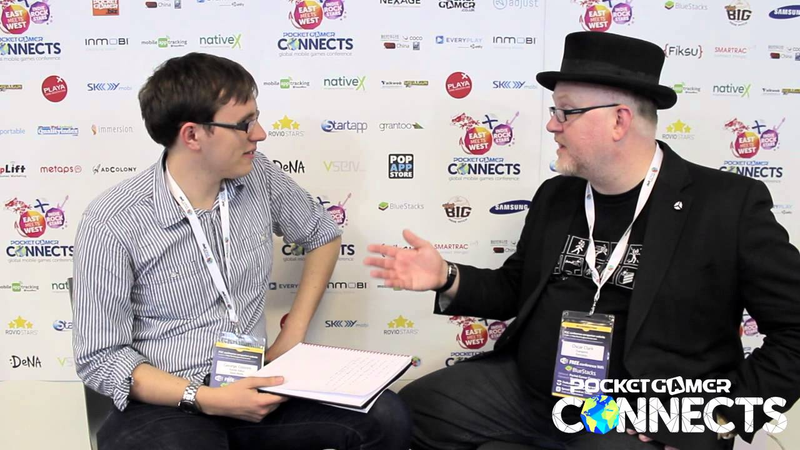
Oscar Clark on the potential of Games-as-a-Service
Games-as-a-Service represents a fundamental shift in game development, moving away from a fire-and-forget mentality toward a model defined by long-term player engagement and relationship building.
- Games-as-a-Service shifts development from a 'fire-and-forget' model to a long-term strategy focused on continuous player engagement and relationship building.
- Rising user acquisition costs in mobile gaming, now reaching approximately six dollars per install, make player retention economically essential for a title's viability.
- Successful titles such as Candy Crush, Clash of Clans, and Hay Day prove that consistent delivery of utility and value over time encourages sustained player investment.

Talking Puzzle & Dragons' success with GungHo Online
Puzzle & Dragons achieved global commercial dominance as one of the world’s most profitable mobile games while maintaining a remarkably lean development structure.
- Puzzle & Dragons achieved global commercial dominance with a lean development team that grew from an initial core of four people to only 20 staff members.
- The studio leverages high-profile collaborative partnerships, such as the June 2013 integration of characters from Clash of Clans and Hay Day, to drive user acquisition and retention.
- Development philosophy balances data-driven analytics with intuitive design, utilizing direct feedback from family members to test game accessibility and engagement.
Behind the Success of Hay Day
The gaming industry is currently navigating a period of significant structural transformation, characterized by a shift in capital allocation and the rapid integration of artificial intelligence into development workflows.
- Major studios are shifting approximately one-third of their media budgets toward loyalty platforms, which have evolved from a source of low-quality installs into a primary user acquisition channel.
- The role of User Acquisition (UA) is undergoing a fundamental rewrite, requiring growth leaders to build proprietary systems that go beyond standard platform-provided tools.
- Game development is shifting from logic-based systems to 'world models' that allow virtual environments to learn and react, exemplified by startups like those led by Pim De Witte, who raised $134 million to advance this technology.