Hay Day
Documents about Hay Day
Supercell Plans to Take “Bigger Creative Risks” With New Games
Supercell is shifting its strategic focus toward higher creative risk-taking to revitalize its development pipeline and maintain its position in the mobile gaming market.
- Supercell is pivoting to higher creative risk-taking after 2022 revenue fell 6% to €1.77 billion and EBITDA dropped 14% to €632 million.
- The company has not launched a new global hit since 2018, despite established titles like Clash of Clans and Hay Day generating lifetime revenues of $10 billion and $2 billion, respectively.
- Strategic development is shifting away from data-driven formulas toward developer passion, with five new titles currently in development at the Helsinki headquarters.

What Kind of Mobile Games Can Generate More Than $1 Billion in Revenue?
The analysis investigates the characteristics of mobile titles that have surpassed a cumulative $1 billion in revenue, drawing on data from PocketGamer and SocialPeta.
- Nearly 60 mobile games have surpassed $1 billion in cumulative revenue, with 4X strategy games emerging as the most dominant genre, accounting for nine of these titles.
- Chinese developers are a major force in the billion-dollar club, responsible for 21% of all qualifying titles and specifically dominating the 4X strategy genre through studios like FunPlus.
- High-revenue games require massive marketing scale, averaging 47,000 unique creatives per title, with video ads comprising 95% of the advertising mix for top performers like 'Rise of Kingdoms'.


The State of Mobile Gaming: Market Trends and Top Titles in the U.S., Europe, and Asia 2022
The analysis demonstrates that the global mobile-gaming market entered a contraction phase in early 2022, with revenue falling 6% year-over-year and the first decline since 2019.
- The global mobile gaming market experienced its first revenue decline since 2019, contracting 6% year-over-year in early 2022.
- Consumer spending in the U.S. and Japan saw double-digit drops, including a 22% decline on Google Play in the U.S., while emerging markets like Brazil and Vietnam gained significant share.
- Europe bucked the global trend with an 18% revenue increase to $8.6 billion, fueled by growth in Turkey and Poland and the popularity of hyper-casual titles.
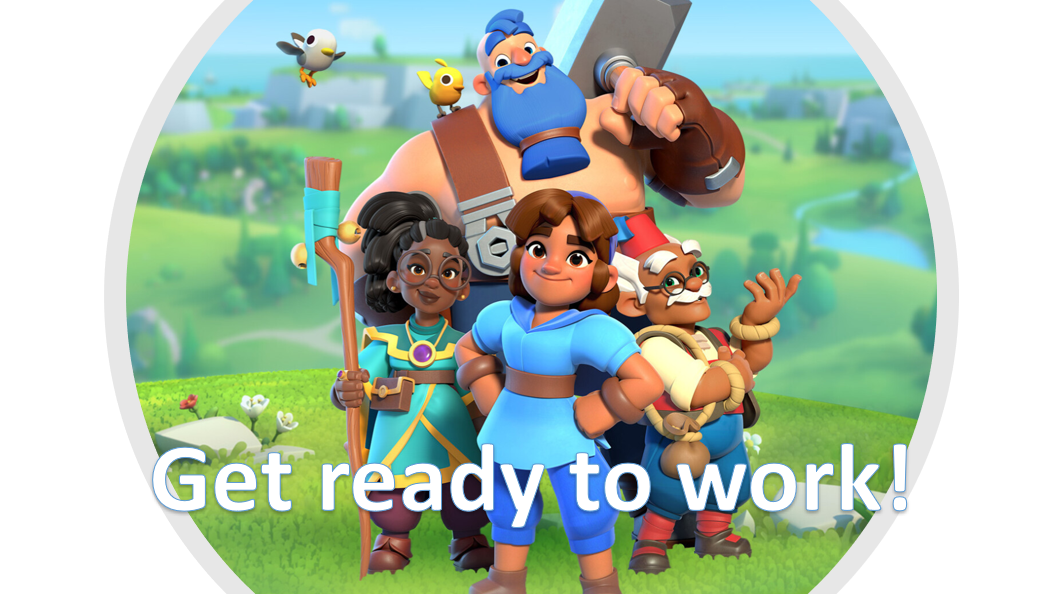
Supercell's Everdale: A Genre Definer or a Pretty-Looking Social Appointment System?
Everdale, a crafting tycoon game developed by Supercell, represents a strategic attempt to enter the mobile simulation market by blending elements of traditional city-builders with social, cooperative mechanics.
- Everdale lacks the depth, player agency, and economic complexity required to achieve the long-term retention and scale typical of Supercell’s billion-dollar portfolio.
- The game’s core 'Valley' system replaces traditional player-to-player trading with communal tasks, which limits individual specialization and restricts player freedom.
- Villager-based pacing creates constant bottlenecks that force high-intensity, short-session micromanagement, potentially causing player burnout rather than the intended relaxing simulation experience.
Sensor Tower on Revenue Increases in Mobile Games Following Battle Pass/Season Pass Implementation
The implementation of Battle Pass and Season Pass monetization models serves as a highly effective strategy for driving revenue growth in the mobile gaming sector.
- Lords Mobile doubled its monthly revenue to $90 million in January 2021 following the introduction of its 'Kingdom Labors' Season Pass, helping the game surpass $2 billion in lifetime revenue.
- Supercell’s Hay Day experienced a 62% month-over-month increase in player spending, reaching approximately $14 million, after launching its Farm Pass in December 2020.
- Clash of Clans saw a 58% month-over-month revenue surge to $66.8 million in April 2019 immediately following the implementation of its Season Challenges and Gold Pass.

TWIG 120: Supercell CEO Annual Letter, Zynga To Build Ad Network, Bad Robot Getting into Games
The gaming industry is currently undergoing a significant shift toward vertical integration and cloud-based infrastructure as companies navigate a landscape defined by mobile privacy constraints and evolving consumer habits.
- Zynga is internalizing its advertising network to mitigate the impact of Apple’s SKAdNetwork limitations and recapture margins lost to mobile privacy constraints.
- Supercell maintains a 31% profit margin and over five billion lifetime installs, though the company is experiencing a decline in annual revenue and EBITDA.
- Supercell faces internal friction as it attempts to reconcile its traditional small-team, prototype-focused culture with the resource-heavy demands of modern live-service operations.
Brawl Stars Surpasses $1 Billion in Lifetime Gross Revenue
Brawl Stars has officially surpassed $1 billion in lifetime gross revenue, marking a significant financial milestone for developer Supercell.
- Brawl Stars has surpassed $1 billion in lifetime gross revenue, becoming the fourth Supercell title to reach this milestone.
- The game experienced its most successful year in 2020, generating $526 million in annual revenue and marking a 27.5% year-over-year increase in player spending.
- The 2020 growth was largely driven by the game's successful launch in the Chinese market.
Supercell Celebrates Another Unicorn as Brawl Stars Passes $1 Billion
Supercell’s mobile title Brawl Stars has officially surpassed $1 billion in lifetime gross revenue, marking a significant milestone for the developer.
- Supercell's Brawl Stars has surpassed $1 billion in lifetime gross revenue, joining the company's other billion-dollar titles: Clash of Clans, Clash Royale, and Hay Day.
- In 2020, Brawl Stars generated approximately $526 million in revenue, marking a 27.5% year-over-year increase and making it Supercell's fastest-growing title.
- The June 2020 launch in China was a primary growth driver, with the Chinese market accounting for $47 million—or 52.6%—of the game's $89.4 million revenue in that month alone.

Hay Day Dissection: How It Got to $1.2 Billion in Revenue
Hay Day has secured its position as a major financial success in the mobile gaming sector, generating over $1.2 billion in lifetime revenue through a sophisticated hybrid monetization model.
- Hay Day has generated over $1.2 billion in total revenue since its 2012 launch, maintaining long-term resilience with a notable revenue and download spike in 2023.
- The game's ARPDAU grew from approximately $0.10 in 2016 to over $0.40 by January 2021, significantly outperforming the 2020 casual game industry average of $0.20.
- Monetization is driven by a 'pay-to-skip' model centered on diamonds, which are used to bypass production timers and are primarily acquired through in-app purchases.
How Playrix' Township Became a Billion Dollar Game
Township has secured its position as a billion-dollar title by fundamentally reshaping the mobile tycoon and crafting genre through a sophisticated blend of aggressive user acquisition and refined live operations.
- Launched in 2011, Township has generated approximately $1 billion in lifetime revenue and maintains a $200 million annual run rate seven years after its initial mobile release.
- Playrix optimizes user acquisition by aligning product development with performance marketing, specifically focusing on maximizing IPM (installs per 1000 impressions) through high-frequency testing of playable ad creatives.
- The game utilizes a 'production puzzle' core loop where players manage 250+ relatable goods across various timers, creating a constant demand for hard currency to skip wait times and drive conversion.

Can Hay Day Pop Solve the Puzzle?
Supercell’s entry into the casual puzzle market with Hay Day Pop highlights the intense difficulty of competing against established titans like King and Playrix.
- Hay Day Pop faces a significant challenge in the match-3 market because it lacks a narrative layer, which is a critical component for driving player retention and effective performance marketing in the genre.
- The game utilizes a 'Puzzle Pass' as a seasonal engagement tool, but its current implementation fails to drive strong monetization because the rewards are too fleeting and lack exclusive, high-value items.
- Supercell’s choice of a 'collapse' style puzzle mechanic is less effective for long-term retention and monetization than the 'switcher' mechanic used by industry leaders like King, Playrix, and Peak.

How does HAY DAY POP retain, engage and monetize?
Hay Day Pop represents Supercell’s entry into the match-puzzler genre, leveraging the established intellectual property and aesthetic of the original Hay Day farming simulation.
- Hay Day Pop is a hybrid match-two puzzle game that integrates base-building and decoration meta-game elements into the established Hay Day intellectual property.
- The game utilizes a dual-currency model, featuring soft currency for construction and hard currency (diamonds) for purchasing extra lives, additional moves, and power-ups.
- Retention is driven by a win-streak mechanic and a progression system that rewards players with stars and seasonal trophies for high-performance level completion.