Far Cry
Documents about Far Cry

Ubisoft & Square Enix E3 Press Conference | Games ReCAP Episode 004
Ubisoft maintains a robust and stable development model by leveraging established engines and iterative design across major franchises such as Assassin’s Creed, Watch Dogs, Far Cry, and the Tom Clancy series.
- Ubisoft’s strategy of leveraging established engines and iterative design for franchises like Assassin’s Creed and Far Cry provides a stable production model that minimizes the volatility and mass layoffs seen elsewhere in the industry.
- A two-year development cadence is proposed as the optimal standard for major titles, allowing players sufficient time to master complex gameplay systems before the next iteration is released.
- Square Enix’s modernization efforts show inconsistent results, with the Final Fantasy VII Remake succeeding through real-time combat and high fidelity, while projects like the Avengers title and the Final Fantasy VIII remaster suffer from a lack of comprehensive overhauls.

Ubisoft Third-Quarter 2018-19 Sales
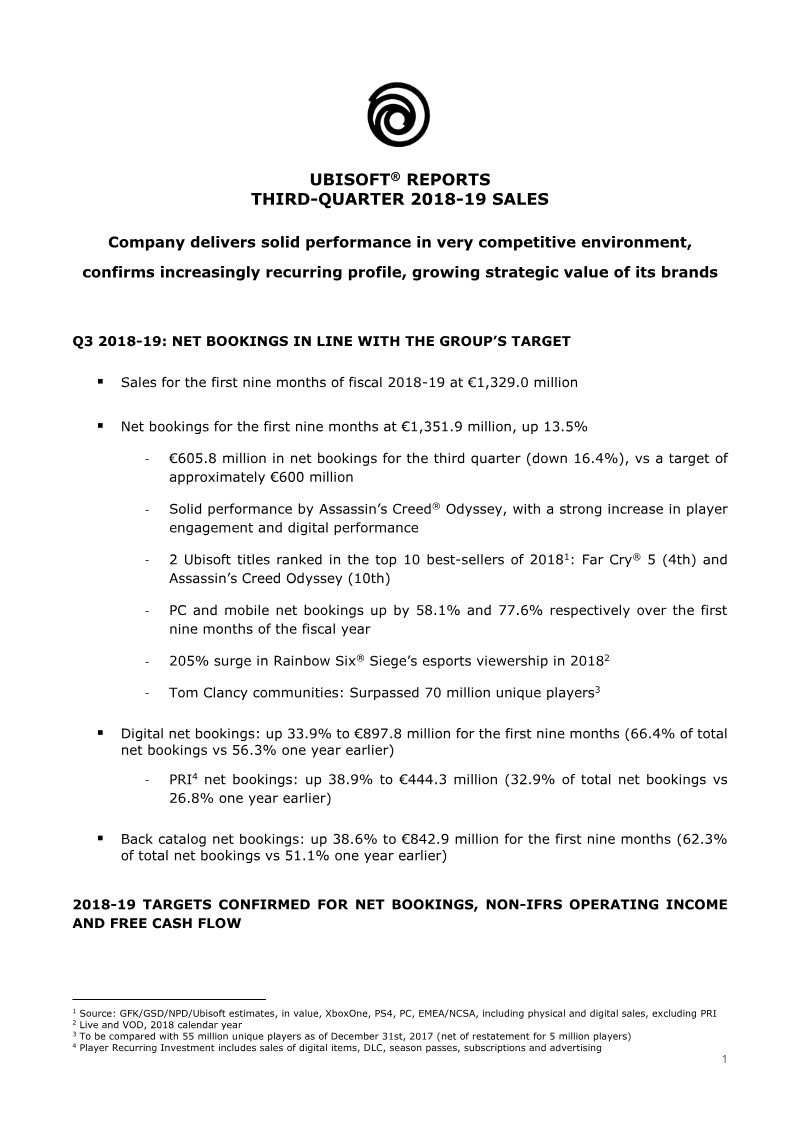
Ubisoft’s third-quarter fiscal 2018-19 sales report highlights a period of resilient performance within a highly competitive market.
- Ubisoft achieved €1,351.9 million in net bookings for the first nine months of fiscal 2018-19, a 13.5% year-over-year increase, while maintaining a full-year target of approximately €2,050 million.
- Digital net bookings grew 33.9% to €897.8 million over the nine-month period, now representing 66.4% of the company's total net bookings.
- Back-catalog net bookings surged 38.6% and Player Recurring Investment (PRI) grew 38.9%, driven by sustained engagement in established titles like Assassin’s Creed Odyssey and Far Cry 5.

Ubisoft FY19 Earnings: First Half
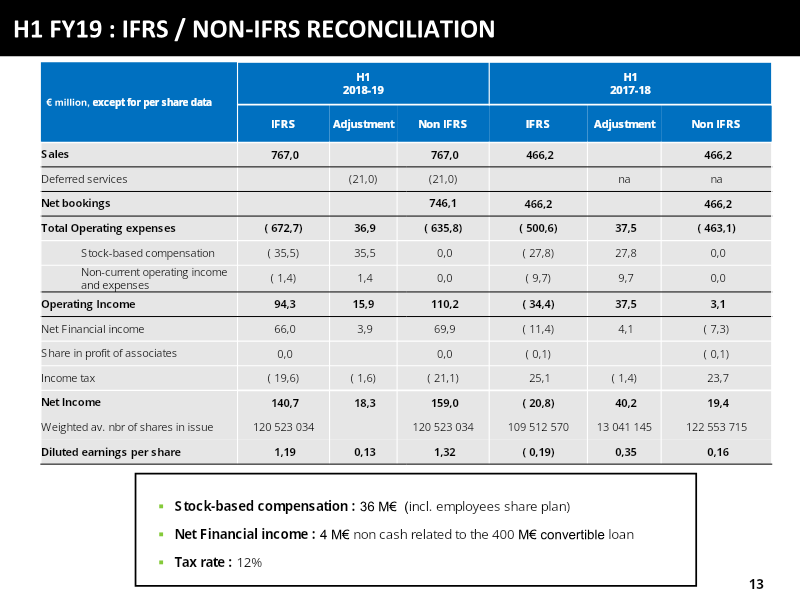
The first half of the 2018-2019 fiscal year reflects a period of robust financial expansion for Ubisoft, characterized by significant growth in digital revenue and strong performance across its core franchises.
- Ubisoft achieved 746 million euros in net bookings for the first half of FY19, representing a 60% year-over-year increase.
- Non-IFRS operating income grew significantly to 110.2 million euros, up from 3.1 million euros in the same period of the previous fiscal year.
- Digital revenue rose 52% to 519 million euros, while recurring player investment increased 49% to 262 million euros.

The cloud gamer – Defining the audience
Cloud gaming services address a significant barrier in the gaming industry: the inability of a large portion of the PC gaming population to run modern, high-demand titles due to hardware limitations.
- Approximately 70% of Steam users currently lack the hardware specifications required to run modern AAA titles like Far Cry 5.
- The core cloud gaming demographic consists of males aged 18–34 who use hardware at least five years old, with 50% of these users having never performed a hardware upgrade.
- Cloud gaming business models have shifted from unsuccessful flat-rate subscription services to hybrid models where users pay for virtual PC access while providing their own game licenses.

Fast Iteration for Far Cry 4 - Optimizing Key Parts of the Dunia Pipeline
The development of Far Cry 4 necessitated a fundamental overhaul of the Dunia engine pipeline to address the productivity bottlenecks that plagued previous projects.
- By implementing a central build cache that shares object files between users, the team reduced full rebuild times for the PC release target from 40 minutes to under 58 seconds.
- The pipeline was optimized for massive parallelization, utilizing a 32-core machine to spawn over 1,000 processes simultaneously for efficient task distribution.
- To eliminate redundant data distribution, the team implemented a slicing system that breaks packages into parts, hashes them using MD5, and only distributes the specific parts that have changed.

Forget About Fortnite: Netflix Down, Ubisoft Up, Guerrilla Out
This analysis of the mid-2018 gaming and technology landscape examines the shifting dynamics of market share, specifically focusing on the disruptive impact of Fortnite.
- Fortnite is cannibalizing the gaming market rather than expanding it, as evidenced by a 6% decline in total digital console sales when Fortnite revenue is excluded from the 49% year-over-year growth figure.
- The rise of Fortnite has negatively impacted viewership for established esports titles, causing declines of 19% for League of Legends, 16% for Overwatch, and 51% for CS:GO in Q2 2018.
- Ubisoft reported strong Q2 2018 financial performance with $663 million in revenue, largely driven by the success of Far Cry 5.


Ubisoft FY18 Earnings
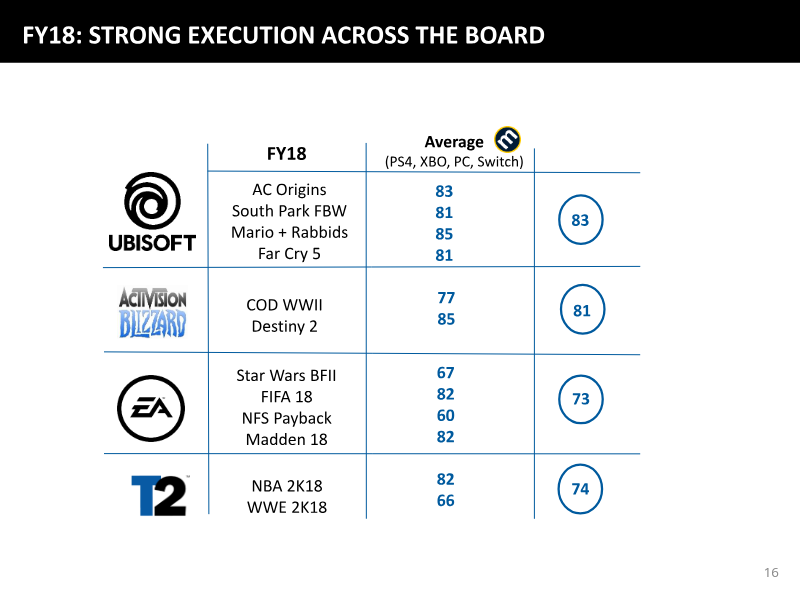
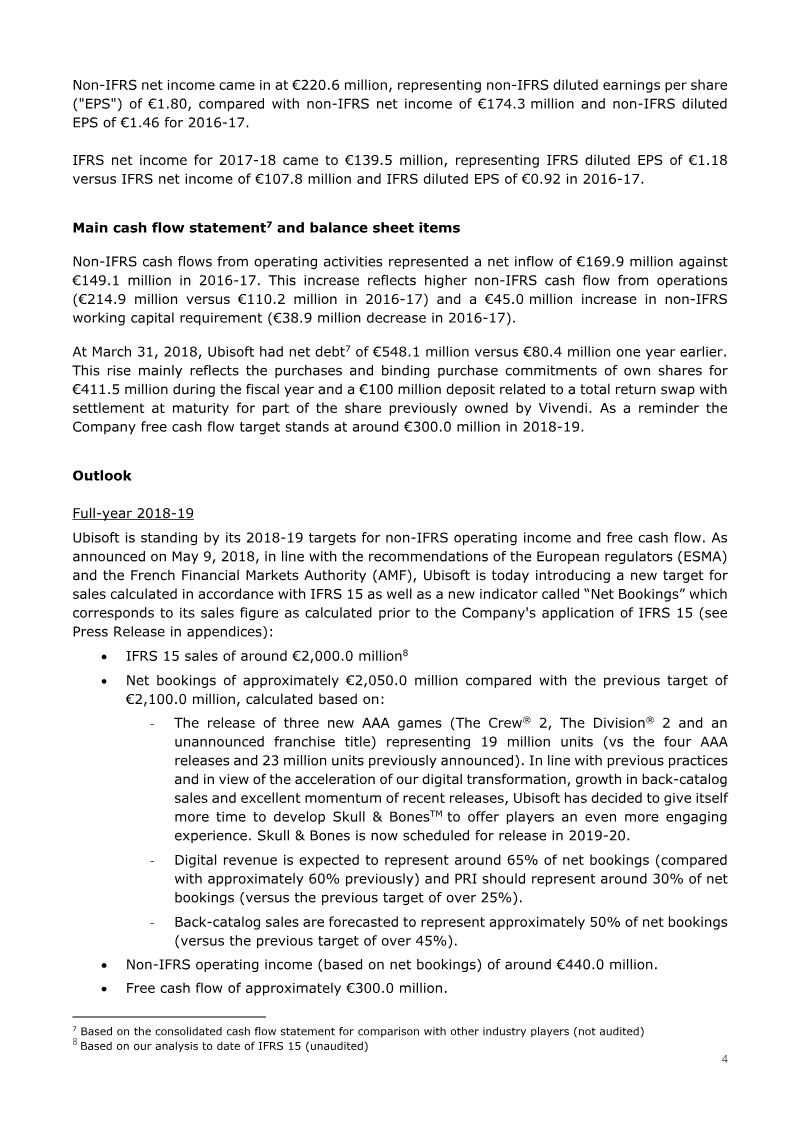
Ubisoft’s fiscal year 2018 earnings report details a period of robust financial growth and operational success, characterized by a transition toward digital-first revenue streams and recurring player investment.
- Ubisoft achieved 1,732 million euros in annual sales for FY18, representing a 19% year-over-year increase driven by titles like Far Cry 5 and Assassin’s Creed Origins.
- Digital revenue reached 1,005 million euros, accounting for 58% of total sales compared to 50% in the previous fiscal year.
- Recurring player investment from in-game items, DLC, and subscriptions grew by 59% to 483 million euros, making up 28% of total revenue.
Ubisoft Full-Year 2017-18 Sales and Earnings Figures
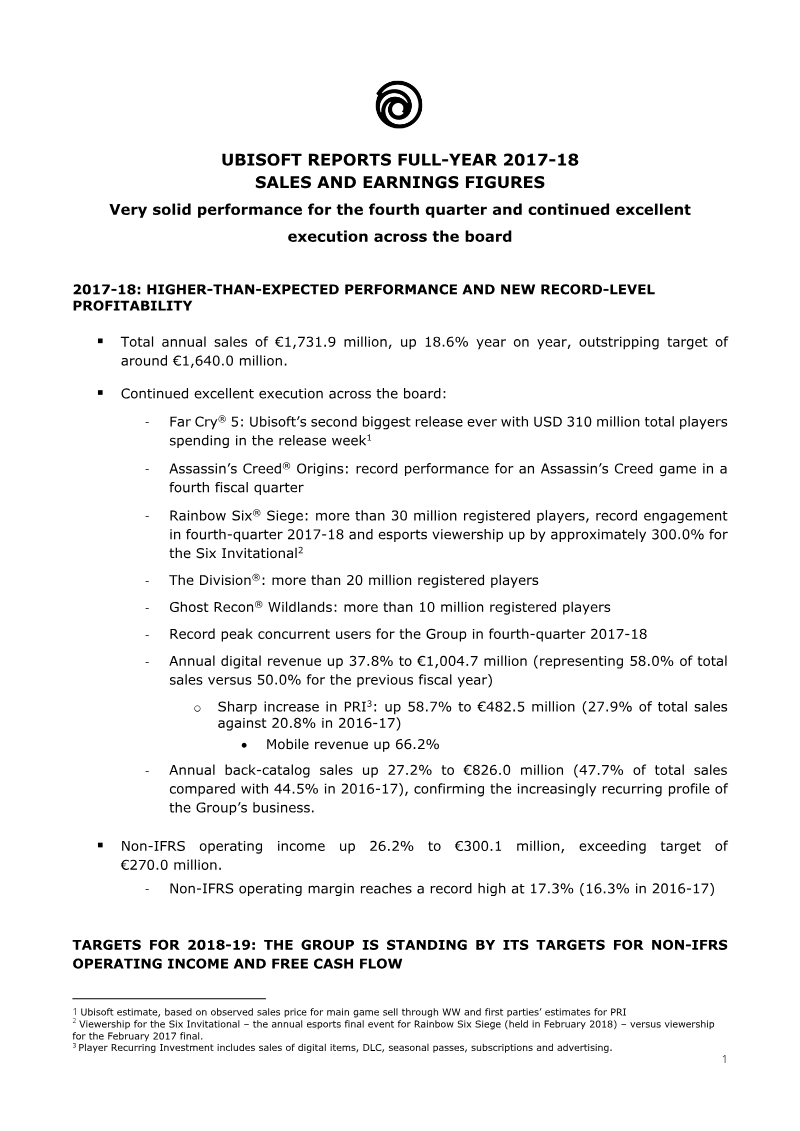
Ubisoft achieved record-level profitability and strong financial growth for the 2017-18 fiscal year, exceeding its initial performance targets.
- Ubisoft achieved record profitability in fiscal year 2017-18, with total sales rising 18.6% to €1,731.9 million and non-IFRS operating income increasing 26.2% to €300.1 million.
- Digital revenue grew 37.8% to €1,004.7 million, now representing 58% of total annual sales, signaling a successful transition toward a digital-first business model.
- Player Recurring Investment (PRI) surged by 58.7%, driven by digital items, subscriptions, and season passes, while back-catalog sales grew by 27.2%.

Rendering the World of Far Cry 4
The development of Far Cry 4 centered on the implementation of a physically based rendering pipeline designed to achieve high-fidelity material realism while maintaining performance across five distinct hardware platforms.
- The development team implemented a physically based rendering (PBR) pipeline using the Disney BRDF model, incorporating metallic and anisotropic parameters to achieve high-fidelity material realism across five hardware platforms.
- A custom anti-aliasing solution combining SMAA with temporal super-sampling achieved high-fidelity image quality at a performance cost of only two milliseconds.
- The transition to a GPU-based virtualized radiance transfer system eliminated CPU-GPU synchronization bottlenecks, while offline G-buffer baking and real-time GPU filtering reduced memory overhead by approximately two megabytes.

Adaptive Virtual Texture Rendering in Far Cry 4
Adaptive Virtual Texture rendering serves as a foundational technology for Far Cry 4, enabling the display of high-fidelity terrain and thousands of procedural decals without exceeding strict memory constraints.
- Ubisoft's Adaptive Virtual Texture (AVT) rendering technique allows for the rendering of thousands of terrain decals in under 1 millisecond, achieving a high resolution of 10 pixels per centimeter.
- The AVT system dynamically adjusts texture resolution based on camera distance by dividing the world into 64x64 meter sectors, allocating larger virtual image sizes for sectors closer to the camera and smaller sizes for those further away.
- To minimize memory footprint and bandwidth, the system uses a 32-bit page ID buffer during the G-buffer rendering pass, with bits allocated specifically for page ID, mipmap level, and virtual image size.
Ubisoft Decides to Invest Additional Development Time in Three Games
Ubisoft is extending development timelines for three upcoming titles to prioritize product quality and long-term engagement.
- Ubisoft has raised its fiscal 2017-18 non-IFRS operating margin guidance to a record 16.5%, up from the previous 15.9% projection.
- Development timelines for three titles are being extended to prioritize quality, including a one-month delay for Far Cry 5 to March 2018 and shifting The Crew 2 to the first half of fiscal 2018-19.
- One of three planned unannounced franchise games has been delayed to fiscal 2019-20, following the successful strategy of extending development time for Assassin’s Creed Origins.

360 Approach for Open World Mission Design in Far Cry and Assassin's Creed
Modern open-world mission design requires a fundamental shift from the linear, scripted progression characteristic of earlier titles like Prince of Persia toward a systemic, radial framework.
- The '360 approach' replaces linear, scripted mission paths with concentric zones of engagement, allowing developers to accommodate unpredictable player exploration in open-world environments.
- Designers should utilize rigorous 2D top-down planning to map out thematic zones and gameplay pillars before beginning engine-based development.
- Gameplay ingredients—such as enemies, environmental cues, and interactive objects—must be distributed spatially to guide players toward objectives while maintaining their sense of agency.