Destiny
Documents about Destiny
Building Customizable Characters for Bungie's Destiny
The transition from the singular hero archetype of the Halo franchise to the player-centric design of Destiny necessitated a fundamental shift in character development.
- Bungie developed a modular character customization system for Destiny that broke character designs into base elements called 'bits,' allowing artists to swap gear pieces without needing to re-skin or re-animate models.
- The system enabled artists to create complex new character assets, such as a helmet, in approximately 20 minutes by assembling pre-defined modular bits.
- To maintain performance across four platforms, the toolset provided real-time memory profiling for both textures and geometry, allowing artists to adjust resolution or swap bits to stay within strict hardware budgets.
User Research on Destiny
The development of Destiny necessitated a fundamental shift in user research methodology, moving away from traditional testing frameworks toward a highly integrated, automated system.
- Bungie implemented strict security measures—including metal detectors and locked-down testing platforms—to allow for playtesting six months earlier than would have been possible otherwise.
- To ensure data accuracy, Bungie used post-stratification weighting to align their lab sample with the general player population, confirming that internal playtest data yielded the same directional results as external agency-recruited participants.
- The development team utilized a 'frustration button' feature during playtests, allowing players to log specific moments of difficulty that were then mapped against XYZ coordinates and video footage to identify pain points and highlight 'awesome moments.'
The Art of Destiny's First-Person Animation
First-person animation in modern shooters requires a delicate balance between maintaining high-speed, responsive gameplay and establishing a tangible sense of physical presence.
- Prioritize immediate controller feedback and fluid motion transitions to maintain player agency and eliminate disruptive input delays.
- Achieve a grounded physical presence by layering first-person animations over third-person rigs and using real-time data to drive subtle movement reactions.
- Decouple camera animation from character locomotion to enable naturalistic head-leading motions that mimic human equilibrium without causing motion sickness.
Multithreading the Entire Destiny Engine
The Destiny engine architecture achieves high-performance, cross-platform scalability by transitioning from traditional synchronization primitives to a sophisticated, job-based multithreading model.
- The Destiny engine utilizes a fiber-based, job-driven architecture to replace traditional synchronization primitives, enabling high-performance scalability across diverse hardware generations including PS3 and Xbox 360.
- Workloads are organized into discrete job sequences with explicit dependency management to prioritize simulation tasks and minimize latency.
- System integrity is maintained through a strict execution environment that uses resource handles, producer-consumer models, and whitelisting to prevent data races and unsafe memory access.
Mapping the Shooter Genre
The shooter genre is often viewed through a monolithic lens, but analysis of player motivation reveals significant diversity in how gamers engage with these titles.
- The primary differentiator in the shooter genre is a strong negative correlation between competition and story, meaning games typically prioritize either high-stakes competitive play or narrative-driven experiences.
- Shooter games are defined by three core axes of motivation: competition versus story, community versus competition, and strategy versus competition.
- Counter-Strike stands out as a significant outlier in the genre, demonstrating a much higher level of competitive intensity compared to other shooter titles.

Game Writing Pitfalls - Lost Opportunities in Games - Extra Credits
Video games face a unique narrative challenge: they possess a significantly lower word count per minute compared to other media like television or film.
- Games face a severe narrative constraint with an average of only 16 words per minute, compared to 120 words per minute in television scripts.
- Every line of dialogue must serve at least one of four functions: world-building, character development, plot progression, or revealing information about other characters.
- Functional gameplay instructions and filler dialogue used to mask transitions often result in flat, unengaging narratives, as seen in the case of Destiny.

Why Harry Slater's GotY 2015 is Afterpulse
Afterpulse, a third-person mobile shooter developed by Digital Legends and published by Gamevil, stands out as a premier title of 2015 due to its exceptional execution of core gameplay mechanics.
- Digital Legends and publisher Gamevil successfully adapted traditional shooter mechanics for mobile in 2015 by prioritizing intuitive control schemes that mitigate the ergonomic frustrations common in touchscreen gaming.
- The game utilizes a 'Destiny-style' compulsion loop that drives player retention by rewarding combat success with incremental gear upgrades and consistent daily incentives.
- The title demonstrates high player stickiness, with users remaining engaged through at least fifteen levels of progression rather than discarding the game after initial content exhaustion.

Destiny is Gaming's "Law & Order" - Video Game Comfort Food - Extra Credits
The primary thesis of this analysis is that Destiny functions as the "Law & Order" of the video game industry, succeeding not through singular moments of brilliance, but by providing a consistently reliable, accessible, and high-quality "comfort food" experience.
- Destiny succeeds as a 'comfort food' title by prioritizing a consistent, high-quality experience across all activities rather than attempting to master a single niche.
- The game functions as a unifying platform for diverse friend groups by integrating PvE and PvP progression, allowing players with different preferences to engage in the same ecosystem.
- Destiny offers a low-friction, evergreen model that provides long-term investment value, contrasting with the finite nature of single-player games or annual franchise releases.


Nippon Ichi Software: Q2 Financial Results (Fiscal Year Ending March 2022)
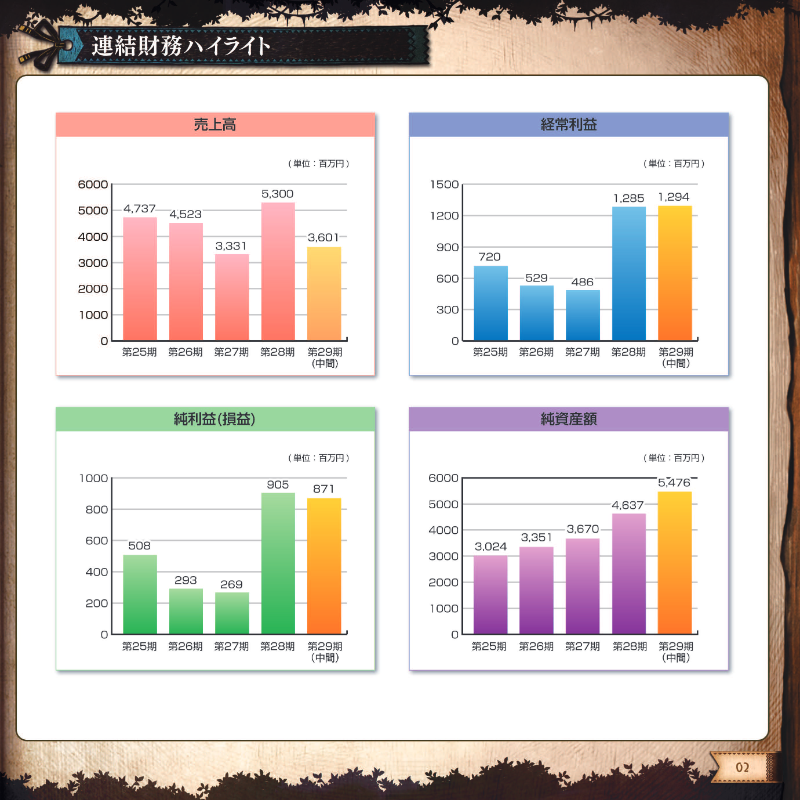
Nippon Ichi Software’s financial results for the second quarter of the fiscal year ending March 2022 demonstrate significant growth in both revenue and profitability.
- Nippon Ichi Software reported strong growth for the first half of the fiscal year ending March 2022, with net sales reaching 3,601 million yen and operating profit rising to 1,288 million yen, compared to 2,094 million yen and 450 million yen respectively in the same period of the previous year.
- Quarterly net profit increased significantly to 871 million yen, up from 251 million yen in the first half of the previous fiscal year.
- The company launched two new IPs, 'Tantei Bokumetsu' and 'Warui Ousama to Rippana Yuusha,' alongside various sequels and ports including 'Fuuraiki 4' and 'Shin Hayarigami 3' to strengthen its consumer game business.


Activision Blizzard 2017 Annual Report
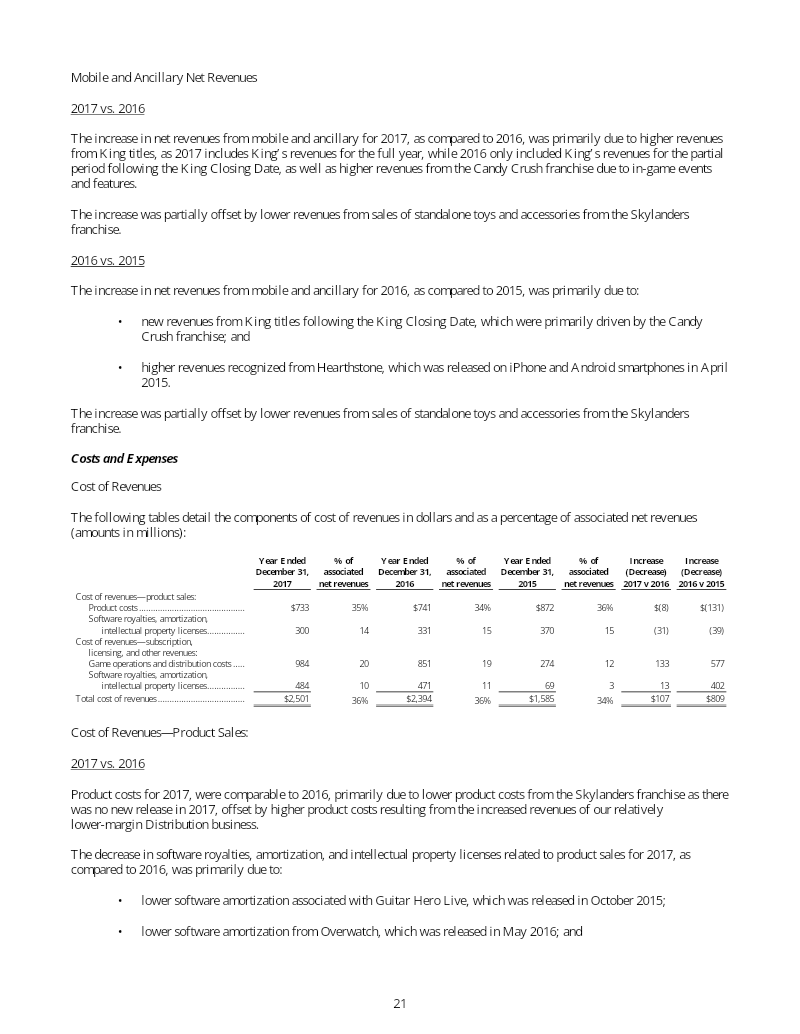
Activision Blizzard’s 2017 fiscal year was defined by a strategic transition toward a recurring, digital-first revenue model.
- Activision Blizzard generated $7.02 billion in net revenue in 2017, a 6% increase driven by digital online channels which accounted for 78% of total revenue.
- Net income dropped to $273 million from $966 million in 2016, primarily due to a $636 million one-time tax charge from the U.S. Tax Reform Act and increased operational and marketing costs.
- Monthly active users declined by 14% year-over-year, a trend attributed largely to the maturity of titles within the King segment.