Dear Esther
Game
15 documents in the library are about Dear Esther, from writers such as DiGRA, Breda University of Applied Sciences and Extra Credits. Each has a summary and key insights with the page they come from.
Connections
Each row is a game or company named alongside Dear Esther, each column a document, oldest first. A mark means that document names it. Select a row to see those documents.
Documents about Dear Esther
Environmental Storytelling and Active Spectatorship in Walking Simulators and Exploration Theatre
Environmental storytelling in exploration-based immersive theatre and walking simulators is the subject of this study, which argues that both forms place the surrounding environment at the centre of narrative meaning and offer participants exploratory freedom without the power to alter the story's events.
- Environmental storytelling in exploration-based immersive theatre and walking simulators places the surrounding environment at the centre of narrative meaning, while giving participants freedom to explore but no power to change the story's events.
- The study frames audiences and players as "active spectators": their agency is confined to interpreting spaces, traces, and atmosphere rather than intervening in the narrative.
- The analysis identifies two main environmental strategies: indexical storytelling, where objects and arrangements act as cause-and-effect clues inviting participants to reconstruct past events, and atmospheric storytelling, where mood and sensory qualities convey meaning affectively.

Making Friends with Death: Posthuman Post-Life Play
The document explores how videogames can facilitate a posthuman reconceptualization of death, dying, and grief, moving beyond traditional humanist, capitalist, and neoliberal perspectives that view death as an interruption or enemy of progress.
- The paper argues that games about death, dying, and grief, such as Spiritfarer, Gris, A Mortician's Tale, and Last Day of June, can reframe mortality away from humanist, capitalist views of death as an interruption of progress toward a view of death as one phase in a generative, interconnected process.
- Drawing on critical posthumanism, feminist, new materialist, and rhizomatic theory (notably Rosi Braidotti), the author reads both Spiritfarer and Gris as enacting postdualistic relations with death, in which the ego and its anxieties dissolve into ongoing processes of becoming.
- Spiritfarer is interpreted as embracing a notion of final destination through its ferrying of spirits to the afterlife, while Gris conveys grief as both overwhelming affect and a process of discovery through its score, restored colour, and backward-moving mechanics.
Gamification of Gothic
Tanya Krzywinska's "Gamification of Gothic" argues that a Gothic critical lens offers sharper insight into videogames than has previously been applied, despite the frequent appearance of Gothic themes across game genres.
- Krzywinska's "Gamification of Gothic" argues that a Gothic critical lens yields sharper insight into videogames than prior scholarship has applied, fusing Game Studies with Gothic Studies and treating gamification as a form of remediation.
- The work proposes five coordinating nodes for evaluating Gothic in games: character and story patterns, mise-en-scène and style, affect, entropy, and the sublime, with the "false hero" protagonist serving as the initial benchmark.
- The analysis contends that most mainstream games, built around progression, winnable conditions, and temporary death, resist the entropy that defines authentically Gothic experience.
Subtle Playability: Orienting Players' Actions Beyond the Threat of Failure
This extended abstract proposes that "walking simulators" and "notgames," despite removing traditional failure conditions, still possess an underlying ludic structure that differentiates them from non-ludic interactive artifacts.
- The paper argues that walking simulators and notgames lack a failure state yet still have an underlying ludic structure, challenging Leino's view that a failure condition is the decisive marker of playability.
- It proposes 'subtle playability': a system of valorised outcomes embedded in an artefact that orients player behaviour without any explicit failure state.
- Proteus (structured as progression toward an ending) is contrasted with Traversing the Sectors (open-ended exploration with no goal or win condition) to illustrate how orientation can exist without a win or lose state.

From Walter Benjamin to the Walking Sim: Flânerie in the Age of the Metaverse
The document explores the concept of "digital flânerie" in contemporary open-world video games and walking simulators, drawing parallels to Walter Benjamin's 19th-century flâneur.
- Maughan argues that Walter Benjamin's flâneur, the idle urban wanderer, has returned in digital form through open world games and the 'walking simulator' genre, and that this framework can illuminate the coming metaverse.
- The central thesis is that digital flânerie is an unstable design principle oscillating between expansiveness and enclosure, hesitancy and frenzy, subjective observation and ubiquitous surveillance.
- The paper's scope centres on AAA and independent titles including Assassin's Creed: Unity, Grand Theft Auto V, Assassin's Creed: Origins, Spider-Man, Dear Esther, Proteus, and Everybody's Gone to the Rapture.
How Not to Play the Game?: Disinvolvement and the Philosophical Analysis of Inaction in Computer Games
The document explores the concept of "inaction" in computer games, proposing a philosophical framework of "apraxeology" or "disinvolvement" to analyze games that minimize or delegate player activity.
- The paper argues that games increasingly foreground non-action, contemplation, and "disinvolvement" over active play, and asks whether inaction offers players critical distance or has become a mechanism of control within a market that demands constant engagement.
- The authors propose developing an "apraxeology," a theory of inaction, and ground it in philosophers including Agamben (humanity's capacity for its own inability), Arendt (labor, work, and action), Benjamin (contemplative painting vs. immersive cinema), and Bataille (ecstasy).
- Inaction-oriented games are classified into three types: reflective games that break the fourth wall (The Stanley Parable, The Beginner's Guide), contemplative games that minimize player activity (Dear Esther, Mountain), and zero-player or idle games (Game of Life, Cookie Clicker).

Ludonarrative in Game Design Education: A Concrete Approach
This paper, written by Hartmut Koenitz, Teun Dubbelman, and Christian Roth of HKU University of the Arts Utrecht, argues that narrative has been underserved in game design education and presents a concrete pedagogical model for addressing this gap.
- The paper argues that game designers can be trained to become interactive narrative designers, crafting game systems so that meaningful narratives emerge in players' minds through interaction.
- Narrative-focused games such as Dear Esther, Gone Home, The Walking Dead, and Firewatch are presented as evidence of a distinct space for interactive digital narration rather than a mere adaptation of print or film storytelling.
- The authors identify a skills divide: scriptwriters are skilled at fixed storytelling but struggle in interactive contexts, while game designers understand interaction but often lack deep narrative knowledge.
The Art of Dear Esther – Building an Environment to tell a Story
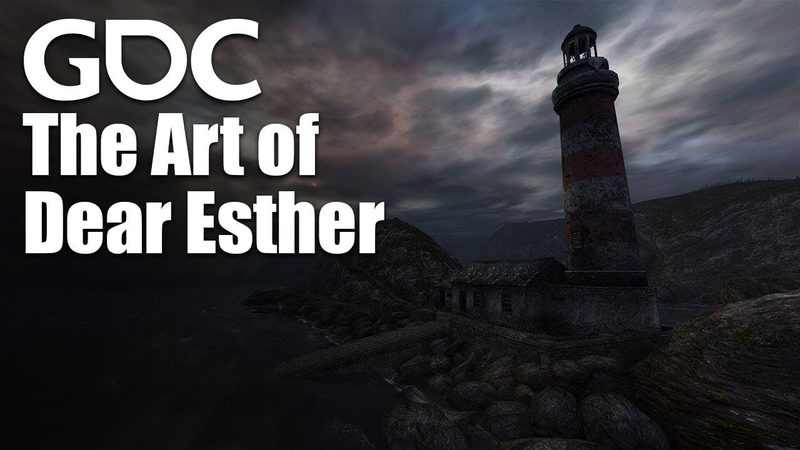
The environmental design of the game Dear Esther serves as a primary vehicle for narrative delivery, moving beyond the traditional role of a static backdrop to become an active participant in storytelling.
- Environmental design serves as the primary narrative vehicle in Dear Esther, functioning as an active participant in storytelling rather than a static backdrop.
- The project, originally developed as a 2008 Source engine mod, intentionally stripped away traditional gameplay mechanics to prioritize an ambiguous, emotionally driven narrative.
- Developers achieved immersion by prioritizing an impressionistic aesthetic—focusing on lighting, atmosphere, and color—over technical fidelity or photorealism.
Game Narrative Through the Detective Lens
Detective fiction offers a productive lens for understanding how gameplay and narrative relate in digital games.
- The paper argues the detective genre is a productive analytical lens for studying how gameplay and narrative relate, with conclusions drawn inductively from a specific corpus of detective stories and games rather than a survey of game narrative as a whole.
- Drawing on Todorov, it distinguishes the whodunit (reconstructing past events drives the mystery) from the thriller (the detective's own adventures are central), and argues both structures naturally support story-driven gameplay where players piece together events or use revealed information to solve problems.
- Examples discussed include Sherlock Holmes and Agatha Christie adaptations, plus non-detective titles such as Myst, Dear Esther, the Blackwell series, and L.A. Noire.
Creator's Discussion of the Growing Focus on, and Potential of, Storytelling in Video Game Design
Video games are widely perceived as violent, genre-bound entertainment dominated by science fiction, horror, and fantasy, but this reputation overlooks a rapidly growing arthouse-style movement running alongside large commercial releases.
- The video game industry's mainstream reputation for violent, otherworldly content (science-fiction, horror, fantasy) understates a growing arthouse movement of personal, autobiographical and life-inspired narrative games.
- Over the last decade, and especially the last five years, an increasing number of games have focused on vivid, believable characters, personal stories, and emotional experiences enhanced through interaction.
- The article examines key titles in this narrative-driven space and the debates they provoked within video game culture, including discussion of ludonarrative dissonance in BioShock.
I Cried to Dream Again: Discovery and Meaning-Making in Walking Simulators
The document "I Cried to Dream Again: Discovery and Meaning-Making in Walking Simulators" argues for a re-evaluation of walking simulators as complex, self-contained game worlds that engage players through experiential aesthetics and exploration mechanics.
- The paper argues that walking simulators such as Dear Esther (The Chinese Room, 2012) and Proteus (Ed Key and David Kanaga, 2013) should be recognised as complex, self-contained game worlds rather than dismissed as minimal experiences.
- Its central claim is that the peaceful, single-player, first-person, non-competitive gameplay enabled by the island setting heightens affective, narrative, spatial, and kinaesthetic involvement for players.
- The island works as a practical design tool: its tension between desirability and inaccessibility limits the game world while drawing on players' cultural associations that shape expectations and reception.
Walking Simulators: The Digitisation of an Aesthetic Practice
Walking simulators such as Year Walk, Gone Home, and Dear Esther digitise an older aesthetic practice: walking as a means of exploration, discovery, and meaning-making in the Romantic tradition.
- The report argues that walking simulators such as Dear Esther, Gone Home, and Year Walk continue a Romantic tradition of walking as aesthetic and spiritual practice, making digital walking a legitimate extension of that tradition.
- The central claim is that movement through space, whether physical or virtual, generates meaning, and the contested label "walking simulator" may still be an apt description of these works.
- Environmental storytelling embeds narrative in landscape and architecture rather than delivering it through cutscenes, so players uncover story through observation and movement.
Companies behind it
As the documents state it.