
Breda University of Applied Sciences
Dutch university of applied sciences in Breda with a large games programme (Academy for AI, Games & Media). Its research portal publishes open papers and reports on game design, serious games and the games industry.
Documents
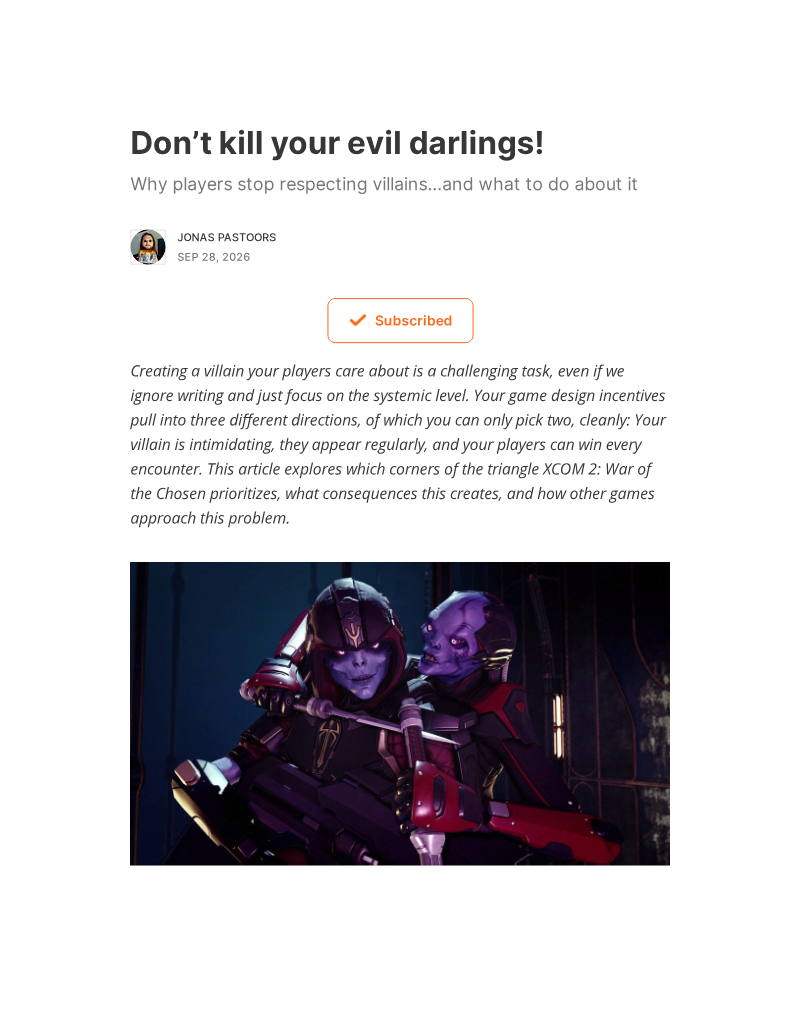
Don't Kill Your Evil Darlings! Why Players Stop Respecting Villains...and What to Do About It
This essay is an opinion-driven design analysis rather than an empirical study, so it presents no survey data, sample sizes, or statistics.
- Game villains face a "design triangle" in which recurrence, intimidating aura, and player beatability can be achieved together only by compromising one of the three.
- Villain decay, the loss of menace over repeated appearances, is the central problem the essay examines, framed through the established villain decay trope.
- XCOM 2: War of the Chosen is praised for keeping its recurring Chosen antagonists threatening by letting players temporarily kill them while the narrative explains their respawns.
A Class on Narrative Frames (and Advanced Murder): What 'Fire Emblem: Three Houses' Knows About Casting the Player's Role
This article examines how the player's narrative role relative to the characters on their team shapes the emotional bonds that develop between them.
- Narrative framing of the player's role strongly shapes emotional bonds with team characters: games that cast the player as a responsible figure, like the professor in Fire Emblem: Three Houses, align the player's incentives with nurturing those characters.
- The article's central thesis is that pairing great power over a crew with a strong sense of responsibility can pre-load the emotional experience a designer intends, with incentive alignment between player and characters as the key variable.
- Games are contrasted by player position: RimWorld casts the player as an external force with supernatural influence but no social identity, while XCOM 2 and Darkest Dungeon create commander responsibilities, with Darkest Dungeon deliberately undermining them through an employer-employee dynamic built on disposability.
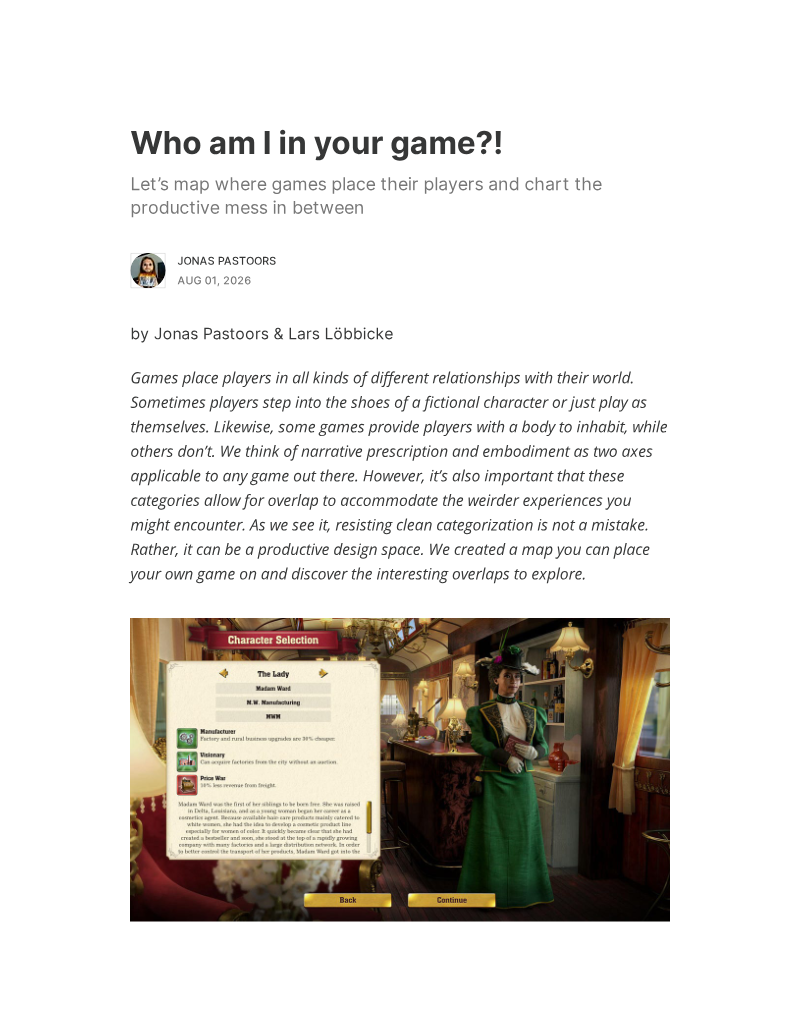
Who Am I in Your Game?! Let's Map Where Games Place Their Players and Chart the Productive Mess in Between
This article proposes a two-axis framework for classifying the relationship between players and their characters in games.
- The article proposes a two-axis framework for player-character relationships: narratively prescribed versus unprescribed roles, crossed with embodied versus abstract characters, yielding four buckets.
- Its central thesis is that overlapping boundaries between these categories are a productive design space rather than an inconsistency, since blurred categories can produce effects that clean categorization cannot.
- Crusader Kings III is cited as a case where the player acts as an all-seeing ruler who must also inhabit mortal successive bodies, creating incentive alignment that mirrors medieval monarchs' concerns.



Designing Conceptual Framework of a Digital Twin Serious Game for Climate-Resilient Cultural Tourism Management
This master's thesis by Saba Najjar proposes a conceptual framework for a digital twin serious game intended to support stakeholder decision-making in climate-resilient cultural tourism management.
- Cultural heritage faces rising climate and anthropogenic risks, and new technologies such as AI, sensor-equipped drones, and nondestructive monitoring are being explored to digitize, monitor, and protect it more efficiently.
- Climate policy under the UNFCCC has gradually institutionalized culture and heritage within the Paris Agreement agenda, treating heritage both as a vulnerable asset and as an instrument for public engagement, creating institutional demand for Digital Twin tools that monitor, simulate, and communicate climate risks.
- The author proposes a conceptual framework (not a ready-to-deploy tool) for a Digital Twin serious game, built iteratively from a literature review and twelve semi-structured expert interviews conducted October 2025 to January 2026, using purposive and snowball sampling.
A Qualitative Exploration of How Game Art Students Engage with Art Historical Material
This qualitative study, a 2026 master's thesis by Iza Morel at Breda University of Applied Sciences, investigates whether deliberate encounters with art history shape how game art students perceive and make creative decisions.
- None of the 113 surveyed European game art programmes included art history in their curricula, which motivated the study.
- Fifteen semi-structured interviews with eleven students and recent alumni of Breda University of Applied Sciences used Cézanne, Seurat, and van Gogh images as visual elicitation and were analysed via Reflexive Thematic Analysis.
- The value of art historical encounters proved conditional rather than uniform, depending on prior vocabulary, default attention patterns, and the sustained, structured looking the interviews provided.
Into the Breach of Affection: How Narrative Frames Can Make You Care About Cardboard
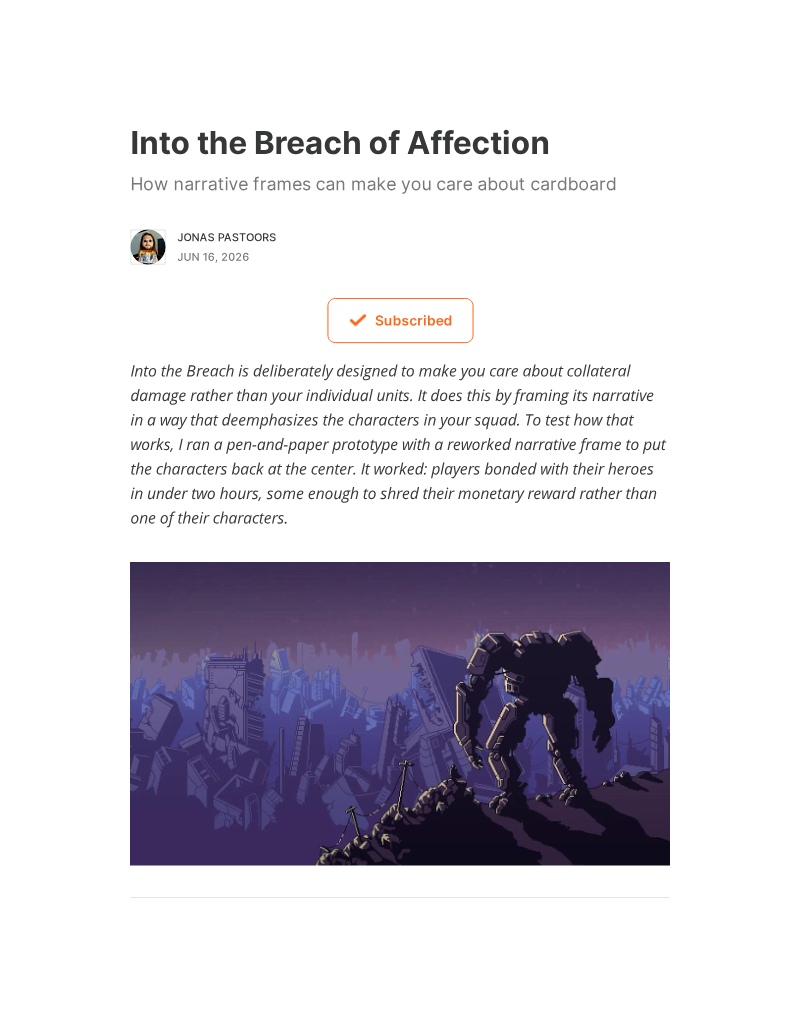
This essay by game designer Jonas Pastoors examines how narrative framing shapes player attachment, using the tactical roguelike Into the Breach as its central case.
- Into the Breach deliberately deemphasizes its pilots: players lose their characters after each run, and pilots mainly serve as a bonus-delivery mechanism while the mechs do the visible fighting.
- Pastoors argues these choices stem from a narrative frame centered on collateral damage, and that the same mechanics could foster bonding if the frame were reversed.
- To test this, the author ran a small, informal pen-and-paper prototype based on Bury Me in the Rift, recasting mechs and pilots as heroes and magical artifacts defending a monastery from demons, with books at stake instead of civilians.



The Impact of Evolving Character Customization on Emotional Engagement and Player Behaviour in RPGs
Evolving character appearance in role-playing games can deepen players' emotional investment in their avatars, but it does far less to change how they actually play.
- Dynamic avatar appearance strongly strengthens emotional connection to a character: 93.9% of 149 surveyed players agreed it created an emotional bond with their character.
- Players often manually altered their appearance to preserve visual coherence when the game's systems failed to keep it consistent, showing how much they value visual continuity.
- Visual evolution had far weaker influence on gameplay behaviour: only 61.7% of respondents said their appearance shaped in-game decisions, and 8 of 10 interviewees said changing appearance did not alter their roleplay choices.
How Many Characters Is Too Many? Let's Discuss Roster Size, Marvel's Midnight Suns (and How to Get It Right)
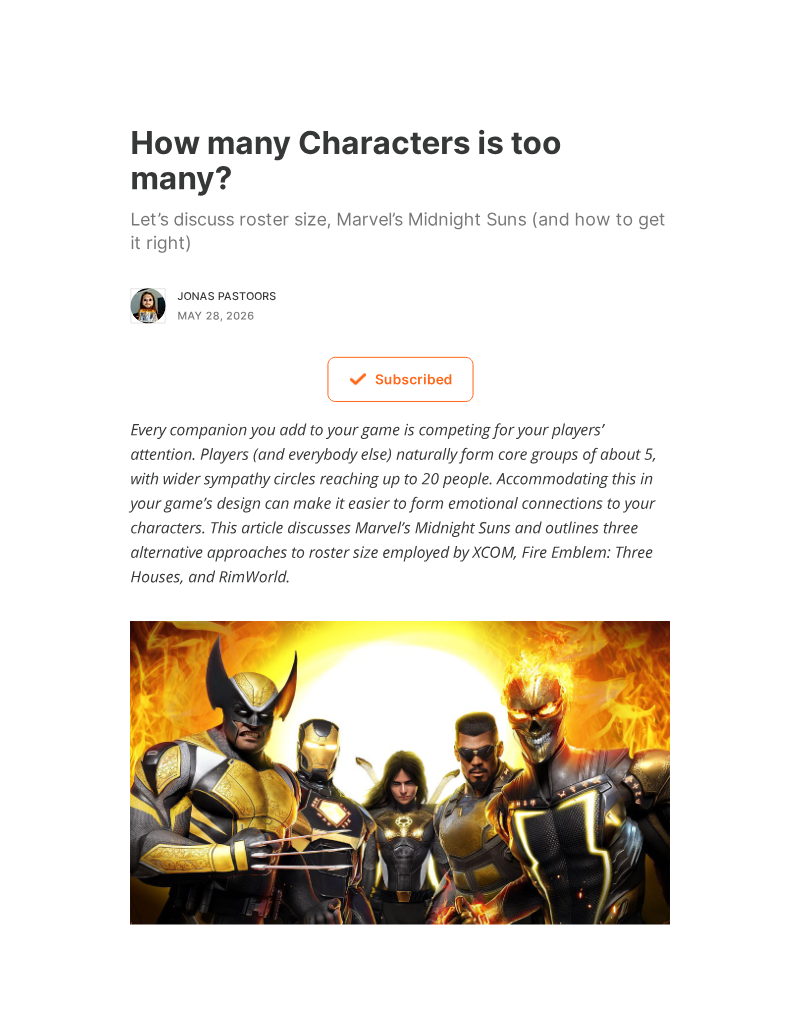
This essay examines how the number of companion characters in a game affects player attention and emotional attachment, using Marvel's Midnight Suns as its central case study.
- Dunbar's Number suggests people maintain a close 'support clique' of about five people and a wider 'sympathy group' of roughly 10 to 20, and the author argues game rosters should respect these social limits because an oversized cast dilutes emotional attachment to individual characters.
- Marvel's Midnight Suns has 13 fully voiced heroes in its base game and 17 with DLC, a total the author considers within the sympathy group range, yet the game lacks a mechanism for players to naturally form a core group of regulars.
- In Midnight Suns, a three-hero combat team limit and friendship progress gating legendary abilities and cosmetics force players to either narrow their focus to two or three favorites and forfeit content, or spread attention across the whole roster, which makes attachment to any single character difficult.
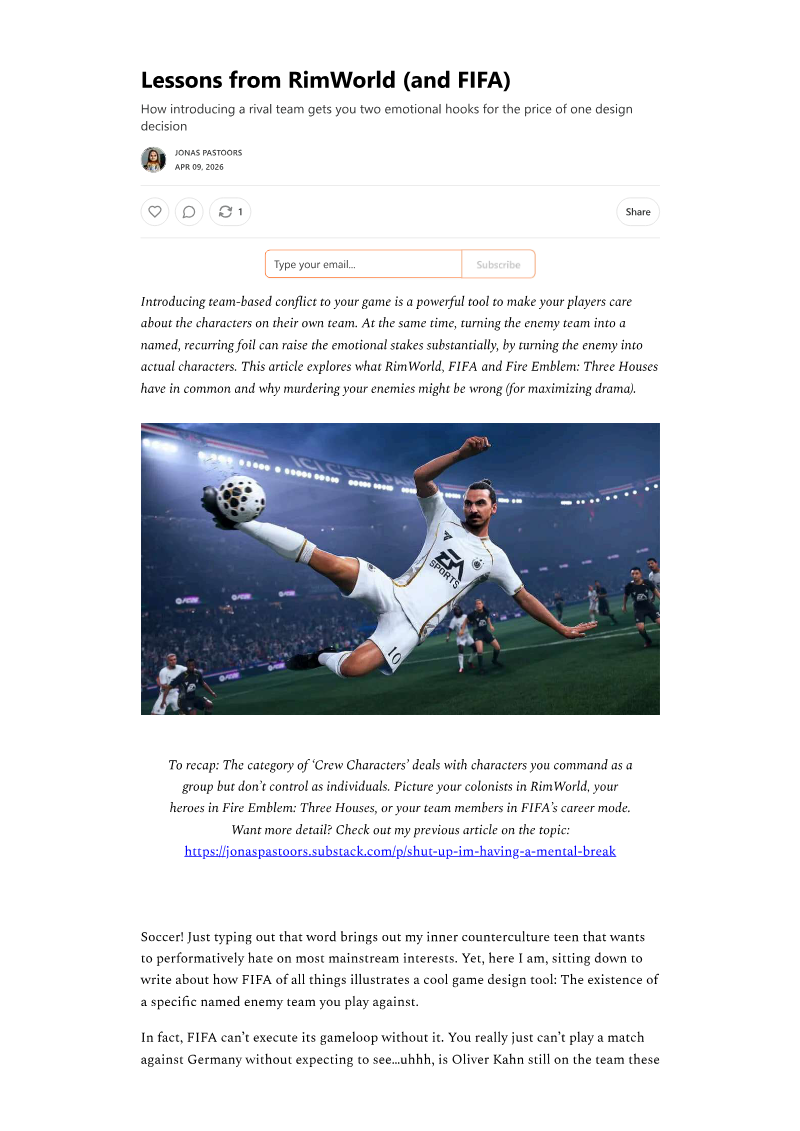
Lessons from RimWorld (and FIFA): How Introducing a Rival Team Gets You Two Emotional Hooks for the Price of One Design Decision
Jonas Pastoors argues that introducing a named rival team into a game creates two emotional hooks from a single design decision: players bond more quickly with their own team, and they develop a personal grudge against recurring enemy characters.
- Introducing a named rival team creates two emotional hooks from one design decision: faster bonding with the player's own team and a personal grudge against recurring enemy characters, drawing on intergroup empathy bias.
- In the author's small study, in-group empathy and out-group counter-empathy appeared almost immediately after participants were assigned to a competing team, and the bias strengthened as play continued.
- The intergroup bias was strongest when the contest was close and the rival posed a real threat, and weakened when the player easily dominated the opposition, suggesting challenging flow states heighten the effect.
"Shut Up, I'm Having a Mental Break!": The Strange Design Space of Characters You Command but Don't Control
This essay argues that video game characters such as RimWorld's colonists, XCOM's soldiers, and Baldur's Gate 3's companions occupy a distinct design category that sits between player characters and non-player characters.
- The essay proposes "crew characters" as a distinct design category: entities the player directs and develops but does not fully control, sitting between NPCs (differing in gameplay role) and player characters (differing in autonomy and individuality).
- Crew characters are placed on a spectrum running from bots and avatars through NPCs and crew to fully independent player characters, illustrated with examples such as Kratos, GLaDOS, and Doomguy.
- Designing for a community of characters rather than a single scripted protagonist creates a fundamentally different challenge, and the author argues designers who recognize crew-character properties can build stronger emotional bonds with them.
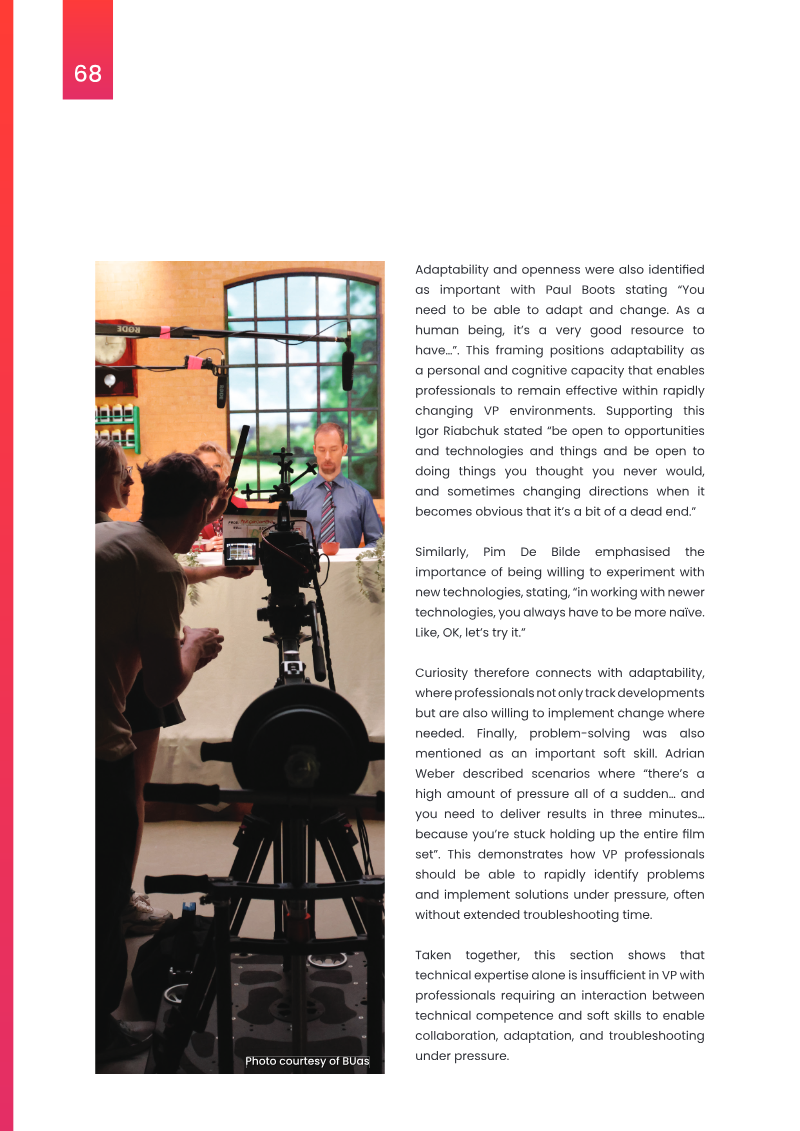
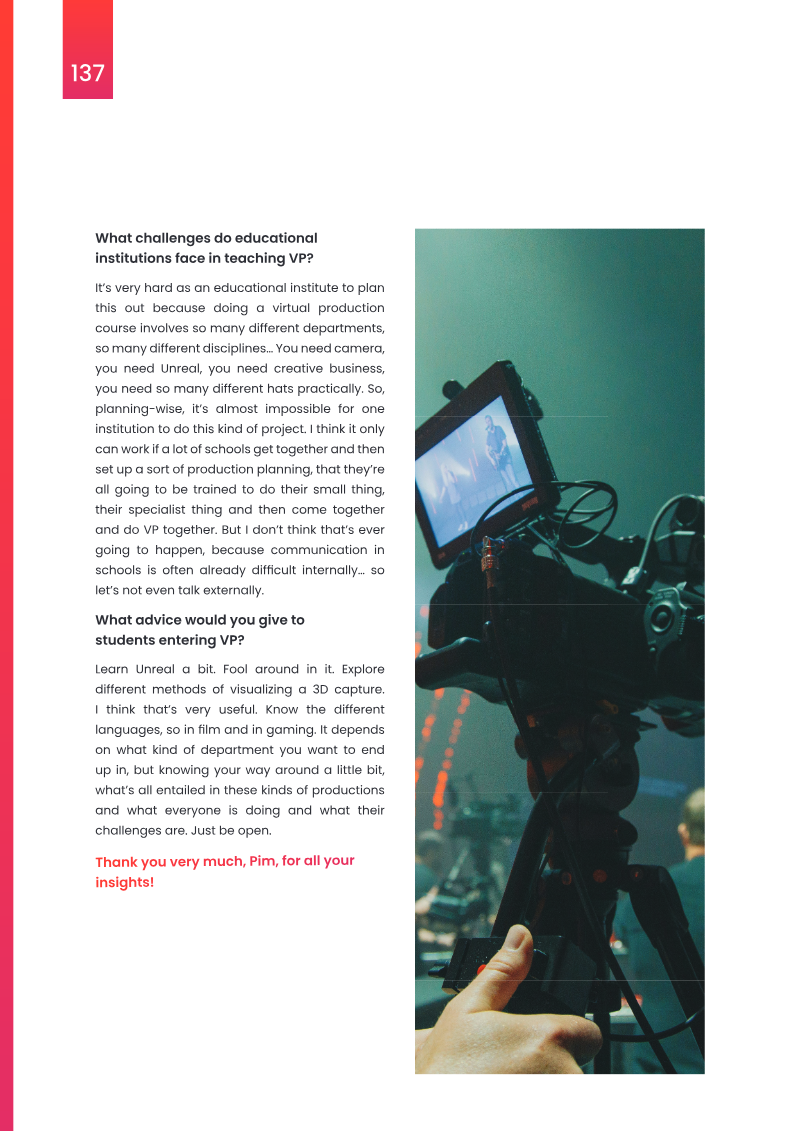
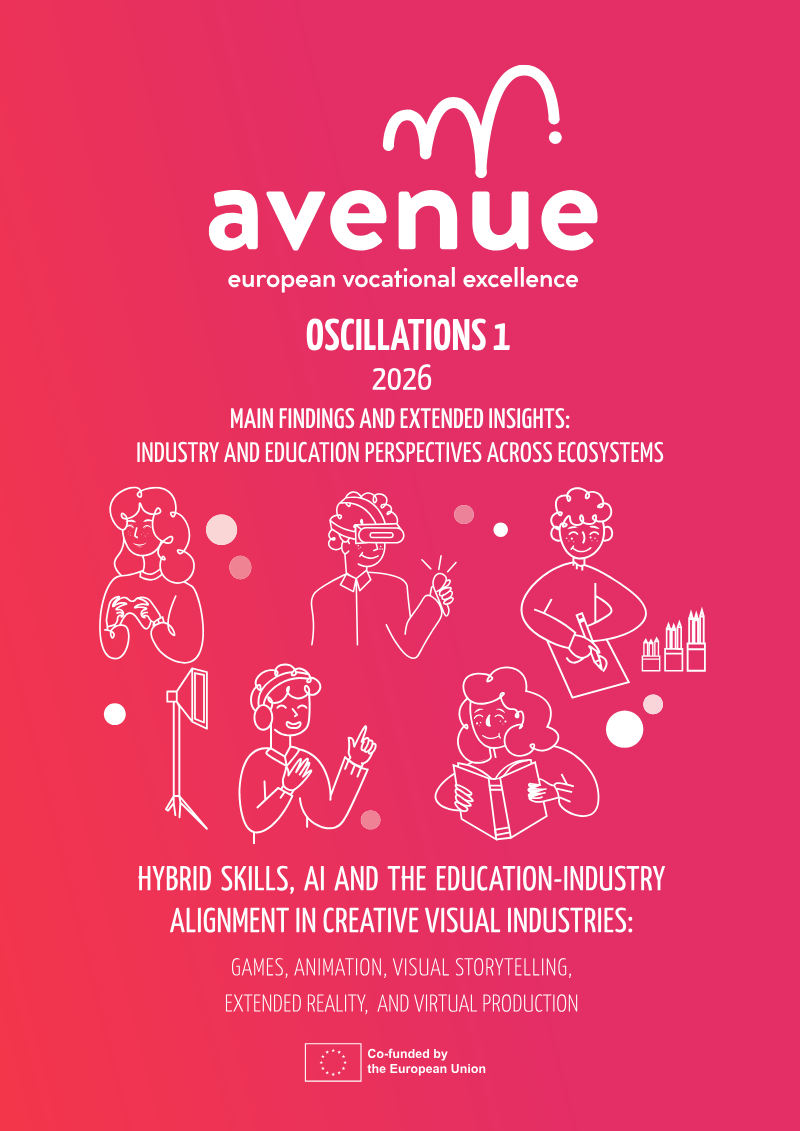
Oscillations 1: Main Findings and Extended Insights: Industry and Education Perspectives
The Oscillations 1 report, produced under the AVENUE initiative in 2026, examines how hybrid skills, artificial intelligence, and education-industry alignment are reshaping five creative visual ecosystems: games, animation, visual storytelling, extended reality (XR), and virtual production (VP).
- The central finding is that rapid adoption of real-time engines, AI-assisted workflows, and hybrid working is shifting demand toward adaptable professionals who combine technical skills with communication, teamwork, and business literacy.
- Technical skills are necessary for entry but insufficient alone: communication, feedback receptiveness, pipeline awareness, and self-directed learning often act as practical hiring gatekeepers.
- The cultural and creative sectors employ roughly 3.8% of the European workforce and contribute about 3.95% (around EUR 477 billion) to the EU economy, with the European games market alone worth nearly EUR 26.8 billion.
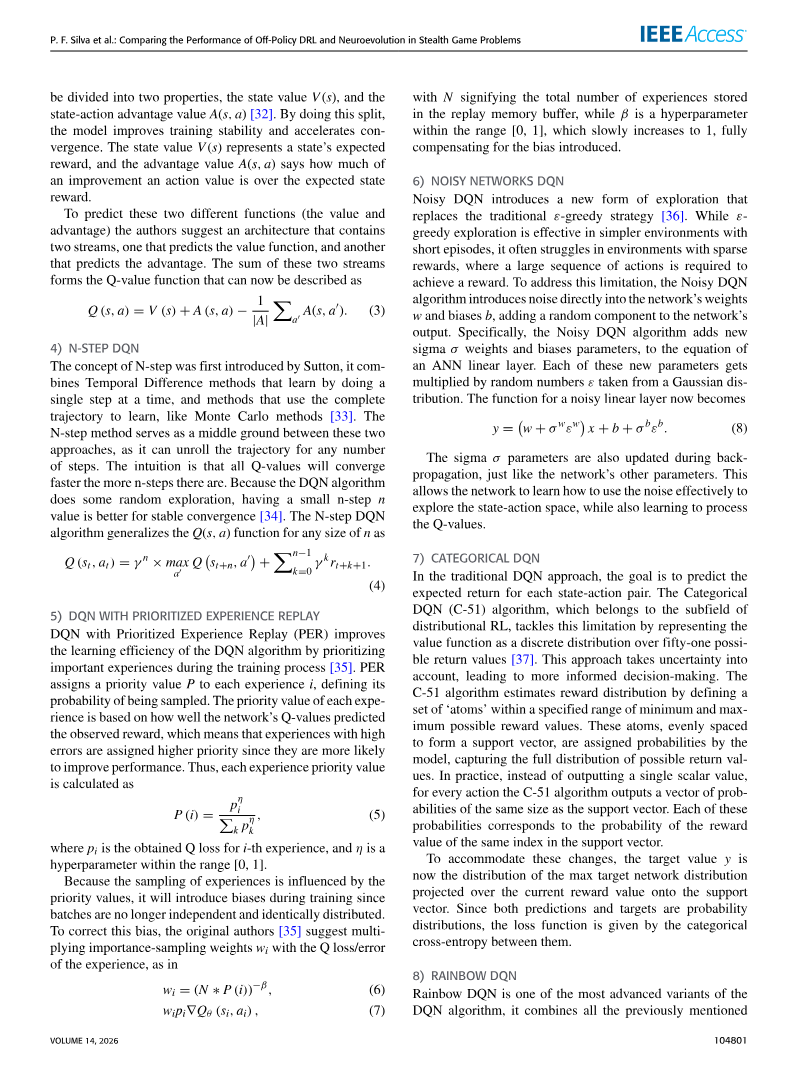
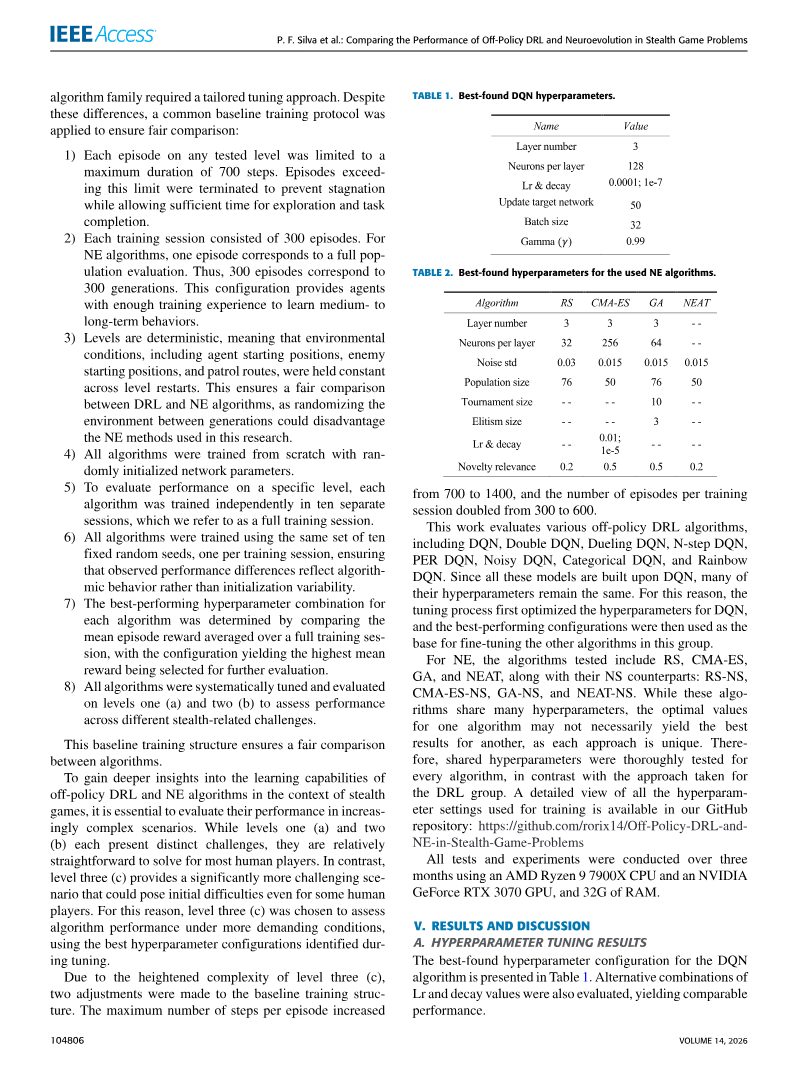
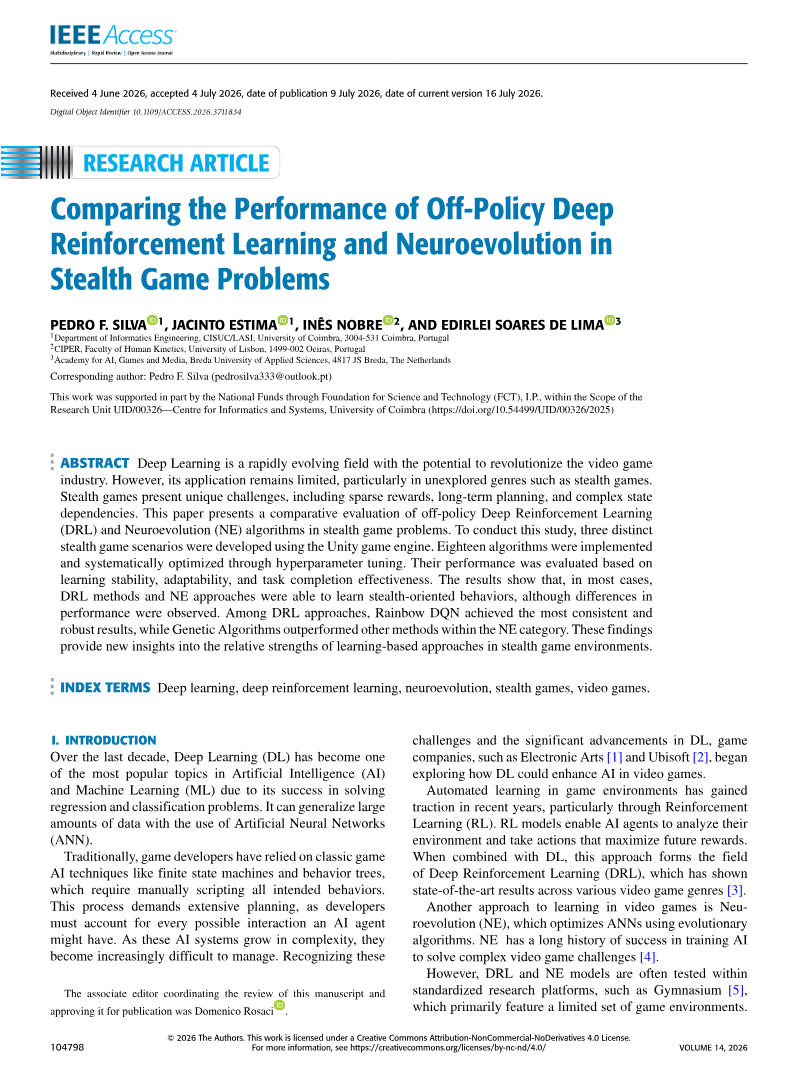
Comparing the Performance of Off-Policy Deep Reinforcement Learning and Neuroevolution in Stealth Game Problems
This study compares off-policy deep reinforcement learning (DRL) and neuroevolution (NE) methods in stealth game environments, a genre the authors note is underrepresented in deep learning research.
- Off-policy deep reinforcement learning and neuroevolution were compared across 18 algorithms in three Unity-built stealth scenarios, a genre the authors note is underrepresented in deep learning research and prior literature, which includes only two earlier deep learning stealth studies.
- On the most demanding third level, only N-step DQN, Categorical DQN, and Rainbow DQN achieved positive average returns among DRL methods, while Genetic Algorithms and GA-NS (a Novelty Search variant) performed best overall and CMA-ES failed to reliably reach the goal.
- Rainbow DQN proved the most consistent DRL method, and Genetic Algorithms were the strongest neuroevolution approach, though all algorithms learned to complete the first two levels.