1 free read left. Create a free account for unlimited reading + AI research.
Create free accountWhitepaper DiGRA
1 free read left. Create a free account for unlimited reading + AI research.
Create free accountWhitepaperDiGRA
Distilling the key insights…
This extended abstract argues that walking simulators and notgames, which remove the possibility of failure in favour of open-ended exploration, nonetheless retain an underlying ludic structure that distinguishes them from non-ludic interactive artefacts. Drawing on Juul's classic game model and Leino's concept of playability, the author contends that Leino's insistence on a failure condition as the decisive marker of playability conflates freeform interactive activities with genuinely ludic ones. The paper proposes a notion of "subtle playability," in which a system of valorised outcomes embedded in the artefact orients player behaviour without an explicit failure state.
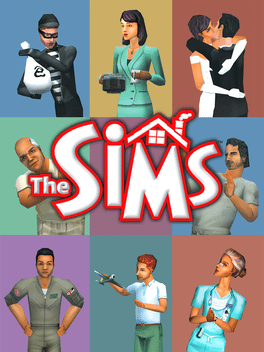
The argument is developed through a comparison of Proteus, which structures exploration as a progression toward an ending, with Traversing the Sectors, which offers open-ended exploration with no goal or win condition. The author also draws on Leino's analysis of The Sims, observing that success in such games is never validated by the system and that players instead pursue non-failure. The inversion of this logic is then applied to games where only success orients action, with reference to the aporia and epiphany processes described by Aarseth and Jayemanne. Islands: Non-Places is presented as an example of implicit goal construction through ambiguous causal relationships.
The paper further identifies valorisation mechanisms that operate through immediate rewards and penalties, as in The Night Journey, where interacting with objects alters avatar speed and session length, and through narrative or aesthetic rewards, as in Dear Esther, where exploration unlocks textual fragments that make up an ambiguous story. In each case, the author suggests that thorough exploration becomes "desirable" even when not evaluated by the game system. The work is explicitly presented as an extended abstract and a theoretical sketch rather than an empirical study, with its conclusions framed as provisional and open to further development, including potential applications to interactive art, immersive theatre, and cosy games.
Each row is a game or company this document names, each column a document, oldest first. A mark means that document names it. Select a row to see those documents.
DiGRA · 2023
DiGRA · 2023
DiGRA · 2023
DiGRA · 2023
DiGRA · 2023
DiGRA · 2023
DiGRA · 2023
DiGRA · 2023

DiGRA · 2023
DiGRA · 2023
DiGRA · 2023
DiGRA · 2023
DiGRA · 2023