Dear Esther
Game
Documents about Dear Esther
Article
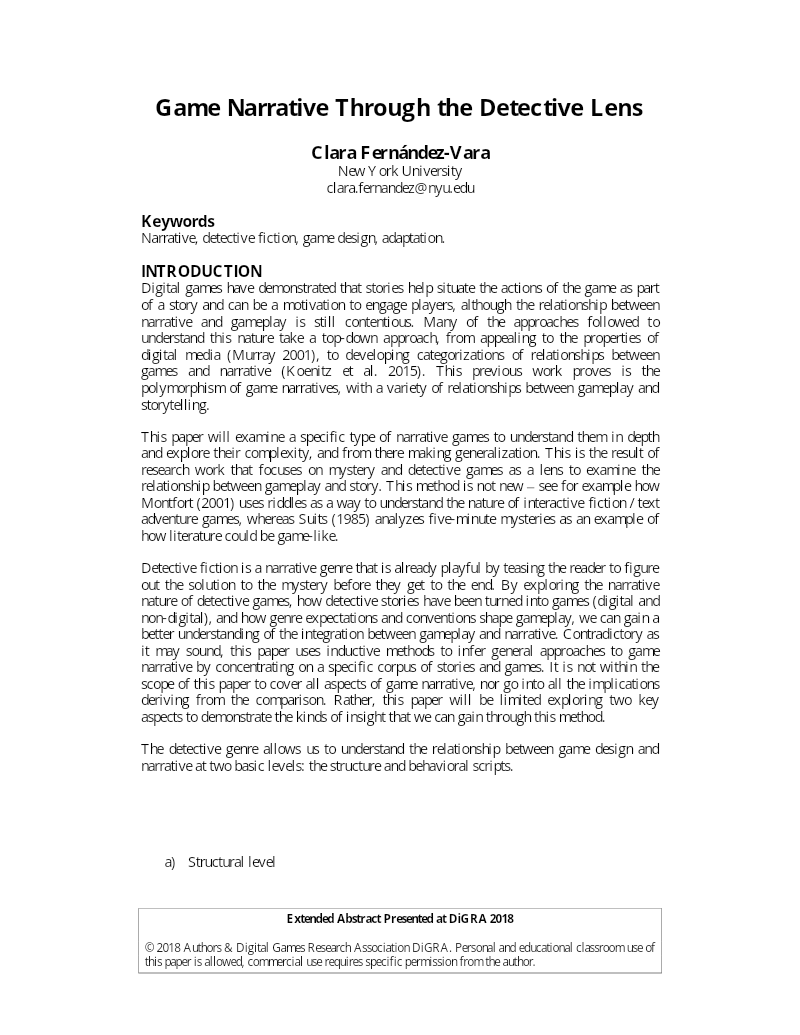
Game Narrative Through the Detective Lens
Detective fiction offers a productive lens for understanding how gameplay and narrative relate in digital games.
- The paper argues the detective genre is a productive analytical lens for studying how gameplay and narrative relate, with conclusions drawn inductively from a specific corpus of detective stories and games rather than a survey of game narrative as a whole.
- Drawing on Todorov, it distinguishes the whodunit (reconstructing past events drives the mystery) from the thriller (the detective's own adventures are central), and argues both structures naturally support story-driven gameplay where players piece together events or use revealed information to solve problems.
- Examples discussed include Sherlock Holmes and Agatha Christie adaptations, plus non-detective titles such as Myst, Dear Esther, the Blackwell series, and L.A. Noire.
DiGRAJan 2018
Article
Creator's Discussion of the Growing Focus on, and Potential of, Storytelling in Video Game Design
Video games are widely perceived as violent, genre-bound entertainment dominated by science fiction, horror, and fantasy, but this reputation overlooks a rapidly growing arthouse-style movement running alongside large commercial releases.
- The video game industry's mainstream reputation for violent, otherworldly content (science-fiction, horror, fantasy) understates a growing arthouse movement of personal, autobiographical and life-inspired narrative games.
- Over the last decade, and especially the last five years, an increasing number of games have focused on vivid, believable characters, personal stories, and emotional experiences enhanced through interaction.
- The article examines key titles in this narrative-driven space and the debates they provoked within video game culture, including discussion of ludonarrative dissonance in BioShock.
Breda University of Applied SciencesMay 2016
Article
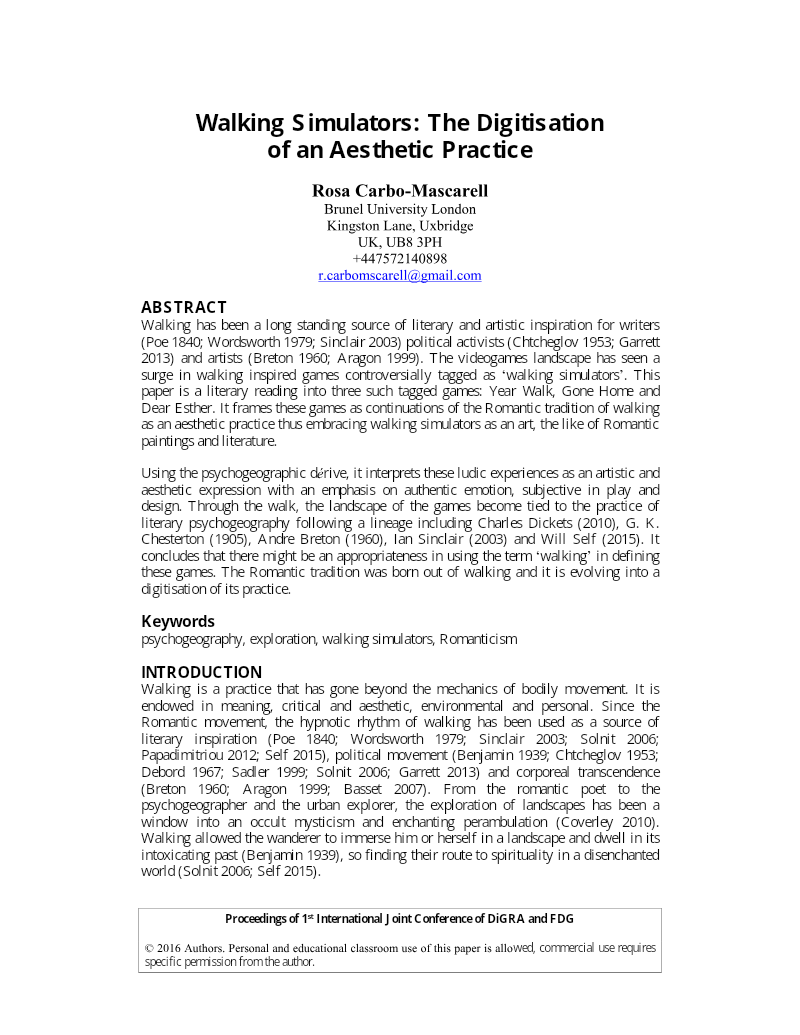
Walking Simulators: The Digitisation of an Aesthetic Practice
Walking simulators such as Year Walk, Gone Home, and Dear Esther digitise an older aesthetic practice: walking as a means of exploration, discovery, and meaning-making in the Romantic tradition.
- The report argues that walking simulators such as Dear Esther, Gone Home, and Year Walk continue a Romantic tradition of walking as aesthetic and spiritual practice, making digital walking a legitimate extension of that tradition.
- The central claim is that movement through space, whether physical or virtual, generates meaning, and the contested label "walking simulator" may still be an apt description of these works.
- Environmental storytelling embeds narrative in landscape and architecture rather than delivering it through cutscenes, so players uncover story through observation and movement.
DiGRAJan 2016
Companies behind it
As the documents state it.